Types of Effective presentations
and public speaking skills
Dr.C.Karthik Deepa
Assistant Professor
Department of Education
Avinashilingam institute for home science &higher Education for Women
Coimbatore
cherrydeepa@gmail.com
Questions to ponder
• Why speaking is important?
• What are some considerations for planning
speaking activities ?
• How are some tips for promoting speaking
in public/stage?
? Suitable titles for oral presentation
Oral Communication
• Ability to speak well.
• Ability to articulate ones knowledge &
understanding,
– use language creatively,
– use and present material effectively in spoken
form, whether in one's own language or a foreign
language,
• to display a command of structure, appropriate
pronunciation, use of register, and range of vocabulary.
• Oral Communication is the ability to talk with
others to give and exchange information &
ideas,
– such as: ask questions, give directions, coordinate
work tasks, explain & persuade.
Planning before speaking
• Is it necessary to review the language to be
used in a task?
• Will the learners work in pairs or small
groups?
• How will learners be monitored as they
complete task?
• How will teachers provide feedback to
students?
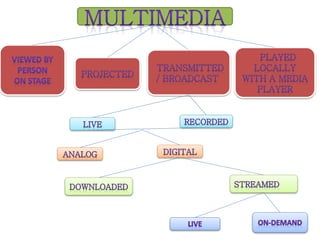
Multimedia
• Multimedia refers to content that uses a
combination of different content forms.
– text
– audio
– still images
– animation
– video
– interactivity content forms
Multimedia games and
simulations
• Multimedia games and
simulations may be used in a
physical environment with special
effects, with multiple users in an
online network, or locally with an
offline computer, game system,
or simulator.
Short impromptu presentation
• Impromptu speaking is a speech and debate
individual event that involves a five to eight
minute speech with a characteristically
short/no preparation time of one to three
minutes.
• The speaker is most commonly provided
with their topic in the form of a quotation,
but the topic may also be presented as an
object, proverb, one-word abstract, or one
of the many alternative possibilities
Tips for impromptu presentation
• Open with a personal experience
• Set and follow a structure
–Real life examples
–Small stories
–Quotations
–gestures
• End on a strong note
Educational or training sessions
• Training subject’s main points.
• Explain key points, demonstrate
procedures, and relate any other
information trainees need to know.
• Conclude with a summary of your opening
overview.
• Use repetition to help trainees grasp and
retain information.
• Always explain what trainees are going to
see before you show a multimedia portion.
• Use as much hands-on training as possible.
Educational or training sessions
• Test frequently.
• Involve trainees.
• Repeat questions before answering them.
• Analyze the session as you go.
• Put yourself in their shoes. Give frequent
breaks, especially for half-day or all-day
sessions.
• Solicit feedback on the training session.
Reference
• http://www.educ.ualberta.ca/staff/olenka.bila
sh/best%20of%20bilash/speaking.html
• http://www.askmen.com/money/body_and_
mind_150/192b_better_living.html

Effective presentations and public speaking skills

  • 1.
    Types of Effectivepresentations and public speaking skills Dr.C.Karthik Deepa Assistant Professor Department of Education Avinashilingam institute for home science &higher Education for Women Coimbatore cherrydeepa@gmail.com
  • 2.
    Questions to ponder •Why speaking is important? • What are some considerations for planning speaking activities ? • How are some tips for promoting speaking in public/stage? ? Suitable titles for oral presentation
  • 3.
    Oral Communication • Abilityto speak well. • Ability to articulate ones knowledge & understanding, – use language creatively, – use and present material effectively in spoken form, whether in one's own language or a foreign language, • to display a command of structure, appropriate pronunciation, use of register, and range of vocabulary. • Oral Communication is the ability to talk with others to give and exchange information & ideas, – such as: ask questions, give directions, coordinate work tasks, explain & persuade.
  • 4.
    Planning before speaking •Is it necessary to review the language to be used in a task? • Will the learners work in pairs or small groups? • How will learners be monitored as they complete task? • How will teachers provide feedback to students?
  • 5.
    Multimedia • Multimedia refersto content that uses a combination of different content forms. – text – audio – still images – animation – video – interactivity content forms
  • 6.
    Multimedia games and simulations •Multimedia games and simulations may be used in a physical environment with special effects, with multiple users in an online network, or locally with an offline computer, game system, or simulator.
  • 8.
    Short impromptu presentation •Impromptu speaking is a speech and debate individual event that involves a five to eight minute speech with a characteristically short/no preparation time of one to three minutes. • The speaker is most commonly provided with their topic in the form of a quotation, but the topic may also be presented as an object, proverb, one-word abstract, or one of the many alternative possibilities
  • 9.
    Tips for impromptupresentation • Open with a personal experience • Set and follow a structure –Real life examples –Small stories –Quotations –gestures • End on a strong note
  • 10.
    Educational or trainingsessions • Training subject’s main points. • Explain key points, demonstrate procedures, and relate any other information trainees need to know. • Conclude with a summary of your opening overview. • Use repetition to help trainees grasp and retain information. • Always explain what trainees are going to see before you show a multimedia portion. • Use as much hands-on training as possible.
  • 11.
    Educational or trainingsessions • Test frequently. • Involve trainees. • Repeat questions before answering them. • Analyze the session as you go. • Put yourself in their shoes. Give frequent breaks, especially for half-day or all-day sessions. • Solicit feedback on the training session.
  • 12.