Learning Styles
VAK/VARK model
Dr.C.Karthik Deepa
Assistant Professor
Department of Education
Avinashilingam Institute for Home Science & Higher Education for
Women
Coimbatore
cherrydeepa@gmail.com
What are Learning Styles?
Information enters your brain three main ways: sight, hearing and touch,
which one you use the most is called your Learning Style
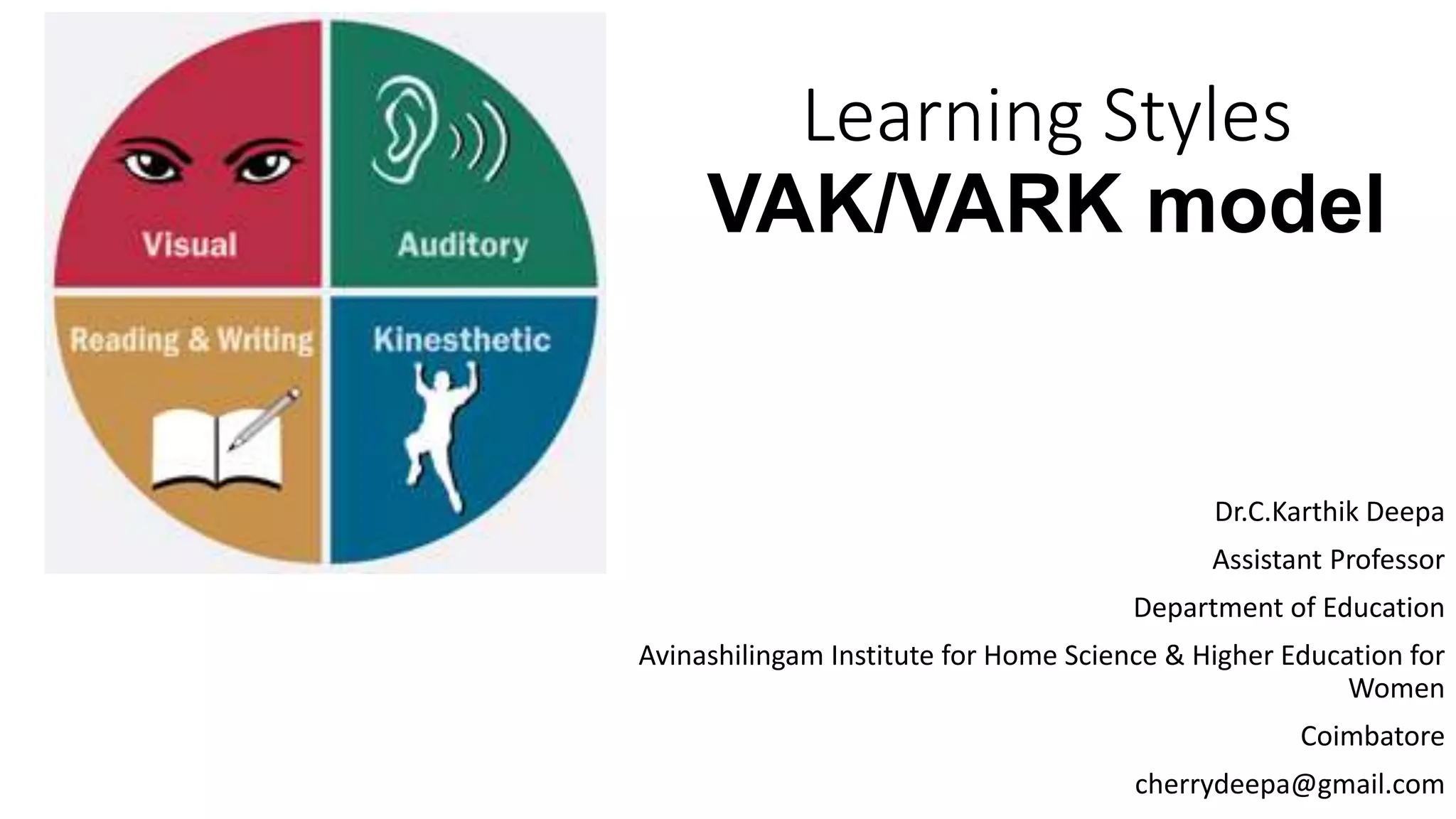
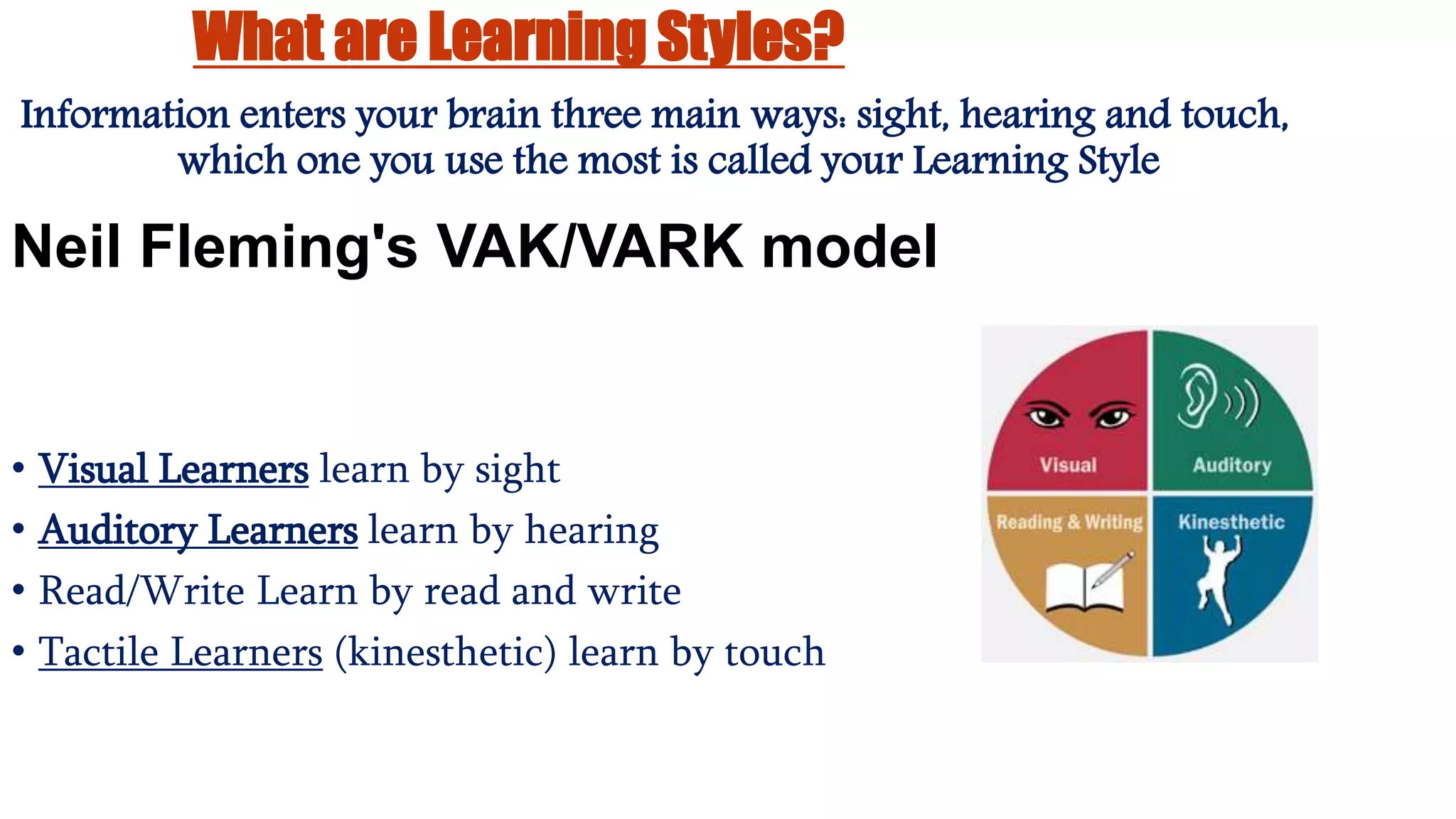
• Visual Learners learn by sight
• Auditory Learners learn by hearing
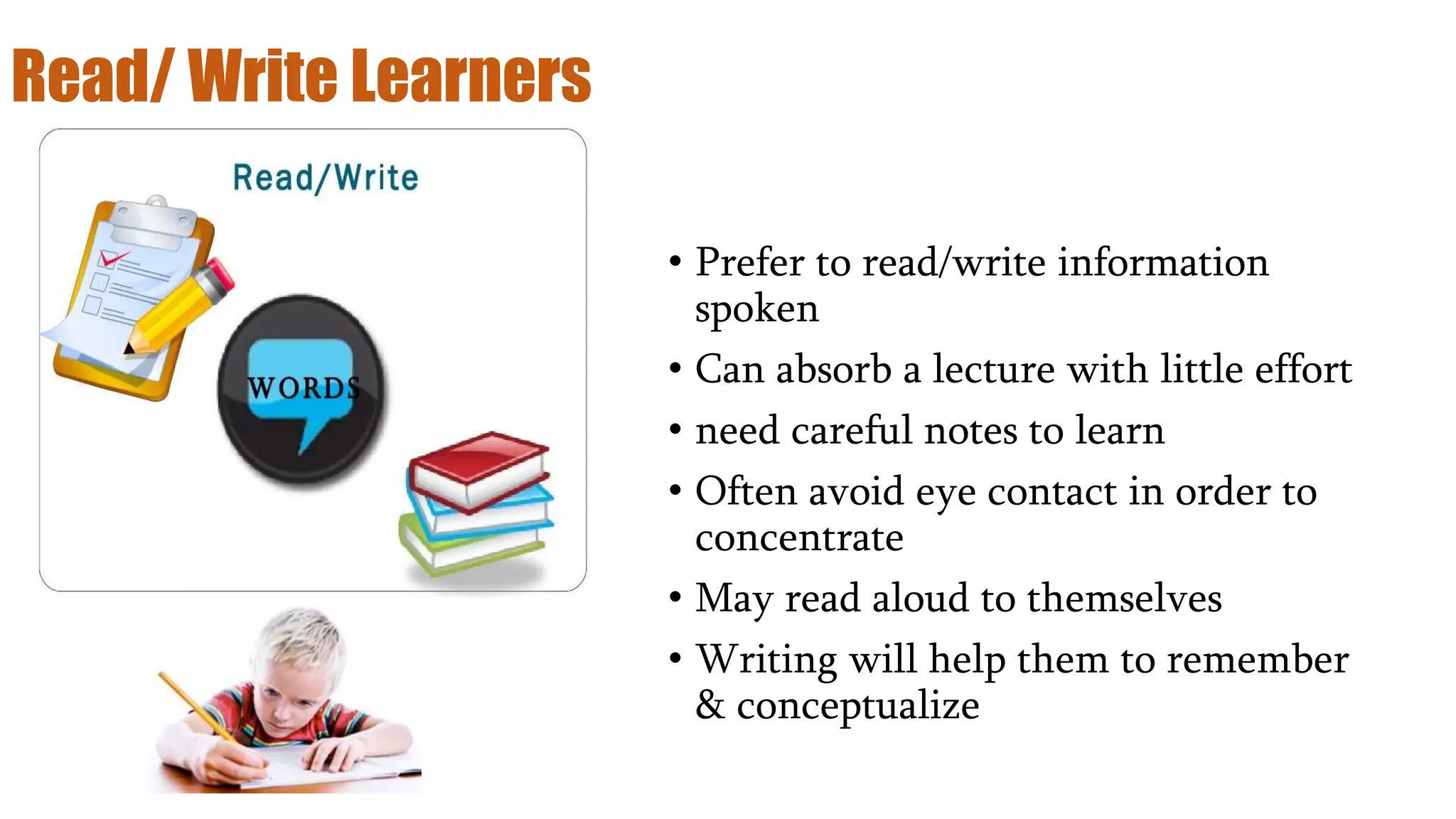
• Read/Write Learn by read and write
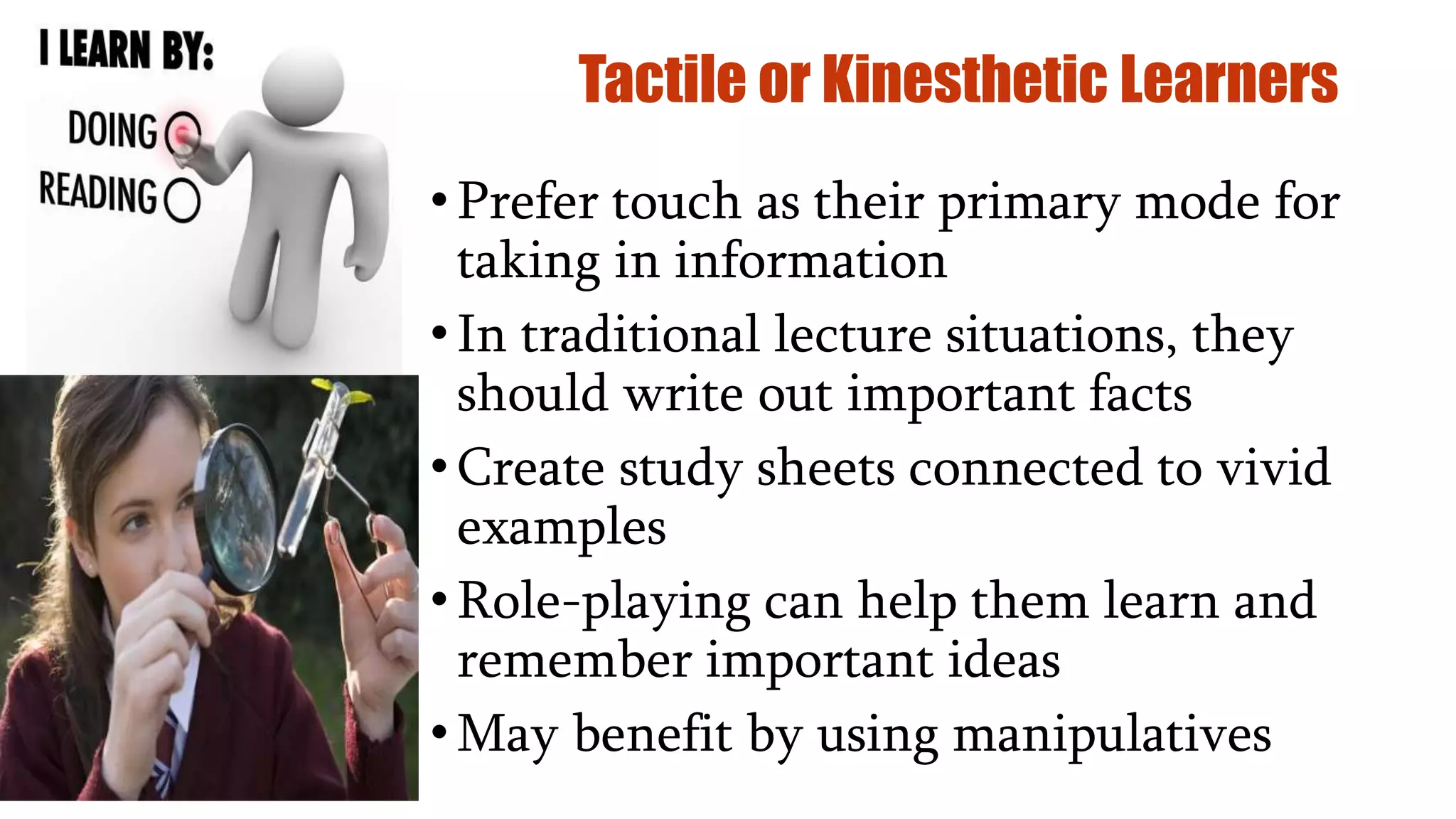
• Tactile Learners (kinesthetic) learn by touch
Neil Fleming's VAK/VARK model
Visual Learners
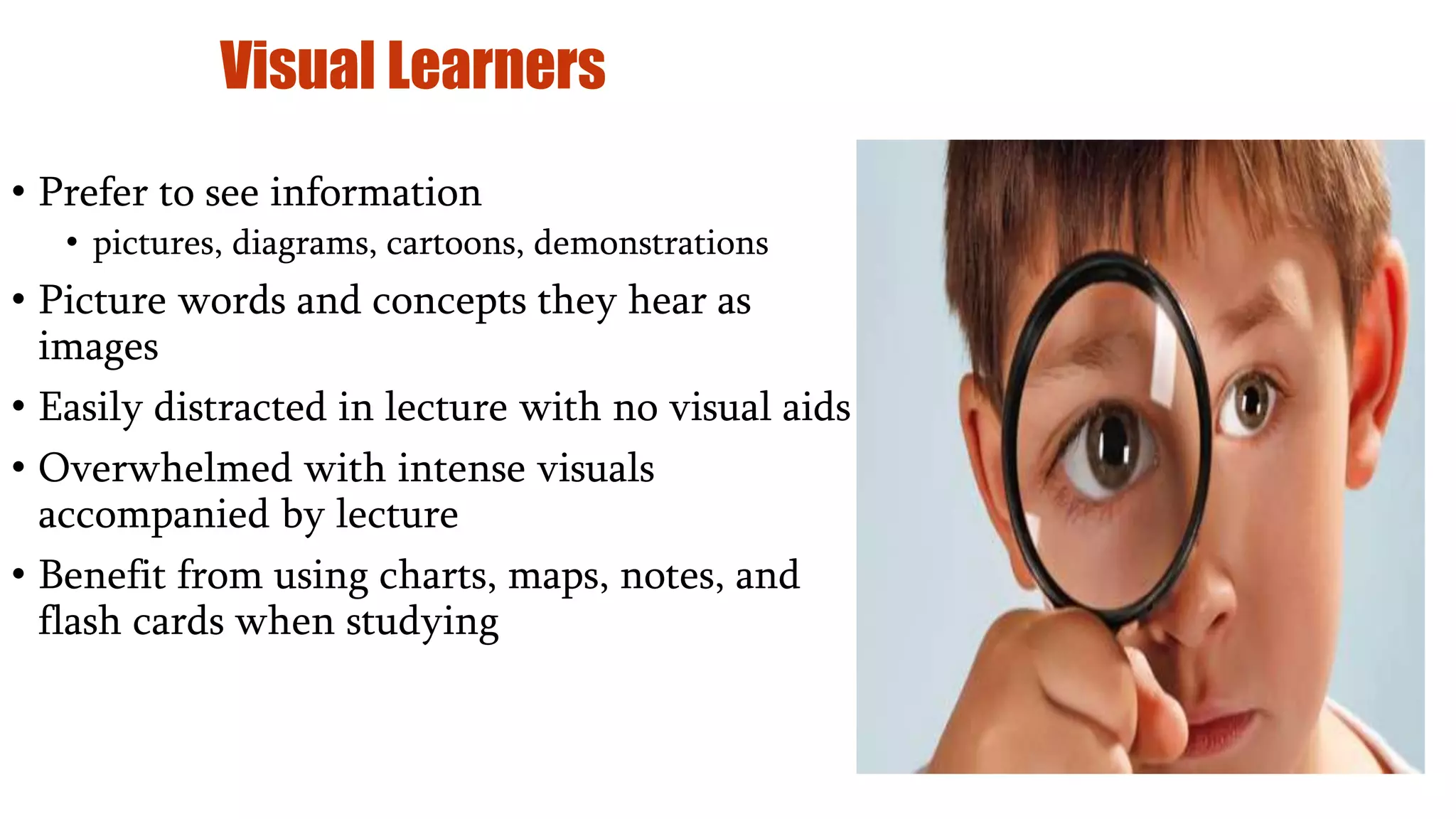
• Prefer to see information
• pictures, diagrams, cartoons, demonstrations
• Picture words and concepts they hear as
images
• Easily distracted in lecture with no visual aids
• Overwhelmed with intense visuals
accompanied by lecture
• Benefit from using charts, maps, notes, and
flash cards when studying
Auditory Learners
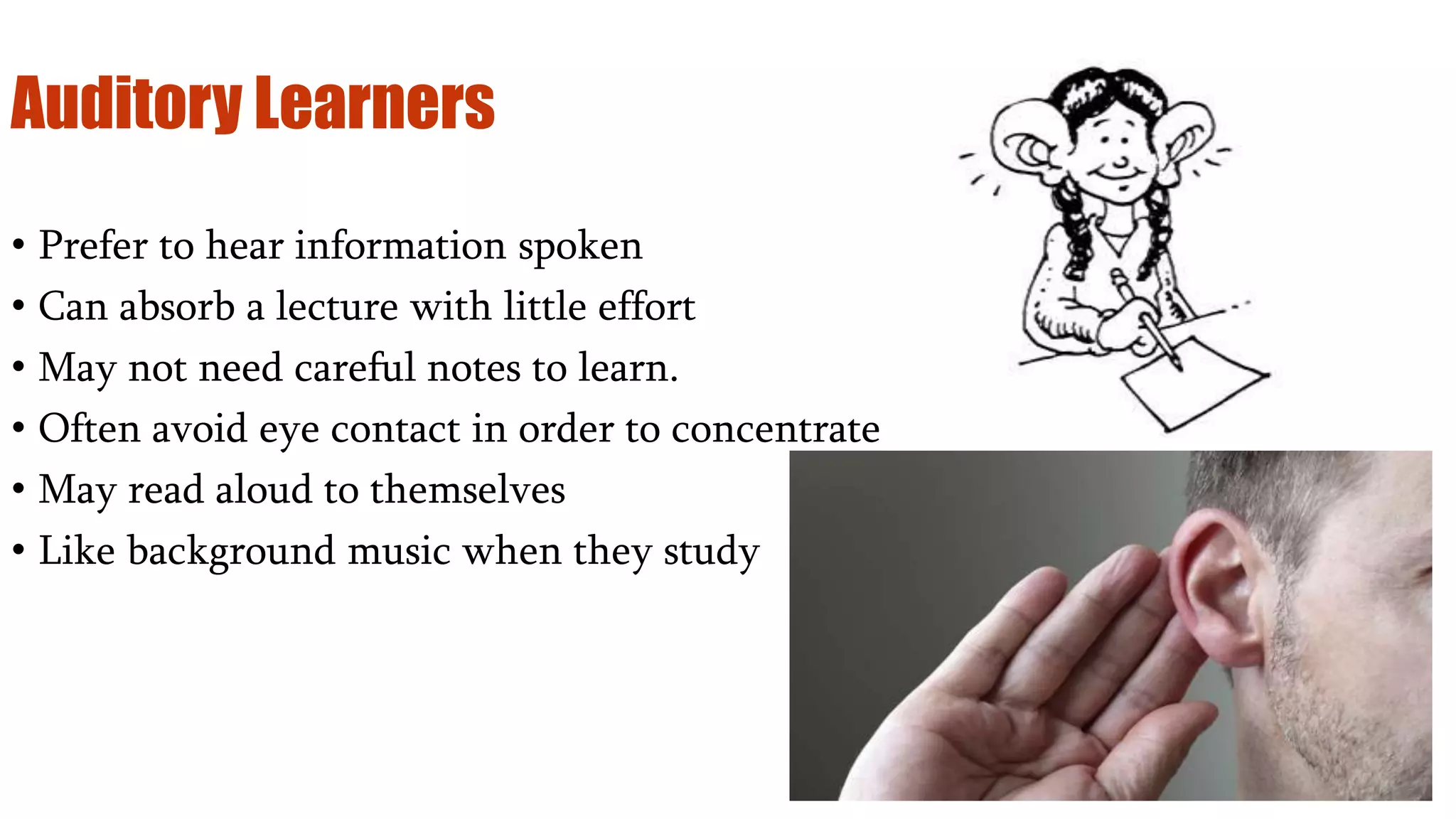
• Prefer to hear information spoken
• Can absorb a lecture with little effort
• May not need careful notes to learn.
• Often avoid eye contact in order to concentrate
• May read aloud to themselves
• Like background music when they study
Read/ Write Learners
• Prefer to read/write information
spoken
• Can absorb a lecture with little effort
• need careful notes to learn
• Often avoid eye contact in order to
concentrate
• May read aloud to themselves
• Writing will help them to remember
& conceptualize
Tactile or Kinesthetic Learners
•Prefer touch as their primary mode for
taking in information
•In traditional lecture situations, they
should write out important facts
•Create study sheets connected to vivid
examples
•Role-playing can help them learn and
remember important ideas
•May benefit by using manipulatives
The End

Learning styles, VAK /VARK Model, 4 types of learning styles, Neil Fleming's model

  • 1.
    Learning Styles VAK/VARK model Dr.C.KarthikDeepa Assistant Professor Department of Education Avinashilingam Institute for Home Science & Higher Education for Women Coimbatore cherrydeepa@gmail.com
  • 2.
    What are LearningStyles? Information enters your brain three main ways: sight, hearing and touch, which one you use the most is called your Learning Style • Visual Learners learn by sight • Auditory Learners learn by hearing • Read/Write Learn by read and write • Tactile Learners (kinesthetic) learn by touch Neil Fleming's VAK/VARK model
  • 3.
    Visual Learners • Preferto see information • pictures, diagrams, cartoons, demonstrations • Picture words and concepts they hear as images • Easily distracted in lecture with no visual aids • Overwhelmed with intense visuals accompanied by lecture • Benefit from using charts, maps, notes, and flash cards when studying
  • 4.
    Auditory Learners • Preferto hear information spoken • Can absorb a lecture with little effort • May not need careful notes to learn. • Often avoid eye contact in order to concentrate • May read aloud to themselves • Like background music when they study
  • 5.
    Read/ Write Learners •Prefer to read/write information spoken • Can absorb a lecture with little effort • need careful notes to learn • Often avoid eye contact in order to concentrate • May read aloud to themselves • Writing will help them to remember & conceptualize
  • 6.
    Tactile or KinestheticLearners •Prefer touch as their primary mode for taking in information •In traditional lecture situations, they should write out important facts •Create study sheets connected to vivid examples •Role-playing can help them learn and remember important ideas •May benefit by using manipulatives
  • 7.