PREPARING 
AN EFFECTIVE 
AGENDA
AGENDA 
 An agenda is a list of meeting activities in the 
order in which they are to be taken up, by 
beginning with the call to order and ending with 
adjournment. It usually includes one or more 
specific items of business to be discussed. An 
agenda may also be called a docket or 
schedule. 
 Creating an effective agenda is one of the most 
important elements for a productive meeting.
Purpose of an agenda 
 Serves as a roadmap for the meeting 
 Keeps meeting on track 
 Provides an outline for the meeting i.e. how long 
to stay on a topic 
 Can be used as a checklist to ensure all 
information is covered
Purpose of an agenda 
 Lets the participants know what will be discussed 
and allows them to prepare as necessary. 
 A good meeting agenda will serve as a guide to 
participants 
 Will make the meeting more efficient and 
productive
Planning the Agenda 
 Set realistic time frames for addressing each item 
 Try to keep the meeting to an hour. 
 If the meeting will be longer, schedule break 
every 90 minutes. 
 Do not prepare a vague agenda
Essential Elements of an 
Agenda 
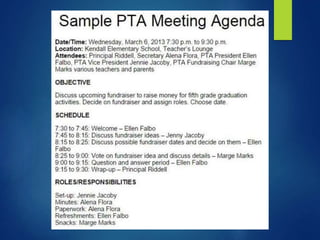
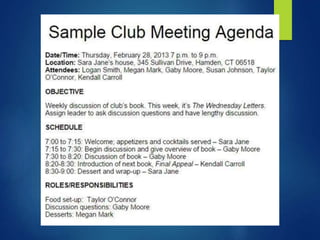
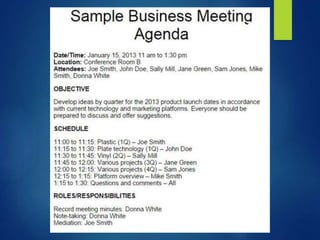
 Name of meeting 
 Purpose 
 Place: Location, Time, Date 
 People attending the meeting 
 Time for introductions 
 Topic 
 Timing and scheduling 
 Defining responsible person(s) 
 Wrap up
Writing the Agenda 
 The topic items should be written using action 
words i.e. discuss, review, brainstorm, decide, etc. 
 When listing the items on the agenda, make sure 
the most important items are first. 
 Next to each topic on the agenda place the 
time. 
 Having the actual time on the agenda keeps the 
meeting on track. 
 List the assigned “Talker” for each topic.
Writing the Agenda 
 Provide the final agenda to meeting invitees prior 
to the meeting. 
 Be sure to open your meeting with a review of the 
agenda.
Thank You

Preparing an effective agenda

  • 1.
  • 2.
    AGENDA  Anagenda is a list of meeting activities in the order in which they are to be taken up, by beginning with the call to order and ending with adjournment. It usually includes one or more specific items of business to be discussed. An agenda may also be called a docket or schedule.  Creating an effective agenda is one of the most important elements for a productive meeting.
  • 3.
    Purpose of anagenda  Serves as a roadmap for the meeting  Keeps meeting on track  Provides an outline for the meeting i.e. how long to stay on a topic  Can be used as a checklist to ensure all information is covered
  • 4.
    Purpose of anagenda  Lets the participants know what will be discussed and allows them to prepare as necessary.  A good meeting agenda will serve as a guide to participants  Will make the meeting more efficient and productive
  • 5.
    Planning the Agenda  Set realistic time frames for addressing each item  Try to keep the meeting to an hour.  If the meeting will be longer, schedule break every 90 minutes.  Do not prepare a vague agenda
  • 6.
    Essential Elements ofan Agenda  Name of meeting  Purpose  Place: Location, Time, Date  People attending the meeting  Time for introductions  Topic  Timing and scheduling  Defining responsible person(s)  Wrap up
  • 7.
    Writing the Agenda  The topic items should be written using action words i.e. discuss, review, brainstorm, decide, etc.  When listing the items on the agenda, make sure the most important items are first.  Next to each topic on the agenda place the time.  Having the actual time on the agenda keeps the meeting on track.  List the assigned “Talker” for each topic.
  • 8.
    Writing the Agenda  Provide the final agenda to meeting invitees prior to the meeting.  Be sure to open your meeting with a review of the agenda.
  • 12.

Editor's Notes

  • #4 Ask participants what is the purpose of an agenda