1. COMMUNICATION
2. VERBAL COMMUNICATION
3. ORAL COMMUNICATION
4. FORMS OF ORAL COMMUNICATION
5. WRITTEN COMMUNICATION
6. FORMS OF WRITTEN COMMUNICATION
7. COMPARISON BETWEEN VERBAL AND
NON-VERBAL.
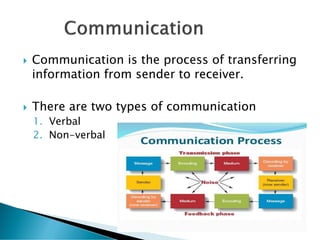
 Communication is the process of transferring
information from sender to receiver.
 There are two types of communication
1. Verbal
2. Non-verbal
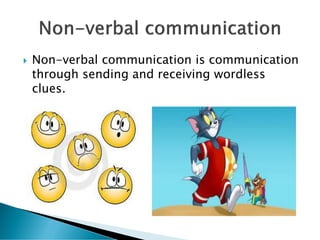
 Non-verbal communication is communication
through sending and receiving wordless
clues.
 Verbal communication is the use of sound and
words to express yourself – i.e. message, idea,
thoughts, feelings etc.
There are two types of verbal communication.
1. Oral
2. Written
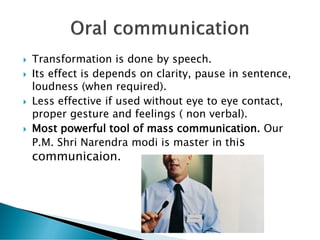
 Transformation is done by speech.
 Its effect is depends on clarity, pause in sentence,
loudness (when required).
 Less effective if used without eye to eye contact,
proper gesture and feelings ( non verbal).
 Most powerful tool of mass communication. Our
P.M. Shri Narendra modi is master in this
communicaion.
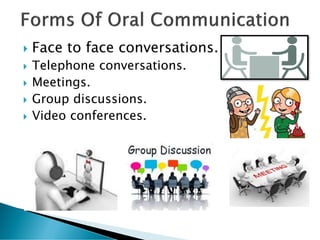
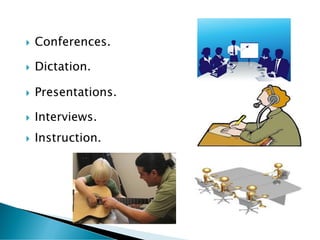
 Face to face conversations.
 Telephone conversations.
 Meetings.
 Group discussions.
 Video conferences.
 Express by written words.
 Proof of communication is automatically
generated in this communication.
 long term data storage & Documentation
possible.
 Must be used properly in legal procedures.
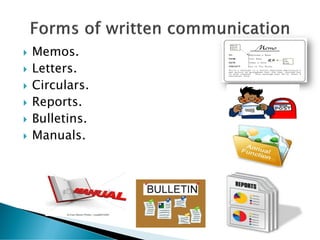
 Memos.
 Letters.
 Circulars.
 Reports.
 Bulletins.
 Manuals.
Verbal Non-verbal
 Uses oral & written.
 Easy to understand.
 Highly structure.
 Begins and ends with
words.
 Less and delayed
feedback.
 This is not.
 Difficult to understand.
 Has lacks of formal
structure.
 Continues until the
purpose achieved.
 Gives a lot feedback.
 In the end, verbal communication means via
using word we can communicate easily and
speedy.
 It has two type: (i)Oral & (ii)written.
 It is highly structured so we can understand
properly.
 It has less feedback.
Verbal communication

Verbal communication

  • 2.
    1. COMMUNICATION 2. VERBALCOMMUNICATION 3. ORAL COMMUNICATION 4. FORMS OF ORAL COMMUNICATION 5. WRITTEN COMMUNICATION 6. FORMS OF WRITTEN COMMUNICATION 7. COMPARISON BETWEEN VERBAL AND NON-VERBAL.
  • 3.
     Communication isthe process of transferring information from sender to receiver.  There are two types of communication 1. Verbal 2. Non-verbal
  • 4.
     Non-verbal communicationis communication through sending and receiving wordless clues.
  • 5.
     Verbal communicationis the use of sound and words to express yourself – i.e. message, idea, thoughts, feelings etc. There are two types of verbal communication. 1. Oral 2. Written
  • 6.
     Transformation isdone by speech.  Its effect is depends on clarity, pause in sentence, loudness (when required).  Less effective if used without eye to eye contact, proper gesture and feelings ( non verbal).  Most powerful tool of mass communication. Our P.M. Shri Narendra modi is master in this communicaion.
  • 7.
     Face toface conversations.  Telephone conversations.  Meetings.  Group discussions.  Video conferences.
  • 9.
     Express bywritten words.  Proof of communication is automatically generated in this communication.  long term data storage & Documentation possible.  Must be used properly in legal procedures.
  • 10.
     Memos.  Letters. Circulars.  Reports.  Bulletins.  Manuals.
  • 12.
    Verbal Non-verbal  Usesoral & written.  Easy to understand.  Highly structure.  Begins and ends with words.  Less and delayed feedback.  This is not.  Difficult to understand.  Has lacks of formal structure.  Continues until the purpose achieved.  Gives a lot feedback.
  • 13.
     In theend, verbal communication means via using word we can communicate easily and speedy.  It has two type: (i)Oral & (ii)written.  It is highly structured so we can understand properly.  It has less feedback.