Time ManagementTime Management
A Session for Student LeadersA Session for Student Leaders
AGENDAAGENDA
 Welcome & Ice Breaker
 Introduction to Time Management
 Time Pie – individual activity
 Prioritizing Chart –small group activity
 Large Group Discussion on Activities
 Break & Snack
 Time Management Skills & Five Steps
Presentation
 Time Management Video
 A Balanced Life – small group activity
 Other Resources
 Reflection / Wrap-Up / Questions
-Mad Dog -Stack Attack
-Defying Gravity -Matchmaker
- Chocolate Unicorn
Introduction to TimeIntroduction to Time
ManagementManagement
Time is our most precious asset, and
yet we let it slip away.
Good time management requires an
important shift in focus from
activities to results
Time management refers to the way
that you organize and plan how
long you spend on specific
activities.
Benefits of TimeBenefits of Time
ManagementManagement
 Greater productivity and
efficiency.
 A better professional
reputation.
 Less stress.
 Increased opportunities for
advancement.
 Greater opportunities to
achieve important life and
career goals.
Undesirable ConsequencesUndesirable Consequences
of Time Managementof Time Management
 Missed deadlines.
 Inefficient work flow.
 Poor work quality.
 A poor professional reputation
and a stalled career.
 Higher stress levels.
Key PointsKey Points
Time management is the process
of organizing and planning how
much time you spend on specific
activities. Invest some time to
learn about managing your own
time more efficiently, and save
yourself time in the future.
Source: www.mindtools.com
10 Common Time
Management
Mistakes
1 Failing to Keep a To-Do List
2. Not Setting Personal Goals
3. Not Prioritizing
4. Failing to Manage Distractions
5. Procrastination
6. Taking on too Much
7. Thriving on "Busy"
8. Multitasking
9. Not Taking Breaks
10. Ineffectively Scheduling Tasks
Source: www.mindtols.com
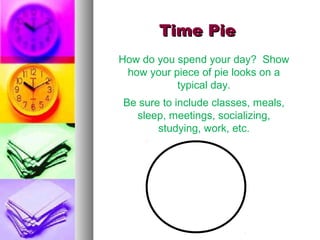
Time PieTime Pie
How do you spend your day? Show
how your piece of pie looks on a
typical day.
Be sure to include classes, meals,
sleep, meetings, socializing,
studying, work, etc.
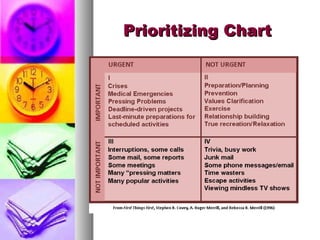
Prioritizing ChartPrioritizing Chart
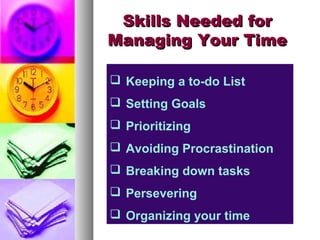
Skills Needed forSkills Needed for
Managing Your TimeManaging Your Time
 Keeping a to-do List
 Setting Goals
 Prioritizing
 Avoiding Procrastination
 Breaking down tasks
 Persevering
 Organizing your time
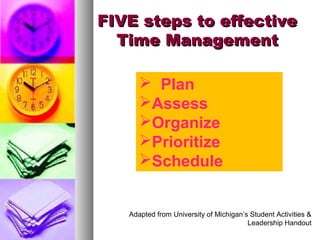
FIVE steps to effectiveFIVE steps to effective
Time ManagementTime Management
 Plan
Assess
Organize
Prioritize
Schedule
Adapted from University of Michigan’s Student Activities &
Leadership Handout
Suggestions for
Effectively Managing
Your Time
o Stay focused
o Plan for down-time
o Handle each piece of
paper only once
o Hide
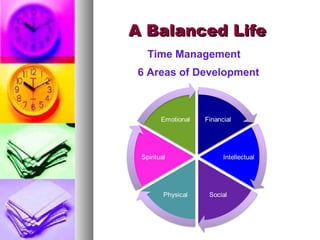
A Balanced LifeA Balanced Life
Time Management
6 Areas of Development
Other ResourcesOther Resources
Handouts included in ParticipantHandouts included in Participant
PacketsPackets
Each Day is a New AccountEach Day is a New Account
Time Management TechniquesTime Management Techniques
Tips for Improving TimeTips for Improving Time
ManagementManagement
ReflectionReflection
Wrap-UpWrap-Up
QuestionsQuestions

Edu 803 time management 1

  • 1.
    Time ManagementTime Management ASession for Student LeadersA Session for Student Leaders
  • 2.
    AGENDAAGENDA  Welcome &Ice Breaker  Introduction to Time Management  Time Pie – individual activity  Prioritizing Chart –small group activity  Large Group Discussion on Activities  Break & Snack  Time Management Skills & Five Steps Presentation  Time Management Video  A Balanced Life – small group activity  Other Resources  Reflection / Wrap-Up / Questions
  • 3.
    -Mad Dog -StackAttack -Defying Gravity -Matchmaker - Chocolate Unicorn
  • 4.
    Introduction to TimeIntroductionto Time ManagementManagement Time is our most precious asset, and yet we let it slip away. Good time management requires an important shift in focus from activities to results Time management refers to the way that you organize and plan how long you spend on specific activities.
  • 5.
    Benefits of TimeBenefitsof Time ManagementManagement  Greater productivity and efficiency.  A better professional reputation.  Less stress.  Increased opportunities for advancement.  Greater opportunities to achieve important life and career goals.
  • 6.
    Undesirable ConsequencesUndesirable Consequences ofTime Managementof Time Management  Missed deadlines.  Inefficient work flow.  Poor work quality.  A poor professional reputation and a stalled career.  Higher stress levels.
  • 7.
    Key PointsKey Points Timemanagement is the process of organizing and planning how much time you spend on specific activities. Invest some time to learn about managing your own time more efficiently, and save yourself time in the future. Source: www.mindtools.com
  • 8.
    10 Common Time Management Mistakes 1Failing to Keep a To-Do List 2. Not Setting Personal Goals 3. Not Prioritizing 4. Failing to Manage Distractions 5. Procrastination 6. Taking on too Much 7. Thriving on "Busy" 8. Multitasking 9. Not Taking Breaks 10. Ineffectively Scheduling Tasks Source: www.mindtols.com
  • 9.
    Time PieTime Pie Howdo you spend your day? Show how your piece of pie looks on a typical day. Be sure to include classes, meals, sleep, meetings, socializing, studying, work, etc.
  • 10.
  • 11.
    Skills Needed forSkillsNeeded for Managing Your TimeManaging Your Time  Keeping a to-do List  Setting Goals  Prioritizing  Avoiding Procrastination  Breaking down tasks  Persevering  Organizing your time
  • 12.
    FIVE steps toeffectiveFIVE steps to effective Time ManagementTime Management  Plan Assess Organize Prioritize Schedule Adapted from University of Michigan’s Student Activities & Leadership Handout
  • 13.
    Suggestions for Effectively Managing YourTime o Stay focused o Plan for down-time o Handle each piece of paper only once o Hide
  • 14.
    A Balanced LifeABalanced Life Time Management 6 Areas of Development
  • 15.
    Other ResourcesOther Resources Handoutsincluded in ParticipantHandouts included in Participant PacketsPackets Each Day is a New AccountEach Day is a New Account Time Management TechniquesTime Management Techniques Tips for Improving TimeTips for Improving Time ManagementManagement
  • 16.