IntroductIonIntroductIon
Time is scarce resource.
It is more valuable than money
as money can be earned.
EvEryonE has Good and BadEvEryonE has Good and Bad
tImEstImEs
 Find yourcreative/thinking time.
 Defend it ruthlessly, spend it usefully.
 Find yourdead time.
 Schedule yourtimings.
how do you FEEl aBout tImE?how do you FEEl aBout tImE?
 A stitch in time saves nine.
 Time flies.
 Time is money.
 Why put off until tomorrow ?
 Do it today ?
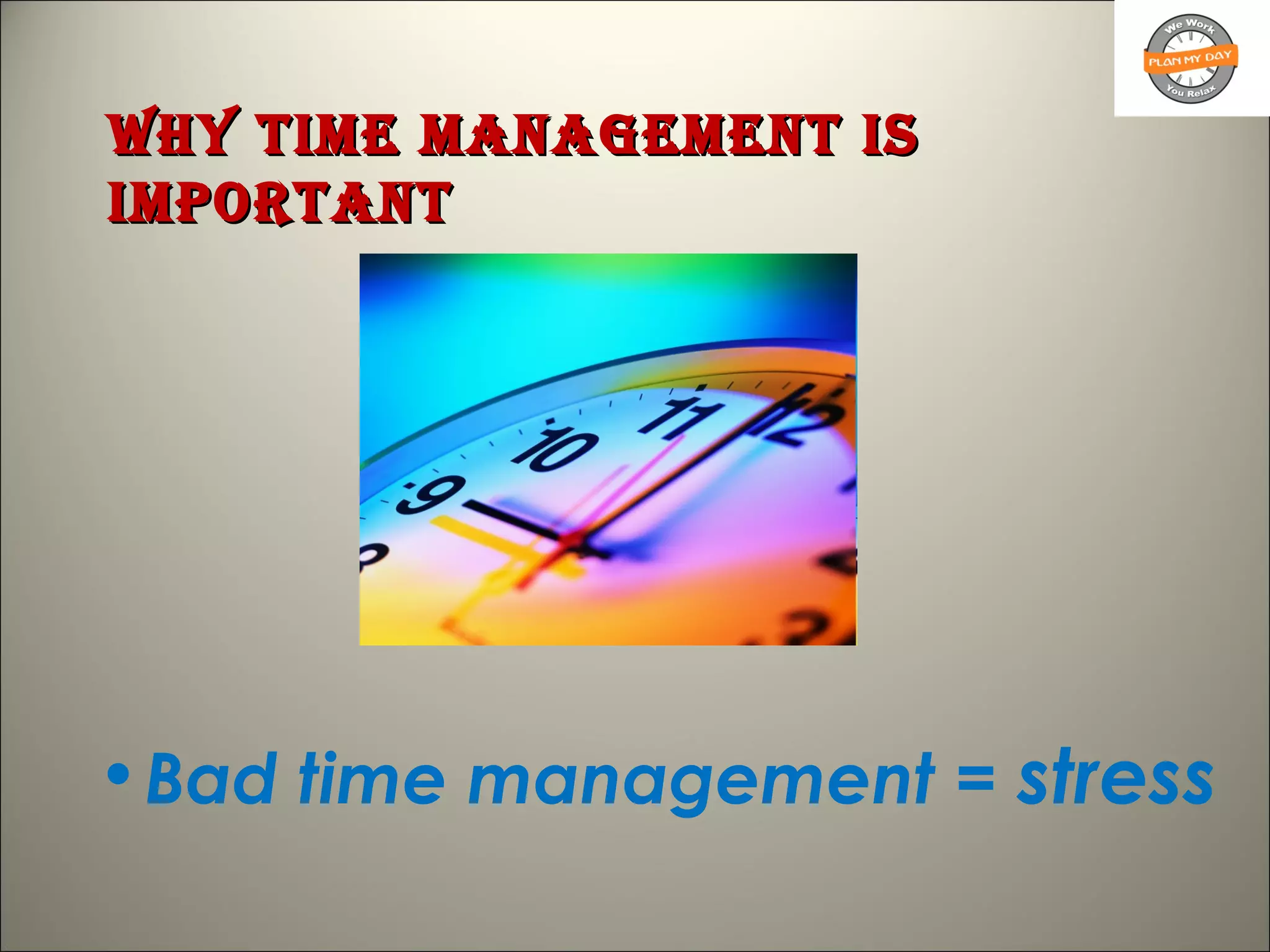
Why Time managemenT isWhy Time managemenT is
imporTanTimporTanT
•Bad time management = stress
Time managemenT involvesTime managemenT involves
 Knowing what yourgoals are
 Deciding what yourpriorities are
 Anticipating future needs and possible
changes
 Controlling yourlife by controlling your
time
 Making a commitment to being punctual
 Not procrastinating
 Carrying out yourplans
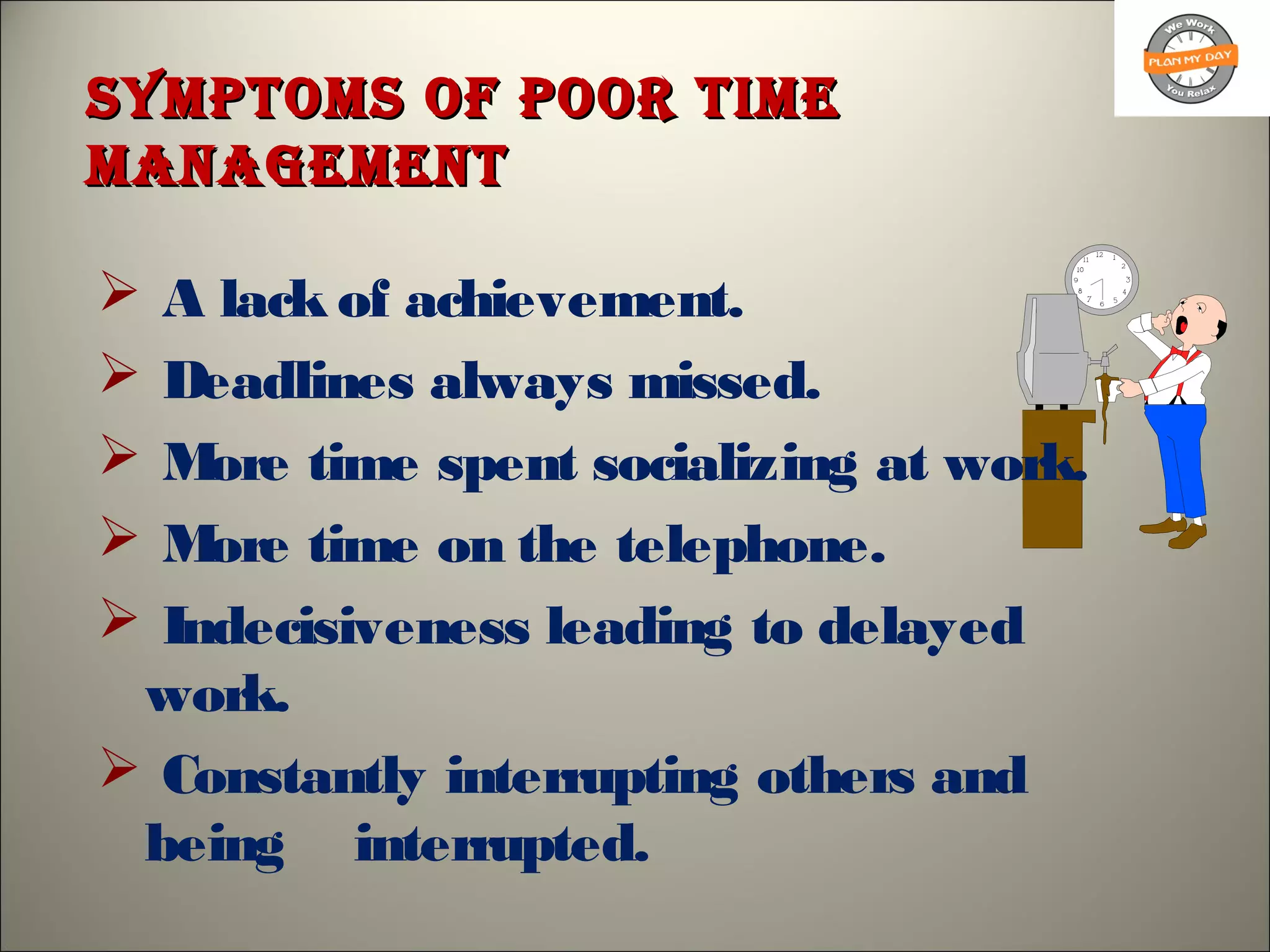
sympToms of poor TimesympToms of poor Time
managemenTmanagemenT
 A lack of achievement.
 Deadlines always missed.
 More time spent socializing at work.
 More time on the telephone.
 Indecisiveness leading to delayed
work.
 Constantly interrupting others and
being interrupted.
Barriers To good TimeBarriers To good Time
managemenTmanagemenT
Keeping too many things in yourhead
Doing whatevergrabs yourattention next
Doing very efficiently that which need not
be done at all
Not spending enough time on yourtop
priorities
PoorPlanning
Barriers to good timeBarriers to good time
managementmanagement
Working in a disorganized and distracting
environment
Attempting to do “too much”
Always saying “YES”
Not managing yourinflows
Confusing activity with productivity
major time Wastersmajor time Wasters
Telephone interruptions
Meetings
Visitors
Socializing
Lack of information
Excessive paperwork
Communication breakdown
Lack of policies and procedures
Lack of competent personnel
major time Wastersmajor time Wasters
Procrastination
Failure to delegate
Unclearobjectives
Failure to set priorities
Failure to plan
Poorscheduling
Lack of self-discipline
Attempting to do too much at once
time management tipstime management tips
• Learn to say no assertively.
• Plan forrewards afteran unpleasant
task.
• Plan forchange; it’s inevitable.
• Finish fully; it’s energizing &motivating.
• Remember:
Spending one minute planning saves
fourorfive minutes in getting a task
done.
Using Time To YoUrUsing Time To YoUr
BenefiTBenefiT
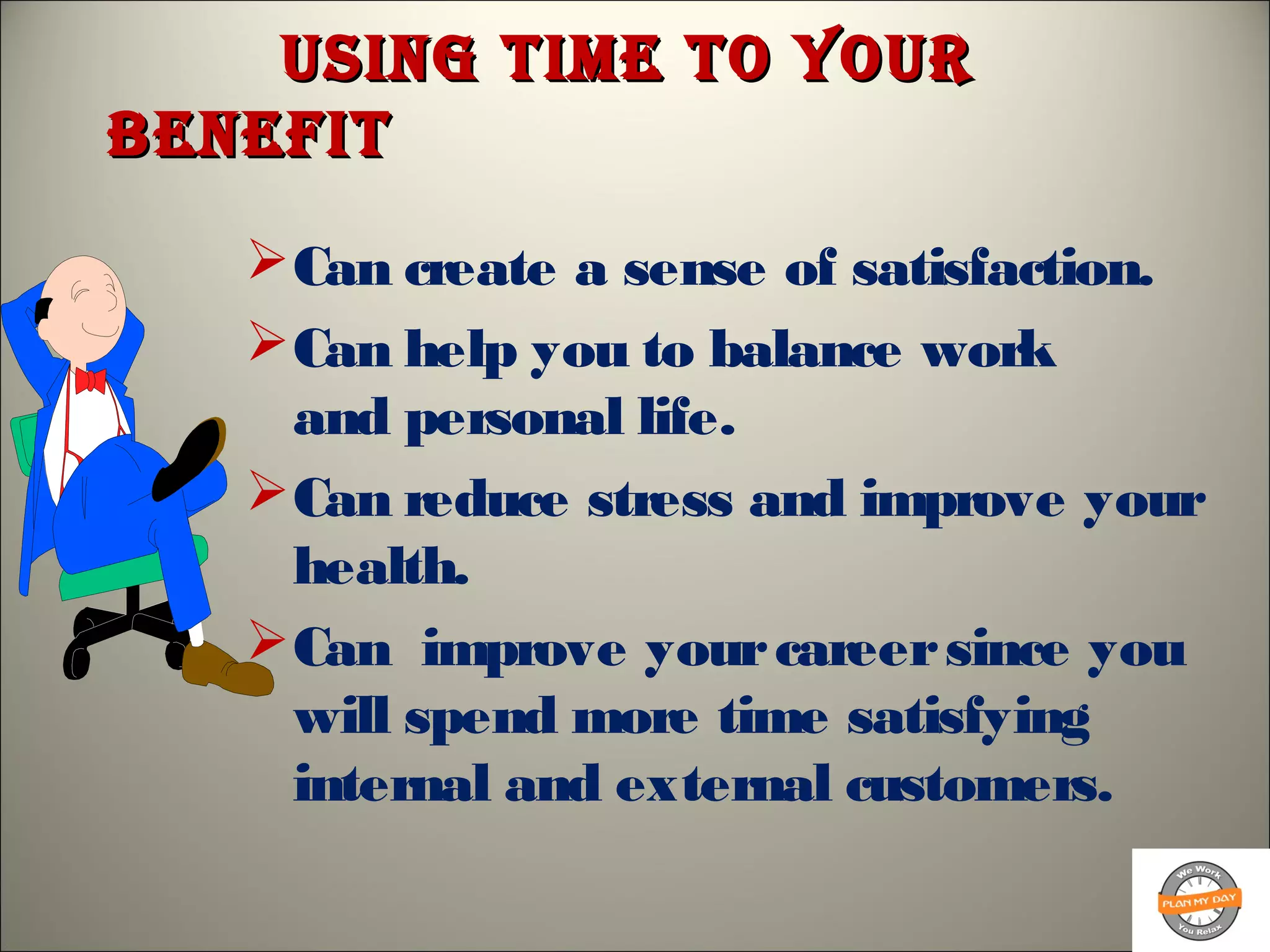
Can create a sense of satisfaction.
Can help you to balance work
and personal life.
Can reduce stress and improve your
health.
Can improve yourcareersince you
will spend more time satisfying
internal and external customers.
ConClUsionConClUsion
If you keep doing the same old thing in
the same old way, you will keep getting
the same old results.”
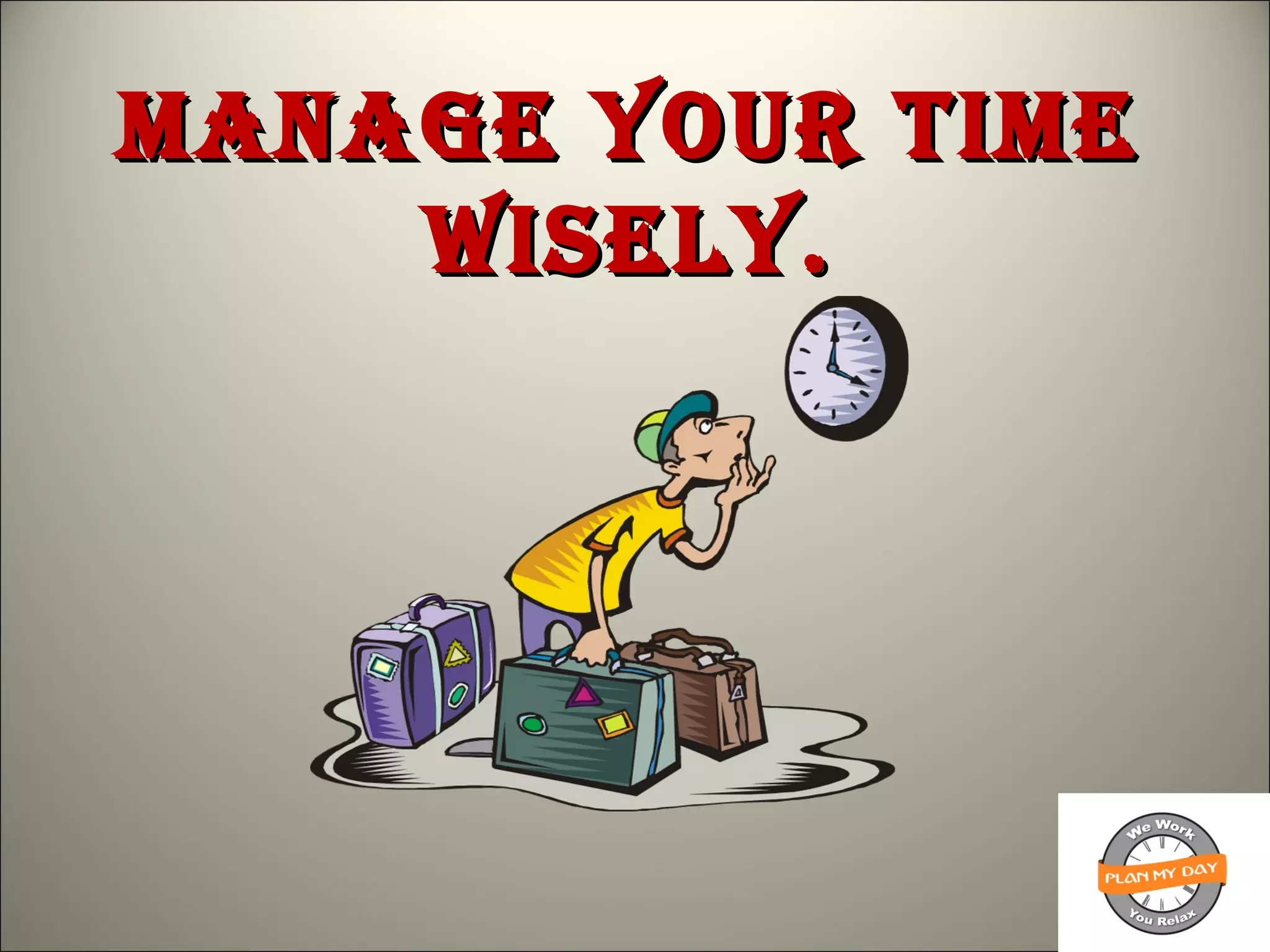
manage YoUr Timemanage YoUr Time
wiselY.wiselY.
Thanks a loT
040- 4966 96 96 www.planmyday.in

Time management

  • 2.
    IntroductIonIntroductIon Time is scarceresource. It is more valuable than money as money can be earned.
  • 3.
    EvEryonE has Goodand BadEvEryonE has Good and Bad tImEstImEs  Find yourcreative/thinking time.  Defend it ruthlessly, spend it usefully.  Find yourdead time.  Schedule yourtimings.
  • 4.
    how do youFEEl aBout tImE?how do you FEEl aBout tImE?  A stitch in time saves nine.  Time flies.  Time is money.  Why put off until tomorrow ?  Do it today ?
  • 5.
    Why Time managemenTisWhy Time managemenT is imporTanTimporTanT •Bad time management = stress
  • 6.
    Time managemenT involvesTimemanagemenT involves  Knowing what yourgoals are  Deciding what yourpriorities are  Anticipating future needs and possible changes  Controlling yourlife by controlling your time  Making a commitment to being punctual  Not procrastinating  Carrying out yourplans
  • 7.
    sympToms of poorTimesympToms of poor Time managemenTmanagemenT  A lack of achievement.  Deadlines always missed.  More time spent socializing at work.  More time on the telephone.  Indecisiveness leading to delayed work.  Constantly interrupting others and being interrupted.
  • 8.
    Barriers To goodTimeBarriers To good Time managemenTmanagemenT Keeping too many things in yourhead Doing whatevergrabs yourattention next Doing very efficiently that which need not be done at all Not spending enough time on yourtop priorities PoorPlanning
  • 9.
    Barriers to goodtimeBarriers to good time managementmanagement Working in a disorganized and distracting environment Attempting to do “too much” Always saying “YES” Not managing yourinflows Confusing activity with productivity
  • 10.
    major time Wastersmajortime Wasters Telephone interruptions Meetings Visitors Socializing Lack of information Excessive paperwork Communication breakdown Lack of policies and procedures Lack of competent personnel
  • 11.
    major time Wastersmajortime Wasters Procrastination Failure to delegate Unclearobjectives Failure to set priorities Failure to plan Poorscheduling Lack of self-discipline Attempting to do too much at once
  • 12.
    time management tipstimemanagement tips • Learn to say no assertively. • Plan forrewards afteran unpleasant task. • Plan forchange; it’s inevitable. • Finish fully; it’s energizing &motivating. • Remember: Spending one minute planning saves fourorfive minutes in getting a task done.
  • 13.
    Using Time ToYoUrUsing Time To YoUr BenefiTBenefiT Can create a sense of satisfaction. Can help you to balance work and personal life. Can reduce stress and improve your health. Can improve yourcareersince you will spend more time satisfying internal and external customers.
  • 14.
    ConClUsionConClUsion If you keepdoing the same old thing in the same old way, you will keep getting the same old results.”
  • 15.
    manage YoUr TimemanageYoUr Time wiselY.wiselY.
  • 16.
    Thanks a loT 040-4966 96 96 www.planmyday.in

Editor's Notes

  • #9 1. A common Time management mistake is trying to use your memory to keep track of all the things you need to do and places you need to be The fact is that you simply cannot rely on your memory alone to keep track of all these details without getting overloaded. Information overload is a growing problem in the corporate environments, and is a major source of stress and anxiety. 2. Things that grab your attention are not always very important, and they often don’t represent your best way to spend your time. URGENT things are not always important, and IMPORTANT Things are not always urgent. 3. Spending your time doing unnecessary work is not a good time management practice, since you could spend that time doing other important things. 4. Symptoms of Poor Prioritization TOO MUCH TO DO AND NOT ENOUGH TIME FEELING OVERWHELMED AND OUT OF CONTROL FEELING UNDER CONSTANT TIME PRESSURE NOT MAKING SIGNIFICANT PROGRESS ON IMPORTANT GOALS Effective time managers have to be selective with their limited amount of time and consciously choose to spend it on what is important 5. Without adequate planning, it is difficult to understand what it will take to complete a project successfully. Lack of planning leads to inadequate preparation, unexpected problems and poor execution IT IS ESTIMATED THAT FOR EVERY MINUTE SPENT PLANNING CAN SAVE THREE MINUTES IN EXECUTION
  • #10 Organize your work space. Piles of paper become a problem when the level of disorganization causes you to misplace information, forget important deadlines and assignments and waste time searching for things You simply can not do everything that is available. Whenever you choose to do something, you are automatically rejecting everything else that could have been done during that time. WHEN EVERYTHING IS IMPORTANT – NOTHING IS IMPORTANT Establish your limits and stick to them. 3. Always saying YES is a major source of overload and stress and it can lead away from your top priorities into less important tasks. If you want to the work and stress associated with attempting too much, you need to decide carefully whether to accept new tasks or not. 4. Inadequate inflow management leads to forgotten requests, incomplete work, misplaced information, and general feelings of anxiety and overwhelm. Use a daily journal/calender/day timer to manage your inflow information and a “to do” list to help in prioritizing your tasks 5. You can stay very busy doing meaningless work that doesn’t bring you closer to your objectives, or spending countless hours fixing problesm and putting out fires that could have been avoided. Once you master the dundamentals of time management, you can begin to look at the higher levels to continue improving your productivity and effectiveness.