Downloaded 261 times




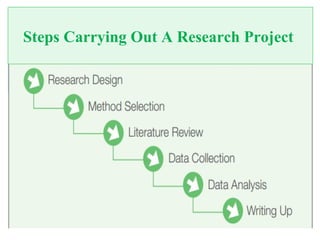
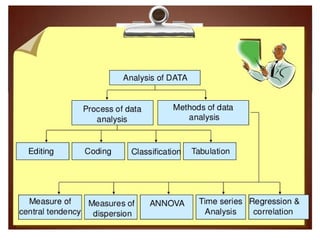

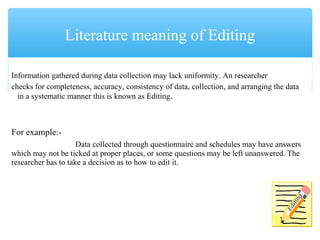



The document discusses data editing in research projects. It explains that data collected through questionnaires may lack uniformity and have incomplete or inconsistent answers. The researcher must check the data for completeness and accuracy, and arrange it systematically - this is known as editing. Some key aspects of editing include clarifying responses, addressing omissions, avoiding bias, making judgments to complete incomplete answers, resolving handwriting issues, and recontacting respondents if needed for clarification. Editing can be done in the field immediately after data collection or later during in-house editing at a centralized location. The researcher edits the data when it is collected, if it contains errors or is incomplete, and arranges it properly.


