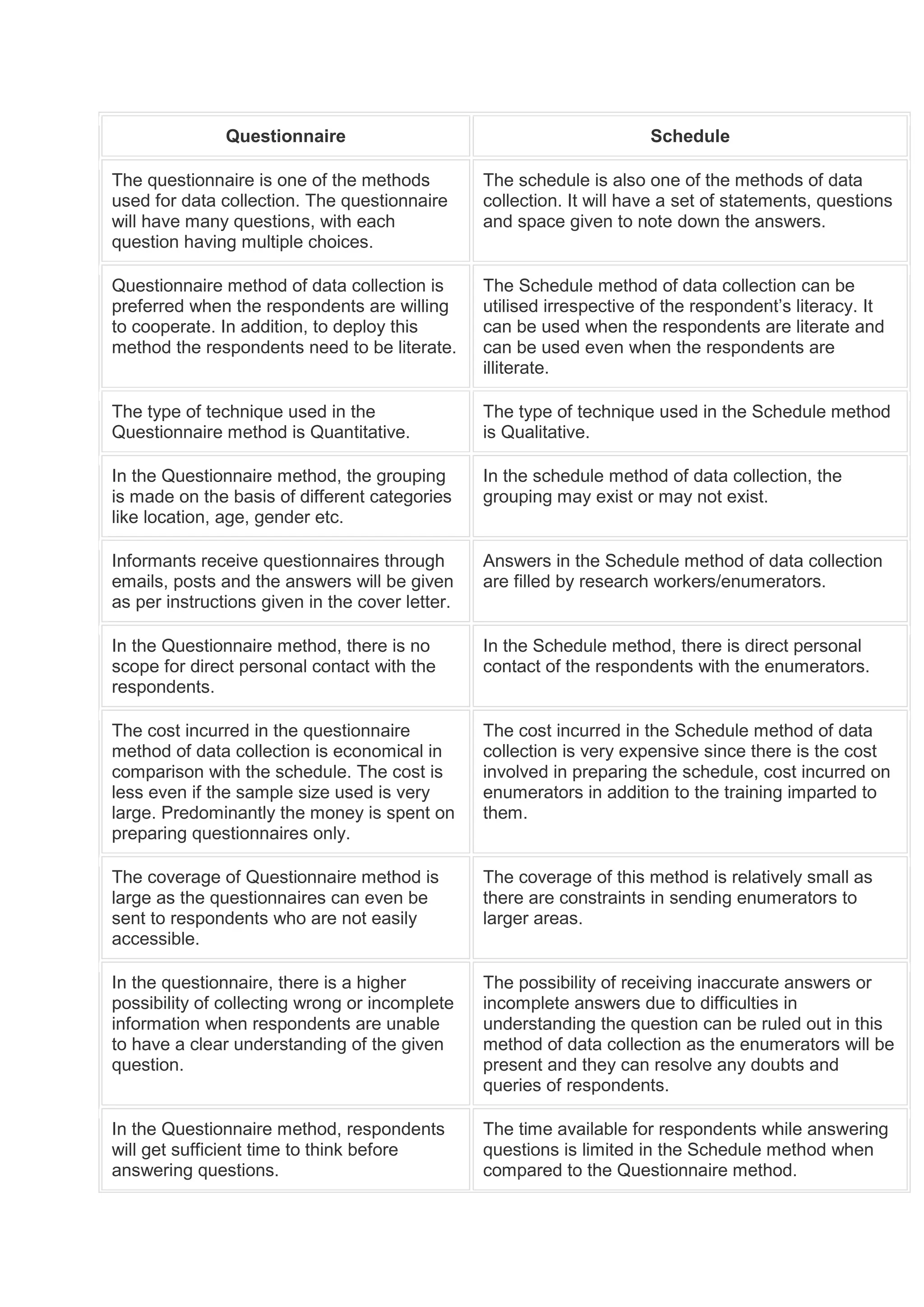
Questionnaire Schedule
The questionnaire is one of the methods
used for data collection. The questionnaire
will have many questions, with each
question having multiple choices.
The schedule is also one of the methods of data
collection. It will have a set of statements, questions
and space given to note down the answers.
Questionnaire method of data collection is
preferred when the respondents are willing
to cooperate. In addition, to deploy this
method the respondents need to be literate.
The Schedule method of data collection can be
utilised irrespective of the respondent’s literacy. It
can be used when the respondents are literate and
can be used even when the respondents are
illiterate.
The type of technique used in the
Questionnaire method is Quantitative.
The type of technique used in the Schedule method
is Qualitative.
In the Questionnaire method, the grouping
is made on the basis of different categories
like location, age, gender etc.
In the schedule method of data collection, the
grouping may exist or may not exist.
Informants receive questionnaires through
emails, posts and the answers will be given
as per instructions given in the cover letter.
Answers in the Schedule method of data collection
are filled by research workers/enumerators.
In the Questionnaire method, there is no
scope for direct personal contact with the
respondents.
In the Schedule method, there is direct personal
contact of the respondents with the enumerators.
The cost incurred in the questionnaire
method of data collection is economical in
comparison with the schedule. The cost is
less even if the sample size used is very
large. Predominantly the money is spent on
preparing questionnaires only.
The cost incurred in the Schedule method of data
collection is very expensive since there is the cost
involved in preparing the schedule, cost incurred on
enumerators in addition to the training imparted to
them.
The coverage of Questionnaire method is
large as the questionnaires can even be
sent to respondents who are not easily
accessible.
The coverage of this method is relatively small as
there are constraints in sending enumerators to
larger areas.
In the questionnaire, there is a higher
possibility of collecting wrong or incomplete
information when respondents are unable
to have a clear understanding of the given
question.
The possibility of receiving inaccurate answers or
incomplete answers due to difficulties in
understanding the question can be ruled out in this
method of data collection as the enumerators will be
present and they can resolve any doubts and
queries of respondents.
In the Questionnaire method, respondents
will get sufficient time to think before
answering questions.
The time available for respondents while answering
questions is limited in the Schedule method when
compared to the Questionnaire method.
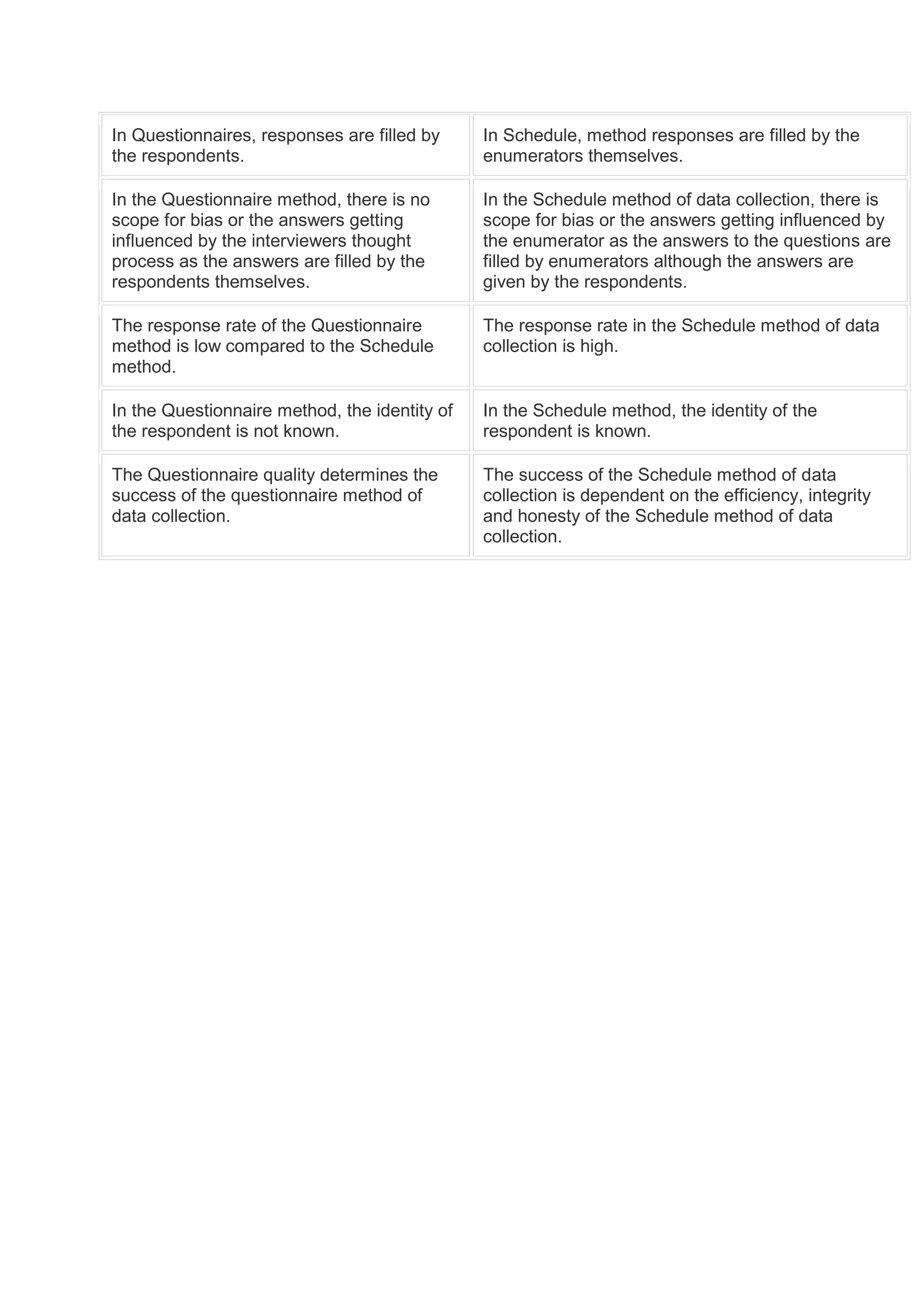
In Questionnaires, responses are filled by
the respondents.
In Schedule, method responses are filled by the
enumerators themselves.
In the Questionnaire method, there is no
scope for bias or the answers getting
influenced by the interviewers thought
process as the answers are filled by the
respondents themselves.
In the Schedule method of data collection, there is
scope for bias or the answers getting influenced by
the enumerator as the answers to the questions are
filled by enumerators although the answers are
given by the respondents.
The response rate of the Questionnaire
method is low compared to the Schedule
method.
The response rate in the Schedule method of data
collection is high.
In the Questionnaire method, the identity of
the respondent is not known.
In the Schedule method, the identity of the
respondent is known.
The Questionnaire quality determines the
success of the questionnaire method of
data collection.
The success of the Schedule method of data
collection is dependent on the efficiency, integrity
and honesty of the Schedule method of data
collection.

Questionnaire Vs schedule.docx

  • 1.
    Questionnaire Schedule The questionnaireis one of the methods used for data collection. The questionnaire will have many questions, with each question having multiple choices. The schedule is also one of the methods of data collection. It will have a set of statements, questions and space given to note down the answers. Questionnaire method of data collection is preferred when the respondents are willing to cooperate. In addition, to deploy this method the respondents need to be literate. The Schedule method of data collection can be utilised irrespective of the respondent’s literacy. It can be used when the respondents are literate and can be used even when the respondents are illiterate. The type of technique used in the Questionnaire method is Quantitative. The type of technique used in the Schedule method is Qualitative. In the Questionnaire method, the grouping is made on the basis of different categories like location, age, gender etc. In the schedule method of data collection, the grouping may exist or may not exist. Informants receive questionnaires through emails, posts and the answers will be given as per instructions given in the cover letter. Answers in the Schedule method of data collection are filled by research workers/enumerators. In the Questionnaire method, there is no scope for direct personal contact with the respondents. In the Schedule method, there is direct personal contact of the respondents with the enumerators. The cost incurred in the questionnaire method of data collection is economical in comparison with the schedule. The cost is less even if the sample size used is very large. Predominantly the money is spent on preparing questionnaires only. The cost incurred in the Schedule method of data collection is very expensive since there is the cost involved in preparing the schedule, cost incurred on enumerators in addition to the training imparted to them. The coverage of Questionnaire method is large as the questionnaires can even be sent to respondents who are not easily accessible. The coverage of this method is relatively small as there are constraints in sending enumerators to larger areas. In the questionnaire, there is a higher possibility of collecting wrong or incomplete information when respondents are unable to have a clear understanding of the given question. The possibility of receiving inaccurate answers or incomplete answers due to difficulties in understanding the question can be ruled out in this method of data collection as the enumerators will be present and they can resolve any doubts and queries of respondents. In the Questionnaire method, respondents will get sufficient time to think before answering questions. The time available for respondents while answering questions is limited in the Schedule method when compared to the Questionnaire method.
  • 2.
    In Questionnaires, responsesare filled by the respondents. In Schedule, method responses are filled by the enumerators themselves. In the Questionnaire method, there is no scope for bias or the answers getting influenced by the interviewers thought process as the answers are filled by the respondents themselves. In the Schedule method of data collection, there is scope for bias or the answers getting influenced by the enumerator as the answers to the questions are filled by enumerators although the answers are given by the respondents. The response rate of the Questionnaire method is low compared to the Schedule method. The response rate in the Schedule method of data collection is high. In the Questionnaire method, the identity of the respondent is not known. In the Schedule method, the identity of the respondent is known. The Questionnaire quality determines the success of the questionnaire method of data collection. The success of the Schedule method of data collection is dependent on the efficiency, integrity and honesty of the Schedule method of data collection.