
• Introduction of IoT
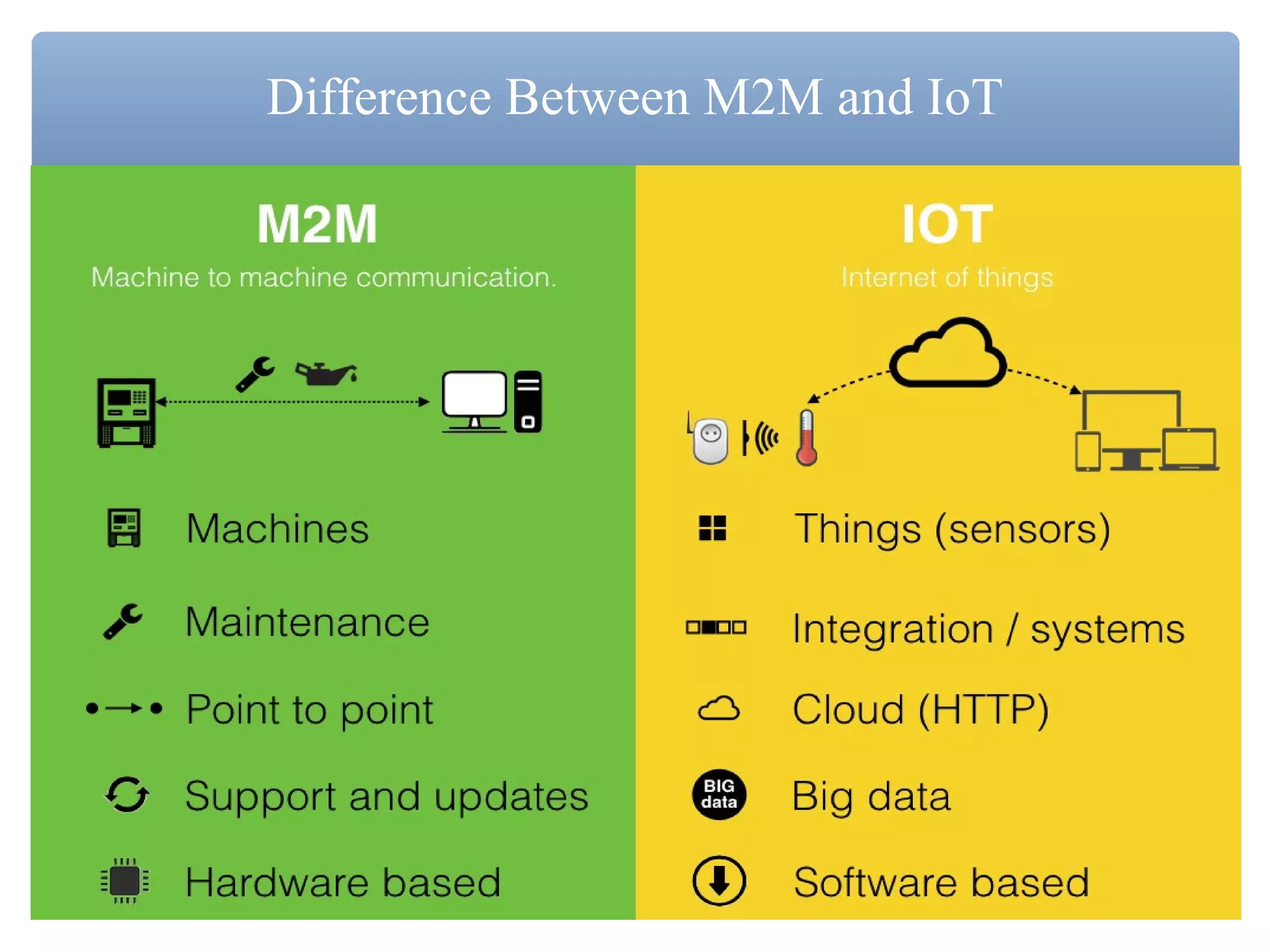
• Difference between M2M and IoT
• Impact of IoT
• Benefits and Risks of IoT
• Conclusions
Content
Although the term “Internet of Things” first appeared in the literature in 2005, there is still
no widely accepted definition.
But some famous authors described IoT as
“Physical objects to the Internet and to each other through small, embedded sensors
and wired and wireless technologies, creating an ecosystem of ubiquitous
computing.”
In simple terms IoT means : “Embedded Intelligence”
Definition of IoT
The Internet of Things (IoT) refers to the use of intelligently connected devices and systems
to leverage data gathered by embedded sensors and actuators in machines and other physical
objects.
In order to optimize the development of the market following key distinctive features are
required:
•The Internet of Things can enable the next wave of life-enhancing services across several
fundamental sectors of the economy.
•Meeting the needs of customers may require global distribution models and consistent
global services.
•The Internet of Things presents an opportunity for new commercial models to support mass
global deployments.
Introduction of IoT
Difference Between M2M and IoT
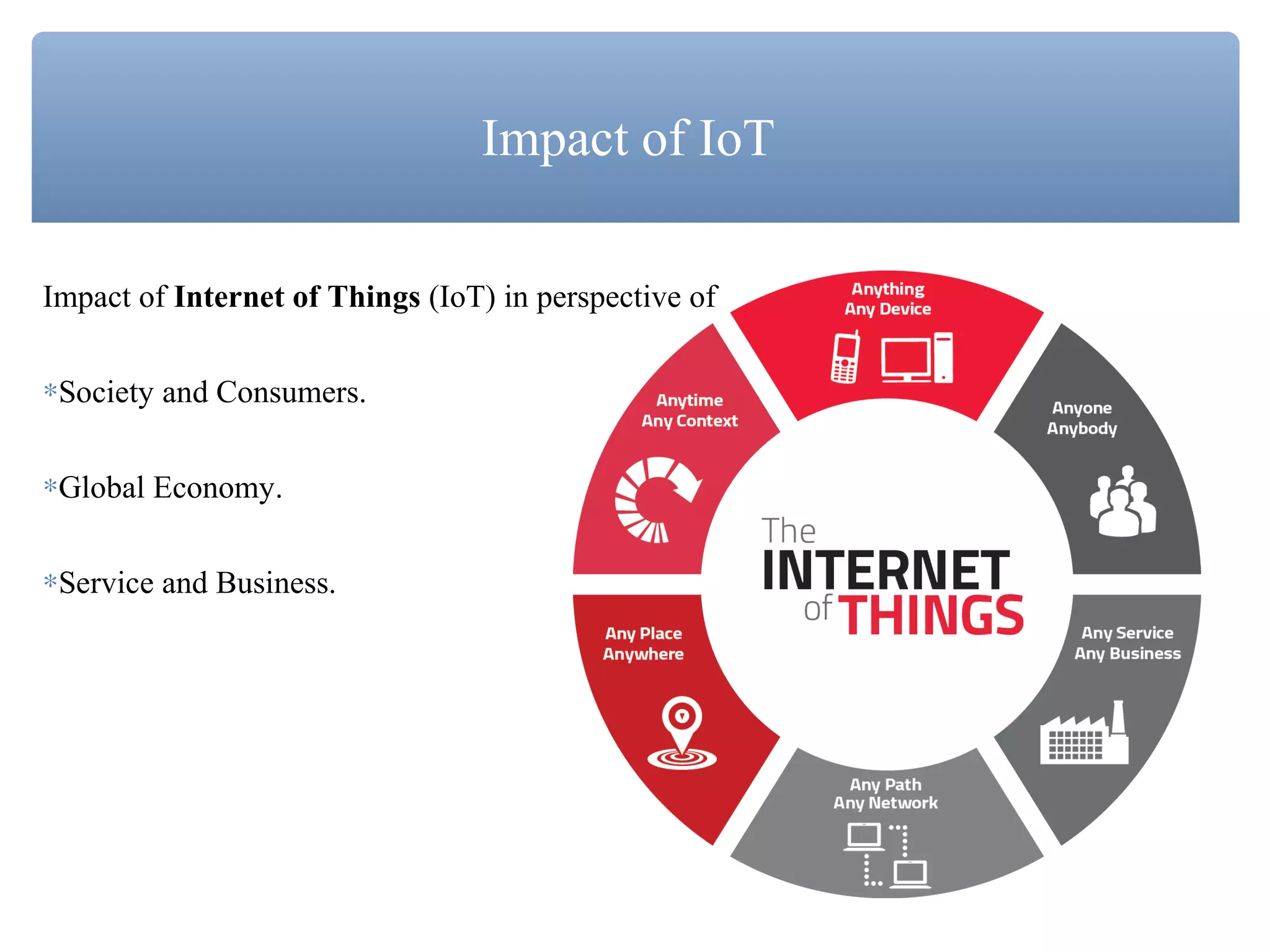
Impact of Internet of Things (IoT) in perspective of
∗Society and Consumers.
∗Global Economy.
∗Service and Business.
Impact of IoT
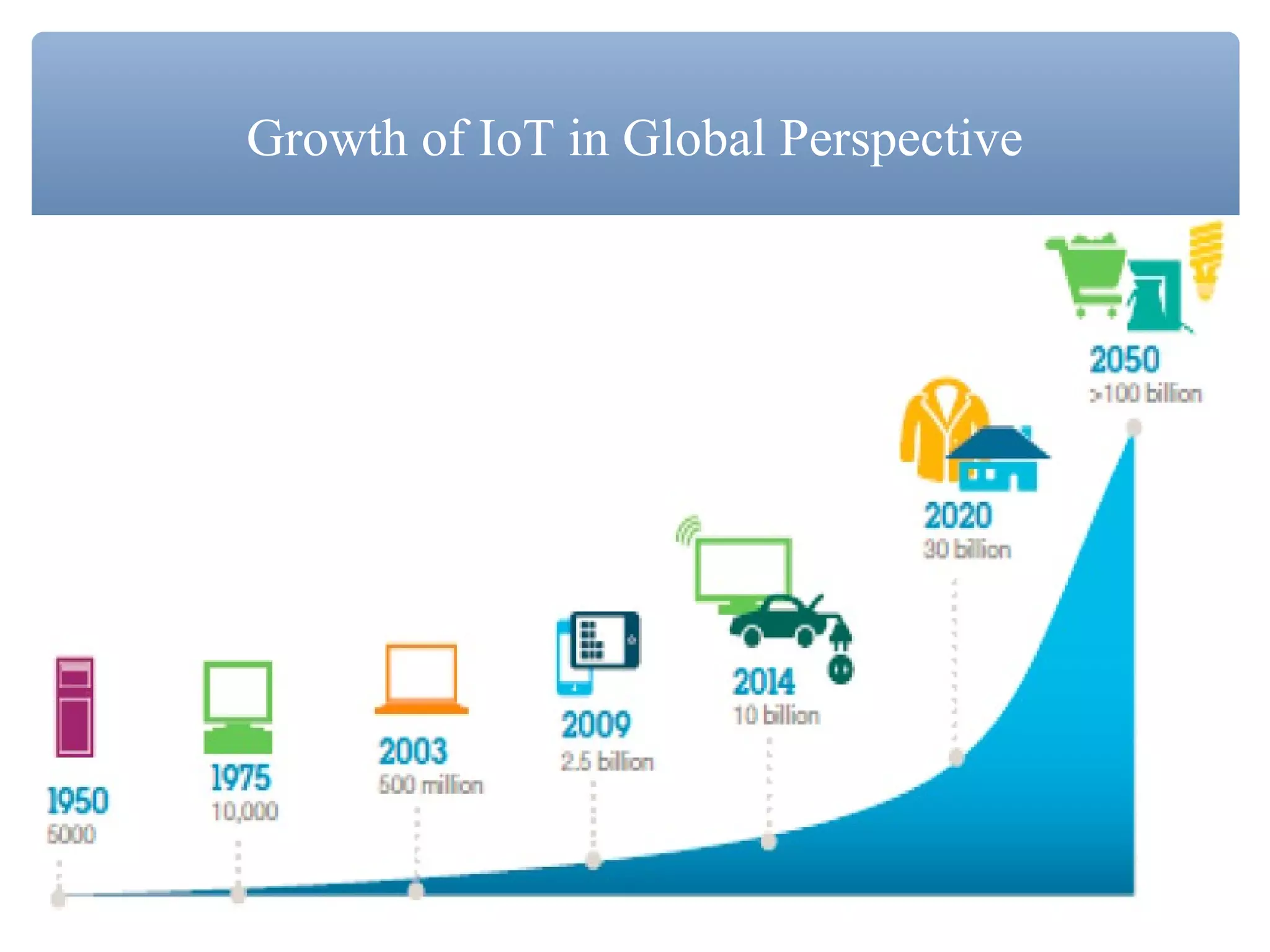
Growth of IoT in Global Perspective
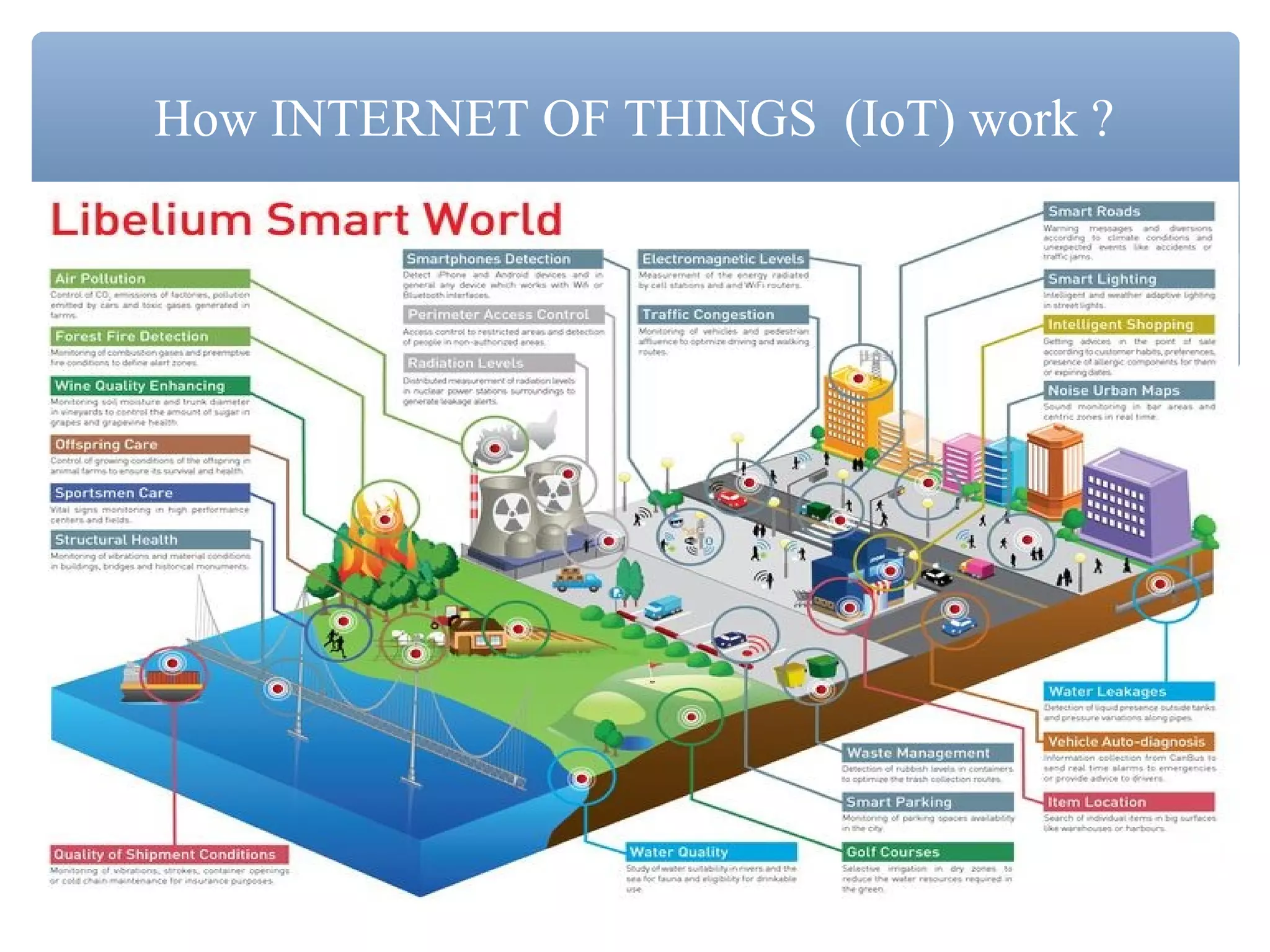
How INTERNET OF THINGS (IoT) work ?
Like every coin has two faces, in the same way IoT have two faces i.e, benefits and risks.
Benefits:
•Health Care Industry Enhancement.
•Connectivity of Devices.
•It helps the Govt. and Various Govt. Departments to function affectively and efficiently.
•IoT Provide the major benefits to the Consumers.
•IoT Provide the safety precautions at dangerous conditions.
Benefits and Risks of IoT
Risks:
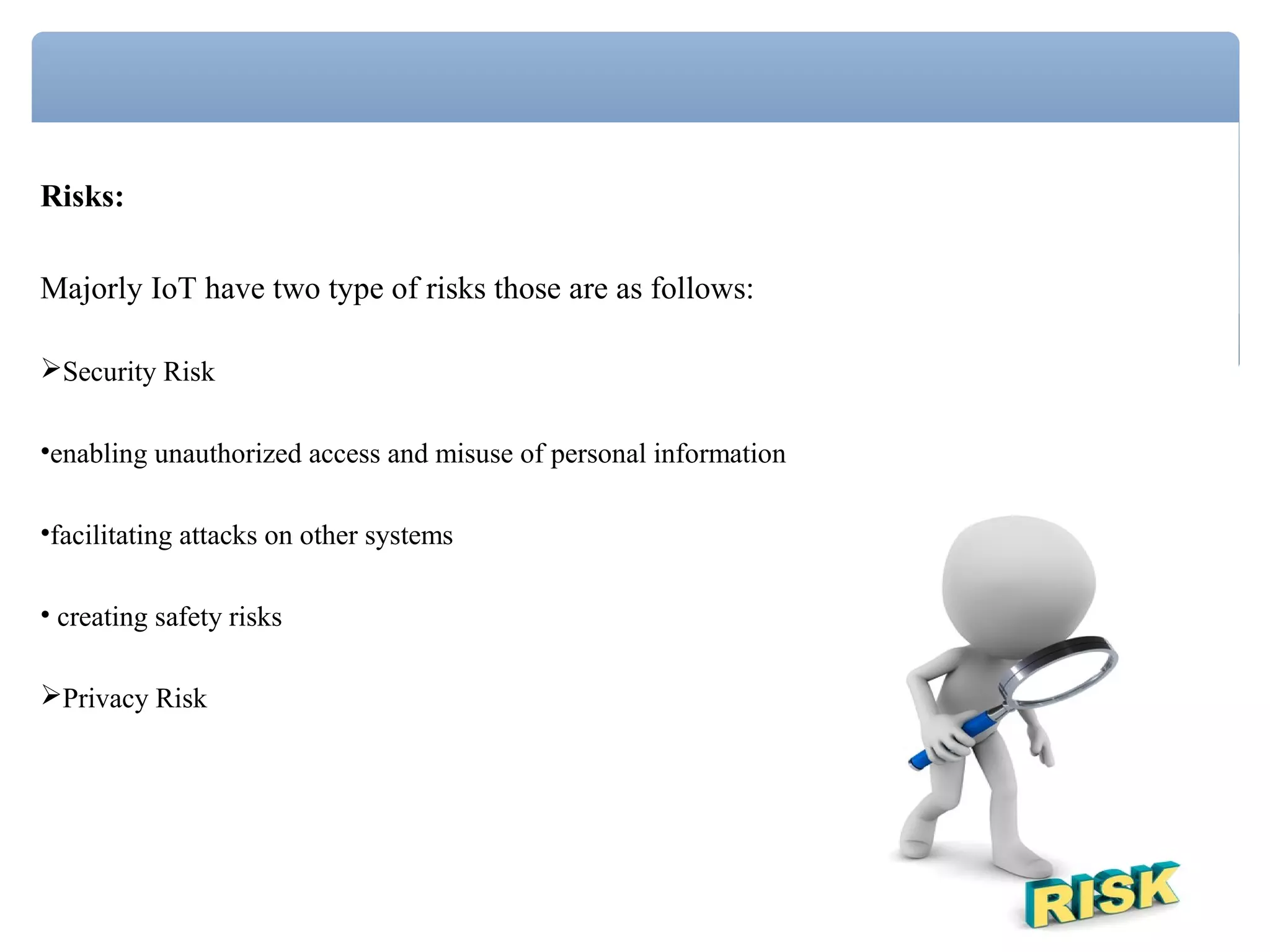
Majorly IoT have two type of risks those are as follows:
Security Risk
•enabling unauthorized access and misuse of personal information
•facilitating attacks on other systems
• creating safety risks
Privacy Risk
IoT is an ideal emerging technology to influence this domain by providing new evolving data
and the required computational resources for creating revolutionary apps.
The proliferation of devices with communicating–actuating capabilities is bringing closer the
vision of an Internet of Things, where the sensing and actuation functions seamlessly blend
in to the background and new capabilities are made possible through access of rich new
information sources.
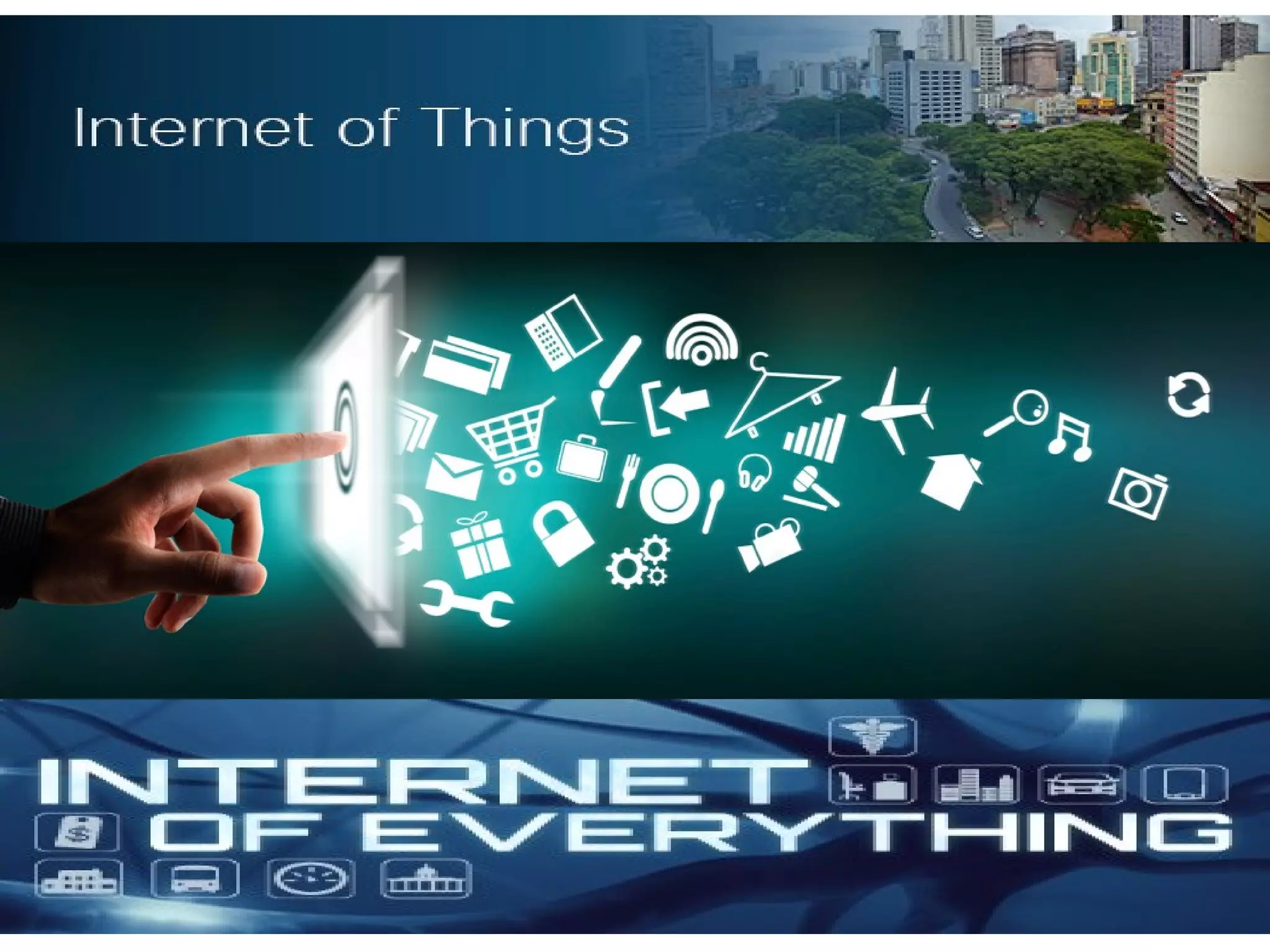
By this I would like to say that IOT is not any more IOT it is IOE
Conclusions
Internet Of Things (IoT)

Internet Of Things (IoT)

  • 2.
    • Introduction ofIoT • Difference between M2M and IoT • Impact of IoT • Benefits and Risks of IoT • Conclusions Content
  • 3.
    Although the term“Internet of Things” first appeared in the literature in 2005, there is still no widely accepted definition. But some famous authors described IoT as “Physical objects to the Internet and to each other through small, embedded sensors and wired and wireless technologies, creating an ecosystem of ubiquitous computing.” In simple terms IoT means : “Embedded Intelligence” Definition of IoT
  • 4.
    The Internet ofThings (IoT) refers to the use of intelligently connected devices and systems to leverage data gathered by embedded sensors and actuators in machines and other physical objects. In order to optimize the development of the market following key distinctive features are required: •The Internet of Things can enable the next wave of life-enhancing services across several fundamental sectors of the economy. •Meeting the needs of customers may require global distribution models and consistent global services. •The Internet of Things presents an opportunity for new commercial models to support mass global deployments. Introduction of IoT
  • 5.
  • 6.
    Impact of Internetof Things (IoT) in perspective of ∗Society and Consumers. ∗Global Economy. ∗Service and Business. Impact of IoT
  • 7.
    Growth of IoTin Global Perspective
  • 8.
    How INTERNET OFTHINGS (IoT) work ?
  • 9.
    Like every coinhas two faces, in the same way IoT have two faces i.e, benefits and risks. Benefits: •Health Care Industry Enhancement. •Connectivity of Devices. •It helps the Govt. and Various Govt. Departments to function affectively and efficiently. •IoT Provide the major benefits to the Consumers. •IoT Provide the safety precautions at dangerous conditions. Benefits and Risks of IoT
  • 10.
    Risks: Majorly IoT havetwo type of risks those are as follows: Security Risk •enabling unauthorized access and misuse of personal information •facilitating attacks on other systems • creating safety risks Privacy Risk
  • 11.
    IoT is anideal emerging technology to influence this domain by providing new evolving data and the required computational resources for creating revolutionary apps. The proliferation of devices with communicating–actuating capabilities is bringing closer the vision of an Internet of Things, where the sensing and actuation functions seamlessly blend in to the background and new capabilities are made possible through access of rich new information sources. By this I would like to say that IOT is not any more IOT it is IOE Conclusions