Ecosystems & Populations
     Introductory Environmental Science
              Canadian Academy
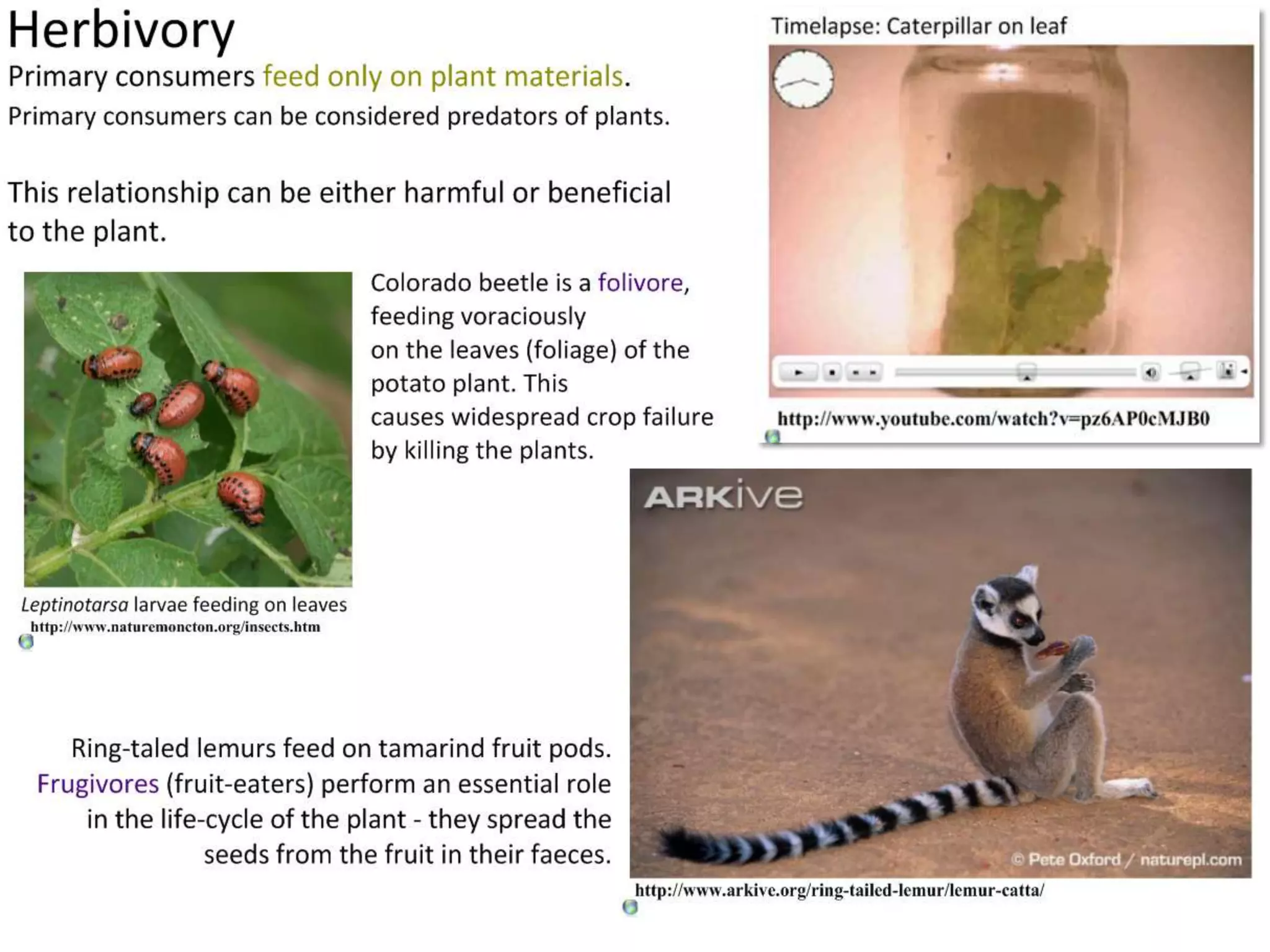
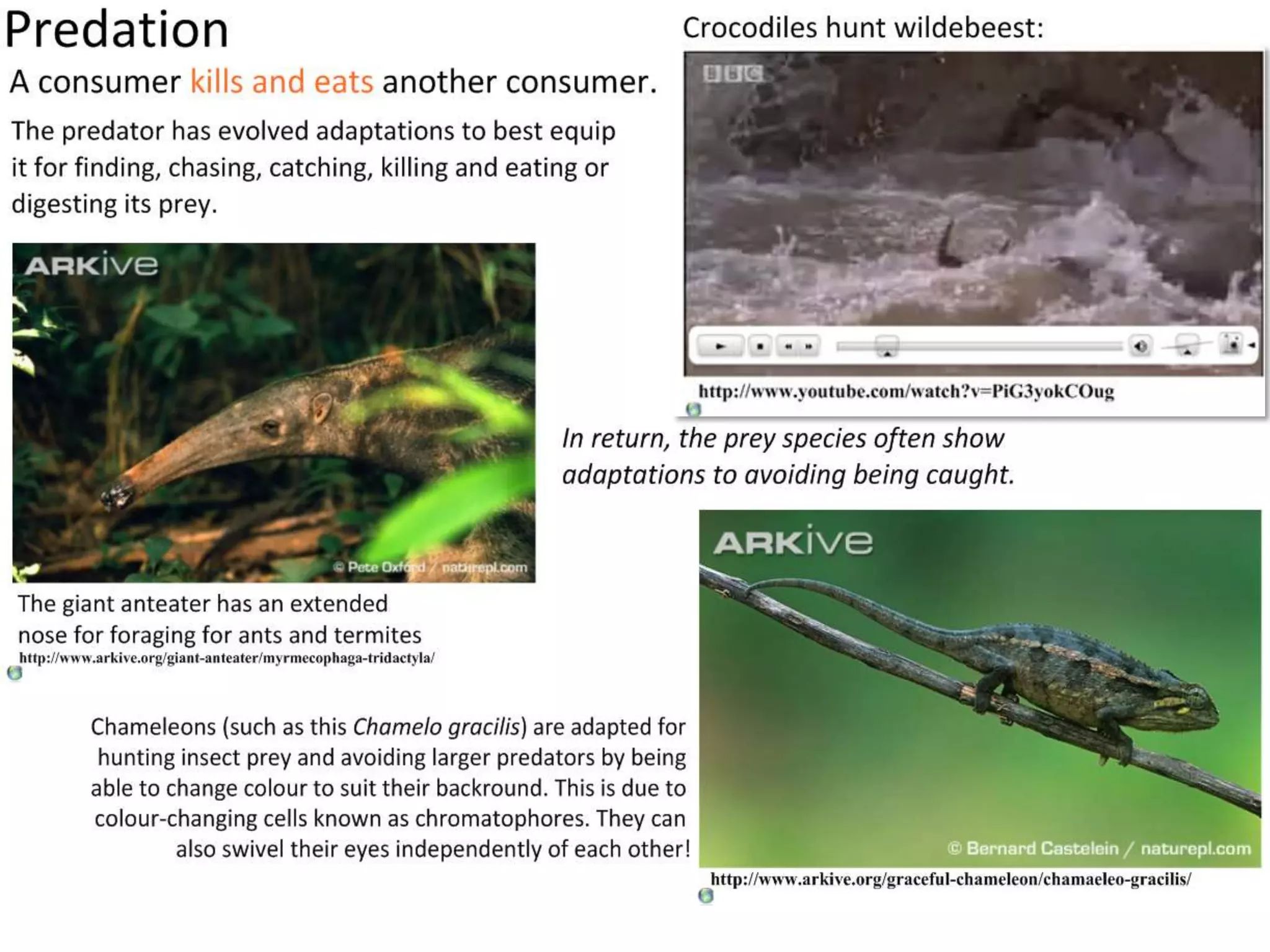
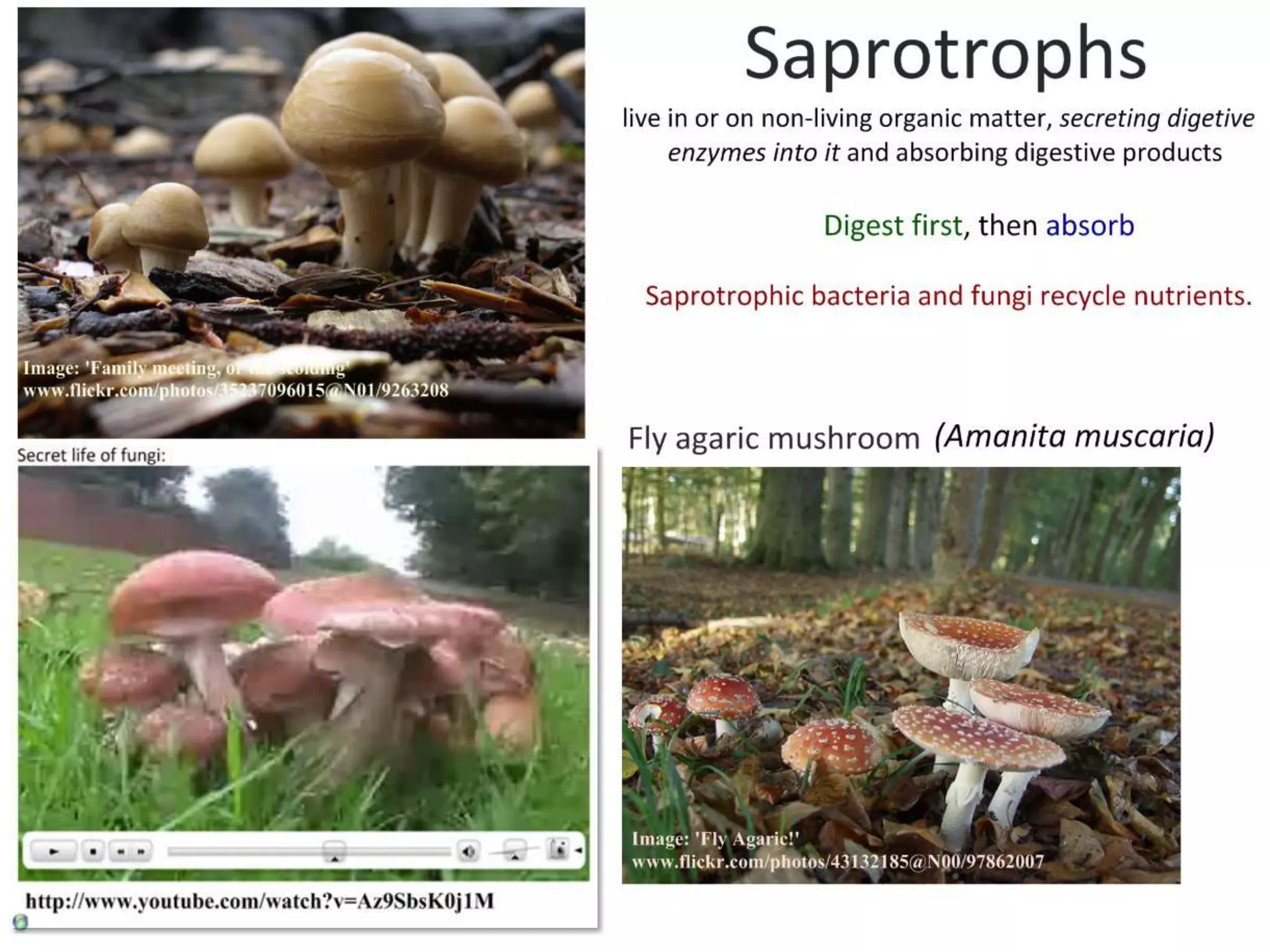
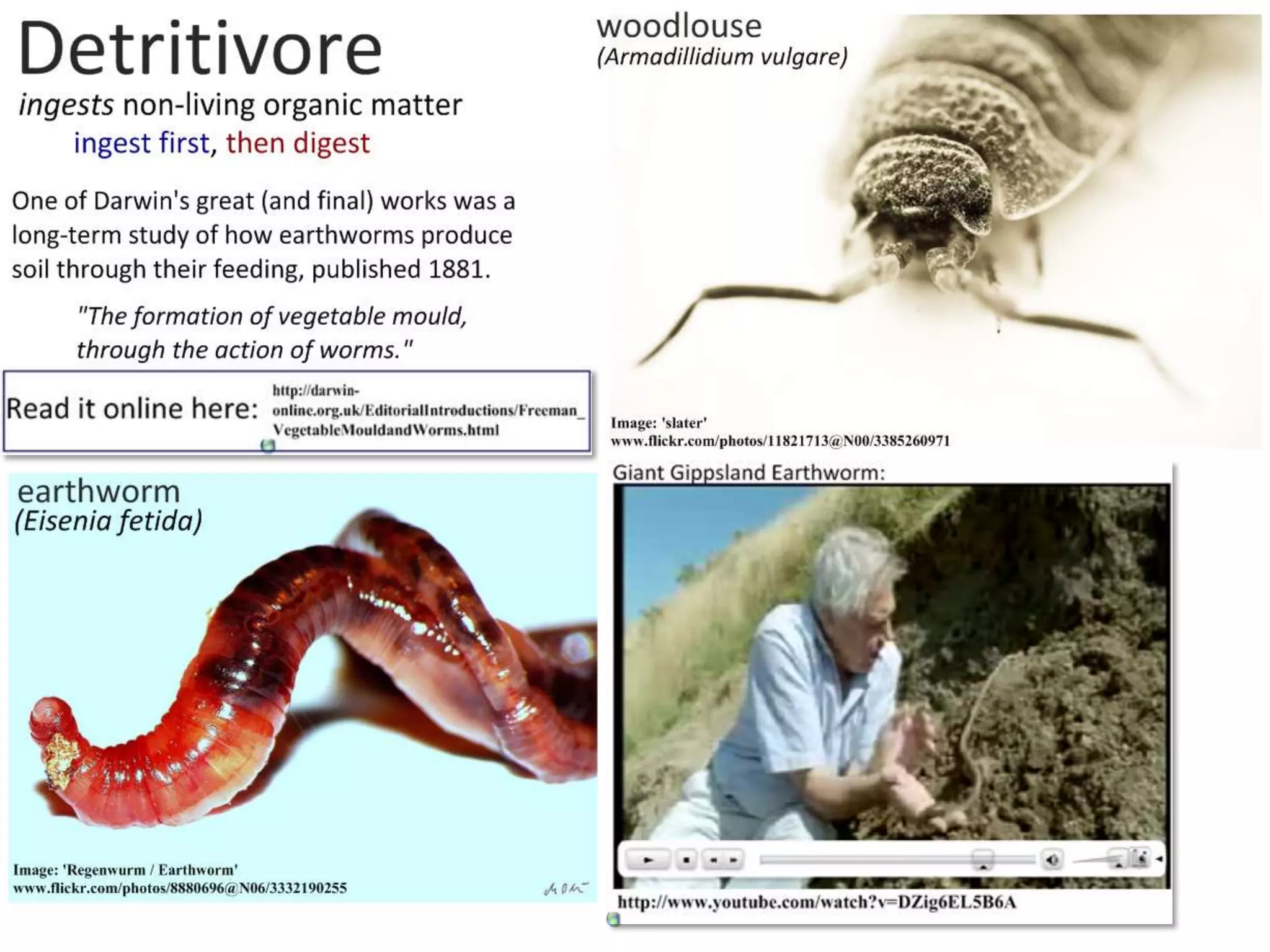
                     MrT
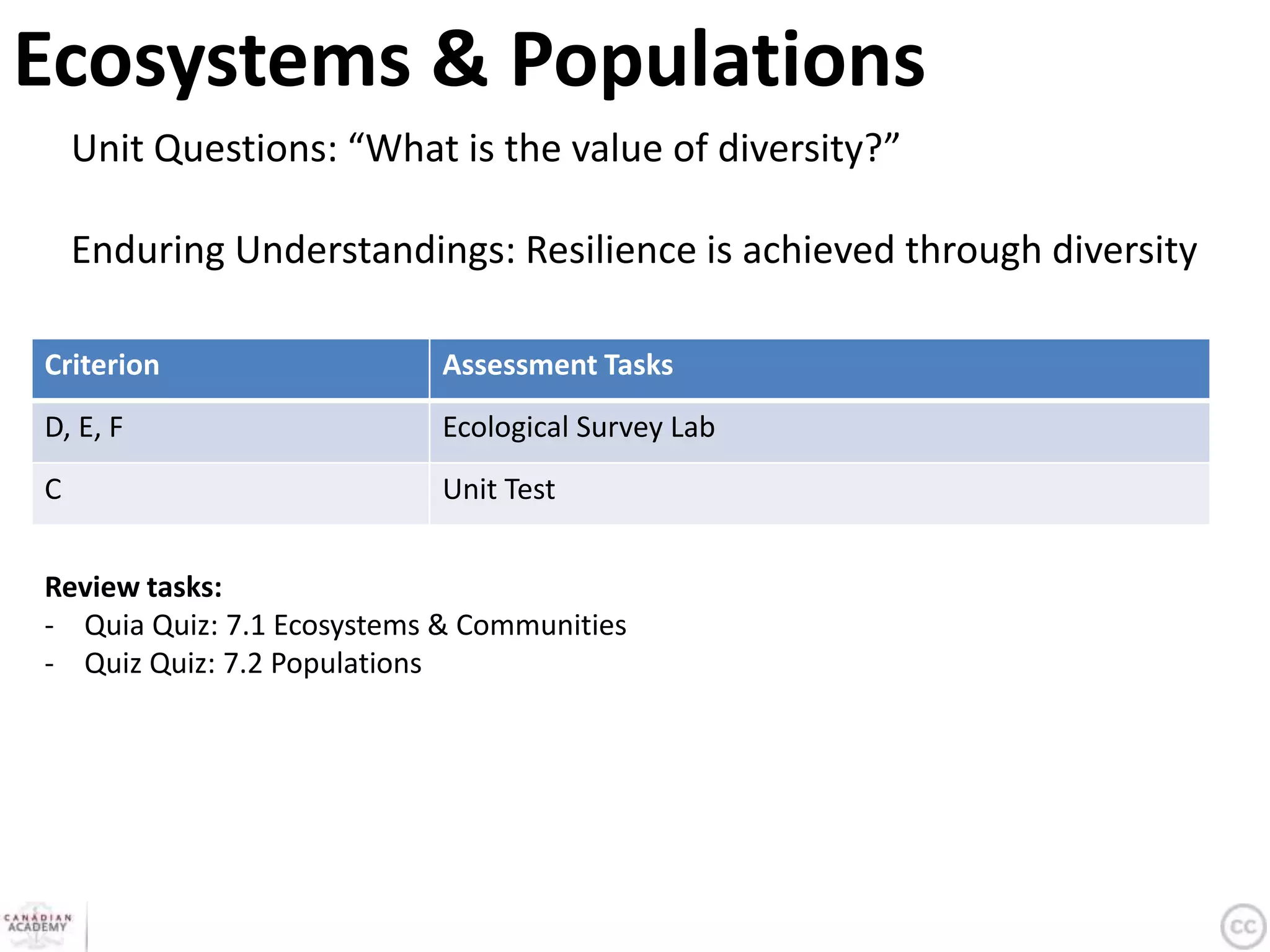
Ecosystems & Populations
    Unit Questions: “What is the value of diversity?”

    Enduring Understandings: Resilience is achieved through diversity

Criterion                   Assessment Tasks
D, E, F                     Ecological Survey Lab
C                           Unit Test


Review tasks:
- Quia Quiz: 7.1 Ecosystems & Communities
- Quiz Quiz: 7.2 Populations
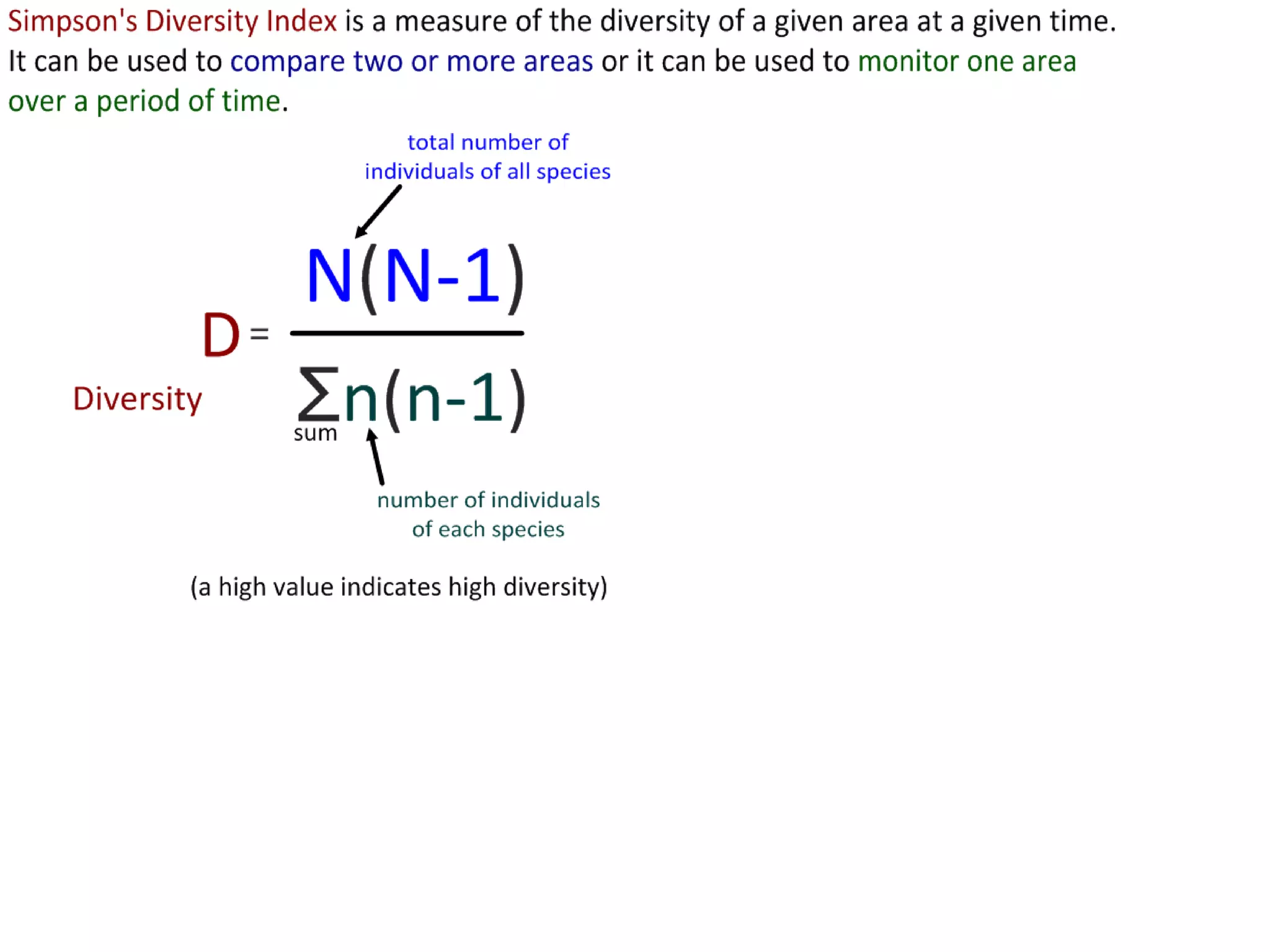
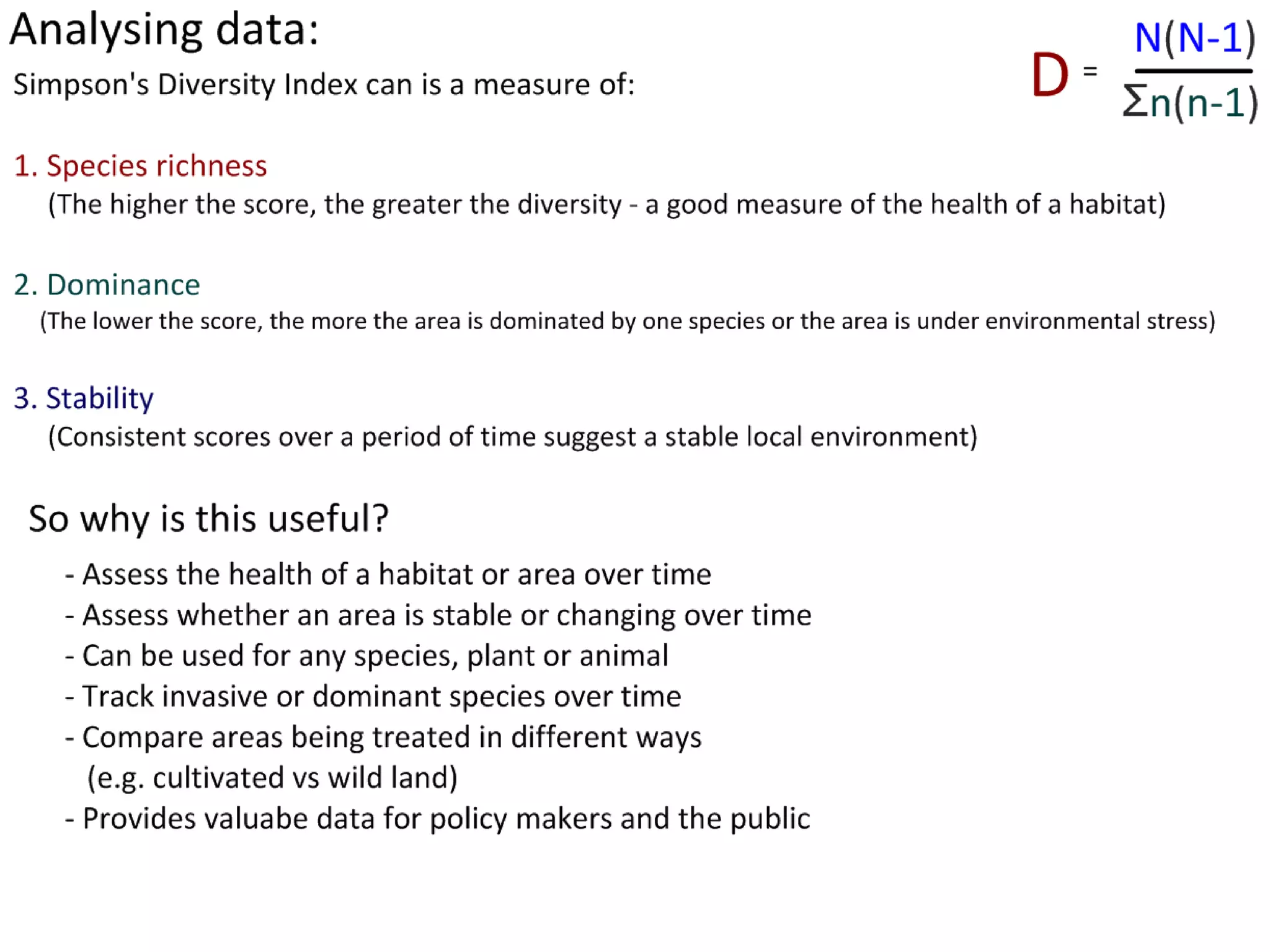
What is Diversity?
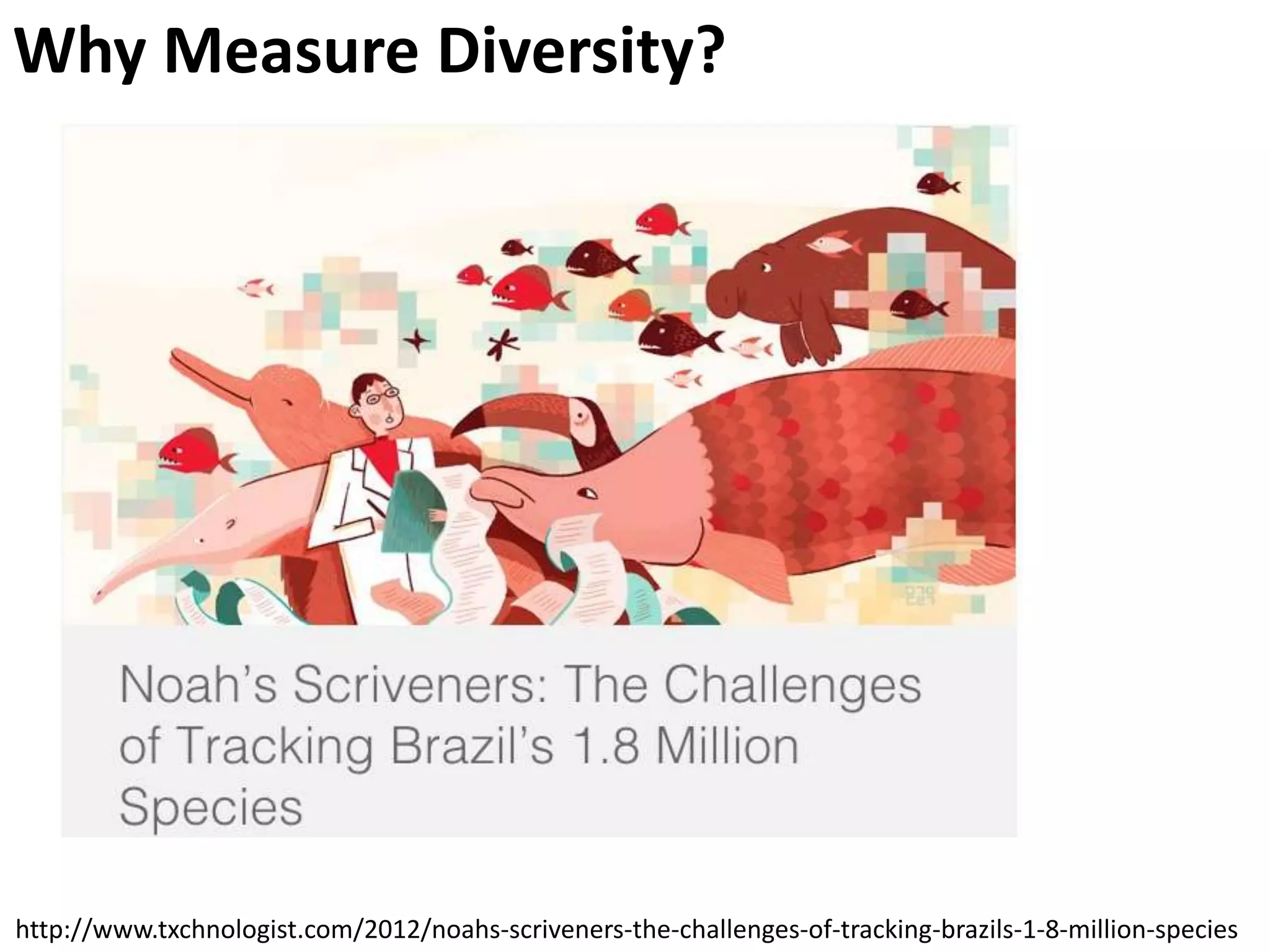
Why Measure Diversity?


http://www.txchnologist.com/2012/noahs-scriveners-the-challenges-of-tracking-brazils-1-8-million-species
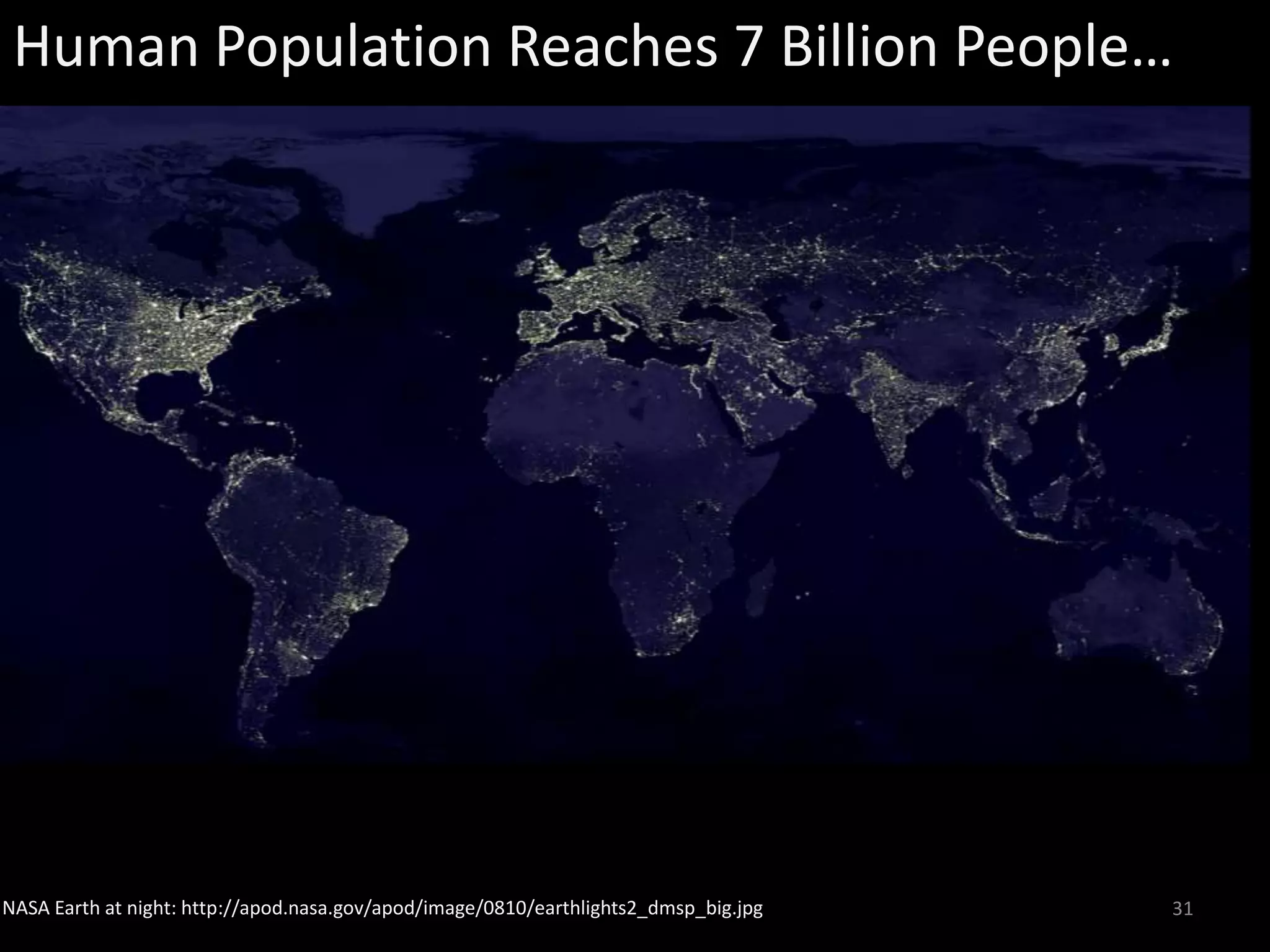
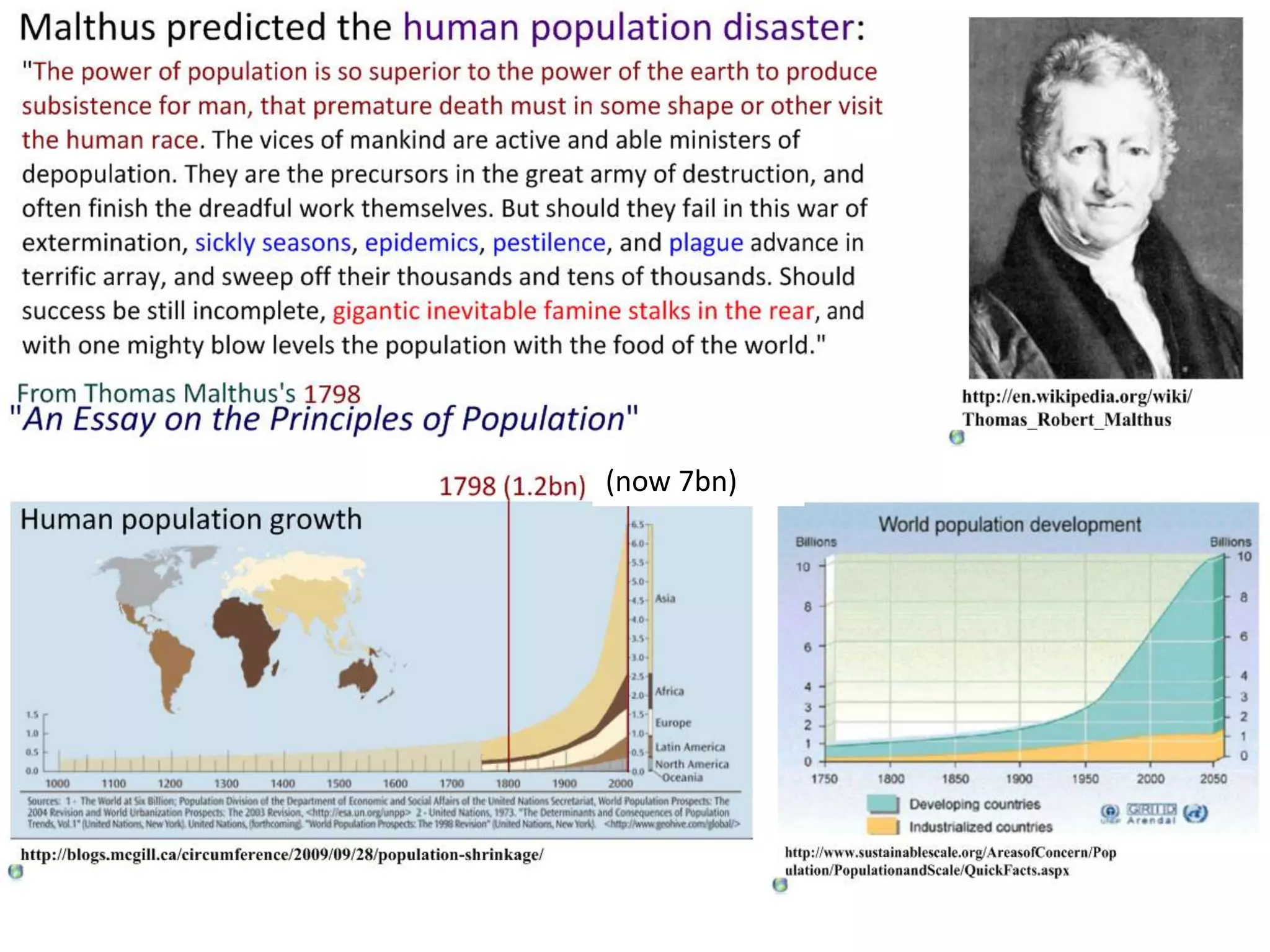
Human Population Reaches 7 Billion People…


NASA Earth at night: http://apod.nasa.gov/apod/image/0810/earthlights2_dmsp_big.jpg   31
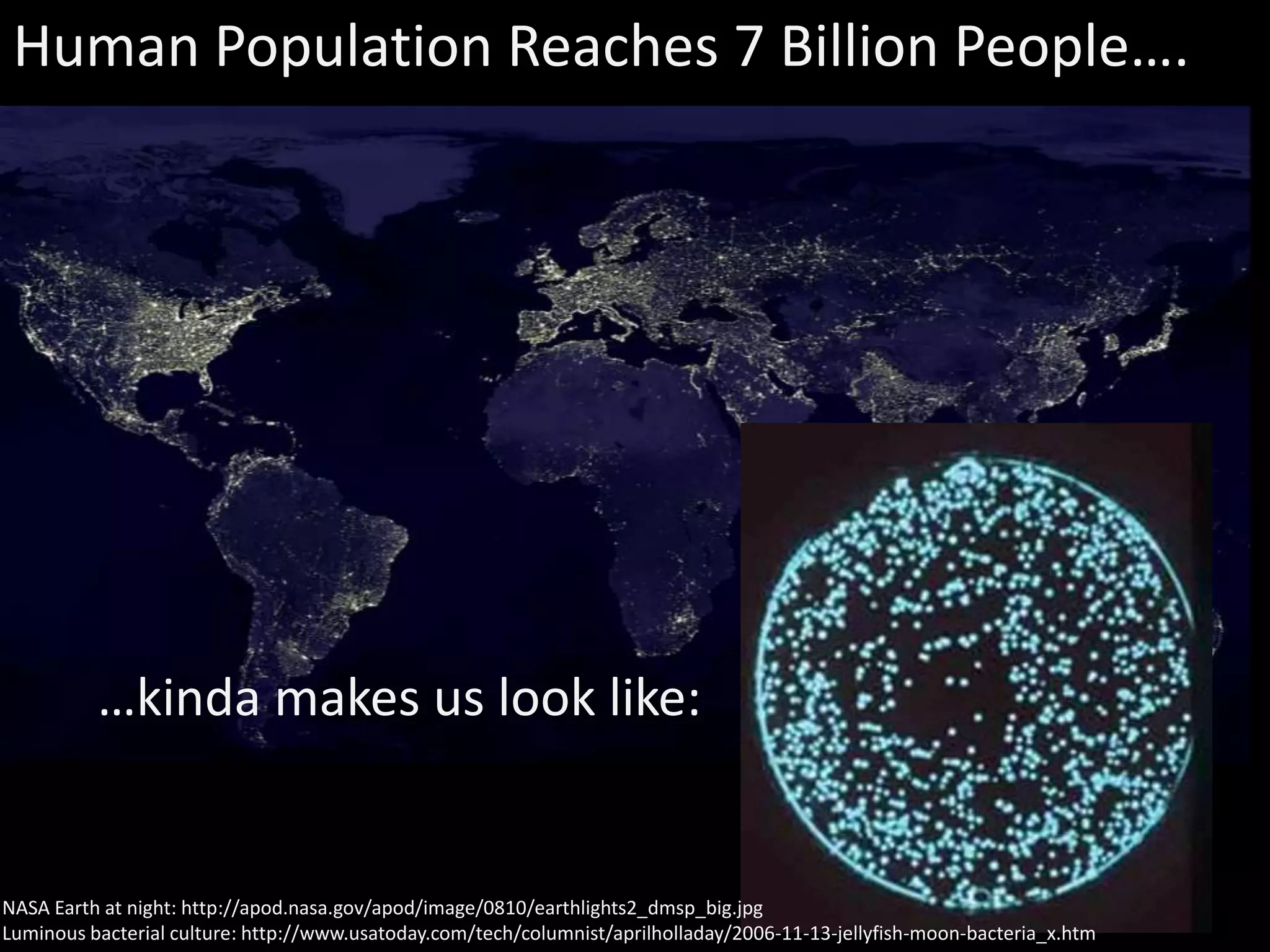
Human Population Reaches 7 Billion People….


          …kinda makes us look like:


NASA Earth at night: http://apod.nasa.gov/apod/image/0810/earthlights2_dmsp_big.jpg                                         32
Luminous bacterial culture: http://www.usatoday.com/tech/columnist/aprilholladay/2006-11-13-jellyfish-moon-bacteria_x.htm
(now 7bn)
Rokko Island Ecological Survey
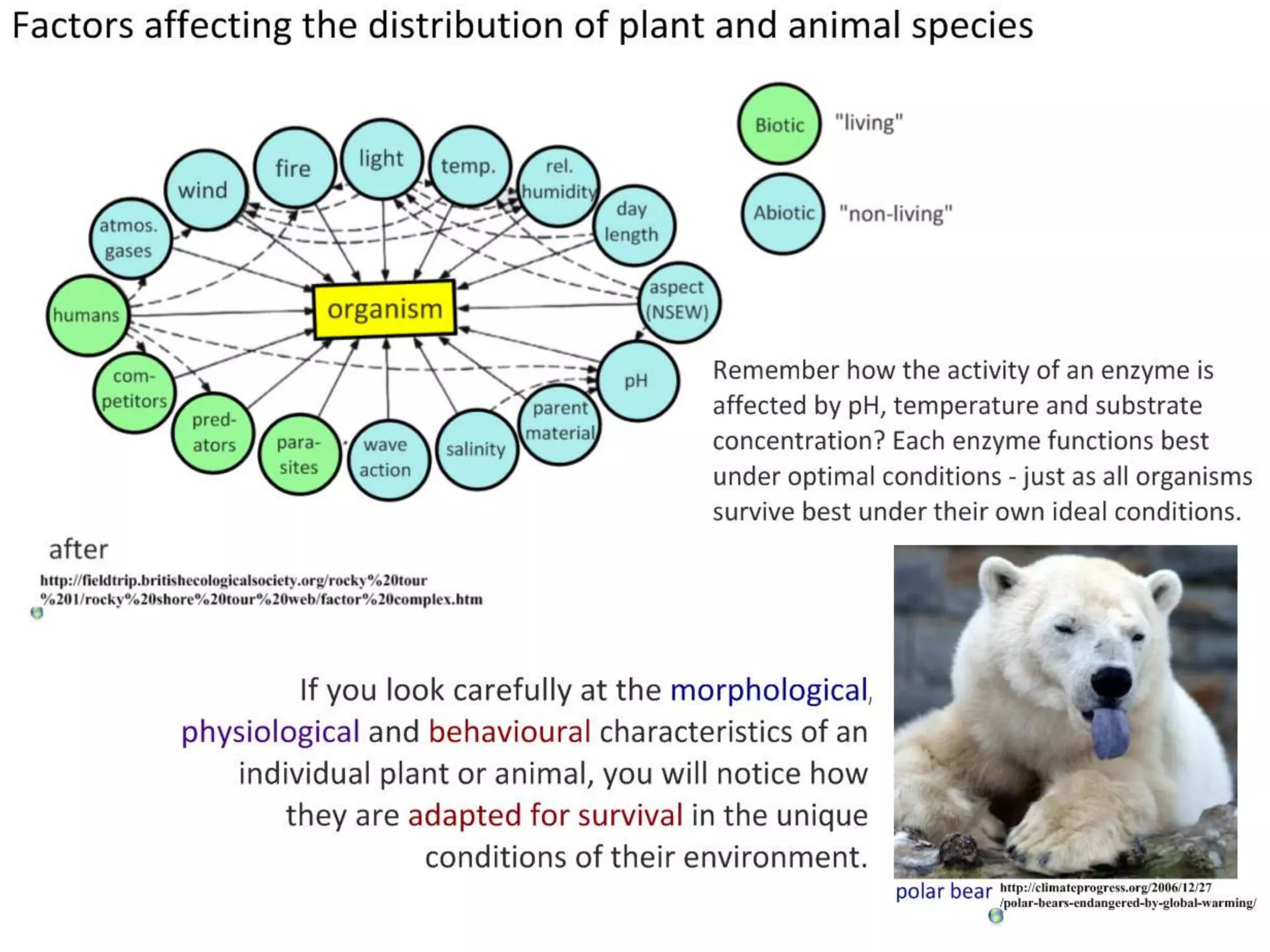
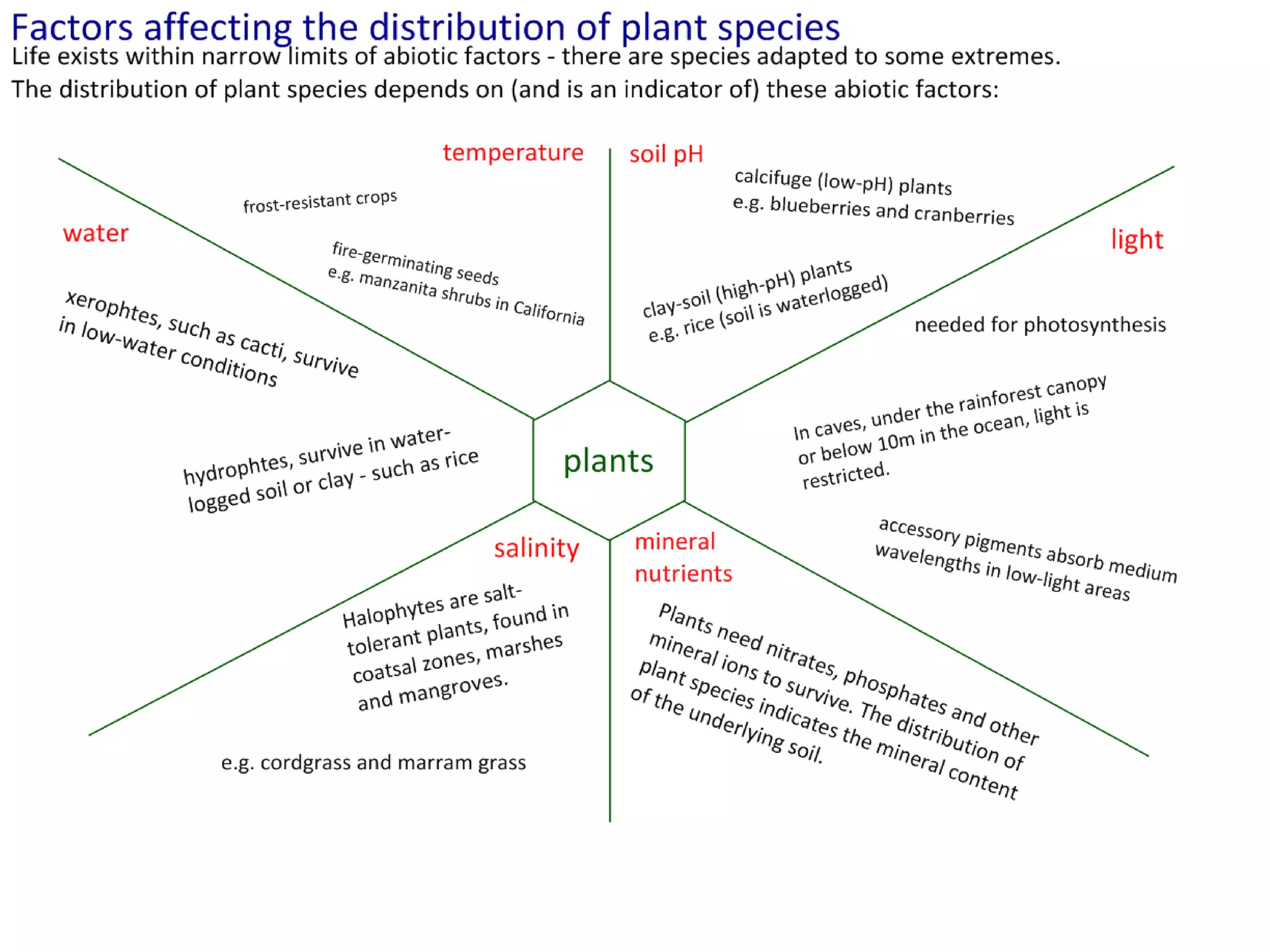
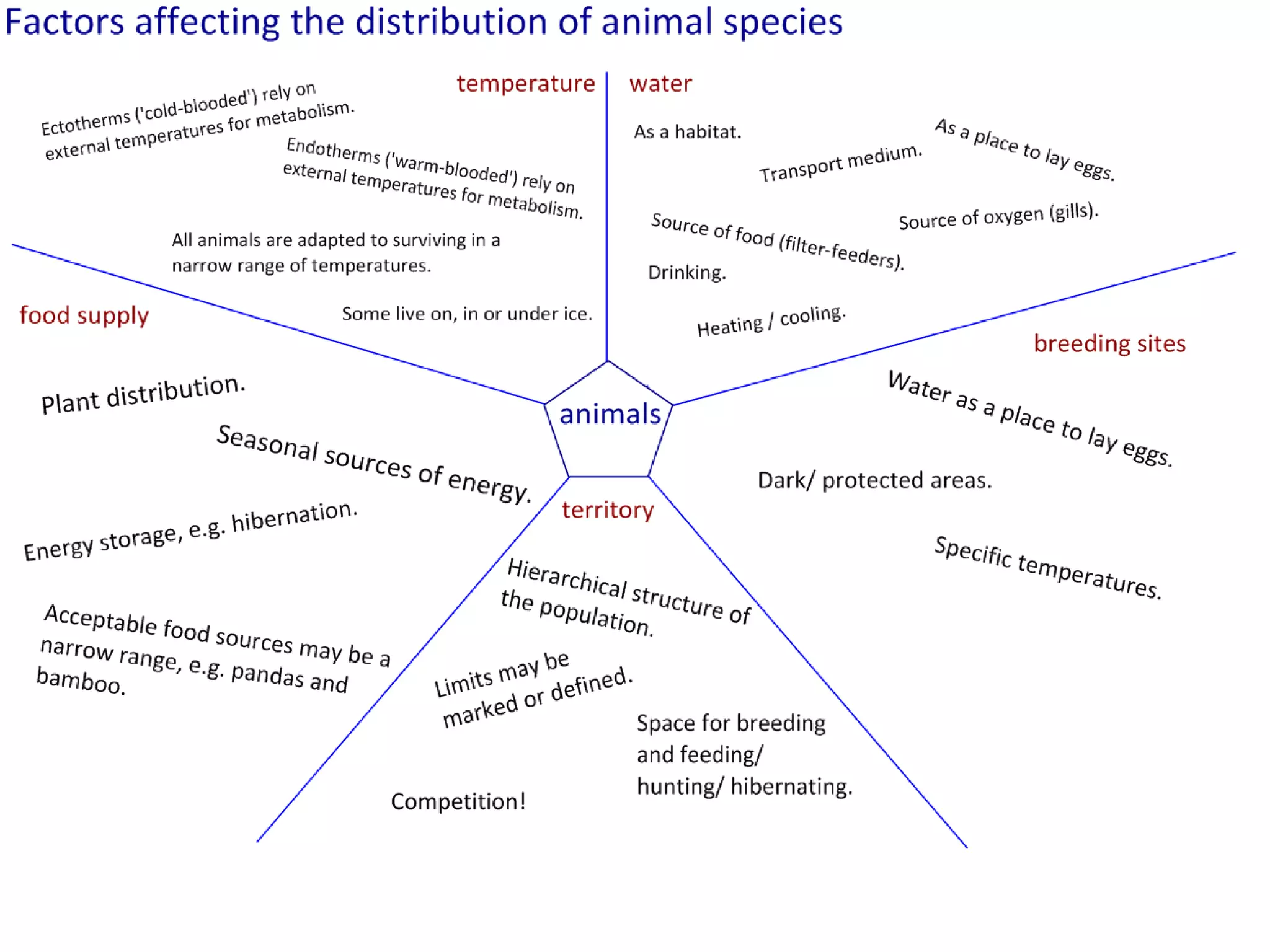
 What biotic and abiotic factors affect populations and distributions of a species?

 Investigate one factor and its effect on a population.


                                                                                      52
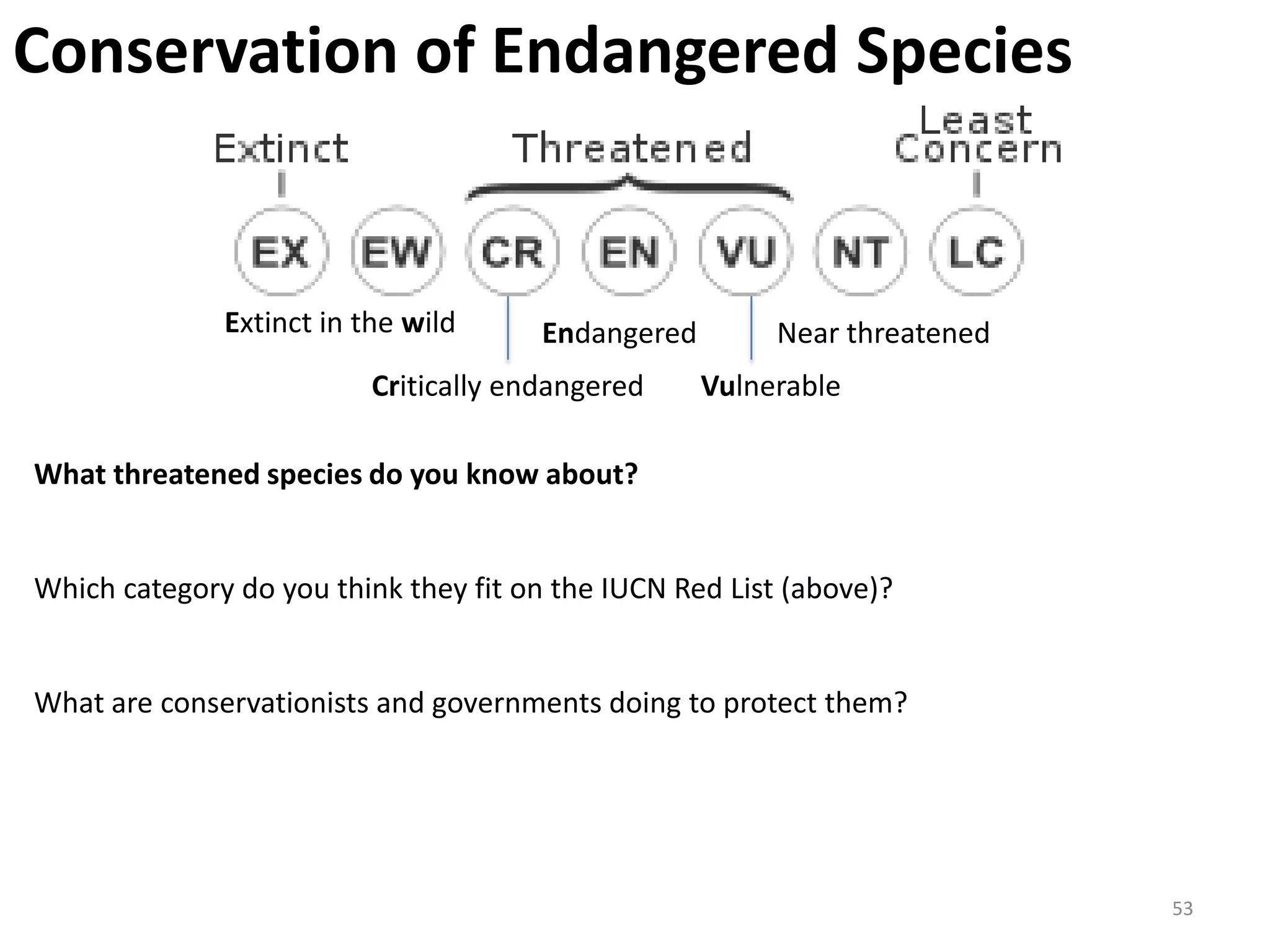
Conservation of Endangered Species


              Extinct in the wild      Endangered        Near threatened
                          Critically endangered     Vulnerable

What threatened species do you know about?


Which category do you think they fit on the IUCN Red List (above)?


What are conservationists and governments doing to protect them?


                                                                           53
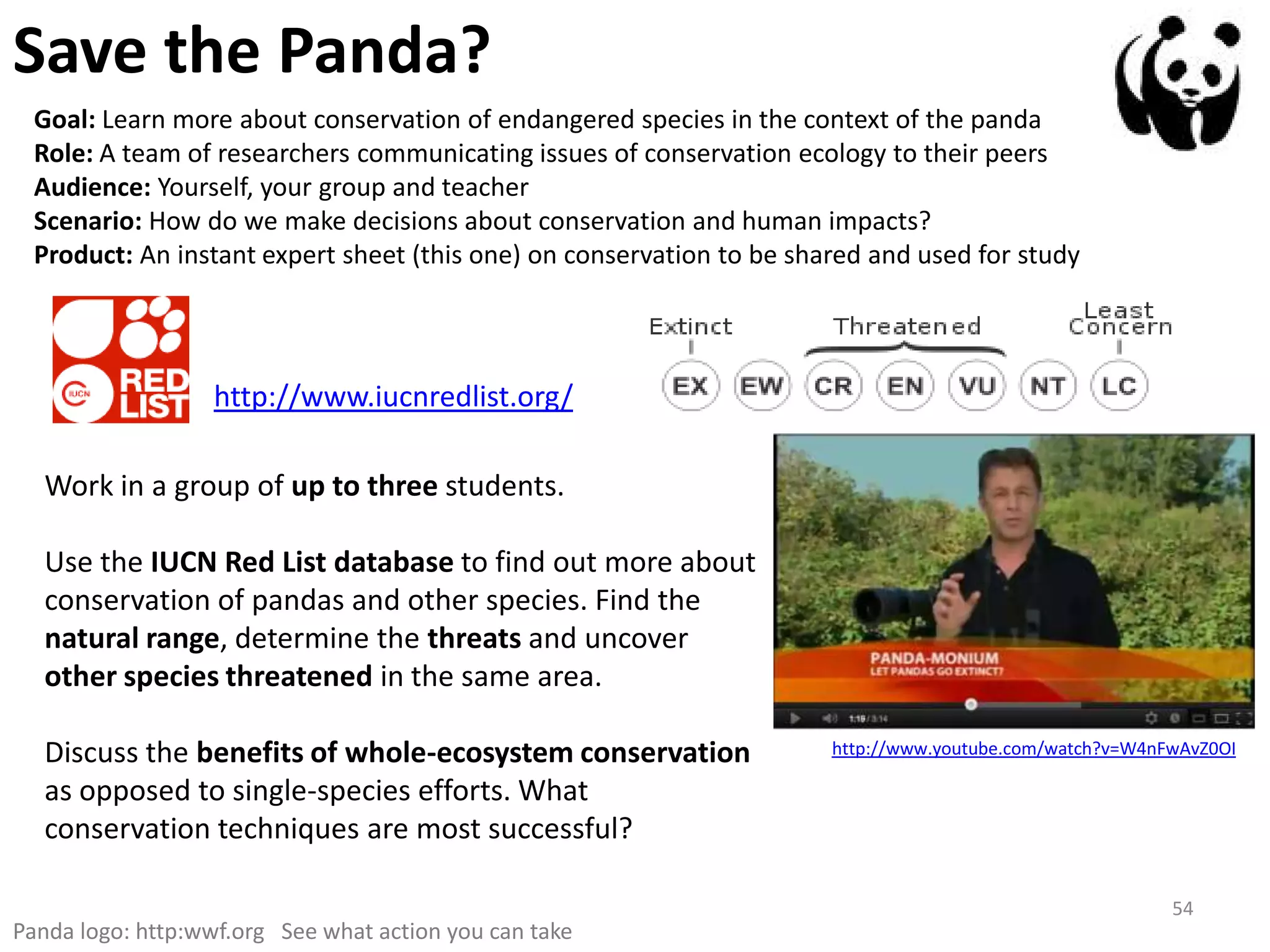
Save the Panda?
  Goal: Learn more about conservation of endangered species in the context of the panda
  Role: A team of researchers communicating issues of conservation ecology to their peers
  Audience: Yourself, your group and teacher
  Scenario: How do we make decisions about conservation and human impacts?
  Product: An instant expert sheet (this one) on conservation to be shared and used for study


                   http://www.iucnredlist.org/

   Work in a group of up to three students.

   Use the IUCN Red List database to find out more about
   conservation of pandas and other species. Find the
   natural range, determine the threats and uncover
   other species threatened in the same area.

   Discuss the benefits of whole-ecosystem conservation                http://www.youtube.com/watch?v=W4nFwAvZ0OI

   as opposed to single-species efforts. What
   conservation techniques are most successful?

                                                                                                          54
Panda logo: http:wwf.org See what action you can take
Ecosystems & Populations Review
 1. Space race review quizzes: m.socrative.com (Room N304)
     • Groups of 2-3
     • One device each
     • Notes might be useful

 2. Complete the knowledge audit and checklist given out yesterday

 3. Check areas you don’t understand. All resources are on the GoogleSite.


                                                                             55
For more resources.

                                      Please consider a donation to charity via Biology4Good.
                      Click here for more information about Biology4Good charity donations.
This is a Creative Commons presentation. It may be linked and embedded but not sold or re-hosted.

Ecosystems & Populations

  • 1.
    Ecosystems & Populations Introductory Environmental Science Canadian Academy MrT
  • 2.
    Ecosystems & Populations Unit Questions: “What is the value of diversity?” Enduring Understandings: Resilience is achieved through diversity Criterion Assessment Tasks D, E, F Ecological Survey Lab C Unit Test Review tasks: - Quia Quiz: 7.1 Ecosystems & Communities - Quiz Quiz: 7.2 Populations
  • 4.
  • 5.
  • 31.
    Human Population Reaches7 Billion People… NASA Earth at night: http://apod.nasa.gov/apod/image/0810/earthlights2_dmsp_big.jpg 31
  • 32.
    Human Population Reaches7 Billion People…. …kinda makes us look like: NASA Earth at night: http://apod.nasa.gov/apod/image/0810/earthlights2_dmsp_big.jpg 32 Luminous bacterial culture: http://www.usatoday.com/tech/columnist/aprilholladay/2006-11-13-jellyfish-moon-bacteria_x.htm
  • 33.
  • 52.
    Rokko Island EcologicalSurvey What biotic and abiotic factors affect populations and distributions of a species? Investigate one factor and its effect on a population. 52
  • 53.
    Conservation of EndangeredSpecies Extinct in the wild Endangered Near threatened Critically endangered Vulnerable What threatened species do you know about? Which category do you think they fit on the IUCN Red List (above)? What are conservationists and governments doing to protect them? 53
  • 54.
    Save the Panda? Goal: Learn more about conservation of endangered species in the context of the panda Role: A team of researchers communicating issues of conservation ecology to their peers Audience: Yourself, your group and teacher Scenario: How do we make decisions about conservation and human impacts? Product: An instant expert sheet (this one) on conservation to be shared and used for study http://www.iucnredlist.org/ Work in a group of up to three students. Use the IUCN Red List database to find out more about conservation of pandas and other species. Find the natural range, determine the threats and uncover other species threatened in the same area. Discuss the benefits of whole-ecosystem conservation http://www.youtube.com/watch?v=W4nFwAvZ0OI as opposed to single-species efforts. What conservation techniques are most successful? 54 Panda logo: http:wwf.org See what action you can take
  • 55.
    Ecosystems & PopulationsReview 1. Space race review quizzes: m.socrative.com (Room N304) • Groups of 2-3 • One device each • Notes might be useful 2. Complete the knowledge audit and checklist given out yesterday 3. Check areas you don’t understand. All resources are on the GoogleSite. 55
  • 56.
    For more resources. Please consider a donation to charity via Biology4Good. Click here for more information about Biology4Good charity donations. This is a Creative Commons presentation. It may be linked and embedded but not sold or re-hosted.