PREPARED BY –VISHIKA KAPOOR
GROUP NUMBER - 4
 HABITAT
 AQUATIC HABITAT
 SALT- WATER
 PROCESS OF OBTAINING SALT
 FRESH WATER
 HYDROPHYTES
 HYDROCOLES
 ADAPTATIONS OF HYDROCOLES
 A habitat is an ecological or environmental area
that is inhabited by a particular species of
animal, plant, or other type of organism. It is
the natural environment in which an organism
lives, or the physical environment that surrounds
a species population.
 A habitat is made up of physical factors such as
soil, moisture, range of temperature, and
availability of light as well as biotic factors such
as the availability of food and the presence of
predators. A habitat is not necessarily a
geographic area—for a parasitic organism it is
the body of its host or even a cell within the
host's body
AQUATIC HABITAT
 Aquatic habitat is something that is related to
WATER.
 As it’s name itself describes it – AQATIC means
WATER
 In an Aquatic Habitat, we can find animals as well as
plants.
 There are two types of water bodies on Earth– FRESH
WATER BODIES and SALT – WATER BODIES.
 It is also called SALINE WATER, and BRINE
WATER.
 It mainly consists of oceans and seas.
 They are mainly composed of water, salt and
some impurities.
 It is not fit for DRINKING, AGRICULTURE,
COOKING FOOD etc.
 SALINE WATER can be used to obtain salt.
PROCESS OF OBTAINING SALT
 To obtain salt we must first take out large amount of
saline water from the sea. This can be done by high
tides or can be done in a small part of the sea near
the shore.
 Then it must be kept in the sun so that the water
evaporates and only the salt is left.
 In INDIA, GUJARAT is the largest producer of salt.
 FRESH WATER BODY consists of – lakes,
rivers, ponds etc.
 This water is fit for DRINKING,
AGRICULTURE, COOKING etc.
 These are small water bodies and they
finally flow towards the sea or the ocean.
 The longest river on earth is the NILE river.
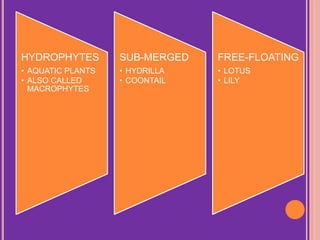
HYDROPHYTES
 HYDROPHYTES are plants which live inside
or on WATER.
 They are also called macrophytes.
HYDROPHYTES
• AQUATIC PLANTS
• ALSO CALLED
MACROPHYTES
SUB-MERGED
• HYDRILLA
• COONTAIL
FREE-FLOATING
• LOTUS
• LILY
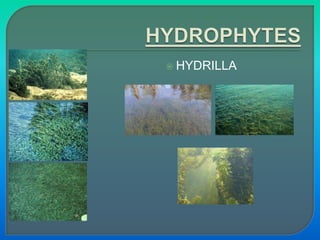
 HYDRILLA
HYDROPHYTES
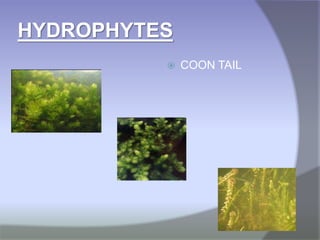
 COON TAIL
HYDROCOLES
 HYDROCLOES are the animals which live
underwater.
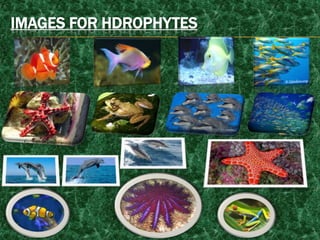
 EXAMPLES : FISH, FROG, DOLPHIN, STARFISH
etc.
IMAGES FOR HDROPHYTES
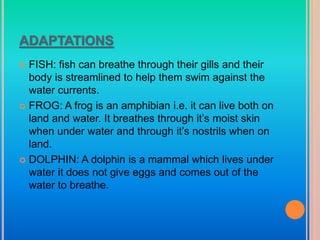
ADAPTATIONS
 FISH: fish can breathe through their gills and their
body is streamlined to help them swim against the
water currents.
 FROG: A frog is an amphibian i.e. it can live both on
land and water. It breathes through it’s moist skin
when under water and through it’s nostrils when on
land.
 DOLPHIN: A dolphin is a mammal which lives under
water it does not give eggs and comes out of the
water to breathe.
Aquatic habitat
Aquatic habitat

Aquatic habitat

  • 1.
    PREPARED BY –VISHIKAKAPOOR GROUP NUMBER - 4
  • 2.
     HABITAT  AQUATICHABITAT  SALT- WATER  PROCESS OF OBTAINING SALT  FRESH WATER  HYDROPHYTES  HYDROCOLES  ADAPTATIONS OF HYDROCOLES
  • 3.
     A habitatis an ecological or environmental area that is inhabited by a particular species of animal, plant, or other type of organism. It is the natural environment in which an organism lives, or the physical environment that surrounds a species population.  A habitat is made up of physical factors such as soil, moisture, range of temperature, and availability of light as well as biotic factors such as the availability of food and the presence of predators. A habitat is not necessarily a geographic area—for a parasitic organism it is the body of its host or even a cell within the host's body
  • 4.
    AQUATIC HABITAT  Aquatichabitat is something that is related to WATER.  As it’s name itself describes it – AQATIC means WATER  In an Aquatic Habitat, we can find animals as well as plants.  There are two types of water bodies on Earth– FRESH WATER BODIES and SALT – WATER BODIES.
  • 5.
     It isalso called SALINE WATER, and BRINE WATER.  It mainly consists of oceans and seas.  They are mainly composed of water, salt and some impurities.  It is not fit for DRINKING, AGRICULTURE, COOKING FOOD etc.  SALINE WATER can be used to obtain salt.
  • 6.
    PROCESS OF OBTAININGSALT  To obtain salt we must first take out large amount of saline water from the sea. This can be done by high tides or can be done in a small part of the sea near the shore.  Then it must be kept in the sun so that the water evaporates and only the salt is left.  In INDIA, GUJARAT is the largest producer of salt.
  • 7.
     FRESH WATERBODY consists of – lakes, rivers, ponds etc.  This water is fit for DRINKING, AGRICULTURE, COOKING etc.  These are small water bodies and they finally flow towards the sea or the ocean.  The longest river on earth is the NILE river.
  • 8.
    HYDROPHYTES  HYDROPHYTES areplants which live inside or on WATER.  They are also called macrophytes.
  • 9.
    HYDROPHYTES • AQUATIC PLANTS •ALSO CALLED MACROPHYTES SUB-MERGED • HYDRILLA • COONTAIL FREE-FLOATING • LOTUS • LILY
  • 10.
  • 11.
  • 12.
    HYDROCOLES  HYDROCLOES arethe animals which live underwater.  EXAMPLES : FISH, FROG, DOLPHIN, STARFISH etc.
  • 13.
  • 14.
    ADAPTATIONS  FISH: fishcan breathe through their gills and their body is streamlined to help them swim against the water currents.  FROG: A frog is an amphibian i.e. it can live both on land and water. It breathes through it’s moist skin when under water and through it’s nostrils when on land.  DOLPHIN: A dolphin is a mammal which lives under water it does not give eggs and comes out of the water to breathe.