NOISE POLLUTION
WHAT IS NOISE POLLUTION?
 Sound that is unwanted or disrupts one’s quality of life is
called as noise. When there is lot of noise in the
environment, it is termed as noise pollution.
 Sound becomes undesirable when it disturbs the normal
activities such as working, sleeping, and during
conversations.
 It is an underrated environmental problem because of the
fact that we can’t see, smell, or taste it.
 World Health Organization stated that “Noise must be
recognized as a major threat to human well-being”
HEALTH EFFECTS
 According to the USEPA, there are direct links between noise
and health. Also, noise pollution adversely affects the lives of
millions of people.
 Noise pollution can damage physiological and psychological
health.
 High blood pressure, stress related illness, sleep disruption,
hearing loss, and productivity loss are the problems related to
noise pollution.
 It can also cause memory loss, severe depression, and panic
attacks.
SOURCES OF NOISE POLLUTION
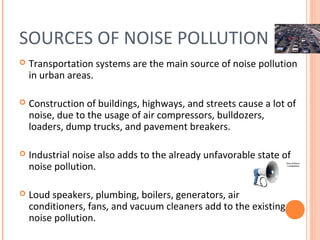
 Transportation systems are the main source of noise pollution
in urban areas.
 Construction of buildings, highways, and streets cause a lot of
noise, due to the usage of air compressors, bulldozers,
loaders, dump trucks, and pavement breakers.
 Industrial noise also adds to the already unfavorable state of
noise pollution.
 Loud speakers, plumbing, boilers, generators, air
conditioners, fans, and vacuum cleaners add to the existing
noise pollution.
SOLUTIONS FOR NOISE
POLLUTION
 Planting bushes and trees in and around sound generating
sources is an effective solution for noise pollution.
 Regular servicing and tuning of automobiles can effectively
reduce the noise pollution.
 Buildings can be designed with suitable noise absorbing
material for the walls, windows, and ceilings.
 Workers should be provided with equipments such as ear
plugs and earmuffs for hearing protection.
SOLUTIONS FOR NOISE
POLLUTION
 Similar to automobiles, lubrication of the machinery and
servicing should be done to minimize noise generation.
 Soundproof doors and windows can be installed to block
unwanted noise from outside.
 Regulations should be imposed to restrict the usage of
play loudspeakers in crowded areas and public places.
 Factories and industries should be located far from the
residential areas.
SOLUTIONS FOR NOISE
POLLUTION
 Community development or urban management should
be done with long-term planning, along with an aim to
reduce noise pollution.
 Social awareness programs should be taken up to
educate the public about the causes and effects of noise
pollution.
MINING POLLUTION
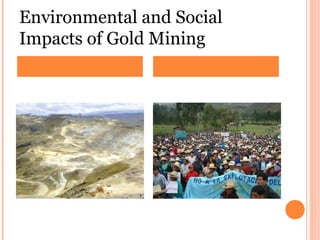
Environmental and Social
Impacts of Gold Mining
Gold Production
• Gold production creates more waste per
ounce than any other metal
• At least 50% of gold produced worldwide is
used for cosmetic, non-essential purposes
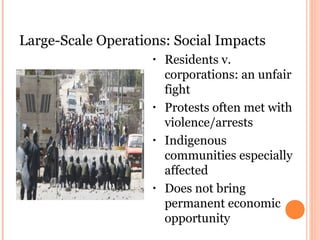
Large-Scale Operations: Social Impacts
• Residents v.
corporations: an unfair
fight
• Protests often met with
violence/arrests
• Indigenous
communities especially
affected
• Does not bring
permanent economic
opportunity
Large-Scale Operations:
Water Depletion and
Contamination
• Large quantities of water needed
– Angostura Mine in Colombia: 250,000
liters of water to be used per hour
• Acid Mine Drainage (AMD)
• Cyanide contamination
– Sodium Cyanide solutions used in leaching:
300-600 mg/l
– U.S. Environmental Protection Agency
maximum contaminant level: .2 mg/l
• Increased sediment in rivers
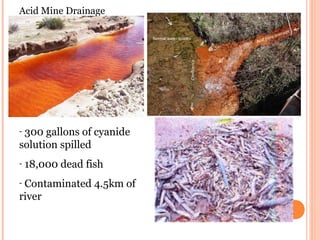
Acid Mine Drainage
Lara River in Honduras
- 300 gallons of cyanide
solution spilled
- 18,000 dead fish
- Contaminated 4.5km of
river
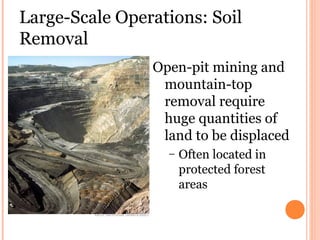
Large-Scale Operations: Soil
Removal
Open-pit mining and
mountain-top
removal require
huge quantities of
land to be displaced
– Often located in
protected forest
areas
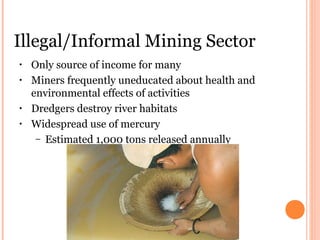
Illegal/Informal Mining Sector
• Only source of income for many
• Miners frequently uneducated about health and
environmental effects of activities
• Dredgers destroy river habitats
• Widespread use of mercury
– Estimated 1,000 tons released annually
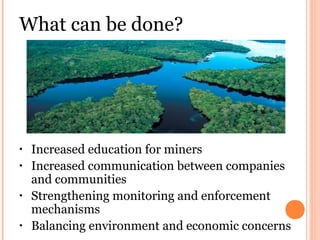
What can be done?
• Increased education for miners
• Increased communication between companies
and communities
• Strengthening monitoring and enforcement
mechanisms
• Balancing environment and economic concerns

Noise pollution

  • 1.
  • 2.
    WHAT IS NOISEPOLLUTION?  Sound that is unwanted or disrupts one’s quality of life is called as noise. When there is lot of noise in the environment, it is termed as noise pollution.  Sound becomes undesirable when it disturbs the normal activities such as working, sleeping, and during conversations.  It is an underrated environmental problem because of the fact that we can’t see, smell, or taste it.  World Health Organization stated that “Noise must be recognized as a major threat to human well-being”
  • 3.
    HEALTH EFFECTS  Accordingto the USEPA, there are direct links between noise and health. Also, noise pollution adversely affects the lives of millions of people.  Noise pollution can damage physiological and psychological health.  High blood pressure, stress related illness, sleep disruption, hearing loss, and productivity loss are the problems related to noise pollution.  It can also cause memory loss, severe depression, and panic attacks.
  • 4.
    SOURCES OF NOISEPOLLUTION  Transportation systems are the main source of noise pollution in urban areas.  Construction of buildings, highways, and streets cause a lot of noise, due to the usage of air compressors, bulldozers, loaders, dump trucks, and pavement breakers.  Industrial noise also adds to the already unfavorable state of noise pollution.  Loud speakers, plumbing, boilers, generators, air conditioners, fans, and vacuum cleaners add to the existing noise pollution.
  • 5.
    SOLUTIONS FOR NOISE POLLUTION Planting bushes and trees in and around sound generating sources is an effective solution for noise pollution.  Regular servicing and tuning of automobiles can effectively reduce the noise pollution.  Buildings can be designed with suitable noise absorbing material for the walls, windows, and ceilings.  Workers should be provided with equipments such as ear plugs and earmuffs for hearing protection.
  • 6.
    SOLUTIONS FOR NOISE POLLUTION Similar to automobiles, lubrication of the machinery and servicing should be done to minimize noise generation.  Soundproof doors and windows can be installed to block unwanted noise from outside.  Regulations should be imposed to restrict the usage of play loudspeakers in crowded areas and public places.  Factories and industries should be located far from the residential areas.
  • 7.
    SOLUTIONS FOR NOISE POLLUTION Community development or urban management should be done with long-term planning, along with an aim to reduce noise pollution.  Social awareness programs should be taken up to educate the public about the causes and effects of noise pollution.
  • 8.
  • 9.
  • 10.
    Gold Production • Goldproduction creates more waste per ounce than any other metal • At least 50% of gold produced worldwide is used for cosmetic, non-essential purposes
  • 11.
    Large-Scale Operations: SocialImpacts • Residents v. corporations: an unfair fight • Protests often met with violence/arrests • Indigenous communities especially affected • Does not bring permanent economic opportunity
  • 12.
    Large-Scale Operations: Water Depletionand Contamination • Large quantities of water needed – Angostura Mine in Colombia: 250,000 liters of water to be used per hour • Acid Mine Drainage (AMD) • Cyanide contamination – Sodium Cyanide solutions used in leaching: 300-600 mg/l – U.S. Environmental Protection Agency maximum contaminant level: .2 mg/l • Increased sediment in rivers
  • 13.
    Acid Mine Drainage LaraRiver in Honduras - 300 gallons of cyanide solution spilled - 18,000 dead fish - Contaminated 4.5km of river
  • 14.
    Large-Scale Operations: Soil Removal Open-pitmining and mountain-top removal require huge quantities of land to be displaced – Often located in protected forest areas
  • 15.
    Illegal/Informal Mining Sector •Only source of income for many • Miners frequently uneducated about health and environmental effects of activities • Dredgers destroy river habitats • Widespread use of mercury – Estimated 1,000 tons released annually
  • 16.
    What can bedone? • Increased education for miners • Increased communication between companies and communities • Strengthening monitoring and enforcement mechanisms • Balancing environment and economic concerns