Bio-ecological Theory of Human
Development
Darrin Coe, Ph.D.
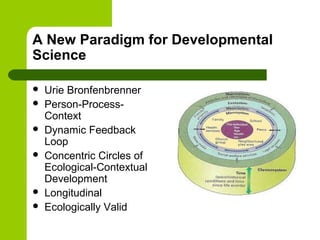
A New Paradigm for Developmental
Science
 Urie Bronfenbrenner
 Person-Process-
Context
 Dynamic Feedback
Loop
 Concentric Circles of
Ecological-Contextual
Development
 Longitudinal
 Ecologically Valid
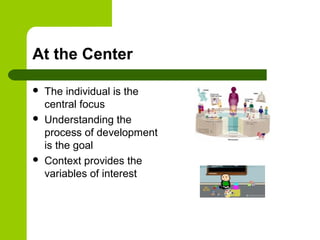
At the Center
 The individual is the
central focus
 Understanding the
process of development
is the goal
 Context provides the
variables of interest
The Individual
 Actively engages with
external ecology
 Ecology provides active
feedback and is
influenced by the
individual
 The individual is
influenced and molded
by feedback
Time is a primary
component of this
dynamic feedback
loop
The Process
 How does the contextual dynamic feedback
loop mold human development?
 What are the mechanisms of the dynamic
feedback loop?
 How do ecological forces exert
developmental pressure on the individual?
The Process (Cont.)
 Ecological Human Development assumes
the individual acts as a causal agent.
 The entirety of the individual’s ecology also
acts as a causal agent.
 “How?” is the question.
 “How much?” is also a good question 
The Context
 Ever expanding circles of ecological
pressures
 Each level of developmental pressure is
triggered based on active interaction from an
individual
 Ecological levels create unique
developmental contexts
 Life transitions trigger new pressures and
contexts
Context cont.
 Microsystem: those people and environments the
individual directly engages with – proximal forces
 Mesosystem: systems exerting influence on one
another, which then exert influence on the
microsystem.
 Exosystem: made up of contexts which the individual
has only indirect interaction with – distal forces.
 Macrosystm: made up of the over-riding social
culture, public policy, norms, and mores.
Time Marches On
 The Chronosystem over-rides the whole
ecological system encompassing historical
events, socio-cultural changes, eras, and
generational forces.
Primary Propositions Developed from
the Theory
 1) “Throughout the life course, human development takes
place through processes of progressively more complex
reciprocal interaction between an active, evolving
biopsychological human organism and the persons, objects,
and symbols in its immediate external environment. To be
effective, the interaction must occur on a fairly regular basis
over extended periods of time. Such enduring forms of
interaction in the immediate environment are referred to as
proximal processes.” (Bronfenbrenner & Morris, 1998, p. 996)
Next
 2) “A developmental outcome at a later point in time
is a joint function of a process; characteristics of the
developing person; the nature of the immediate
environmental context in which the person lives; and
of the length and frequency of the time interval
during which the developing person has been
exposed to the environmental setting under
consideration.” (Bronfenbrenner & Evans, 2000, p.
119)
And the Outcome is?
 Ecological processes or forces are usually
manifested through interactive dyads or
triads that involve the individual and one or
two other forces, e.g. child, mother, father.
These forces result in competence or
dysfunction
Different from Stage Theories
 Unlike stage theories which base development on
specific developmental markers, e.g. pre-operational
thinking or walking
 Development is gauged through competence, i.e. the
ongoing acquisition of knowledge, skills, or abilities
resulting in enhanced self-directed behavior across
situations and developmental domains.
But what about . . .
 Individuals can also manifest developmental
dysfunction, i.e. the recurrent manifestation
of difficulties in acquiring and maintaining
ever more complex control and integration of
behavior across situations and
developmental domains.
 Compare to what would be considered a
“delay” in the stage theories of development.
But How?
 People achieve ever increasing complex
competence or dysfunction through:
– Level of exposure to ecological forces
 Duration
 Frequency
 Interruption
 Timing
 Intensity
Research anyone?
 It is the components of exposure that can be
measured and analyzed.
 Components of exposure provide a developmental
understanding of the process of development.
 In the future this will also include epigenetic
components of gene expression.
Examples of Research
 How does the staff morale at an agency that
provides services to children with special needs
affect cognitive development in the first three years
of life: The moderating affect of parental
relationships.
 How much does violence in prison affect the
adolescent development of anxiety among a sample
of children with incarcerated parents: the mediating
effect of religious groups.
A Final Example
 How does the expanding network of first
order and second order relationship of a
toddler affect cognitive and language
development: An examination of transitions
using social network analysis.
References
 Bronfenbrenner, U. & Evans, G. (2000).
Developmental science in the 21st
century: Emerging
questions, theoretical models, research designs and
empirical findings. Social Development, 9(1), 115-
125.
 Bronfenbrenner, U. & Morris, P. A. (1998). The
ecology of developmental processes. In Lerner, R.
M. (Ed.), Handbook of Child Psychology (5th
Ed. Vol.
1): (series editor: W. Damon). Pp. 993-1028. New
York: Wiley.

Ecological theory of human development

  • 1.
    Bio-ecological Theory ofHuman Development Darrin Coe, Ph.D.
  • 2.
    A New Paradigmfor Developmental Science  Urie Bronfenbrenner  Person-Process- Context  Dynamic Feedback Loop  Concentric Circles of Ecological-Contextual Development  Longitudinal  Ecologically Valid
  • 3.
    At the Center The individual is the central focus  Understanding the process of development is the goal  Context provides the variables of interest
  • 4.
    The Individual  Activelyengages with external ecology  Ecology provides active feedback and is influenced by the individual  The individual is influenced and molded by feedback Time is a primary component of this dynamic feedback loop
  • 5.
    The Process  Howdoes the contextual dynamic feedback loop mold human development?  What are the mechanisms of the dynamic feedback loop?  How do ecological forces exert developmental pressure on the individual?
  • 6.
    The Process (Cont.) Ecological Human Development assumes the individual acts as a causal agent.  The entirety of the individual’s ecology also acts as a causal agent.  “How?” is the question.  “How much?” is also a good question 
  • 7.
    The Context  Everexpanding circles of ecological pressures  Each level of developmental pressure is triggered based on active interaction from an individual  Ecological levels create unique developmental contexts  Life transitions trigger new pressures and contexts
  • 8.
    Context cont.  Microsystem:those people and environments the individual directly engages with – proximal forces  Mesosystem: systems exerting influence on one another, which then exert influence on the microsystem.  Exosystem: made up of contexts which the individual has only indirect interaction with – distal forces.  Macrosystm: made up of the over-riding social culture, public policy, norms, and mores.
  • 9.
    Time Marches On The Chronosystem over-rides the whole ecological system encompassing historical events, socio-cultural changes, eras, and generational forces.
  • 10.
    Primary Propositions Developedfrom the Theory  1) “Throughout the life course, human development takes place through processes of progressively more complex reciprocal interaction between an active, evolving biopsychological human organism and the persons, objects, and symbols in its immediate external environment. To be effective, the interaction must occur on a fairly regular basis over extended periods of time. Such enduring forms of interaction in the immediate environment are referred to as proximal processes.” (Bronfenbrenner & Morris, 1998, p. 996)
  • 11.
    Next  2) “Adevelopmental outcome at a later point in time is a joint function of a process; characteristics of the developing person; the nature of the immediate environmental context in which the person lives; and of the length and frequency of the time interval during which the developing person has been exposed to the environmental setting under consideration.” (Bronfenbrenner & Evans, 2000, p. 119)
  • 12.
    And the Outcomeis?  Ecological processes or forces are usually manifested through interactive dyads or triads that involve the individual and one or two other forces, e.g. child, mother, father. These forces result in competence or dysfunction
  • 13.
    Different from StageTheories  Unlike stage theories which base development on specific developmental markers, e.g. pre-operational thinking or walking  Development is gauged through competence, i.e. the ongoing acquisition of knowledge, skills, or abilities resulting in enhanced self-directed behavior across situations and developmental domains.
  • 14.
    But what about. . .  Individuals can also manifest developmental dysfunction, i.e. the recurrent manifestation of difficulties in acquiring and maintaining ever more complex control and integration of behavior across situations and developmental domains.  Compare to what would be considered a “delay” in the stage theories of development.
  • 15.
    But How?  Peopleachieve ever increasing complex competence or dysfunction through: – Level of exposure to ecological forces  Duration  Frequency  Interruption  Timing  Intensity
  • 16.
    Research anyone?  Itis the components of exposure that can be measured and analyzed.  Components of exposure provide a developmental understanding of the process of development.  In the future this will also include epigenetic components of gene expression.
  • 17.
    Examples of Research How does the staff morale at an agency that provides services to children with special needs affect cognitive development in the first three years of life: The moderating affect of parental relationships.  How much does violence in prison affect the adolescent development of anxiety among a sample of children with incarcerated parents: the mediating effect of religious groups.
  • 18.
    A Final Example How does the expanding network of first order and second order relationship of a toddler affect cognitive and language development: An examination of transitions using social network analysis.
  • 19.
    References  Bronfenbrenner, U.& Evans, G. (2000). Developmental science in the 21st century: Emerging questions, theoretical models, research designs and empirical findings. Social Development, 9(1), 115- 125.  Bronfenbrenner, U. & Morris, P. A. (1998). The ecology of developmental processes. In Lerner, R. M. (Ed.), Handbook of Child Psychology (5th Ed. Vol. 1): (series editor: W. Damon). Pp. 993-1028. New York: Wiley.