EBGP MULTIHOP
www.netprotocolxpert.in
• EBGP multihop option often is used to peer with an external neighbor. If there are
multiple paths between EBGP peers you will probably want to take advantage of
that. Therefore you will need to use a loopback interface as update source. By
default, BGP allows to establish EBGP neighborships to peers residing on directly
connected networks, it is limited by TTL (which is 1 by default for EBGP peers).
• If you want to establish connections to peers which are not directly connected use
this command:
• neighbor {ip-add | group-name} ebgp-multihop [ttl]
• ttl is Time to Live value.
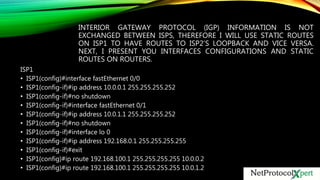
INTERIOR GATEWAY PROTOCOL (IGP) INFORMATION IS NOT
EXCHANGED BETWEEN ISPS, THEREFORE I WILL USE STATIC ROUTES
ON ISP1 TO HAVE ROUTES TO ISP2’S LOOPBACK AND VICE VERSA.
NEXT, I PRESENT YOU INTERFACES CONFIGURATIONS AND STATIC
ROUTES ON ROUTERS.
ISP1
• ISP1(config)#interface fastEthernet 0/0
• ISP1(config-if)#ip address 10.0.0.1 255.255.255.252
• ISP1(config-if)#no shutdown
• ISP1(config-if)#interface fastEthernet 0/1
• ISP1(config-if)#ip address 10.0.1.1 255.255.255.252
• ISP1(config-if)#no shutdown
• ISP1(config-if)#interface lo 0
• ISP1(config-if)#ip address 192.168.0.1 255.255.255.255
• ISP1(config-if)#exit
• ISP1(config)#ip route 192.168.100.1 255.255.255.255 10.0.0.2
• ISP1(config)#ip route 192.168.100.1 255.255.255.255 10.0.1.2
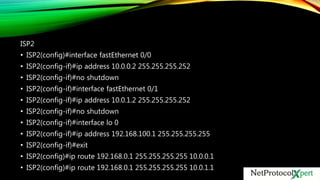
ISP2
• ISP2(config)#interface fastEthernet 0/0
• ISP2(config-if)#ip address 10.0.0.2 255.255.255.252
• ISP2(config-if)#no shutdown
• ISP2(config-if)#interface fastEthernet 0/1
• ISP2(config-if)#ip address 10.0.1.2 255.255.255.252
• ISP2(config-if)#no shutdown
• ISP2(config-if)#interface lo 0
• ISP2(config-if)#ip address 192.168.100.1 255.255.255.255
• ISP2(config-if)#exit
• ISP2(config)#ip route 192.168.0.1 255.255.255.255 10.0.0.1
• ISP2(config)#ip route 192.168.0.1 255.255.255.255 10.0.1.1
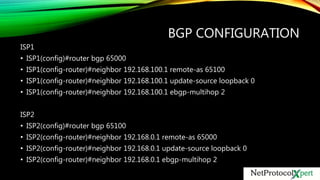
BGP CONFIGURATION
ISP1
• ISP1(config)#router bgp 65000
• ISP1(config-router)#neighbor 192.168.100.1 remote-as 65100
• ISP1(config-router)#neighbor 192.168.100.1 update-source loopback 0
• ISP1(config-router)#neighbor 192.168.100.1 ebgp-multihop 2
ISP2
• ISP2(config)#router bgp 65100
• ISP2(config-router)#neighbor 192.168.0.1 remote-as 65000
• ISP2(config-router)#neighbor 192.168.0.1 update-source loopback 0
• ISP2(config-router)#neighbor 192.168.0.1 ebgp-multihop 2
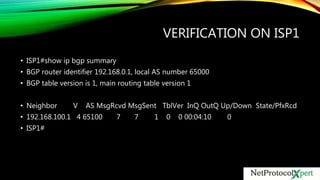
VERIFICATION ON ISP1
• ISP1#show ip bgp summary
• BGP router identifier 192.168.0.1, local AS number 65000
• BGP table version is 1, main routing table version 1
• Neighbor V AS MsgRcvd MsgSent TblVer InQ OutQ Up/Down State/PfxRcd
• 192.168.100.1 4 65100 7 7 1 0 0 00:04:10 0
• ISP1#
TTL VALUE CAN BE CHECKED THIS WAY
• ISP1#show ip bgp neighbors
• ... output ommited ...
• Connections established 1; dropped 0
• Last reset never
• External BGP neighbor may be up to 2 hops away.
• Connection state is ESTAB, I/O status: 1, unread input bytes: 0
• Connection is ECN Disabled, Mininum incoming TTL 0, Outgoing TTL 2
• Local host: 192.168.0.1, Local port: 37835
• Foreign host: 192.168.100.1, Foreign port: 179
• ... output ommited ...
• ISP1#
FOLLOW US ON
https://www.facebook.com/N
etProtocolXpert/
https://www.linkedin.com/c
ompany/netprotocol-xpert
https://plus.google.com/u/
0/collection/AYQ-EB
https://www.instagram.com/
netprotocol_xpert/
https://twitter.com/NPX_cisco
https://branded.me/netprot
ocolxpert

EBGP MultiHop

  • 1.
  • 2.
    • EBGP multihopoption often is used to peer with an external neighbor. If there are multiple paths between EBGP peers you will probably want to take advantage of that. Therefore you will need to use a loopback interface as update source. By default, BGP allows to establish EBGP neighborships to peers residing on directly connected networks, it is limited by TTL (which is 1 by default for EBGP peers). • If you want to establish connections to peers which are not directly connected use this command: • neighbor {ip-add | group-name} ebgp-multihop [ttl] • ttl is Time to Live value.
  • 4.
    INTERIOR GATEWAY PROTOCOL(IGP) INFORMATION IS NOT EXCHANGED BETWEEN ISPS, THEREFORE I WILL USE STATIC ROUTES ON ISP1 TO HAVE ROUTES TO ISP2’S LOOPBACK AND VICE VERSA. NEXT, I PRESENT YOU INTERFACES CONFIGURATIONS AND STATIC ROUTES ON ROUTERS. ISP1 • ISP1(config)#interface fastEthernet 0/0 • ISP1(config-if)#ip address 10.0.0.1 255.255.255.252 • ISP1(config-if)#no shutdown • ISP1(config-if)#interface fastEthernet 0/1 • ISP1(config-if)#ip address 10.0.1.1 255.255.255.252 • ISP1(config-if)#no shutdown • ISP1(config-if)#interface lo 0 • ISP1(config-if)#ip address 192.168.0.1 255.255.255.255 • ISP1(config-if)#exit • ISP1(config)#ip route 192.168.100.1 255.255.255.255 10.0.0.2 • ISP1(config)#ip route 192.168.100.1 255.255.255.255 10.0.1.2
  • 5.
    ISP2 • ISP2(config)#interface fastEthernet0/0 • ISP2(config-if)#ip address 10.0.0.2 255.255.255.252 • ISP2(config-if)#no shutdown • ISP2(config-if)#interface fastEthernet 0/1 • ISP2(config-if)#ip address 10.0.1.2 255.255.255.252 • ISP2(config-if)#no shutdown • ISP2(config-if)#interface lo 0 • ISP2(config-if)#ip address 192.168.100.1 255.255.255.255 • ISP2(config-if)#exit • ISP2(config)#ip route 192.168.0.1 255.255.255.255 10.0.0.1 • ISP2(config)#ip route 192.168.0.1 255.255.255.255 10.0.1.1
  • 6.
    BGP CONFIGURATION ISP1 • ISP1(config)#routerbgp 65000 • ISP1(config-router)#neighbor 192.168.100.1 remote-as 65100 • ISP1(config-router)#neighbor 192.168.100.1 update-source loopback 0 • ISP1(config-router)#neighbor 192.168.100.1 ebgp-multihop 2 ISP2 • ISP2(config)#router bgp 65100 • ISP2(config-router)#neighbor 192.168.0.1 remote-as 65000 • ISP2(config-router)#neighbor 192.168.0.1 update-source loopback 0 • ISP2(config-router)#neighbor 192.168.0.1 ebgp-multihop 2
  • 7.
    VERIFICATION ON ISP1 •ISP1#show ip bgp summary • BGP router identifier 192.168.0.1, local AS number 65000 • BGP table version is 1, main routing table version 1 • Neighbor V AS MsgRcvd MsgSent TblVer InQ OutQ Up/Down State/PfxRcd • 192.168.100.1 4 65100 7 7 1 0 0 00:04:10 0 • ISP1#
  • 8.
    TTL VALUE CANBE CHECKED THIS WAY • ISP1#show ip bgp neighbors • ... output ommited ... • Connections established 1; dropped 0 • Last reset never • External BGP neighbor may be up to 2 hops away. • Connection state is ESTAB, I/O status: 1, unread input bytes: 0 • Connection is ECN Disabled, Mininum incoming TTL 0, Outgoing TTL 2 • Local host: 192.168.0.1, Local port: 37835 • Foreign host: 192.168.100.1, Foreign port: 179 • ... output ommited ... • ISP1#
  • 9.