Lithospheric Plates
1. Why is the Earth broken up into
different pieces on the surface?
2. What is making the plates move
relative to one another?
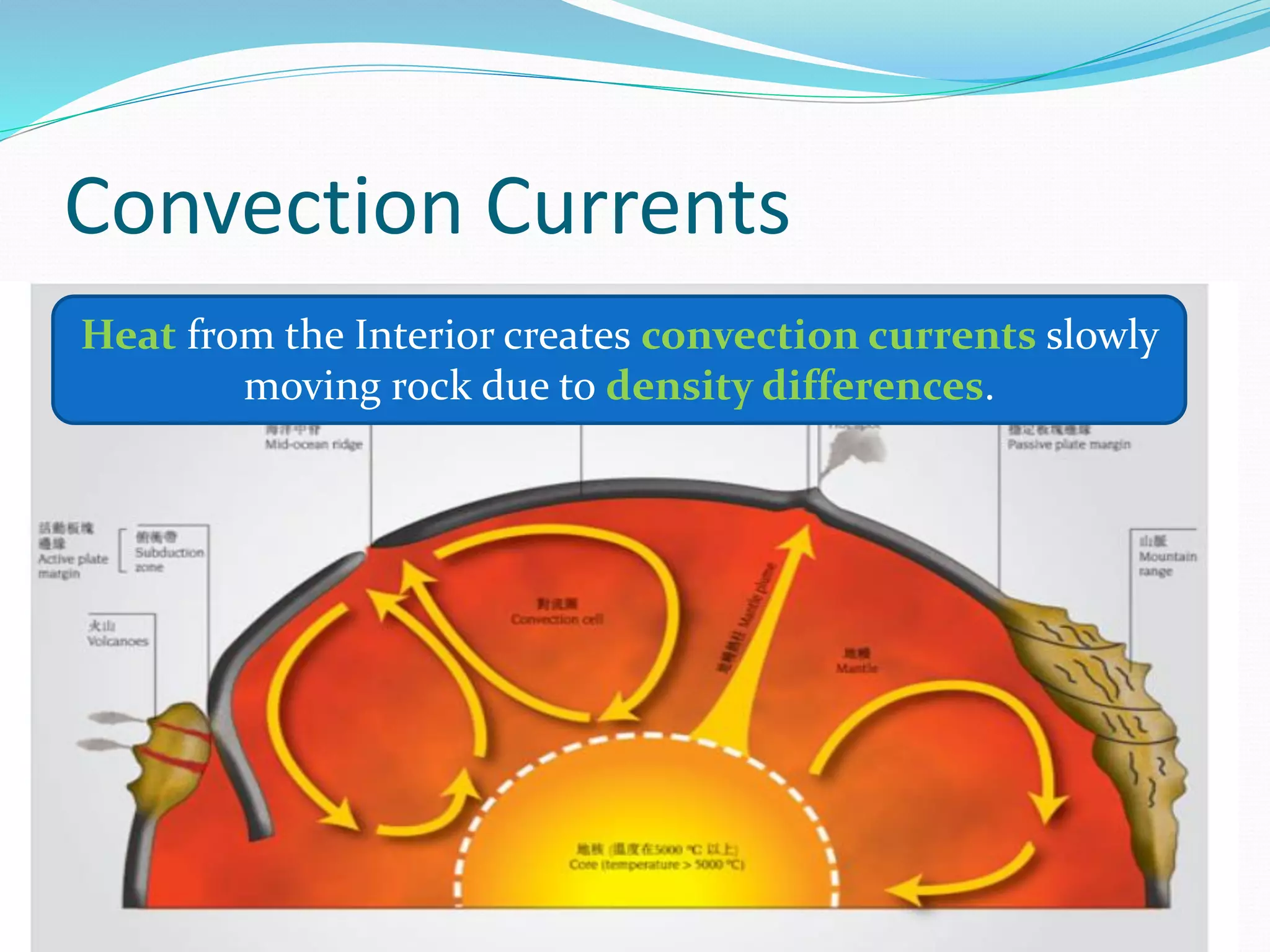
Convection Currents
Heat from the Interior creates convection currents slowly
moving rock due to density differences.
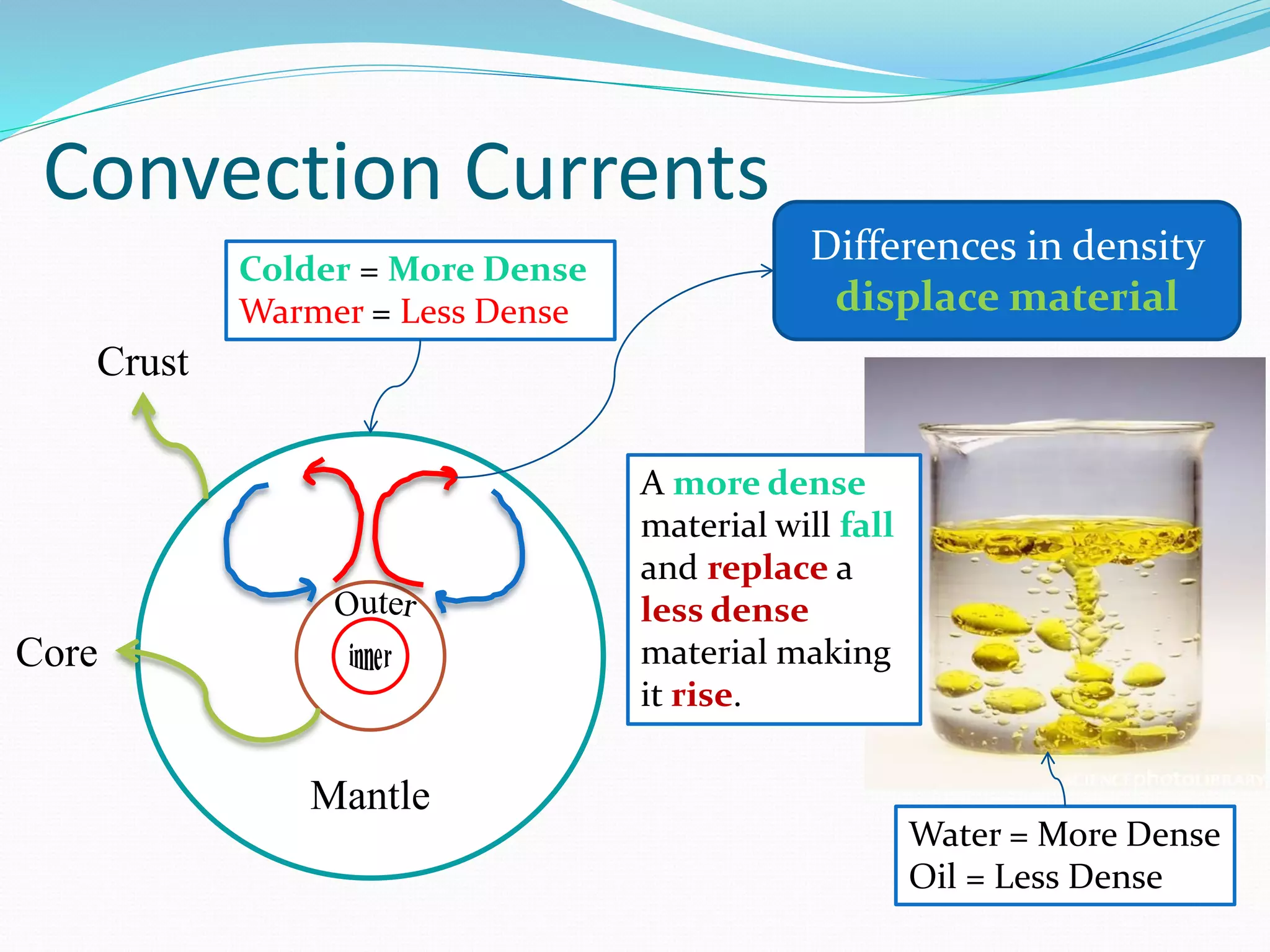
Convection Currents
Crust
Mantle
Core
Differences in density
displace material
A more dense
material will fall
and replace a
less dense
material making
it rise.
Water = More Dense
Oil = Less Dense
Colder = More Dense
Warmer = Less Dense
Two different models of Earth’s Interior
Mechanical Model
 The physical properties
that allow the
movement we observe.
Chemical Model
 The composition of each
layer.
Chemical Model
Crust
Mantle
Core
Elements get heavier
Temperature
Increases Pressure Increases
The closer to
the core…
ATM
Composition: Layers of Earth
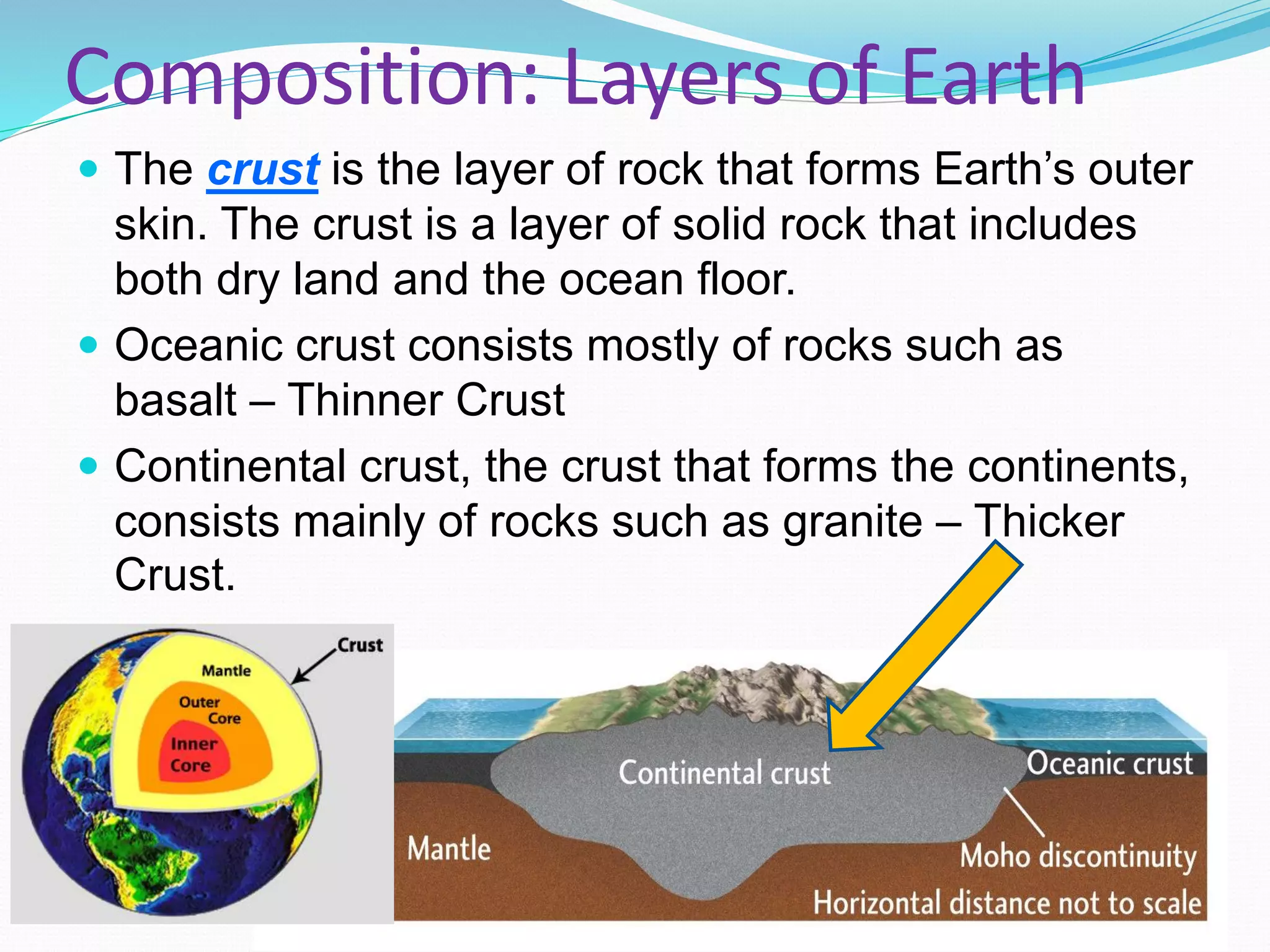
 The crust is the layer of rock that forms Earth’s outer
skin. The crust is a layer of solid rock that includes
both dry land and the ocean floor. CRUST
Composition: Layers of Earth
 The crust is the layer of rock that forms Earth’s outer
skin. The crust is a layer of solid rock that includes
both dry land and the ocean floor.
 Oceanic crust consists mostly of rocks such as
basalt – Thinner Crust
Composition: Layers of Earth
 The crust is the layer of rock that forms Earth’s outer
skin. The crust is a layer of solid rock that includes
both dry land and the ocean floor.
 Oceanic crust consists mostly of rocks such as
basalt – Thinner Crust
 Continental crust, the crust that forms the continents,
consists mainly of rocks such as granite – Thicker
Crust.
 Earth’s mantle is made up of rock that is very
hot, but solid.
Mantle
 Earth’s mantle is made up of rock that is very
hot, but solid.
 Scientists divide the mantle into layers based
on the physical characteristics of those layers.
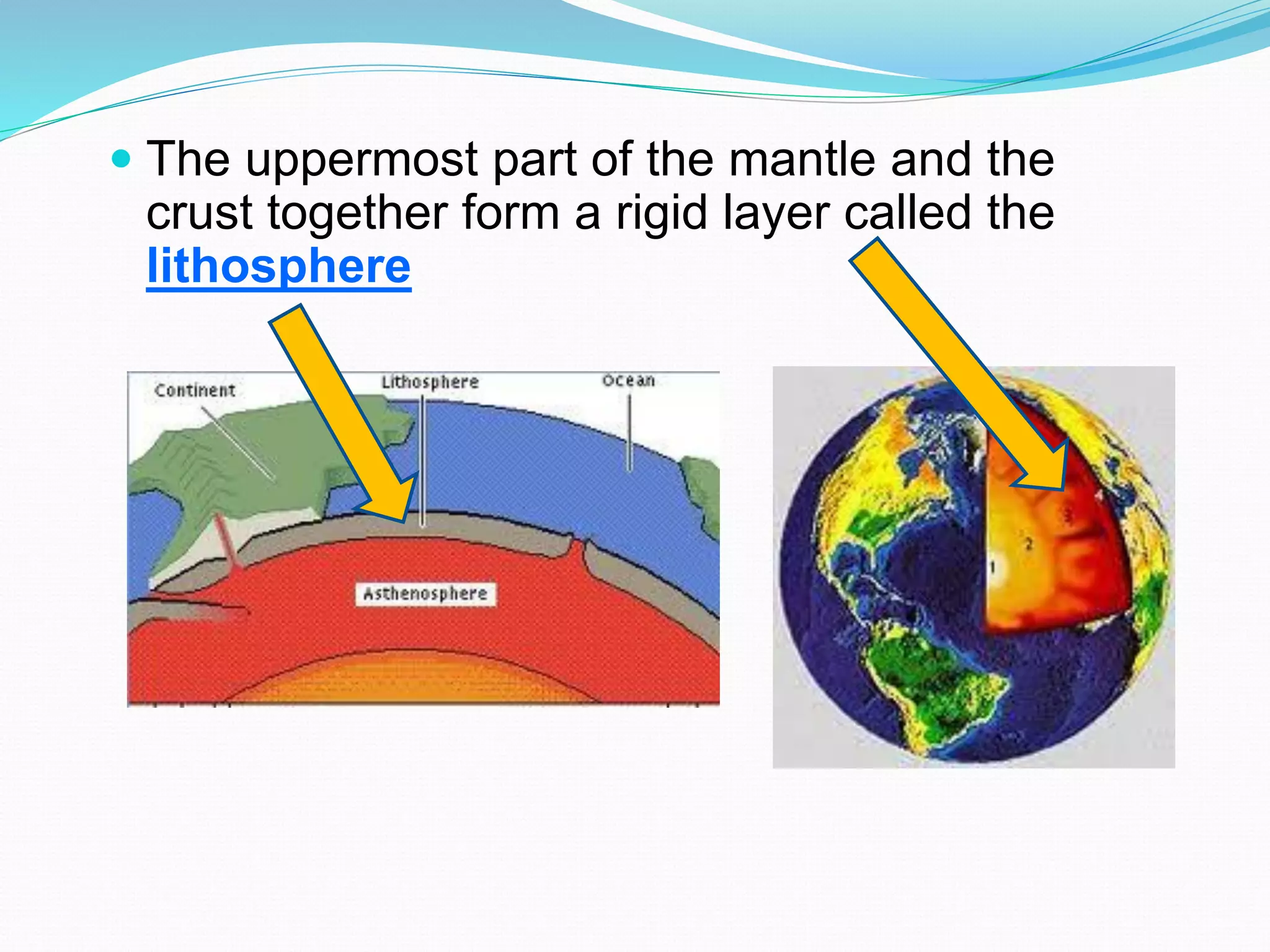
 The uppermost part of the mantle and the
crust together form a rigid layer called the
lithosphere
 The part of the mantle just beneath the
lithosphere is less rigid than the rock above.
This part of the mantle is somewhat soft—it
can bend like plastic. This soft layer is called
the asthenosphere
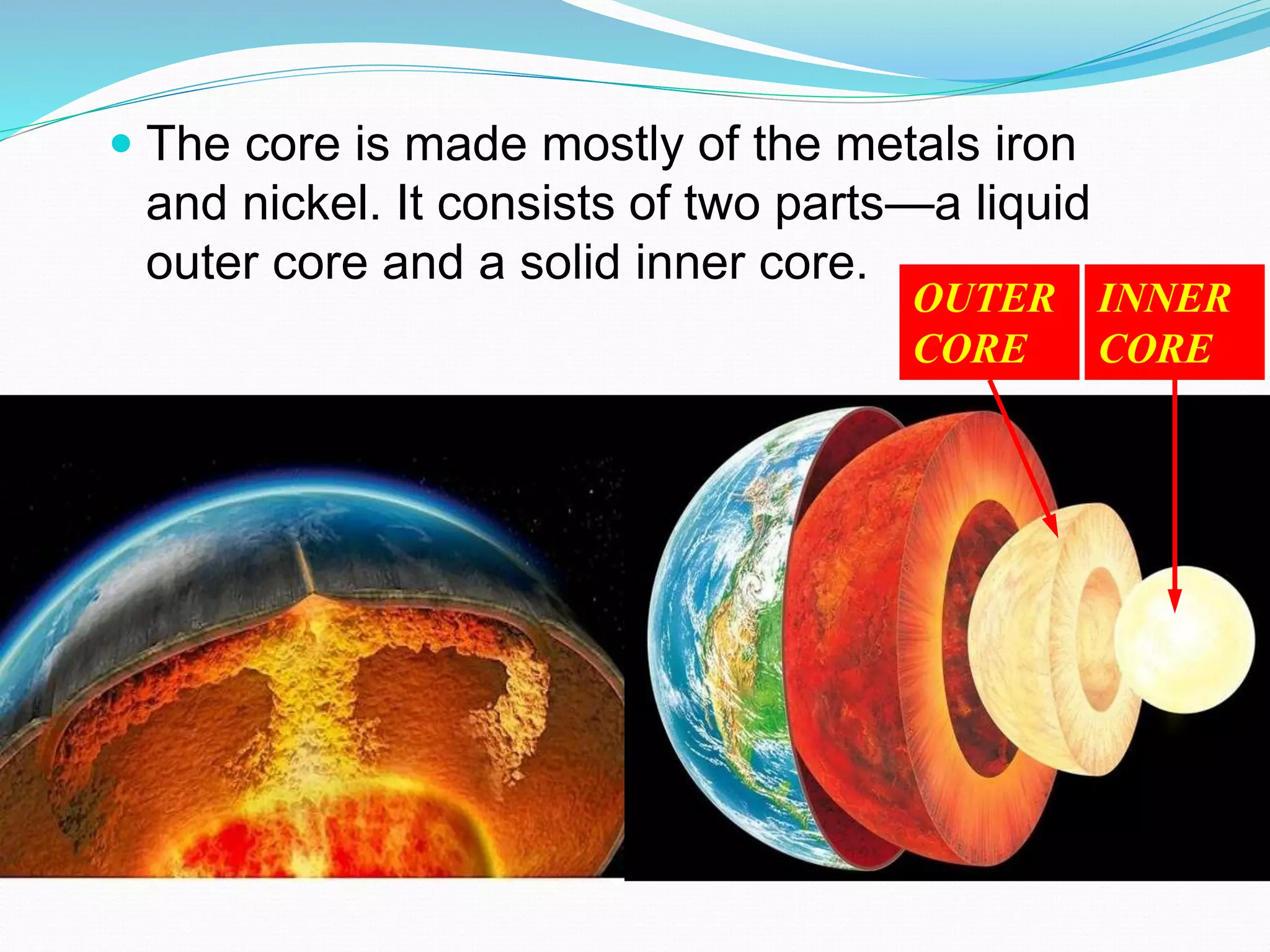
 The core is made mostly of the metals iron
and nickel. It consists of two parts—a liquid
outer core and a solid inner core.
OUTER
CORE
INNER
CORE
 The outer core is a layer of molten metal that
surrounds the inner core. Despite enormous
pressure, the outer core is liquid.
The Core and Earth’s Magnetic Field
 Scientists think
that movements in
the liquid outer
core create
Earth’s magnetic
field. Because
Earth has a
magnetic field, the
planet acts like a
giant bar magnet.
 The inner core is a dense ball of solid metal.
In the inner core, extreme pressure squeezes
the atoms of iron and nickel so much that they
cannot spread out and become liquid.
Mechanical ModelCOREMANTLECRUST
Upper
Lower
Middle
Ocean
Land
Outer
Inner
Solid
Plastic
Molten
Liquid
Solid
Lithosphere
Asthenosphere
Mesosphere
Liquid Fe and Ni
Solid Fe and Ni
Let’s put the chemical and
mechanical models together!

Earth Interior - Chemical and Mechanical Models

  • 1.
    Lithospheric Plates 1. Whyis the Earth broken up into different pieces on the surface? 2. What is making the plates move relative to one another?
  • 2.
    Convection Currents Heat fromthe Interior creates convection currents slowly moving rock due to density differences.
  • 3.
    Convection Currents Crust Mantle Core Differences indensity displace material A more dense material will fall and replace a less dense material making it rise. Water = More Dense Oil = Less Dense Colder = More Dense Warmer = Less Dense
  • 4.
    Two different modelsof Earth’s Interior Mechanical Model  The physical properties that allow the movement we observe. Chemical Model  The composition of each layer.
  • 5.
    Chemical Model Crust Mantle Core Elements getheavier Temperature Increases Pressure Increases The closer to the core… ATM
  • 6.
    Composition: Layers ofEarth  The crust is the layer of rock that forms Earth’s outer skin. The crust is a layer of solid rock that includes both dry land and the ocean floor. CRUST
  • 7.
    Composition: Layers ofEarth  The crust is the layer of rock that forms Earth’s outer skin. The crust is a layer of solid rock that includes both dry land and the ocean floor.  Oceanic crust consists mostly of rocks such as basalt – Thinner Crust
  • 8.
    Composition: Layers ofEarth  The crust is the layer of rock that forms Earth’s outer skin. The crust is a layer of solid rock that includes both dry land and the ocean floor.  Oceanic crust consists mostly of rocks such as basalt – Thinner Crust  Continental crust, the crust that forms the continents, consists mainly of rocks such as granite – Thicker Crust.
  • 9.
     Earth’s mantleis made up of rock that is very hot, but solid. Mantle
  • 10.
     Earth’s mantleis made up of rock that is very hot, but solid.  Scientists divide the mantle into layers based on the physical characteristics of those layers.
  • 11.
     The uppermostpart of the mantle and the crust together form a rigid layer called the lithosphere
  • 12.
     The partof the mantle just beneath the lithosphere is less rigid than the rock above. This part of the mantle is somewhat soft—it can bend like plastic. This soft layer is called the asthenosphere
  • 13.
     The coreis made mostly of the metals iron and nickel. It consists of two parts—a liquid outer core and a solid inner core. OUTER CORE INNER CORE
  • 14.
     The outercore is a layer of molten metal that surrounds the inner core. Despite enormous pressure, the outer core is liquid.
  • 15.
    The Core andEarth’s Magnetic Field  Scientists think that movements in the liquid outer core create Earth’s magnetic field. Because Earth has a magnetic field, the planet acts like a giant bar magnet.
  • 16.
     The innercore is a dense ball of solid metal. In the inner core, extreme pressure squeezes the atoms of iron and nickel so much that they cannot spread out and become liquid.
  • 18.
  • 19.
    Let’s put thechemical and mechanical models together!