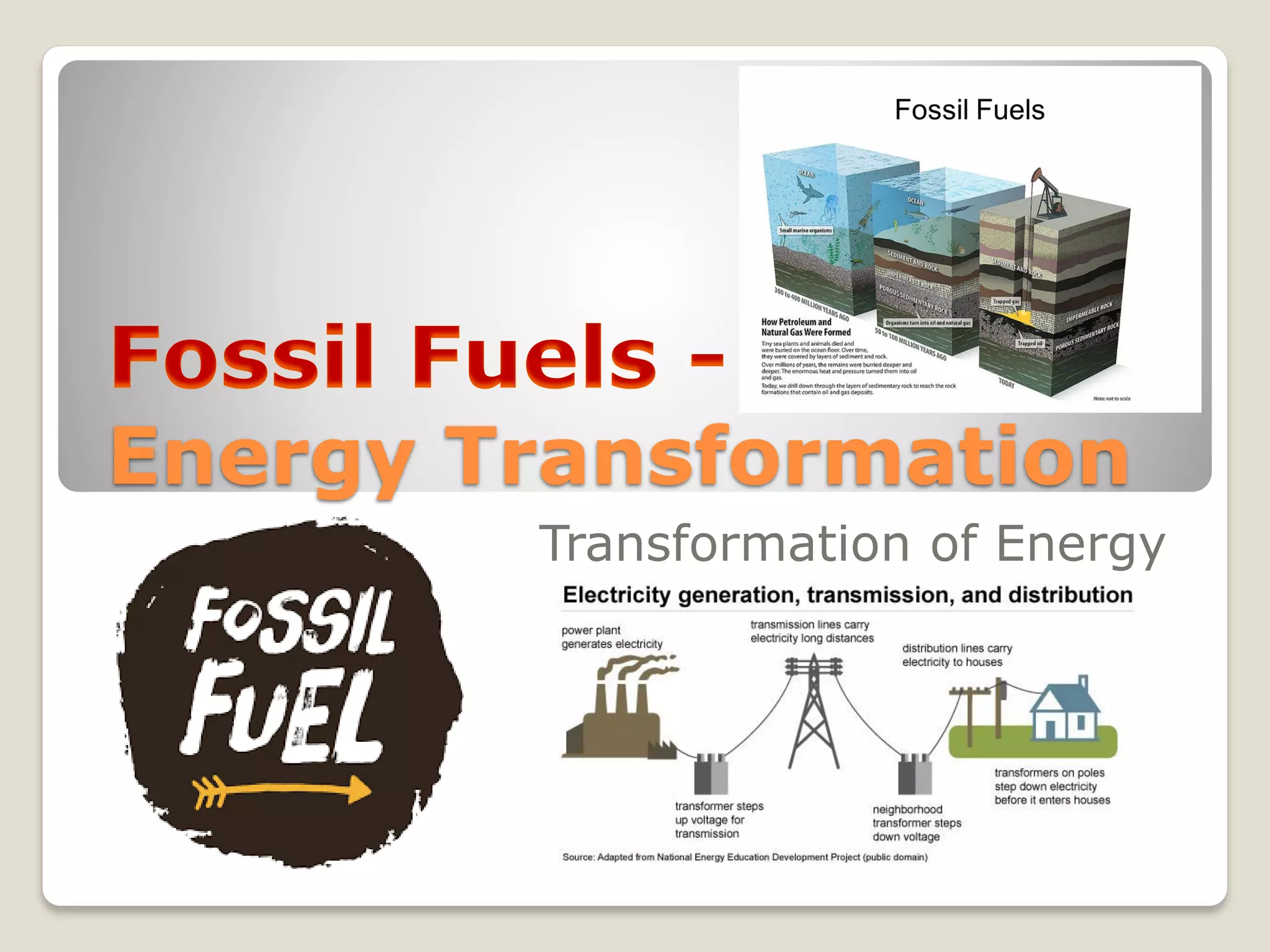
Energy Transformation
Transformation of Energy
How do fuels provide energy?
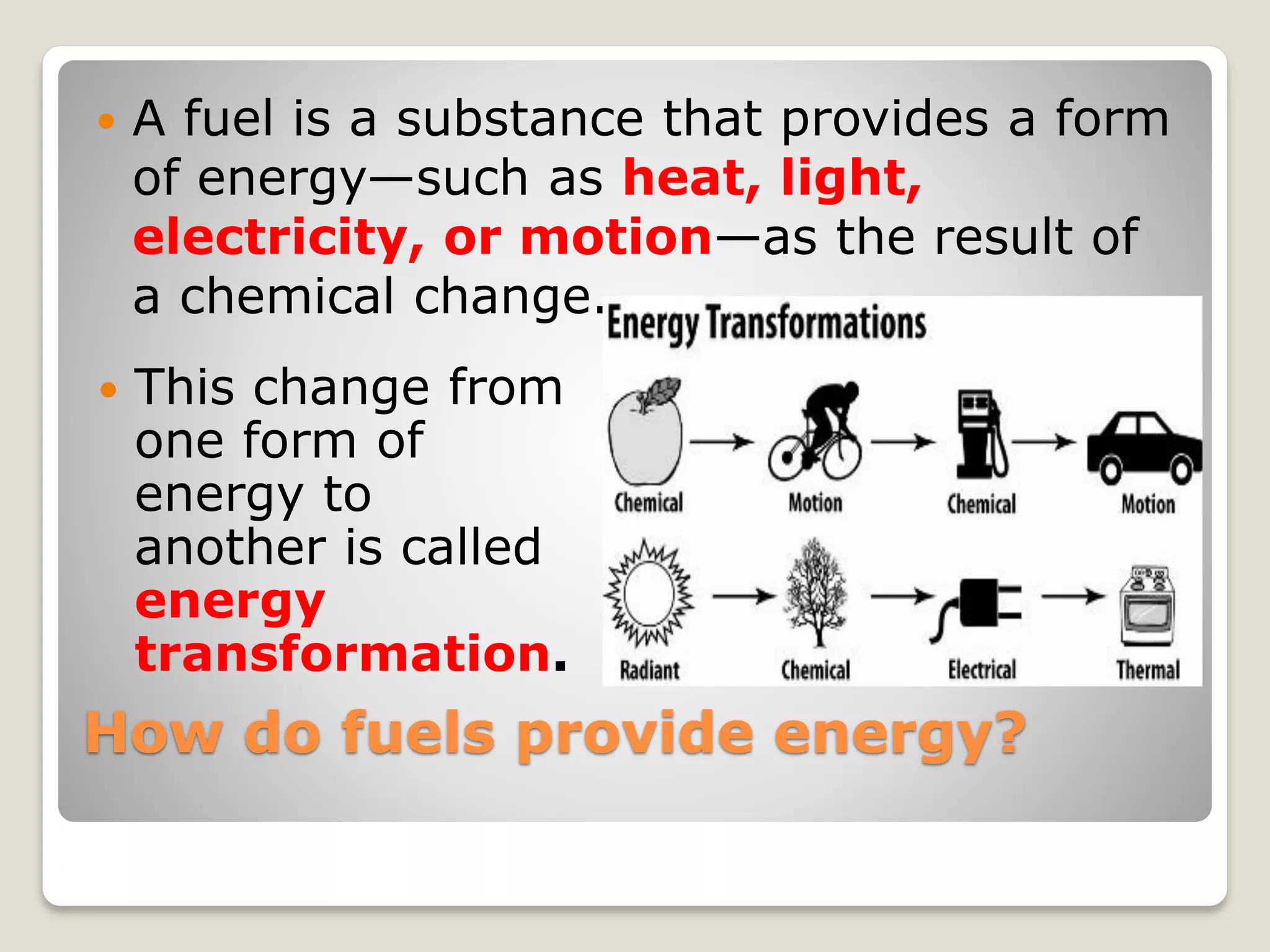
 A fuel is a substance that provides a form
of energy—such as heat, light,
electricity, or motion—as the result of
a chemical change.
 This change from
one form of
energy to
another is called
energy
transformation.
How do fuels provide energy?
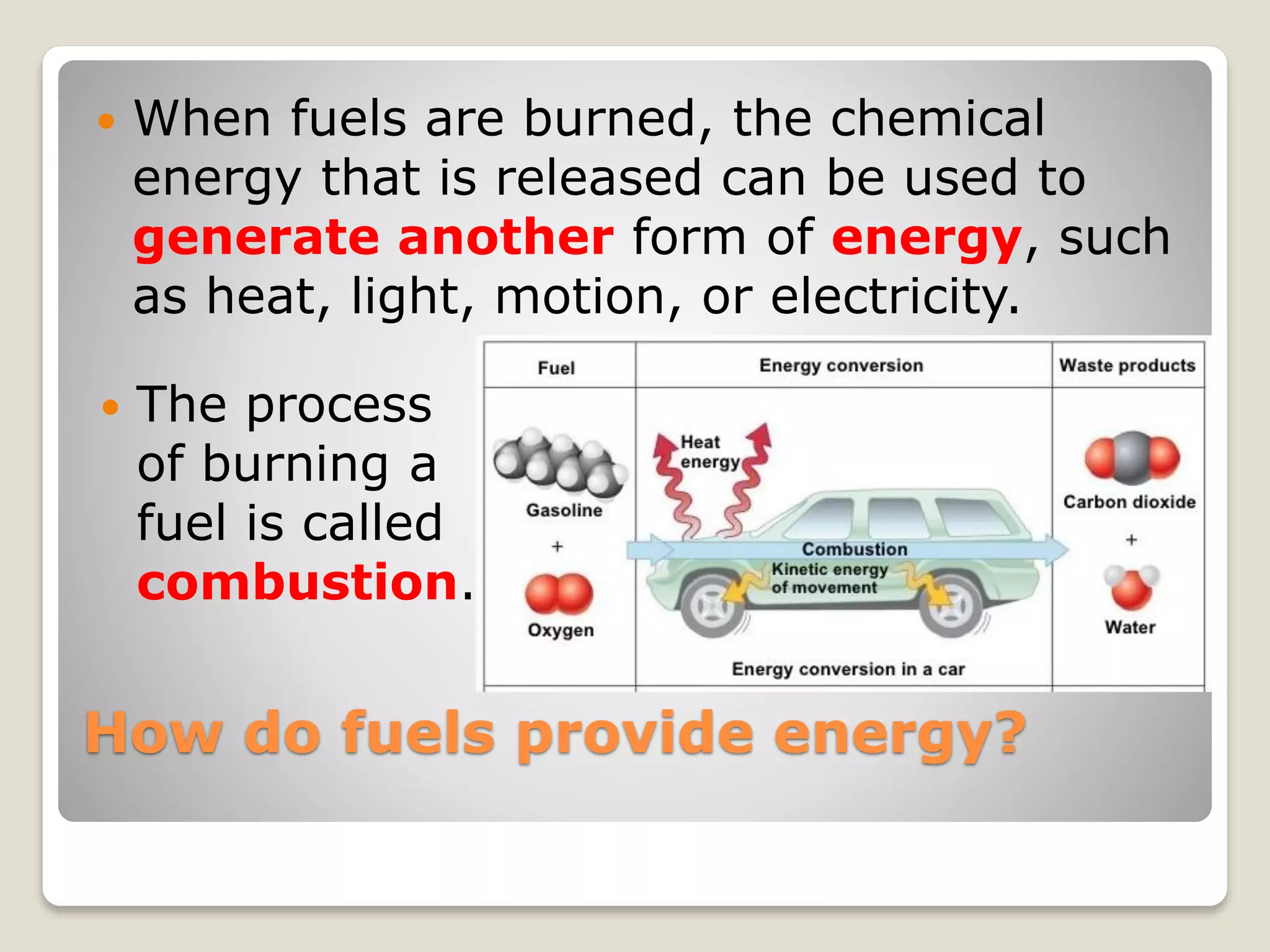
 When fuels are burned, the chemical
energy that is released can be used to
generate another form of energy, such
as heat, light, motion, or electricity.
 The process
of burning a
fuel is called
combustion.
What are the three major
fossil fuels?
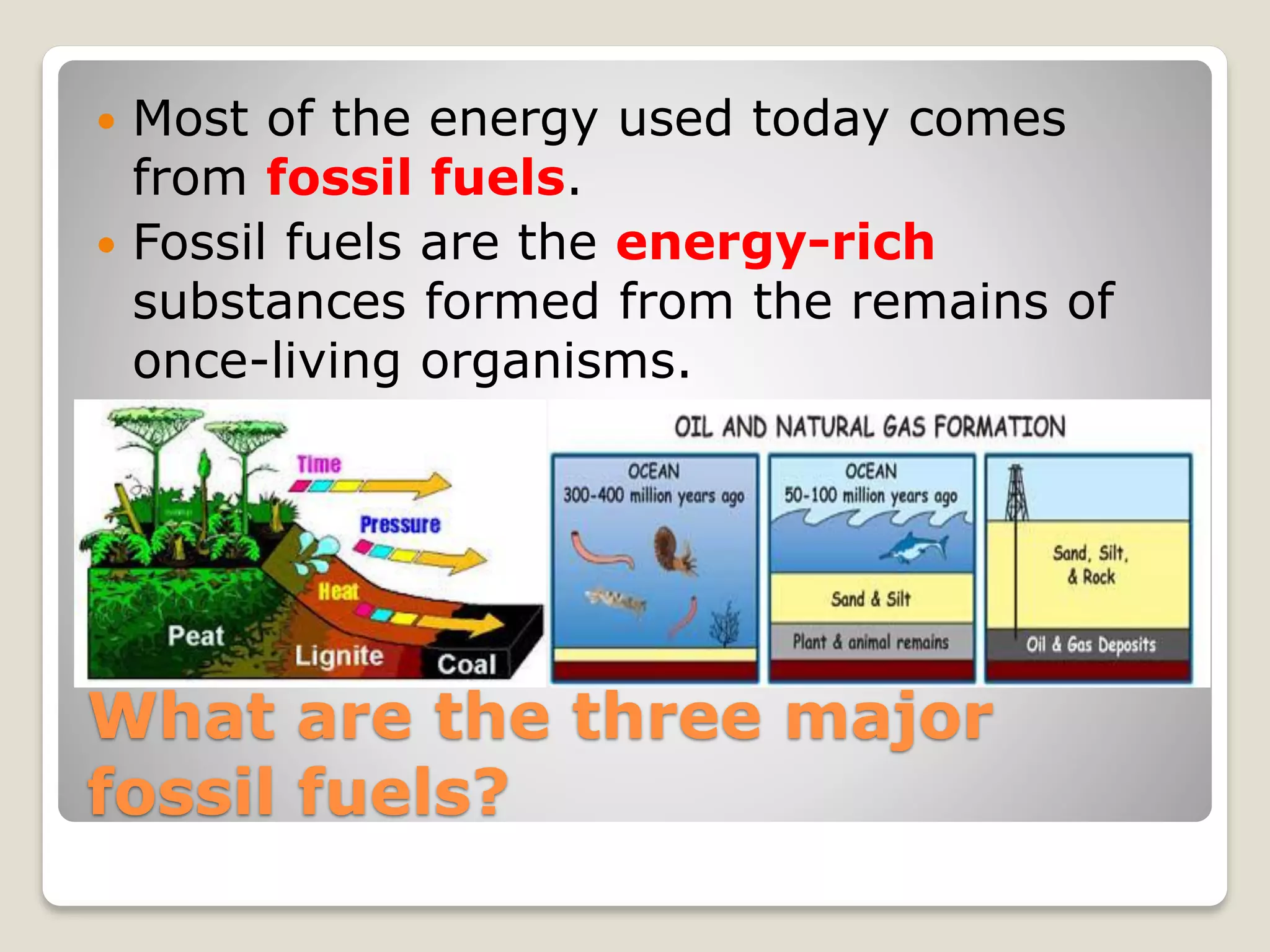
 Most of the energy used today comes
from fossil fuels.
 Fossil fuels are the energy-rich
substances formed from the remains of
once-living organisms.
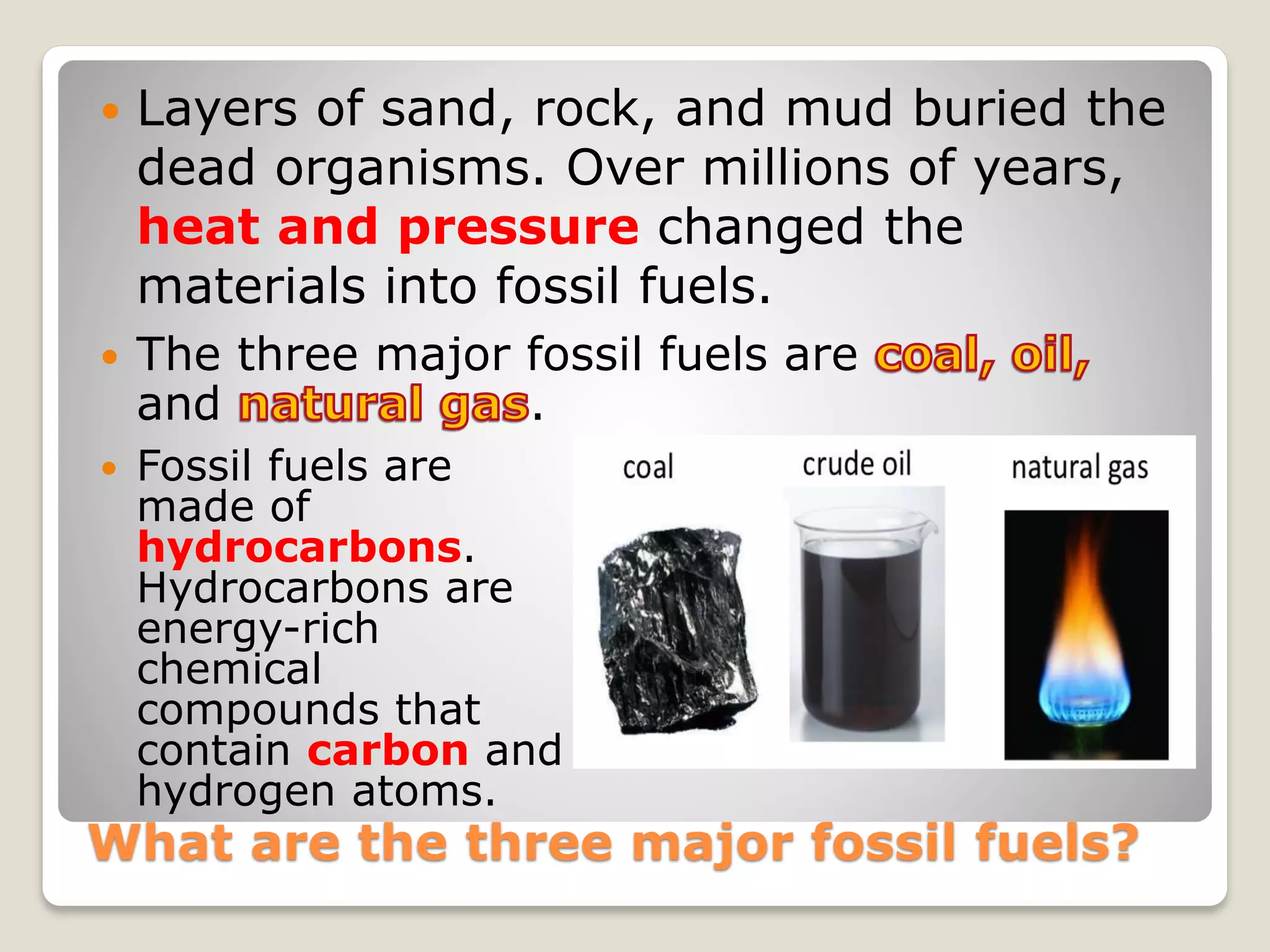
What are the three major fossil fuels?
 Layers of sand, rock, and mud buried the
dead organisms. Over millions of years,
heat and pressure changed the
materials into fossil fuels.
 Fossil fuels are
made of
hydrocarbons.
Hydrocarbons are
energy-rich
chemical
compounds that
contain carbon and
hydrogen atoms.
 The three major fossil fuels are
and .
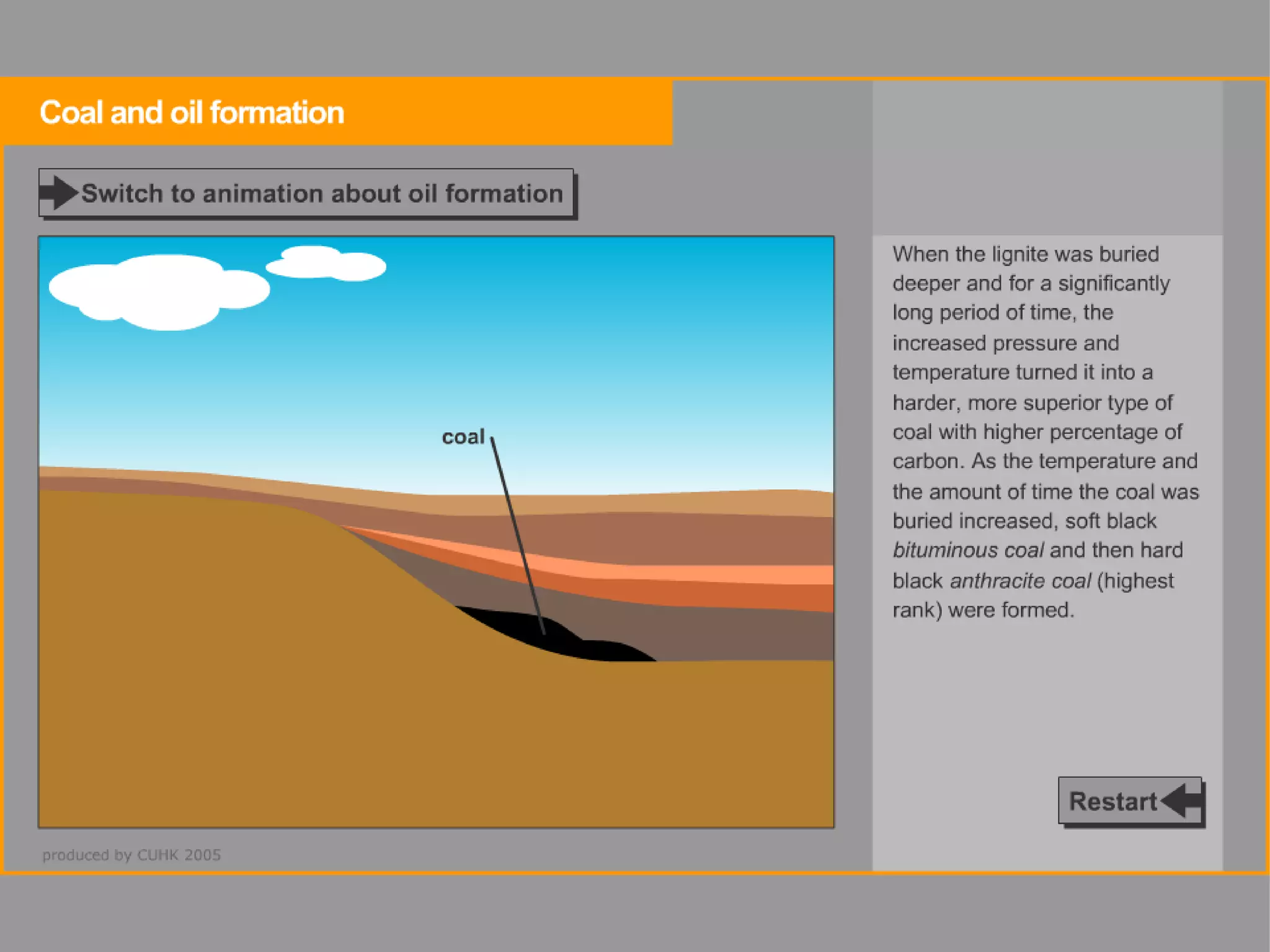
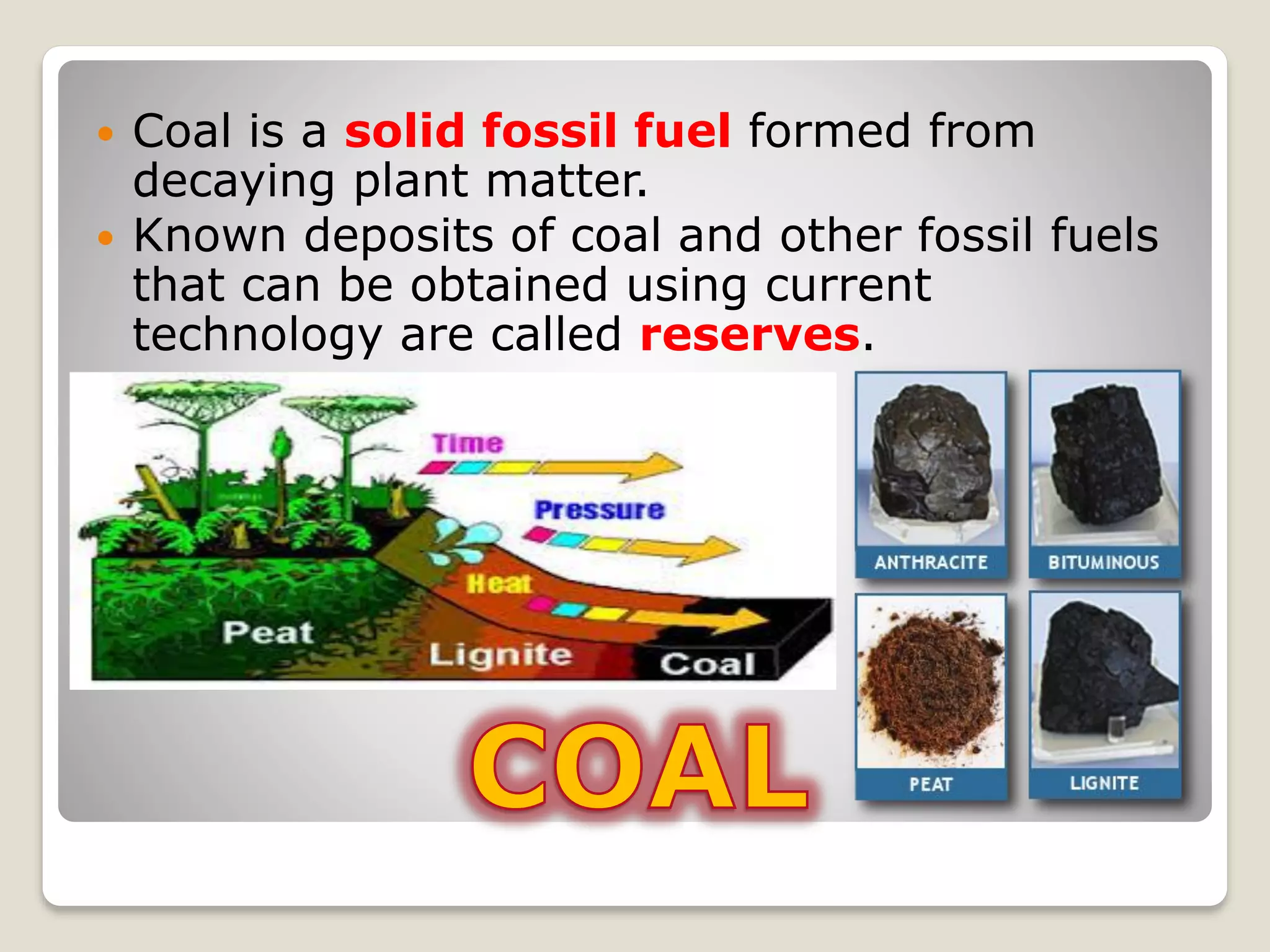
 Coal is a solid fossil fuel formed from
decaying plant matter.
 Known deposits of coal and other fossil fuels
that can be obtained using current
technology are called reserves.
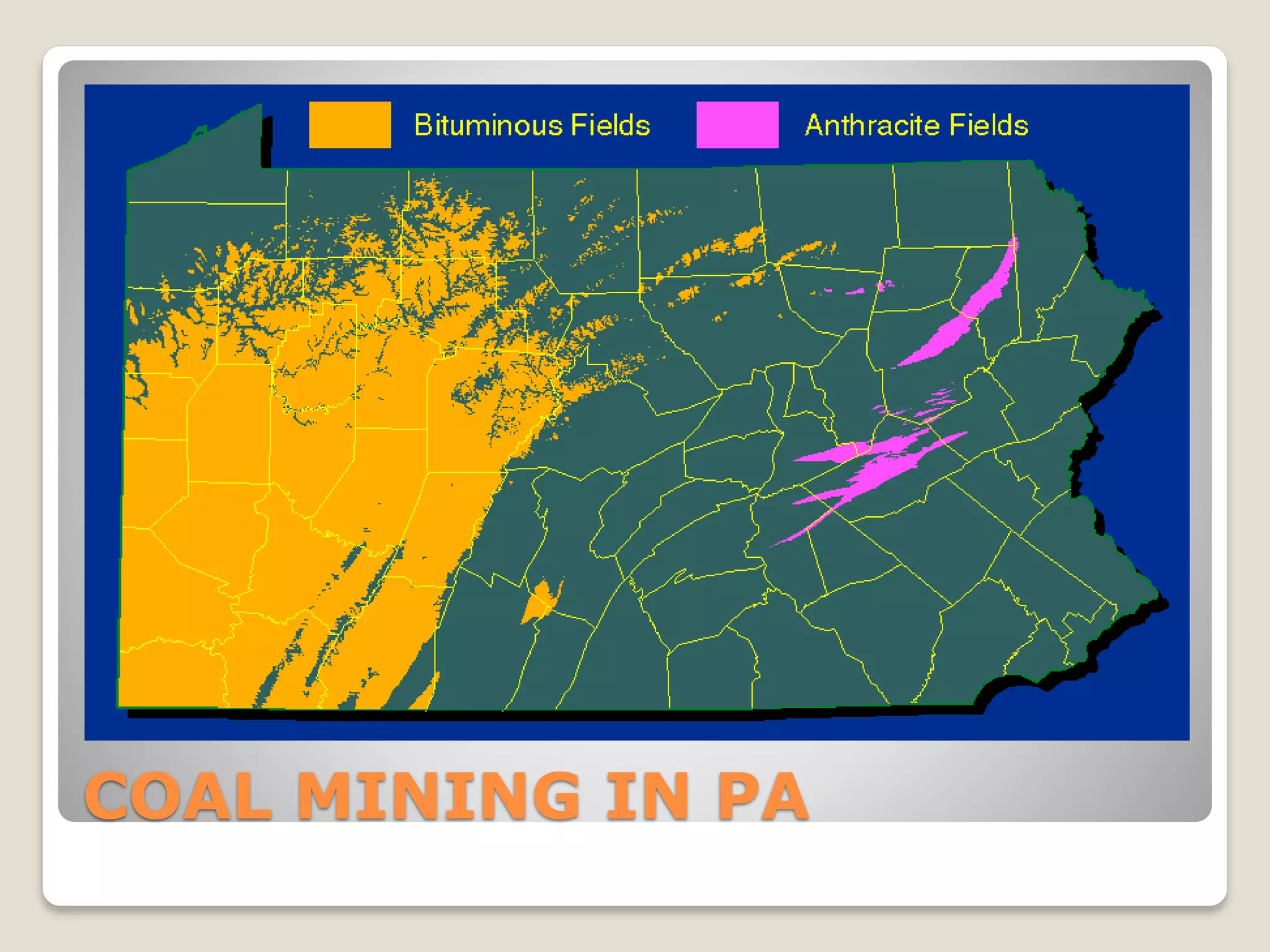
COAL MINING IN PA
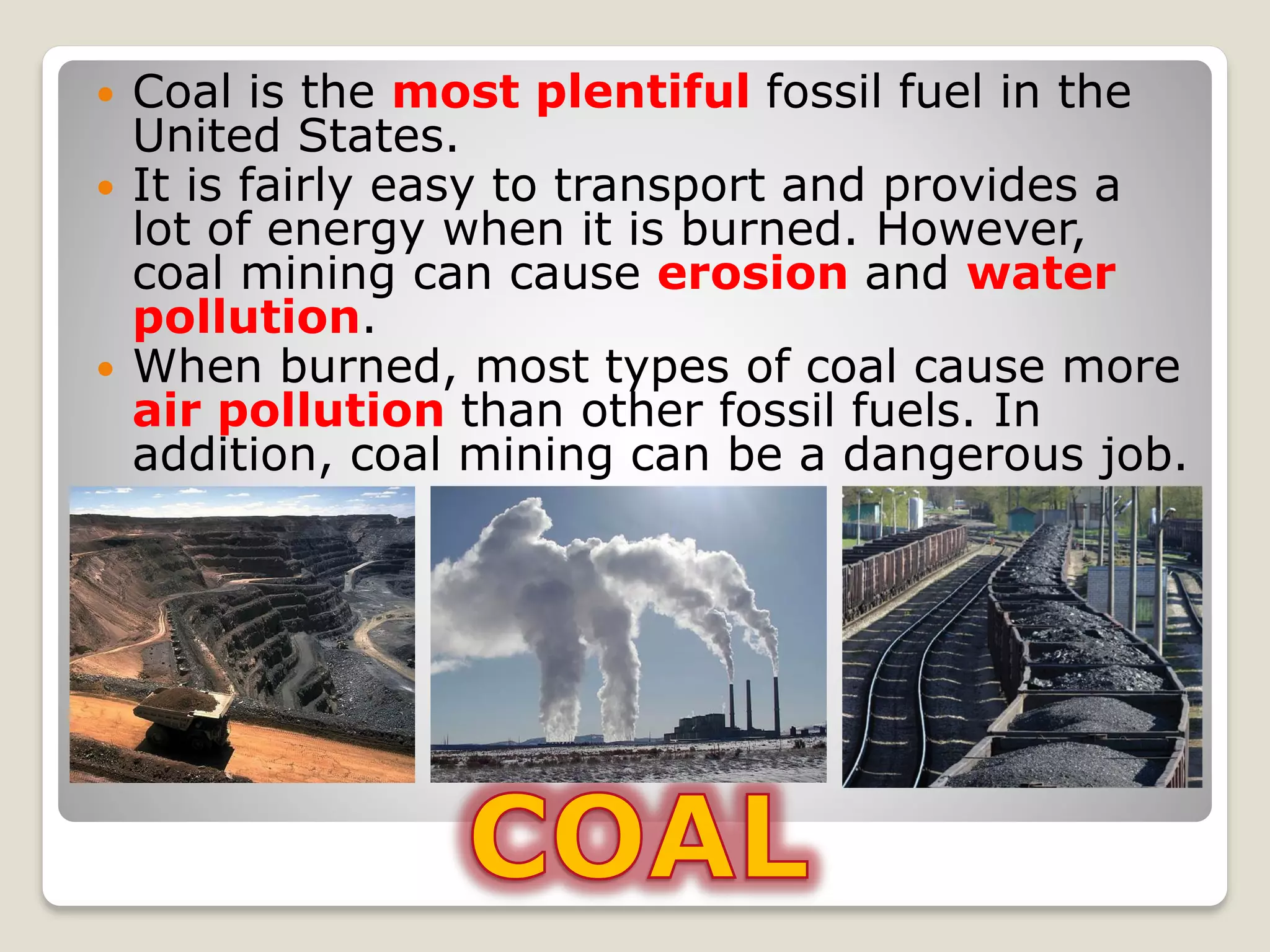
 Coal is the most plentiful fossil fuel in the
United States.
 It is fairly easy to transport and provides a
lot of energy when it is burned. However,
coal mining can cause erosion and water
pollution.
 When burned, most types of coal cause more
air pollution than other fossil fuels. In
addition, coal mining can be a dangerous job.
 Insert Animation
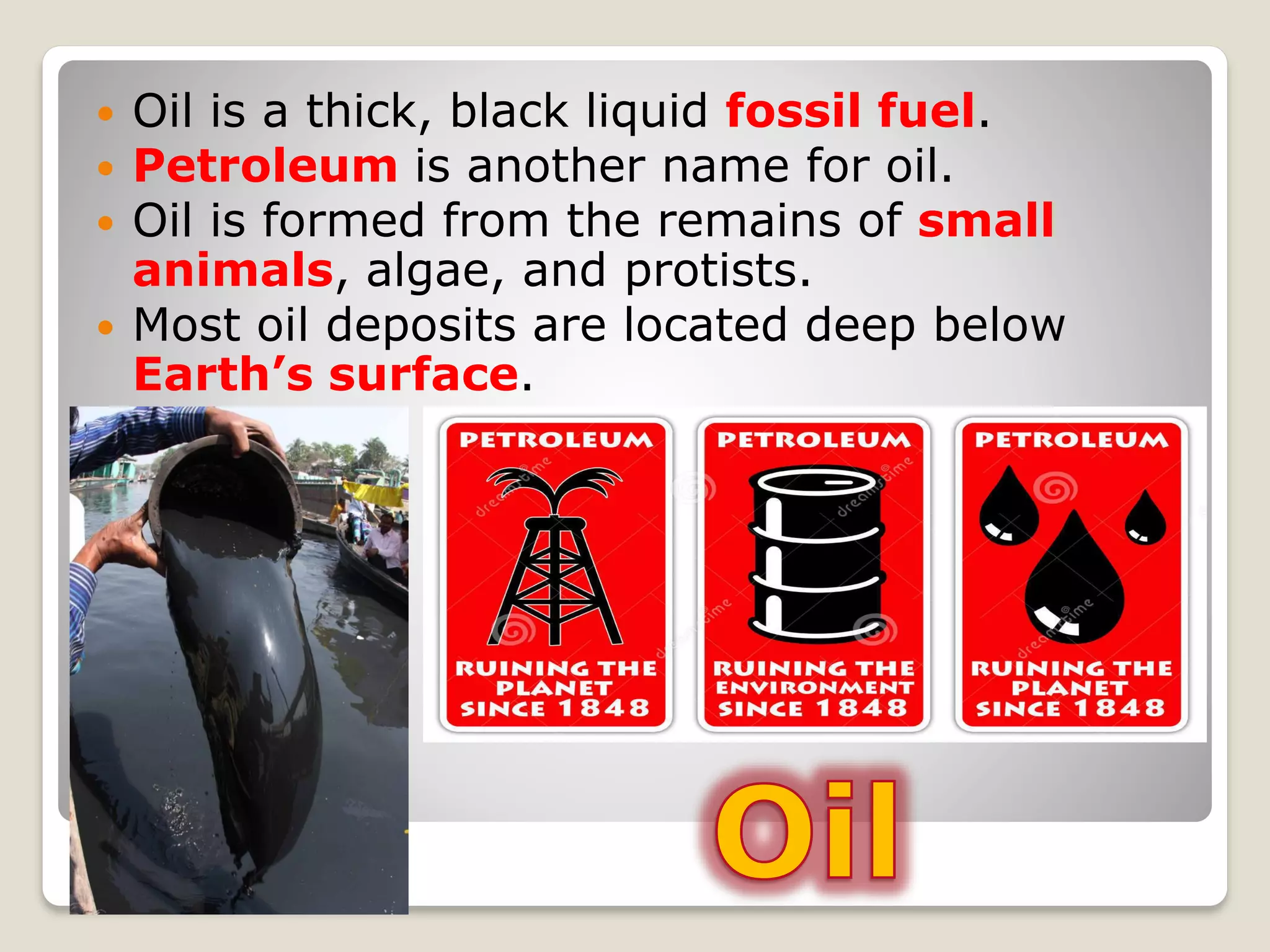
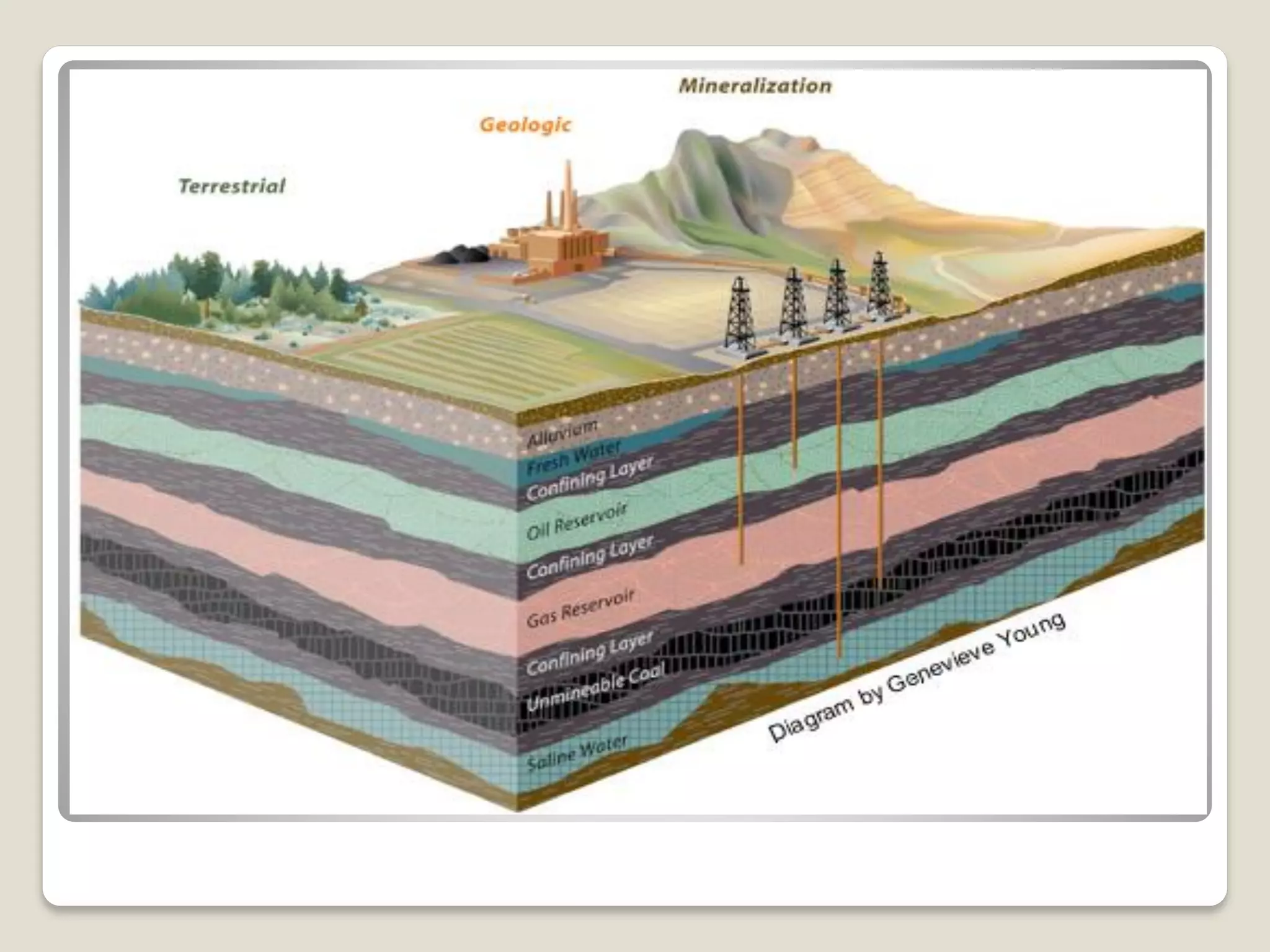
 Oil is a thick, black liquid fossil fuel.
 Petroleum is another name for oil.
 Oil is formed from the remains of small
animals, algae, and protists.
 Most oil deposits are located deep below
Earth’s surface.
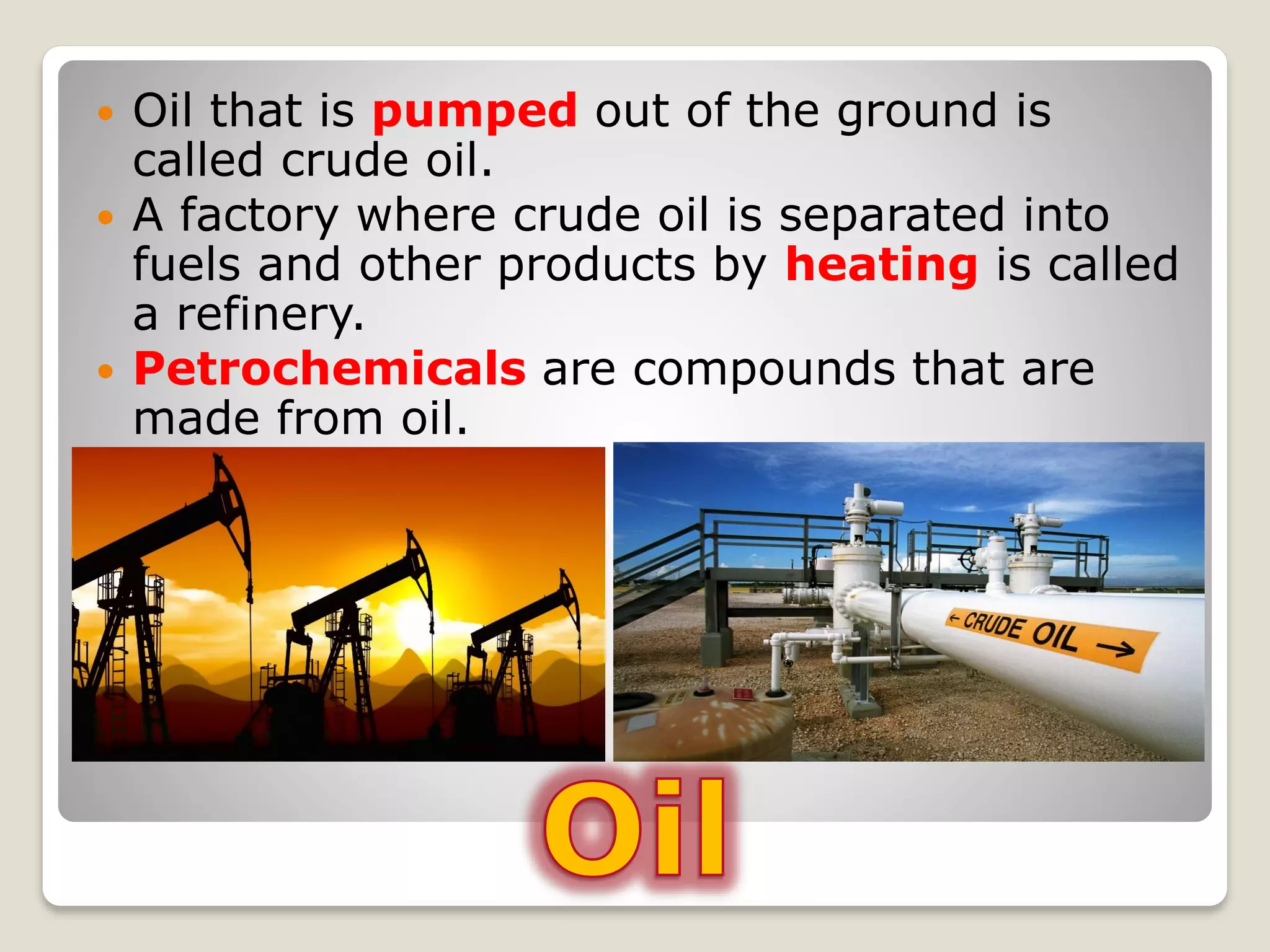
 Oil that is pumped out of the ground is
called crude oil.
 A factory where crude oil is separated into
fuels and other products by heating is called
a refinery.
 Petrochemicals are compounds that are
made from oil.
 Insert Animation
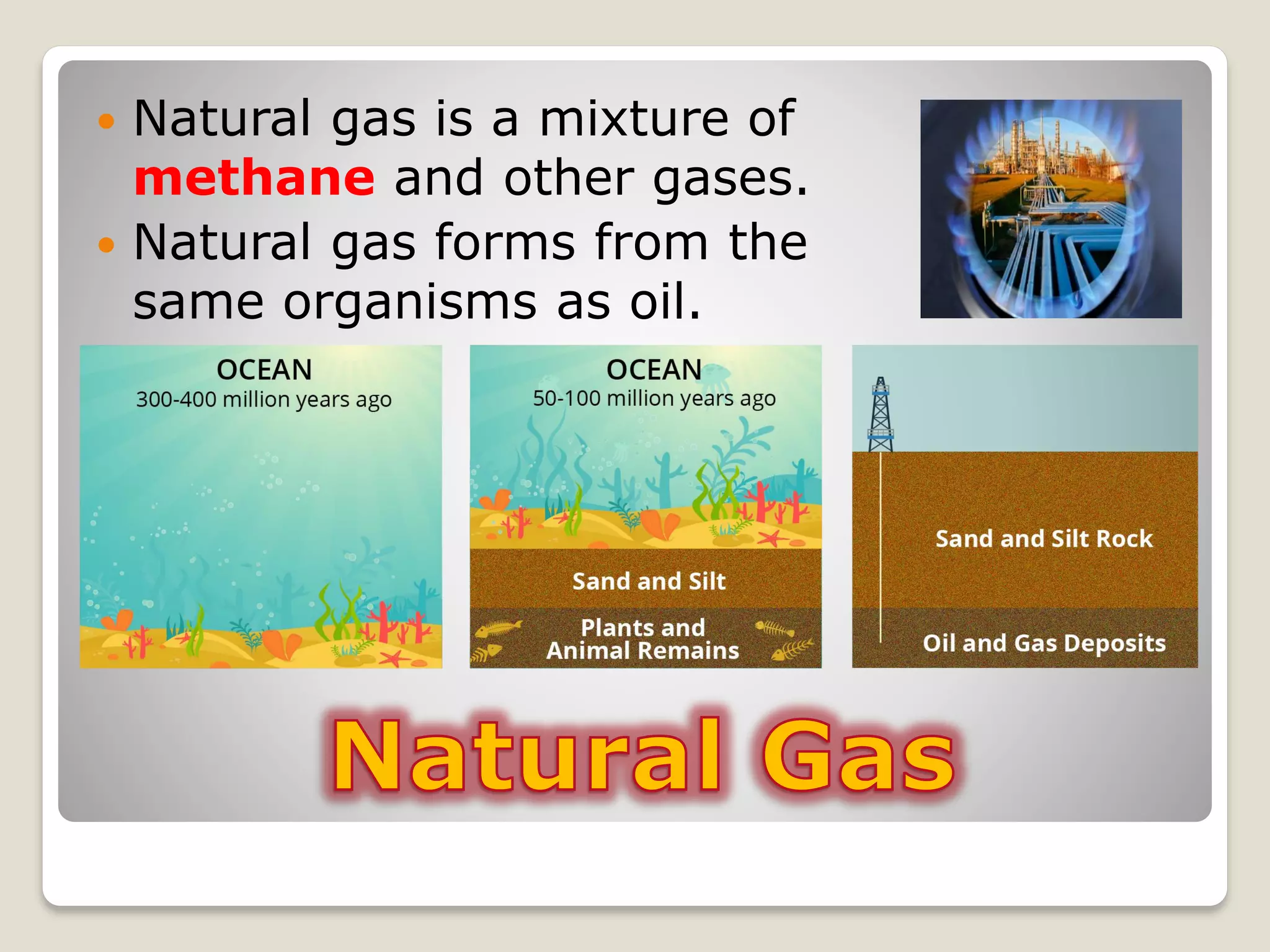
 Natural gas is a mixture of
methane and other gases.
 Natural gas forms from the
same organisms as oil.
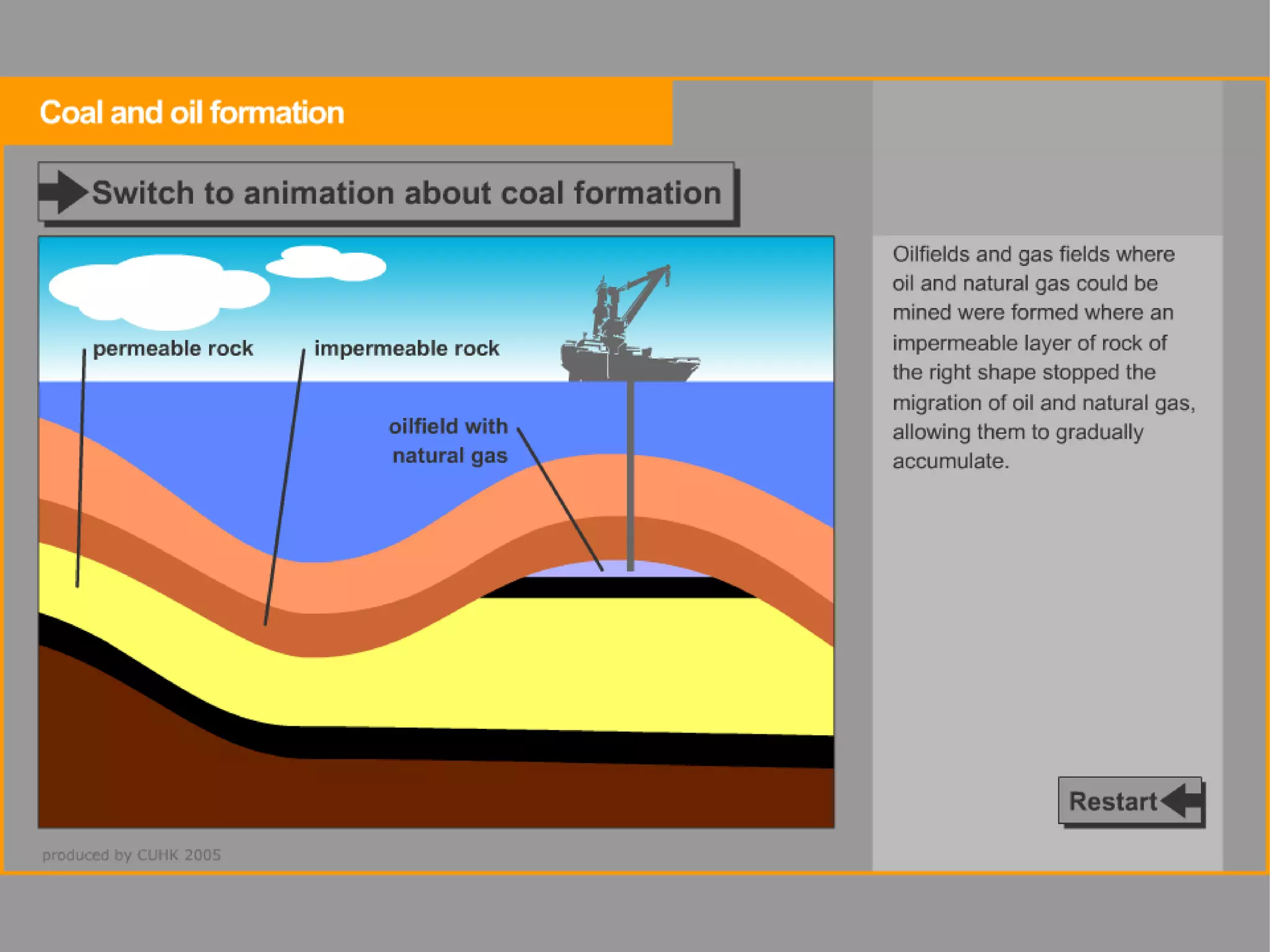
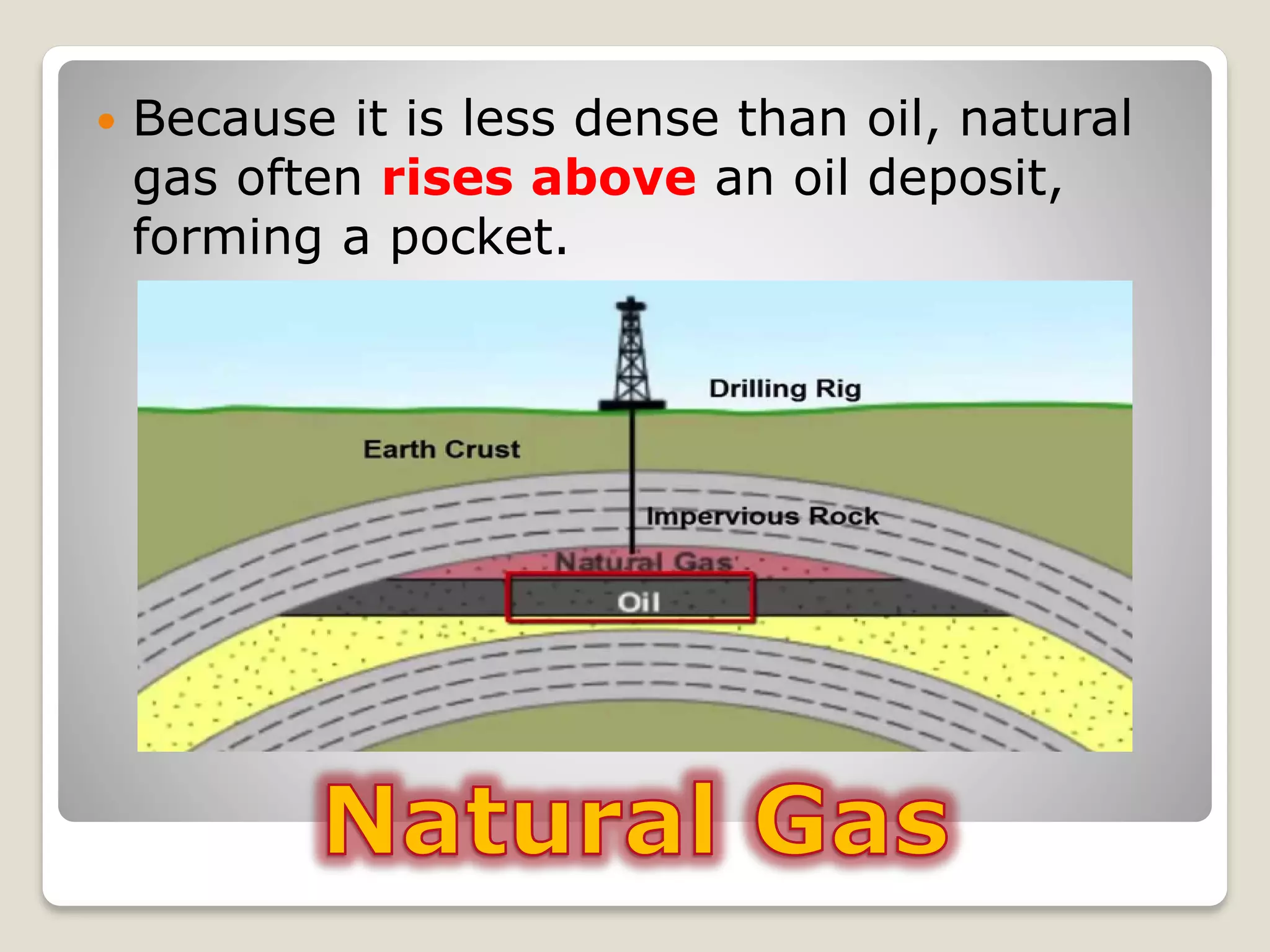
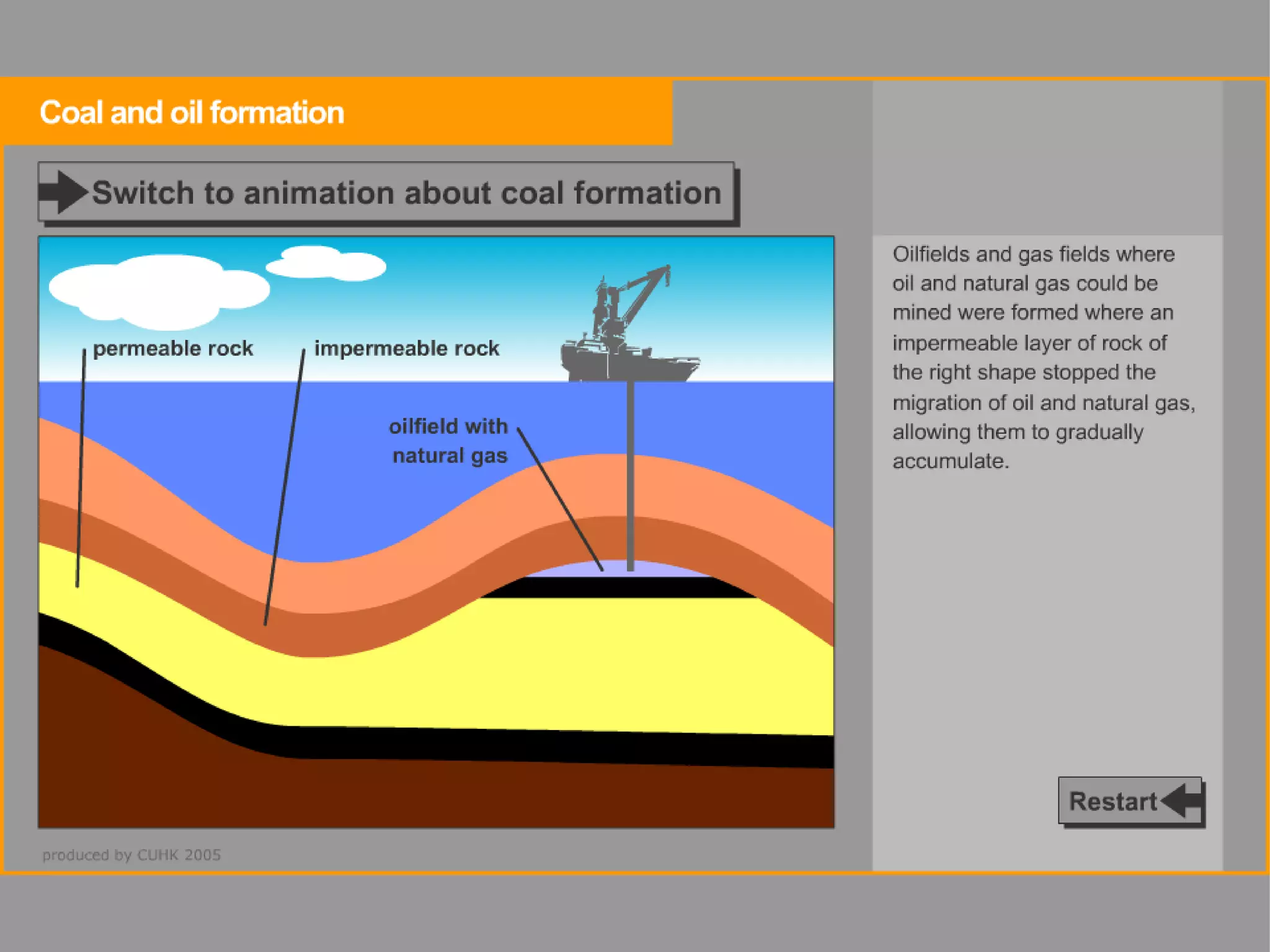
 Because it is less dense than oil, natural
gas often rises above an oil deposit,
forming a pocket.
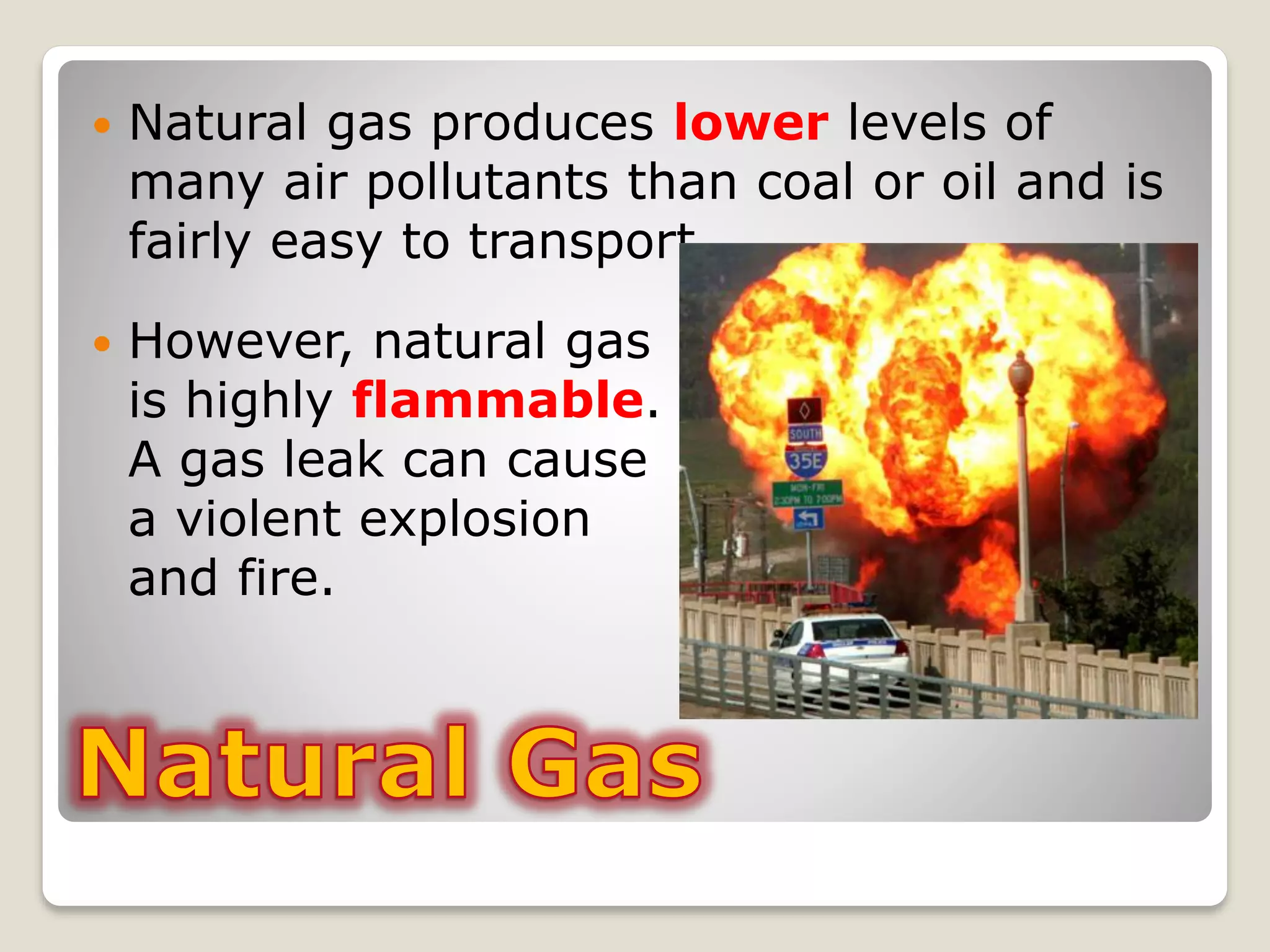
 Natural gas produces lower levels of
many air pollutants than coal or oil and is
fairly easy to transport.
 However, natural gas
is highly flammable.
A gas leak can cause
a violent explosion
and fire.
 Insert Animation
Why are fossil fuels considered
nonrenewable resources?
 People currently rely very heavily on
fossil fuels. But since fossil fuels take
hundreds of millions of years to form they
are considered nonrenewable
resources.
 Fossil fuels are being used at a rate
faster than they are formed.
 New sources of energy are needed to
replace the decreasing fossil fuel
reserves.
VIDEO – What are Fossil Fuels?

Fossil Fuels

  • 1.
  • 2.
    How do fuelsprovide energy?  A fuel is a substance that provides a form of energy—such as heat, light, electricity, or motion—as the result of a chemical change.  This change from one form of energy to another is called energy transformation.
  • 3.
    How do fuelsprovide energy?  When fuels are burned, the chemical energy that is released can be used to generate another form of energy, such as heat, light, motion, or electricity.  The process of burning a fuel is called combustion.
  • 4.
    What are thethree major fossil fuels?  Most of the energy used today comes from fossil fuels.  Fossil fuels are the energy-rich substances formed from the remains of once-living organisms.
  • 5.
    What are thethree major fossil fuels?  Layers of sand, rock, and mud buried the dead organisms. Over millions of years, heat and pressure changed the materials into fossil fuels.  Fossil fuels are made of hydrocarbons. Hydrocarbons are energy-rich chemical compounds that contain carbon and hydrogen atoms.  The three major fossil fuels are and .
  • 6.
     Coal isa solid fossil fuel formed from decaying plant matter.  Known deposits of coal and other fossil fuels that can be obtained using current technology are called reserves.
  • 7.
  • 8.
     Coal isthe most plentiful fossil fuel in the United States.  It is fairly easy to transport and provides a lot of energy when it is burned. However, coal mining can cause erosion and water pollution.  When burned, most types of coal cause more air pollution than other fossil fuels. In addition, coal mining can be a dangerous job.
  • 9.
  • 10.
     Oil isa thick, black liquid fossil fuel.  Petroleum is another name for oil.  Oil is formed from the remains of small animals, algae, and protists.  Most oil deposits are located deep below Earth’s surface.
  • 12.
     Oil thatis pumped out of the ground is called crude oil.  A factory where crude oil is separated into fuels and other products by heating is called a refinery.  Petrochemicals are compounds that are made from oil.
  • 13.
  • 14.
     Natural gasis a mixture of methane and other gases.  Natural gas forms from the same organisms as oil.
  • 15.
     Because itis less dense than oil, natural gas often rises above an oil deposit, forming a pocket.
  • 16.
     Natural gasproduces lower levels of many air pollutants than coal or oil and is fairly easy to transport.  However, natural gas is highly flammable. A gas leak can cause a violent explosion and fire.
  • 17.
  • 18.
    Why are fossilfuels considered nonrenewable resources?  People currently rely very heavily on fossil fuels. But since fossil fuels take hundreds of millions of years to form they are considered nonrenewable resources.  Fossil fuels are being used at a rate faster than they are formed.  New sources of energy are needed to replace the decreasing fossil fuel reserves.
  • 19.
    VIDEO – Whatare Fossil Fuels?