Physical Science
Module 6 – Part 1


The Earth and the Lithosphere
The Earth’s Layers
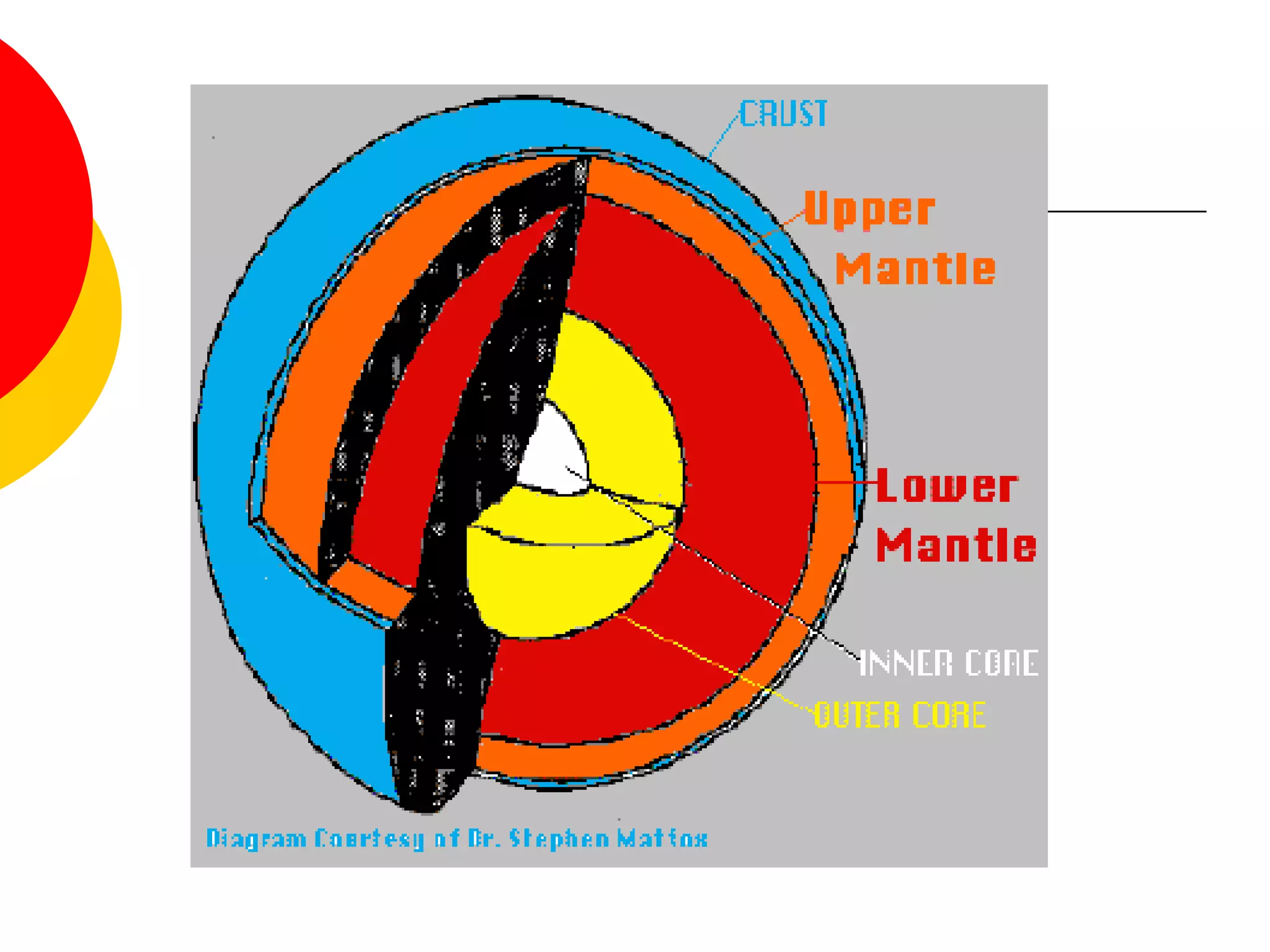
     The Earth is composed of four different layers.
     (Look at Figure 6.1 on page 131)
     The crust is the layer that you live on, and it is
      the most widely studied and understood.
     The mantle is much hotter and has the ability
      to flow.
     The Outer and Inner Cores are hotter still with
      pressures so great that you would be squeezed
      into a ball smaller than a marble if you were
      able to go to the center of the Earth!!!!!!
Crust
   The   Earth's Crust is like the skin of
    an apple.
   It is very thin in comparison to the
    other three layers.
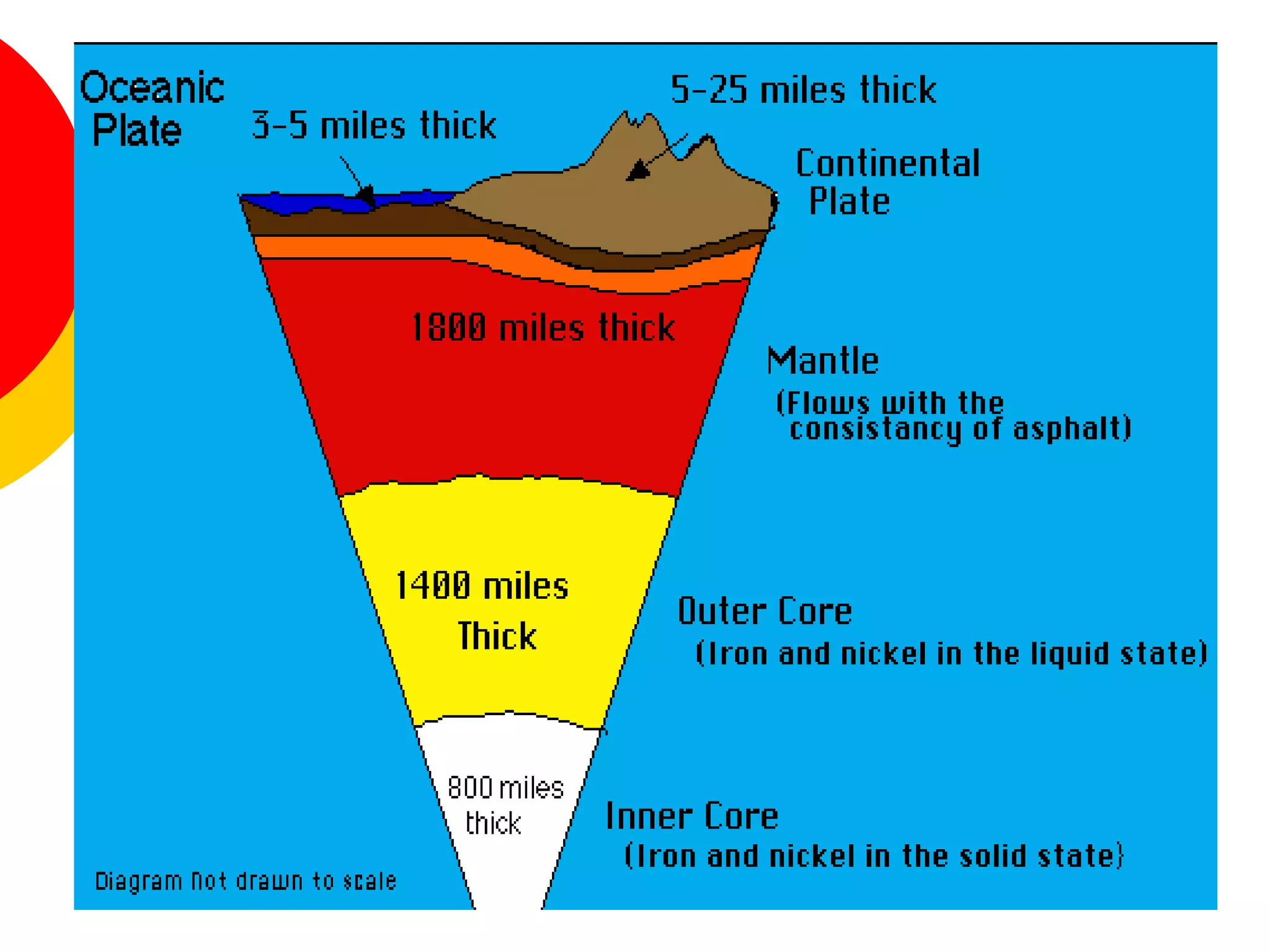
   The crust is only about 3-5 miles (8
    kilometers) thick under the oceans
    (oceanic crust) and about 25 miles
    (32 kilometers) thick under the
    continents (continental crust).
Crust
   The temperatures of the crust vary
    from air temperature on top to
    about 1600 degrees Fahrenheit
    (870 degrees Celsius) in the
    deepest parts of the crust. You can
    bake a loaf of bread in your oven at
    350 degrees Fahrenheit , at 1600
    degrees F. rocks begin to melt.
Crust
   The temperatures of the crust vary
    from air temperature on top to
    about 1600 degrees Fahrenheit
    (870 degrees Celsius) in the
    deepest parts of the crust. You can
    bake a loaf of bread in your oven at
    350 degrees Fahrenheit , at 1600
    degrees F. rocks begin to melt.
Crust
   The  crust of the Earth is broken
    into many pieces called plates.
   The plates "float" on the soft,
    plastic mantle which is located
    below the crust.
Crust
  These  plates usually move
   along smoothly but sometimes
   they stick and build up
   pressure.
  The pressure builds and the
   rock bends until it snaps.
   When this occurs an
   Earthquake is the result!
Crust
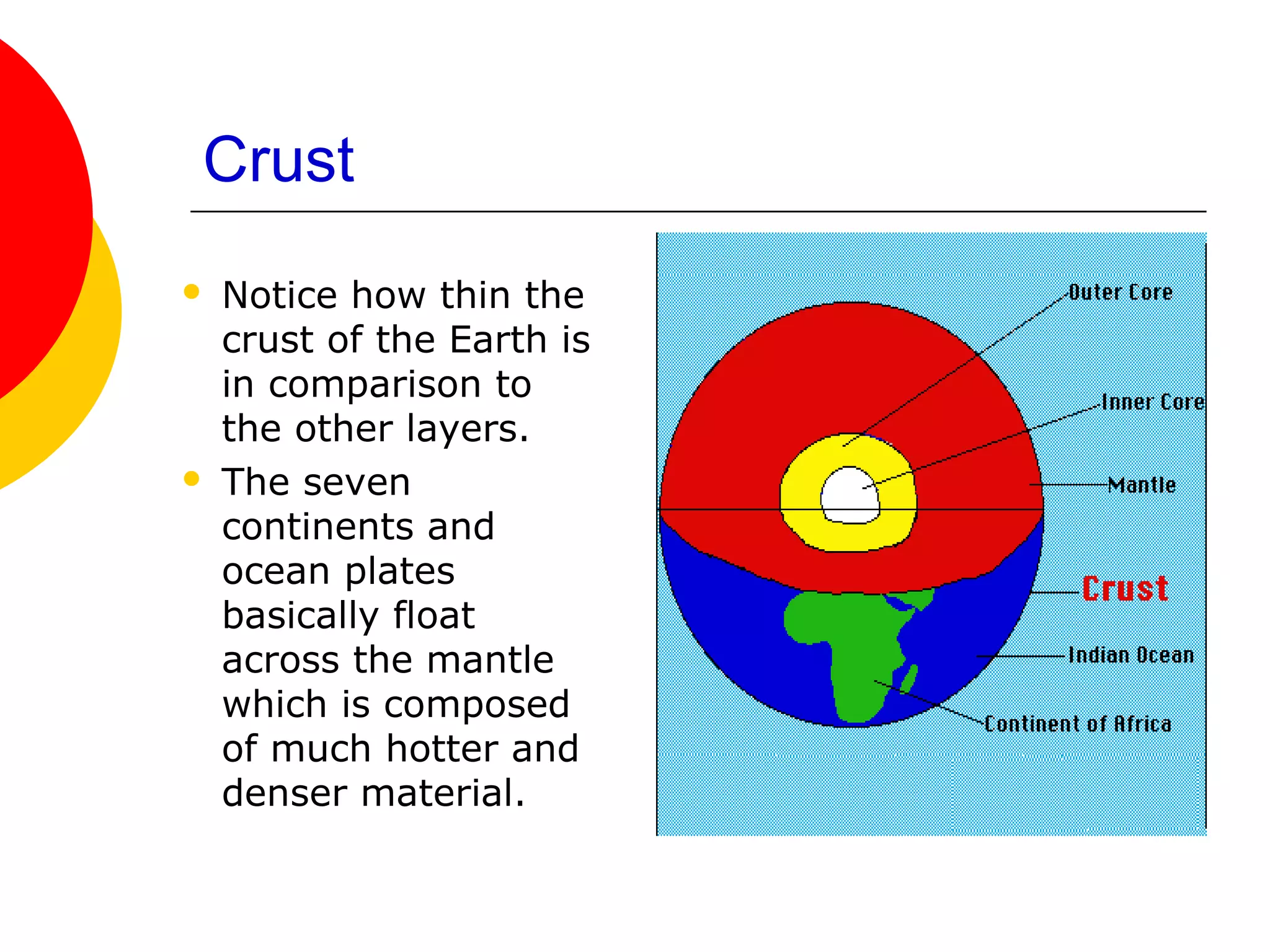
   Notice how thin the
    crust of the Earth is
    in comparison to
    the other layers.
   The seven
    continents and
    ocean plates
    basically float
    across the mantle
    which is composed
    of much hotter and
    denser material.
Crust
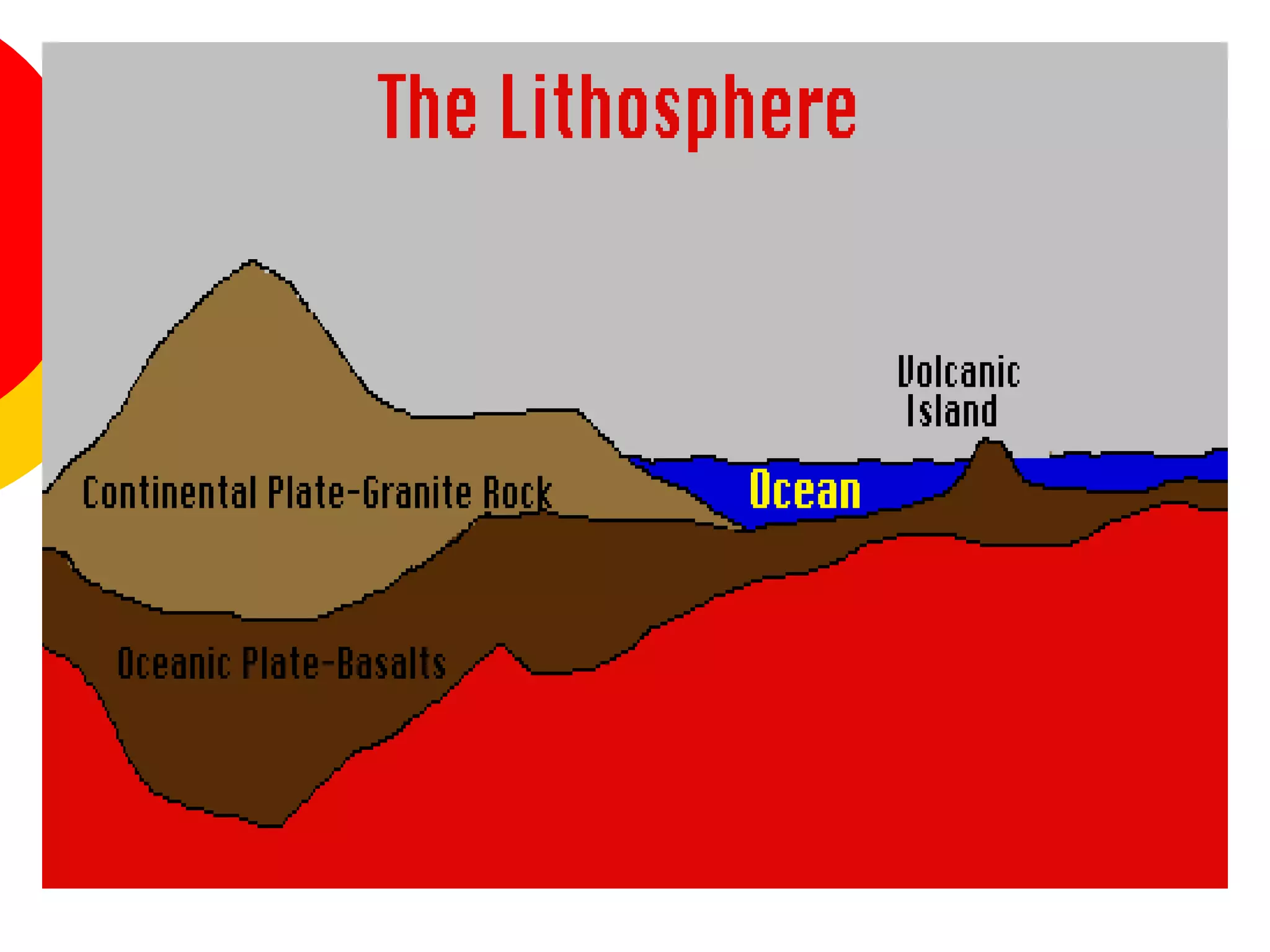
   The crust is composed of two basic rock
    types granite and basalt.
   The continental crust is composed mostly
    of granite. The oceanic crust consists of a
    volcanic lava rock called basalt.
   Basaltic rocks of the ocean plates are
    much denser and heavier than the granite
    rock of the continental plates.
   Because of this the continents ride on the
    denser oceanic plates.
Crust
   The crust and the upper layer of the
    mantle together make up a zone of
    rigid, brittle rock called the
    Lithosphere.
The Mantle
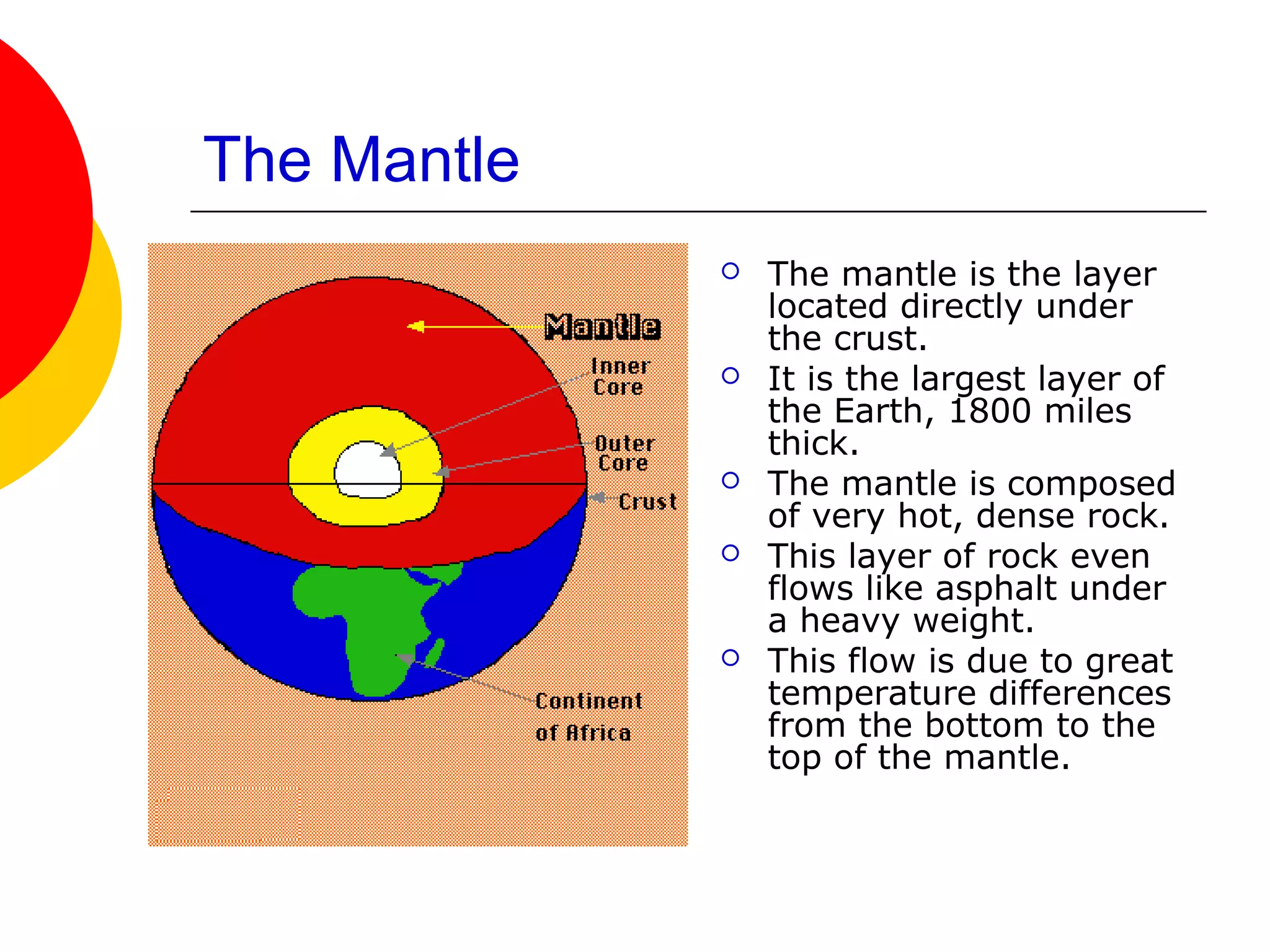
                The mantle is the layer
                 located directly under
                 the crust.
                It is the largest layer of
                 the Earth, 1800 miles
                 thick.
                The mantle is composed
                 of very hot, dense rock.
                This layer of rock even
                 flows like asphalt under
                 a heavy weight.
                This flow is due to great
                 temperature differences
                 from the bottom to the
                 top of the mantle.
Mantle
   The movement of the mantle is the
    reason that the plates of the Earth
    move! The temperature of the
    mantle varies from 1600 degrees
    Fahrenheit at the top to about 4000
    degrees Fahrenheit near the
    bottom!
Mantle
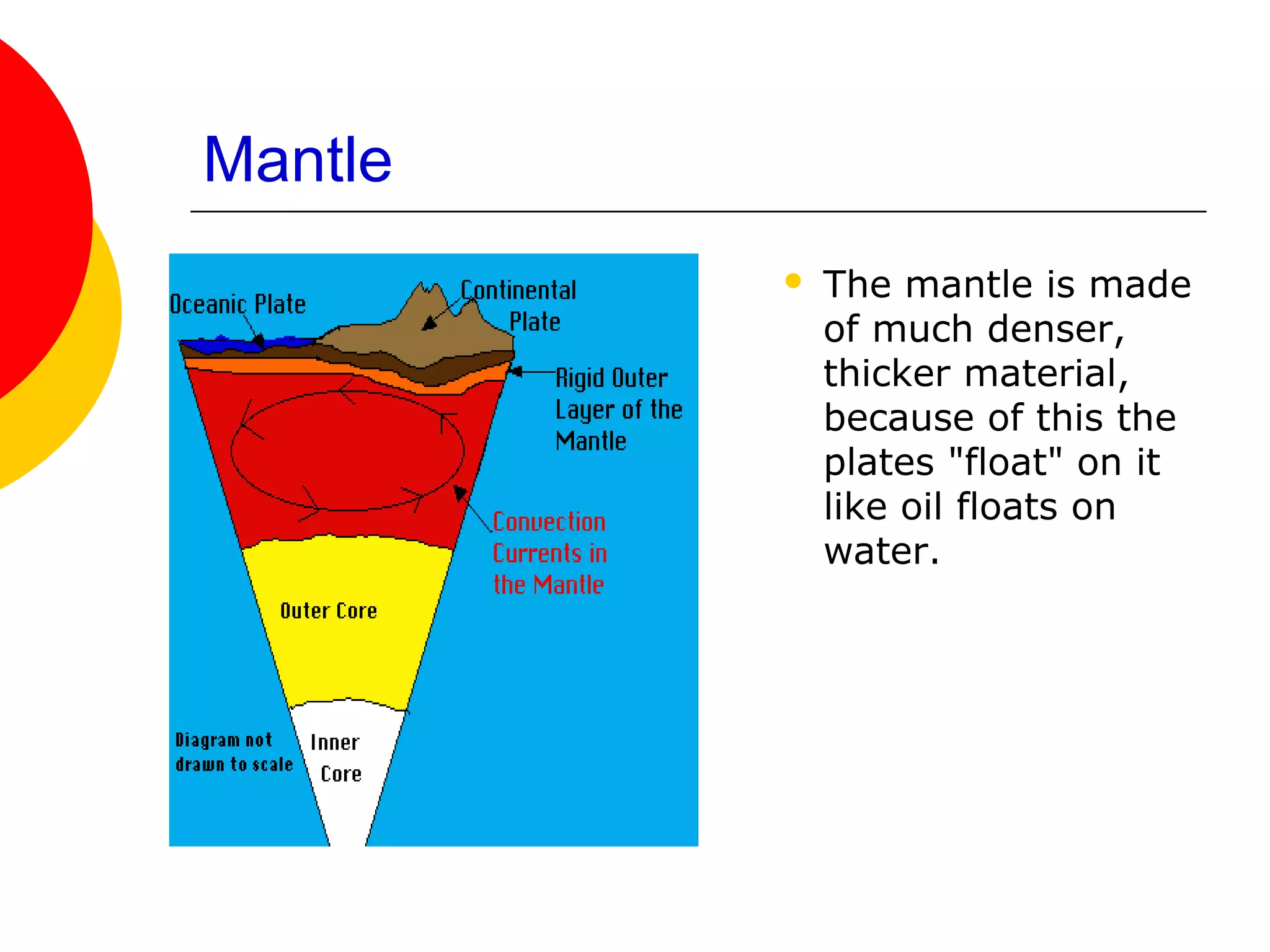
            The mantle is made
             of much denser,
             thicker material,
             because of this the
             plates "float" on it
             like oil floats on
             water.
Mantle
  Many geologists believe that the mantle
  "flows" because of convection currents.
  Convection currents are caused by
  the very hot material at the deepest
  part of the mantle rising, then cooling,
  sinking again and then heating, rising
  and repeating the cycle over and over.
Mantle
  The  next time you heat anything like
   soup or pudding in a pan you can
   watch the convection currents move in
   the liquid.
  When the convection currents flow in
   the mantle they also move the crust.
  The crust gets a free ride with these
   currents. A conveyor belt in a factory
   moves boxes like the convection
   currents in the mantle moves the
   plates of the Earth.
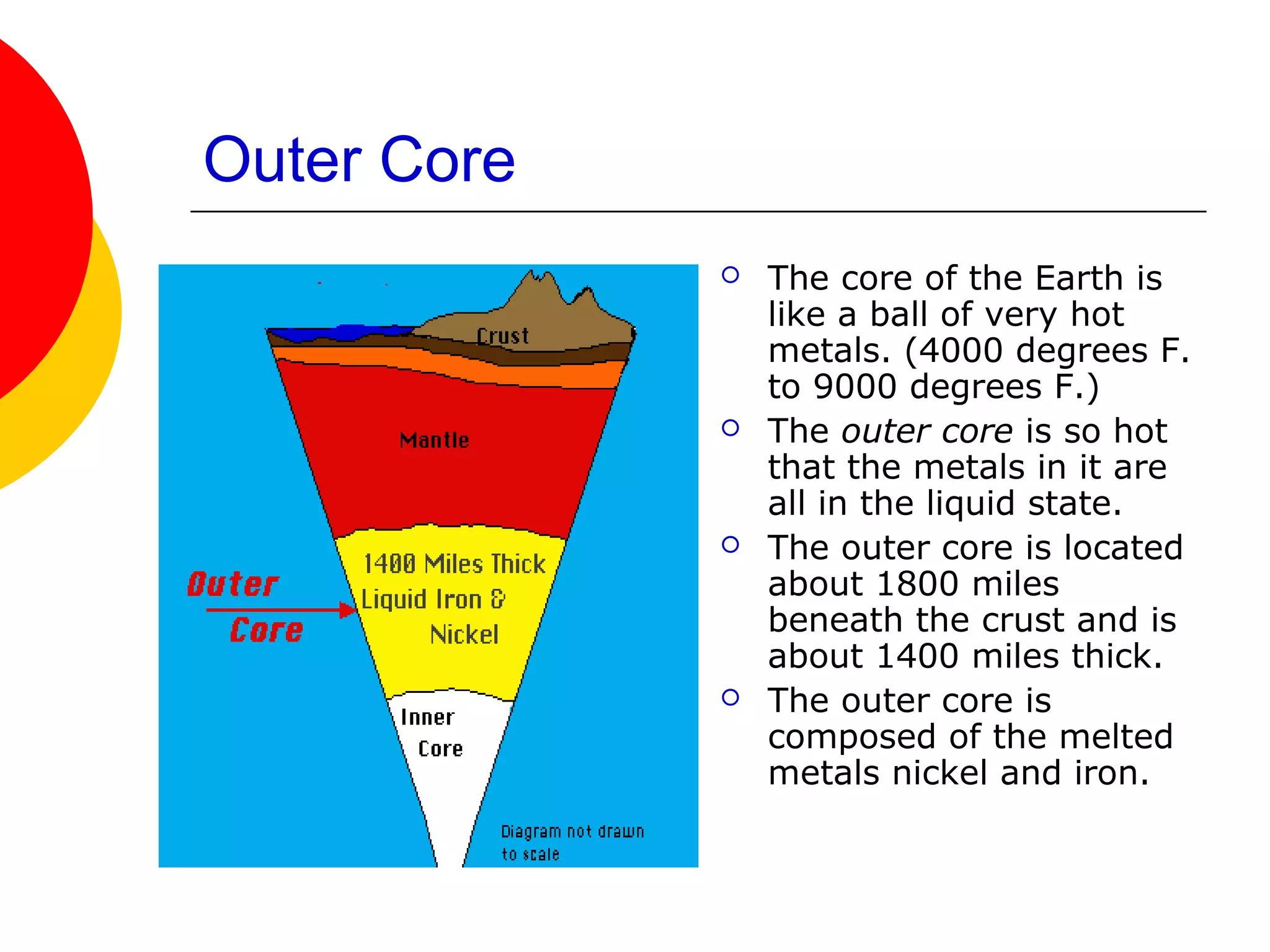
Outer Core
                The core of the Earth is
                 like a ball of very hot
                 metals. (4000 degrees F.
                 to 9000 degrees F.)
                The outer core is so hot
                 that the metals in it are
                 all in the liquid state.
                The outer core is located
                 about 1800 miles
                 beneath the crust and is
                 about 1400 miles thick.
                The outer core is
                 composed of the melted
                 metals nickel and iron.
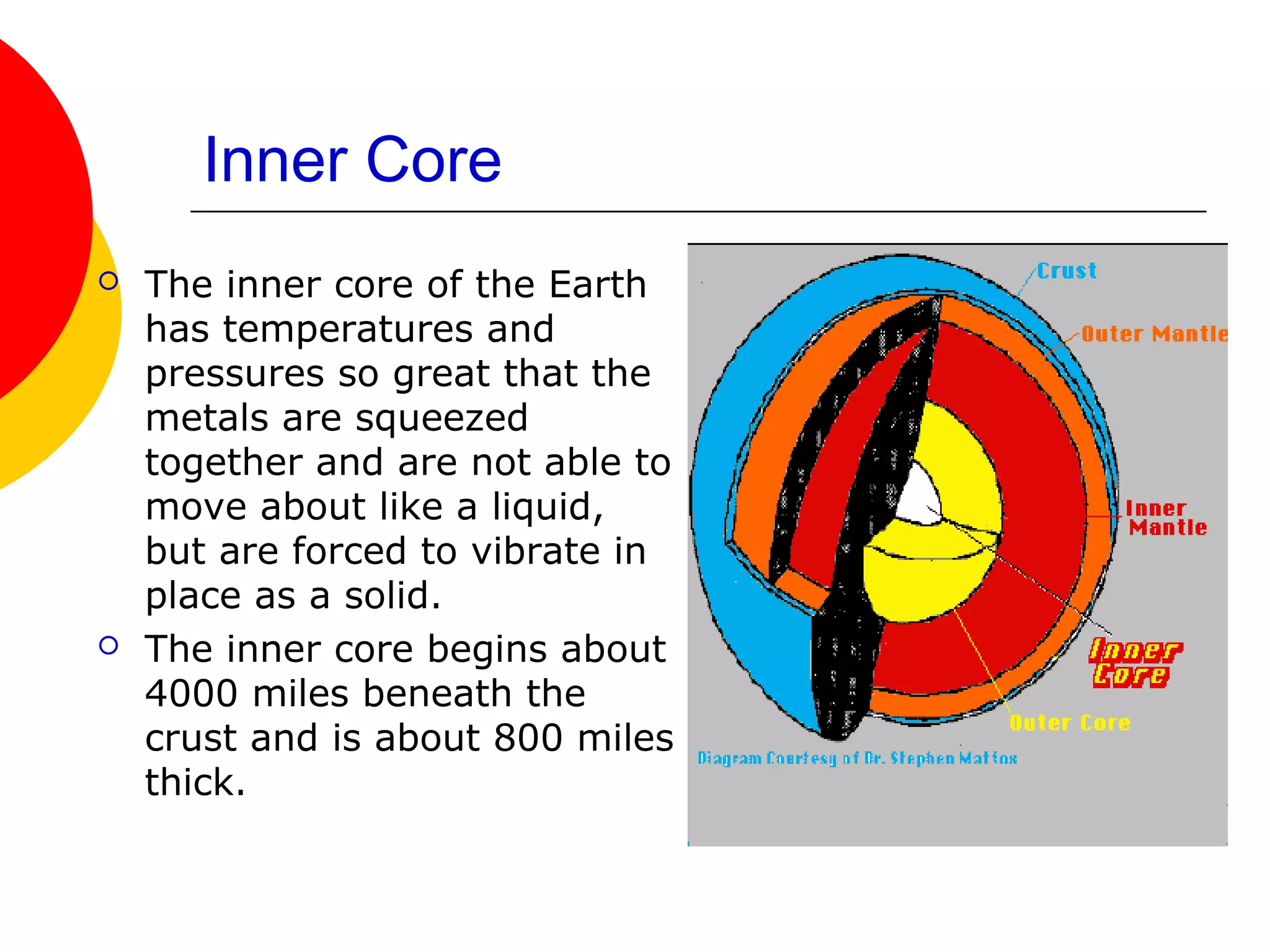
Inner Core
   The inner core of the Earth
    has temperatures and
    pressures so great that the
    metals are squeezed
    together and are not able to
    move about like a liquid,
    but are forced to vibrate in
    place as a solid.
   The inner core begins about
    4000 miles beneath the
    crust and is about 800 miles
    thick.
Inner Core
   The temperatures may reach 9000
    degrees F. and the pressures are
    45,000,000 pounds per square inch.
   This is 3,000,000 times the air
    pressure on you at sea level!!!

Module 6 part 1

  • 1.
    Physical Science Module 6– Part 1 The Earth and the Lithosphere
  • 2.
    The Earth’s Layers  The Earth is composed of four different layers.  (Look at Figure 6.1 on page 131)  The crust is the layer that you live on, and it is the most widely studied and understood.  The mantle is much hotter and has the ability to flow.  The Outer and Inner Cores are hotter still with pressures so great that you would be squeezed into a ball smaller than a marble if you were able to go to the center of the Earth!!!!!!
  • 5.
    Crust The Earth's Crust is like the skin of an apple.  It is very thin in comparison to the other three layers.  The crust is only about 3-5 miles (8 kilometers) thick under the oceans (oceanic crust) and about 25 miles (32 kilometers) thick under the continents (continental crust).
  • 6.
    Crust  The temperatures of the crust vary from air temperature on top to about 1600 degrees Fahrenheit (870 degrees Celsius) in the deepest parts of the crust. You can bake a loaf of bread in your oven at 350 degrees Fahrenheit , at 1600 degrees F. rocks begin to melt.
  • 7.
    Crust  The temperatures of the crust vary from air temperature on top to about 1600 degrees Fahrenheit (870 degrees Celsius) in the deepest parts of the crust. You can bake a loaf of bread in your oven at 350 degrees Fahrenheit , at 1600 degrees F. rocks begin to melt.
  • 8.
    Crust The crust of the Earth is broken into many pieces called plates.  The plates "float" on the soft, plastic mantle which is located below the crust.
  • 9.
    Crust These plates usually move along smoothly but sometimes they stick and build up pressure. The pressure builds and the rock bends until it snaps. When this occurs an Earthquake is the result!
  • 10.
    Crust  Notice how thin the crust of the Earth is in comparison to the other layers.  The seven continents and ocean plates basically float across the mantle which is composed of much hotter and denser material.
  • 11.
    Crust  The crust is composed of two basic rock types granite and basalt.  The continental crust is composed mostly of granite. The oceanic crust consists of a volcanic lava rock called basalt.  Basaltic rocks of the ocean plates are much denser and heavier than the granite rock of the continental plates.  Because of this the continents ride on the denser oceanic plates.
  • 12.
    Crust  The crust and the upper layer of the mantle together make up a zone of rigid, brittle rock called the Lithosphere.
  • 14.
    The Mantle  The mantle is the layer located directly under the crust.  It is the largest layer of the Earth, 1800 miles thick.  The mantle is composed of very hot, dense rock.  This layer of rock even flows like asphalt under a heavy weight.  This flow is due to great temperature differences from the bottom to the top of the mantle.
  • 15.
    Mantle  The movement of the mantle is the reason that the plates of the Earth move! The temperature of the mantle varies from 1600 degrees Fahrenheit at the top to about 4000 degrees Fahrenheit near the bottom!
  • 16.
    Mantle  The mantle is made of much denser, thicker material, because of this the plates "float" on it like oil floats on water.
  • 17.
    Mantle  Manygeologists believe that the mantle "flows" because of convection currents.  Convection currents are caused by the very hot material at the deepest part of the mantle rising, then cooling, sinking again and then heating, rising and repeating the cycle over and over.
  • 18.
    Mantle  The next time you heat anything like soup or pudding in a pan you can watch the convection currents move in the liquid.  When the convection currents flow in the mantle they also move the crust.  The crust gets a free ride with these currents. A conveyor belt in a factory moves boxes like the convection currents in the mantle moves the plates of the Earth.
  • 19.
    Outer Core  The core of the Earth is like a ball of very hot metals. (4000 degrees F. to 9000 degrees F.)  The outer core is so hot that the metals in it are all in the liquid state.  The outer core is located about 1800 miles beneath the crust and is about 1400 miles thick.  The outer core is composed of the melted metals nickel and iron.
  • 20.
    Inner Core  The inner core of the Earth has temperatures and pressures so great that the metals are squeezed together and are not able to move about like a liquid, but are forced to vibrate in place as a solid.  The inner core begins about 4000 miles beneath the crust and is about 800 miles thick.
  • 21.
    Inner Core  The temperatures may reach 9000 degrees F. and the pressures are 45,000,000 pounds per square inch.  This is 3,000,000 times the air pressure on you at sea level!!!