Index
• What is E-waste ?
• Sources of E-waste
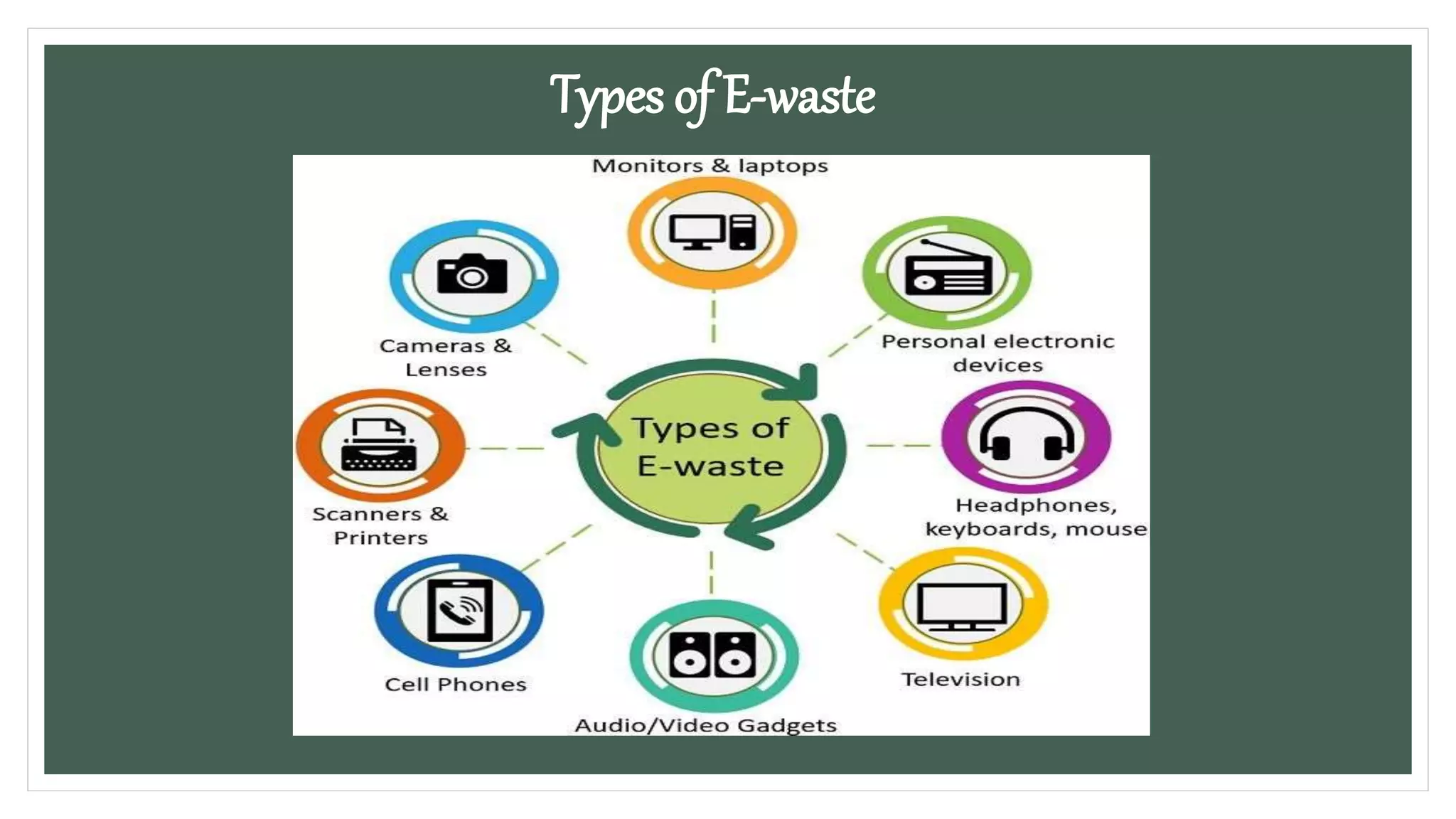
• Types of E-waste
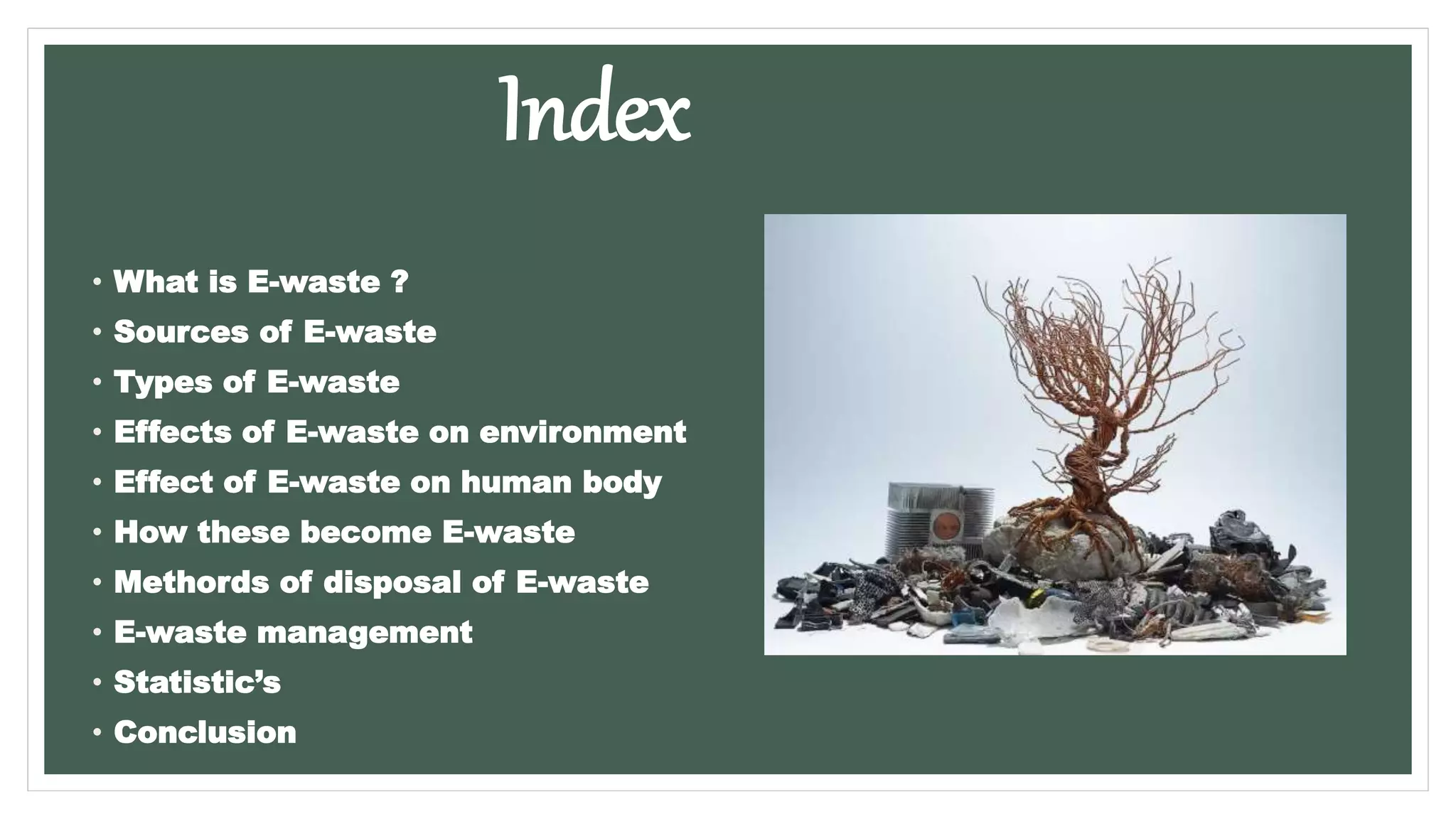
• Effects of E-waste on environment
• Effect of E-waste on human body
• How these become E-waste
• Methords of disposal of E-waste
• E-waste management
• Statistic’s
• Conclusion
What is E-waste ?
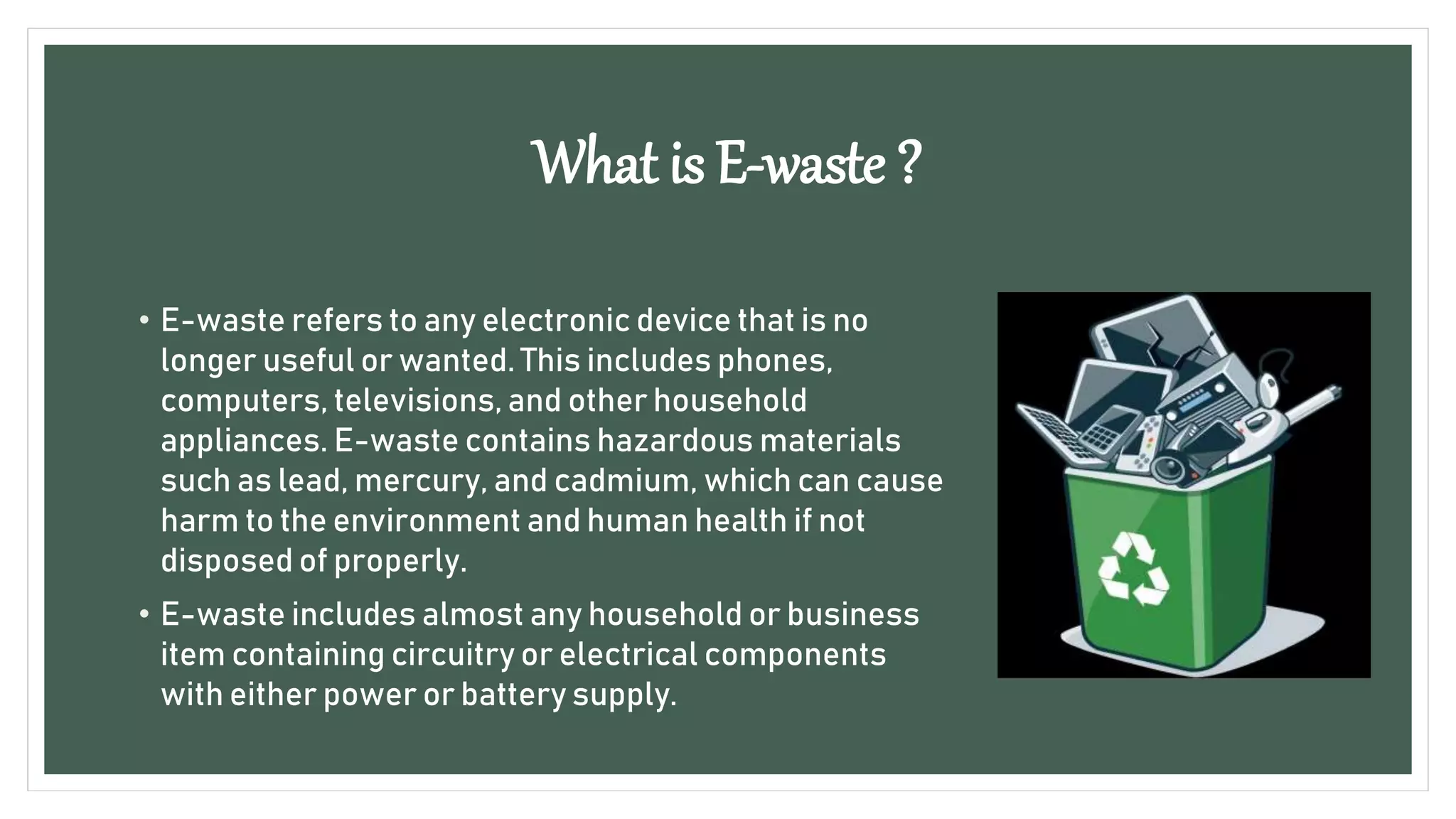
• E-waste refers to any electronic device that is no
longer useful or wanted. This includes phones,
computers, televisions, and other household
appliances. E-waste contains hazardous materials
such as lead, mercury, and cadmium, which can cause
harm to the environment and human health if not
disposed of properly.
• E-waste includes almost any household or business
item containing circuitry or electrical components
with either power or battery supply.
Sources of E-waste
• Any appliance that runs on electricity has the potential to cause
damage to the environment if it is not disposed properly. Common
things of electrical and electronic waste are:
1.Large household appliances like refrigerators/freezers, washing
machines, dishwashers, televisions.
2.Small household appliances which include toasters, coffee makers,
irons, hairdryers.
3.Information Technology (IT) and Telecommunications equipment
namely personal computers, telephones, mobile phones, laptops,
printers, scanners, photocopiers etc.
4.Audio, visual components such as VCRs, stereo equipements, etc.
Types of E-waste
Effects of E-waste on environment
• Emission of E-waste create environmental damage.
• Toxic chemicals from E-waste enter the “soil-crop-food
pathway”.
• These are non-biodegradable and cause soil pollution.
• E-waste dumping yards and nearby places are polluted and
cause health hazards.
• When electronic waste is thrown away in landfills their toxic
materials seep into groundwater, affecting both land and sea
animals.
Effect of E-waste on human body
Elements Effects on human body
Lead Damage centeral and peripheral nervous system, blood system
and kidney damage.affects brain development of child.
Chromium Asthmatic bronchits, DNA damage.
Mercury Chronic damage to brain and respiratory syatem.
Plastic including PVC Burning produces dioxin.it causes reproductive and
developemental problem; immune system damage ; interefere
with regulatory hormones.
TODAY’S ELECTRONIC GADGETS,
TOMORROW ELECTRONIC WASTE …..!!
How these become E-waste
REASONS :
• Advancement in technology.
• Change in style fashion and status .
• Not taking precaution while handling them.
• Attractive offers from manufacturers.
• Cell phone upgrades.
• Digital TV conversion.
• Software upgrade.
• Disposible printers.
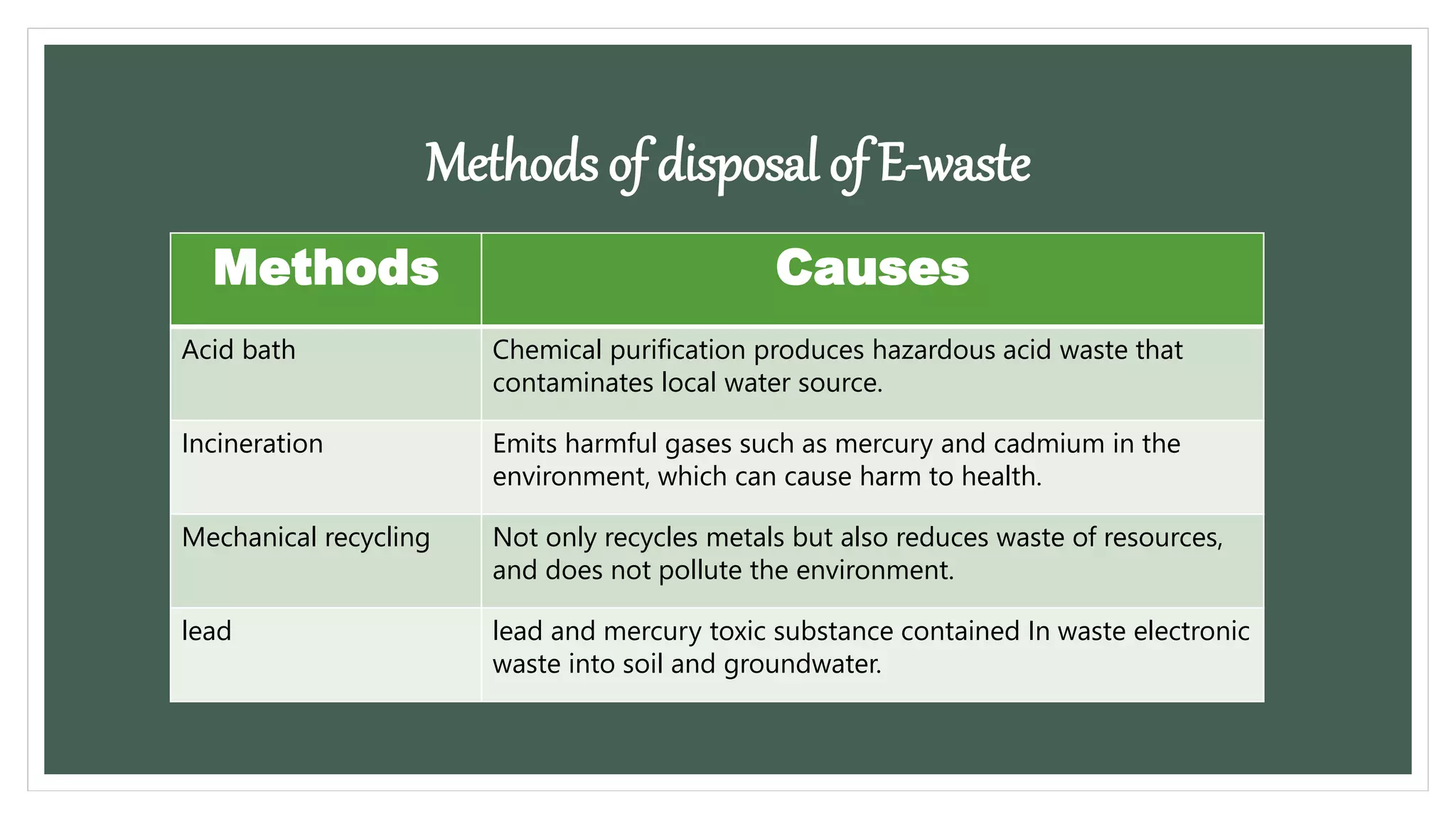
Methods of disposal of E-waste
Methods Causes
Acid bath Chemical purification produces hazardous acid waste that
contaminates local water source.
Incineration Emits harmful gases such as mercury and cadmium in the
environment, which can cause harm to health.
Mechanical recycling Not only recycles metals but also reduces waste of resources,
and does not pollute the environment.
lead lead and mercury toxic substance contained In waste electronic
waste into soil and groundwater.
E-waste management
E-waste management includes following activities :
• Collection of E-waste.
• Sorting of E-waste.
• Processing of E-waste.
• Repairing of E-waste.
• Recycling.
• Dismantling.
• Component recovery from E-waste.
• Residual disposal of E-waste.
Statistic’s
• According to the statistic’s we are generatingmore than 40 million tons of E-waste a
year and only 27% of this is recycled.
• India is in the 5th positionin the generationof E-waste.
• In 2022, there will be more than 164 million e-waste materials produced. This number is
expected to increase by 37% every year through 2030.
• The World Health Organization(WHO) predicts that by 2022, countries around the world
will produce up to 63 million tons of electronic waste annually—anincrease of almost
30% from 2018 levels.
Statistic’s
Conclusion
• E-waste has emerged as one of the fastest growing waste steams world
wide today.
• Elctronic gadgets, without disposal can cause environmental harm.
• Reuse and recycle are more benifitial than simple disposal.
• Designing of products using environmental friendly raw times can make
a change.
• Awareness of E-waste should be given.
• Government shall take steps to reduce E-waste disposal.

E-waste.pptx

  • 2.
    Index • What isE-waste ? • Sources of E-waste • Types of E-waste • Effects of E-waste on environment • Effect of E-waste on human body • How these become E-waste • Methords of disposal of E-waste • E-waste management • Statistic’s • Conclusion
  • 3.
    What is E-waste? • E-waste refers to any electronic device that is no longer useful or wanted. This includes phones, computers, televisions, and other household appliances. E-waste contains hazardous materials such as lead, mercury, and cadmium, which can cause harm to the environment and human health if not disposed of properly. • E-waste includes almost any household or business item containing circuitry or electrical components with either power or battery supply.
  • 5.
    Sources of E-waste •Any appliance that runs on electricity has the potential to cause damage to the environment if it is not disposed properly. Common things of electrical and electronic waste are: 1.Large household appliances like refrigerators/freezers, washing machines, dishwashers, televisions. 2.Small household appliances which include toasters, coffee makers, irons, hairdryers. 3.Information Technology (IT) and Telecommunications equipment namely personal computers, telephones, mobile phones, laptops, printers, scanners, photocopiers etc. 4.Audio, visual components such as VCRs, stereo equipements, etc.
  • 6.
  • 7.
    Effects of E-wasteon environment • Emission of E-waste create environmental damage. • Toxic chemicals from E-waste enter the “soil-crop-food pathway”. • These are non-biodegradable and cause soil pollution. • E-waste dumping yards and nearby places are polluted and cause health hazards. • When electronic waste is thrown away in landfills their toxic materials seep into groundwater, affecting both land and sea animals.
  • 8.
    Effect of E-wasteon human body Elements Effects on human body Lead Damage centeral and peripheral nervous system, blood system and kidney damage.affects brain development of child. Chromium Asthmatic bronchits, DNA damage. Mercury Chronic damage to brain and respiratory syatem. Plastic including PVC Burning produces dioxin.it causes reproductive and developemental problem; immune system damage ; interefere with regulatory hormones.
  • 10.
  • 11.
    How these becomeE-waste REASONS : • Advancement in technology. • Change in style fashion and status . • Not taking precaution while handling them. • Attractive offers from manufacturers. • Cell phone upgrades. • Digital TV conversion. • Software upgrade. • Disposible printers.
  • 12.
    Methods of disposalof E-waste Methods Causes Acid bath Chemical purification produces hazardous acid waste that contaminates local water source. Incineration Emits harmful gases such as mercury and cadmium in the environment, which can cause harm to health. Mechanical recycling Not only recycles metals but also reduces waste of resources, and does not pollute the environment. lead lead and mercury toxic substance contained In waste electronic waste into soil and groundwater.
  • 13.
    E-waste management E-waste managementincludes following activities : • Collection of E-waste. • Sorting of E-waste. • Processing of E-waste. • Repairing of E-waste. • Recycling. • Dismantling. • Component recovery from E-waste. • Residual disposal of E-waste.
  • 14.
    Statistic’s • According tothe statistic’s we are generatingmore than 40 million tons of E-waste a year and only 27% of this is recycled. • India is in the 5th positionin the generationof E-waste. • In 2022, there will be more than 164 million e-waste materials produced. This number is expected to increase by 37% every year through 2030. • The World Health Organization(WHO) predicts that by 2022, countries around the world will produce up to 63 million tons of electronic waste annually—anincrease of almost 30% from 2018 levels.
  • 15.
  • 16.
    Conclusion • E-waste hasemerged as one of the fastest growing waste steams world wide today. • Elctronic gadgets, without disposal can cause environmental harm. • Reuse and recycle are more benifitial than simple disposal. • Designing of products using environmental friendly raw times can make a change. • Awareness of E-waste should be given. • Government shall take steps to reduce E-waste disposal.