Definition environment 
Surroundings in which an organization operates 
including air, water, land, natural resources, flora and 
fauna, human and their interrelationship.
‘Environmental Awareness’? 
 Highlight environmentally friendly working 
practices, relating to 
 Waste 
 Energy 
 Transport 
 Water issues
 Climate change 
 Ecological footprint 
 Carbon management 
 Sustainable development
Climate change 
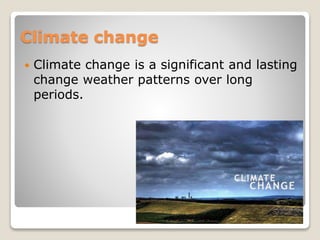
 Climate change is a significant and lasting 
change weather patterns over long 
periods.
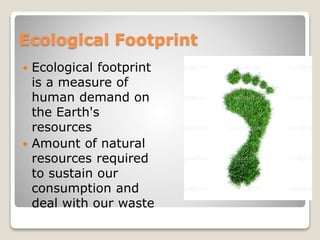
Ecological Footprint 
 Ecological footprint 
is a measure of 
human demand on 
the Earth's 
resources 
 Amount of natural 
resources required 
to sustain our 
consumption and 
deal with our waste
Carbon Management 
 The process of 
managing an 
individual or 
organisation’s 
emissions of 
greenhouse 
gases 
 CO2 reduction
Sustainable development 
 Development that 
meets the needs of 
the present without 
compromising the 
ability of future 
generations to meet 
their own needs
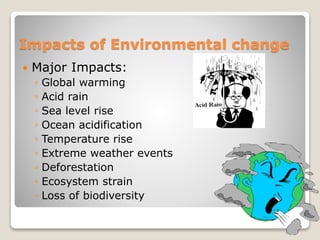
Impacts of Environmental change 
 Major Impacts: 
◦ Global warming 
◦ Acid rain 
◦ Sea level rise 
◦ Ocean acidification 
◦ Temperature rise 
◦ Extreme weather events 
◦ Deforestation 
◦ Ecosystem strain 
◦ Loss of biodiversity
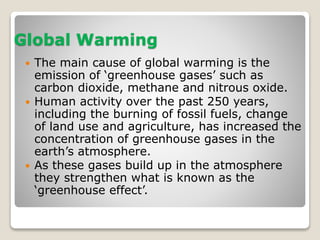
Global Warming 
 The main cause of global warming is the 
emission of ‘greenhouse gases’ such as 
carbon dioxide, methane and nitrous oxide. 
 Human activity over the past 250 years, 
including the burning of fossil fuels, change 
of land use and agriculture, has increased the 
concentration of greenhouse gases in the 
earth’s atmosphere. 
 As these gases build up in the atmosphere 
they strengthen what is known as the 
‘greenhouse effect’.
Reduce, Reuse, Recycle 
 In order to minimise the impact of waste 
products on the environment there are 
actions that we can take by reducing what 
we use, reusing products and recycling 
waste.
Ways to reduce…. 
 Boil only water you need 
 Buy only what you need 
 Buy things with less packaging 
 Cook food for only those eating 
 Switch off lights, monitors, appliances 
 Print on both sides of paper 
 Flush toilet only when needed 
 Solar power 
 Insulation in homes 
 Service vehicles and equip regularly 
 Use public transport
Ways to reuse…. 
 New ways of using materials 
 Reuse wrapping, boxes, plastic bags 
 ‘Bag for life’ 
 Repair rather than dispose 
 Composting (paper, wood, food) 
 Chip fat from local chip shop used as diesel 
 Sell unwanted items 
 Re-use coffee cups 
 Print on both sides 
 Rechargeable batteries 
 Grey water harvesting 
 Rain water harvesting
Recyclable Resources 
 Plastics 
 Tins, aluminium, steel 
 Paper 
 Glass 
 Cardboard 
 Clothing 
 Electronic equipment 
 Mobile phones 
 Spectacles 
 Tyres 
 Ink cartridges 
 Some building materials
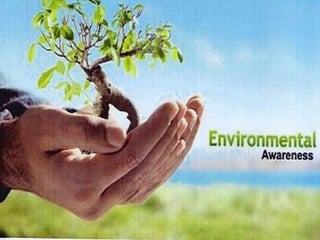
Environment awareness

Environment awareness

  • 2.
    Definition environment Surroundingsin which an organization operates including air, water, land, natural resources, flora and fauna, human and their interrelationship.
  • 3.
    ‘Environmental Awareness’? Highlight environmentally friendly working practices, relating to  Waste  Energy  Transport  Water issues
  • 4.
     Climate change  Ecological footprint  Carbon management  Sustainable development
  • 5.
    Climate change Climate change is a significant and lasting change weather patterns over long periods.
  • 6.
    Ecological Footprint Ecological footprint is a measure of human demand on the Earth's resources  Amount of natural resources required to sustain our consumption and deal with our waste
  • 7.
    Carbon Management The process of managing an individual or organisation’s emissions of greenhouse gases  CO2 reduction
  • 8.
    Sustainable development Development that meets the needs of the present without compromising the ability of future generations to meet their own needs
  • 9.
    Impacts of Environmentalchange  Major Impacts: ◦ Global warming ◦ Acid rain ◦ Sea level rise ◦ Ocean acidification ◦ Temperature rise ◦ Extreme weather events ◦ Deforestation ◦ Ecosystem strain ◦ Loss of biodiversity
  • 10.
    Global Warming The main cause of global warming is the emission of ‘greenhouse gases’ such as carbon dioxide, methane and nitrous oxide.  Human activity over the past 250 years, including the burning of fossil fuels, change of land use and agriculture, has increased the concentration of greenhouse gases in the earth’s atmosphere.  As these gases build up in the atmosphere they strengthen what is known as the ‘greenhouse effect’.
  • 11.
    Reduce, Reuse, Recycle  In order to minimise the impact of waste products on the environment there are actions that we can take by reducing what we use, reusing products and recycling waste.
  • 12.
    Ways to reduce….  Boil only water you need  Buy only what you need  Buy things with less packaging  Cook food for only those eating  Switch off lights, monitors, appliances  Print on both sides of paper  Flush toilet only when needed  Solar power  Insulation in homes  Service vehicles and equip regularly  Use public transport
  • 13.
    Ways to reuse….  New ways of using materials  Reuse wrapping, boxes, plastic bags  ‘Bag for life’  Repair rather than dispose  Composting (paper, wood, food)  Chip fat from local chip shop used as diesel  Sell unwanted items  Re-use coffee cups  Print on both sides  Rechargeable batteries  Grey water harvesting  Rain water harvesting
  • 14.
    Recyclable Resources Plastics  Tins, aluminium, steel  Paper  Glass  Cardboard  Clothing  Electronic equipment  Mobile phones  Spectacles  Tyres  Ink cartridges  Some building materials