The Ways to Protect the 
Environment 
Presented by 
Rokonuzzaman 
Roll: SS-866 
M.S. (2012-13) 
Department of Geography and Environment 
University of Dhaka 
Course code: 568 
Date: May 15, 2014
The ways to Protect the 
Environment
• Our planet is changing. We need to help it 
change for the better and we're asking for 
your help to do that! 
• There are a lot of things that affect our planet 
in a bad way but the good news is that 
everyone can help to reduce them and do 
their bit for the environment.
Here’s a list of Important Topic 
Electricity (Energy) 
Pollution 
Food 
Water 
Rubbish 
Deforestation
1. Electricity 
• Electricity is a form of energy and this is what powers 
the TV, the kettle, dishwasher, hairdryer, toaster, 
remote control, mobile phone, fridge, electric 
toothbrush, mp3 player and more. 
• Our growing need for energy is one of the problems 
facing the world today.
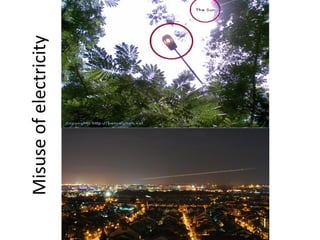
Misuse of electricity
How we can save energy 
• On or Off? Leaving televisions, stereos and computers on 
standby with the little red light showing still uses up 
electricity, even though they might look like they're turned 
off. To stop this you can turn them off at the wall. 
• Putting the kettle on or off : We need to boil water to make 
tea. Tea need to be hot. But it does not need to be on the 
kettle for long time. 
• Don’t keep hot item in fridge: The fridge is an important part 
of the kitchen, it keeps food fresh, cool and healthy! But it 
takes a lot of energy to keep cool, so help it by not leaving the 
fridge door open or putting hot things inside.
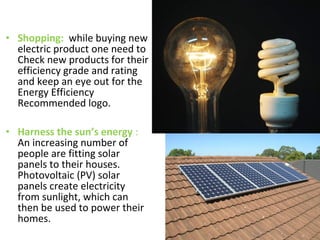
• Shopping: while buying new 
electric product one need to 
Check new products for their 
efficiency grade and rating 
and keep an eye out for the 
Energy Efficiency 
Recommended logo. 
• Harness the sun’s energy : 
An increasing number of 
people are fitting solar 
panels to their houses. 
Photovoltaic (PV) solar 
panels create electricity 
from sunlight, which can 
then be used to power their 
homes.
2. Pollution 
• Pollution is caused when harmful or poisonous 
substances are released or found in the air, rivers, 
seas, animals, plants or even our bodies. 
• Chemical waste from factories and sewage works 
cause pollution that can get into our rivers and 
seas. 
• Harmful chemicals can also be found in many 
household and garden items, from plastics to 
cleaning products, weed killers and sprays.
Examples of water pollution
How to get rid of pollution 
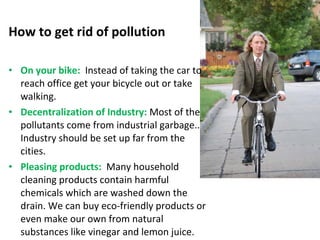
• On your bike: Instead of taking the car to 
reach office get your bicycle out or take 
walking. 
• Decentralization of Industry: Most of the 
pollutants come from industrial garbage.. 
Industry should be set up far from the 
cities. 
• Pleasing products: Many household 
cleaning products contain harmful 
chemicals which are washed down the 
drain. We can buy eco-friendly products or 
even make our own from natural 
substances like vinegar and lemon juice.
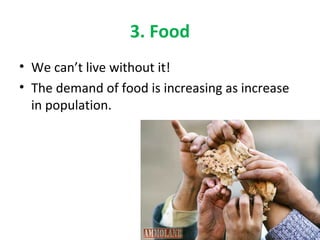
3. Food 
• We can’t live without it! 
• The demand of food is increasing as increase 
in population.
• Eat less Meat: It is an easy 
and effective way to cut down 
on meat. Make one or even 
two of your days meat-free. 
• Eat organic food: Organic 
foods have had no insecticides 
and pesticides added to them 
which makes them that bit 
more natural and healthy. 
Eating organic food reduces 
how many chemicals are made 
and spread across the 
countryside.
4. Water 
• Turn on the tap and there it is. 
Getting water is so easy that 
you’d be mistaken for thinking 
that there was an endless 
supply. 
• But the world has a water 
shortage. 70% of the world is 
covered in water - we should 
call our planet ‘ocean’ not 
‘earth’! 
• But most of this water is salt 
water, leaving only a small 
percentage of fresh drinking 
water.
• Countries including Spain, Italy, Peru, China and South Africa 
actually import water from exporting countries such as the 
US, Australia and Argentina. 
• A staggering 1.1 billion people on earth have no access to 
clean drinking water. 
• This global shortage is predicted to get worse as global 
temperatures rise. 
• Every person in the UK uses about 150 liters of water a day - 
compare this to some countries where they only have 5-10 
liters! Poor countries would be shocked to hear that we use 
drinking water to flush our toilets.
How to Save 
Water? 
• Get your teeth into it : We brush our 
teeth twice a day and by turning the 
tap off while we brush we can save 5- 
10 liters of water. 
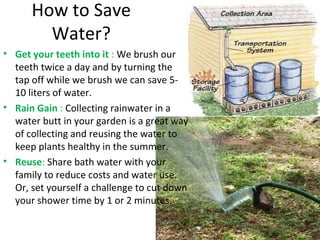
• Rain Gain : Collecting rainwater in a 
water butt in your garden is a great way 
of collecting and reusing the water to 
keep plants healthy in the summer. 
• Reuse: Share bath water with your 
family to reduce costs and water use. 
Or, set yourself a challenge to cut down 
your shower time by 1 or 2 minutes.
5. Rubbish 
• We throw away unwanted food, glass bottles, 
plastic bottles, cans, wrappers, paper and 
cardboard. 
• Many of these things are made up of natural 
resources such as trees, coal, oil and aluminum 
and one day some of these resources will be used 
up completely.
How to manage 
Rubbish 
Sort it out! Not all of our recycling is 
taken by helpful dustmen. Unwanted 
or leftover food such as tea bags and 
potato peelings can be added straight 
to a compost heap. Little insects help 
break down food and plant matter and 
make it into scrumptious soil that 
plants, trees and other animals lo 
Recycle Bank : Some councils don’t 
collect plastics or cardboard but there is 
always somewhere nearby with big 
recycling banks where you can take 
them.
Save trees: Save trees by recycling your own paper. 
Paper with a clean side can be made into notepads 
with a simple staple or a hole to tie a piece of string. 
These are great for doodles and notes. If you are 
buying paper, buy recycled paper. 
• Fashion Statement: Give any unwanted clothes to charity shops or to a 
Salvation Army recycling bank. A lot of our unwanted clothes go to the 
homeless to keep them warm or alternatively, the clothes are sent to 
developing countries. 
• Packaging: Packaging is a big problem for the environment because once the 
product is open you don’t need it and it’s thrown out or, if it’s lucky, recycled. 
So avoid buying products that have a lot of paper and plastic around them.
6. Deforestation 
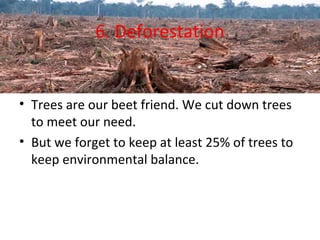
• Trees are our beet friend. We cut down trees 
to meet our need. 
• But we forget to keep at least 25% of trees to 
keep environmental balance.
• Animals are losing their habitat. 
• The earth is losing its carrying capacity. 
• Human being are losing green and habitable 
environment and decrease in oxygen to 
inhale.
What we can do to save trees? 
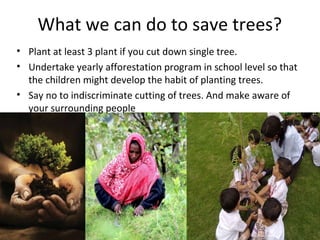
• Plant at least 3 plant if you cut down single tree. 
• Undertake yearly afforestation program in school level so that 
the children might develop the habit of planting trees. 
• Say no to indiscriminate cutting of trees. And make aware of 
your surrounding people
SO, lets plant a tree today!
Any Question?
Thank You Very Much!!!

The ways to protect environment

  • 1.
    The Ways toProtect the Environment Presented by Rokonuzzaman Roll: SS-866 M.S. (2012-13) Department of Geography and Environment University of Dhaka Course code: 568 Date: May 15, 2014
  • 2.
    The ways toProtect the Environment
  • 3.
    • Our planetis changing. We need to help it change for the better and we're asking for your help to do that! • There are a lot of things that affect our planet in a bad way but the good news is that everyone can help to reduce them and do their bit for the environment.
  • 4.
    Here’s a listof Important Topic Electricity (Energy) Pollution Food Water Rubbish Deforestation
  • 5.
    1. Electricity •Electricity is a form of energy and this is what powers the TV, the kettle, dishwasher, hairdryer, toaster, remote control, mobile phone, fridge, electric toothbrush, mp3 player and more. • Our growing need for energy is one of the problems facing the world today.
  • 6.
  • 7.
    How we cansave energy • On or Off? Leaving televisions, stereos and computers on standby with the little red light showing still uses up electricity, even though they might look like they're turned off. To stop this you can turn them off at the wall. • Putting the kettle on or off : We need to boil water to make tea. Tea need to be hot. But it does not need to be on the kettle for long time. • Don’t keep hot item in fridge: The fridge is an important part of the kitchen, it keeps food fresh, cool and healthy! But it takes a lot of energy to keep cool, so help it by not leaving the fridge door open or putting hot things inside.
  • 8.
    • Shopping: whilebuying new electric product one need to Check new products for their efficiency grade and rating and keep an eye out for the Energy Efficiency Recommended logo. • Harness the sun’s energy : An increasing number of people are fitting solar panels to their houses. Photovoltaic (PV) solar panels create electricity from sunlight, which can then be used to power their homes.
  • 9.
    2. Pollution •Pollution is caused when harmful or poisonous substances are released or found in the air, rivers, seas, animals, plants or even our bodies. • Chemical waste from factories and sewage works cause pollution that can get into our rivers and seas. • Harmful chemicals can also be found in many household and garden items, from plastics to cleaning products, weed killers and sprays.
  • 10.
  • 11.
    How to getrid of pollution • On your bike: Instead of taking the car to reach office get your bicycle out or take walking. • Decentralization of Industry: Most of the pollutants come from industrial garbage.. Industry should be set up far from the cities. • Pleasing products: Many household cleaning products contain harmful chemicals which are washed down the drain. We can buy eco-friendly products or even make our own from natural substances like vinegar and lemon juice.
  • 12.
    3. Food •We can’t live without it! • The demand of food is increasing as increase in population.
  • 13.
    • Eat lessMeat: It is an easy and effective way to cut down on meat. Make one or even two of your days meat-free. • Eat organic food: Organic foods have had no insecticides and pesticides added to them which makes them that bit more natural and healthy. Eating organic food reduces how many chemicals are made and spread across the countryside.
  • 14.
    4. Water •Turn on the tap and there it is. Getting water is so easy that you’d be mistaken for thinking that there was an endless supply. • But the world has a water shortage. 70% of the world is covered in water - we should call our planet ‘ocean’ not ‘earth’! • But most of this water is salt water, leaving only a small percentage of fresh drinking water.
  • 15.
    • Countries includingSpain, Italy, Peru, China and South Africa actually import water from exporting countries such as the US, Australia and Argentina. • A staggering 1.1 billion people on earth have no access to clean drinking water. • This global shortage is predicted to get worse as global temperatures rise. • Every person in the UK uses about 150 liters of water a day - compare this to some countries where they only have 5-10 liters! Poor countries would be shocked to hear that we use drinking water to flush our toilets.
  • 17.
    How to Save Water? • Get your teeth into it : We brush our teeth twice a day and by turning the tap off while we brush we can save 5- 10 liters of water. • Rain Gain : Collecting rainwater in a water butt in your garden is a great way of collecting and reusing the water to keep plants healthy in the summer. • Reuse: Share bath water with your family to reduce costs and water use. Or, set yourself a challenge to cut down your shower time by 1 or 2 minutes.
  • 18.
    5. Rubbish •We throw away unwanted food, glass bottles, plastic bottles, cans, wrappers, paper and cardboard. • Many of these things are made up of natural resources such as trees, coal, oil and aluminum and one day some of these resources will be used up completely.
  • 19.
    How to manage Rubbish Sort it out! Not all of our recycling is taken by helpful dustmen. Unwanted or leftover food such as tea bags and potato peelings can be added straight to a compost heap. Little insects help break down food and plant matter and make it into scrumptious soil that plants, trees and other animals lo Recycle Bank : Some councils don’t collect plastics or cardboard but there is always somewhere nearby with big recycling banks where you can take them.
  • 20.
    Save trees: Savetrees by recycling your own paper. Paper with a clean side can be made into notepads with a simple staple or a hole to tie a piece of string. These are great for doodles and notes. If you are buying paper, buy recycled paper. • Fashion Statement: Give any unwanted clothes to charity shops or to a Salvation Army recycling bank. A lot of our unwanted clothes go to the homeless to keep them warm or alternatively, the clothes are sent to developing countries. • Packaging: Packaging is a big problem for the environment because once the product is open you don’t need it and it’s thrown out or, if it’s lucky, recycled. So avoid buying products that have a lot of paper and plastic around them.
  • 21.
    6. Deforestation •Trees are our beet friend. We cut down trees to meet our need. • But we forget to keep at least 25% of trees to keep environmental balance.
  • 22.
    • Animals arelosing their habitat. • The earth is losing its carrying capacity. • Human being are losing green and habitable environment and decrease in oxygen to inhale.
  • 23.
    What we cando to save trees? • Plant at least 3 plant if you cut down single tree. • Undertake yearly afforestation program in school level so that the children might develop the habit of planting trees. • Say no to indiscriminate cutting of trees. And make aware of your surrounding people
  • 24.
    SO, lets planta tree today!
  • 25.
  • 26.