Presented By:
  BINU BABU
     S1 MBA
An Environmental Management System
                (EMS) is a set of processes and practices
                that enable an organization to reduce its
                environmental impacts and increase its
                operating efficiency.
 It includes the organizational structure, planning and
  resources for developing, implementing and
  maintaining policy for environmental protection.
 An EMS is really just a formal planning tool to help
  an organization organize priorities and pursue
  goals.
 It focuses mainly on continual improvement of the
  system .
 Provides a systematic way of managing an
  organization’s environmental affairs
•   Supports a variety of goals
•    Ensures the impact “owner” is
    responsible
•    Is in harmony with mission
•    Recognizes continual improvement
 An environmental policy defines our
  organization’s commitment to the
  environment through continual
  improvement in environmental
  performance.
 A strong, clear environmental policy
  can serve as a starting point for
  developing our EMS.
 The policy should be evaluated
  regularly and modified to reflect
  changing environmental priorities.
 Inthe planning phase of EMS, we will
 identify impacts the environment, and
 determine which of those impacts are
 significant, set objectives and targets to
 minimize environmental impacts and
 improve environmental performance, and
 establish action plans to meet the
 objectives and targets.
 EMS consist of:
  Environmental Impacts and Aspects
  Compliance
  Objectives and Targets
” According to ISO 14001 definitions:
 An aspect is an element of an
  organization’s activities, products, or
  services that can interact with the
  environment.

    An impact is any change to the
    environment…wholly or partially
    resulting from an organization’s
    activities, products, or services
    .
 All
    EMSs must address compliance
 with applicable environmental
 regulations.
 To comply with the laws and
 regulations we must know what the
 regulations are and implement
 procedures and install equipment to
 comply with those regulations.
  An objective is a goal that is consistent with
  environmental policy, priority environmental
  aspects and impacts, and applicable
  environmental regulations.
 A target is a more detailed performance goal
  related to and supporting a specific
  objective.
 Specific targets must be met to achieve an
  objective of an EMS.
 The objectives and targets will drive many
  other EMS elements, particularly
  measurement and monitoring activities.
 Theimplementation phase of EMS
 involves systematically executing
 plans.
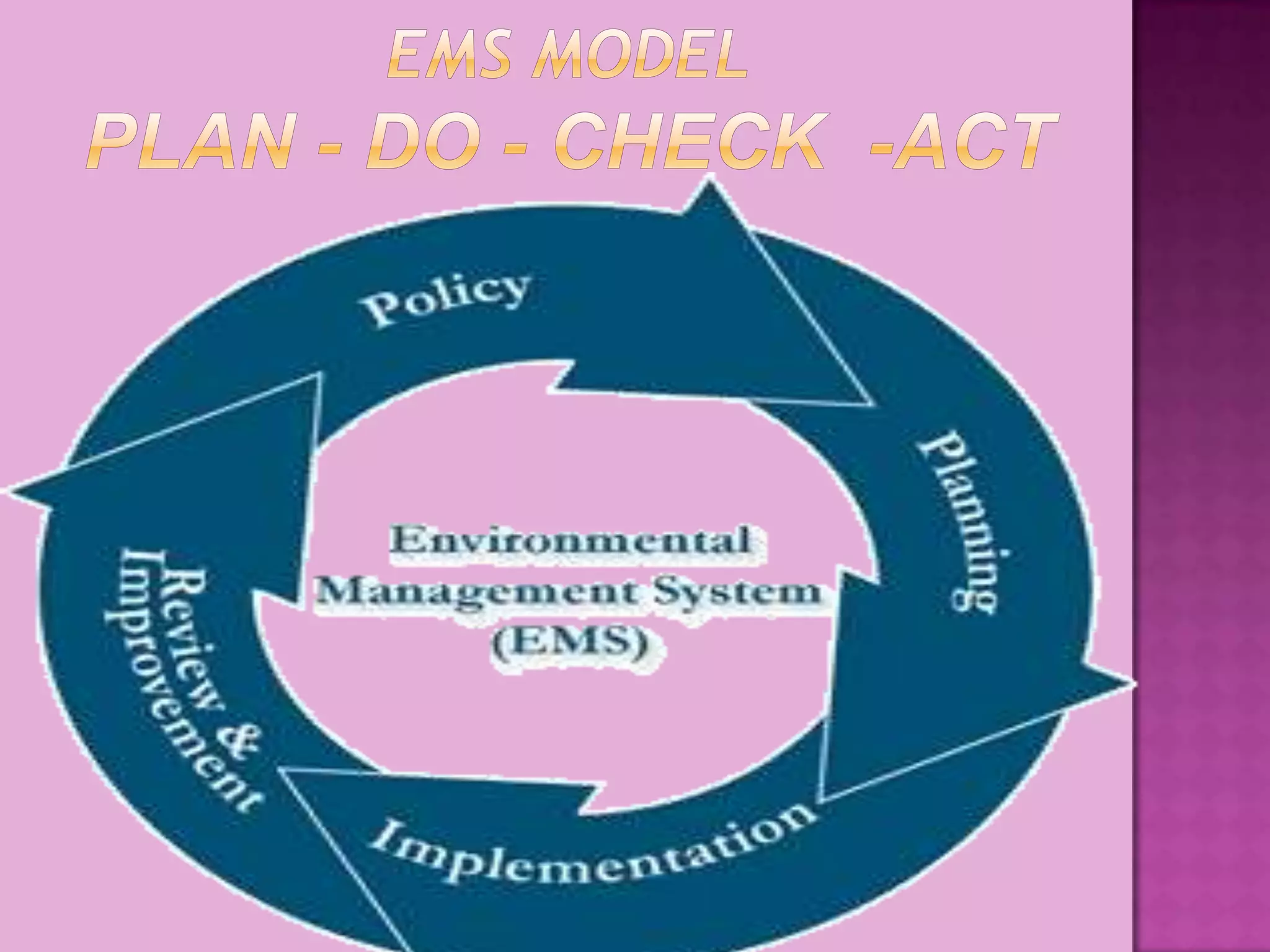
 Regular reviews are key to continual
 improvement and to ensuring that EMS
 will continue to meet needs over time.
 An   environmental management system
    takes time and commitment from the
    entire organisation.


      Effective running of an EMS will
    provide ongoing environmental
    benefits, cost savings and contribute to
    building an attractive work place
    culture.
Environmental management system

Environmental management system

  • 1.
    Presented By: BINU BABU S1 MBA
  • 3.
    An Environmental ManagementSystem (EMS) is a set of processes and practices that enable an organization to reduce its environmental impacts and increase its operating efficiency.  It includes the organizational structure, planning and resources for developing, implementing and maintaining policy for environmental protection.
  • 4.
     An EMSis really just a formal planning tool to help an organization organize priorities and pursue goals.  It focuses mainly on continual improvement of the system .  Provides a systematic way of managing an organization’s environmental affairs
  • 5.
    Supports a variety of goals • Ensures the impact “owner” is responsible • Is in harmony with mission • Recognizes continual improvement
  • 7.
     An environmentalpolicy defines our organization’s commitment to the environment through continual improvement in environmental performance.  A strong, clear environmental policy can serve as a starting point for developing our EMS.  The policy should be evaluated regularly and modified to reflect changing environmental priorities.
  • 8.
     Inthe planningphase of EMS, we will identify impacts the environment, and determine which of those impacts are significant, set objectives and targets to minimize environmental impacts and improve environmental performance, and establish action plans to meet the objectives and targets. EMS consist of:  Environmental Impacts and Aspects  Compliance  Objectives and Targets
  • 9.
    ” According toISO 14001 definitions:  An aspect is an element of an organization’s activities, products, or services that can interact with the environment.  An impact is any change to the environment…wholly or partially resulting from an organization’s activities, products, or services .
  • 10.
     All EMSs must address compliance with applicable environmental regulations.  To comply with the laws and regulations we must know what the regulations are and implement procedures and install equipment to comply with those regulations.
  • 11.
     Anobjective is a goal that is consistent with environmental policy, priority environmental aspects and impacts, and applicable environmental regulations.  A target is a more detailed performance goal related to and supporting a specific objective.  Specific targets must be met to achieve an objective of an EMS.  The objectives and targets will drive many other EMS elements, particularly measurement and monitoring activities.
  • 12.
     Theimplementation phaseof EMS involves systematically executing plans.
  • 13.
     Regular reviewsare key to continual improvement and to ensuring that EMS will continue to meet needs over time.
  • 14.
     An environmental management system takes time and commitment from the entire organisation.  Effective running of an EMS will provide ongoing environmental benefits, cost savings and contribute to building an attractive work place culture.