Environmental Aspects and Impacts
BISHNU PRASAD KOIRALA
•An environmental aspect is the way of activity, service
or product impacts the environment. For examples, one
of the environmental aspects of machine washing may be
a cleaning agent that has potential for water pollution
(this pollution is the environmental impacts).
•The environmental aspects of an organization can cause
environmental impacts. Examples of environmental
impacts are acidification of water and soil, the
greenhouse effect, etc. An environmental impact is the
consequence of the environmental aspects on people,
plants or animals.
 The organization identifies and evaluates the actual or
potential aspects and impacts to the environment,
whether adverse or beneficial, from its activities,
services and facilities. During the evaluation process,
significant impacts to the environment are determined.
e.g.,
Activity , Service Environmental
Aspects
Environmental
Impacts
Machine Washing
Cleaning agent in
waste water
Potential Water
Pollution
Using Water Impact to Natural
Resources
Heating Emissions from
boiler
Air Pollution
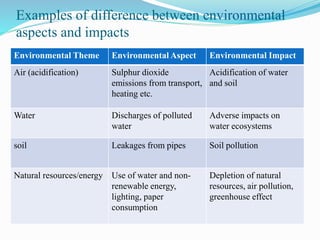
Examples of difference between environmental
aspects and impacts
Environmental Theme Environmental Aspect Environmental Impact
Air (acidification) Sulphur dioxide
emissions from transport,
heating etc.
Acidification of water
and soil
Water Discharges of polluted
water
Adverse impacts on
water ecosystems
soil Leakages from pipes Soil pollution
Natural resources/energy Use of water and non-
renewable energy,
lighting, paper
consumption
Depletion of natural
resources, air pollution,
greenhouse effect
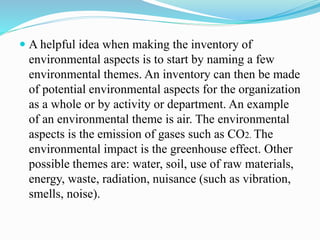
 A helpful idea when making the inventory of
environmental aspects is to start by naming a few
environmental themes. An inventory can then be made
of potential environmental aspects for the organization
as a whole or by activity or department. An example
of an environmental theme is air. The environmental
aspects is the emission of gases such as CO2. The
environmental impact is the greenhouse effect. Other
possible themes are: water, soil, use of raw materials,
energy, waste, radiation, nuisance (such as vibration,
smells, noise).
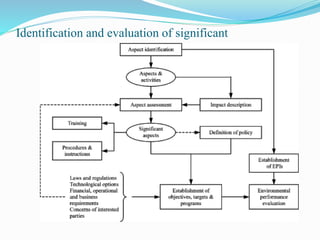
Identification and evaluation of significant
 Environmental aspects, especially in the planning
phase, is the most fundamental part of ISO 14001. To
understand the environmental aspects and impacts is
one of the key success factors of implementing an ISO
14001 EMS in the language of ISO 14001, “an
environmental aspect is an element of an
organization’s activities, products, or services that has
or may have an impact on the environment”
 The term activity, service and product. An activity is a
part of the core business (e.g., production process
steps).
 Service means an auxiliary service that supports core
activities (e.g., boilers, heating and cooling maintenance).
 A Product is the goods you offer for market. An
environmental aspect of the product could be, eg:
excessive packaging of the product, or level of
recyclability of the product at the end of its lifecycle.
 As ISO 14001 states, “ The organizations shall establish a
procedure to identify environmental aspects and determine
those aspects that have or can have a significant impact to
the environment”
 and should also kept register of the environmental
aspects, which is kept up to date and takes into
account planned new or modified activities, products,
or services.
 Aspects can be divided into direct and indirect.
 Direct environmental aspects are associated with
activities, products, and services of the organization
itself, over which it has direct management control
(e.g., how you manage waste on your site).
 However, for non-industrial organizations the focus will
often be on indirect environmental aspects of their
activities (e.g., how your subcontractor manages waste
on your site, chain controlled aspects, customer
controlled aspects).
 In order to identify all environmental aspects people
need to study how organization’s activities, products,
and services affect the environment. e.g., emissions to
air, release to water and land, use of raw materials,
waste and natural resources, impacts on biodiversity,
etc.
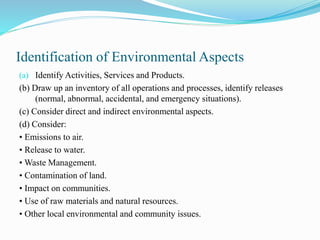
Identification of Environmental Aspects
(a) Identify Activities, Services and Products.
(b) Draw up an inventory of all operations and processes, identify releases
(normal, abnormal, accidental, and emergency situations).
(c) Consider direct and indirect environmental aspects.
(d) Consider:
• Emissions to air.
• Release to water.
• Waste Management.
• Contamination of land.
• Impact on communities.
• Use of raw materials and natural resources.
• Other local environmental and community issues.
Records of Environmental Aspects
• Review based on sound understanding of
environmental issues associated with the process.
• Check that both Direct and Indirect Environmental
Aspects have been included.
• Check the method of assigning significance.
• Check that both actual and potential aspects have been
included.
• Check that legislative requirements have been taken in
view.
Identification and evaluation of significant
Scope of environmental aspects inventory
 The organization must identify the environmental
aspects of its activities, products and services within
the scope of its environmental system. The
organization only has to identify the environmental
aspects that it can control and that it can influence.
 Organization must look at process such as the
following:
Design and development
Production processes
Packaging and transportation
Environmental performance and procedures of
contractors and suppliers
Scope of environmental aspects inventory
Waste processes
Extraction and distribution of raw materials and
natural resources
Distribution, use and life span of products.

Environmental aspects and impacts

  • 1.
    Environmental Aspects andImpacts BISHNU PRASAD KOIRALA
  • 2.
    •An environmental aspectis the way of activity, service or product impacts the environment. For examples, one of the environmental aspects of machine washing may be a cleaning agent that has potential for water pollution (this pollution is the environmental impacts). •The environmental aspects of an organization can cause environmental impacts. Examples of environmental impacts are acidification of water and soil, the greenhouse effect, etc. An environmental impact is the consequence of the environmental aspects on people, plants or animals.
  • 3.
     The organizationidentifies and evaluates the actual or potential aspects and impacts to the environment, whether adverse or beneficial, from its activities, services and facilities. During the evaluation process, significant impacts to the environment are determined.
  • 4.
    e.g., Activity , ServiceEnvironmental Aspects Environmental Impacts Machine Washing Cleaning agent in waste water Potential Water Pollution Using Water Impact to Natural Resources Heating Emissions from boiler Air Pollution
  • 5.
    Examples of differencebetween environmental aspects and impacts Environmental Theme Environmental Aspect Environmental Impact Air (acidification) Sulphur dioxide emissions from transport, heating etc. Acidification of water and soil Water Discharges of polluted water Adverse impacts on water ecosystems soil Leakages from pipes Soil pollution Natural resources/energy Use of water and non- renewable energy, lighting, paper consumption Depletion of natural resources, air pollution, greenhouse effect
  • 6.
     A helpfulidea when making the inventory of environmental aspects is to start by naming a few environmental themes. An inventory can then be made of potential environmental aspects for the organization as a whole or by activity or department. An example of an environmental theme is air. The environmental aspects is the emission of gases such as CO2. The environmental impact is the greenhouse effect. Other possible themes are: water, soil, use of raw materials, energy, waste, radiation, nuisance (such as vibration, smells, noise).
  • 7.
    Identification and evaluationof significant  Environmental aspects, especially in the planning phase, is the most fundamental part of ISO 14001. To understand the environmental aspects and impacts is one of the key success factors of implementing an ISO 14001 EMS in the language of ISO 14001, “an environmental aspect is an element of an organization’s activities, products, or services that has or may have an impact on the environment”  The term activity, service and product. An activity is a part of the core business (e.g., production process steps).
  • 8.
     Service meansan auxiliary service that supports core activities (e.g., boilers, heating and cooling maintenance).  A Product is the goods you offer for market. An environmental aspect of the product could be, eg: excessive packaging of the product, or level of recyclability of the product at the end of its lifecycle.  As ISO 14001 states, “ The organizations shall establish a procedure to identify environmental aspects and determine those aspects that have or can have a significant impact to the environment”
  • 9.
     and shouldalso kept register of the environmental aspects, which is kept up to date and takes into account planned new or modified activities, products, or services.  Aspects can be divided into direct and indirect.  Direct environmental aspects are associated with activities, products, and services of the organization itself, over which it has direct management control (e.g., how you manage waste on your site).
  • 10.
     However, fornon-industrial organizations the focus will often be on indirect environmental aspects of their activities (e.g., how your subcontractor manages waste on your site, chain controlled aspects, customer controlled aspects).  In order to identify all environmental aspects people need to study how organization’s activities, products, and services affect the environment. e.g., emissions to air, release to water and land, use of raw materials, waste and natural resources, impacts on biodiversity, etc.
  • 11.
    Identification of EnvironmentalAspects (a) Identify Activities, Services and Products. (b) Draw up an inventory of all operations and processes, identify releases (normal, abnormal, accidental, and emergency situations). (c) Consider direct and indirect environmental aspects. (d) Consider: • Emissions to air. • Release to water. • Waste Management. • Contamination of land. • Impact on communities. • Use of raw materials and natural resources. • Other local environmental and community issues.
  • 12.
    Records of EnvironmentalAspects • Review based on sound understanding of environmental issues associated with the process. • Check that both Direct and Indirect Environmental Aspects have been included. • Check the method of assigning significance. • Check that both actual and potential aspects have been included. • Check that legislative requirements have been taken in view.
  • 13.
  • 14.
    Scope of environmentalaspects inventory  The organization must identify the environmental aspects of its activities, products and services within the scope of its environmental system. The organization only has to identify the environmental aspects that it can control and that it can influence.  Organization must look at process such as the following: Design and development Production processes Packaging and transportation Environmental performance and procedures of contractors and suppliers
  • 15.
    Scope of environmentalaspects inventory Waste processes Extraction and distribution of raw materials and natural resources Distribution, use and life span of products.