Environmental
Management Plan
Environmental Management Plan
 Site specific plan developed to ensure that the project is implemented in
an environmental sustainable manner where all contractors and
subcontractors, including consultants, understand the potential
environmental risks arising from the proposed project and take appropriate
 EMP is not limit to minimizing environmental impact, it’s an integrated
system of an organizations business policy and procedure
Intention of EMP
Intention of EMP
 Management of surrounding
environment
 Establishment of environmental policy
 Compliance with legal law and
requirements
 Drawing a boundary affected by the
organizational process
Objectives of EMP
 Recovery of ecosystems
 Conserving biodiversity
 Good human health
 Occupational health and safety
 Identification of process driven environmental
negative aspects
 Minimizing process driven environmental impact
Component
 Environmental Policy
 Legal and Other Requirements
 Objectives and Targets
 Organizational Structure and Responsibility
 Training and Awareness
 Communications
 Self-Auditing and Monitoring
 Document Control
 Management Review
Scope of EMP
 Impact on the physical and biological environment
 Contribution to innovation and definition of best environmental practice
 Compliance with statutory requirements and other environmental commitments
 Availability of resources
Elements Need to be Considered
 Environmental Management systems
 Competency Criteria including CPD (Continual Professional Development)
 Energy Management System
 Water Management System
 Material Management System
 Planning, Design and Development
 Pollution Prevention
 Transport
 Biodiversity and open space
Relation between EMP and Environmental
Health and Safety and Worker Safety
 Management of potential hazard and risks
 Health and Safety implications about all hazards
 Description about management techniques including inspections, maintenance
follow-up, reports, personnel protective gears and medical monitoring
 Outline of emergency response procedures including organizational structure
of key trained personnel to act as emergency responders action steps for
entering and working within zone of hazards, evacuation procedures, protective
gear requirements, decontamination procedures, lines of communication,
emergency call centers' telephone numbers, map of nearest medical centers'
route, etc.
Relation between EMP and Environmental
Health and Safety and Worker Safety
 Provide adequate worker training
 Use proper personnel protective equipment
 Follow fire protection measures
 Arrange availability of appropriate emergency response, rescue, and first-
aid personnel and services
Emergency response plan
 Identification of all possible emergency case, e.g., fire hazard, earthquake
 Preventive measure of any kind of explosion, e.g., generator management
 Evacuation plan
 Training on safety issues of possible emergency situations
 Regular and periodic training and establishment of training calender
Evacuation Plan
EMS team
 Set the competency criteria of EMS team
 Appoint competent personnel
 Set a clear and specific organogram of the EMS team
 Establishment of Environmental Management System
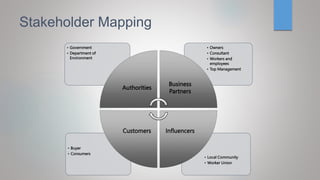
Stakeholder Mapping
• Local Community
• Worker Union
• Buyer
• Consumers
• Owners
• Consultant
• Workers and
employees
• Top Management
• Government
• Department of
Environment
Authorities
Business
Partners
Influencers
Customers
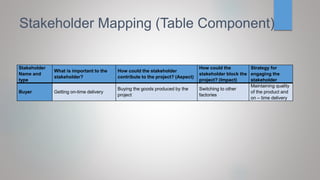
Stakeholder Mapping (Table Component)
Stakeholder
Name and
type
What is important to the
stakeholder?
How could the stakeholder
contribute to the project? (Aspect)
How could the
stakeholder block the
project? (Impact)
Strategy for
engaging the
stakeholder
Buyer Getting on-time delivery
Buying the goods produced by the
project
Switching to other
factories
Maintaining quality
of the product and
on – time delivery
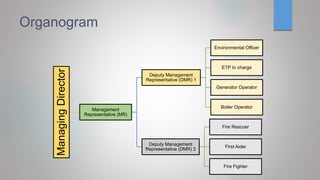
Organogram
Managing
Director
Management
Representative (MR)
Deputy Management
Representative (DMR) 1
Environmental Officer
ETP In charge
Generator Operator
Boiler Operator
Deputy Management
Representative (DMR) 2
Fire Rescuer
First Aider
Fire Fighter
Universal Risk Management Hierarchy
Elimination
Substitution
Engineering Controls
Administrative
Controls
PPE
Most Effective to Less Effective
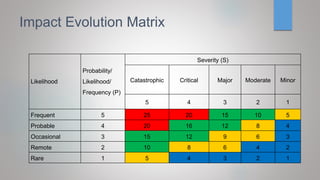
Impact Evolution Matrix
Likelihood
Probability/
Likelihood/
Frequency (P)
Severity (S)
Catastrophic Critical Major Moderate Minor
5 4 3 2 1
Frequent 5 25 20 15 10 5
Probable 4 20 16 12 8 4
Occasional 3 15 12 9 6 3
Remote 2 10 8 6 4 2
Rare 1 5 4 3 2 1
Significance Determination
Priority Number, P0
P x S
Significance Level
1 to 4 Low
5 to 9 Medium
10 to 19 High
20 to 25 Extreme
Aspect Impact Evolution
SL Aspect Associated Impact P S P0
Qualitative
Risk Grading
1
Sewing
Machine
Operation
Needle Injury 5 2 10 High
SL Aspect Associated Impact P S P0
Qualitative
Risk Grading
2 Generator Exploration from Generator 1 5 5 Medium
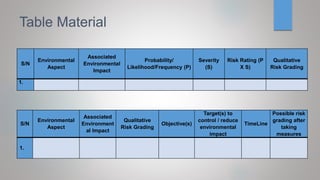
Table Material
S/N
Environmental
Aspect
Associated
Environmental
Impact
Probability/
Likelihood/Frequency (P)
Severity
(S)
Risk Rating (P
X S)
Qualitative
Risk Grading
1.
S/N
Environmental
Aspect
Associated
Environment
al Impact
Qualitative
Risk Grading
Objective(s)
Target(s) to
control / reduce
environmental
impact
TimeLine
Possible risk
grading after
taking
measures
1.
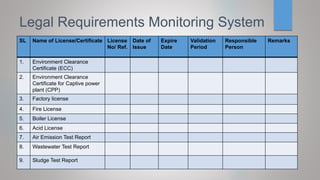
Legal Requirements Monitoring System
SL Name of License/Certificate License
No/ Ref.
Date of
Issue
Expire
Date
Validation
Period
Responsible
Person
Remarks
1. Environment Clearance
Certificate (ECC)
2. Environment Clearance
Certificate for Captive power
plant (CPP)
3. Factory license
4. Fire License
5. Boiler License
6. Acid License
7. Air Emission Test Report
8. Wastewater Test Report
9. Sludge Test Report
Thank You

Environmental Management Plan

  • 1.
  • 2.
    Environmental Management Plan Site specific plan developed to ensure that the project is implemented in an environmental sustainable manner where all contractors and subcontractors, including consultants, understand the potential environmental risks arising from the proposed project and take appropriate  EMP is not limit to minimizing environmental impact, it’s an integrated system of an organizations business policy and procedure
  • 3.
    Intention of EMP Intentionof EMP  Management of surrounding environment  Establishment of environmental policy  Compliance with legal law and requirements  Drawing a boundary affected by the organizational process Objectives of EMP  Recovery of ecosystems  Conserving biodiversity  Good human health  Occupational health and safety  Identification of process driven environmental negative aspects  Minimizing process driven environmental impact
  • 4.
    Component  Environmental Policy Legal and Other Requirements  Objectives and Targets  Organizational Structure and Responsibility  Training and Awareness  Communications  Self-Auditing and Monitoring  Document Control  Management Review
  • 5.
    Scope of EMP Impact on the physical and biological environment  Contribution to innovation and definition of best environmental practice  Compliance with statutory requirements and other environmental commitments  Availability of resources
  • 6.
    Elements Need tobe Considered  Environmental Management systems  Competency Criteria including CPD (Continual Professional Development)  Energy Management System  Water Management System  Material Management System  Planning, Design and Development  Pollution Prevention  Transport  Biodiversity and open space
  • 7.
    Relation between EMPand Environmental Health and Safety and Worker Safety  Management of potential hazard and risks  Health and Safety implications about all hazards  Description about management techniques including inspections, maintenance follow-up, reports, personnel protective gears and medical monitoring  Outline of emergency response procedures including organizational structure of key trained personnel to act as emergency responders action steps for entering and working within zone of hazards, evacuation procedures, protective gear requirements, decontamination procedures, lines of communication, emergency call centers' telephone numbers, map of nearest medical centers' route, etc.
  • 8.
    Relation between EMPand Environmental Health and Safety and Worker Safety  Provide adequate worker training  Use proper personnel protective equipment  Follow fire protection measures  Arrange availability of appropriate emergency response, rescue, and first- aid personnel and services
  • 9.
    Emergency response plan Identification of all possible emergency case, e.g., fire hazard, earthquake  Preventive measure of any kind of explosion, e.g., generator management  Evacuation plan  Training on safety issues of possible emergency situations  Regular and periodic training and establishment of training calender
  • 10.
  • 11.
    EMS team  Setthe competency criteria of EMS team  Appoint competent personnel  Set a clear and specific organogram of the EMS team  Establishment of Environmental Management System
  • 12.
    Stakeholder Mapping • LocalCommunity • Worker Union • Buyer • Consumers • Owners • Consultant • Workers and employees • Top Management • Government • Department of Environment Authorities Business Partners Influencers Customers
  • 13.
    Stakeholder Mapping (TableComponent) Stakeholder Name and type What is important to the stakeholder? How could the stakeholder contribute to the project? (Aspect) How could the stakeholder block the project? (Impact) Strategy for engaging the stakeholder Buyer Getting on-time delivery Buying the goods produced by the project Switching to other factories Maintaining quality of the product and on – time delivery
  • 14.
    Organogram Managing Director Management Representative (MR) Deputy Management Representative(DMR) 1 Environmental Officer ETP In charge Generator Operator Boiler Operator Deputy Management Representative (DMR) 2 Fire Rescuer First Aider Fire Fighter
  • 15.
    Universal Risk ManagementHierarchy Elimination Substitution Engineering Controls Administrative Controls PPE Most Effective to Less Effective
  • 16.
    Impact Evolution Matrix Likelihood Probability/ Likelihood/ Frequency(P) Severity (S) Catastrophic Critical Major Moderate Minor 5 4 3 2 1 Frequent 5 25 20 15 10 5 Probable 4 20 16 12 8 4 Occasional 3 15 12 9 6 3 Remote 2 10 8 6 4 2 Rare 1 5 4 3 2 1
  • 17.
    Significance Determination Priority Number,P0 P x S Significance Level 1 to 4 Low 5 to 9 Medium 10 to 19 High 20 to 25 Extreme
  • 18.
    Aspect Impact Evolution SLAspect Associated Impact P S P0 Qualitative Risk Grading 1 Sewing Machine Operation Needle Injury 5 2 10 High SL Aspect Associated Impact P S P0 Qualitative Risk Grading 2 Generator Exploration from Generator 1 5 5 Medium
  • 19.
    Table Material S/N Environmental Aspect Associated Environmental Impact Probability/ Likelihood/Frequency (P) Severity (S) RiskRating (P X S) Qualitative Risk Grading 1. S/N Environmental Aspect Associated Environment al Impact Qualitative Risk Grading Objective(s) Target(s) to control / reduce environmental impact TimeLine Possible risk grading after taking measures 1.
  • 20.
    Legal Requirements MonitoringSystem SL Name of License/Certificate License No/ Ref. Date of Issue Expire Date Validation Period Responsible Person Remarks 1. Environment Clearance Certificate (ECC) 2. Environment Clearance Certificate for Captive power plant (CPP) 3. Factory license 4. Fire License 5. Boiler License 6. Acid License 7. Air Emission Test Report 8. Wastewater Test Report 9. Sludge Test Report
  • 21.