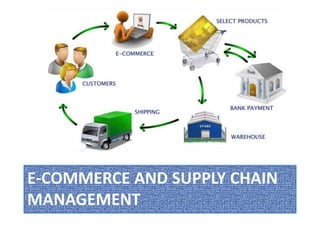
E-COMMERCE AND SUPPLY CHAIN 
MANAGEMENT
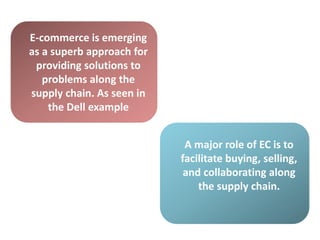
E-commerce is emerging 
as a superb approach for 
providing solutions to 
problems along the 
supply chain. As seen in 
the Dell example 
A major role of EC is to 
facilitate buying, selling, 
and collaborating along 
the supply chain.
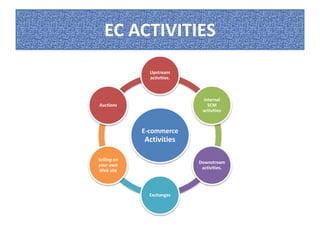
EC ACTIVITIES 
Upstream 
activities. 
E-commerce 
Activities 
Internal 
SCM 
activities 
Downstream 
activities. 
Exchanges 
Auctions 
Selling on 
your own 
Web site
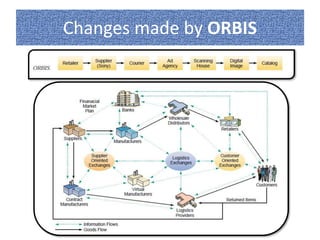
Restructuring the Supply Chain 
E-commerce can introduce 
structural changes in the 
supply chain. For example, 
the creation of e-markets 
drastically changes order 
processing and fulfillment.
Changes made by ORBIS
Integration of EC with ERP 
• Since many middle-sized and large companies 
already have an ERP system, and since e-commerce 
needs to interface with ERP, it makes 
sense to integrate the two. For example, SAP 
started the mySAP initiative. 
• The logic behind integrating EC and ERP is that by 
extending the existing ERP system to support e-commerce, 
organizations not only leverage their 
investment in the ERP solution, but also speed up 
the development of EC applications.
PITFALLS 
• The problem with this approach is that the ERP 
software is very complex and inflexible (difficult 
to change), so it is difficult to achieve easy, 
smooth, and effective integration. 
• One other potential problem is that ERP systems 
tend to focus on back-office (administrative) 
applications, whereas EC focuses on front-office 
applications such as sales and order taking, 
customer service, and other customer 
relationship management (CRM) activities.
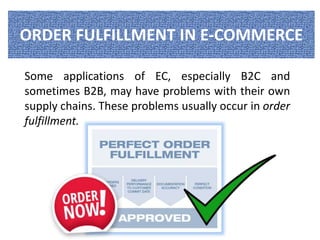
ORDER FULFILLMENT IN E-COMMERCE 
Some applications of EC, especially B2C and 
sometimes B2B, may have problems with their own 
supply chains. These problems usually occur in order 
fulfillment.
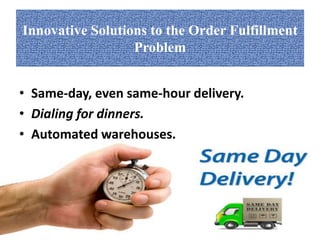
Innovative Solutions to the Order Fulfillment 
Problem 
• Same-day, even same-hour delivery. 
• Dialing for dinners. 
• Automated warehouses.
Dealing with Returns 
Returning unwanted merchandise and providing 
for exchanges are necessary for maintaining 
customers’ trust and loyalty. 
• Return an item to the place where it was 
purchased. 
• Separate the logistics of returns from the logistics 
of delivery. 
• Allow the customer to physically drop the 
returned items at collection stations from which 
the returns can be picked up. 
• Completely outsource the logistics of returns.

E commerce and supply chain management

  • 1.
    E-COMMERCE AND SUPPLYCHAIN MANAGEMENT
  • 2.
    E-commerce is emerging as a superb approach for providing solutions to problems along the supply chain. As seen in the Dell example A major role of EC is to facilitate buying, selling, and collaborating along the supply chain.
  • 3.
    EC ACTIVITIES Upstream activities. E-commerce Activities Internal SCM activities Downstream activities. Exchanges Auctions Selling on your own Web site
  • 4.
    Restructuring the SupplyChain E-commerce can introduce structural changes in the supply chain. For example, the creation of e-markets drastically changes order processing and fulfillment.
  • 5.
  • 6.
    Integration of ECwith ERP • Since many middle-sized and large companies already have an ERP system, and since e-commerce needs to interface with ERP, it makes sense to integrate the two. For example, SAP started the mySAP initiative. • The logic behind integrating EC and ERP is that by extending the existing ERP system to support e-commerce, organizations not only leverage their investment in the ERP solution, but also speed up the development of EC applications.
  • 7.
    PITFALLS • Theproblem with this approach is that the ERP software is very complex and inflexible (difficult to change), so it is difficult to achieve easy, smooth, and effective integration. • One other potential problem is that ERP systems tend to focus on back-office (administrative) applications, whereas EC focuses on front-office applications such as sales and order taking, customer service, and other customer relationship management (CRM) activities.
  • 8.
    ORDER FULFILLMENT INE-COMMERCE Some applications of EC, especially B2C and sometimes B2B, may have problems with their own supply chains. These problems usually occur in order fulfillment.
  • 9.
    Innovative Solutions tothe Order Fulfillment Problem • Same-day, even same-hour delivery. • Dialing for dinners. • Automated warehouses.
  • 10.
    Dealing with Returns Returning unwanted merchandise and providing for exchanges are necessary for maintaining customers’ trust and loyalty. • Return an item to the place where it was purchased. • Separate the logistics of returns from the logistics of delivery. • Allow the customer to physically drop the returned items at collection stations from which the returns can be picked up. • Completely outsource the logistics of returns.