Supply Chain Management  Presented By: Kapil Batra Jyoti Arora
Agenda Introduction to Supply Chain Management  Concept of Supply Chain Management Need of supply Chain Management  Evolution of Supply Chain Management Issues involved in development of SCM framework
Introduction to Supply Chain Management
Introduction to Supply Chain Management Retail helps in  Making goods available At the right time Takes care of customer  preference Services to the customer
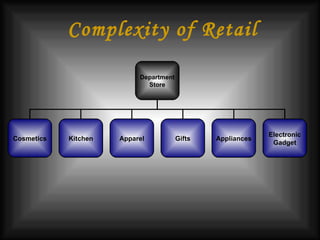
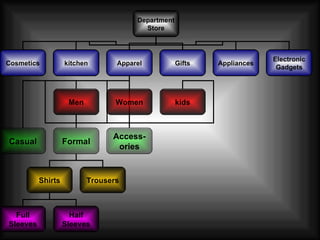
Complexity of Retail Department Store Cosmetics Kitchen Apparel Gifts Appliances Electronic Gadget
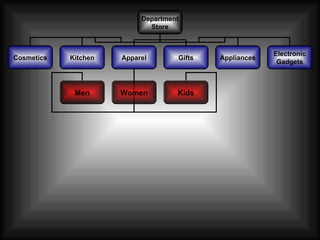
Department Store Cosmetics Kitchen Apparel Gifts Appliances Electronic Gadgets Men Women Kids
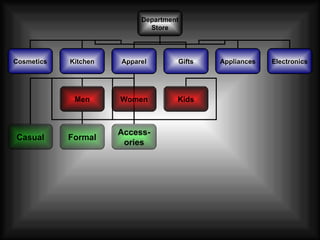
Department Store Cosmetics Kitchen Apparel Gifts Appliances Electronics Men Women Kids Casual Formal Access- ories
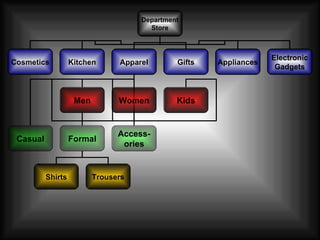
Department Store Cosmetics Kitchen Apparel Gifts Appliances Electronic Gadgets Men Women Kids Casual Formal Access-ories Shirts Trousers
Department Store Cosmetics kitchen Apparel Gifts Appliances Electronic Gadgets Men Women kids Casual Formal Access-ories Shirts Trousers Full Sleeves Half Sleeves
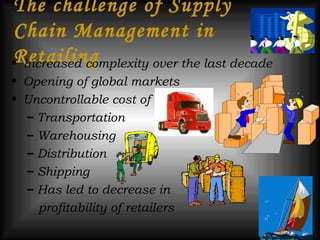
The challenge of Supply Chain Management in Retailing Increased complexity over the last decade Opening of global markets Uncontrollable cost of Transportation Warehousing  Distribution Shipping Has led to decrease in profitability of retailers
Overcoming the Challenge To overcome the challenge of complexity in SCM various innovations have been done Just In Time (JIT) Total-Quality Management (TQM) Zero Inventory (ZI) Vendor Management Inventory (VMI) Efficient Consumer Response (ECR)
Concept of Supply Chain Management
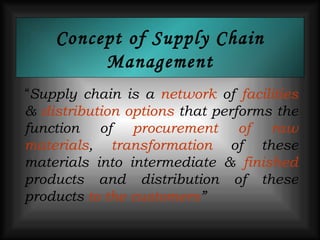
Concept of Supply Chain Management “ Supply chain is a  network  of  facilities  &  distribution options  that performs the function of  procurement of raw materials ,  transformation  of these materials into intermediate &  finished  products and distribution of these products  to the customers ”
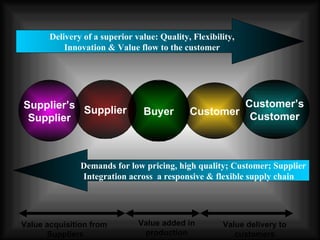
Customer’s Customer Customer Buyer Delivery of a superior value: Quality, Flexibility, Innovation & Value flow to the customer Demands for low pricing, high quality; Customer; Supplier Integration across  a responsive & flexible supply chain Supplier Supplier’s Supplier Value acquisition from  Suppliers Value added in production Value delivery to customers
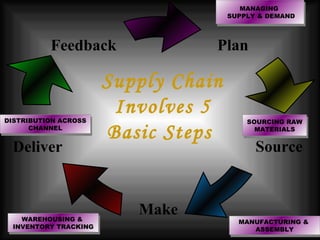
Supply Chain Involves 5 Basic Steps  Plan Deliver Feedback Source Make SOURCING RAW MATERIALS MANAGING  SUPPLY & DEMAND WAREHOUSING &  INVENTORY TRACKING DISTRIBUTION ACROSS CHANNEL MANUFACTURING &  ASSEMBLY
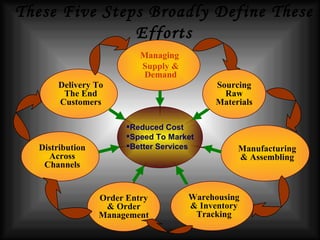
These Five Steps Broadly Define These Efforts Delivery To The End Customers Distribution Across Channels Order Entry & Order Management Warehousing & Inventory Tracking Manufacturing  & Assembling  Sourcing Raw Materials Managing  Supply & Demand Reduced Cost Speed To Market Better Services
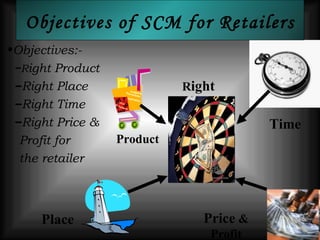
Objectives of SCM for Retailers Objectives:-  R ight Product  Right Place  Right Time Right Price &  Profit for the retailer Product Time Price  & Profit Place R ight
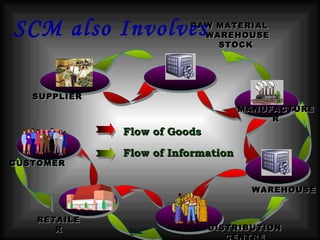
SUPPLIER Flow of Goods Flow of Information SCM also Involves RAW MATERIAL  WAREHOUSE STOCK MANUFACTURER WAREHOUSE DISTRIBUTION CENTRE RETAILER CUSTOMER
Need of SCM
Need of SCM Change in Customer Buying Habits Demand changes frequently Shorter product lifecycle Increased cost of holding inventory Increased Competition Multiple buying options for customer Hence, need of making product accessible to customer Minimize the cost  Efficient distribution result
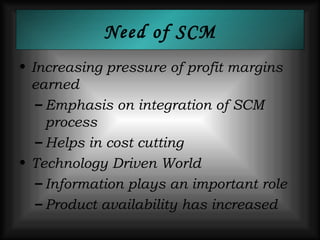
Increasing pressure of profit margins earned Emphasis on integration of SCM process Helps in cost cutting Technology Driven World Information plays an important role Product availability has increased Need of SCM
Evolution of Supply Chain Management
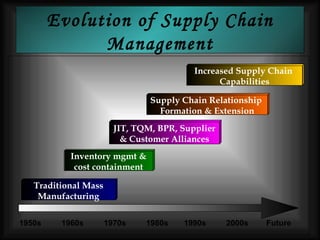
Evolution of Supply Chain Management Traditional Mass Manufacturing Inventory mgmt & cost containment 1950s  1960s  1970s  1980s  1990s  2000s  Future JIT, TQM, BPR, Supplier & Customer Alliances Supply Chain Relationship  Formation & Extension Increased Supply Chain  Capabilities
Issues Involved In Developing Efficient Supply Chain Framework
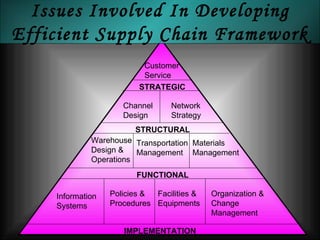
Issues Involved In Developing Efficient Supply Chain Framework Warehouse Design & Operations STRATEGIC Customer Service Network Strategy STRUCTURAL Channel Design Transportation Management Materials Management Information Systems Policies & Procedures Facilities & Equipments Organization & Change Management FUNCTIONAL IMPLEMENTATION
Thank You

Supply chain mamngement

  • 1.
    Supply Chain Management Presented By: Kapil Batra Jyoti Arora
  • 2.
    Agenda Introduction toSupply Chain Management Concept of Supply Chain Management Need of supply Chain Management Evolution of Supply Chain Management Issues involved in development of SCM framework
  • 3.
    Introduction to SupplyChain Management
  • 4.
    Introduction to SupplyChain Management Retail helps in Making goods available At the right time Takes care of customer preference Services to the customer
  • 5.
    Complexity of RetailDepartment Store Cosmetics Kitchen Apparel Gifts Appliances Electronic Gadget
  • 6.
    Department Store CosmeticsKitchen Apparel Gifts Appliances Electronic Gadgets Men Women Kids
  • 7.
    Department Store CosmeticsKitchen Apparel Gifts Appliances Electronics Men Women Kids Casual Formal Access- ories
  • 8.
    Department Store CosmeticsKitchen Apparel Gifts Appliances Electronic Gadgets Men Women Kids Casual Formal Access-ories Shirts Trousers
  • 9.
    Department Store Cosmeticskitchen Apparel Gifts Appliances Electronic Gadgets Men Women kids Casual Formal Access-ories Shirts Trousers Full Sleeves Half Sleeves
  • 10.
    The challenge ofSupply Chain Management in Retailing Increased complexity over the last decade Opening of global markets Uncontrollable cost of Transportation Warehousing Distribution Shipping Has led to decrease in profitability of retailers
  • 11.
    Overcoming the ChallengeTo overcome the challenge of complexity in SCM various innovations have been done Just In Time (JIT) Total-Quality Management (TQM) Zero Inventory (ZI) Vendor Management Inventory (VMI) Efficient Consumer Response (ECR)
  • 12.
    Concept of SupplyChain Management
  • 13.
    Concept of SupplyChain Management “ Supply chain is a network of facilities & distribution options that performs the function of procurement of raw materials , transformation of these materials into intermediate & finished products and distribution of these products to the customers ”
  • 14.
    Customer’s Customer CustomerBuyer Delivery of a superior value: Quality, Flexibility, Innovation & Value flow to the customer Demands for low pricing, high quality; Customer; Supplier Integration across a responsive & flexible supply chain Supplier Supplier’s Supplier Value acquisition from Suppliers Value added in production Value delivery to customers
  • 15.
    Supply Chain Involves5 Basic Steps Plan Deliver Feedback Source Make SOURCING RAW MATERIALS MANAGING SUPPLY & DEMAND WAREHOUSING & INVENTORY TRACKING DISTRIBUTION ACROSS CHANNEL MANUFACTURING & ASSEMBLY
  • 16.
    These Five StepsBroadly Define These Efforts Delivery To The End Customers Distribution Across Channels Order Entry & Order Management Warehousing & Inventory Tracking Manufacturing & Assembling Sourcing Raw Materials Managing Supply & Demand Reduced Cost Speed To Market Better Services
  • 17.
    Objectives of SCMfor Retailers Objectives:- R ight Product Right Place Right Time Right Price & Profit for the retailer Product Time Price & Profit Place R ight
  • 18.
    SUPPLIER Flow ofGoods Flow of Information SCM also Involves RAW MATERIAL WAREHOUSE STOCK MANUFACTURER WAREHOUSE DISTRIBUTION CENTRE RETAILER CUSTOMER
  • 19.
  • 20.
    Need of SCMChange in Customer Buying Habits Demand changes frequently Shorter product lifecycle Increased cost of holding inventory Increased Competition Multiple buying options for customer Hence, need of making product accessible to customer Minimize the cost Efficient distribution result
  • 21.
    Increasing pressure ofprofit margins earned Emphasis on integration of SCM process Helps in cost cutting Technology Driven World Information plays an important role Product availability has increased Need of SCM
  • 22.
    Evolution of SupplyChain Management
  • 23.
    Evolution of SupplyChain Management Traditional Mass Manufacturing Inventory mgmt & cost containment 1950s 1960s 1970s 1980s 1990s 2000s Future JIT, TQM, BPR, Supplier & Customer Alliances Supply Chain Relationship Formation & Extension Increased Supply Chain Capabilities
  • 24.
    Issues Involved InDeveloping Efficient Supply Chain Framework
  • 25.
    Issues Involved InDeveloping Efficient Supply Chain Framework Warehouse Design & Operations STRATEGIC Customer Service Network Strategy STRUCTURAL Channel Design Transportation Management Materials Management Information Systems Policies & Procedures Facilities & Equipments Organization & Change Management FUNCTIONAL IMPLEMENTATION
  • 26.