ERP AND E-BUSINESS
Sreejilal
Introduction
 ERP gives an Opportunity to standardize
& automate business processes which
results in
 Increasing productivity
 Reducing cycle time
which is just not sufficient today.
E-business
 has changed definition of enterprise
systems
 Pushes ERP from inside core to network
edge
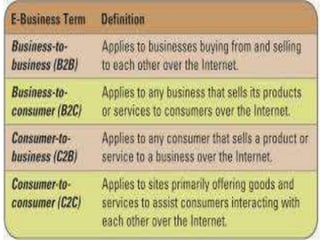
 Extends ERP to accomplish B2B & B2C
 Optimizing organization’s internal value
chain
 Enhance and redesign business
processes
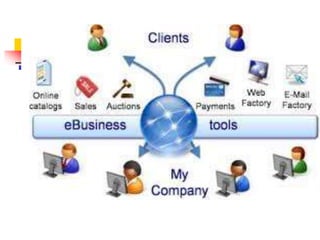
E-business
 Involves Communications & doing
business electronically
 Achieves effectiveness through
improved customer service, reduced
cost, streamlined business processes
 Creates a strategic, customer focused
business environment for shared
business improvements, mutual benefits
and joint rewards
 Uses web based interface(corporate
portals)
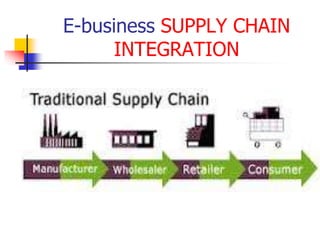
E-business SUPPLY CHAIN
INTEGRATION
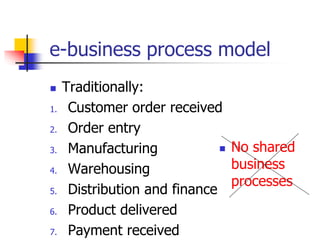
e-business process model
 No shared
business
processes
 Traditionally:
1. Customer order received
2. Order entry
3. Manufacturing
4. Warehousing
5. Distribution and finance
6. Product delivered
7. Payment received
e-business process model
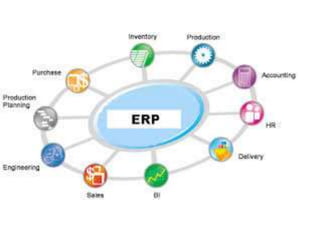
 Integrates core business processes into
a single software and hardware system
 5 major process in a typical ERP system
are:
1. Finance
2. Logistics
3. Manufacturing
4. Human resources
5. Sales/marketing
 E-business starts with suppliers
 Manufacturing of product/rendering a
service
 Providing the service/product
 Getting feedback from customers
 Giving feedback to suppliers
 Payments to suppliers
 Collecting information about
customers, suppliers, competitors.
Everything
using
ELECTRONIC
MEANS
 E-business focuses on efficiency and
effectiveness of external, cross enterprise
processes & opens door to new strategic
opportunities
 ERP supports business strategy
 E-business makes ERP more transparent
and outward
 Results in highly comprehensive and
integrated information
 Web-enabled ERP system forces
companies to look at processes that span
multiple enterprises
 A customer order triggers activities such
as:
 Customer receives acknowledgement
 payment details sent to bank for
verification and authentication
 Inventory checking
 If yes: deliver product with updations in
sales and finance departments
 If no: suppliers informed via EDI
followed by production planning
 Customer can track their order through
Web
e-business supply chain
 Supply chain refers to the complex
network of relationships that
organizations maintain with trading
partners to procure, manufacture and
deliver products or services
 Coordination of material, information
and financial flows between and among
all the participants
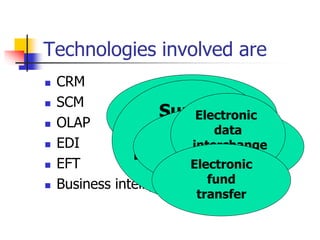
Technologies involved are
 CRM
 SCM
 OLAP
 EDI
 EFT
 Business intelligence
customer
relationship
management
Supply
chain
management
On-line
analytical
processing
Electronic
data
interchange
Electronic
fund
transfer
 CRM: customer info analysis for better
operating efficiency
 OLAP: collect, collate & analyze data for
decision making
 GIS: Integrated with SCM for best
delivery routes
 EDI: digital networks & automated
procurement and supply processes
 EFT: accept and make payments
between trading partners
ERP e-Business integration
 E-business : best vehicle to share
business info with partners for creating
major B2B synergies
 Creates accurate, relevant & consistent
data
 Assist in intelligence business decision
making
 Reduced inventory
 Improved order and cash management
 Improved customer responsiveness
 Reduced it costs
 Availability of resources for value-added
activities
Erp & e business

Erp & e business

  • 1.
  • 3.
    Introduction  ERP givesan Opportunity to standardize & automate business processes which results in  Increasing productivity  Reducing cycle time which is just not sufficient today.
  • 4.
    E-business  has changeddefinition of enterprise systems  Pushes ERP from inside core to network edge  Extends ERP to accomplish B2B & B2C  Optimizing organization’s internal value chain  Enhance and redesign business processes
  • 5.
    E-business  Involves Communications& doing business electronically  Achieves effectiveness through improved customer service, reduced cost, streamlined business processes  Creates a strategic, customer focused business environment for shared business improvements, mutual benefits and joint rewards  Uses web based interface(corporate portals)
  • 6.
  • 8.
    e-business process model No shared business processes  Traditionally: 1. Customer order received 2. Order entry 3. Manufacturing 4. Warehousing 5. Distribution and finance 6. Product delivered 7. Payment received
  • 10.
    e-business process model Integrates core business processes into a single software and hardware system  5 major process in a typical ERP system are: 1. Finance 2. Logistics 3. Manufacturing 4. Human resources 5. Sales/marketing
  • 11.
     E-business startswith suppliers  Manufacturing of product/rendering a service  Providing the service/product  Getting feedback from customers  Giving feedback to suppliers  Payments to suppliers  Collecting information about customers, suppliers, competitors. Everything using ELECTRONIC MEANS
  • 12.
     E-business focuseson efficiency and effectiveness of external, cross enterprise processes & opens door to new strategic opportunities  ERP supports business strategy  E-business makes ERP more transparent and outward  Results in highly comprehensive and integrated information  Web-enabled ERP system forces companies to look at processes that span multiple enterprises
  • 13.
     A customerorder triggers activities such as:  Customer receives acknowledgement  payment details sent to bank for verification and authentication  Inventory checking  If yes: deliver product with updations in sales and finance departments  If no: suppliers informed via EDI followed by production planning  Customer can track their order through Web
  • 14.
    e-business supply chain Supply chain refers to the complex network of relationships that organizations maintain with trading partners to procure, manufacture and deliver products or services  Coordination of material, information and financial flows between and among all the participants
  • 15.
    Technologies involved are CRM  SCM  OLAP  EDI  EFT  Business intelligence customer relationship management Supply chain management On-line analytical processing Electronic data interchange Electronic fund transfer
  • 16.
     CRM: customerinfo analysis for better operating efficiency  OLAP: collect, collate & analyze data for decision making  GIS: Integrated with SCM for best delivery routes  EDI: digital networks & automated procurement and supply processes  EFT: accept and make payments between trading partners
  • 17.
    ERP e-Business integration E-business : best vehicle to share business info with partners for creating major B2B synergies  Creates accurate, relevant & consistent data  Assist in intelligence business decision making  Reduced inventory  Improved order and cash management
  • 18.
     Improved customerresponsiveness  Reduced it costs  Availability of resources for value-added activities

Editor's Notes

  • #12 e-business process model