
E-COMMERCE---@@
CONTENTS--
1. What is E-COMMERCE ?
2. Objective of E-COMMERCE.
3. Advantages & Disadvantages
of E-C.
4. Forces Driving E-C.
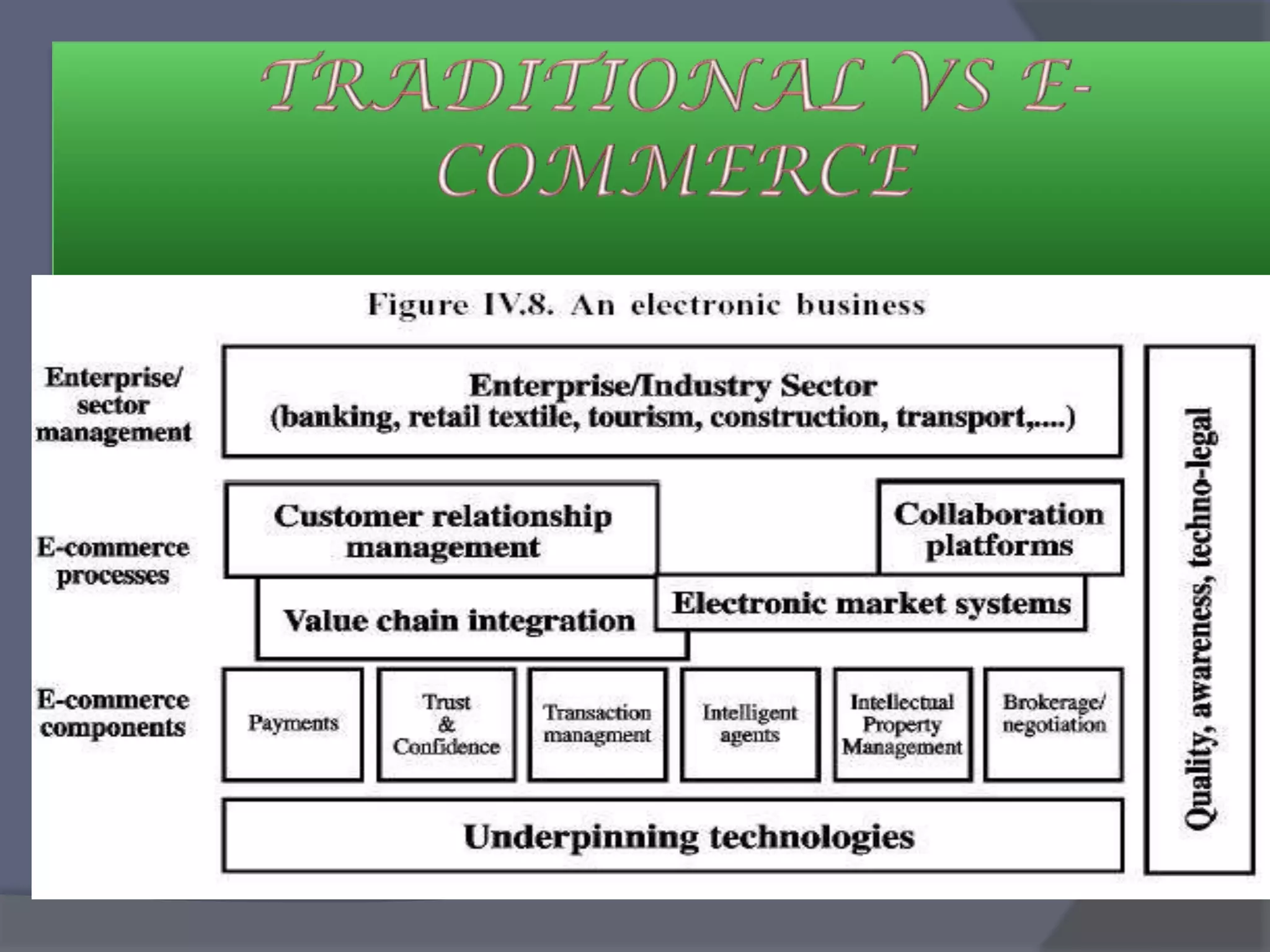
5. Traditional vs E-C.
6. E-C opportunities for
industries.
7. E-C Model
What is E-Commerce-
Electronic commerce, commonly
known as e-commerce, is a type of
industry where buying and selling
of product or service over
electronic systems such as the
Internet and other computer
networks. Electronic commerce
draws on such technologies
as mobile
commerce, electronic funds
transfer, supply chain
management, Internet
marketing
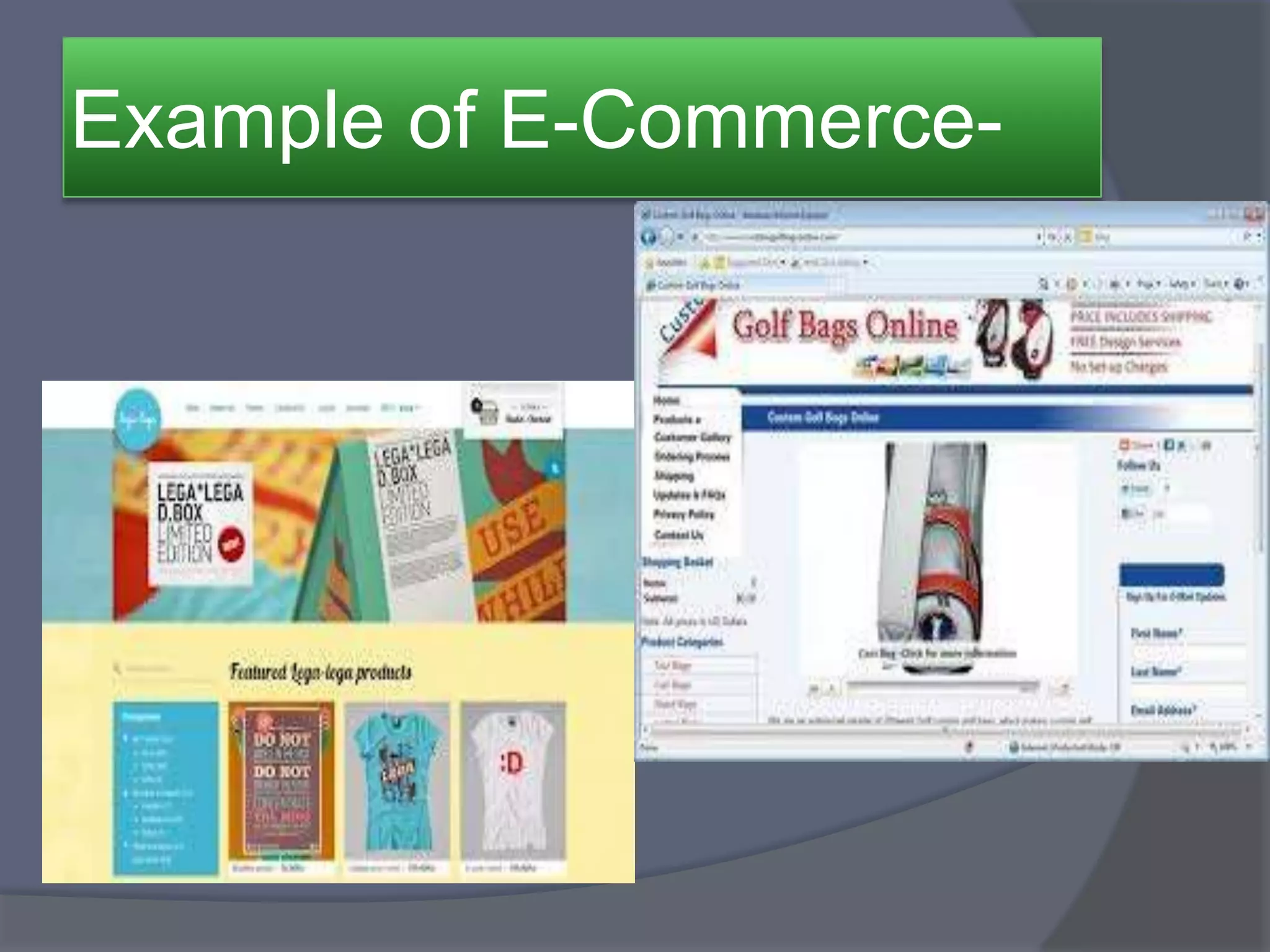
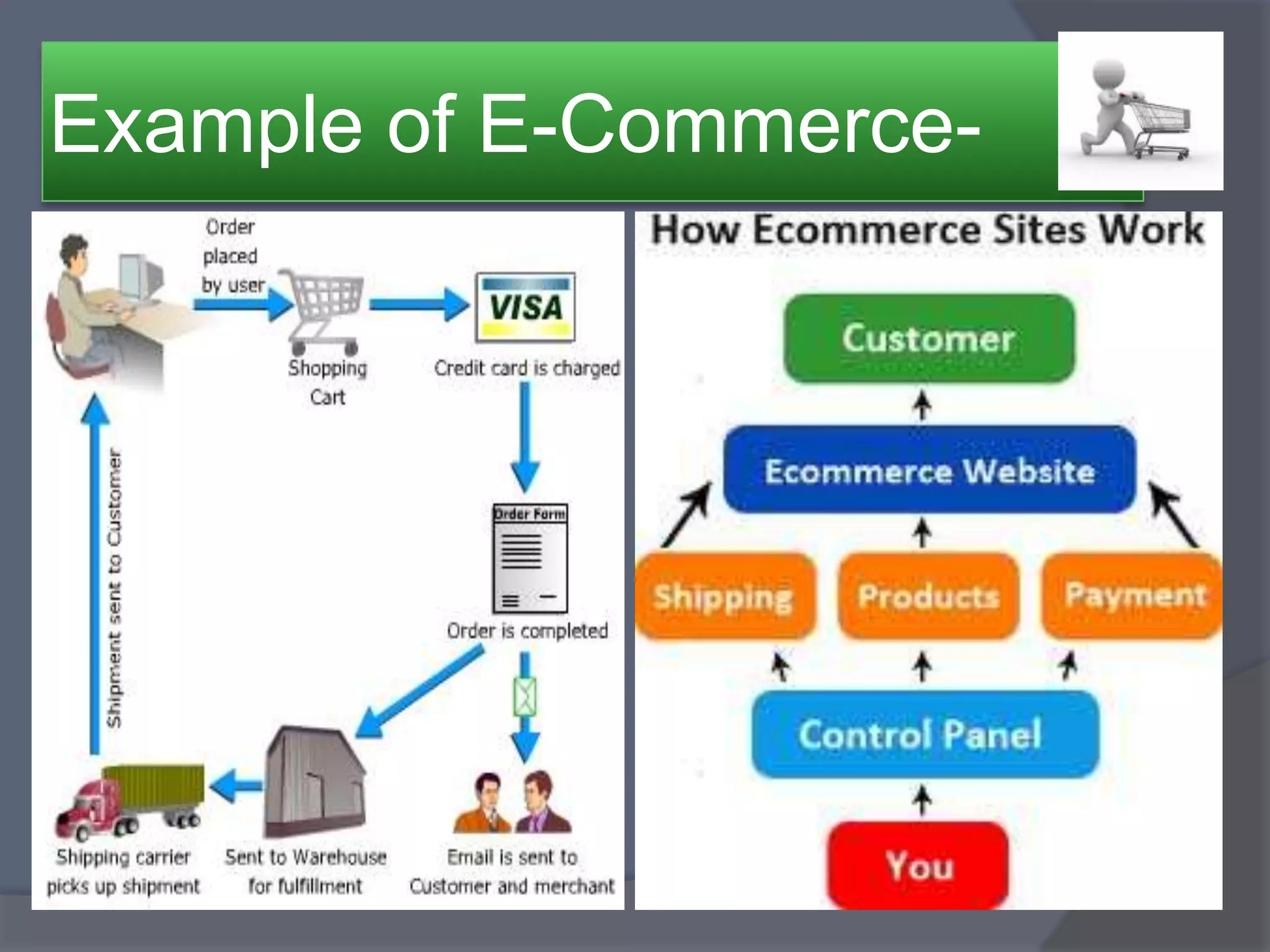
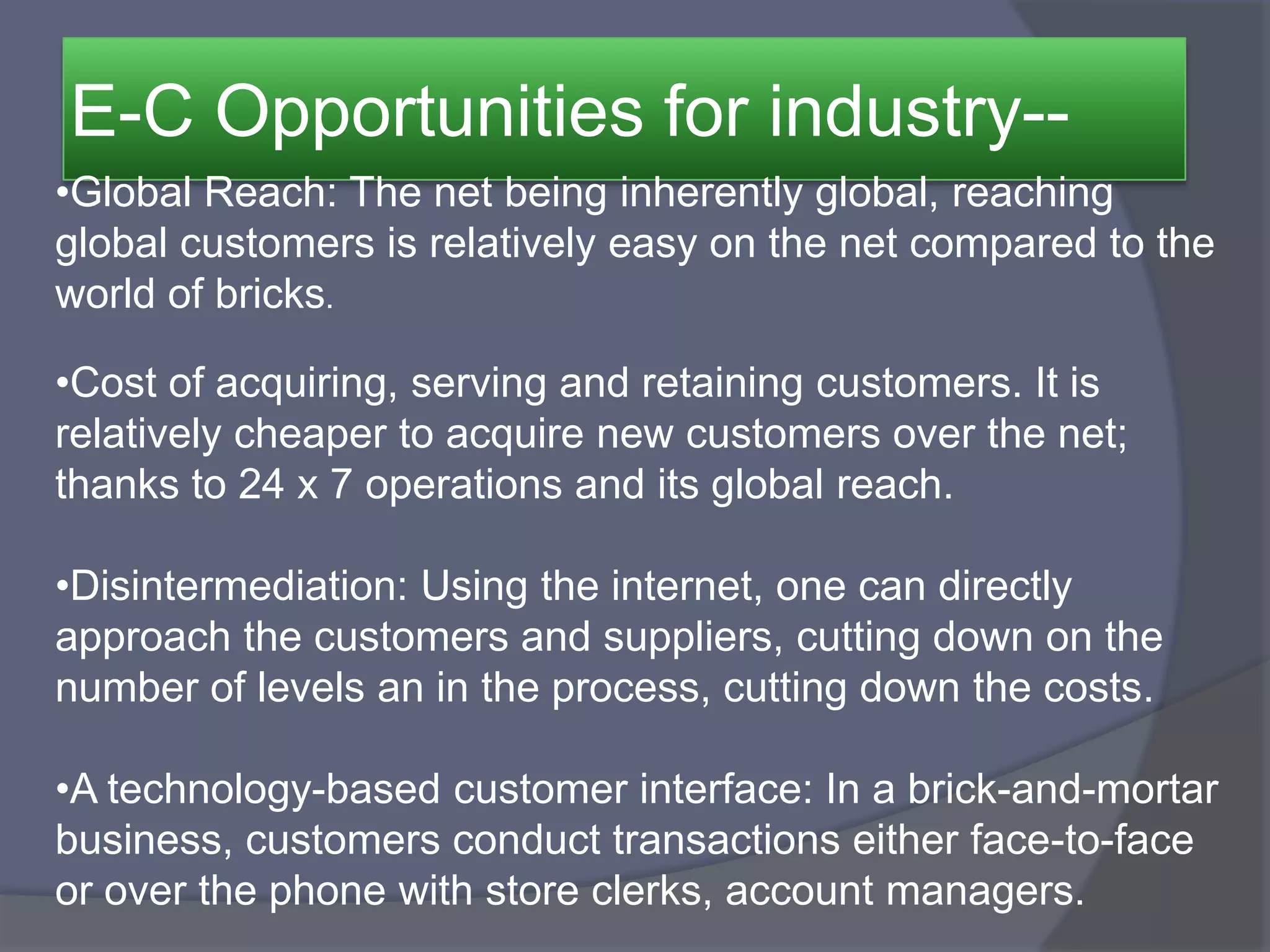
Example of E-Commerce-
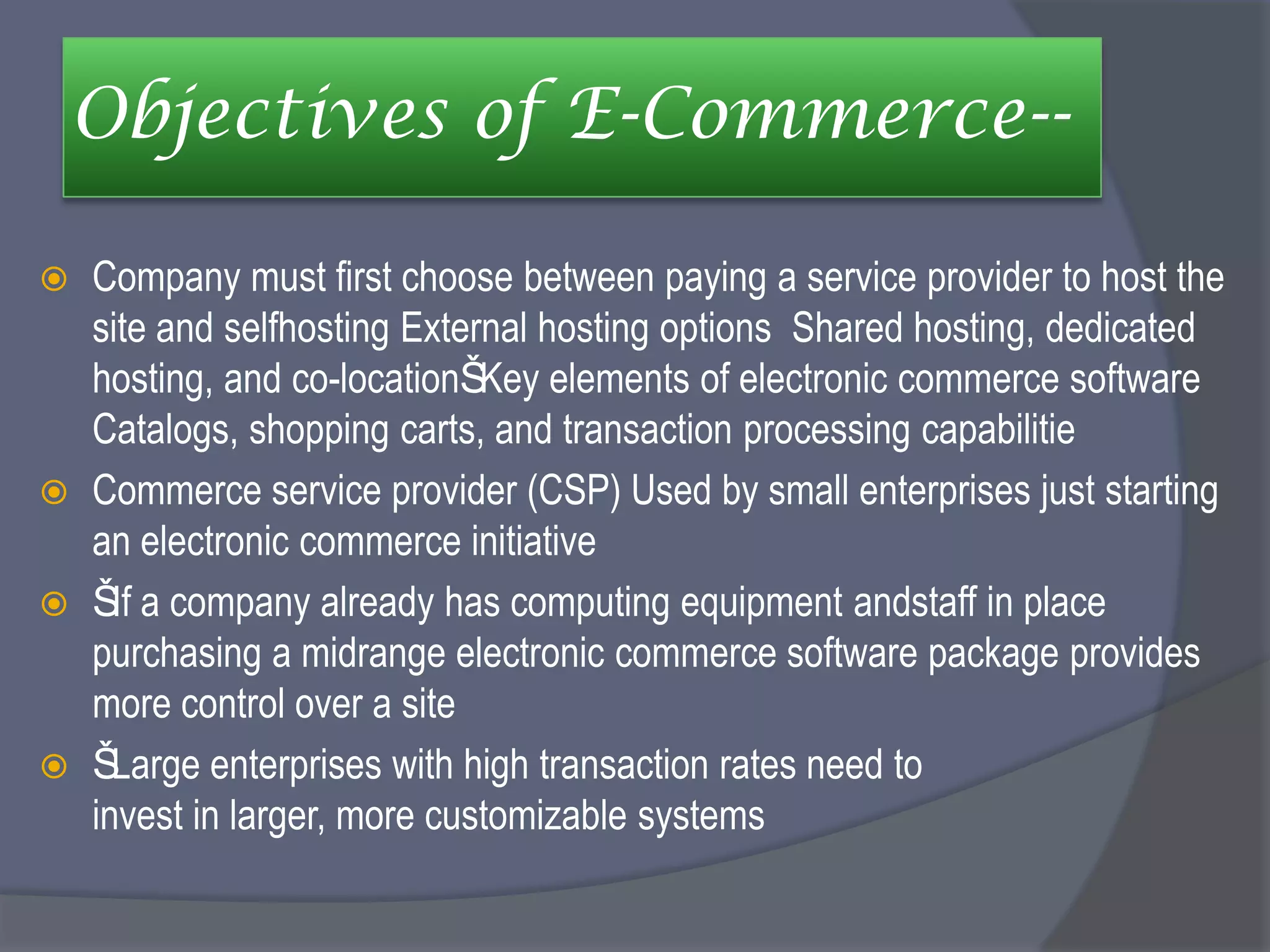
Objectives of E-Commerce--
 Company must first choose between paying a service provider to host the
site and selfhosting External hosting options Shared hosting, dedicated
hosting, and co-locationŠKey elements of electronic commerce software
Catalogs, shopping carts, and transaction processing capabilitie
 Commerce service provider (CSP) Used by small enterprises just starting
an electronic commerce initiative
 ŠIf a company already has computing equipment andstaff in place
purchasing a midrange electronic commerce software package provides
more control over a site
 ŠLarge enterprises with high transaction rates need to
invest in larger, more customizable systems
Advantages of E-Commerce--
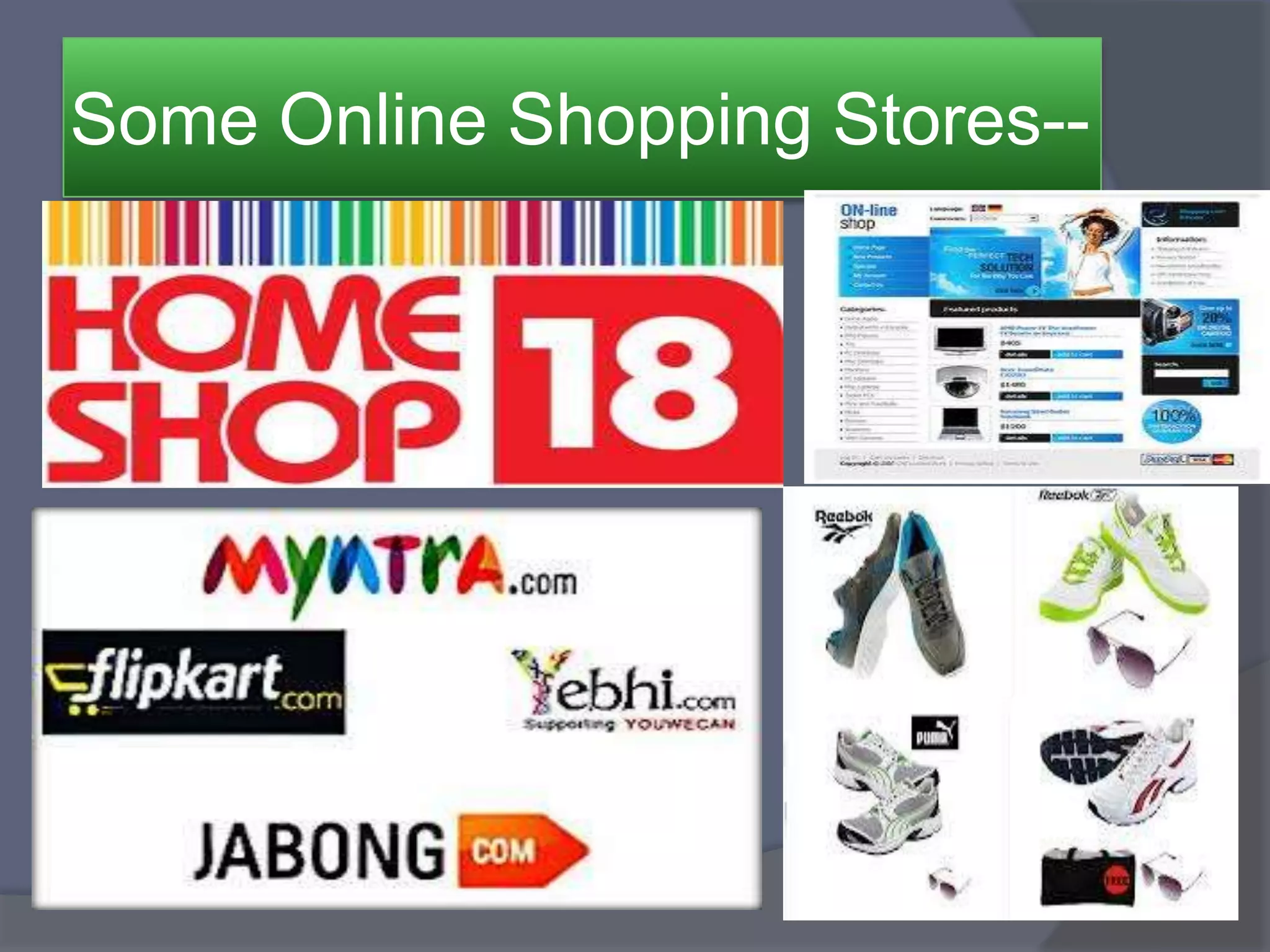
Some Online Shopping Stores--
Disadvantages of E-
Commerce--
1. Any one, good or bad, can easily start a business.
And there are many bad sites which eat up
customers’ money.
2. There is no guarantee of product quality.
3. Mechanical failures can cause unpredictable
effects on the total processes.
4. As there is minimum chance of direct customer
to company interactions, customer loyalty is
always on a check.
5. There are many hackers who look for
opportunities, and thus an ecommerce site, service,
payment gateways, all are always prone to attack.
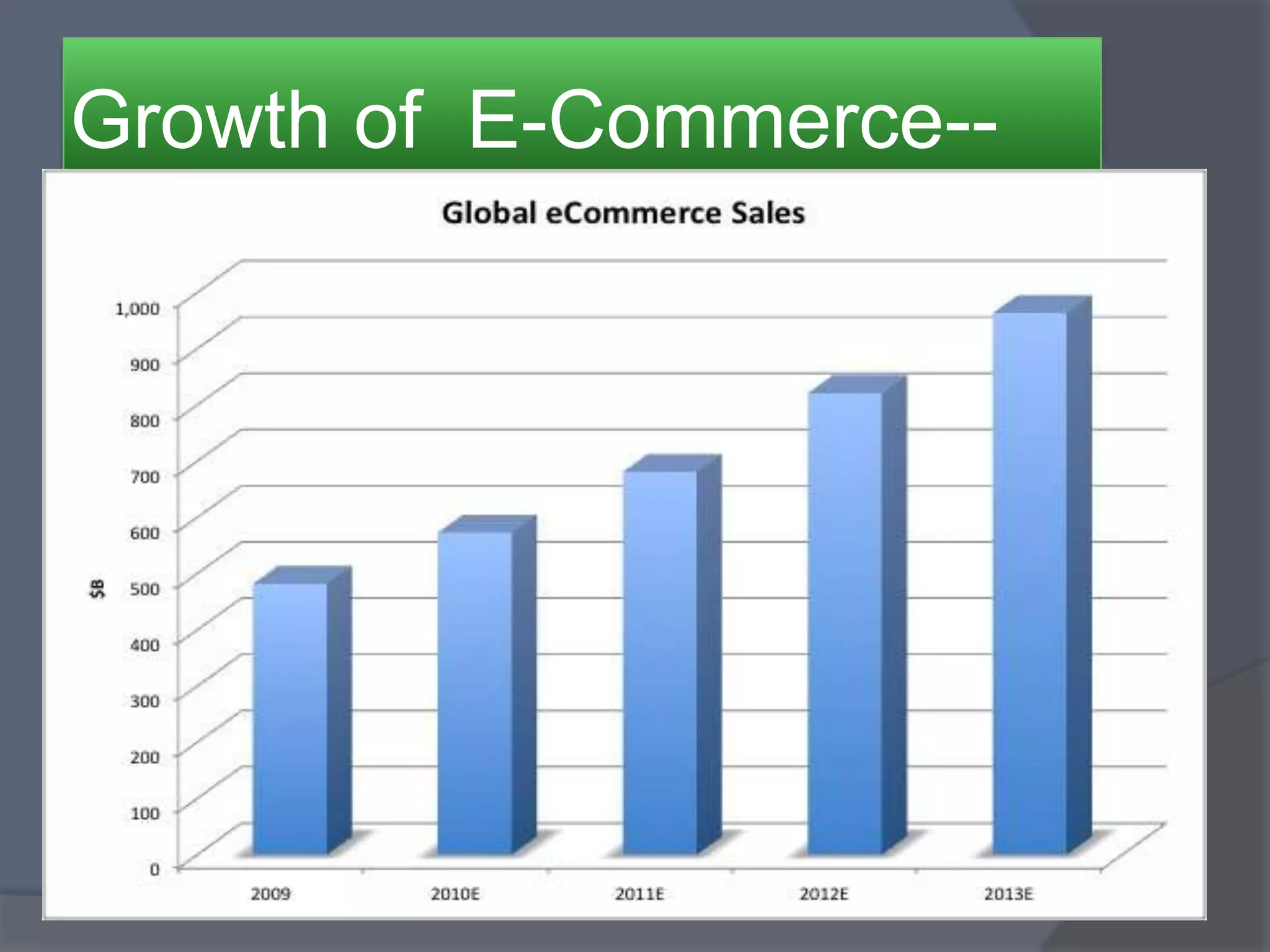
Growth of E-Commerce--
Traditional Commerce-
In addition to buying or selling, firms engage in
many other activities that keep them in
business. For example, the seller of a product
must identify demand, promote its products to
potential buyers, accept orders, deliver its
product, bill and accept payment for its product,
and support its customers' use of its product
after the sale. In many cases, sellers will
customize or create a product to a customer's
specification. These include the buyer and
seller.
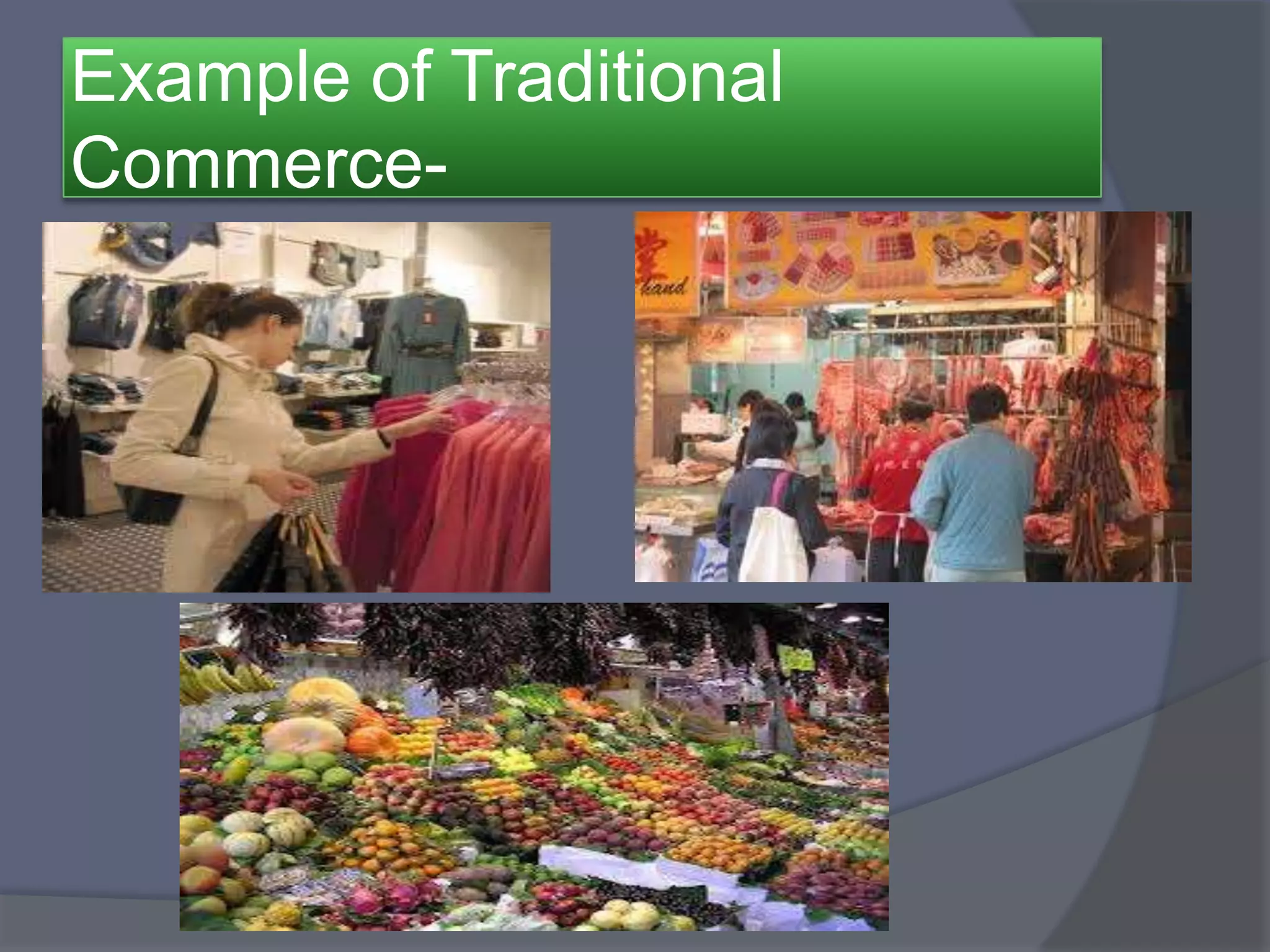
Example of Traditional
Commerce-
E-Commerce--
Firms have used various electronic communications
tools to conduct different kinds of business
transactions. Banks have use used EFTs to move
customers' money around the world, all kinds of
businesses use EDI to place orders and send
invoices, and retailers have used television
advertising to generate telephone orders from the
general public for various types of merchandise for
many decades.
Example of E-Commerce-
E-C Opportunities for industry--
•Global Reach: The net being inherently global, reaching
global customers is relatively easy on the net compared to the
world of bricks.
•Cost of acquiring, serving and retaining customers. It is
relatively cheaper to acquire new customers over the net;
thanks to 24 x 7 operations and its global reach.
•Disintermediation: Using the internet, one can directly
approach the customers and suppliers, cutting down on the
number of levels an in the process, cutting down the costs.
•A technology-based customer interface: In a brick-and-mortar
business, customers conduct transactions either face-to-face
or over the phone with store clerks, account managers.
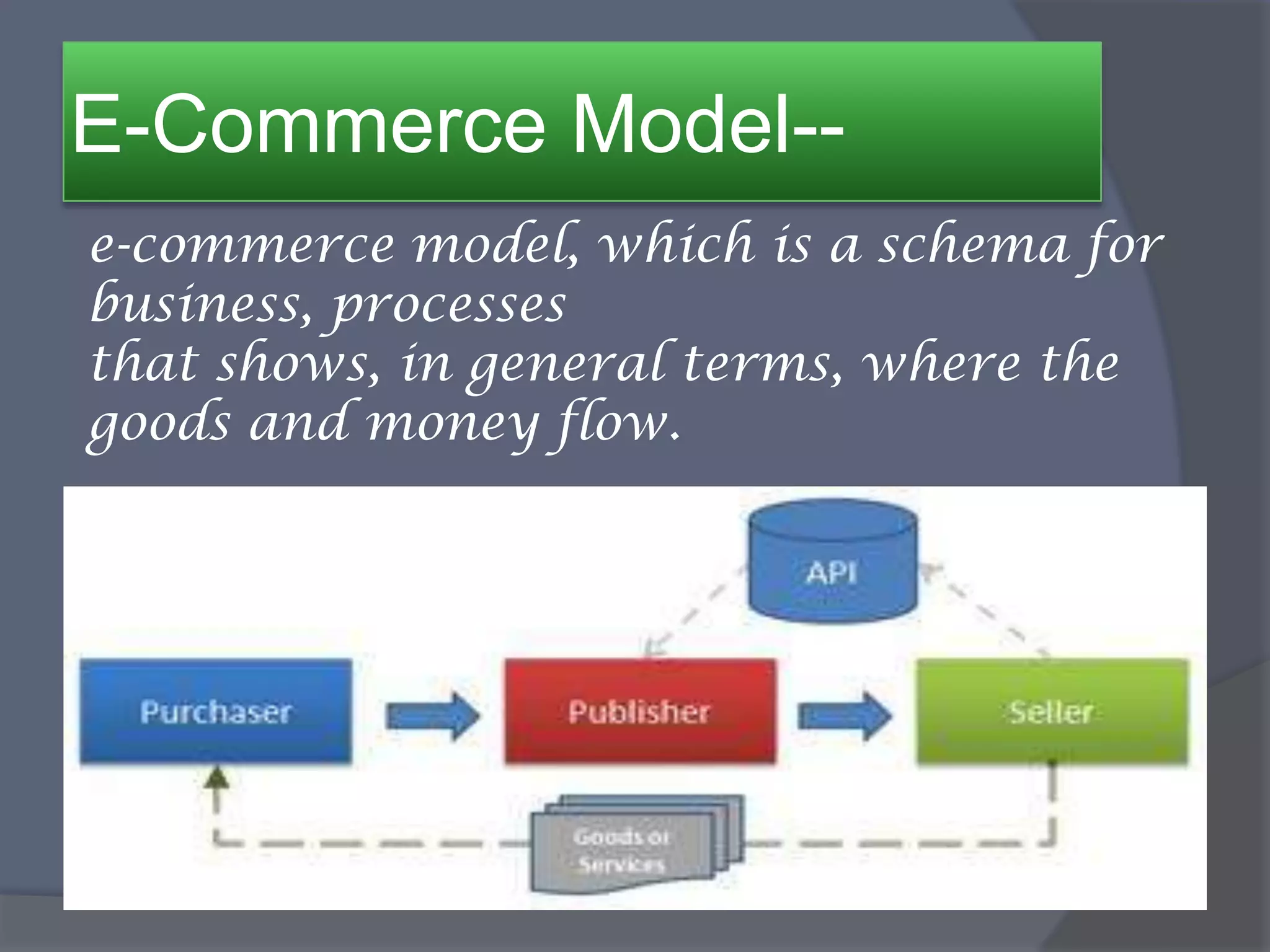
E-Commerce Model--
e-commerce model, which is a schema for
business, processes
that shows, in general terms, where the
goods and money flow.
Types Of E-Commerce model--
Business to Business Ecommerce (B2B Ecommerce)
In this type of ecommerce, both participants are businesses. As a result,
the volume and value of B2B ecommerce can be huge. An example of
business to business ecommerce could be a manufacturer of gadgets
sourcing components online.
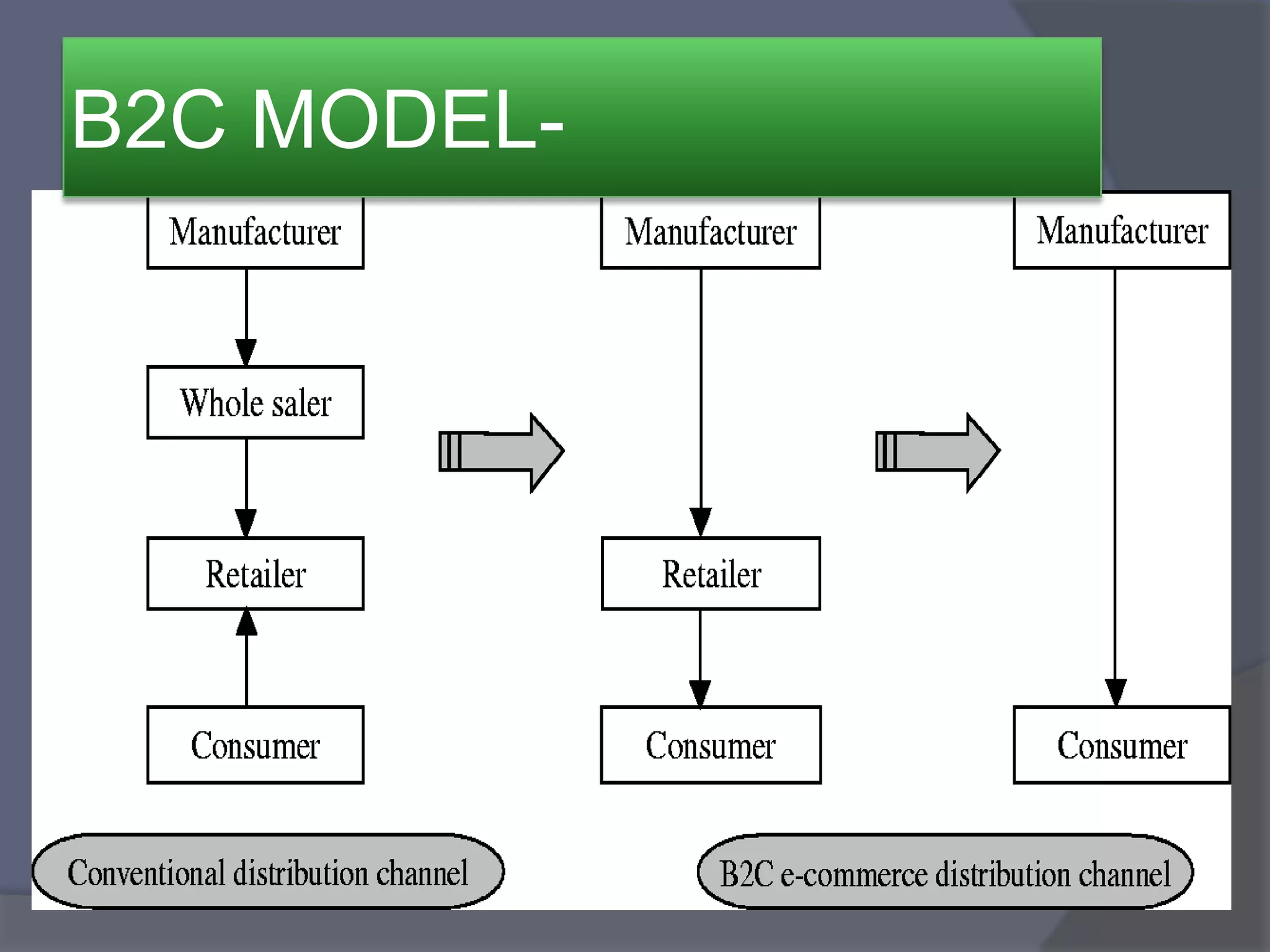
Business to Consumer Ecommerce (B2C Ecommerce):
When we hear the term ecommerce, most people think of B2C
ecommerce. That is why a name like Amazon.com pops up in most
discussions about ecommerce. Elimination of the need for physical
stores is the biggest rationale for business to consumer ecommerce. But
the complexity and cost of logistics can be a barrier to B2C ecommerce
growth.
Types Of E-Commerce model--
Consumer to Business Ecommerce (C2B Ecommerce)
On the face of it, C2B ecommerce seems lop-sided. But online commerce
has empowered consumers to originate requirements that businesses
fulfill. An example of this could be a job board where a consumer places
her requirements and multiple companies bid for winning the project.
Another example would be a consumer posting his requirements of a
holiday package, and various tour operators making offers.
Consumer to Consumer Ecommerce (C2C Ecommerce)
The moment you think of C2C ecommerce eBay.com comes to mind. That
is because it is the most popular platform that enables consumers to sell to
other consumers. Since eBay.com is a business, this form of ecommerce
could also be called C2B2C ecommerce (consumer to business to
consumer ecommerce).
B2C MODEL-
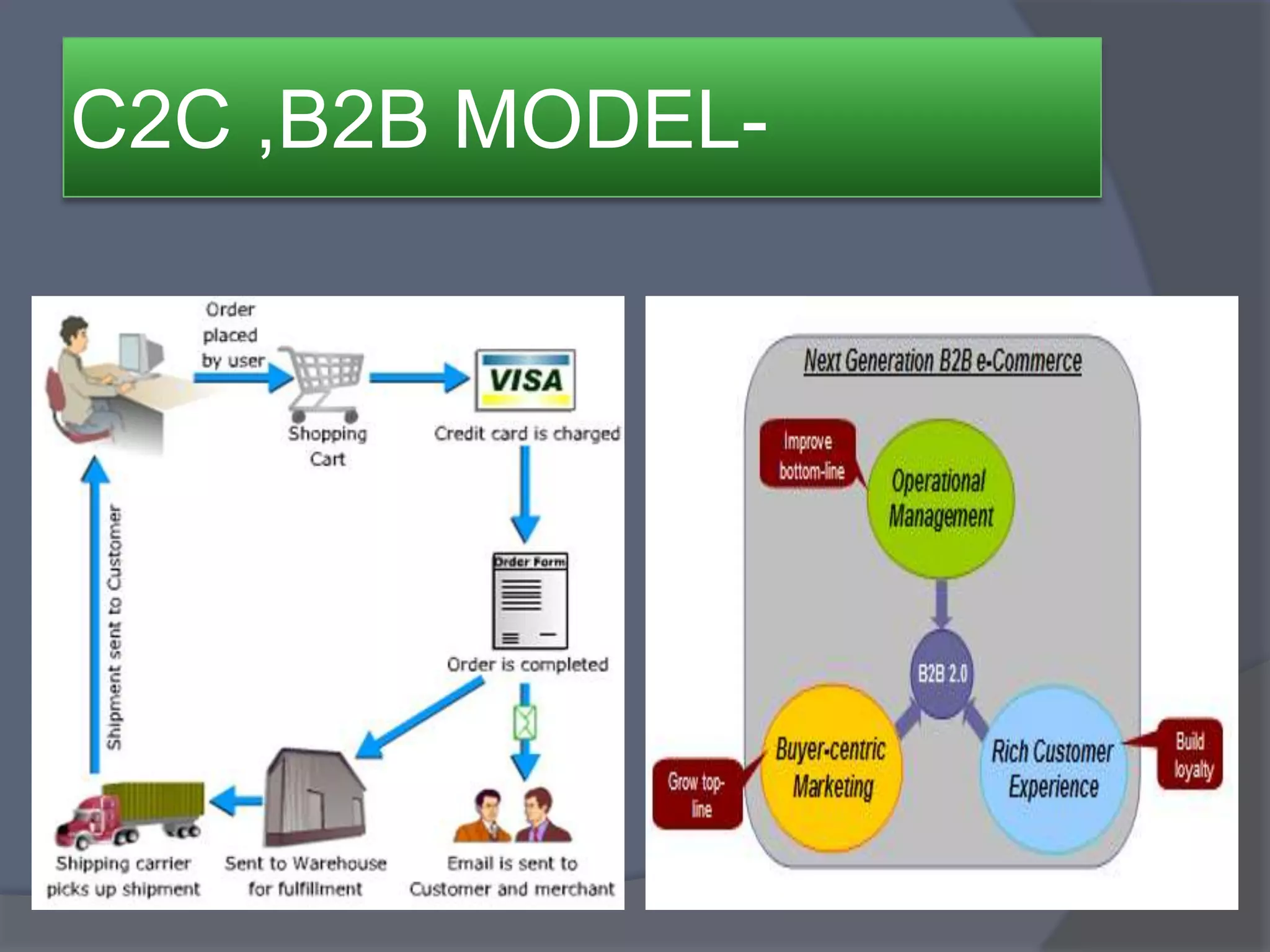
C2C ,B2B MODEL-
E commerce---@@

E commerce---@@

  • 1.
  • 2.
    CONTENTS-- 1. What isE-COMMERCE ? 2. Objective of E-COMMERCE. 3. Advantages & Disadvantages of E-C. 4. Forces Driving E-C. 5. Traditional vs E-C. 6. E-C opportunities for industries. 7. E-C Model
  • 3.
    What is E-Commerce- Electroniccommerce, commonly known as e-commerce, is a type of industry where buying and selling of product or service over electronic systems such as the Internet and other computer networks. Electronic commerce draws on such technologies as mobile commerce, electronic funds transfer, supply chain management, Internet marketing
  • 4.
  • 5.
    Objectives of E-Commerce-- Company must first choose between paying a service provider to host the site and selfhosting External hosting options Shared hosting, dedicated hosting, and co-locationŠKey elements of electronic commerce software Catalogs, shopping carts, and transaction processing capabilitie  Commerce service provider (CSP) Used by small enterprises just starting an electronic commerce initiative  ŠIf a company already has computing equipment andstaff in place purchasing a midrange electronic commerce software package provides more control over a site  ŠLarge enterprises with high transaction rates need to invest in larger, more customizable systems
  • 6.
  • 7.
  • 8.
    Disadvantages of E- Commerce-- 1.Any one, good or bad, can easily start a business. And there are many bad sites which eat up customers’ money. 2. There is no guarantee of product quality. 3. Mechanical failures can cause unpredictable effects on the total processes. 4. As there is minimum chance of direct customer to company interactions, customer loyalty is always on a check. 5. There are many hackers who look for opportunities, and thus an ecommerce site, service, payment gateways, all are always prone to attack.
  • 9.
  • 11.
    Traditional Commerce- In additionto buying or selling, firms engage in many other activities that keep them in business. For example, the seller of a product must identify demand, promote its products to potential buyers, accept orders, deliver its product, bill and accept payment for its product, and support its customers' use of its product after the sale. In many cases, sellers will customize or create a product to a customer's specification. These include the buyer and seller.
  • 12.
  • 13.
    E-Commerce-- Firms have usedvarious electronic communications tools to conduct different kinds of business transactions. Banks have use used EFTs to move customers' money around the world, all kinds of businesses use EDI to place orders and send invoices, and retailers have used television advertising to generate telephone orders from the general public for various types of merchandise for many decades.
  • 14.
  • 15.
    E-C Opportunities forindustry-- •Global Reach: The net being inherently global, reaching global customers is relatively easy on the net compared to the world of bricks. •Cost of acquiring, serving and retaining customers. It is relatively cheaper to acquire new customers over the net; thanks to 24 x 7 operations and its global reach. •Disintermediation: Using the internet, one can directly approach the customers and suppliers, cutting down on the number of levels an in the process, cutting down the costs. •A technology-based customer interface: In a brick-and-mortar business, customers conduct transactions either face-to-face or over the phone with store clerks, account managers.
  • 16.
    E-Commerce Model-- e-commerce model,which is a schema for business, processes that shows, in general terms, where the goods and money flow.
  • 17.
    Types Of E-Commercemodel-- Business to Business Ecommerce (B2B Ecommerce) In this type of ecommerce, both participants are businesses. As a result, the volume and value of B2B ecommerce can be huge. An example of business to business ecommerce could be a manufacturer of gadgets sourcing components online. Business to Consumer Ecommerce (B2C Ecommerce): When we hear the term ecommerce, most people think of B2C ecommerce. That is why a name like Amazon.com pops up in most discussions about ecommerce. Elimination of the need for physical stores is the biggest rationale for business to consumer ecommerce. But the complexity and cost of logistics can be a barrier to B2C ecommerce growth.
  • 18.
    Types Of E-Commercemodel-- Consumer to Business Ecommerce (C2B Ecommerce) On the face of it, C2B ecommerce seems lop-sided. But online commerce has empowered consumers to originate requirements that businesses fulfill. An example of this could be a job board where a consumer places her requirements and multiple companies bid for winning the project. Another example would be a consumer posting his requirements of a holiday package, and various tour operators making offers. Consumer to Consumer Ecommerce (C2C Ecommerce) The moment you think of C2C ecommerce eBay.com comes to mind. That is because it is the most popular platform that enables consumers to sell to other consumers. Since eBay.com is a business, this form of ecommerce could also be called C2B2C ecommerce (consumer to business to consumer ecommerce).
  • 19.
  • 20.

Editor's Notes

  • #7 6. Easy to start and manage a business.7. Customers can easily select products from different providers without moving around physically.