DRUGS FOR
TREATING SHOCK
DR. SAROJ SUWAL
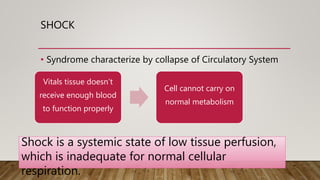
SHOCK
• Syndrome characterize by collapse of Circulatory System
Vitals tissue doesn’t
receive enough blood
to function properly
Cell cannot carry on
normal metabolism
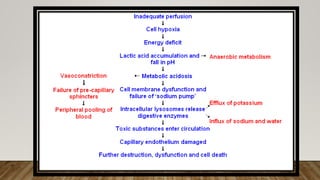
Shock is a systemic state of low tissue perfusion,
which is inadequate for normal cellular
respiration.
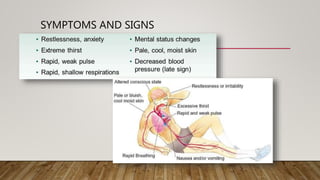
SYMPTOMS AND SIGNS
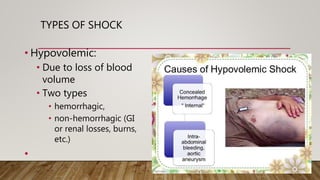
TYPES OF SHOCK
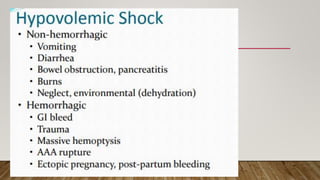
• Hypovolemic:
• Due to loss of blood
volume
• Two types
• hemorrhagic,
• non-hemorrhagic (GI
or renal losses, burns,
etc.)
•
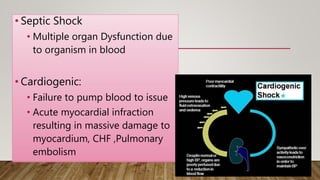
• Septic Shock
• Multiple organ Dysfunction due
to organism in blood
• Cardiogenic:
• Failure to pump blood to issue
• Acute myocardial infraction
resulting in massive damage to
myocardium, CHF ,Pulmonary
embolism
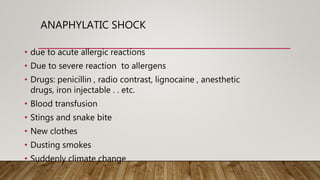
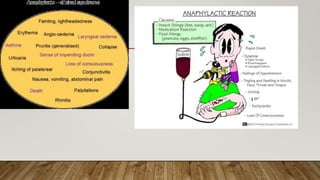
ANAPHYLATIC SHOCK
• due to acute allergic reactions
• Due to severe reaction to allergens
• Drugs: penicillin , radio contrast, lignocaine , anesthetic
drugs, iron injectable . . etc.
• Blood transfusion
• Stings and snake bite
• New clothes
• Dusting smokes
• Suddenly climate change
DRUGS USED FOR SHOCK
•3 categories
•Vasoconstrictors
•Cardio Tonic Drugs
•Fluid Replacement
agents
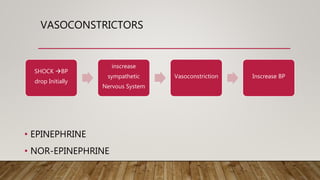
VASOCONSTRICTORS
• EPINEPHRINE
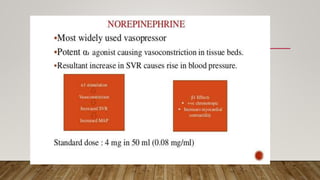
• NOR-EPINEPHRINE
SHOCK BP
drop Initially
inscrease
sympathetic
Nervous System
Vasoconstriction Inscrease BP
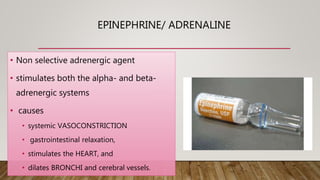
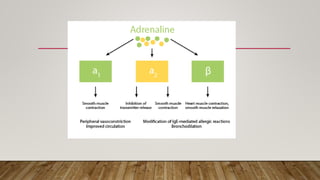
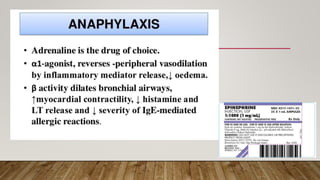
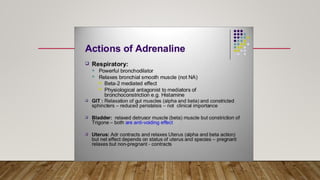
EPINEPHRINE/ ADRENALINE
• Non selective adrenergic agent
• stimulates both the alpha- and beta-
adrenergic systems
• causes
• systemic VASOCONSTRICTION
• gastrointestinal relaxation,
• stimulates the HEART, and
• dilates BRONCHI and cerebral vessels.
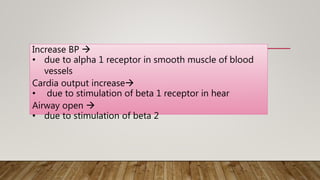
Increase BP 
• due to alpha 1 receptor in smooth muscle of blood
vessels
Cardia output increase
• due to stimulation of beta 1 receptor in hear
Airway open 
• due to stimulation of beta 2
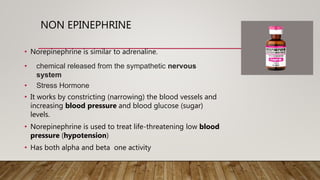
NON EPINEPHRINE
• Norepinephrine is similar to adrenaline.
• chemical released from the sympathetic nervous
system
• Stress Hormone
• It works by constricting (narrowing) the blood vessels and
increasing blood pressure and blood glucose (sugar)
levels.
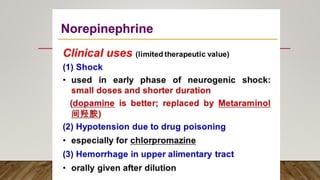
• Norepinephrine is used to treat life-threatening low blood
pressure (hypotension)
• Has both alpha and beta one activity
CARDIO TONIC DRUGS
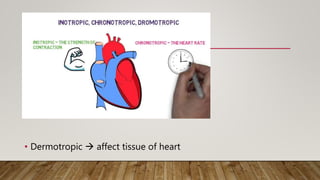
• Ionotropic agents – inscrease
force of contraction of heart
muscles
• Digoxin
• Dobutamine
• Dopamine
• Dermotropic  affect tissue of heart
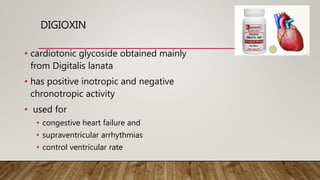
DIGIOXIN
• cardiotonic glycoside obtained mainly
from Digitalis lanata
• has positive inotropic and negative
chronotropic activity
• used for
• congestive heart failure and
• supraventricular arrhythmias
• control ventricular rate
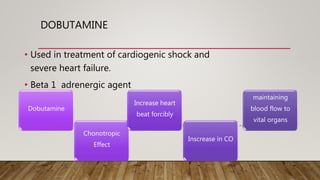
DOBUTAMINE
• Used in treatment of cardiogenic shock and
severe heart failure.
• Beta 1 adrenergic agent
Dobutamine
Chonotropic
Effect
Increase heart
beat forcibly
Inscrease in CO
maintaining
blood flow to
vital organs
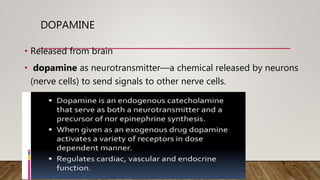
DOPAMINE
• Released from brain
• dopamine as neurotransmitter—a chemical released by neurons
(nerve cells) to send signals to other nerve cells.
DOPAMINE
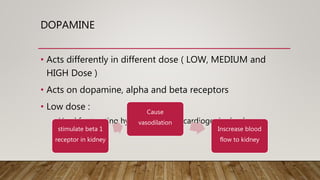
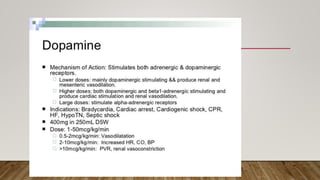
• Acts differently in different dose ( LOW, MEDIUM and
HIGH Dose )
• Acts on dopamine, alpha and beta receptors
• Low dose :
• Used for treating hypovolemic and cardiogenic shock
stimulate beta 1
receptor in kidney
Cause
vasodilation
Inscrease blood
flow to kidney
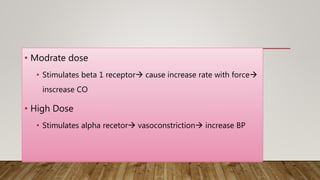
• Modrate dose
• Stimulates beta 1 receptor cause increase rate with force
inscrease CO
• High Dose
• Stimulates alpha recetor vasoconstriction increase BP
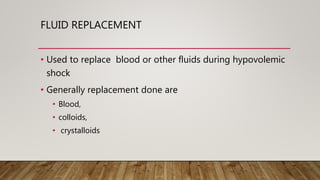
FLUID REPLACEMENT
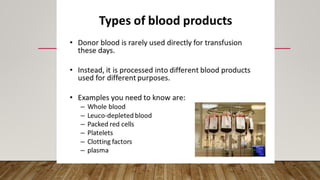
• Used to replace blood or other fluids during hypovolemic
shock
• Generally replacement done are
• Blood,
• colloids,
• crystalloids
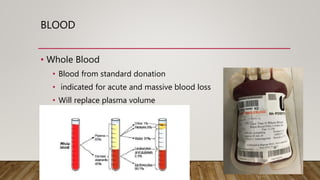
BLOOD
• Whole Blood
• Blood from standard donation
• indicated for acute and massive blood loss
• Will replace plasma volume
• Supply RBC’s
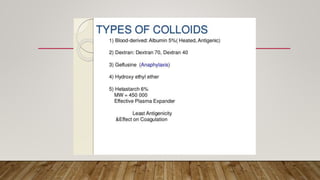
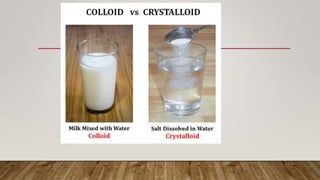
COLLOIDS
• Used when 1/3 blood volume is lost
• Are proteins that stay suspended in blood for long
period
• Draw water from body’s cells and tissues into blood
vessels
• Colloids are
• Serum albumin, plasma protein fractions, dextrans
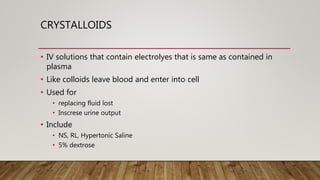
CRYSTALLOIDS
• IV solutions that contain electrolyes that is same as contained in
plasma
• Like colloids leave blood and enter into cell
• Used for
• replacing fluid lost
• Inscrese urine output
• Include
• NS, RL, Hypertonic Saline
• 5% dextrose
THANKS
Drugs for treating shock

Drugs for treating shock

  • 1.
  • 2.
    SHOCK • Syndrome characterizeby collapse of Circulatory System Vitals tissue doesn’t receive enough blood to function properly Cell cannot carry on normal metabolism Shock is a systemic state of low tissue perfusion, which is inadequate for normal cellular respiration.
  • 4.
  • 5.
    TYPES OF SHOCK •Hypovolemic: • Due to loss of blood volume • Two types • hemorrhagic, • non-hemorrhagic (GI or renal losses, burns, etc.) •
  • 7.
    • Septic Shock •Multiple organ Dysfunction due to organism in blood • Cardiogenic: • Failure to pump blood to issue • Acute myocardial infraction resulting in massive damage to myocardium, CHF ,Pulmonary embolism
  • 8.
    ANAPHYLATIC SHOCK • dueto acute allergic reactions • Due to severe reaction to allergens • Drugs: penicillin , radio contrast, lignocaine , anesthetic drugs, iron injectable . . etc. • Blood transfusion • Stings and snake bite • New clothes • Dusting smokes • Suddenly climate change
  • 11.
    DRUGS USED FORSHOCK •3 categories •Vasoconstrictors •Cardio Tonic Drugs •Fluid Replacement agents
  • 12.
    VASOCONSTRICTORS • EPINEPHRINE • NOR-EPINEPHRINE SHOCKBP drop Initially inscrease sympathetic Nervous System Vasoconstriction Inscrease BP
  • 13.
    EPINEPHRINE/ ADRENALINE • Nonselective adrenergic agent • stimulates both the alpha- and beta- adrenergic systems • causes • systemic VASOCONSTRICTION • gastrointestinal relaxation, • stimulates the HEART, and • dilates BRONCHI and cerebral vessels.
  • 16.
    Increase BP  •due to alpha 1 receptor in smooth muscle of blood vessels Cardia output increase • due to stimulation of beta 1 receptor in hear Airway open  • due to stimulation of beta 2
  • 19.
    NON EPINEPHRINE • Norepinephrineis similar to adrenaline. • chemical released from the sympathetic nervous system • Stress Hormone • It works by constricting (narrowing) the blood vessels and increasing blood pressure and blood glucose (sugar) levels. • Norepinephrine is used to treat life-threatening low blood pressure (hypotension) • Has both alpha and beta one activity
  • 22.
    CARDIO TONIC DRUGS •Ionotropic agents – inscrease force of contraction of heart muscles • Digoxin • Dobutamine • Dopamine
  • 23.
    • Dermotropic affect tissue of heart
  • 24.
    DIGIOXIN • cardiotonic glycosideobtained mainly from Digitalis lanata • has positive inotropic and negative chronotropic activity • used for • congestive heart failure and • supraventricular arrhythmias • control ventricular rate
  • 25.
    DOBUTAMINE • Used intreatment of cardiogenic shock and severe heart failure. • Beta 1 adrenergic agent Dobutamine Chonotropic Effect Increase heart beat forcibly Inscrease in CO maintaining blood flow to vital organs
  • 26.
    DOPAMINE • Released frombrain • dopamine as neurotransmitter—a chemical released by neurons (nerve cells) to send signals to other nerve cells.
  • 27.
    DOPAMINE • Acts differentlyin different dose ( LOW, MEDIUM and HIGH Dose ) • Acts on dopamine, alpha and beta receptors • Low dose : • Used for treating hypovolemic and cardiogenic shock stimulate beta 1 receptor in kidney Cause vasodilation Inscrease blood flow to kidney
  • 28.
    • Modrate dose •Stimulates beta 1 receptor cause increase rate with force inscrease CO • High Dose • Stimulates alpha recetor vasoconstriction increase BP
  • 30.
    FLUID REPLACEMENT • Usedto replace blood or other fluids during hypovolemic shock • Generally replacement done are • Blood, • colloids, • crystalloids
  • 31.
    BLOOD • Whole Blood •Blood from standard donation • indicated for acute and massive blood loss • Will replace plasma volume • Supply RBC’s
  • 33.
    COLLOIDS • Used when1/3 blood volume is lost • Are proteins that stay suspended in blood for long period • Draw water from body’s cells and tissues into blood vessels • Colloids are • Serum albumin, plasma protein fractions, dextrans
  • 35.
    CRYSTALLOIDS • IV solutionsthat contain electrolyes that is same as contained in plasma • Like colloids leave blood and enter into cell • Used for • replacing fluid lost • Inscrese urine output • Include • NS, RL, Hypertonic Saline • 5% dextrose
  • 37.