Chemotherapy &
Antimicrobial Agents
UNIT –II
For BN /B.Sc. Nursing
Contents
 Chemotherapy and
terminologies
 Antimicrobial agents
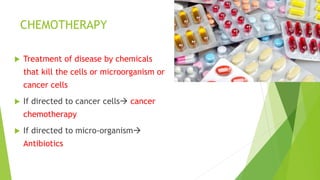
CHEMOTHERAPY
 Treatment of disease by chemicals
that kill the cells or microorganism or
cancer cells
 If directed to cancer cells cancer
chemotherapy
 If directed to micro-organism
Antibiotics
General Principles of Chemotherapy
 Diagnosis
 Indication of chemotherapy
 Selections of drugs
 Selections of dose and
 route of administration
 Duration of therapy
 Drug therapy
 Test for cure
 Prophylactic drug
Diagnosis:
Site of Infections
Responsible organism
Sensitivity of drug
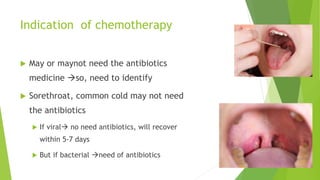
Indication of chemotherapy
 May or maynot need the antibiotics
medicine so, need to identify
 Sorethroat, common cold may not need
the antibiotics
 If viral no need antibiotics, will recover
within 5-7 days
 But if bacterial need of antibiotics
Selection of Drugs
 Is based on the cost effectiveness of drug,
safety and toxicity .
 Can be targeted and empirical chemotherapy
 Targeted chemotherapy
 Chemotherapy according to culture sensitivity
 Cancer drugs
 Emperical chemotherapy
 According to practice of doctors
 According to epidemiological pattern to disease
Selection of dose
 Should be enough to achieve minimum
inhibitory concentration(MIC)
 MIC
 Minimum effect of antibiotics require to
suppress microorganism or to achieve
therapeutic effect
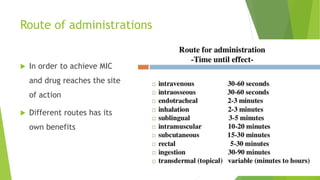
Route of administrations
 In order to achieve MIC
and drug reaches the site
of action
 Different routes has its
own benefits
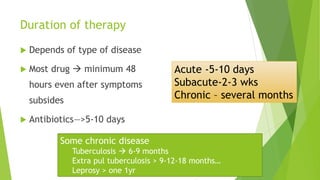
Duration of therapy
 Depends of type of disease
 Most drug  minimum 48
hours even after symptoms
subsides
 Antibiotics—>5-10 days
Acute -5-10 days
Subacute-2-3 wks
Chronic – several months
Some chronic disease
Tuberculosis  6-9 months
Extra pul tuberculosis > 9-12-18 months…
Leprosy > one 1yr
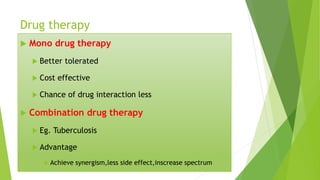
Drug therapy
 Mono drug therapy
 Better tolerated
 Cost effective
 Chance of drug interaction less
 Combination drug therapy
 Eg. Tuberculosis
 Advantage
 Achieve synergism,less side effect,inscrease spectrum
Change of drug during therapy
 Frequent change is not good
 Enough time give so that it can be goodly
absorbed, reach site of action and produce
pharmacological effects
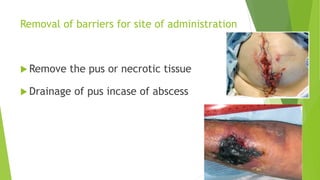
Removal of barriers for site of administration
 Remove the pus or necrotic tissue
 Drainage of pus incase of abscess
Test for Cure
 After therapy,
 Symptoms and sign may disappear before pathogen
eradicated
 Especially in chronic cases
 So, continue medication for time
 Need prophylaxis
Chemoprophylaxis( Prophylaxis )
 Prevention of disease or infections by chemotherapy
 Non Surgical prophylaxis
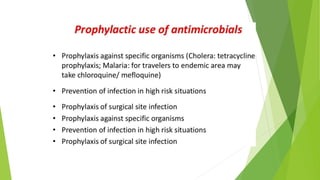
 Rheumatic fever long acting penicillin
 Person travelling endemic area of malaria  mefloquinine or primaquine
 DVT prophylaxis in bed ridden patient
 Surgical
 Purpose is to decrease the adverse effect
 Prevent further infection
 Given if surgical hours is two or more hours(esp. GI surgery, musculoskeletal surgeries
etc
Adverse effect of antimicrobial
agents(AMAs)
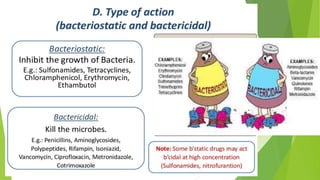
 Toxicity
 Hypersensitivity
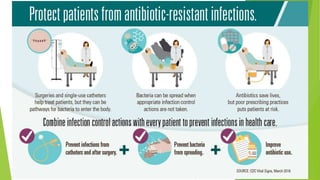
 Drug resistance
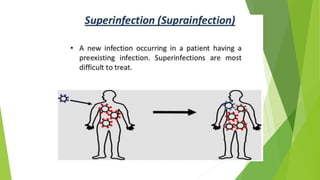
 Super infection
 Nutritional deficiency
 Masking of infection
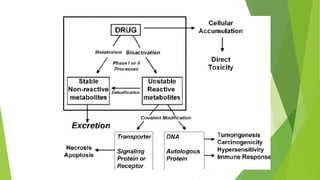
Toxicity
 Local toxicity
Local irritation at site of administration
 pain and abscess by i/m drug
Thrombophlebitis on iv drug
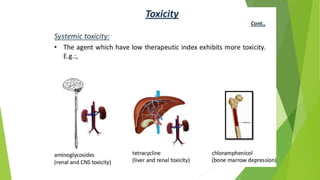
 Systematic toxicity
Aminoglycosideototoxicity
Chloramphenicolbonemarrow supression
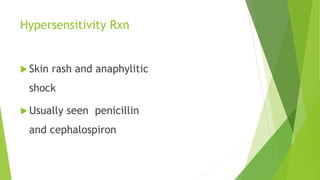
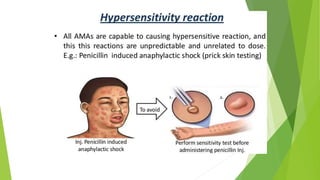
Hypersensitivity Rxn
 Skin rash and anaphylitic
shock
 Usually seen penicillin
and cephalospiron
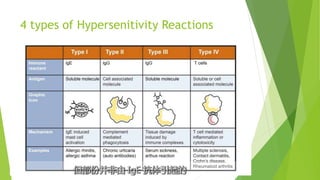
4 types of Hypersenitivity Reactions
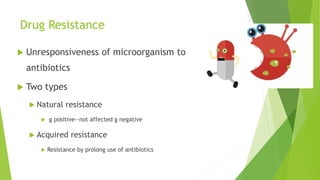
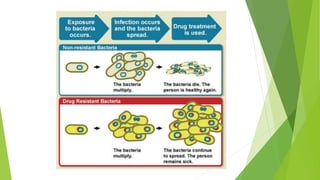
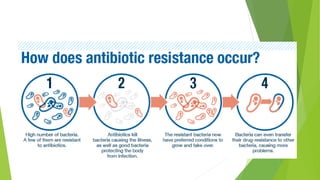
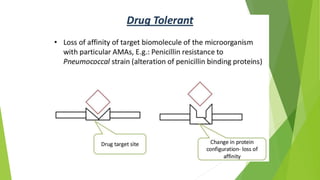
Drug Resistance
 Unresponsiveness of microorganism to
antibiotics
 Two types
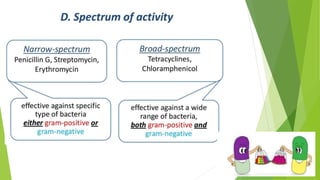
 Natural resistance
 g positive—not affected g negative
 Acquired resistance
 Resistance by prolong use of antibiotics
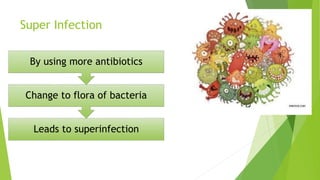
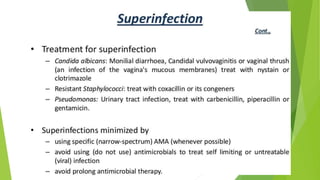
Super Infection
Leads to superinfection
Change to flora of bacteria
By using more antibiotics
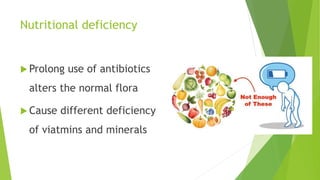
Nutritional deficiency
 Prolong use of antibiotics
alters the normal flora
 Cause different deficiency
of viatmins and minerals
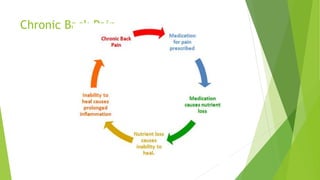
Chronic Back Pain
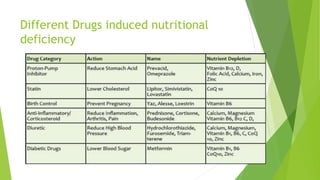
Different Drugs induced nutritional
deficiency
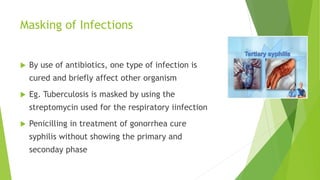
Masking of Infections
 By use of antibiotics, one type of infection is
cured and briefly affect other organism
 Eg. Tuberculosis is masked by using the
streptomycin used for the respiratory iinfection
 Penicilling in treatment of gonorrhea cure
syphilis without showing the primary and
seconday phase
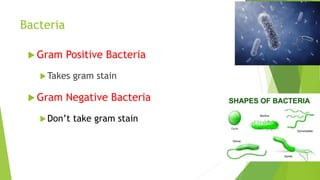
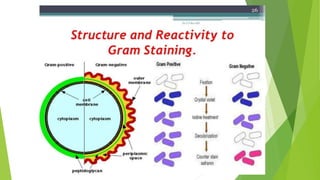
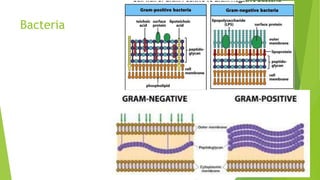
Bacteria
 Gram Positive Bacteria
Takes gram stain
 Gram Negative Bacteria
Don’t take gram stain
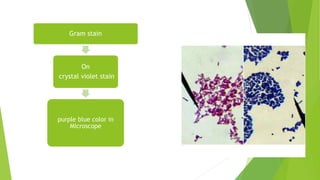
Gram stain
On
crystal violet stain
purple blue color in
Microscope
Bacteria
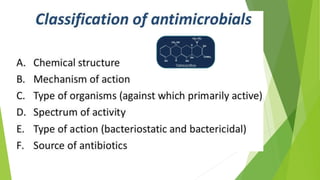
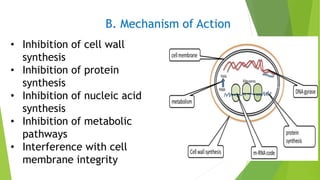
• Inhibition of cell wall
synthesis
• Inhibition of protein
synthesis
• Inhibition of nucleic acid
synthesis
• Inhibition of metabolic
pathways
• Interference with cell
membrane integrity
B. Mechanism of Action
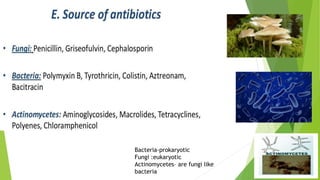
Bacteria-prokaryotic
Fungi :eukaryotic
Actinomycetes– are fungi like
bacteria
Questions:
 Difference between Pharmacokinetics and Pharmacodynamics
 Define chemotherapy
 Define antibiotics and classify them
 Routes of drug administrations
 Define pharmacology and describe different drug sources and
describe the factor that affect individual response drug

Antimicrobial agents Nursing ppt

  • 1.
    Chemotherapy & Antimicrobial Agents UNIT–II For BN /B.Sc. Nursing
  • 2.
  • 3.
    CHEMOTHERAPY  Treatment ofdisease by chemicals that kill the cells or microorganism or cancer cells  If directed to cancer cells cancer chemotherapy  If directed to micro-organism Antibiotics
  • 4.
    General Principles ofChemotherapy  Diagnosis  Indication of chemotherapy  Selections of drugs  Selections of dose and  route of administration  Duration of therapy  Drug therapy  Test for cure  Prophylactic drug
  • 5.
    Diagnosis: Site of Infections Responsibleorganism Sensitivity of drug
  • 6.
    Indication of chemotherapy May or maynot need the antibiotics medicine so, need to identify  Sorethroat, common cold may not need the antibiotics  If viral no need antibiotics, will recover within 5-7 days  But if bacterial need of antibiotics
  • 7.
    Selection of Drugs Is based on the cost effectiveness of drug, safety and toxicity .  Can be targeted and empirical chemotherapy  Targeted chemotherapy  Chemotherapy according to culture sensitivity  Cancer drugs  Emperical chemotherapy  According to practice of doctors  According to epidemiological pattern to disease
  • 8.
    Selection of dose Should be enough to achieve minimum inhibitory concentration(MIC)  MIC  Minimum effect of antibiotics require to suppress microorganism or to achieve therapeutic effect
  • 10.
    Route of administrations In order to achieve MIC and drug reaches the site of action  Different routes has its own benefits
  • 11.
    Duration of therapy Depends of type of disease  Most drug  minimum 48 hours even after symptoms subsides  Antibiotics—>5-10 days Acute -5-10 days Subacute-2-3 wks Chronic – several months Some chronic disease Tuberculosis  6-9 months Extra pul tuberculosis > 9-12-18 months… Leprosy > one 1yr
  • 12.
    Drug therapy  Monodrug therapy  Better tolerated  Cost effective  Chance of drug interaction less  Combination drug therapy  Eg. Tuberculosis  Advantage  Achieve synergism,less side effect,inscrease spectrum
  • 13.
    Change of drugduring therapy  Frequent change is not good  Enough time give so that it can be goodly absorbed, reach site of action and produce pharmacological effects
  • 14.
    Removal of barriersfor site of administration  Remove the pus or necrotic tissue  Drainage of pus incase of abscess
  • 15.
    Test for Cure After therapy,  Symptoms and sign may disappear before pathogen eradicated  Especially in chronic cases  So, continue medication for time  Need prophylaxis
  • 16.
    Chemoprophylaxis( Prophylaxis ) Prevention of disease or infections by chemotherapy  Non Surgical prophylaxis  Rheumatic fever long acting penicillin  Person travelling endemic area of malaria  mefloquinine or primaquine  DVT prophylaxis in bed ridden patient  Surgical  Purpose is to decrease the adverse effect  Prevent further infection  Given if surgical hours is two or more hours(esp. GI surgery, musculoskeletal surgeries etc
  • 18.
    Adverse effect ofantimicrobial agents(AMAs)  Toxicity  Hypersensitivity  Drug resistance  Super infection  Nutritional deficiency  Masking of infection
  • 19.
    Toxicity  Local toxicity Localirritation at site of administration  pain and abscess by i/m drug Thrombophlebitis on iv drug  Systematic toxicity Aminoglycosideototoxicity Chloramphenicolbonemarrow supression
  • 22.
    Hypersensitivity Rxn  Skinrash and anaphylitic shock  Usually seen penicillin and cephalospiron
  • 23.
    4 types ofHypersenitivity Reactions
  • 25.
    Drug Resistance  Unresponsivenessof microorganism to antibiotics  Two types  Natural resistance  g positive—not affected g negative  Acquired resistance  Resistance by prolong use of antibiotics
  • 31.
    Super Infection Leads tosuperinfection Change to flora of bacteria By using more antibiotics
  • 34.
    Nutritional deficiency  Prolonguse of antibiotics alters the normal flora  Cause different deficiency of viatmins and minerals
  • 35.
  • 36.
    Different Drugs inducednutritional deficiency
  • 37.
    Masking of Infections By use of antibiotics, one type of infection is cured and briefly affect other organism  Eg. Tuberculosis is masked by using the streptomycin used for the respiratory iinfection  Penicilling in treatment of gonorrhea cure syphilis without showing the primary and seconday phase
  • 40.
    Bacteria  Gram PositiveBacteria Takes gram stain  Gram Negative Bacteria Don’t take gram stain
  • 41.
    Gram stain On crystal violetstain purple blue color in Microscope
  • 43.
  • 48.
    • Inhibition ofcell wall synthesis • Inhibition of protein synthesis • Inhibition of nucleic acid synthesis • Inhibition of metabolic pathways • Interference with cell membrane integrity B. Mechanism of Action
  • 52.
  • 53.
    Questions:  Difference betweenPharmacokinetics and Pharmacodynamics  Define chemotherapy  Define antibiotics and classify them  Routes of drug administrations  Define pharmacology and describe different drug sources and describe the factor that affect individual response drug