DR. HIMANSHU HORA
SRMS COLLEGE OF ENGG. & TECH.,BAREILLY
INDIA
Documenting Software
Architecture
Theme of topic
Documenting the architecture is the crowning step to
crafting it. Good architecture documentation is the
fruit which stakeholder get from herculean effort of
one person SYSTEM ARCHITECT and if the
stakeholders not been able to understand the whole
effort will have been wasted.
So documentation should have to be easy in
reading as well as in understanding.
Uses of architectural documentation
“Documentation is to write from the point of
view of the reader”
 The architecture of the system depends on the
requirement levied on it.
 Should be sufficiently abstract.
 Should be detailed also to serve as blueprint.
 Understand who the stakeholder are, this will help in
documentation.
Views
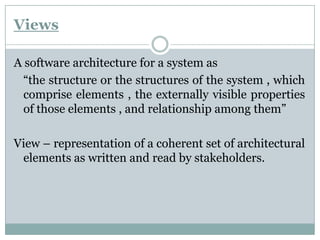
A software architecture for a system as
“the structure or the structures of the system , which
comprise elements , the externally visible properties
of those elements , and relationship among them”
View – representation of a coherent set of architectural
elements as written and read by stakeholders.
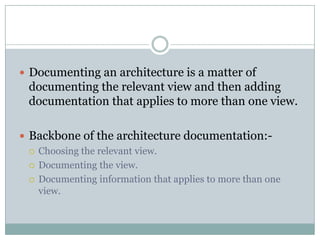
 Documenting an architecture is a matter of
documenting the relevant view and then adding
documentation that applies to more than one view.
 Backbone of the architecture documentation:-
 Choosing the relevant view.
 Documenting the view.
 Documenting information that applies to more than one
view.
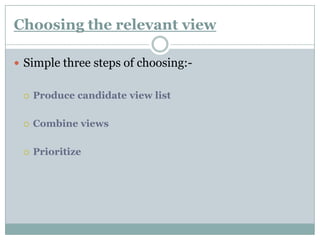
Choosing the relevant view
 Simple three steps of choosing:-
 Produce candidate view list
 Combine views
 Prioritize
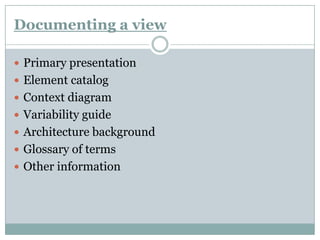
Documenting a view
 Primary presentation
 Element catalog
 Context diagram
 Variability guide
 Architecture background
 Glossary of terms
 Other information
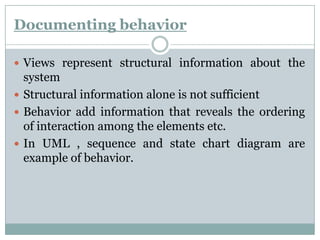
Documenting behavior
 Views represent structural information about the
system
 Structural information alone is not sufficient
 Behavior add information that reveals the ordering
of interaction among the elements etc.
 In UML , sequence and state chart diagram are
example of behavior.
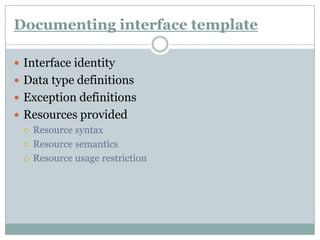
Documenting interface template
 Interface identity
 Data type definitions
 Exception definitions
 Resources provided
 Resource syntax
 Resource semantics
 Resource usage restriction
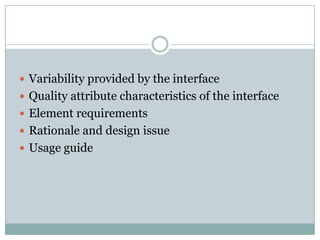
 Variability provided by the interface
 Quality attribute characteristics of the interface
 Element requirements
 Rationale and design issue
 Usage guide
DR. HIMANSHU HORA
SRMS COLLEGE OF ENGG. & TECH.,BAREILLY
INDIA
Thank You

Documenting software architecture

  • 1.
    DR. HIMANSHU HORA SRMSCOLLEGE OF ENGG. & TECH.,BAREILLY INDIA Documenting Software Architecture
  • 2.
    Theme of topic Documentingthe architecture is the crowning step to crafting it. Good architecture documentation is the fruit which stakeholder get from herculean effort of one person SYSTEM ARCHITECT and if the stakeholders not been able to understand the whole effort will have been wasted. So documentation should have to be easy in reading as well as in understanding.
  • 3.
    Uses of architecturaldocumentation “Documentation is to write from the point of view of the reader”  The architecture of the system depends on the requirement levied on it.  Should be sufficiently abstract.  Should be detailed also to serve as blueprint.  Understand who the stakeholder are, this will help in documentation.
  • 4.
    Views A software architecturefor a system as “the structure or the structures of the system , which comprise elements , the externally visible properties of those elements , and relationship among them” View – representation of a coherent set of architectural elements as written and read by stakeholders.
  • 5.
     Documenting anarchitecture is a matter of documenting the relevant view and then adding documentation that applies to more than one view.  Backbone of the architecture documentation:-  Choosing the relevant view.  Documenting the view.  Documenting information that applies to more than one view.
  • 6.
    Choosing the relevantview  Simple three steps of choosing:-  Produce candidate view list  Combine views  Prioritize
  • 7.
    Documenting a view Primary presentation  Element catalog  Context diagram  Variability guide  Architecture background  Glossary of terms  Other information
  • 8.
    Documenting behavior  Viewsrepresent structural information about the system  Structural information alone is not sufficient  Behavior add information that reveals the ordering of interaction among the elements etc.  In UML , sequence and state chart diagram are example of behavior.
  • 9.
    Documenting interface template Interface identity  Data type definitions  Exception definitions  Resources provided  Resource syntax  Resource semantics  Resource usage restriction
  • 10.
     Variability providedby the interface  Quality attribute characteristics of the interface  Element requirements  Rationale and design issue  Usage guide
  • 11.
    DR. HIMANSHU HORA SRMSCOLLEGE OF ENGG. & TECH.,BAREILLY INDIA Thank You