DESIGN PATTERN
AND
CATEGORIES
SRMS College of Engg. & Tech., Bareilly
INDIA
DR. HIMANSHU HORA
Patterns
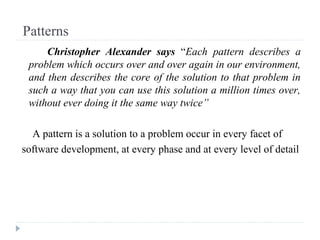
Christopher Alexander says “Each pattern describes a
problem which occurs over and over again in our environment,
and then describes the core of the solution to that problem in
such a way that you can use this solution a million times over,
without ever doing it the same way twice”
A pattern is a solution to a problem occur in every facet of
software development, at every phase and at every level of detail
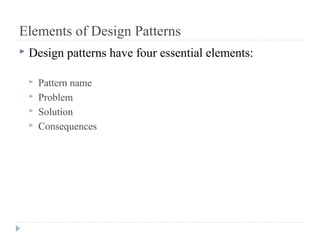
Elements of Design Patterns
 Design patterns have four essential elements:
 Pattern name
 Problem
 Solution
 Consequences
Pattern Name
 Used to describe:
 a design problem
 its solutions
 its consequences
 Increases design vocabulary
 Makes it possible to design at a higher level of
abstraction
 Enhances communication
 “The Hardest part of programming is coming up with
good variable [function, and type] names.”
Problem
 Describes when to apply the pattern
 Explains the problem and its context
 May describe specific design problems and/or object
structures
 May contain a list of preconditions that must be met
before it makes sense to apply the pattern
Solution
 Describes the elements that make up the
 design
 relationships
 responsibilities
 collaborations
 Does not describe specific concrete implementation
 Abstract description of design problems and how the
pattern solves it
Consequences
 Results and trade-offs of applying the pattern
 Critical for:
 evaluating design alternatives
 understanding costs
 understanding benefits of applying the pattern
 Includes the impacts of a pattern on a system’s:
 flexibility
 extensibility
 portability
Types of Patterns
 Creational patterns:
 Deal with initializing and configuring classes and objects
 Structural patterns:
 Deal with decoupling interface and implementation of
classes and objects
 Composition of classes or objects
 Behavioural patterns:
 Deal with dynamic interactions among societies of classes
and objects
 How they distribute responsibility
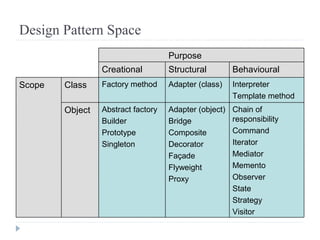
Design Pattern Space
Chain of
responsibility
Command
Iterator
Mediator
Memento
Observer
State
Strategy
Visitor
Adapter (object)
Bridge
Composite
Decorator
Façade
Flyweight
Proxy
Abstract factory
Builder
Prototype
Singleton
Object
Interpreter
Template method
Adapter (class)Factory methodClassScope
BehaviouralStructuralCreational
Purpose
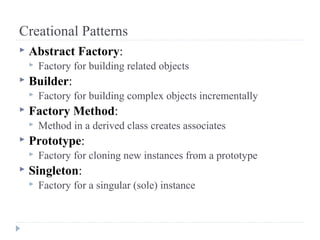
Creational Patterns
 Abstract Factory:
 Factory for building related objects
 Builder:
 Factory for building complex objects incrementally
 Factory Method:
 Method in a derived class creates associates
 Prototype:
 Factory for cloning new instances from a prototype
 Singleton:
 Factory for a singular (sole) instance
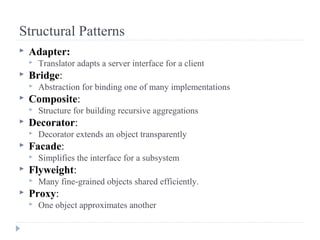
Structural Patterns
 Adapter:
 Translator adapts a server interface for a client
 Bridge:
 Abstraction for binding one of many implementations
 Composite:
 Structure for building recursive aggregations
 Decorator:
 Decorator extends an object transparently
 Facade:
 Simplifies the interface for a subsystem
 Flyweight:
 Many fine-grained objects shared efficiently.
 Proxy:
 One object approximates another
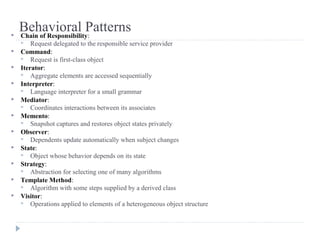
Behavioral Patterns Chain of Responsibility:
 Request delegated to the responsible service provider
 Command:
 Request is first-class object
 Iterator:
 Aggregate elements are accessed sequentially
 Interpreter:
 Language interpreter for a small grammar
 Mediator:
 Coordinates interactions between its associates
 Memento:
 Snapshot captures and restores object states privately
 Observer:
 Dependents update automatically when subject changes
 State:
 Object whose behavior depends on its state
 Strategy:
 Abstraction for selecting one of many algorithms
 Template Method:
 Algorithm with some steps supplied by a derived class
 Visitor:
 Operations applied to elements of a heterogeneous object structure
Benefits of Design Patterns
 Design patterns enable large-scale reuse of software
architectures and also help document systems
 Patterns explicitly capture expert knowledge and
design tradeoffs and make it more widely available
 Patterns help improve developer communication
 Pattern names form a common vocabulary
 Patterns help ease the transition to OO technology
Drawbacks to Design Patterns
 Patterns do not lead to direct code reuse
 Patterns are deceptively simple
 Teams may suffer from pattern overload
 Patterns are validated by experience and discussion
rather than by automated testing
 Integrating patterns into a software development
process is a human-intensive activity.
THANK YOU
DR. HIMANSHU HORA
SRMS College of Engg. & Tech., Bareilly
INDIA

Design pattern & categories

  • 1.
    DESIGN PATTERN AND CATEGORIES SRMS Collegeof Engg. & Tech., Bareilly INDIA DR. HIMANSHU HORA
  • 2.
    Patterns Christopher Alexander says“Each pattern describes a problem which occurs over and over again in our environment, and then describes the core of the solution to that problem in such a way that you can use this solution a million times over, without ever doing it the same way twice” A pattern is a solution to a problem occur in every facet of software development, at every phase and at every level of detail
  • 3.
    Elements of DesignPatterns  Design patterns have four essential elements:  Pattern name  Problem  Solution  Consequences
  • 4.
    Pattern Name  Usedto describe:  a design problem  its solutions  its consequences  Increases design vocabulary  Makes it possible to design at a higher level of abstraction  Enhances communication  “The Hardest part of programming is coming up with good variable [function, and type] names.”
  • 5.
    Problem  Describes whento apply the pattern  Explains the problem and its context  May describe specific design problems and/or object structures  May contain a list of preconditions that must be met before it makes sense to apply the pattern
  • 6.
    Solution  Describes theelements that make up the  design  relationships  responsibilities  collaborations  Does not describe specific concrete implementation  Abstract description of design problems and how the pattern solves it
  • 7.
    Consequences  Results andtrade-offs of applying the pattern  Critical for:  evaluating design alternatives  understanding costs  understanding benefits of applying the pattern  Includes the impacts of a pattern on a system’s:  flexibility  extensibility  portability
  • 8.
    Types of Patterns Creational patterns:  Deal with initializing and configuring classes and objects  Structural patterns:  Deal with decoupling interface and implementation of classes and objects  Composition of classes or objects  Behavioural patterns:  Deal with dynamic interactions among societies of classes and objects  How they distribute responsibility
  • 9.
    Design Pattern Space Chainof responsibility Command Iterator Mediator Memento Observer State Strategy Visitor Adapter (object) Bridge Composite Decorator Façade Flyweight Proxy Abstract factory Builder Prototype Singleton Object Interpreter Template method Adapter (class)Factory methodClassScope BehaviouralStructuralCreational Purpose
  • 10.
    Creational Patterns  AbstractFactory:  Factory for building related objects  Builder:  Factory for building complex objects incrementally  Factory Method:  Method in a derived class creates associates  Prototype:  Factory for cloning new instances from a prototype  Singleton:  Factory for a singular (sole) instance
  • 11.
    Structural Patterns  Adapter: Translator adapts a server interface for a client  Bridge:  Abstraction for binding one of many implementations  Composite:  Structure for building recursive aggregations  Decorator:  Decorator extends an object transparently  Facade:  Simplifies the interface for a subsystem  Flyweight:  Many fine-grained objects shared efficiently.  Proxy:  One object approximates another
  • 12.
    Behavioral Patterns Chainof Responsibility:  Request delegated to the responsible service provider  Command:  Request is first-class object  Iterator:  Aggregate elements are accessed sequentially  Interpreter:  Language interpreter for a small grammar  Mediator:  Coordinates interactions between its associates  Memento:  Snapshot captures and restores object states privately  Observer:  Dependents update automatically when subject changes  State:  Object whose behavior depends on its state  Strategy:  Abstraction for selecting one of many algorithms  Template Method:  Algorithm with some steps supplied by a derived class  Visitor:  Operations applied to elements of a heterogeneous object structure
  • 13.
    Benefits of DesignPatterns  Design patterns enable large-scale reuse of software architectures and also help document systems  Patterns explicitly capture expert knowledge and design tradeoffs and make it more widely available  Patterns help improve developer communication  Pattern names form a common vocabulary  Patterns help ease the transition to OO technology
  • 14.
    Drawbacks to DesignPatterns  Patterns do not lead to direct code reuse  Patterns are deceptively simple  Teams may suffer from pattern overload  Patterns are validated by experience and discussion rather than by automated testing  Integrating patterns into a software development process is a human-intensive activity.
  • 15.
    THANK YOU DR. HIMANSHUHORA SRMS College of Engg. & Tech., Bareilly INDIA