Dr. Himanshu Hora
SRMS College of Engineering & Technology
Bareilly (UP) INDIA
Contents
 Introduction
 Goals of architecture reviews
 Types of review
 Basic review flow
 Work product and plan
 Review packages
 Benefits of architecture review
Architecture Reviews
 Architecture reviews are an effective way of ensuring design
quality and addressing architectural concerns
 The principle objectives of a software architecture review are
to assess an architecture’s ability to deliver a system capable of
fulfilling the quality requirements and to identify potential risks
Goals of Architecture Reviews
Architecture reviews ensure:
 The architecture of a system is documented
 It provides a coherent description of the system
 It is conformant to State and Agency principles, standards and
plans
 It is compatible with the legacy technical landscape
 That the chosen technology and design is likely to achieve the
project’s goals and objectives
Types of review
 Project process reviews
 Project Initiation Review
 Approve project goals, strategy, concept
 Iterative projects may propose how they will articulate
architecture and design
 Planning / Design Review
 Approve project architecture, solution design, technology
direction
 Do this each time architecture changes
 Execution / Build / Pilot Review (pre-release)
 Approve architecture /design changes that may occur
during E&B
Cont..
 Purchase process reviews
 Pre-purchase Review (RFP, IFB)
 Ensure sensible technical language in requirements
 Purchase Proposal Review (pre-award)
 Approve technology selections, architecture and strategy
of proposal
Basic review flow
 Submit documents (project team)
 Review documents (architect)
 If issues are found:
 Resolve issues
 Re-submit
 If issues are not resolved:
 Approve with issue or Reject
 If rejected:
 Re-plan and resubmit or halt
 If approved with issue
 Track and resolve issue later on
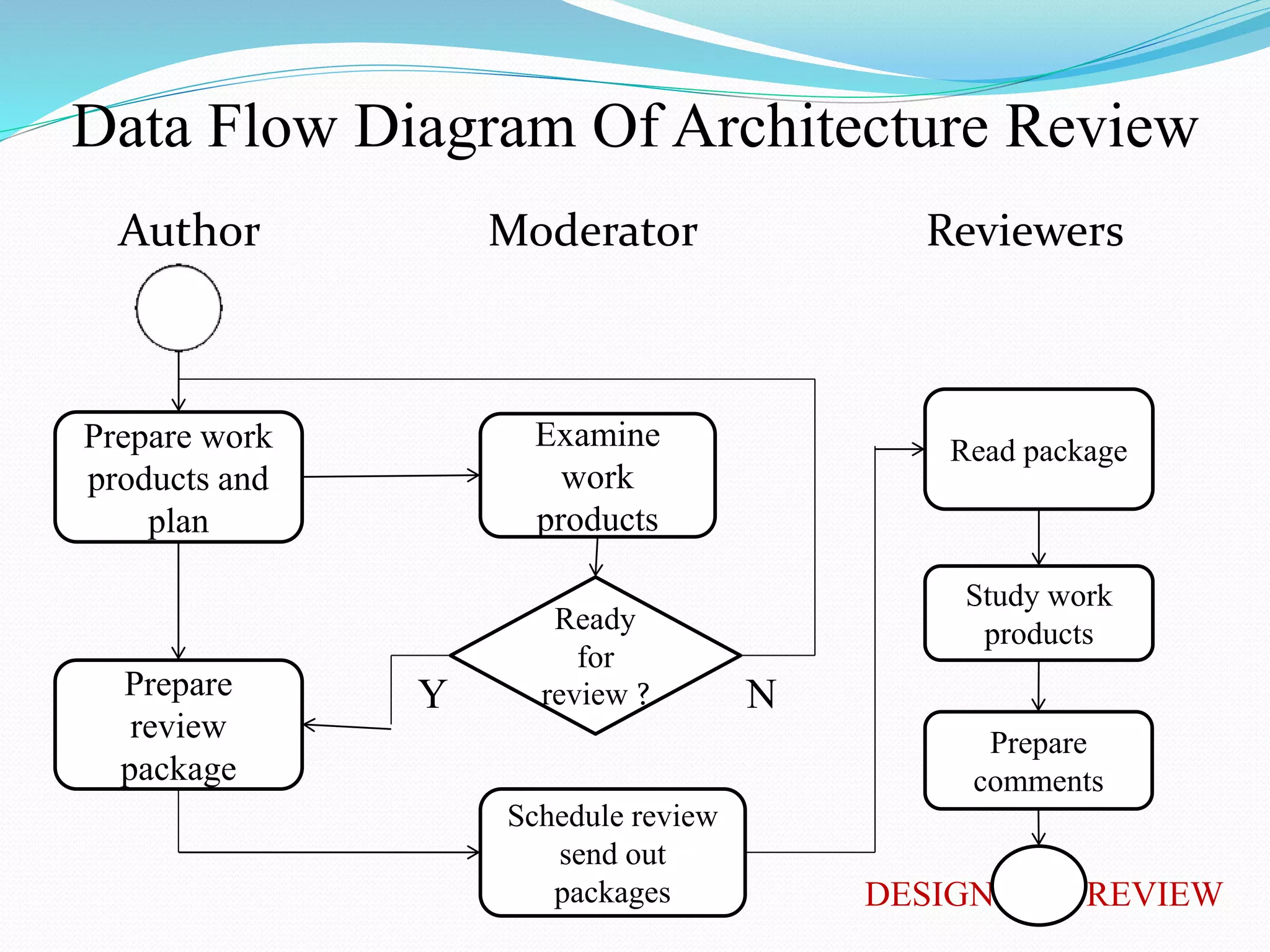
Data Flow Diagram Of Architecture Review
Author Moderator Reviewers
Y N
DESIGN REVIEW
Prepare work
products and
plan
Ready
for
review ?
Examine
work
products
Read package
Study work
products
Prepare
comments
Schedule review
send out
packages
Prepare
review
package
Work Product & Plan
 Work products (design)
 use cases
 class diagrams
 primary responsibility of each class
 sequence diagrams
 models
 etc.
 Plan
 what will be reviewed and the order
 what types of issues will be covered
 don’t hide risks
Review Package
 Intro- history, key problems, important decisions,
requirements, designs, analysis etc
 Agenda- Order materials will be reviewed
 Criteria- Define the various fields
 Work products- Use cases, class diagrams, sequence diagrams,
etc
 Reviewer assignments- What each reviewer is responsible for;
e.g. give each reviewer responsibility for a subset of the
classes
Roles In Review Process
• Moderator – not a member of reviewed team
• keeps review moving
• ensures all voices are heard and key points covered
• ensures decisions are made: accepted, major/minor
revisions, further review
• Recorder – member of the reviewed team
• takes notes, records all issues raised and decisions reached,
all questions, suggestions, and action items
• publishes a report of the review
Roles In Review Process
• Reviewers
• Raise questions, concerns
• Author and design team
• Answers questions but is otherwise silent
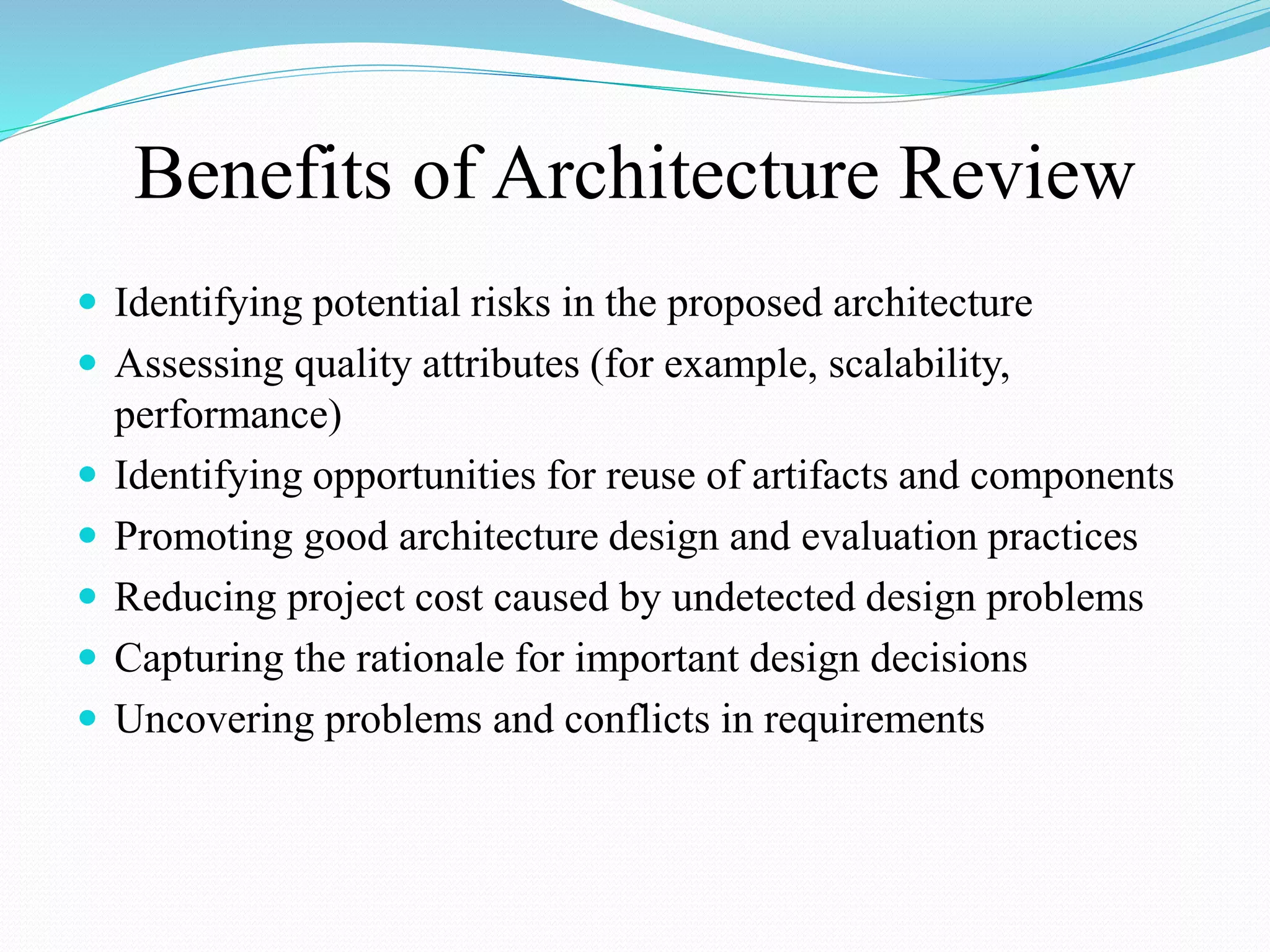
Benefits of Architecture Review
 Identifying potential risks in the proposed architecture
 Assessing quality attributes (for example, scalability,
performance)
 Identifying opportunities for reuse of artifacts and components
 Promoting good architecture design and evaluation practices
 Reducing project cost caused by undetected design problems
 Capturing the rationale for important design decisions
 Uncovering problems and conflicts in requirements
• Conforming to organization’s quality assurance process
• Assisting stakeholders in negotiating conflicting requirements
• Partitioning architectural design responsibilities
• Identifying skills required to implement the proposed
architecture
• Improving architecture documentation quality
• Facilitating clear articulation of nonfunctional requirements
• Opening new communication channels among stakeholders
Benefits of Architecture Review
Dr. Himanshu Hora
SRMS College of Engineering & Technology
Bareilly (UP) INDIA

Architecture Review

  • 1.
    Dr. Himanshu Hora SRMSCollege of Engineering & Technology Bareilly (UP) INDIA
  • 2.
    Contents  Introduction  Goalsof architecture reviews  Types of review  Basic review flow  Work product and plan  Review packages  Benefits of architecture review
  • 3.
    Architecture Reviews  Architecturereviews are an effective way of ensuring design quality and addressing architectural concerns  The principle objectives of a software architecture review are to assess an architecture’s ability to deliver a system capable of fulfilling the quality requirements and to identify potential risks
  • 4.
    Goals of ArchitectureReviews Architecture reviews ensure:  The architecture of a system is documented  It provides a coherent description of the system  It is conformant to State and Agency principles, standards and plans  It is compatible with the legacy technical landscape  That the chosen technology and design is likely to achieve the project’s goals and objectives
  • 5.
    Types of review Project process reviews  Project Initiation Review  Approve project goals, strategy, concept  Iterative projects may propose how they will articulate architecture and design  Planning / Design Review  Approve project architecture, solution design, technology direction  Do this each time architecture changes  Execution / Build / Pilot Review (pre-release)  Approve architecture /design changes that may occur during E&B
  • 6.
    Cont..  Purchase processreviews  Pre-purchase Review (RFP, IFB)  Ensure sensible technical language in requirements  Purchase Proposal Review (pre-award)  Approve technology selections, architecture and strategy of proposal
  • 7.
    Basic review flow Submit documents (project team)  Review documents (architect)  If issues are found:  Resolve issues  Re-submit  If issues are not resolved:  Approve with issue or Reject  If rejected:  Re-plan and resubmit or halt  If approved with issue  Track and resolve issue later on
  • 8.
    Data Flow DiagramOf Architecture Review Author Moderator Reviewers Y N DESIGN REVIEW Prepare work products and plan Ready for review ? Examine work products Read package Study work products Prepare comments Schedule review send out packages Prepare review package
  • 9.
    Work Product &Plan  Work products (design)  use cases  class diagrams  primary responsibility of each class  sequence diagrams  models  etc.  Plan  what will be reviewed and the order  what types of issues will be covered  don’t hide risks
  • 10.
    Review Package  Intro-history, key problems, important decisions, requirements, designs, analysis etc  Agenda- Order materials will be reviewed  Criteria- Define the various fields  Work products- Use cases, class diagrams, sequence diagrams, etc  Reviewer assignments- What each reviewer is responsible for; e.g. give each reviewer responsibility for a subset of the classes
  • 11.
    Roles In ReviewProcess • Moderator – not a member of reviewed team • keeps review moving • ensures all voices are heard and key points covered • ensures decisions are made: accepted, major/minor revisions, further review • Recorder – member of the reviewed team • takes notes, records all issues raised and decisions reached, all questions, suggestions, and action items • publishes a report of the review
  • 12.
    Roles In ReviewProcess • Reviewers • Raise questions, concerns • Author and design team • Answers questions but is otherwise silent
  • 13.
    Benefits of ArchitectureReview  Identifying potential risks in the proposed architecture  Assessing quality attributes (for example, scalability, performance)  Identifying opportunities for reuse of artifacts and components  Promoting good architecture design and evaluation practices  Reducing project cost caused by undetected design problems  Capturing the rationale for important design decisions  Uncovering problems and conflicts in requirements
  • 14.
    • Conforming toorganization’s quality assurance process • Assisting stakeholders in negotiating conflicting requirements • Partitioning architectural design responsibilities • Identifying skills required to implement the proposed architecture • Improving architecture documentation quality • Facilitating clear articulation of nonfunctional requirements • Opening new communication channels among stakeholders Benefits of Architecture Review
  • 15.
    Dr. Himanshu Hora SRMSCollege of Engineering & Technology Bareilly (UP) INDIA