DIURETICS
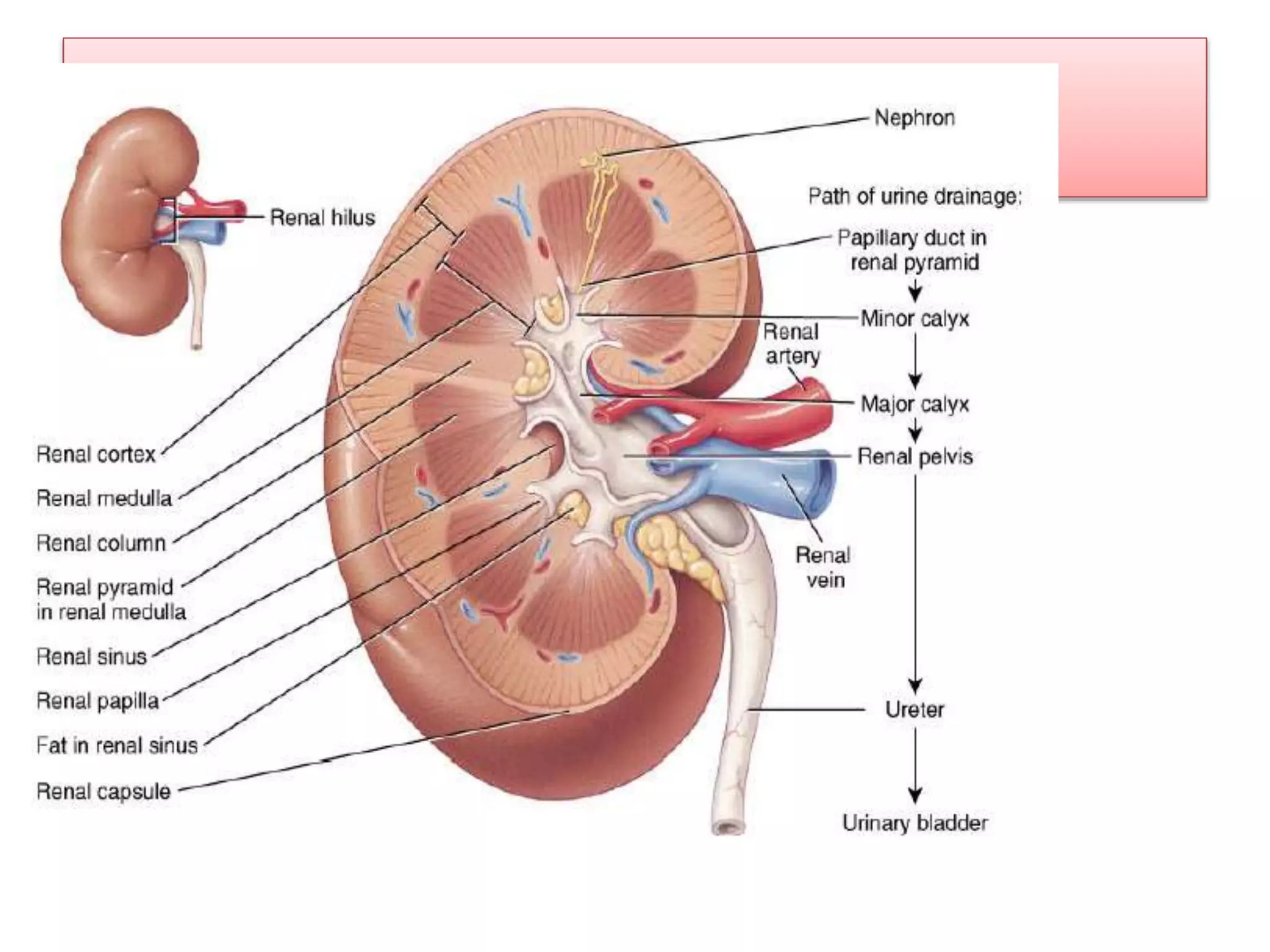
The Nephron
• Nephrons are the structural and functional units that form
urine, consisting of:
– Glomerulus-a tuft of capillaries associated with a renal
tubule
– Bowman’s capsule-blind, cup-shaped end of a renal tubule
that completely surrounds the glomerulus
– Long tubular portion
STRUCTURE OF GLOMERULI
Anatomy of the Bowman’s Capsule
• Parietal layer
• Visceral layer - Podocytes
Juxtaglomerular Apparatus (JGA) and
macula densa
Mechanisms of Urine Formation
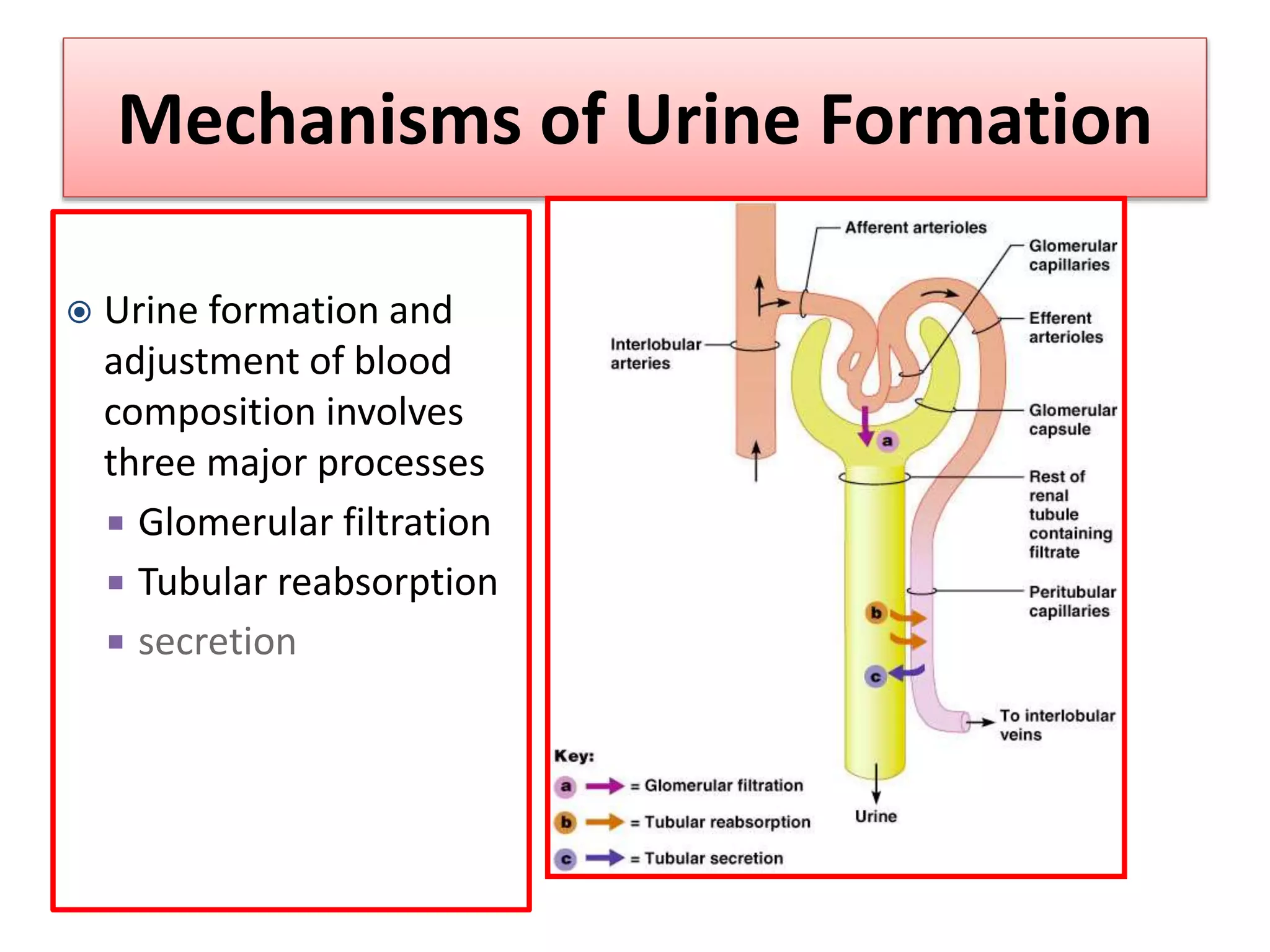
 Urine formation and
adjustment of blood
composition involves
three major processes
 Glomerular filtration
 Tubular reabsorption
 secretion
Mechanisms of Urine Formation
• The kidneys filter the body’s entire plasma volume 60 times
each day
• Gfr is 180 L/day and plasma vol is 3L so its 60 times each
day……
• The filtrate:
– Contains all plasma components except protein
PCT
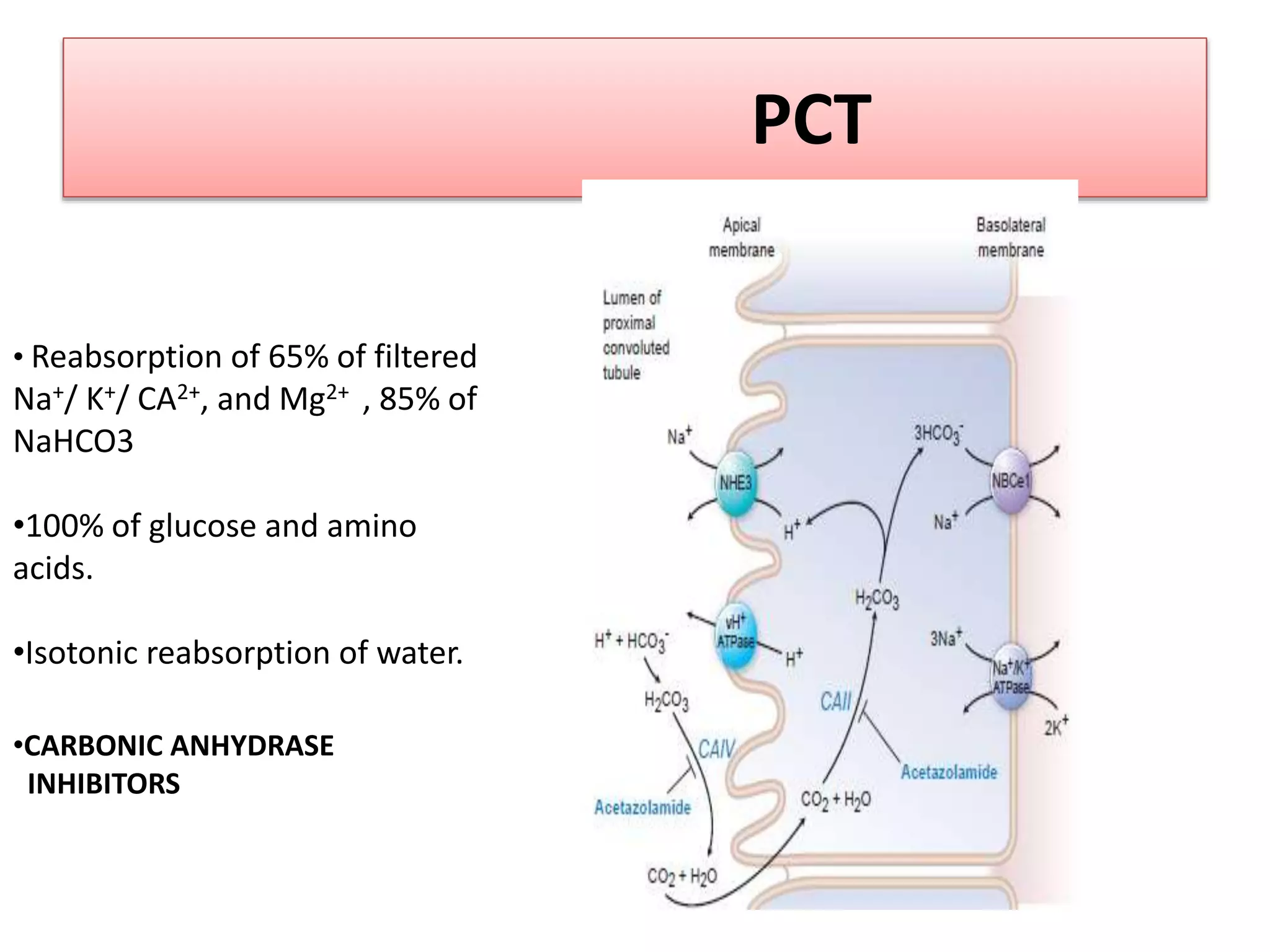
• Reabsorption of 65% of filtered
Na+/ K+/ CA2+, and Mg2+ , 85% of
NaHCO3
•100% of glucose and amino
acids.
•Isotonic reabsorption of water.
•CARBONIC ANHYDRASE
INHIBITORS
Contd.
• Specific sodium-coupled symporters→ reabsorption
of glucose, amino acids, phosphate, and sulfate from
the glomerular filtrate.
• The proximal tubule → secretion and reabsorption of
organic weak acids and weak bases
• Basolateral K+ channels maintain an inside-negative
membrane potential
LOOP OF HENLE
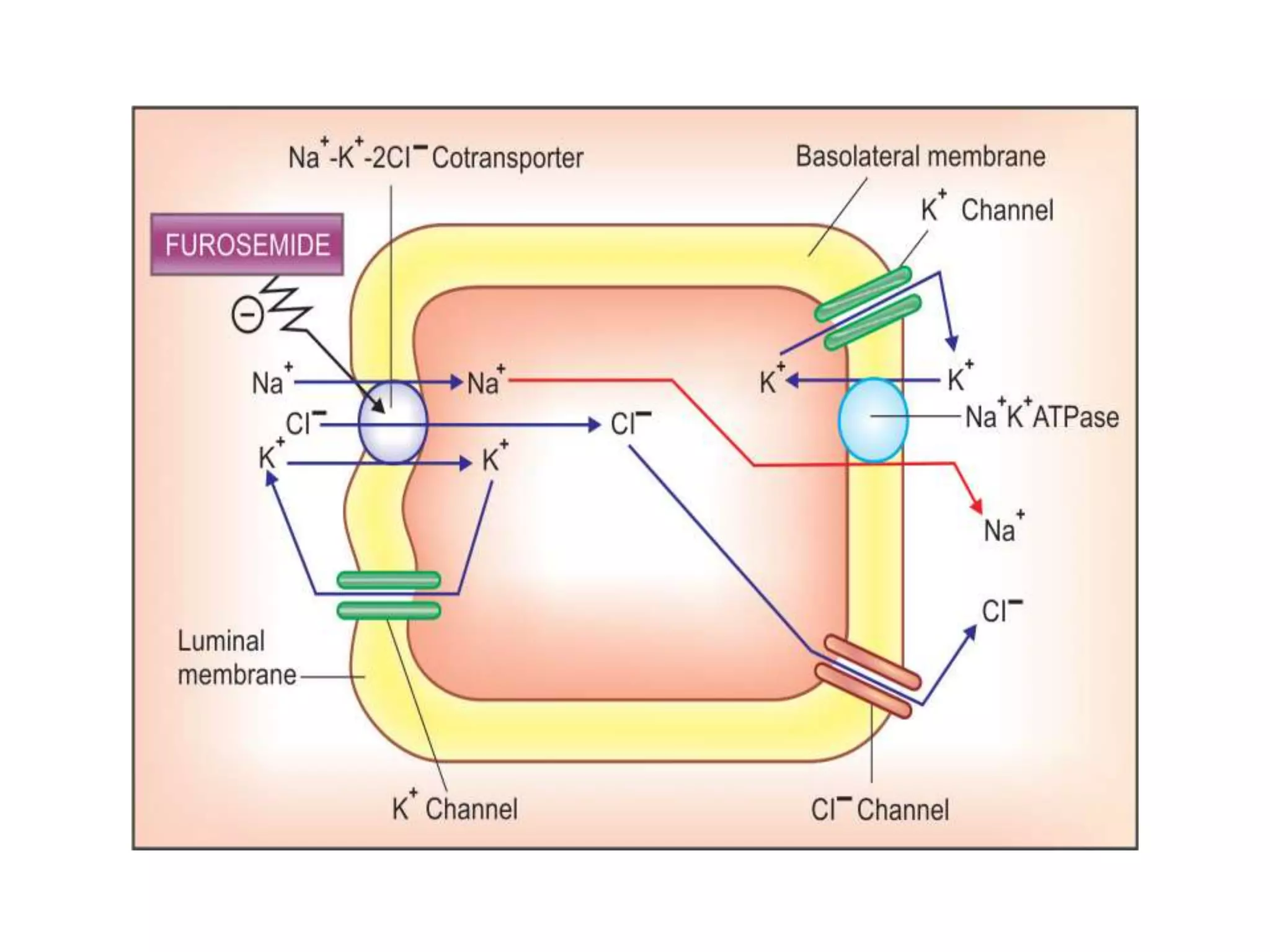
Active reabsorption of 15–25% of filtered Na+/ K+/ Cl–
Secondary reabsorption of Ca2+ and Mg2+
Tubular fluid emerging from the ascending thin limb is hypertonic
 LOOP DIURETICS
• 4 times higher osmolarity of medullary tip
(papilla) is maintained by the hairpin structure
of the loop of Henle acting as passive counter
current multiplier and the arrangement of
blood vessels as vasa recta
DCT
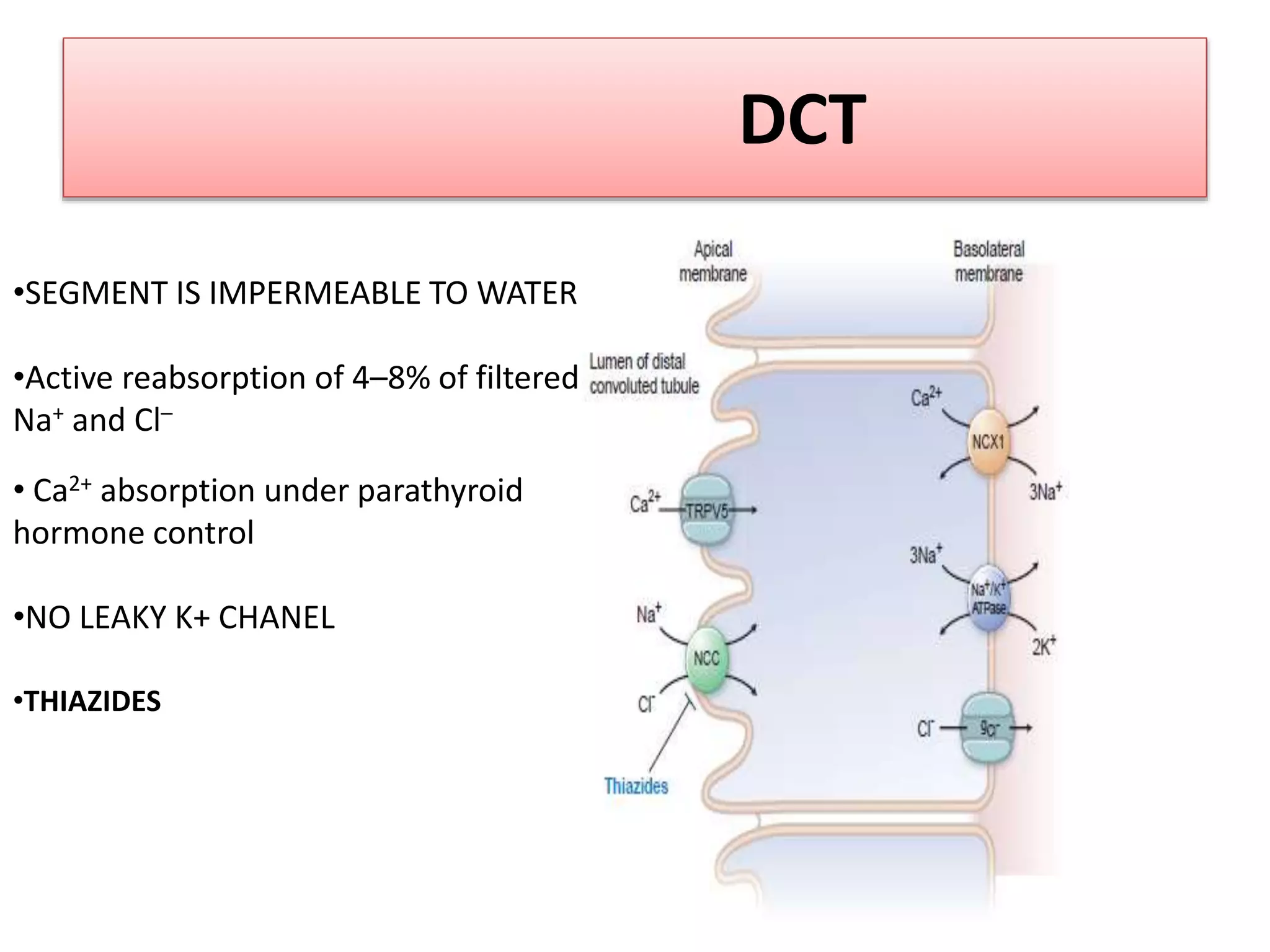
•SEGMENT IS IMPERMEABLE TO WATER
•Active reabsorption of 4–8% of filtered
Na+ and Cl–
• Ca2+ absorption under parathyroid
hormone control
•NO LEAKY K+ CHANEL
•THIAZIDES
CORTICAL CT
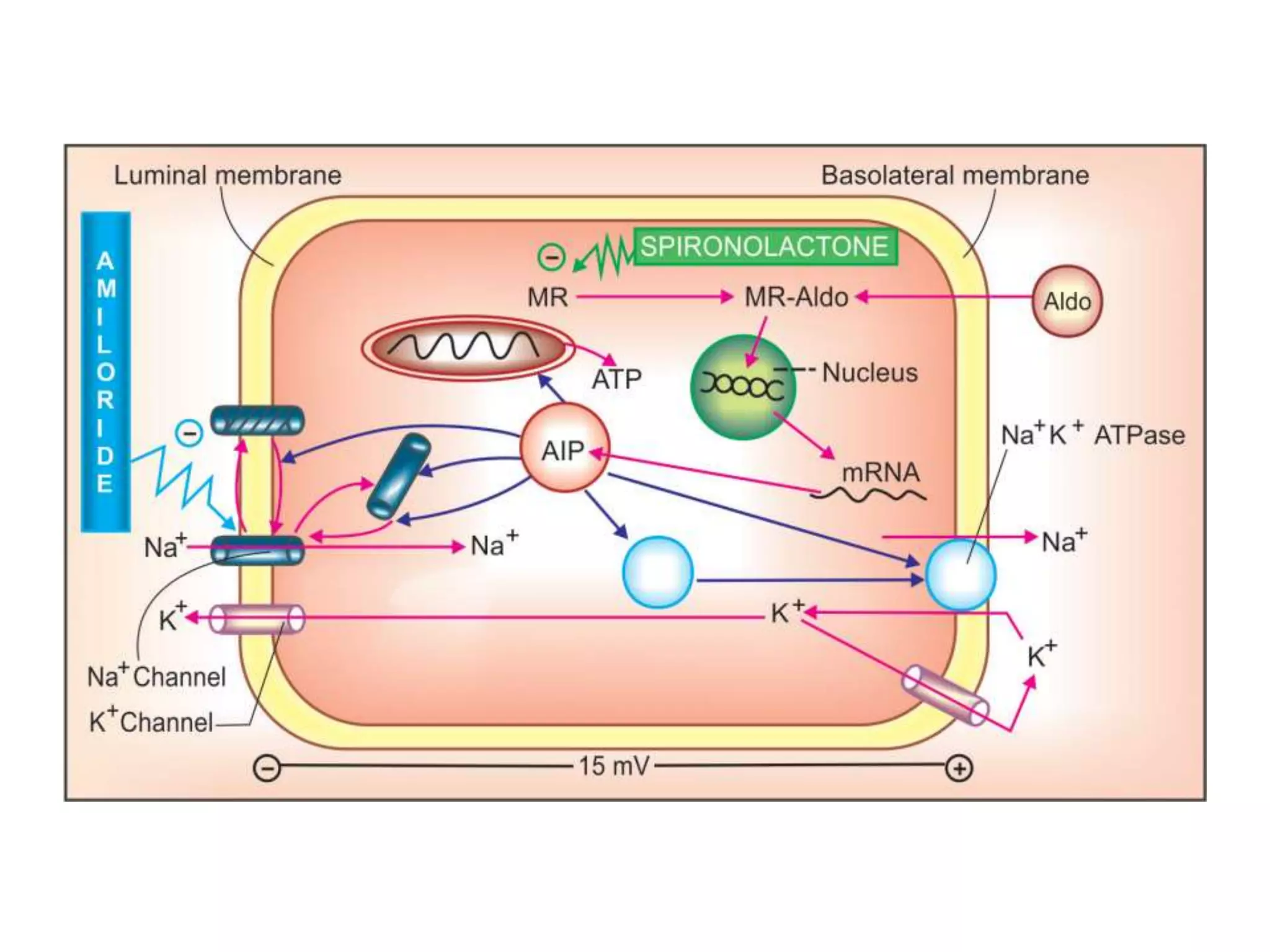
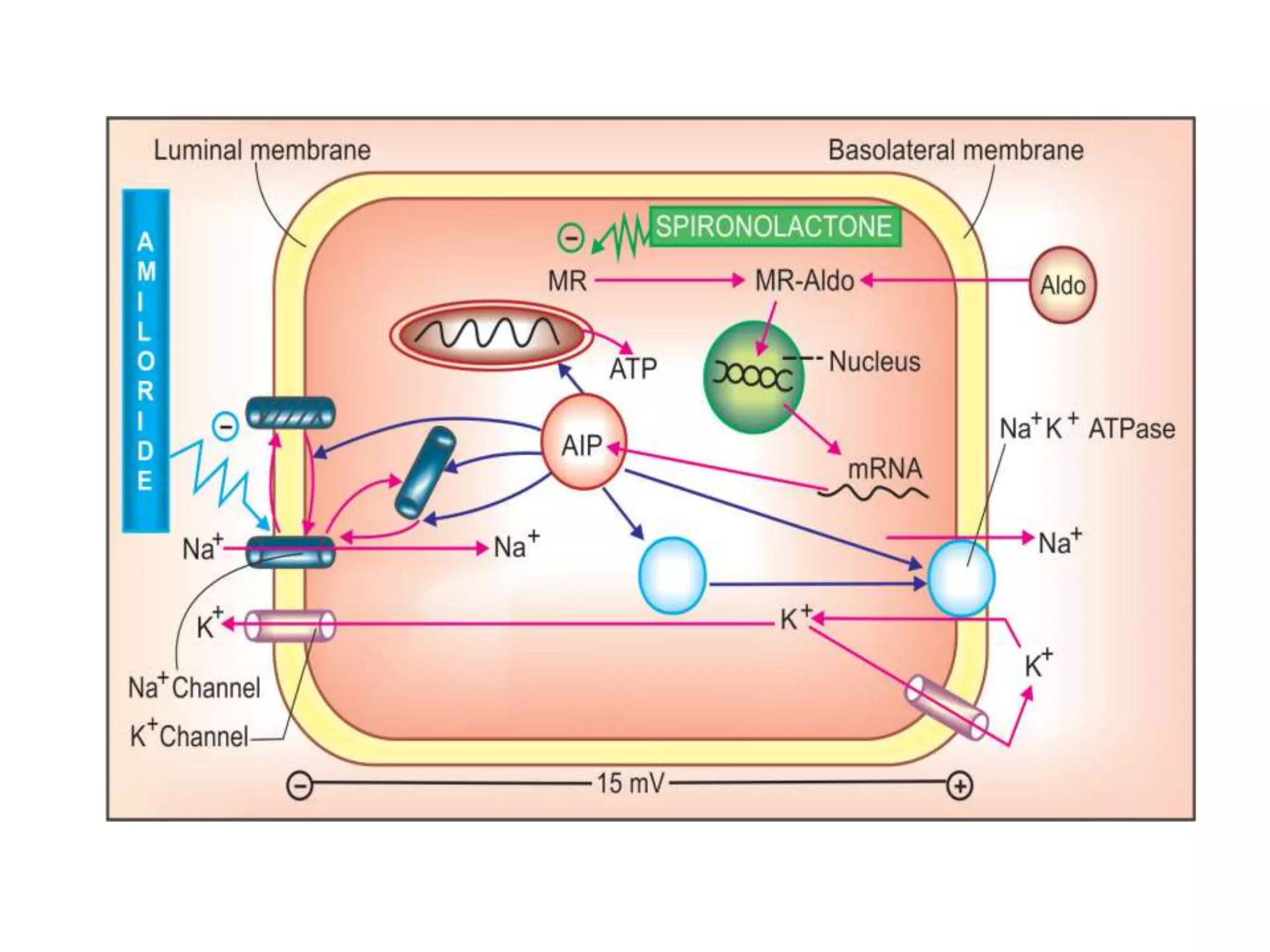
• Na+ alone pump
• Na+ reabsorption (2–5%) K+
and H+ secretion by
aldosterone
• K+-sparing diuretics,amiloride
MEDULLARY CT
•Water reabsorption under vasopressin
control
•NO Na+K+ATPase on basolateral
membrane
FREE WATER CLEARANCE
• the rate of free-water clearance represents the rate at which
solute-free water is excreted by the kidneys
• When free-water clearance is positive, excess water is being
excreted by the kidneys
• when free-water clearance is negative, excess solutes are
being removed from the blood by the kidneys and water is
being conserved.
Classification
High efficacy diuretics (Na+ - K+ -2Cl-
cotransport inhibitor):
• Sulfomyl Derivatives:Furosemide, Bumetanide,
Torsemide,
 Medium efficacy diuretics (lnhibitors of Na--
Cl- sympoft)
(a) Benzothiadiazines (thiazides)
• Hydrochlorothiazide, Benzthiazide,
• Hydroflumethiazide, Bendrofumethiazide
Contd.
(b)Thiazide like (related heterocyclics)
• Chlorthalidone, Metolazone,
Xipamide,Indapamide,Clopamide
Weak or adjunctive diuretics:
(a) Carbonic anhydrase inhibitors:Acetazolamide
(b) Potassium sparing diuretics
(l) Aldosterone antagonist:
• Spironolactone, Eplerenone
(li) Inhibitors of renal epithelial Na+ channel
• Triamterene, Amiloride.
Contd.
(c) Osmotic diuretics
• Mannitol, Isosorbide, Glycerol
•Loop diuretics
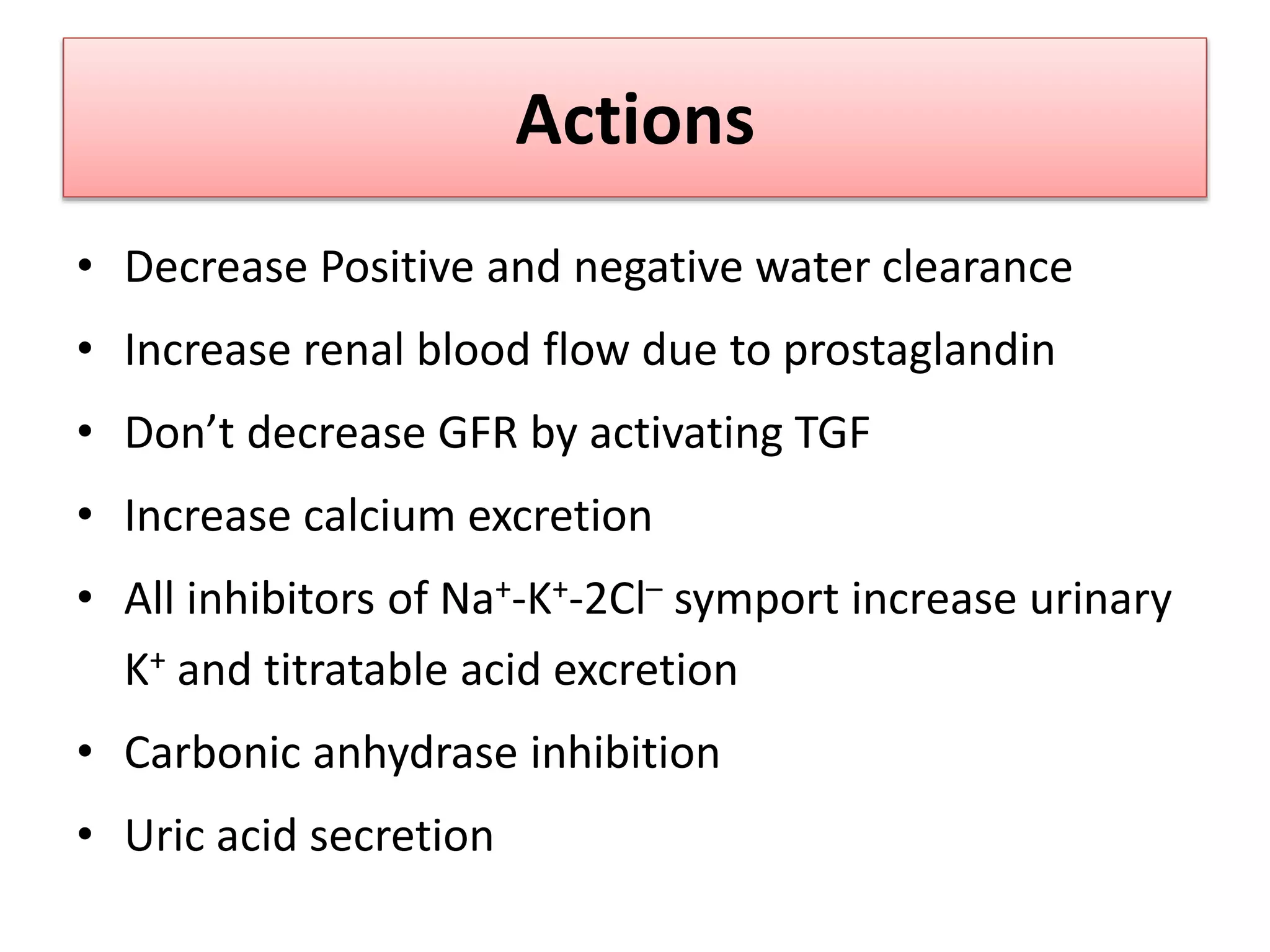
Actions
• Decrease Positive and negative water clearance
• Increase renal blood flow due to prostaglandin
• Don’t decrease GFR by activating TGF
• Increase calcium excretion
• All inhibitors of Na+-K+-2Cl– symport increase urinary
K+ and titratable acid excretion
• Carbonic anhydrase inhibition
• Uric acid secretion
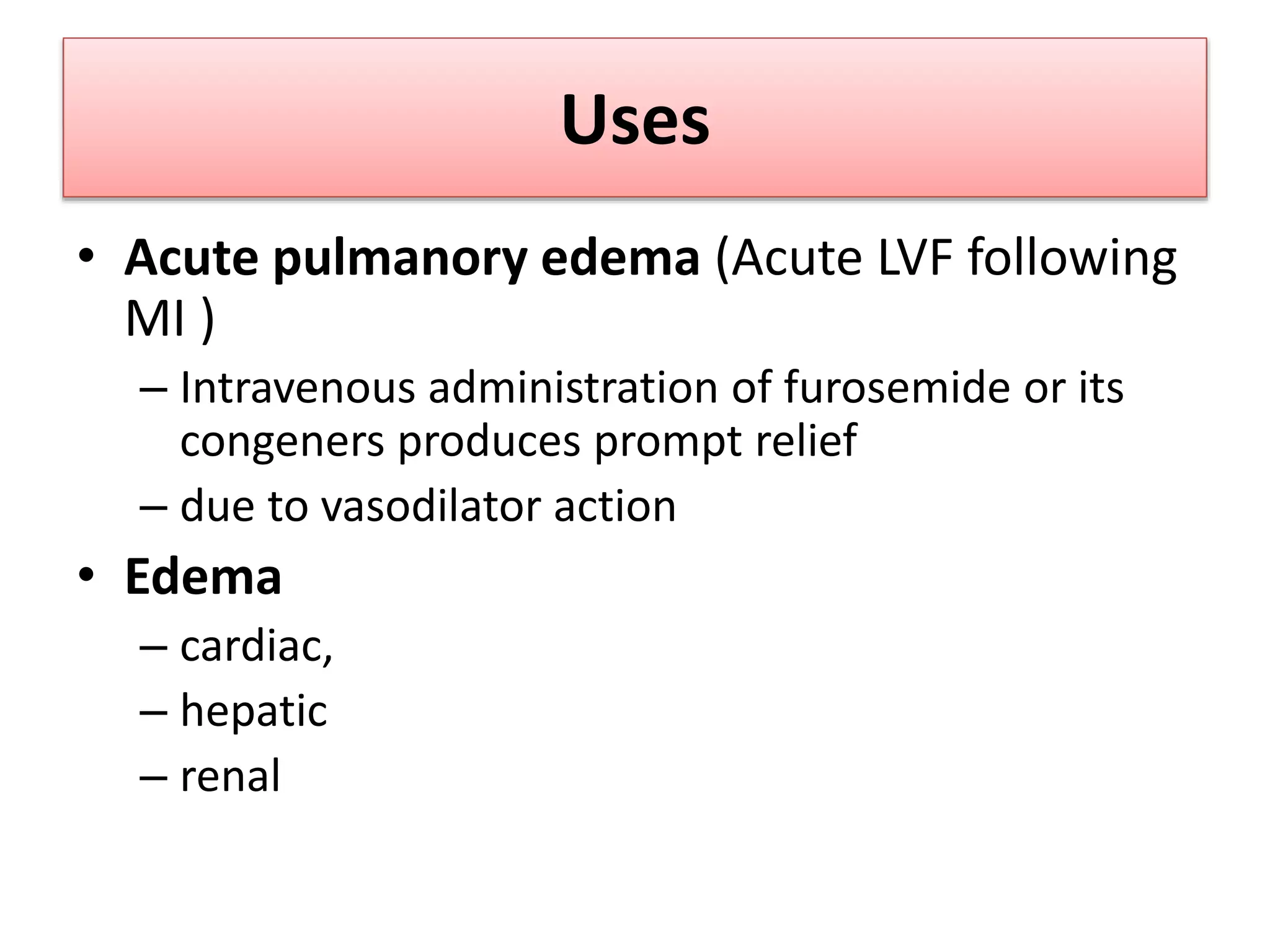
Uses
• Acute pulmanory edema (Acute LVF following
MI )
– Intravenous administration of furosemide or its
congeners produces prompt relief
– due to vasodilator action
• Edema
– cardiac,
– hepatic
– renal
Contd.
• Cerebral edema
– Furosemide combined with osmotic diuretics to
improve efficacy
• Hypertension: only in presence of renal
insufficiency, CHF, or in resistant case of
hypertensive emergencies
Contd.
• Along with BT:
to prevent volume overload
• Hypercalcemia of malignancy:
Promotes Ca excretion and prevent volume
overload
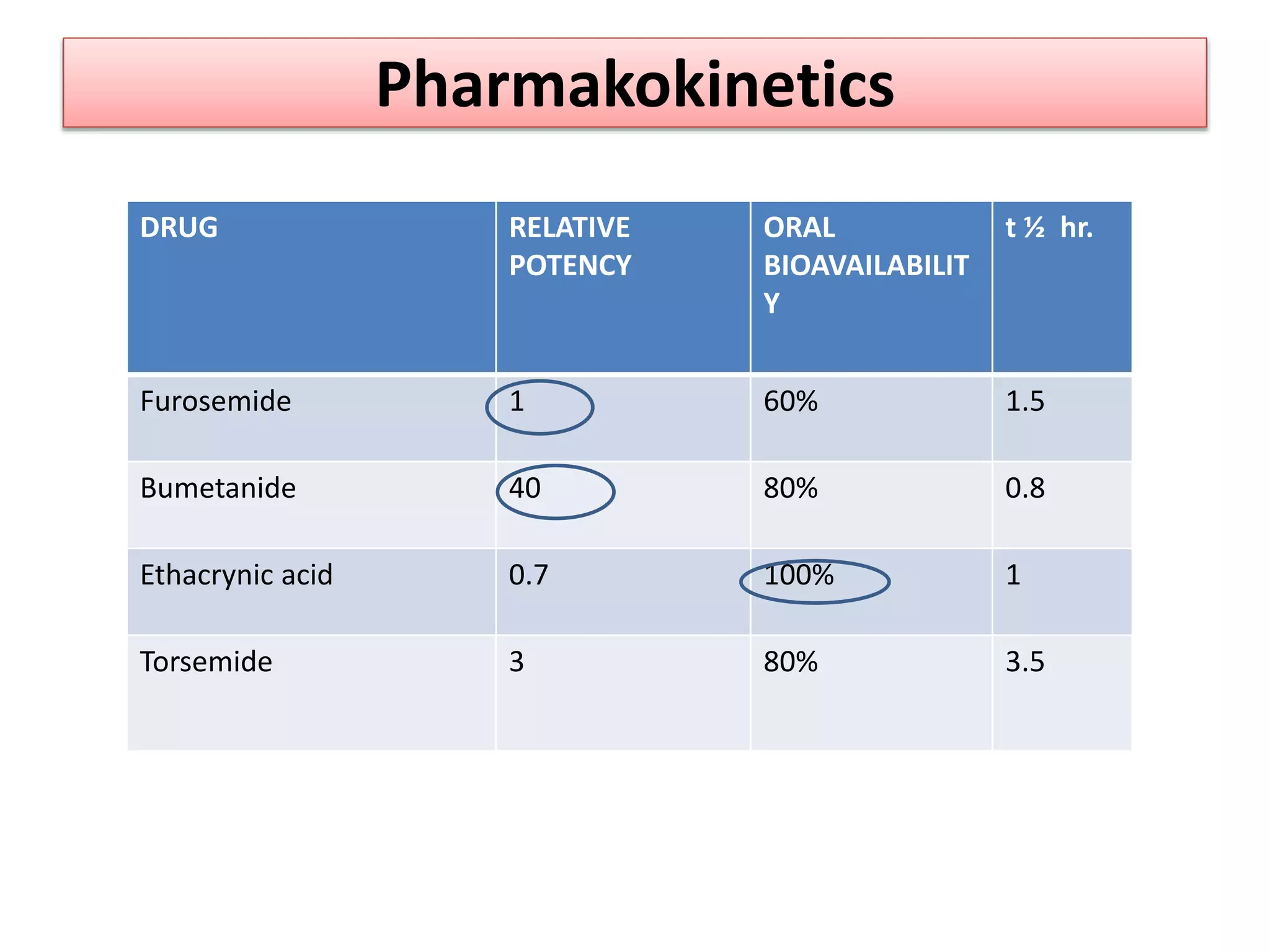
Pharmakokinetics
DRUG RELATIVE
POTENCY
ORAL
BIOAVAILABILIT
Y
t ½ hr.
Furosemide 1 60% 1.5
Bumetanide 40 80% 0.8
Ethacrynic acid 0.7 100% 1
Torsemide 3 80% 3.5
• Thiazide diuretics
Mechanism of action
Actions
• Decrease positive water clearance
• Carbonic anhydrase inhibition
• Reduce GFR
• Decrease calcium excretion
Uses
1. Hypertension
• Once daily dose is sufficent
• No fluid retention
• Low incidence of postural hypotension
• Effective in isolated systolic hypertension
• Low cost
• Lesser incidence of hip fracture because of
hypocalciuric action
Contd.
2. Edema:
• Mild to moderate
• For maintenance therapy
3. Hypercalciura
4. Diabetes insipidus:
• Reduce GFR
• Induce a sustained electrolyte depletion so
glomerular filtrate is completely reabsorb
Isotonicallly in PT
• Adverse effects
LOOP/THIAZIDE DIURETICS
• Hypokalemia
• Dilutional hyponatremia
• GIT & CNS disturbances
• Hyperuricemia
• Hyeperglycemia & hyperlipidemia
• Hypomagnesemia
• Hypo/hypercalcemia
CONTD.
• Ototoxicity
• Allergic reaction: rashes, photosensitivity
• Thiazides aggravates renal insufficiency,
probably by reducing g.f.r.
Contd.
• Diuresis induced in cirrhotics may precipitate
mental disturbances and hepatic coma.
• Avoided in toxaemia of
Pregnancy:miscarriage,fetal death
Interactions-Loop/thiazide diuretics
(1) aminoglycosides (synergism of ototoxicity
caused by both drugs)
(2) anticoagulants (increased anticoagulant
activity)
(3) digitalis glycosides (increased digitalis-induce
arrhythmia)
(4) lithium (increased plasma levels of lithium
(5) propranolol (increased plasma levels of
propranolol)
Contd.
(6) sulfonylureas (hyperglycemia)
(7) cisplatin (increased risk of diuretic-induced
ototoxicity)
8) NSAIDs (blunted diuretic response and salicylate
toxicity when given with high doses of salicylates)
(9) probenecid (blunted diuretic response) .
• Carbonic Anhydrase inhibitors
Contd.
• Acetazolamide
• Dorzolemide
• Brinzolamide
Mechanism of actions
Other action
Extrarenal actions of acetazolamide are:
• Lowering of intraocular tension due to
decreased formation of aqueous humour (it
is rich in HCO3-).
• Decreased gastric HCI and pancreatic
NaHCO3 secretion: This action requires
very high doses-clinically not significant
Contd.
• Raised level of CO2 in brain and lowering
of pH sedation and elevation of seizure
threshold.
• Alteration of CO2 transport in lungs and
tissues: these actions are masked by
compensatory mechanisms.
Uses
• Glaucoma:
Brinzolamide and Dorzolamide topically used
• To alkalization of urine
For UTI and excretion of some acidic drug
• Epilepsy
As adjuvant in absence seizures
Contd.
• Acute mountain sickness
Reduce CSF formation and lowers brain pH
• Periodic paralysis
Adverse Effect
• Hypokalemia
• Metabolic acidosis
• Hypersensitivity reaction
• Calculus ,ureteric colic
• Bone marrow depression
• Hepatic coma precipitated
• Osmotic Diuretics
Mechanism of Action
• Retains water isoosmotically in PT Dilute luminal
fluid which opposes NACl reabsorption
• Inhibit transport process in thick ASCLH
• Expand the extracellular fluid volume:increases g.f.r.
and inhibits renin release
• Increases renal blood flow, especially to the medulla—
medullary hypertonicity is reduced -Corticomedullary
osmotic gradient is dissipated—passive salt
reabsorption is reduced
Contd.
Administration
• Mannitol can not absorb orally
• Given 10-20% i.v. solution
Use
 Increased intracranial & intraocular tension:
• Head injury
• Stroke
• Acute congestive glaucoma
 To maitain gfr & urine flow in impending acute renal
failure
• Shock
• Severe trauma
• Cardiac surgery
• Hemolytic reactions
Contd.
• Dialysis dysequlibrium syndrome
– To counteract low osmolality of plasma/e.c.f.
due to rapid haemodialysis or peritoneal dialysis
Adverse effects
• Headche
• Nausea and vomiting
• Hypersensitivity reaction
Contraindications
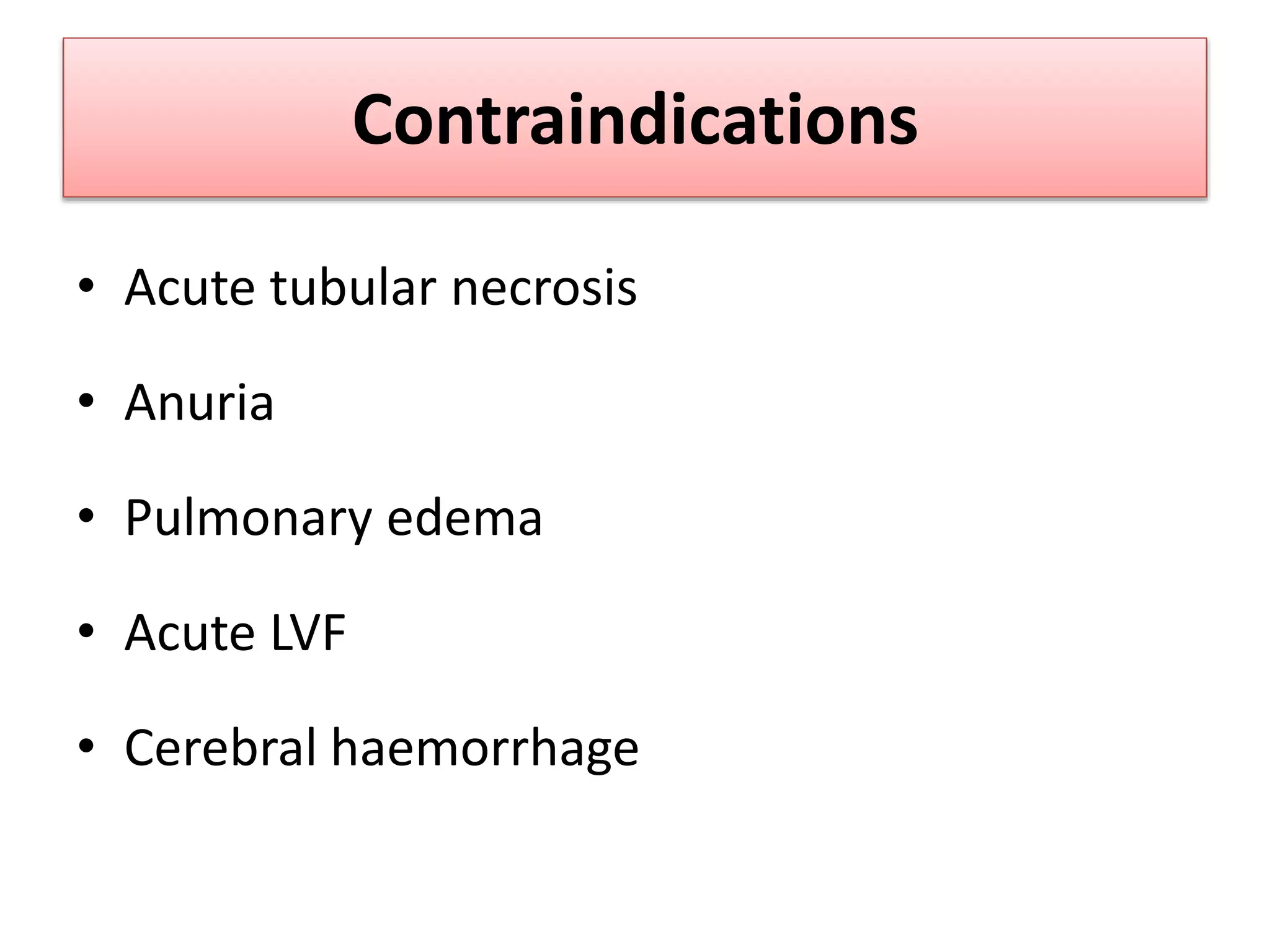
• Acute tubular necrosis
• Anuria
• Pulmonary edema
• Acute LVF
• Cerebral haemorrhage
• Aldosterone antagonist
Drugs
• Spironolactone, Eplerenone
Uses
• Congestive heart failure
– As additional drug to conventional therapy in
moderate to severe CHF
– Prevents ventricular remodeling & mortality
Other uses
• To counteract K+ loss due to Thiazide and Loop
diuretics
• Edema:
Mostly in Cirrhotic and Nephrotic edema where
Aldosterone level is high
• Hypertension:
a. Use as adjuvant therapy
b. Attenuate hypertension related Renal fibrosis
and vascular /ventricular hypertrophy
Contd.
• Hyperaldosteronism---primary
---secondary
Adverse Effect
• Drowsiness, Ataxia, loose motions
• Gynecomastia, Erectile dysfunction, breast
tenderness and menstrual irregularities
• Hyperkalemia
• Acidosis
• Peptic ulcer aggravated
Pharmacokinetics
• Oral bioavailability of spironolactone from
microfine powder tablet is 75%
• Completely metabolized in liver
• Converted to active metabolites, the most
important of which is Canrenone
Interactions
• Hyperkalemia-ACE –I ,ARB
• Aspirin block spironolactone action (inhibit
tubular secretion of canrenone)
• Spironolactone increase digoxin conc.
• Inhibitors of renal epithelial
Na+ channel
Drugs
• Amiloreide
• Traimterene
Uses
• Lithium induced DI
• Cystic fibrosis
• Hypokalemia
Adverse effect
• GIT side effects
• Hyperkalemia
• Rise in blood urea
• Impaired glucose tolerance
• Photosensitivity reactions
• Thiazides diuretics causes all EXCEPT:
• (a) Hyperglycemia
• (b) Increased calcium excretion
• (c ) Useful in congestive heart failure
• (d) Decreased uric acid excretion
• Regarding furosemide true statement is:
• (a) Acute pulmonary edema is an indication
• (b) Acts on PCT
• (c) Mild diuresis
• (d) Given only by parenteral route
• Spironolactone is contraindicated with which
of the following drugs?
• (a) Enalapril
• (b) Atenolol
• (c) Verapamil
• (d) Chlorthiazide
• Aldosterone antagonists are not useful in the
treatment
• of:
• (a) Hypertension
• (b) Congestive heart failure
• (c) Gynaecomastia
• (d) Hirsutism
• Intravenous furosemide is used for rapid control
of symptoms in acute left ventricular failure. It
provides quick relief of dyspnoea by:
• (a) Producing bronchodilation
• (b) Causing rapid diuresis and reducing circulating
• blood volume
• (c) Causing venodilation
• (d) Stimulating left ventricular contractility
• Which of the following diuretics can result in
metabolic acidosis?
• (a) Indapamide
• (b) Furosemide
• (c) Hydrochlorthiazide
• (d) Acetazolamide
• Epleronone is:
• (a) Aldosterone antagonist
• (b) Can cause hyperkalemia in predisposed
patients
• (c) A diuretic
• (d) All of these
• Loop diuretics acts on:
• (a) PCT
• (b) DCT
• (c) Thick ascending limb of loop of Henle
• (d) Collecting duct
• Furosemide causes all except:)
• (a) Hyperglycemia
• (b) Hypomagnesemia
• (c) Hypokalemia
• (d) Acidosis
•THANK YOU

Diuretics

  • 1.
  • 3.
    The Nephron • Nephronsare the structural and functional units that form urine, consisting of: – Glomerulus-a tuft of capillaries associated with a renal tubule – Bowman’s capsule-blind, cup-shaped end of a renal tubule that completely surrounds the glomerulus – Long tubular portion
  • 4.
  • 5.
    Anatomy of theBowman’s Capsule • Parietal layer • Visceral layer - Podocytes
  • 6.
  • 7.
    Mechanisms of UrineFormation  Urine formation and adjustment of blood composition involves three major processes  Glomerular filtration  Tubular reabsorption  secretion
  • 8.
    Mechanisms of UrineFormation • The kidneys filter the body’s entire plasma volume 60 times each day • Gfr is 180 L/day and plasma vol is 3L so its 60 times each day…… • The filtrate: – Contains all plasma components except protein
  • 9.
    PCT • Reabsorption of65% of filtered Na+/ K+/ CA2+, and Mg2+ , 85% of NaHCO3 •100% of glucose and amino acids. •Isotonic reabsorption of water. •CARBONIC ANHYDRASE INHIBITORS
  • 10.
    Contd. • Specific sodium-coupledsymporters→ reabsorption of glucose, amino acids, phosphate, and sulfate from the glomerular filtrate. • The proximal tubule → secretion and reabsorption of organic weak acids and weak bases • Basolateral K+ channels maintain an inside-negative membrane potential
  • 12.
    LOOP OF HENLE Activereabsorption of 15–25% of filtered Na+/ K+/ Cl– Secondary reabsorption of Ca2+ and Mg2+ Tubular fluid emerging from the ascending thin limb is hypertonic  LOOP DIURETICS
  • 13.
    • 4 timeshigher osmolarity of medullary tip (papilla) is maintained by the hairpin structure of the loop of Henle acting as passive counter current multiplier and the arrangement of blood vessels as vasa recta
  • 14.
    DCT •SEGMENT IS IMPERMEABLETO WATER •Active reabsorption of 4–8% of filtered Na+ and Cl– • Ca2+ absorption under parathyroid hormone control •NO LEAKY K+ CHANEL •THIAZIDES
  • 15.
    CORTICAL CT • Na+alone pump • Na+ reabsorption (2–5%) K+ and H+ secretion by aldosterone • K+-sparing diuretics,amiloride
  • 16.
    MEDULLARY CT •Water reabsorptionunder vasopressin control •NO Na+K+ATPase on basolateral membrane
  • 17.
    FREE WATER CLEARANCE •the rate of free-water clearance represents the rate at which solute-free water is excreted by the kidneys • When free-water clearance is positive, excess water is being excreted by the kidneys • when free-water clearance is negative, excess solutes are being removed from the blood by the kidneys and water is being conserved.
  • 19.
    Classification High efficacy diuretics(Na+ - K+ -2Cl- cotransport inhibitor): • Sulfomyl Derivatives:Furosemide, Bumetanide, Torsemide,  Medium efficacy diuretics (lnhibitors of Na-- Cl- sympoft) (a) Benzothiadiazines (thiazides) • Hydrochlorothiazide, Benzthiazide, • Hydroflumethiazide, Bendrofumethiazide
  • 20.
    Contd. (b)Thiazide like (relatedheterocyclics) • Chlorthalidone, Metolazone, Xipamide,Indapamide,Clopamide Weak or adjunctive diuretics: (a) Carbonic anhydrase inhibitors:Acetazolamide (b) Potassium sparing diuretics (l) Aldosterone antagonist: • Spironolactone, Eplerenone (li) Inhibitors of renal epithelial Na+ channel • Triamterene, Amiloride.
  • 21.
    Contd. (c) Osmotic diuretics •Mannitol, Isosorbide, Glycerol
  • 22.
  • 24.
    Actions • Decrease Positiveand negative water clearance • Increase renal blood flow due to prostaglandin • Don’t decrease GFR by activating TGF • Increase calcium excretion • All inhibitors of Na+-K+-2Cl– symport increase urinary K+ and titratable acid excretion • Carbonic anhydrase inhibition • Uric acid secretion
  • 25.
    Uses • Acute pulmanoryedema (Acute LVF following MI ) – Intravenous administration of furosemide or its congeners produces prompt relief – due to vasodilator action • Edema – cardiac, – hepatic – renal
  • 26.
    Contd. • Cerebral edema –Furosemide combined with osmotic diuretics to improve efficacy • Hypertension: only in presence of renal insufficiency, CHF, or in resistant case of hypertensive emergencies
  • 27.
    Contd. • Along withBT: to prevent volume overload • Hypercalcemia of malignancy: Promotes Ca excretion and prevent volume overload
  • 28.
    Pharmakokinetics DRUG RELATIVE POTENCY ORAL BIOAVAILABILIT Y t ½hr. Furosemide 1 60% 1.5 Bumetanide 40 80% 0.8 Ethacrynic acid 0.7 100% 1 Torsemide 3 80% 3.5
  • 29.
  • 30.
  • 31.
    Actions • Decrease positivewater clearance • Carbonic anhydrase inhibition • Reduce GFR • Decrease calcium excretion
  • 32.
    Uses 1. Hypertension • Oncedaily dose is sufficent • No fluid retention • Low incidence of postural hypotension • Effective in isolated systolic hypertension • Low cost • Lesser incidence of hip fracture because of hypocalciuric action
  • 33.
    Contd. 2. Edema: • Mildto moderate • For maintenance therapy 3. Hypercalciura 4. Diabetes insipidus: • Reduce GFR • Induce a sustained electrolyte depletion so glomerular filtrate is completely reabsorb Isotonicallly in PT
  • 34.
  • 35.
    LOOP/THIAZIDE DIURETICS • Hypokalemia •Dilutional hyponatremia • GIT & CNS disturbances • Hyperuricemia • Hyeperglycemia & hyperlipidemia • Hypomagnesemia • Hypo/hypercalcemia
  • 36.
    CONTD. • Ototoxicity • Allergicreaction: rashes, photosensitivity • Thiazides aggravates renal insufficiency, probably by reducing g.f.r.
  • 37.
    Contd. • Diuresis inducedin cirrhotics may precipitate mental disturbances and hepatic coma. • Avoided in toxaemia of Pregnancy:miscarriage,fetal death
  • 38.
    Interactions-Loop/thiazide diuretics (1) aminoglycosides(synergism of ototoxicity caused by both drugs) (2) anticoagulants (increased anticoagulant activity) (3) digitalis glycosides (increased digitalis-induce arrhythmia) (4) lithium (increased plasma levels of lithium (5) propranolol (increased plasma levels of propranolol)
  • 39.
    Contd. (6) sulfonylureas (hyperglycemia) (7)cisplatin (increased risk of diuretic-induced ototoxicity) 8) NSAIDs (blunted diuretic response and salicylate toxicity when given with high doses of salicylates) (9) probenecid (blunted diuretic response) .
  • 40.
  • 41.
  • 42.
  • 43.
    Other action Extrarenal actionsof acetazolamide are: • Lowering of intraocular tension due to decreased formation of aqueous humour (it is rich in HCO3-). • Decreased gastric HCI and pancreatic NaHCO3 secretion: This action requires very high doses-clinically not significant
  • 44.
    Contd. • Raised levelof CO2 in brain and lowering of pH sedation and elevation of seizure threshold. • Alteration of CO2 transport in lungs and tissues: these actions are masked by compensatory mechanisms.
  • 45.
    Uses • Glaucoma: Brinzolamide andDorzolamide topically used • To alkalization of urine For UTI and excretion of some acidic drug • Epilepsy As adjuvant in absence seizures
  • 46.
    Contd. • Acute mountainsickness Reduce CSF formation and lowers brain pH • Periodic paralysis
  • 47.
    Adverse Effect • Hypokalemia •Metabolic acidosis • Hypersensitivity reaction • Calculus ,ureteric colic • Bone marrow depression • Hepatic coma precipitated
  • 48.
  • 49.
    Mechanism of Action •Retains water isoosmotically in PT Dilute luminal fluid which opposes NACl reabsorption • Inhibit transport process in thick ASCLH • Expand the extracellular fluid volume:increases g.f.r. and inhibits renin release • Increases renal blood flow, especially to the medulla— medullary hypertonicity is reduced -Corticomedullary osmotic gradient is dissipated—passive salt reabsorption is reduced
  • 50.
    Contd. Administration • Mannitol cannot absorb orally • Given 10-20% i.v. solution
  • 51.
    Use  Increased intracranial& intraocular tension: • Head injury • Stroke • Acute congestive glaucoma  To maitain gfr & urine flow in impending acute renal failure • Shock • Severe trauma • Cardiac surgery • Hemolytic reactions
  • 52.
    Contd. • Dialysis dysequlibriumsyndrome – To counteract low osmolality of plasma/e.c.f. due to rapid haemodialysis or peritoneal dialysis
  • 53.
    Adverse effects • Headche •Nausea and vomiting • Hypersensitivity reaction
  • 54.
    Contraindications • Acute tubularnecrosis • Anuria • Pulmonary edema • Acute LVF • Cerebral haemorrhage
  • 55.
  • 56.
  • 58.
    Uses • Congestive heartfailure – As additional drug to conventional therapy in moderate to severe CHF – Prevents ventricular remodeling & mortality
  • 59.
    Other uses • Tocounteract K+ loss due to Thiazide and Loop diuretics • Edema: Mostly in Cirrhotic and Nephrotic edema where Aldosterone level is high • Hypertension: a. Use as adjuvant therapy b. Attenuate hypertension related Renal fibrosis and vascular /ventricular hypertrophy
  • 60.
  • 61.
    Adverse Effect • Drowsiness,Ataxia, loose motions • Gynecomastia, Erectile dysfunction, breast tenderness and menstrual irregularities • Hyperkalemia • Acidosis • Peptic ulcer aggravated
  • 62.
    Pharmacokinetics • Oral bioavailabilityof spironolactone from microfine powder tablet is 75% • Completely metabolized in liver • Converted to active metabolites, the most important of which is Canrenone
  • 63.
    Interactions • Hyperkalemia-ACE –I,ARB • Aspirin block spironolactone action (inhibit tubular secretion of canrenone) • Spironolactone increase digoxin conc.
  • 64.
    • Inhibitors ofrenal epithelial Na+ channel
  • 65.
  • 67.
    Uses • Lithium inducedDI • Cystic fibrosis • Hypokalemia
  • 68.
    Adverse effect • GITside effects • Hyperkalemia • Rise in blood urea • Impaired glucose tolerance • Photosensitivity reactions
  • 69.
    • Thiazides diureticscauses all EXCEPT: • (a) Hyperglycemia • (b) Increased calcium excretion • (c ) Useful in congestive heart failure • (d) Decreased uric acid excretion
  • 70.
    • Regarding furosemidetrue statement is: • (a) Acute pulmonary edema is an indication • (b) Acts on PCT • (c) Mild diuresis • (d) Given only by parenteral route
  • 71.
    • Spironolactone iscontraindicated with which of the following drugs? • (a) Enalapril • (b) Atenolol • (c) Verapamil • (d) Chlorthiazide
  • 72.
    • Aldosterone antagonistsare not useful in the treatment • of: • (a) Hypertension • (b) Congestive heart failure • (c) Gynaecomastia • (d) Hirsutism
  • 73.
    • Intravenous furosemideis used for rapid control of symptoms in acute left ventricular failure. It provides quick relief of dyspnoea by: • (a) Producing bronchodilation • (b) Causing rapid diuresis and reducing circulating • blood volume • (c) Causing venodilation • (d) Stimulating left ventricular contractility
  • 74.
    • Which ofthe following diuretics can result in metabolic acidosis? • (a) Indapamide • (b) Furosemide • (c) Hydrochlorthiazide • (d) Acetazolamide
  • 75.
    • Epleronone is: •(a) Aldosterone antagonist • (b) Can cause hyperkalemia in predisposed patients • (c) A diuretic • (d) All of these
  • 76.
    • Loop diureticsacts on: • (a) PCT • (b) DCT • (c) Thick ascending limb of loop of Henle • (d) Collecting duct
  • 77.
    • Furosemide causesall except:) • (a) Hyperglycemia • (b) Hypomagnesemia • (c) Hypokalemia • (d) Acidosis
  • 78.

Editor's Notes

  • #3 Pyramids are made up of parallel bundles of urine-collecting tubules Renal columns are inward extensions of cortical tissue that separate the pyramids The medullary pyramid and its surrounding capsule constitute a lobe
  • #4 Glomerulus –;;;;;;;;;;; Glomerular (Bowman’s) capsule – blind, cup-shaped end of a renal tubule that completely surrounds the glomerulus…….. Renal corpuscle – the glomerulus and its Bowman’s capsule
  • #6 Pododcyte specialized cell having foot process…..
  • #7 Where the distal tubule lies against the afferent (sometimes efferent) arteriole Arteriole walls have juxtaglomerular (JG) cells Enlarged, smooth muscle cells Have secretory granules containing renin Act as mechanoreceptors……………………. Macula densa Tall, closely packed distal tubule cells Lie adjacent to JG cells Function as chemoreceptors or osmoreceptors
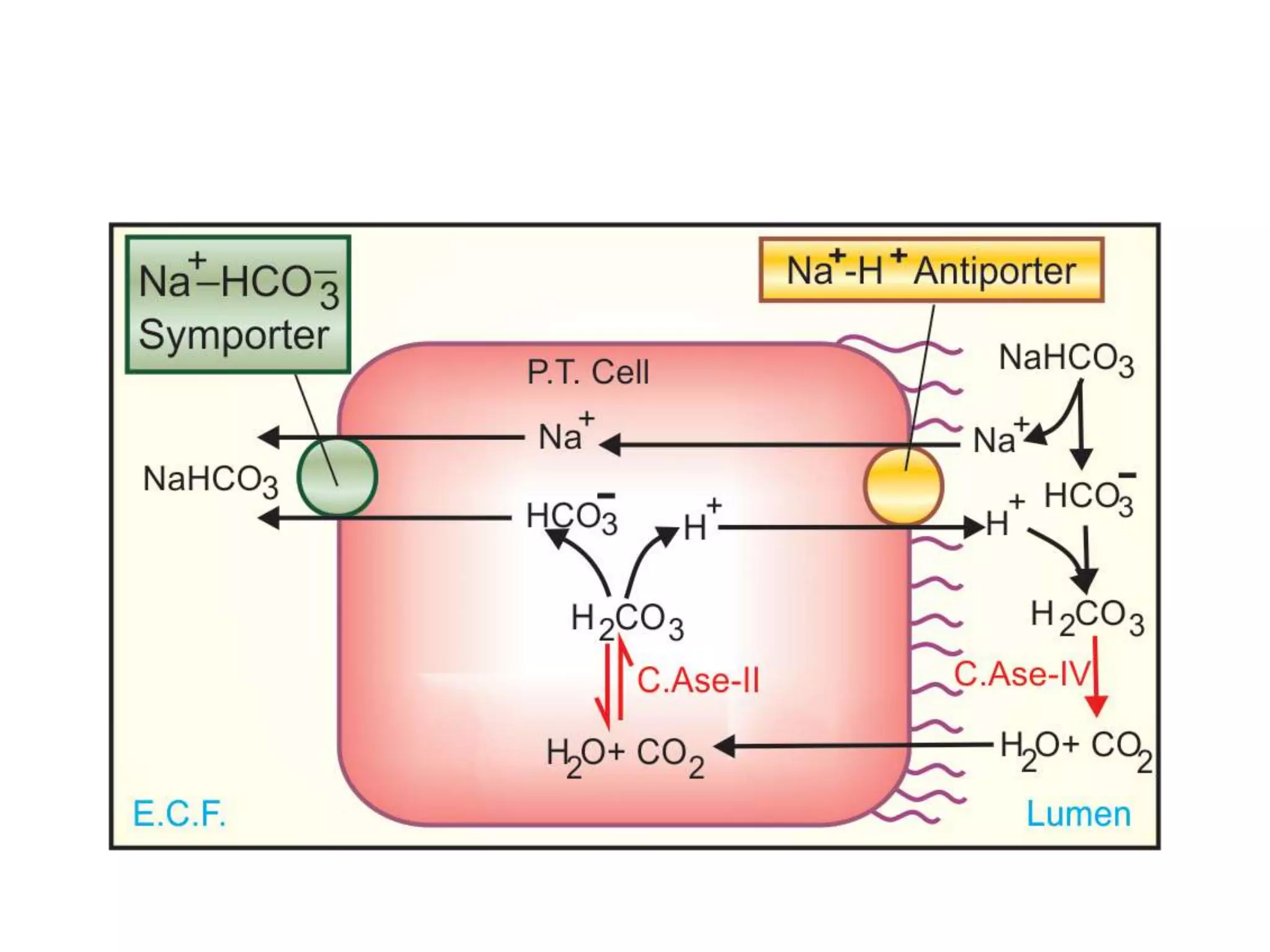
  • #10 Na is reabsorbed via the NHE3 Na/H antiporter. The action of this antiporter, together with that of an apical membrane vacuolar ATPase (vH ATPase), results in signifi cant H+ extrusion into the proximal convoluted tubule urinary space. H +extrusion is coupled to HCO3- reabsorption by the action of an apical membrane carbonic anhydrase IV (CAIV) that catalyzes the cleavage of HCO3 into OH and CO2. OH combines with H to form water, while CO2 diffuses into the cytoplasm of the epithelial cell. The cytoplasmic enzyme carbonic anhydrase II (CAII) catalyzes the formation of HCO3 from CO2 and OH; the HCO3 is then transported into the interstitium together with Na. The net result of this process is reabsorption of HCO3 and Na by the basolateral cotransporter NBCe1. Acetazolamide inhibits both isoforms of carbonic anhydrase; the decreased carbonic anhydrase activity results in decreased Na and HCO3 \absorption.
  • #13 IN THIN LIMB ONLY PASSIVE RABSORPTION OF WATER…….. The medullary thick ascending limb of the loop of Henle absorbs Na through an apical membrane Na/K/2Cl (NKCC2) transporter. The Na/K-ATPase pumps sodium from the cytoplasm into the interstitium, basolateral Cl channel (CLC-K2) transports Cl into the interstitium. K is primarily recycled into the urinary space via a luminal K channel (ROMK). The combined activities of apical ROMK and basolateral CLC-K2 result in a lumen-positive transepithelial potential difference ( approximately 10 mV) that drives paracellular absorption of cations, including Ca2 and Mg2. Loop diuretics inhibit NKCC2, resulting in signifi cantly increased renal sodium excretion. Disruption of the positive transepithelial potential by loop diuretics also increases the excretion of Ca2 and Mg2
  • #15 Distal convoluted tubule cell. Distal convoluted tubule cells absorb Na via an apical membrane NaCl co-transporter (NCC). Na is then transported across the basolateral membrane into the interstitium via the Na/K- ATPase, and Cl is transported from the cytosol into the interstitium via Cl channels (gCl ) and perhaps by K-Cl co-transporters (not shown). Renal epithelial cells of the distal convoluted tubule also absorb Ca2 via apical membrane Ca2 channels (TRPV5), TRPM6 magnesium channels in the apical membraneand Ca2 is transported across the basolateral membrane into the interstitium by the Na/Ca2 exchanger NCX1 and by the Ca2-ATPase PMCA (not shown). Thiazides inhibit NCC, resulting in increased Na excretion. Thiazides also increase epithelial cell absorption of Ca2 by an unknown mechanism (not shown).
  • #16 To compensate this some Cl- driven from tubular fluid to the interstitium via paracellular pathway Amiloride –inhibit apical membrane Na+ channel and spironolactone antagonise the aldosterone
  • #18 IF WE TAKE THE UREINE AND SAY SOLUTE IS MORE THAN WE SAY THAT ITS NOT SOLUTE FREE SO THE FREE WATER CL BECOMES NEGATIVE ……IT OCCURS IN CONDITION OF DEHYDRATION,,,,,,,,, Using the example discussed earlier, if urine flow rate is 1 ml/min and osmolar clearance is 2 ml/min, free-water clearance would be -1 ml/min. This means that instead of water being cleared from the kidneys in excess of solutes, the kidneys are actually returning water back to the systemic circulation, as occurs during water deficits. Thus, whenever urine osmolarity is greater than plasma osmolarity, free-water clearance will be negative, indicating water conservation.
  • #26 OR thiazide is preferred
  • #28 Promotes Ca excretion and prevent volume overload
  • #32 Not significant other actions
  • #33 Use because of flat dose response curve and no acute effect
  • #34 Recurrent stone Effective in both nephrogenic and pitutary diabetes Not given in cirhosis because aggrave hepatic ancephalopathy by increase ammonia
  • #36 More with thiazide and because of increase reabsorption of Uric acid in PT because both is trasprted by organtic anions
  • #37 where alterations in the electrolyte composition of endolymph may contribute to drug-induced ototoxicity-with ethycrinic acid
  • #43 Type 4 for hydrolysis Type-2 inner side
  • #48 Because of interfering with hepatic elimination of ammonia Acidosis more in CoPD Stone due to precipiation of calcium phosphate in alkaline urine
  • #49 First see mannitol
  • #52 If acute renal failure already occurs mannitol is not given because pulmonary edema occurs
  • #56 Also k+ sparing diuretics
  • #61 Conn”s syndrome-Primary
  • #62 Interact with progestone receptors, Acidosis in cirrhotic patients, Hormonal side effect less with eplerenone