Presented by:
Yasmeen Mir
M. Pharm ist year (Pharmacology-İ)
Roll no.:18155110001
Diuretics (natriuretics) are drugs that mainly promotes the
excretion of the (Na+), (Cl-) or (HCO3-) and water.
 Application of these drugs in the management of hypertension
has over stripped their use in edema.
 The net result being:
– Increase the urine flow,
– change urine pH
– change the ionic composition of the urine and blood.
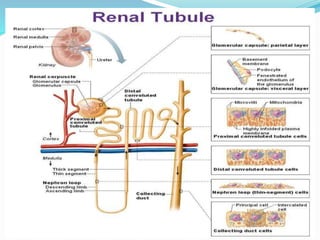
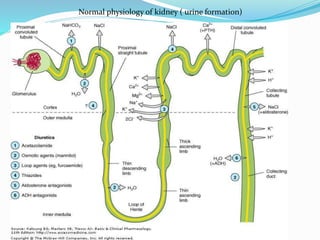
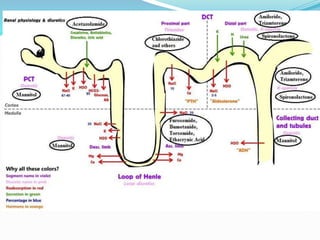
Normal physiology of kidney ( urine formation)
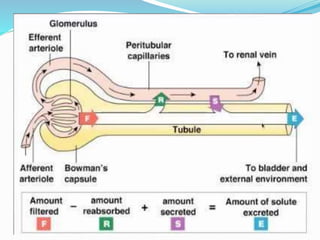
 Urine formation starts from Glomerular Filtration.
 Around 180 Liter of fluid is filtered everyday in glomerulus. All soluble
constituents of blood except plasma proteins and lipids are filtered at glomerulus.
 But more than 99% of the glomerular filtrate is reabsorbed in the tubules. So in
spite of 180 liter fluid filtration in glomerulus, only 1.5 liter of urine is produced in 24
hours.
 Hence, tubular reabsorption and secretion are the more effective steps than the
glomerular filtration for the drug target, as they alter urine formation in greater
extend
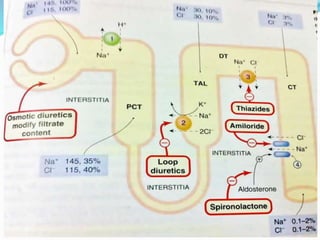
Tubular reabsorption can occur at four different sites.
1.PROXIMAL CONVULATED TUBULE
• Glucose, bicarbonate, amino acids and other metabolites are reabsorbed.
• Two-third of Na+ is reabsorbed, Chloride enters in exchange for a base anion, such
as formate and oxalate.
• Water follows passively to maintain iso-osmolarity
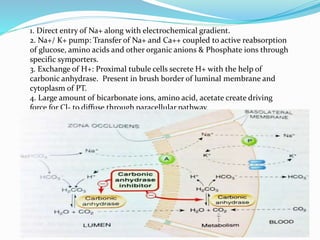
1. Direct entry of Na+ along with electrochemical gradient.
2. Na+/ K+ pump: Transfer of Na+ and Ca++ coupled to active reabsorption
of glucose, amino acids and other organic anions & Phosphate ions through
specific symporters.
3. Exchange of H+: Proximal tubule cells secrete H+ with the help of
carbonic anhydrase. Present in brush border of luminal membrane and
cytoplasm of PT.
4. Large amount of bicarbonate ions, amino acid, acetate create driving
force for Cl- to diffuse through paracellular pathway.
LOOP OF HENLE
[ (DESCENDING LOOP OF HENLE)
• The filtrate entering here is isotonic due to water reabsorption in this area.
• Tubular fluid becomes concentrated (Hypertonic) (Three fold increase in salt
concentration).
LOOP OF HENLE
(ASCENDING LOOP OF HENLE)
1. ASCENDING LOOP OF HENLE (Medullary part lined by cuboidal cells).
• Unique. Impermeable to water
• Active reabsorption of Na+, K+ & Cl- is mediated by a Na+/K+/2Cl- Cotransporter.
• Mg++ and Ca++ enter the interstitial fluid.
• 25% to 30% of tubular NaCl returns to the interstitial fluid (blood). So, Loop of Henle is
called diluting region. A major site for salt reabsorption.
2. ASCENDING LOOP OF HENLE (Cortical part lined by flattened cells).
• Impermeable to water.
• Salt reabsorption continues but through Na+-Cl symporters.
• Tubular fluid gets further diluted.
DISTAL CONVULATED TUBULE
• Impermeable to water.
• 10% of filtered NaCl is reabsorbed via Na+/Cl transporter that is sensitive to
Thiazide
diuretics.
• Calcium reabsorption mediated by Na+/Ca++ exchanger into the interstitial fluid.
• Ca++ excretion is regulated by parathyroid hormone in this portion of the tubule.
COLLECTING TUBULE & DUCT
• Na+, K+, water reabsorption.
• Na+ enters through channels to tubular cells but absorption in blood relies on
Na+/K+-ATPase.
• Aldosterone receptors in tubular cells influence Na+ reabsorption & K+ secretion.
• Absorption of Na+ at this site occurs through a specific amiloride sensitive Na+
channel & controlled by aldosterone.
• ADH promotes reabsorption of water from the collecting tubule mediated by
cAMP.
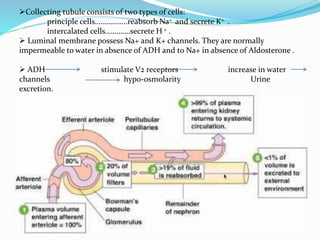
Collecting tubule consists of two types of cells:
principle cells……………..reabsorb Na+ and secrete K+ .
intercalated cells………….secrete H + .
 Luminal membrane possess Na+ and K+ channels. They are normally
impermeable to water in absence of ADH and to Na+ in absence of Aldosterone .
 ADH stimulate V2 receptors increase in water
channels hypo-osmolarity Urine
excretion.
Classification of Diuretics
A. Weak Diuretics:-
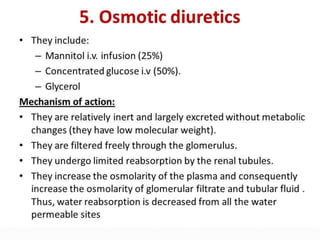
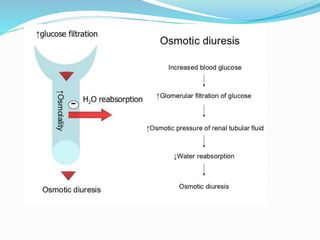
i. Osmotic Diuretics:
Electrolytes: Sodium Chloride, Potassium citrate, Potassium carbonate, Potassium
acetate, Potassium chloride.
Nonelectrolytes: Mannitol, Isosorbide, Sucrose, Urea, Glycerol.
ii. Acidifying salts: Ammonium chloride, Arginine hydrochloride.
iii. Xanthine derivatives: Aminophylline, Theophylline.
iv. Carbonic anhydrase inhibitors: Acetazolamide, Dichlorphenamide, Ethozolamide,
Methazolamide.
B. Moderately potent Diuretics:-
i. Thiazide Diuretics : Bendrofluazide, Clopamide, Hydrochlorothiazide,
Chlorthalidone, Chloroxolone, Indapamide, Polythiazide, Cyclopenthiazide.
C. Very Potent Diuretics:-
i. Loop Diuretics: Furosemide, Ethacrynic acid, Torsemid, Bumetamide, Peretanide,
Indacrinone.
ii. Mercurials: Mersalyl,Mercaptomerin,Meralluride, Chlormerodin, Mercurous
chloride (Mersalyl).
D. Potassium sparing Diuretics:-
Triamterene, Spironolactone, Amiloride.
Classification of Diuretics
(According to the site of action)
DRUGS USED IN RENAL
DISORDERS
Drugs that modify
salt excretion
Drugs that modify
water excretion
PCT TAL DCT CCT Osmotic diuretics
ADH
ADH
agonist
antagonist
Carbonic
anhydrase
inhibitors
Loop
diuretics
Thiazides
K+-sparing
diuretics
Loop Diuretics (High ceiling diuretics)
• Inhibitors of Na+ K+ 2Cl- Cotransporter. Inhibit Na+ & Cl- reabsorption.
• Also produce venodilator action, directly or indirectly by releasing renal factor.
• Increased H+ & K+ loss. Thus may produce metabolic alkalosis.
• Increase in Ca++ & Mg++ concentration & decreased excretion of uric acid.
• They also potentiate the action of Thiazides.
• The excretion of Na+ continues even if ECF is less & hence may result into dehydration
&
hypotension.
Therapeutic Uses:
Diuretic actions of Loop Diuretics:
1. Oedema due to cardiac failure, hepatic disease, nephrotic syndrome.
2. Acute pulmonary edema & cerebral edema, pregnancy & idiopathic edema.
3. Acute chronic renal failure.
4. Barbiturate poisoning, salicylate poisoning.
Nondiuretic action of Loop Diuretics:
1. As an antihypertensive.
2. Idiopathic calcium urolithiasis.
3. In Hypocalcaemia.
4. Diabetes insipidus.
5. Hyponatremic states due to water retention.
6. Glaucoma.
• Adverse effects:
1. Hypokalemia, So used with potassium sparing diuretics.
2. Hyponatremia, dehydration & metabolic acidosis.
3. Hyperglycemia, hyperuricemia.
4. Weakness, fatigue, dizziness, cramps & myalgia.
5. Prostatic hypertrophy, ototoxicity, cardiac arrest after IV injection.
6. Hepatic insufficiency, gastric upset.
7. Orthostatic hypotension.
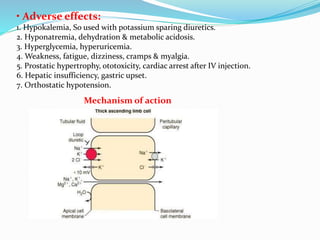
Mechanism of action
1) Furosemide
• Potent, oral, diuretic, possessing halogenated salfamoyl benzene ring common to
Thiazide diuretics.
• Thick ascending loop of Henle. Blocks Na+-K+-2Cl symport.
• IV administration increases the renal blood flow. It increases PGE2 synthesis in the
kidneys, which has a locally protective, vasodilator effect.
• In physiological or pharmacological stress, it counters the intrarenal vasoconstriction.
• Furosemide attaches to the Cl- binding site of protein (Na+ K+ 2Cl-) to inhibit its
transport function.
Pharmacological actions:-
• Kidneys:- Excretion of Na+, K+, Cl-, PO4-2.
Excessive chloride loss →hypochloremic alkalosis.
K+ loss→ Hypokalemia.( Less marked with Furosemide than Thiazides).
Little change in Urine pH. Potent renin releasers.
• Blood vessels & BP:-
IV furosemide dilates peripheral vasculature, Lowers the arterial BP, rapid venous
pooling of blood, reducing cardiac preload & afterload.
• Metabolic actions:-
↑sed blood uric acid & disturbances of glucose tolerance, ↑sed blood urea. Ca++ &
Mg++ excretion also ↑ses.
Pharmacokinetics:-
• Absorbed orally, Bioavailability 60-100%.
• Lipid solubility is low, Food reduces bioavailability.
• Excreted within 4 hours. Onset of action is quick & short.
• 50% excreted unchanged, rest conjugated with glucuronide in kidney.
Dose:-
20-80 mg once in morning. Upto 200mg in renal insufficiency every 6 hrs by IM/IV.
In pulmonary edema 40-80 mg IV.
→LASIX 40 mg tab., 20 mg/2ml inj., SALINEX 40 mg tab., FRUSENEX 40 mg, 100
mg tab.
2) Torsemide
• 3 times more potent than furosemide.
• Oral absorption more rapid and complete. 80% metabolized in liver.
• t1/2= 3.5 hrs. Duration of action= 4-8 hrs.
• Used in hypertension & edema.
Dose:-
2.5 mg OD in hypertension, 5-20 mg/day in edema, 100 mg BD in renal failure.
→DIURETOR 10,20 mg tabs., DYTOR 10,20,100 mg tabs.
3) Bumetanide
• 40 times more potent than furosemide.
• Onset & duration and its effect on electrolyte excretion are similar to furosemide.
• 80% absorption. It is metabolized in liver & its half life is not prolonged in renal
insufficiency.
Dose:-
1-5 mg oral OD in the morning, 2-4 mg IM/IV, (Max 15 mg/day in renal failure).
→BUMET 1mg tab., 0.25 mg/ml inj.
Axosemide, Tripamide, Piretanide are other diuretics belonging to the furosemide
group.
Ethacrynic acid
• An unsaturated ketone derivatives of Phenoxyacetic acid, is a potent oral diuretic like
furosemide.
• Chemically unrelated to diuretic drugs but same effects as of furosemide.
• Max. diuresis within 2-3 hrs after giving orally.
• It can be used in edematous states, especially in patients allergic to sulphonamides.
• Less used because prone to cause adverse effects which are similar to those of
furosemide.
Interactions
1. Potentiate all other antihypertensives. This interaction is intentionally employed in
therapeutics.
2. Hypokalaemia induced by these diuretics:
• Enhances digitalis toxicity.
• Produces polymorphic ventricular tachycardia with quinidine and other
antiarrhythmics.
• Potentiates competitive neuromuscular blockers
and reduces sulfonylurea action.
3. Loop diuretics + aminoglycoside antibiotics – both ototoxic and nephrotoxic →
additive toxicity.
4. Cotrimoxazole + loop diuretics- thrombocytopenia.
5. Indomethacin/ NSAIDs + Loop diuretics- diminishes diuretic and
antihypertensive effect of loop diuretics.
6. Probenecid + furosemide and thiazides competitively inhibits tubular secretion
of
furosemide and thiazides, decreases their action by reducing the concentration in
the tubular fluid, while diuretics diminish uricosuric action of probenecid.
7. Serum lithium level rises when diuretic therapy is instituted. This is due to
enhanced reabsorption of Li+ (and Na+) in PT.
8. Furosemide and warfarin/ Clofibrates: Displacement of plasma protein binding
of warfarin.
Resistance to high ceiling diuretics
1. Renal insufficiency .
• Decreased access of diuretics to its site of action due to low g.f.r and low
proximal tubular secretion.
2. Nephrotic syndrome.
• Binding of diuretic to urinary protein, other pharmacodynamic causes.
3. Cirrhosis of liver.
• Abnormal pharmacodynamic hyperaldosteronism; mechanism not clear.
4. CHF.
• lmpaired oral absorption due to intestinal congestion, decreased renal blood
flow and glomerular filtration, lncreased salt reabsorption in PT.
2.Thaizides and Thiazide-like
Diuretics
Mostly used diuretic drugs.
Sulphonamide derivatives.
Acetzolamide and hydrochlorothiazide are prodrugs
Their potency rank is in Oder:
polythizide>Indapamide>Bendroflumethiazide>Metalazone>Quinethazone=Hydr
ochlorthiazide=Chlorthiazide=Chlorthalidone>Chlorothiazide.
Their duration of action runs as follows:
Chlorthalidone>Polythiazide>Indapamide>Metalozone>Hydrochlorthiazide>Chlo
rothiazide.
 they are mainly secreted through the PT by the organic acid secretory
mechanism.
 When given orally, these drugs are readily absorbed from GIT.
Longer acting drugs High lipid solubility and volume of distribution.
Mechanism of action
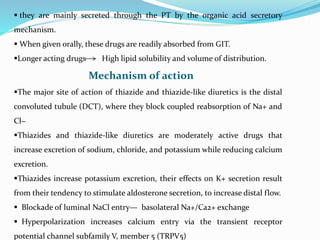
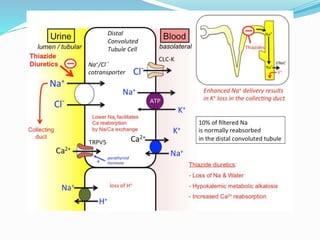
The major site of action of thiazide and thiazide-like diuretics is the distal
convoluted tubule (DCT), where they block coupled reabsorption of Na+ and
Cl−
Thiazides and thiazide-like diuretics are moderately active drugs that
increase excretion of sodium, chloride, and potassium while reducing calcium
excretion.
Thiazides increase potassium excretion, their effects on K+ secretion result
from their tendency to stimulate aldosterone secretion, to increase distal flow.
 Blockade of luminal NaCl entry— basolateral Na+/Ca2+ exchange
 Hyperpolarization increases calcium entry via the transient receptor
potential channel subfamily V, member 5 (TRPV5)
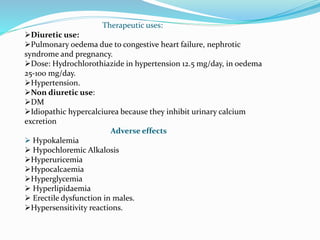
Therapeutic uses:
Diuretic use:
Pulmonary oedema due to congestive heart failure, nephrotic
syndrome and pregnancy.
Dose: Hydrochlorothiazide in hypertension 12.5 mg/day, in oedema
25-100 mg/day.
Hypertension.
Non diuretic use:
DM
Idiopathic hypercalciurea because they inhibit urinary calcium
excretion
Adverse effects
 Hypokalemia
 Hypochloremic Alkalosis
Hyperuricemia
Hypocalcaemia
Hyperglycemia
 Hyperlipidaemia
 Erectile dysfunction in males.
Hypersensitivity reactions.
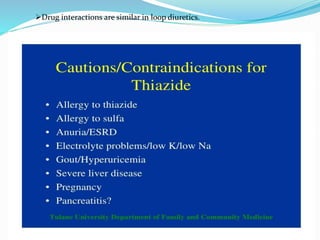
Drug interactions are similar in loop diuretics.
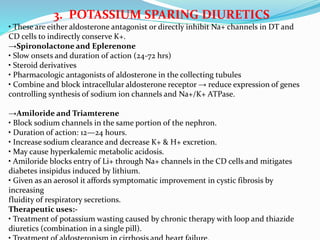
3. POTASSIUM SPARING DIURETICS
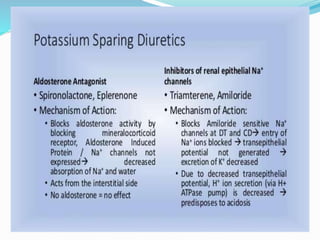
• These are either aldosterone antagonist or directly inhibit Na+ channels in DT and
CD cells to indirectly conserve K+.
→Spironolactone and Eplerenone
• Slow onsets and duration of action (24-72 hrs)
• Steroid derivatives
• Pharmacologic antagonists of aldosterone in the collecting tubules
• Combine and block intracellular aldosterone receptor → reduce expression of genes
controlling synthesis of sodium ion channels and Na+/K+ ATPase.
→Amiloride and Triamterene
• Block sodium channels in the same portion of the nephron.
• Duration of action: 12—24 hours.
• Increase sodium clearance and decrease K+ & H+ excretion.
• May cause hyperkalemic metabolic acidosis.
• Amiloride blocks entry of Li+ through Na+ channels in the CD cells and mitigates
diabetes insipidus induced by lithium.
• Given as an aerosol it affords symptomatic improvement in cystic fibrosis by
increasing
fluidity of respiratory secretions.
Therapeutic uses:-
• Treatment of potassium wasting caused by chronic therapy with loop and thiazide
diuretics (combination in a single pill).
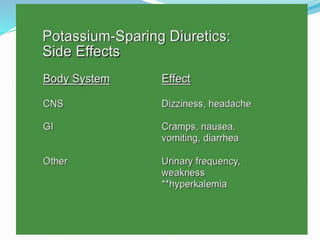
Adverse effects:-
• Hyperkalaemia is the most important toxicity.
• Can cause endocrine abnormalities (gynecomastia and antiandrogenic effects).
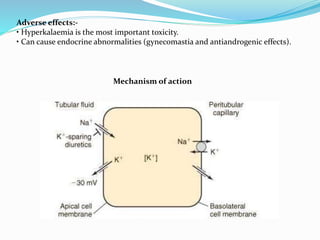
Mechanism of action
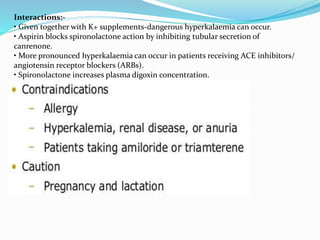
Interactions:-
• Given together with K+ supplements-dangerous hyperkalaemia can occur.
• Aspirin blocks spironolactone action by inhibiting tubular secretion of
canrenone.
• More pronounced hyperkalaemia can occur in patients receiving ACE inhibitors/
angiotensin receptor blockers (ARBs).
• Spironolactone increases plasma digoxin concentration.
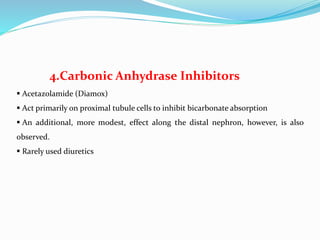
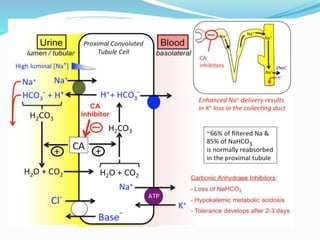
4.Carbonic Anhydrase Inhibitors
 Acetazolamide (Diamox)
 Act primarily on proximal tubule cells to inhibit bicarbonate absorption
 An additional, more modest, effect along the distal nephron, however, is also
observed.
 Rarely used diuretics
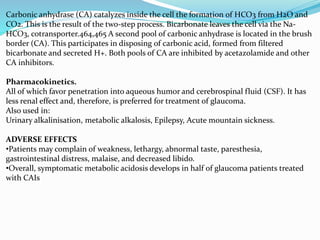
Carbonic anhydrase (CA) catalyzes inside the cell the formation of HCO3 from H2O and
CO2. This is the result of the two-step process. Bicarbonate leaves the cell via the Na-
HCO3, cotransporter.464,465 A second pool of carbonic anhydrase is located in the brush
border (CA). This participates in disposing of carbonic acid, formed from filtered
bicarbonate and secreted H+. Both pools of CA are inhibited by acetazolamide and other
CA inhibitors.
Pharmacokinetics.
All of which favor penetration into aqueous humor and cerebrospinal fluid (CSF). It has
less renal effect and, therefore, is preferred for treatment of glaucoma.
Also used in:
Urinary alkalinisation, metabolic alkalosis, Epilepsy, Acute mountain sickness.
ADVERSE EFFECTS
•Patients may complain of weakness, lethargy, abnormal taste, paresthesia,
gastrointestinal distress, malaise, and decreased libido.
•Overall, symptomatic metabolic acidosis develops in half of glaucoma patients treated
with CAIs
ADVERSE EFFECTS
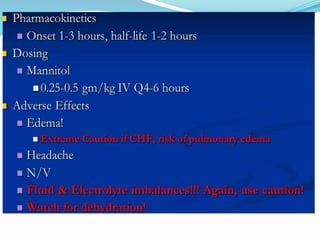
The osmotic abstraction of cell water initially causes hyponatremia and
hypochloremia.
Later, when the excess ECF is excreted, the decrease in cell water concentrates K+
and H+ within cells, which increases the gradient for their diffusion into the ECF,
leading to hyperkalemic acidosis.
Later, hypernatremic dehydration may develop if free water is not provided,
because urinary concentrating ability is inhibited.
Uses
Treat oligurea state in shock
Cerebral edema
Glaucoma
Diuretics

Diuretics

  • 1.
    Presented by: Yasmeen Mir M.Pharm ist year (Pharmacology-İ) Roll no.:18155110001
  • 2.
    Diuretics (natriuretics) aredrugs that mainly promotes the excretion of the (Na+), (Cl-) or (HCO3-) and water.  Application of these drugs in the management of hypertension has over stripped their use in edema.  The net result being: – Increase the urine flow, – change urine pH – change the ionic composition of the urine and blood.
  • 5.
    Normal physiology ofkidney ( urine formation)
  • 6.
     Urine formationstarts from Glomerular Filtration.  Around 180 Liter of fluid is filtered everyday in glomerulus. All soluble constituents of blood except plasma proteins and lipids are filtered at glomerulus.  But more than 99% of the glomerular filtrate is reabsorbed in the tubules. So in spite of 180 liter fluid filtration in glomerulus, only 1.5 liter of urine is produced in 24 hours.  Hence, tubular reabsorption and secretion are the more effective steps than the glomerular filtration for the drug target, as they alter urine formation in greater extend Tubular reabsorption can occur at four different sites. 1.PROXIMAL CONVULATED TUBULE • Glucose, bicarbonate, amino acids and other metabolites are reabsorbed. • Two-third of Na+ is reabsorbed, Chloride enters in exchange for a base anion, such as formate and oxalate. • Water follows passively to maintain iso-osmolarity
  • 7.
    1. Direct entryof Na+ along with electrochemical gradient. 2. Na+/ K+ pump: Transfer of Na+ and Ca++ coupled to active reabsorption of glucose, amino acids and other organic anions & Phosphate ions through specific symporters. 3. Exchange of H+: Proximal tubule cells secrete H+ with the help of carbonic anhydrase. Present in brush border of luminal membrane and cytoplasm of PT. 4. Large amount of bicarbonate ions, amino acid, acetate create driving force for Cl- to diffuse through paracellular pathway.
  • 8.
    LOOP OF HENLE [(DESCENDING LOOP OF HENLE) • The filtrate entering here is isotonic due to water reabsorption in this area. • Tubular fluid becomes concentrated (Hypertonic) (Three fold increase in salt concentration). LOOP OF HENLE (ASCENDING LOOP OF HENLE) 1. ASCENDING LOOP OF HENLE (Medullary part lined by cuboidal cells). • Unique. Impermeable to water • Active reabsorption of Na+, K+ & Cl- is mediated by a Na+/K+/2Cl- Cotransporter. • Mg++ and Ca++ enter the interstitial fluid. • 25% to 30% of tubular NaCl returns to the interstitial fluid (blood). So, Loop of Henle is called diluting region. A major site for salt reabsorption. 2. ASCENDING LOOP OF HENLE (Cortical part lined by flattened cells). • Impermeable to water. • Salt reabsorption continues but through Na+-Cl symporters. • Tubular fluid gets further diluted.
  • 9.
    DISTAL CONVULATED TUBULE •Impermeable to water. • 10% of filtered NaCl is reabsorbed via Na+/Cl transporter that is sensitive to Thiazide diuretics. • Calcium reabsorption mediated by Na+/Ca++ exchanger into the interstitial fluid. • Ca++ excretion is regulated by parathyroid hormone in this portion of the tubule. COLLECTING TUBULE & DUCT • Na+, K+, water reabsorption. • Na+ enters through channels to tubular cells but absorption in blood relies on Na+/K+-ATPase. • Aldosterone receptors in tubular cells influence Na+ reabsorption & K+ secretion. • Absorption of Na+ at this site occurs through a specific amiloride sensitive Na+ channel & controlled by aldosterone. • ADH promotes reabsorption of water from the collecting tubule mediated by cAMP.
  • 10.
    Collecting tubule consistsof two types of cells: principle cells……………..reabsorb Na+ and secrete K+ . intercalated cells………….secrete H + .  Luminal membrane possess Na+ and K+ channels. They are normally impermeable to water in absence of ADH and to Na+ in absence of Aldosterone .  ADH stimulate V2 receptors increase in water channels hypo-osmolarity Urine excretion.
  • 11.
    Classification of Diuretics A.Weak Diuretics:- i. Osmotic Diuretics: Electrolytes: Sodium Chloride, Potassium citrate, Potassium carbonate, Potassium acetate, Potassium chloride. Nonelectrolytes: Mannitol, Isosorbide, Sucrose, Urea, Glycerol. ii. Acidifying salts: Ammonium chloride, Arginine hydrochloride. iii. Xanthine derivatives: Aminophylline, Theophylline. iv. Carbonic anhydrase inhibitors: Acetazolamide, Dichlorphenamide, Ethozolamide, Methazolamide. B. Moderately potent Diuretics:- i. Thiazide Diuretics : Bendrofluazide, Clopamide, Hydrochlorothiazide, Chlorthalidone, Chloroxolone, Indapamide, Polythiazide, Cyclopenthiazide. C. Very Potent Diuretics:- i. Loop Diuretics: Furosemide, Ethacrynic acid, Torsemid, Bumetamide, Peretanide, Indacrinone. ii. Mercurials: Mersalyl,Mercaptomerin,Meralluride, Chlormerodin, Mercurous chloride (Mersalyl). D. Potassium sparing Diuretics:- Triamterene, Spironolactone, Amiloride.
  • 12.
    Classification of Diuretics (Accordingto the site of action) DRUGS USED IN RENAL DISORDERS Drugs that modify salt excretion Drugs that modify water excretion PCT TAL DCT CCT Osmotic diuretics ADH ADH agonist antagonist Carbonic anhydrase inhibitors Loop diuretics Thiazides K+-sparing diuretics
  • 15.
    Loop Diuretics (Highceiling diuretics) • Inhibitors of Na+ K+ 2Cl- Cotransporter. Inhibit Na+ & Cl- reabsorption. • Also produce venodilator action, directly or indirectly by releasing renal factor. • Increased H+ & K+ loss. Thus may produce metabolic alkalosis. • Increase in Ca++ & Mg++ concentration & decreased excretion of uric acid. • They also potentiate the action of Thiazides. • The excretion of Na+ continues even if ECF is less & hence may result into dehydration & hypotension. Therapeutic Uses: Diuretic actions of Loop Diuretics: 1. Oedema due to cardiac failure, hepatic disease, nephrotic syndrome. 2. Acute pulmonary edema & cerebral edema, pregnancy & idiopathic edema. 3. Acute chronic renal failure. 4. Barbiturate poisoning, salicylate poisoning. Nondiuretic action of Loop Diuretics: 1. As an antihypertensive. 2. Idiopathic calcium urolithiasis. 3. In Hypocalcaemia. 4. Diabetes insipidus. 5. Hyponatremic states due to water retention. 6. Glaucoma.
  • 16.
    • Adverse effects: 1.Hypokalemia, So used with potassium sparing diuretics. 2. Hyponatremia, dehydration & metabolic acidosis. 3. Hyperglycemia, hyperuricemia. 4. Weakness, fatigue, dizziness, cramps & myalgia. 5. Prostatic hypertrophy, ototoxicity, cardiac arrest after IV injection. 6. Hepatic insufficiency, gastric upset. 7. Orthostatic hypotension. Mechanism of action
  • 17.
    1) Furosemide • Potent,oral, diuretic, possessing halogenated salfamoyl benzene ring common to Thiazide diuretics. • Thick ascending loop of Henle. Blocks Na+-K+-2Cl symport. • IV administration increases the renal blood flow. It increases PGE2 synthesis in the kidneys, which has a locally protective, vasodilator effect. • In physiological or pharmacological stress, it counters the intrarenal vasoconstriction. • Furosemide attaches to the Cl- binding site of protein (Na+ K+ 2Cl-) to inhibit its transport function. Pharmacological actions:- • Kidneys:- Excretion of Na+, K+, Cl-, PO4-2. Excessive chloride loss →hypochloremic alkalosis. K+ loss→ Hypokalemia.( Less marked with Furosemide than Thiazides). Little change in Urine pH. Potent renin releasers. • Blood vessels & BP:- IV furosemide dilates peripheral vasculature, Lowers the arterial BP, rapid venous pooling of blood, reducing cardiac preload & afterload. • Metabolic actions:- ↑sed blood uric acid & disturbances of glucose tolerance, ↑sed blood urea. Ca++ & Mg++ excretion also ↑ses.
  • 18.
    Pharmacokinetics:- • Absorbed orally,Bioavailability 60-100%. • Lipid solubility is low, Food reduces bioavailability. • Excreted within 4 hours. Onset of action is quick & short. • 50% excreted unchanged, rest conjugated with glucuronide in kidney. Dose:- 20-80 mg once in morning. Upto 200mg in renal insufficiency every 6 hrs by IM/IV. In pulmonary edema 40-80 mg IV. →LASIX 40 mg tab., 20 mg/2ml inj., SALINEX 40 mg tab., FRUSENEX 40 mg, 100 mg tab. 2) Torsemide • 3 times more potent than furosemide. • Oral absorption more rapid and complete. 80% metabolized in liver. • t1/2= 3.5 hrs. Duration of action= 4-8 hrs. • Used in hypertension & edema. Dose:- 2.5 mg OD in hypertension, 5-20 mg/day in edema, 100 mg BD in renal failure. →DIURETOR 10,20 mg tabs., DYTOR 10,20,100 mg tabs.
  • 19.
    3) Bumetanide • 40times more potent than furosemide. • Onset & duration and its effect on electrolyte excretion are similar to furosemide. • 80% absorption. It is metabolized in liver & its half life is not prolonged in renal insufficiency. Dose:- 1-5 mg oral OD in the morning, 2-4 mg IM/IV, (Max 15 mg/day in renal failure). →BUMET 1mg tab., 0.25 mg/ml inj. Axosemide, Tripamide, Piretanide are other diuretics belonging to the furosemide group.
  • 20.
    Ethacrynic acid • Anunsaturated ketone derivatives of Phenoxyacetic acid, is a potent oral diuretic like furosemide. • Chemically unrelated to diuretic drugs but same effects as of furosemide. • Max. diuresis within 2-3 hrs after giving orally. • It can be used in edematous states, especially in patients allergic to sulphonamides. • Less used because prone to cause adverse effects which are similar to those of furosemide. Interactions 1. Potentiate all other antihypertensives. This interaction is intentionally employed in therapeutics. 2. Hypokalaemia induced by these diuretics: • Enhances digitalis toxicity. • Produces polymorphic ventricular tachycardia with quinidine and other antiarrhythmics. • Potentiates competitive neuromuscular blockers and reduces sulfonylurea action. 3. Loop diuretics + aminoglycoside antibiotics – both ototoxic and nephrotoxic → additive toxicity. 4. Cotrimoxazole + loop diuretics- thrombocytopenia.
  • 21.
    5. Indomethacin/ NSAIDs+ Loop diuretics- diminishes diuretic and antihypertensive effect of loop diuretics. 6. Probenecid + furosemide and thiazides competitively inhibits tubular secretion of furosemide and thiazides, decreases their action by reducing the concentration in the tubular fluid, while diuretics diminish uricosuric action of probenecid. 7. Serum lithium level rises when diuretic therapy is instituted. This is due to enhanced reabsorption of Li+ (and Na+) in PT. 8. Furosemide and warfarin/ Clofibrates: Displacement of plasma protein binding of warfarin. Resistance to high ceiling diuretics 1. Renal insufficiency . • Decreased access of diuretics to its site of action due to low g.f.r and low proximal tubular secretion. 2. Nephrotic syndrome. • Binding of diuretic to urinary protein, other pharmacodynamic causes. 3. Cirrhosis of liver. • Abnormal pharmacodynamic hyperaldosteronism; mechanism not clear. 4. CHF. • lmpaired oral absorption due to intestinal congestion, decreased renal blood flow and glomerular filtration, lncreased salt reabsorption in PT.
  • 22.
    2.Thaizides and Thiazide-like Diuretics Mostlyused diuretic drugs. Sulphonamide derivatives. Acetzolamide and hydrochlorothiazide are prodrugs Their potency rank is in Oder: polythizide>Indapamide>Bendroflumethiazide>Metalazone>Quinethazone=Hydr ochlorthiazide=Chlorthiazide=Chlorthalidone>Chlorothiazide. Their duration of action runs as follows: Chlorthalidone>Polythiazide>Indapamide>Metalozone>Hydrochlorthiazide>Chlo rothiazide.
  • 23.
     they aremainly secreted through the PT by the organic acid secretory mechanism.  When given orally, these drugs are readily absorbed from GIT. Longer acting drugs High lipid solubility and volume of distribution. Mechanism of action The major site of action of thiazide and thiazide-like diuretics is the distal convoluted tubule (DCT), where they block coupled reabsorption of Na+ and Cl− Thiazides and thiazide-like diuretics are moderately active drugs that increase excretion of sodium, chloride, and potassium while reducing calcium excretion. Thiazides increase potassium excretion, their effects on K+ secretion result from their tendency to stimulate aldosterone secretion, to increase distal flow.  Blockade of luminal NaCl entry— basolateral Na+/Ca2+ exchange  Hyperpolarization increases calcium entry via the transient receptor potential channel subfamily V, member 5 (TRPV5)
  • 25.
    Therapeutic uses: Diuretic use: Pulmonaryoedema due to congestive heart failure, nephrotic syndrome and pregnancy. Dose: Hydrochlorothiazide in hypertension 12.5 mg/day, in oedema 25-100 mg/day. Hypertension. Non diuretic use: DM Idiopathic hypercalciurea because they inhibit urinary calcium excretion Adverse effects  Hypokalemia  Hypochloremic Alkalosis Hyperuricemia Hypocalcaemia Hyperglycemia  Hyperlipidaemia  Erectile dysfunction in males. Hypersensitivity reactions.
  • 26.
    Drug interactions aresimilar in loop diuretics.
  • 27.
    3. POTASSIUM SPARINGDIURETICS • These are either aldosterone antagonist or directly inhibit Na+ channels in DT and CD cells to indirectly conserve K+. →Spironolactone and Eplerenone • Slow onsets and duration of action (24-72 hrs) • Steroid derivatives • Pharmacologic antagonists of aldosterone in the collecting tubules • Combine and block intracellular aldosterone receptor → reduce expression of genes controlling synthesis of sodium ion channels and Na+/K+ ATPase. →Amiloride and Triamterene • Block sodium channels in the same portion of the nephron. • Duration of action: 12—24 hours. • Increase sodium clearance and decrease K+ & H+ excretion. • May cause hyperkalemic metabolic acidosis. • Amiloride blocks entry of Li+ through Na+ channels in the CD cells and mitigates diabetes insipidus induced by lithium. • Given as an aerosol it affords symptomatic improvement in cystic fibrosis by increasing fluidity of respiratory secretions. Therapeutic uses:- • Treatment of potassium wasting caused by chronic therapy with loop and thiazide diuretics (combination in a single pill).
  • 29.
    Adverse effects:- • Hyperkalaemiais the most important toxicity. • Can cause endocrine abnormalities (gynecomastia and antiandrogenic effects). Mechanism of action
  • 31.
    Interactions:- • Given togetherwith K+ supplements-dangerous hyperkalaemia can occur. • Aspirin blocks spironolactone action by inhibiting tubular secretion of canrenone. • More pronounced hyperkalaemia can occur in patients receiving ACE inhibitors/ angiotensin receptor blockers (ARBs). • Spironolactone increases plasma digoxin concentration.
  • 32.
    4.Carbonic Anhydrase Inhibitors Acetazolamide (Diamox)  Act primarily on proximal tubule cells to inhibit bicarbonate absorption  An additional, more modest, effect along the distal nephron, however, is also observed.  Rarely used diuretics
  • 34.
    Carbonic anhydrase (CA)catalyzes inside the cell the formation of HCO3 from H2O and CO2. This is the result of the two-step process. Bicarbonate leaves the cell via the Na- HCO3, cotransporter.464,465 A second pool of carbonic anhydrase is located in the brush border (CA). This participates in disposing of carbonic acid, formed from filtered bicarbonate and secreted H+. Both pools of CA are inhibited by acetazolamide and other CA inhibitors. Pharmacokinetics. All of which favor penetration into aqueous humor and cerebrospinal fluid (CSF). It has less renal effect and, therefore, is preferred for treatment of glaucoma. Also used in: Urinary alkalinisation, metabolic alkalosis, Epilepsy, Acute mountain sickness. ADVERSE EFFECTS •Patients may complain of weakness, lethargy, abnormal taste, paresthesia, gastrointestinal distress, malaise, and decreased libido. •Overall, symptomatic metabolic acidosis develops in half of glaucoma patients treated with CAIs
  • 38.
    ADVERSE EFFECTS The osmoticabstraction of cell water initially causes hyponatremia and hypochloremia. Later, when the excess ECF is excreted, the decrease in cell water concentrates K+ and H+ within cells, which increases the gradient for their diffusion into the ECF, leading to hyperkalemic acidosis. Later, hypernatremic dehydration may develop if free water is not provided, because urinary concentrating ability is inhibited. Uses Treat oligurea state in shock Cerebral edema Glaucoma