
It is one of the most important factors in the physical environment.
It controls the activities & distribution of animals & plants.
Sometimes acts as a limiting factor for distribution and growth of organisms.
It is thus define as the thermal state considered with reference to it capacity
for transferring heat to other bodies.
The temperature of the sea varies between definite limits, the minimum of
which is the freezing point of the sea water which is -1.91oC
 Since there is always a certain amount f circulation, no part of the ocean ever becomes wholly
stagnant.
 In the surface of low latitudes, the temperature mostly is between 26 and 30oC.
 In most of the shallow seas & partly closed waters like Persian Gulf, the surface temperature may
become high as 35oC.
 From 200m depth to the bottom of the sea, the temperature is less than 3oC.
 In the middle latitudes, the temperature depends upon the season, but here also the range of
temperature does not exceed 10oC.
 Surface water is influenced by various factors which varies the temperature from place to place but in
deep seas, the temperature more or less constant.
 In the Atlantic, the Pacific & the Indian Oceans, the temperature of the deep-waters ranges between
0oC near the Antarctic & nearly 2-3oC towards Equator
 The average daily surface temperature of the oceans is about 0.2-0.3oC
 The vertical distribution of temperature is not uniform in different
latitudes.
 At high latitudes, the difference between the surface & the deep
layers is very less as compared to that of low and middle
latitudes. Its because at high latitudes heat from surface passes to
the atmosphere, hence reducing the temperature difference
between surface and deep sea layers
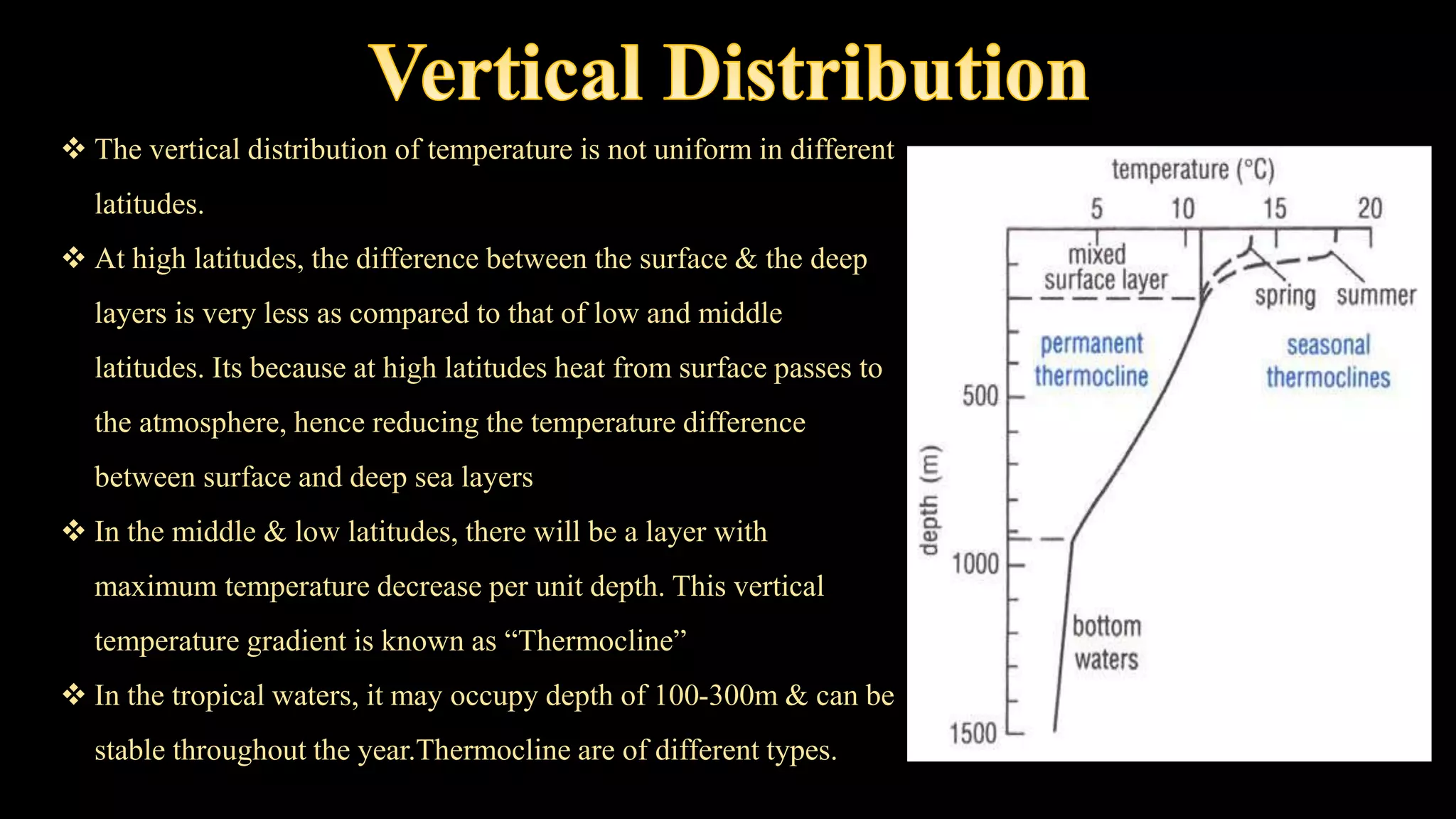
 In the middle & low latitudes, there will be a layer with
maximum temperature decrease per unit depth. This vertical
temperature gradient is known as “Thermocline”
 In the tropical waters, it may occupy depth of 100-300m & can be
stable throughout the year.Thermocline are of different types.
Permanent Thermocline:- These are the deepest occurring from 100-500m below the surface and
has greater stability than others.
 It is moderately thick and quite distinct near the Equator, becoming thicker and deeper and less
intense in the middle latitudes
 It develops as a result of the equatoward flow of deep, cold water from the poles and the poleward
flow of warm surface water from the Equator.
Seasonal Thermocline:- It is very oftenly formed in the ocean at the middle latitudes.
 Unlike in tropics and higher latitudes, there is a marked seasonal variations in the vertical distribution.
 The surface water becomes warmer during the summers, leading to the formation of temporary
seasonal thermocline near the surface.
Diurnal Thermocline:- It is formed very near to the surface during day time and disappears at night.
 Formed within a depth of 10m, with the maximum gradient of about 3oC
The zone of sea in which the thermocline is formed is known as the ‘discontinuity layer’. Above this
zone, a fairly even warmness is maintained by the surface mixing, and this surface stratum is known as
thermosphere.
Below thermocline, the water is cold and there only a slight decrease in the temperature towards bottom.
Thermocline acts as a boundary between the warm surface water and the cold-deep water.
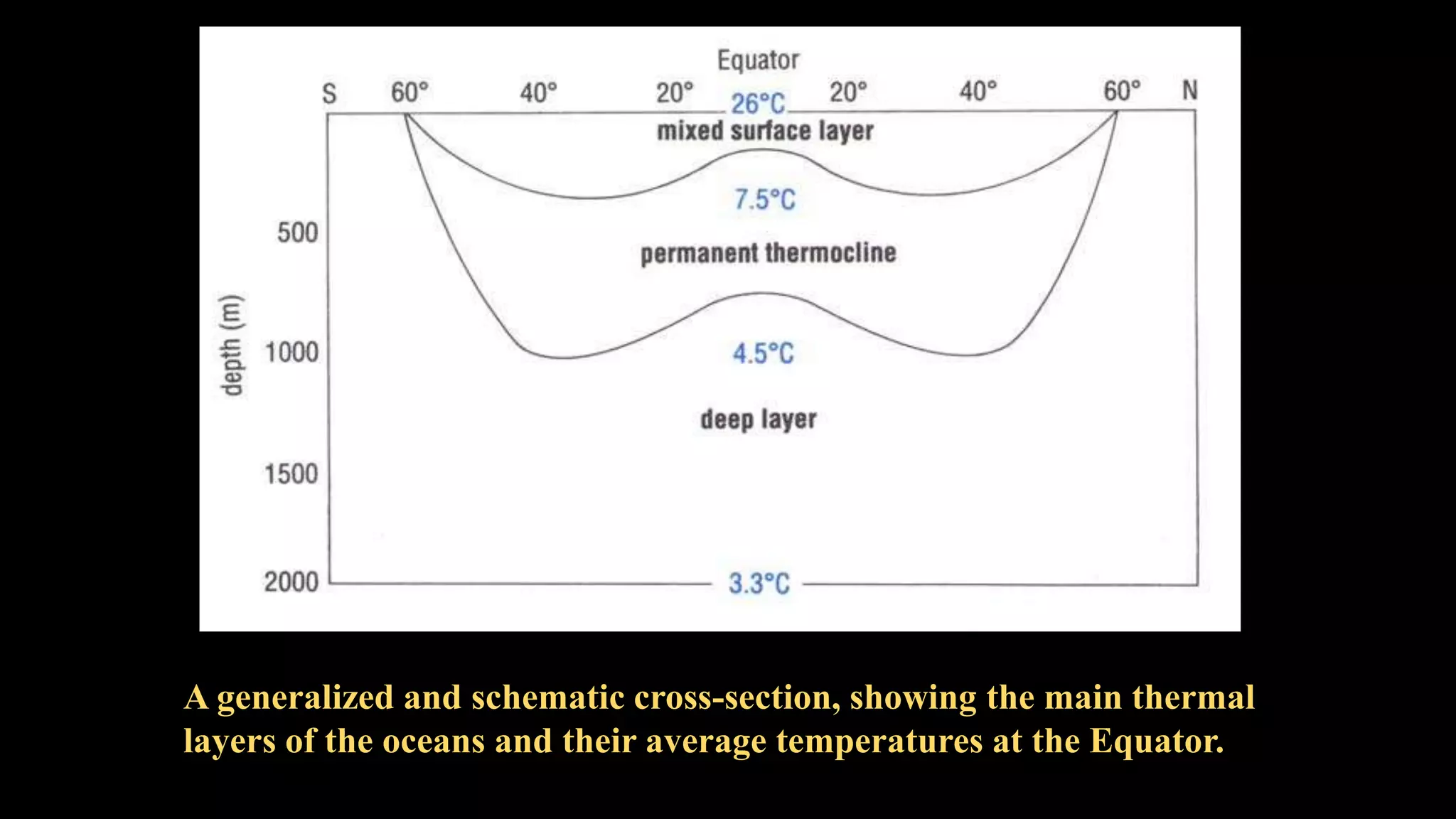
A generalized and schematic cross-section, showing the main thermal
layers of the oceans and their average temperatures at the Equator.
Impact of Temperature
• Other than the birds and mammals (and some large fishes), marine
organisms are cold-blooded and their body temperatures will vary with
changes in their environment.
• These organisms are ectotherms.
• In cold water, metabolic rates will usually be lower and growth rates
of organisms will be slower, although they can attain larger sizes.
• The opposite will be true in warm water.
• Warm-blooded organisms such as birds and mammals are less
restricted by temperature changes and their natural habitats cover
broader regions.
• These organisms are endotherms.
• An excellent example of this is the annual migration of whales
between polar and tropical waters.
• The effect of temperature on marine phytoplankton growth strategies, metabolism and chemical
composition. They find that although protein synthesis is increased under high temperatures, the
number of ribosomes-the protein builders-and associated ribosomal RNAs decreases. Ribosomes
are phosphate rich, and a decrease will therefore lead to higher nitrogen/phosphate ratios in the
organisms. This change in nutrient ratios will increase the demand for nitrogen, causing shifts
towards nitrogen limitation, which would lower productivity and have implications for the marine
carbon cycle.
• Free-swimming species are likely to respond immediately and their distribution is
likely to ‘track’ changes in temperature isotherms for critical temperature ranges. (i.e.
whether they require warm waters in summer or cannot tolerate cold waters in winter).
• Wide scale effects including increased abundance and extension of distribution of southern species
alongside reduced abundance and retreat in the distribution of northern species are the most likely
effects of increased seawater temperatures across the continental shelf.Amongst species living on or
near the seabed, fish are likely to react in concert with temperature change as they are mobile
Distribution of Temperature and its Impact on Marine Organism

Distribution of Temperature and its Impact on Marine Organism

  • 2.
    It is oneof the most important factors in the physical environment. It controls the activities & distribution of animals & plants. Sometimes acts as a limiting factor for distribution and growth of organisms. It is thus define as the thermal state considered with reference to it capacity for transferring heat to other bodies. The temperature of the sea varies between definite limits, the minimum of which is the freezing point of the sea water which is -1.91oC
  • 3.
     Since thereis always a certain amount f circulation, no part of the ocean ever becomes wholly stagnant.  In the surface of low latitudes, the temperature mostly is between 26 and 30oC.  In most of the shallow seas & partly closed waters like Persian Gulf, the surface temperature may become high as 35oC.  From 200m depth to the bottom of the sea, the temperature is less than 3oC.  In the middle latitudes, the temperature depends upon the season, but here also the range of temperature does not exceed 10oC.  Surface water is influenced by various factors which varies the temperature from place to place but in deep seas, the temperature more or less constant.  In the Atlantic, the Pacific & the Indian Oceans, the temperature of the deep-waters ranges between 0oC near the Antarctic & nearly 2-3oC towards Equator  The average daily surface temperature of the oceans is about 0.2-0.3oC
  • 4.
     The verticaldistribution of temperature is not uniform in different latitudes.  At high latitudes, the difference between the surface & the deep layers is very less as compared to that of low and middle latitudes. Its because at high latitudes heat from surface passes to the atmosphere, hence reducing the temperature difference between surface and deep sea layers  In the middle & low latitudes, there will be a layer with maximum temperature decrease per unit depth. This vertical temperature gradient is known as “Thermocline”  In the tropical waters, it may occupy depth of 100-300m & can be stable throughout the year.Thermocline are of different types.
  • 5.
    Permanent Thermocline:- Theseare the deepest occurring from 100-500m below the surface and has greater stability than others.  It is moderately thick and quite distinct near the Equator, becoming thicker and deeper and less intense in the middle latitudes  It develops as a result of the equatoward flow of deep, cold water from the poles and the poleward flow of warm surface water from the Equator. Seasonal Thermocline:- It is very oftenly formed in the ocean at the middle latitudes.  Unlike in tropics and higher latitudes, there is a marked seasonal variations in the vertical distribution.  The surface water becomes warmer during the summers, leading to the formation of temporary seasonal thermocline near the surface. Diurnal Thermocline:- It is formed very near to the surface during day time and disappears at night.  Formed within a depth of 10m, with the maximum gradient of about 3oC The zone of sea in which the thermocline is formed is known as the ‘discontinuity layer’. Above this zone, a fairly even warmness is maintained by the surface mixing, and this surface stratum is known as thermosphere. Below thermocline, the water is cold and there only a slight decrease in the temperature towards bottom. Thermocline acts as a boundary between the warm surface water and the cold-deep water.
  • 6.
    A generalized andschematic cross-section, showing the main thermal layers of the oceans and their average temperatures at the Equator.
  • 7.
    Impact of Temperature •Other than the birds and mammals (and some large fishes), marine organisms are cold-blooded and their body temperatures will vary with changes in their environment. • These organisms are ectotherms. • In cold water, metabolic rates will usually be lower and growth rates of organisms will be slower, although they can attain larger sizes. • The opposite will be true in warm water. • Warm-blooded organisms such as birds and mammals are less restricted by temperature changes and their natural habitats cover broader regions. • These organisms are endotherms. • An excellent example of this is the annual migration of whales between polar and tropical waters.
  • 8.
    • The effectof temperature on marine phytoplankton growth strategies, metabolism and chemical composition. They find that although protein synthesis is increased under high temperatures, the number of ribosomes-the protein builders-and associated ribosomal RNAs decreases. Ribosomes are phosphate rich, and a decrease will therefore lead to higher nitrogen/phosphate ratios in the organisms. This change in nutrient ratios will increase the demand for nitrogen, causing shifts towards nitrogen limitation, which would lower productivity and have implications for the marine carbon cycle. • Free-swimming species are likely to respond immediately and their distribution is likely to ‘track’ changes in temperature isotherms for critical temperature ranges. (i.e. whether they require warm waters in summer or cannot tolerate cold waters in winter). • Wide scale effects including increased abundance and extension of distribution of southern species alongside reduced abundance and retreat in the distribution of northern species are the most likely effects of increased seawater temperatures across the continental shelf.Amongst species living on or near the seabed, fish are likely to react in concert with temperature change as they are mobile