Embed presentation
Downloaded 11 times


The document discusses different types of disfluencies in speech, categorizing them as either core or accessory disfluencies. It notes there are nine main types of disfluencies that can be further broken down into subcategories like sound or syllable repetitions. The document also examines different schemes for categorizing disfluencies and discusses using person-first respectful terminology when referring to individuals.
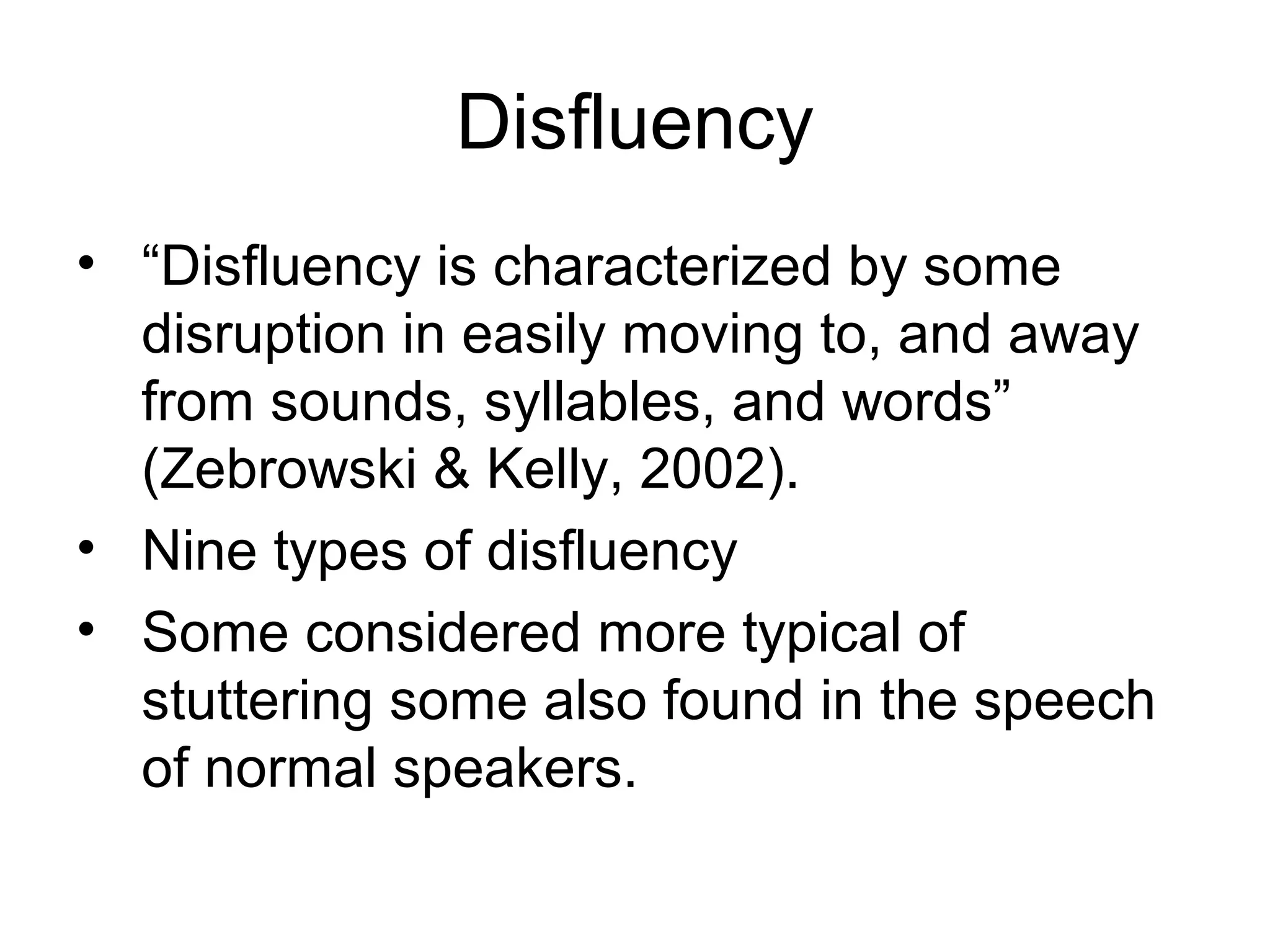
Disfluency is marked by disruptions in speech flow, with nine types found in stuttering and normal speech.
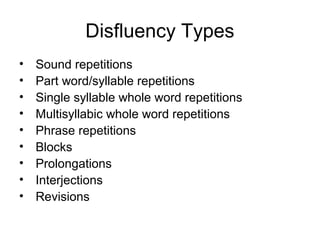
Lists of disfluency types, including sound and word repetitions, blocks, prolongations, interjections, and revisions.
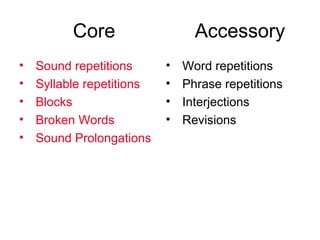
Categories of disfluencies include core like sound repetitions and accessory items like interjections and revisions.
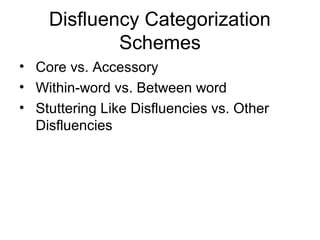
Schemes for categorizing disfluencies: Core vs. Accessory, Within-word vs. Between word.
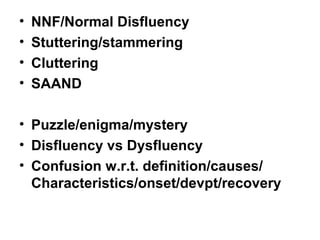
Discussion of terms related to disfluency including stuttering, cluttering, and confusion in definitions.
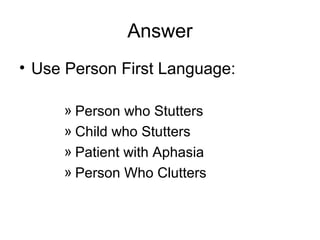
Promotes using person-first language to refer to individuals, such as 'Person who Stutters'.
Emphasizes the importance of person-first language, providing examples of preferred terms.


