Downloaded 80 times
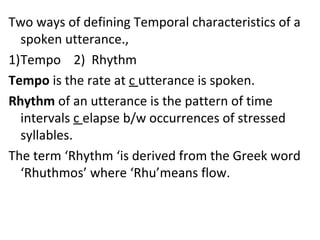
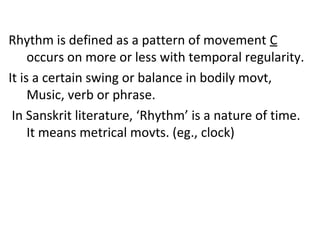
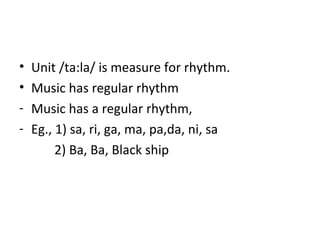
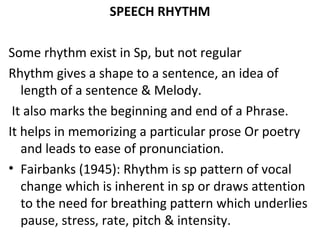
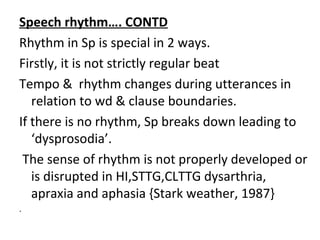
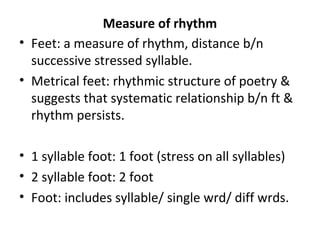
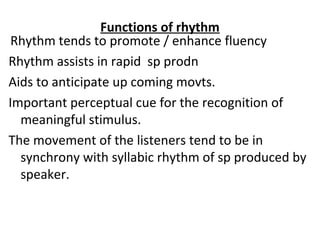
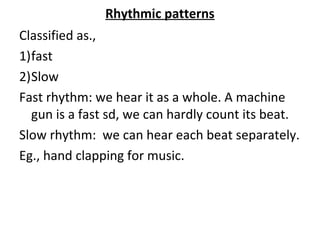
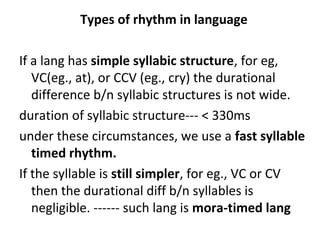
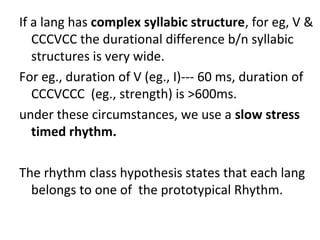
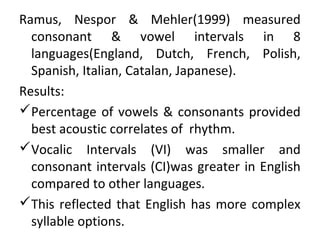
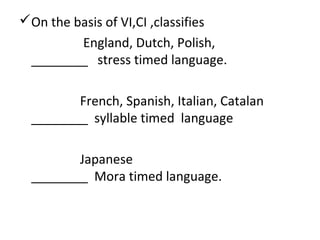
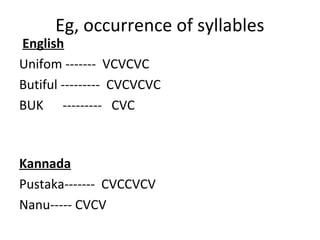

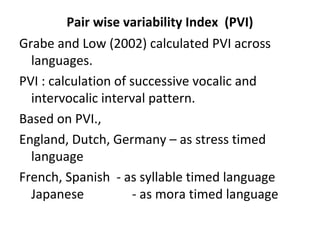
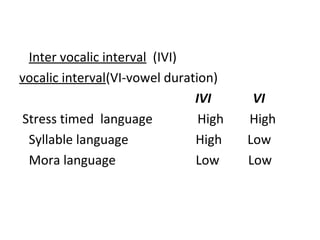
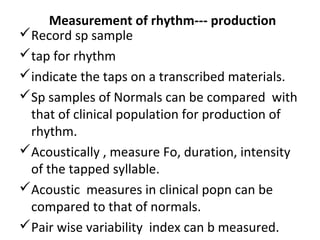
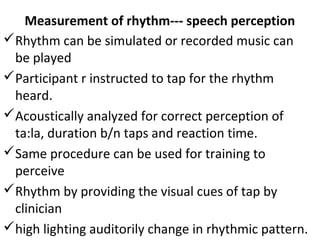
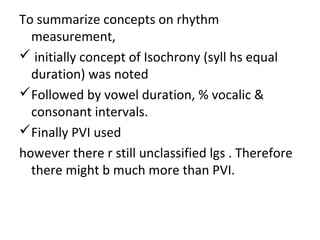
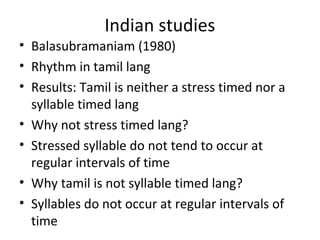
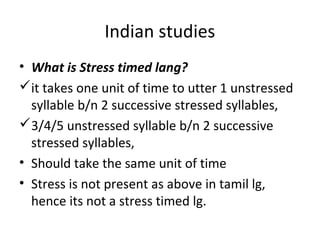
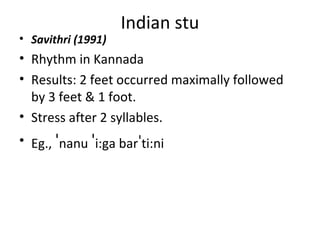
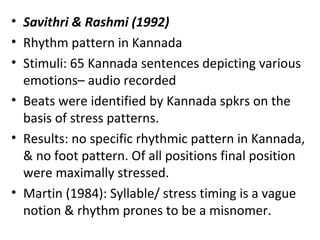
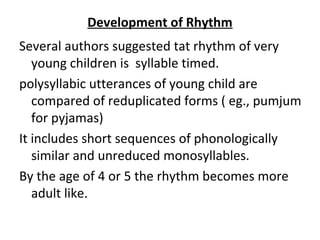
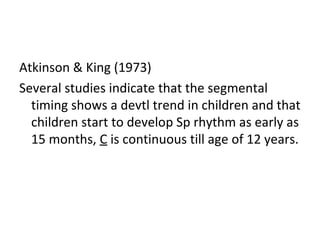
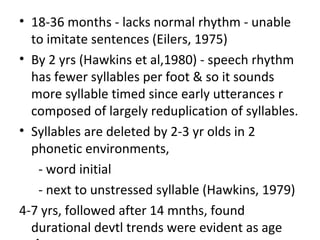
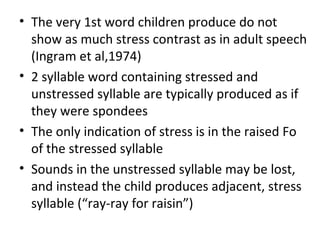
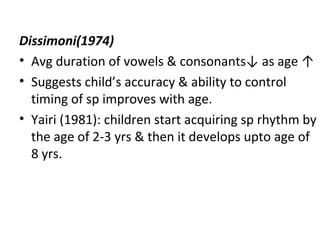
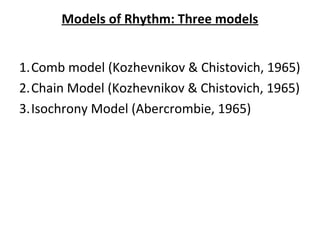
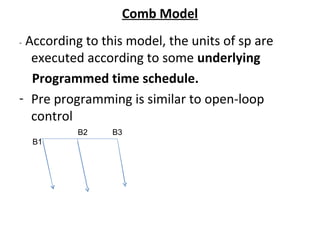
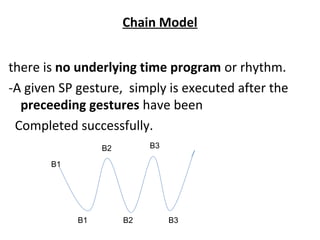
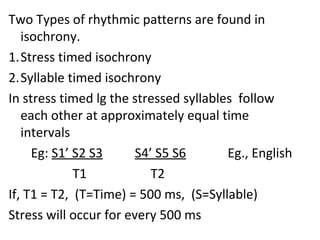
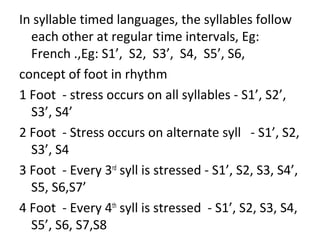
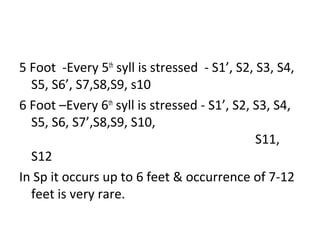
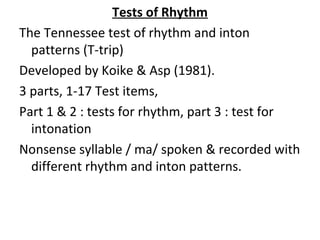
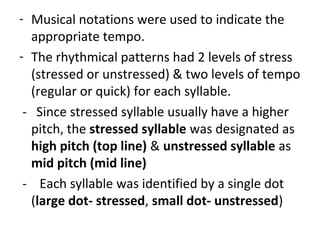
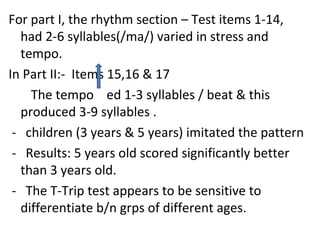
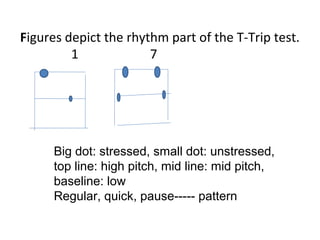
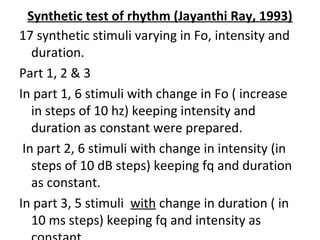
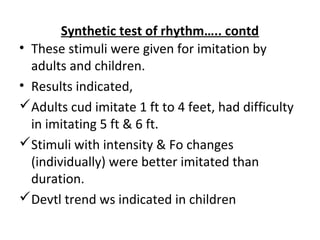
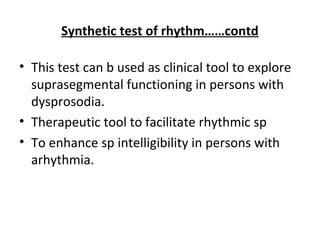
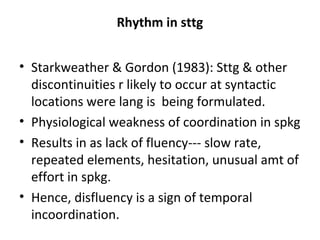
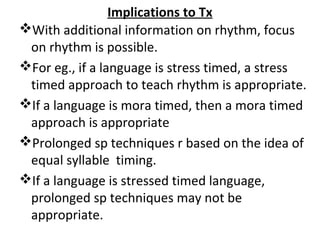

Rhythm can be defined in several ways, including as a pattern of movement that occurs with some degree of temporal regularity. In speech, rhythm gives shape to sentences and marks phrase boundaries. Different languages have different rhythmic patterns based on factors like syllable structure and stress patterns. Studies have measured rhythm using metrics like the proportion of vowel/consonant intervals and pairwise variability index. Research also shows that children acquire adult-like speech rhythm between ages 4-7, and rhythm continues developing through adolescence. Models of rhythm include the comb model of pre-programming, the chain model of feedback-based sequencing, and the isochrony model of regular intervals.


