DISASTER MANAGEMENT
CONTENTS
2
 INTRODUCTION
 DISASTER MANAGEMENT
 TYPES OF DISASTER
 CHARACTERISTIC OF DISASTER
 PHASES OF DISASTER
 PHASES OF DISASTER MANAGEMENT
 ADVANTAGES AND DISADVANTAGES OF DISASTER
MANAGEMENT
 CASE STUDY
 SUMMARY
INTRODUCTION
3
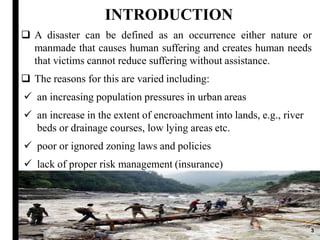
 A disaster can be defined as an occurrence either nature or
manmade that causes human suffering and creates human needs
that victims cannot reduce suffering without assistance.
 The reasons for this are varied including:
 an increasing population pressures in urban areas
 an increase in the extent of encroachment into lands, e.g., river
beds or drainage courses, low lying areas etc.
 poor or ignored zoning laws and policies
 lack of proper risk management (insurance)
DISASTER MANAGEMENT
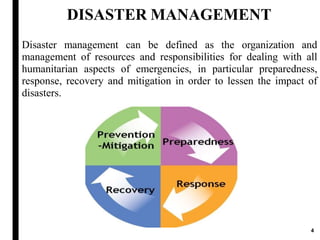
Disaster management can be defined as the organization and
management of resources and responsibilities for dealing with all
humanitarian aspects of emergencies, in particular preparedness,
response, recovery and mitigation in order to lessen the impact of
disasters.
4
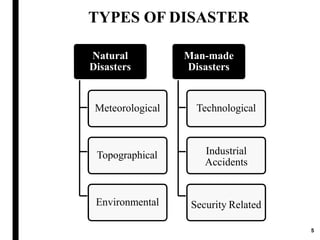
TYPES OF DISASTER
Natural
Disasters
Meteorological
Topographical
Environmental
Man-made
Disasters
Technological
Industrial
Accidents
Security Related
5
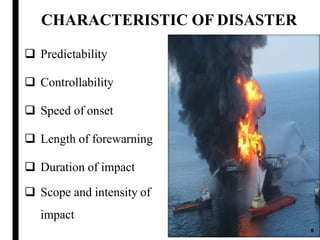
CHARACTERISTIC OF DISASTER
6
 Predictability
 Controllability
 Speed of onset
 Length of forewarning
 Duration of impact
 Scope and intensity of
impact
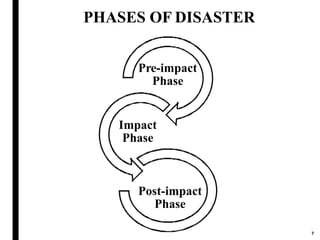
Pre-impact
Phase
Impact
Phase
Post-impact
Phase
7
PHASES OF DISASTER
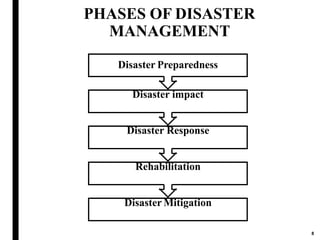
PHASES OF DISASTER
MANAGEMENT
Disaster Preparedness
Disaster impact
Disaster Response
Rehabilitation
Disaster Mitigation
8
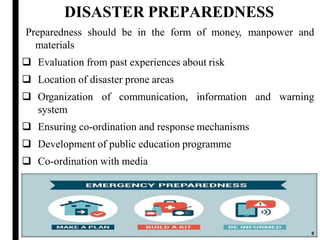
DISASTER PREPAREDNESS
9
Preparedness should be in the form of money, manpower and
materials
 Evaluation from past experiences about risk
 Location of disaster prone areas
and warning Organization of communication, information
system
 Ensuring co-ordination and response mechanisms
 Development of public education programme
 Co-ordination with media
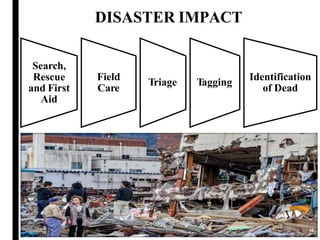
DISASTER IMPACT
Search,
Rescue
and First
Aid
Field
Care
Triage Tagging
Identification
of Dead
10
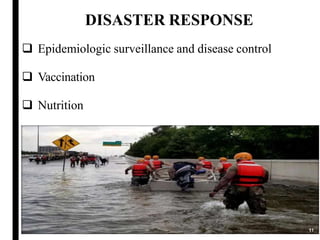
DISASTER RESPONSE
11
 Epidemiologic surveillance and disease control
 Vaccination
 Nutrition
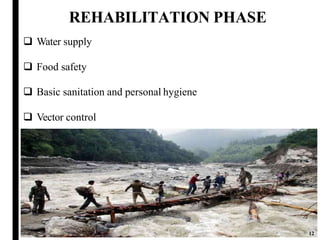
REHABILITATION PHASE
12
 Water supply
 Food safety
 Basic sanitation and personal hygiene
 Vector control
DISASTER MITIGATION
13
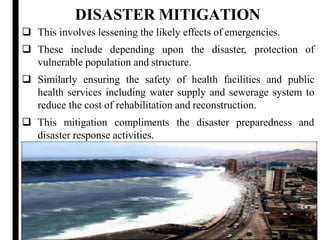
 This involves lessening the likely effects of emergencies.
 These include depending upon the disaster, protection of
vulnerable population and structure.
 Similarly ensuring the safety of health facilities and public
health services including water supply and sewerage system to
reduce the cost of rehabilitation and reconstruction.
 This mitigation compliments the disaster preparedness and
disaster response activities.
ADVANTAGES AND DISADVANTAGES
OF DISASTER MANAGEMENT
14
ADVANTAGES
or avoid
losses
1. Reduce
potential
hazards
2. Assure
appropriate
victims of
prompt
assistance
disaster
achieve rapid and effective
recovery.
3. The corporate knowledge and
experience can be improved
with the help of disaster
management.
DISADVANTAGES
the 1. Lot of cost involved in
from developing and
implementation
and 2. Need of lots of effort for
to doing it properly
and 3. If it is not done properly,
it is not worth to do
disaster management
CASE STUDY
15
KODAGU DISTRICT DISASTER MANAGEMENT PLAN
2017-18
1. PREPAREDNESS MEASURES
 Incident Response System – Kodagu District
Incident Response Team of the Kodagu District is as follows
Official Designation Name
AEE, PRED Madikeri Mr. L. Srikantaiah
Commissioner, CMC, Madikeri Mrs. Subha
AEE, PWD, Virajpet Mr. K.E. Ibrahim
AEE, PWD, Somwarpet Mr. Mahendrakumar
District Emergency Operation Centre (DEOC)
Cont.,
of Logistics,
 Search and Rescue Team in the Kodagu District
 Mechanisms for Checking and Certification
Equipment and Stores
 Media Management/ Information Dissemination
2. RESPONSE AND RELIEF MEASURES
 Response Plan
 Response Flow Chart
 Warning & Alert
 Media Management/ Coordination/ Information Dissémination
 Media Release
 Relief – Kodagu District
3. RECONSTRUCTIONS, REHABILITATION AND
RECOVERY MEASURES
 Relief And Recovery Coordination
ManagementAuthority
By District Disaster
Buildings/ Reconstruction/Repairing Of Lifeline
Buildings
Damages
16
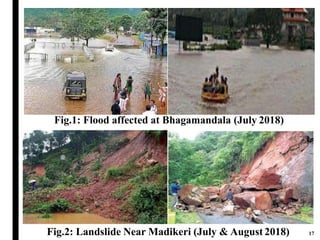
Fig.1: Flood affected at Bhagamandala (July 2018)
Fig.2: Landslide Near Madikeri (July & August 2018) 17
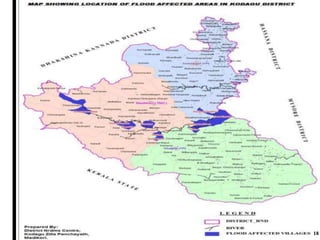
18
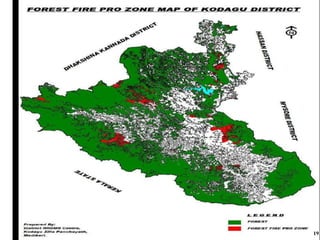
19
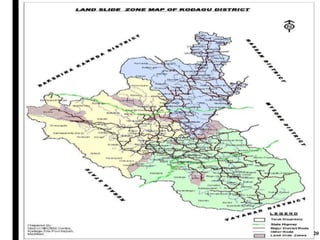
20
SUMMARY
21
 Disaster management is more than just response and relief.
 It is a systematic process i.e., is based on the key management
principles of planning, organizing and leading which includes
coordinating and controlling.
 This aims to reduce the negative impact or consequences of
adverse events i.e., disasters cannot always be prevented, but
the adverse effect can be minimized.
REFERENCES
21
 Disaster Management Plan 2017-18, Kodagu District,
https://ndma.gov.in/en/Karnataka-sdma-office
 Raheem A. Usman., F. B. Olorunfemi., G. P. Awotayo., A. M.
Tunde., B. A. Usman., “Disaster Risk Management”
Environmental Change and Sustainability, edited by Steven
Silvern and Stephan Young
 Carter, W. N., Disaster Management, A Disaster Manager’s
Handbook(1992), Asia Development House, Manila.
 http://nidm.gov.in
Thank you
23

Disaster Management Technical Seminar

  • 1.
  • 2.
    CONTENTS 2  INTRODUCTION  DISASTERMANAGEMENT  TYPES OF DISASTER  CHARACTERISTIC OF DISASTER  PHASES OF DISASTER  PHASES OF DISASTER MANAGEMENT  ADVANTAGES AND DISADVANTAGES OF DISASTER MANAGEMENT  CASE STUDY  SUMMARY
  • 3.
    INTRODUCTION 3  A disastercan be defined as an occurrence either nature or manmade that causes human suffering and creates human needs that victims cannot reduce suffering without assistance.  The reasons for this are varied including:  an increasing population pressures in urban areas  an increase in the extent of encroachment into lands, e.g., river beds or drainage courses, low lying areas etc.  poor or ignored zoning laws and policies  lack of proper risk management (insurance)
  • 4.
    DISASTER MANAGEMENT Disaster managementcan be defined as the organization and management of resources and responsibilities for dealing with all humanitarian aspects of emergencies, in particular preparedness, response, recovery and mitigation in order to lessen the impact of disasters. 4
  • 5.
  • 6.
    CHARACTERISTIC OF DISASTER 6 Predictability  Controllability  Speed of onset  Length of forewarning  Duration of impact  Scope and intensity of impact
  • 7.
  • 8.
    PHASES OF DISASTER MANAGEMENT DisasterPreparedness Disaster impact Disaster Response Rehabilitation Disaster Mitigation 8
  • 9.
    DISASTER PREPAREDNESS 9 Preparedness shouldbe in the form of money, manpower and materials  Evaluation from past experiences about risk  Location of disaster prone areas and warning Organization of communication, information system  Ensuring co-ordination and response mechanisms  Development of public education programme  Co-ordination with media
  • 10.
  • 11.
    DISASTER RESPONSE 11  Epidemiologicsurveillance and disease control  Vaccination  Nutrition
  • 12.
    REHABILITATION PHASE 12  Watersupply  Food safety  Basic sanitation and personal hygiene  Vector control
  • 13.
    DISASTER MITIGATION 13  Thisinvolves lessening the likely effects of emergencies.  These include depending upon the disaster, protection of vulnerable population and structure.  Similarly ensuring the safety of health facilities and public health services including water supply and sewerage system to reduce the cost of rehabilitation and reconstruction.  This mitigation compliments the disaster preparedness and disaster response activities.
  • 14.
    ADVANTAGES AND DISADVANTAGES OFDISASTER MANAGEMENT 14 ADVANTAGES or avoid losses 1. Reduce potential hazards 2. Assure appropriate victims of prompt assistance disaster achieve rapid and effective recovery. 3. The corporate knowledge and experience can be improved with the help of disaster management. DISADVANTAGES the 1. Lot of cost involved in from developing and implementation and 2. Need of lots of effort for to doing it properly and 3. If it is not done properly, it is not worth to do disaster management
  • 15.
    CASE STUDY 15 KODAGU DISTRICTDISASTER MANAGEMENT PLAN 2017-18 1. PREPAREDNESS MEASURES  Incident Response System – Kodagu District Incident Response Team of the Kodagu District is as follows Official Designation Name AEE, PRED Madikeri Mr. L. Srikantaiah Commissioner, CMC, Madikeri Mrs. Subha AEE, PWD, Virajpet Mr. K.E. Ibrahim AEE, PWD, Somwarpet Mr. Mahendrakumar District Emergency Operation Centre (DEOC)
  • 16.
    Cont., of Logistics,  Searchand Rescue Team in the Kodagu District  Mechanisms for Checking and Certification Equipment and Stores  Media Management/ Information Dissemination 2. RESPONSE AND RELIEF MEASURES  Response Plan  Response Flow Chart  Warning & Alert  Media Management/ Coordination/ Information Dissémination  Media Release  Relief – Kodagu District 3. RECONSTRUCTIONS, REHABILITATION AND RECOVERY MEASURES  Relief And Recovery Coordination ManagementAuthority By District Disaster Buildings/ Reconstruction/Repairing Of Lifeline Buildings Damages 16
  • 17.
    Fig.1: Flood affectedat Bhagamandala (July 2018) Fig.2: Landslide Near Madikeri (July & August 2018) 17
  • 18.
  • 19.
  • 20.
  • 21.
    SUMMARY 21  Disaster managementis more than just response and relief.  It is a systematic process i.e., is based on the key management principles of planning, organizing and leading which includes coordinating and controlling.  This aims to reduce the negative impact or consequences of adverse events i.e., disasters cannot always be prevented, but the adverse effect can be minimized.
  • 22.
    REFERENCES 21  Disaster ManagementPlan 2017-18, Kodagu District, https://ndma.gov.in/en/Karnataka-sdma-office  Raheem A. Usman., F. B. Olorunfemi., G. P. Awotayo., A. M. Tunde., B. A. Usman., “Disaster Risk Management” Environmental Change and Sustainability, edited by Steven Silvern and Stephan Young  Carter, W. N., Disaster Management, A Disaster Manager’s Handbook(1992), Asia Development House, Manila.  http://nidm.gov.in
  • 23.