Faisal Ahmed
B.H.M.S
5th Semester
Introduction
 Diphtheria is a contagious bacterial infection that mainly affects
the nose and throat. Less commonly, it can also affect the skin.
The symptoms of diphtheria include.
 high temperature.
 sore throat, and breathing difficulties.
 Children are mostly effected by diphtheria.
 An estimated 5-10% Peoples are effected From diphtheria.
History
 Diphtheria was first described by Hippocrates in the fifth
century BC, and throughout history diphtheria has been a
leading cause of death, primarily among children.
 The diphtheria bacterium was first identified in the 1880s by
F. Loeffler, and the antitoxin against diphtheria was later
developed in the 1890s.
Definition
 Diphtheria is an infection caused by the bacterium
Corynebacterium diphtheriae . A form of diphtheria that
involves the skin, eyes, or genitals also exists. Complications
may include myocarditis, inflammation of nerves,
kidney problems, and bleeding problems due to low levels of
platelets.
Causes
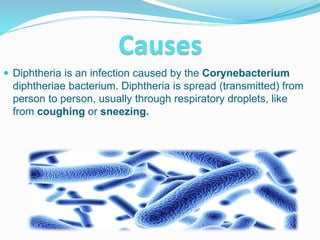
 Diphtheria is an infection caused by the Corynebacterium
diphtheriae bacterium. Diphtheria is spread (transmitted) from
person to person, usually through respiratory droplets, like
from coughing or sneezing.
Signs & Symptoms
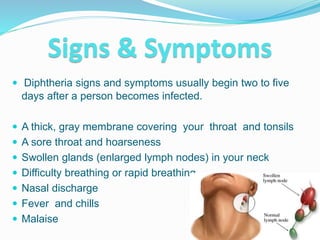
 Diphtheria signs and symptoms usually begin two to five
days after a person becomes infected.
 A thick, gray membrane covering your throat and tonsils
 A sore throat and hoarseness
 Swollen glands (enlarged lymph nodes) in your neck
 Difficulty breathing or rapid breathing
 Nasal discharge
 Fever and chills
 Malaise
Transmission
 Person-to-Person Transmission occur through oral or respiratory
droplets , close Physical contact .
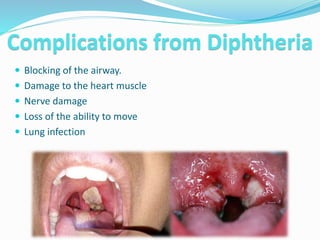
Complications from Diphtheria
 Blocking of the airway.
 Damage to the heart muscle
 Nerve damage
 Loss of the ability to move
 Lung infection
Heart damage
 The diphtheria toxin may spread through blood
stream & damage other tissues in your body ,
such as heart muscle , causing inflammation of
( Mayocarditis ).
 Its may be slight, showing up as minor
abnormalities on an ECG ,or severe, leading
sudden death .
Nerve damage
 The toxin can also cause nerve damage. Typical targets are
Nerves to the throat, where poor nerve conduction may
cause difficulty swallowing. If diphtheria toxin damages
the nerves that help control muscles used in breathing, these
muscles may become paralyzed.
Renal
 The Diphtheria toxin may damage the kidneys,
affecting their ability to filter wastes from the
blood.
 This leads to renal failure.
Breathing Problems
 Diphtheria-causing bacteria may produce a toxin. This toxin damages
tissue in the immediate area of infection — usually, the nose and
throat. At that site, the infection produces a tough, gray-colored
membrane composed of dead cells, bacteria and other substances.
 This membrane can obstruct breathing.
Skin (Cutaneous Diphtheria)
 Diphtheria can affect the skin, causing the typical pain,
redness and swelling associated with other bacterial skin
infections. Ulcers covered by a gray membrane also may
develop in cutaneous diphtheria.
Tests & Diagnosis
 Diphtheria can be dignosed usually by Proper clinical
examination , throat culture from the infected area and blood
tests .
- Tests may be include .
 Gram stain or Throat culture to identify corynebacterium
diphtheria .
 ECG .
Prevantion
 Diphtheria is easily prevanted
with the use of a safe & effective
vaccine.
 Most people receive their first
vaccination for the disease as
childern . This is the DTP vaccine
(Diphtheria-tetanus-pretussis)
Treatment
 Antitoxin :
After Doctors conform diphtheria , the infecte child receives an
antitoxin.The antitoxin, injected into a vine or muscle , neutralizes the
diphtheria toxin already circulating in the body .
 Antibiotics :
Diphtheria is also treated with antibiotics , such as penicilline or
erythromycin.
Antibiotic help kill bacteria in the body , clearing up infection .
Homeopathic Remedies For
Diphtheria
 Mercurius cyanatus
 Diphtherinum
 Kali bichromicum
 Kali muriaticum
 Kali permanganicum
 Apis mellifica
 Lachesis
 Lycopodium
 Bromine
 Muriatic acid
 Nitric acid
 Phytolacca
 Arsenicum
Diphtheria

Diphtheria

  • 2.
  • 4.
    Introduction  Diphtheria isa contagious bacterial infection that mainly affects the nose and throat. Less commonly, it can also affect the skin. The symptoms of diphtheria include.  high temperature.  sore throat, and breathing difficulties.  Children are mostly effected by diphtheria.  An estimated 5-10% Peoples are effected From diphtheria.
  • 5.
    History  Diphtheria wasfirst described by Hippocrates in the fifth century BC, and throughout history diphtheria has been a leading cause of death, primarily among children.  The diphtheria bacterium was first identified in the 1880s by F. Loeffler, and the antitoxin against diphtheria was later developed in the 1890s.
  • 6.
    Definition  Diphtheria isan infection caused by the bacterium Corynebacterium diphtheriae . A form of diphtheria that involves the skin, eyes, or genitals also exists. Complications may include myocarditis, inflammation of nerves, kidney problems, and bleeding problems due to low levels of platelets.
  • 7.
    Causes  Diphtheria isan infection caused by the Corynebacterium diphtheriae bacterium. Diphtheria is spread (transmitted) from person to person, usually through respiratory droplets, like from coughing or sneezing.
  • 8.
    Signs & Symptoms Diphtheria signs and symptoms usually begin two to five days after a person becomes infected.  A thick, gray membrane covering your throat and tonsils  A sore throat and hoarseness  Swollen glands (enlarged lymph nodes) in your neck  Difficulty breathing or rapid breathing  Nasal discharge  Fever and chills  Malaise
  • 9.
    Transmission  Person-to-Person Transmissionoccur through oral or respiratory droplets , close Physical contact .
  • 10.
    Complications from Diphtheria Blocking of the airway.  Damage to the heart muscle  Nerve damage  Loss of the ability to move  Lung infection
  • 11.
    Heart damage  Thediphtheria toxin may spread through blood stream & damage other tissues in your body , such as heart muscle , causing inflammation of ( Mayocarditis ).  Its may be slight, showing up as minor abnormalities on an ECG ,or severe, leading sudden death .
  • 12.
    Nerve damage  Thetoxin can also cause nerve damage. Typical targets are Nerves to the throat, where poor nerve conduction may cause difficulty swallowing. If diphtheria toxin damages the nerves that help control muscles used in breathing, these muscles may become paralyzed.
  • 13.
    Renal  The Diphtheriatoxin may damage the kidneys, affecting their ability to filter wastes from the blood.  This leads to renal failure.
  • 14.
    Breathing Problems  Diphtheria-causingbacteria may produce a toxin. This toxin damages tissue in the immediate area of infection — usually, the nose and throat. At that site, the infection produces a tough, gray-colored membrane composed of dead cells, bacteria and other substances.  This membrane can obstruct breathing.
  • 15.
    Skin (Cutaneous Diphtheria) Diphtheria can affect the skin, causing the typical pain, redness and swelling associated with other bacterial skin infections. Ulcers covered by a gray membrane also may develop in cutaneous diphtheria.
  • 16.
    Tests & Diagnosis Diphtheria can be dignosed usually by Proper clinical examination , throat culture from the infected area and blood tests . - Tests may be include .  Gram stain or Throat culture to identify corynebacterium diphtheria .  ECG .
  • 17.
    Prevantion  Diphtheria iseasily prevanted with the use of a safe & effective vaccine.  Most people receive their first vaccination for the disease as childern . This is the DTP vaccine (Diphtheria-tetanus-pretussis)
  • 18.
    Treatment  Antitoxin : AfterDoctors conform diphtheria , the infecte child receives an antitoxin.The antitoxin, injected into a vine or muscle , neutralizes the diphtheria toxin already circulating in the body .  Antibiotics : Diphtheria is also treated with antibiotics , such as penicilline or erythromycin. Antibiotic help kill bacteria in the body , clearing up infection .
  • 19.
    Homeopathic Remedies For Diphtheria Mercurius cyanatus  Diphtherinum  Kali bichromicum  Kali muriaticum  Kali permanganicum  Apis mellifica  Lachesis  Lycopodium  Bromine  Muriatic acid  Nitric acid  Phytolacca  Arsenicum