Introduction to the DigitalTurn
course
Mart Laanpere, Ph.D.
Senior researcher at the Centre for
Educational Technology, Tallinn University
Call me Mart
• I am third-generation mathematics teacher
• Principal of a rural K-12 school 1992 – 1996
• Researcher in the Centre for Educational
Technology, Tallinn University since 2003
• Ph.D. in educational science & technology
• Research interests: digital competences,
pedagogy-driven design of online learning
environments, digital textbooks, online
assessment, smart schoolhouse, learning
analytics, didactics of informatics
Practicalities
• Agenda and other files: GoogleDrive, Sync
• Apps: GDrive, EverNote, QRreader, Storyo…
• Communication: WhatsApp, Facebook, Twitter?
• Sharing: GoogleDocs, Facebook, WhatsApp
• Personal app collection: EdShelf.com
• Contacts: Mart & James
• Documenting and reflecting: TodaysMeet.com
• Learning together, helping each other
• Certificates, EuroPass, badges
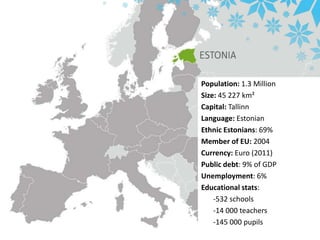
Population: 1.3 Million
Size: 45 227 km²
Capital: Tallinn
Language: Estonian
Ethnic Estonians: 69%
Member of EU: 2004
Currency: Euro (2011)
Public debt: 9% of GDP
Unemployment: 6%
Educational stats:
-532 schools
-14 000 teachers
-145 000 pupils
INFORMATION SOCIETY INDICATORS
• Over 80% of families have at home computer and
broadband connection, independent to their SES
• 95% of income tax declarations submitted online,
99% bank transfers made online
• Online elections since 2005, over 30% e-voted in
2015 parliamentary elections
• iBanking, eHealth, ePolice, ePrescription, eSchool
• eResidency: https://e-estonia.com/e-residents
• Internet as a human right, free public wifi (500+
access points provided by municipalities)
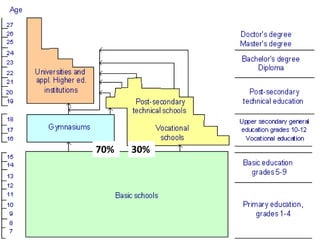
30%70%
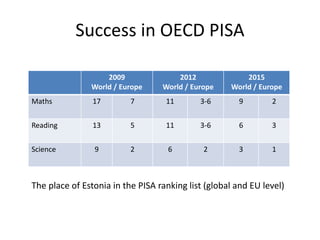
Success in OECD PISA
2009
World / Europe
2012
World / Europe
2015
World / Europe
Maths 17 7 11 3-6 9 2
Reading 13 5 11 3-6 6 3
Science 9 2 6 2 3 1
The place of Estonia in the PISA ranking list (global and EU level)
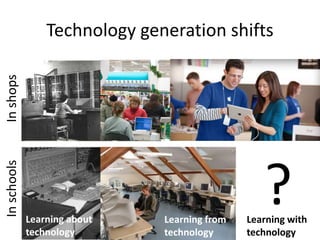
Technology generation shifts
InshopsInschools
?Learning about
technology
Learning from
technology
Learning with
technology
Strategy for Lifelong Learning 2020: action
plan for Digital Turn in Estonian schools
• Digital turn in formal education system: digital culture
into curricula, bottom-up innovation, sharing good
practice, educational technologists in schools
• Digital learning resources: digital textbooks, OER,
quality management, recommender systems
• Digital infrastructure for learning : 1:1 computing,
BYOD, interoperable ecosystem of services, mobile
clients, school-wide digital turn (first in 20 pilot schools,
then in others)
• Digital competences of teachers and students:
competence models, self-assessment tools, mapping
with course offerings and accreditation procedures,
updating initial teacher education curricula
https://www.hm.ee/sites/default/files/estonian_lifelong_strategy.pdf
Experiences from Samsung Digital Turn
project 2014-2015
• Whole-school digital turn: focus on change
management and pedagogical innovation (Fullan)
• Every school found their own focus (20 schools)
– Learners as creators: Kahoot, Geocaching, Digital
storytelling, learner-created textbooks
– Systemic and sustainable change: formative
assessment with e-portfolios, 3D-modeling
– Leadership: digital language immersion, regional lead
• Digital maturity self-assessment tool, peer-
assessment between schools Samsungdigipoore.ee
Quiz
• Go to http://Kahoot.it
• Enter the code you see on the screen and your
name
• Respond fast 
Helsinki University: future classroom
Digital Turn intro 2017

Digital Turn intro 2017

  • 1.
    Introduction to theDigitalTurn course Mart Laanpere, Ph.D. Senior researcher at the Centre for Educational Technology, Tallinn University
  • 2.
    Call me Mart •I am third-generation mathematics teacher • Principal of a rural K-12 school 1992 – 1996 • Researcher in the Centre for Educational Technology, Tallinn University since 2003 • Ph.D. in educational science & technology • Research interests: digital competences, pedagogy-driven design of online learning environments, digital textbooks, online assessment, smart schoolhouse, learning analytics, didactics of informatics
  • 3.
    Practicalities • Agenda andother files: GoogleDrive, Sync • Apps: GDrive, EverNote, QRreader, Storyo… • Communication: WhatsApp, Facebook, Twitter? • Sharing: GoogleDocs, Facebook, WhatsApp • Personal app collection: EdShelf.com • Contacts: Mart & James • Documenting and reflecting: TodaysMeet.com • Learning together, helping each other • Certificates, EuroPass, badges
  • 4.
    Population: 1.3 Million Size:45 227 km² Capital: Tallinn Language: Estonian Ethnic Estonians: 69% Member of EU: 2004 Currency: Euro (2011) Public debt: 9% of GDP Unemployment: 6% Educational stats: -532 schools -14 000 teachers -145 000 pupils
  • 5.
    INFORMATION SOCIETY INDICATORS •Over 80% of families have at home computer and broadband connection, independent to their SES • 95% of income tax declarations submitted online, 99% bank transfers made online • Online elections since 2005, over 30% e-voted in 2015 parliamentary elections • iBanking, eHealth, ePolice, ePrescription, eSchool • eResidency: https://e-estonia.com/e-residents • Internet as a human right, free public wifi (500+ access points provided by municipalities)
  • 6.
  • 7.
    Success in OECDPISA 2009 World / Europe 2012 World / Europe 2015 World / Europe Maths 17 7 11 3-6 9 2 Reading 13 5 11 3-6 6 3 Science 9 2 6 2 3 1 The place of Estonia in the PISA ranking list (global and EU level)
  • 8.
    Technology generation shifts InshopsInschools ?Learningabout technology Learning from technology Learning with technology
  • 9.
    Strategy for LifelongLearning 2020: action plan for Digital Turn in Estonian schools • Digital turn in formal education system: digital culture into curricula, bottom-up innovation, sharing good practice, educational technologists in schools • Digital learning resources: digital textbooks, OER, quality management, recommender systems • Digital infrastructure for learning : 1:1 computing, BYOD, interoperable ecosystem of services, mobile clients, school-wide digital turn (first in 20 pilot schools, then in others) • Digital competences of teachers and students: competence models, self-assessment tools, mapping with course offerings and accreditation procedures, updating initial teacher education curricula https://www.hm.ee/sites/default/files/estonian_lifelong_strategy.pdf
  • 10.
    Experiences from SamsungDigital Turn project 2014-2015 • Whole-school digital turn: focus on change management and pedagogical innovation (Fullan) • Every school found their own focus (20 schools) – Learners as creators: Kahoot, Geocaching, Digital storytelling, learner-created textbooks – Systemic and sustainable change: formative assessment with e-portfolios, 3D-modeling – Leadership: digital language immersion, regional lead • Digital maturity self-assessment tool, peer- assessment between schools Samsungdigipoore.ee
  • 11.
    Quiz • Go tohttp://Kahoot.it • Enter the code you see on the screen and your name • Respond fast 
  • 12.