

Primary and Secondary
 e-Learning: Examining the
Process of Achieving Maturity


   Michael Barbour, Wayne State University
Research Purpose
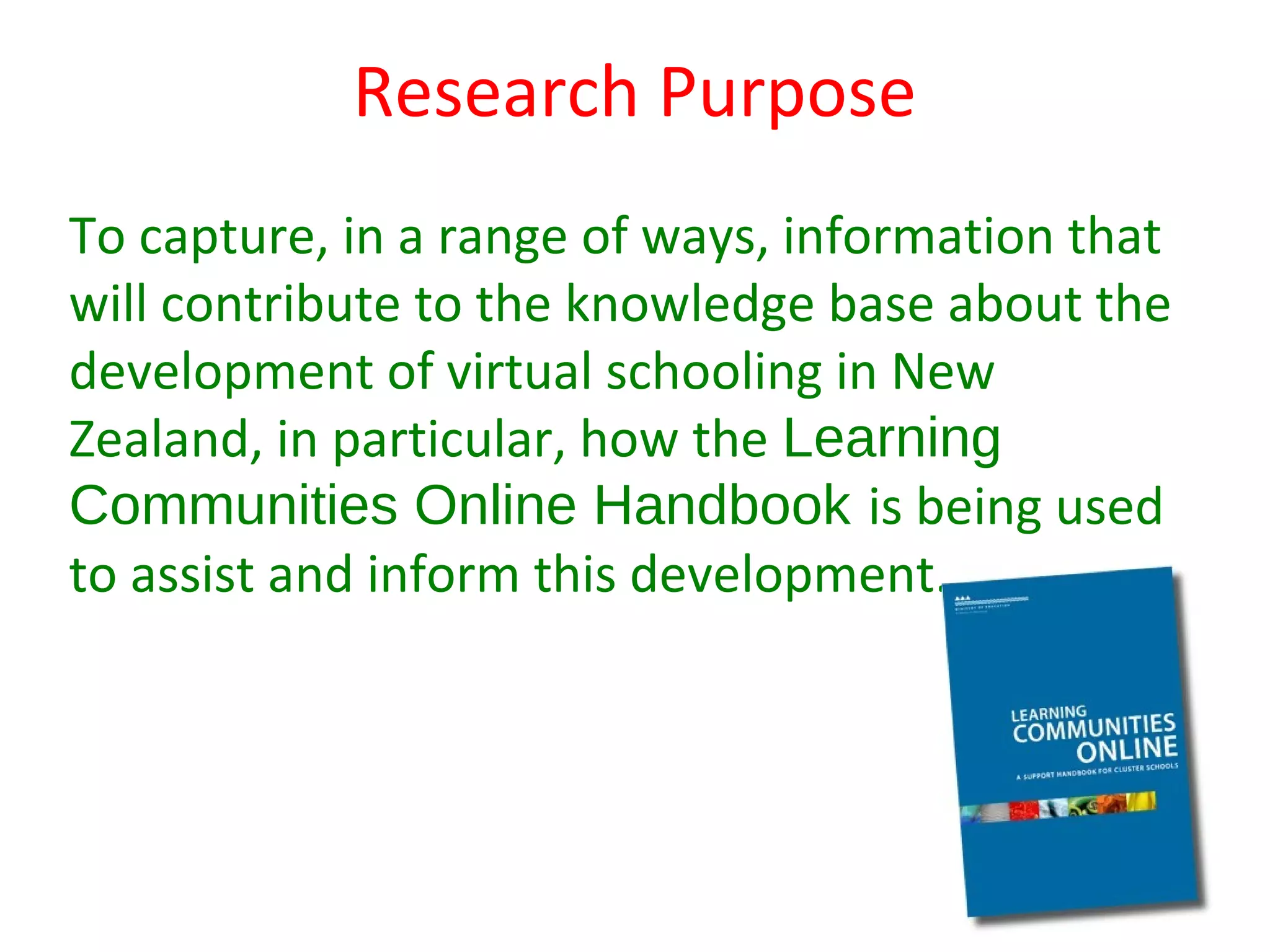
To capture, in a range of ways, information that
will contribute to the knowledge base about the
development of virtual schooling in New
Zealand, in particular, how the Learning
Communities Online Handbook is being used
to assist and inform this development.
Research Questions
1.(a) What common barriers do e-learning
  clusters face in their development towards
  maturity and sustainability?
2.(b) How have mature and sustainable clusters
  overcome those barriers?

2.What are some examples of how networked
  schools are emerging in the New Zealand
  context?
Research Questions
1.(a) What common barriers do e-learning
  clusters face in their development towards
  maturity and sustainability?
2.(b) How have mature and sustainable clusters
  overcome those barriers?

2.What are some examples of how networked
  schools are emerging in the New Zealand
  context?
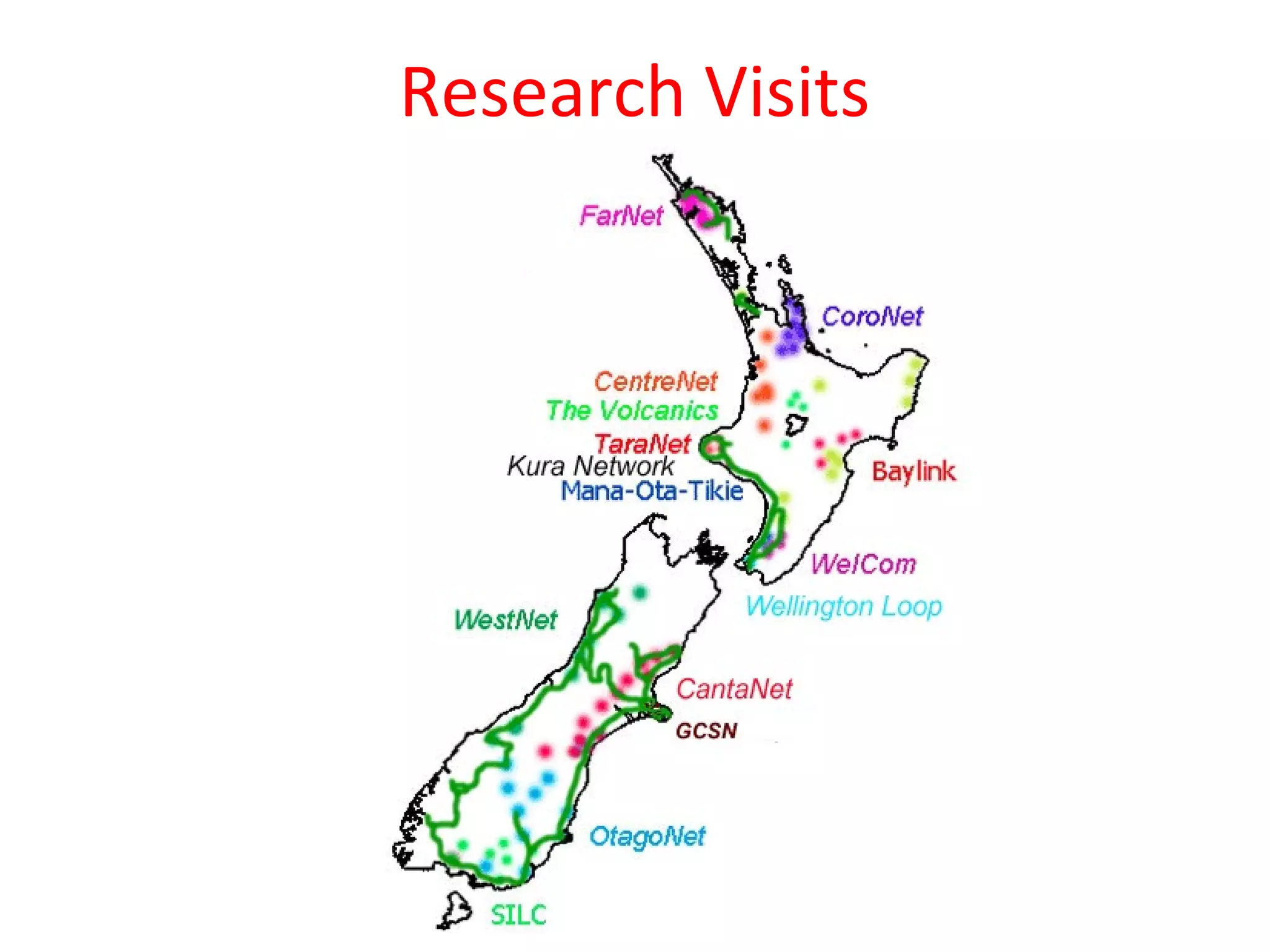
Research Visits
• 9 current or emerging clusters

• 3 VLN-related projects

• 13 schools

• 1 health school

• Te Kura

• 9 tertiary institutions
Research Visits
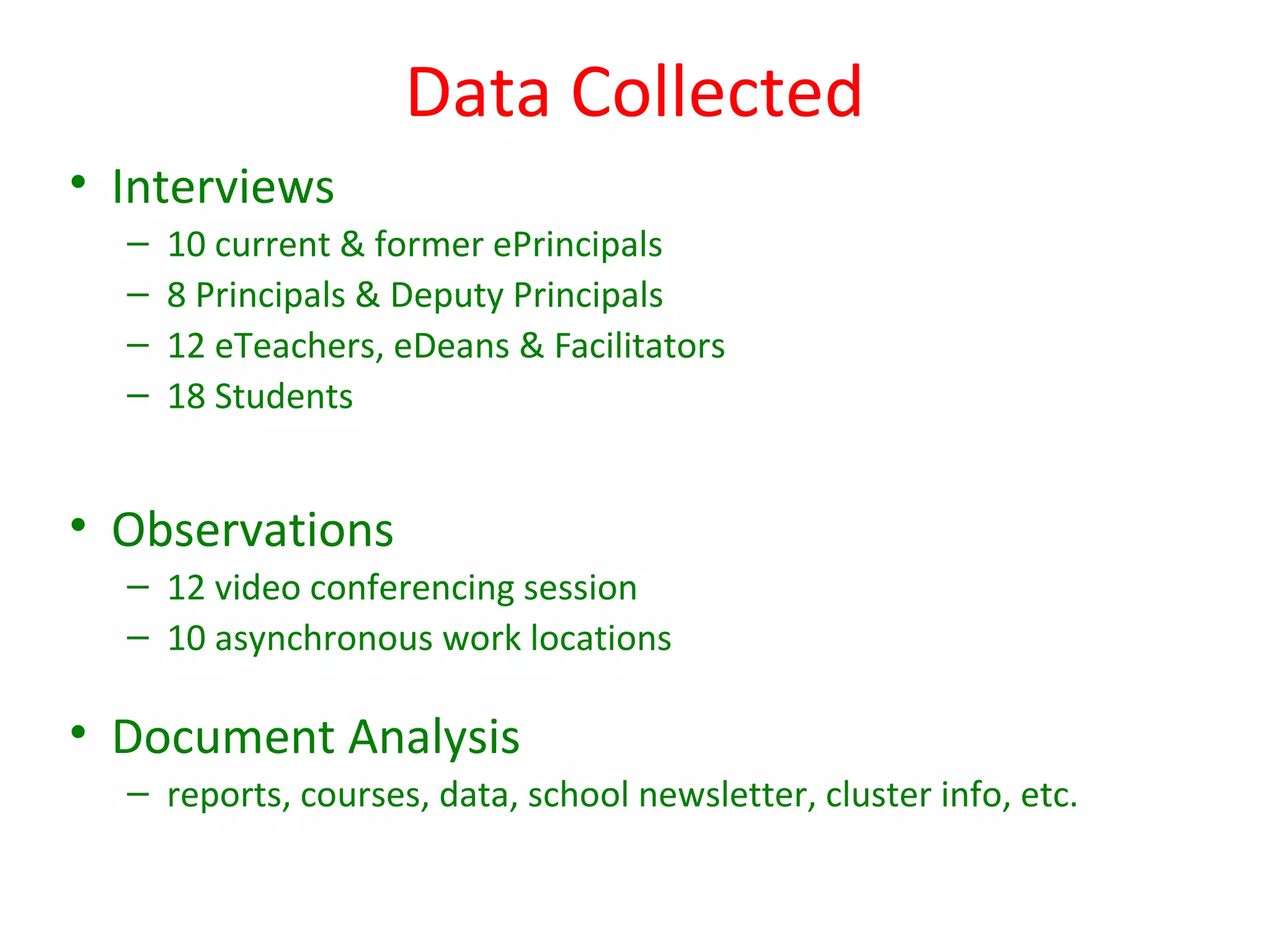
Data Collected
• Interviews
  –   10 current & former ePrincipals
  –   8 Principals & Deputy Principals
  –   12 eTeachers, eDeans & Facilitators
  –   18 Students


• Observations
  – 12 video conferencing session
  – 10 asynchronous work locations

• Document Analysis
  – reports, courses, data, school newsletter, cluster info, etc.
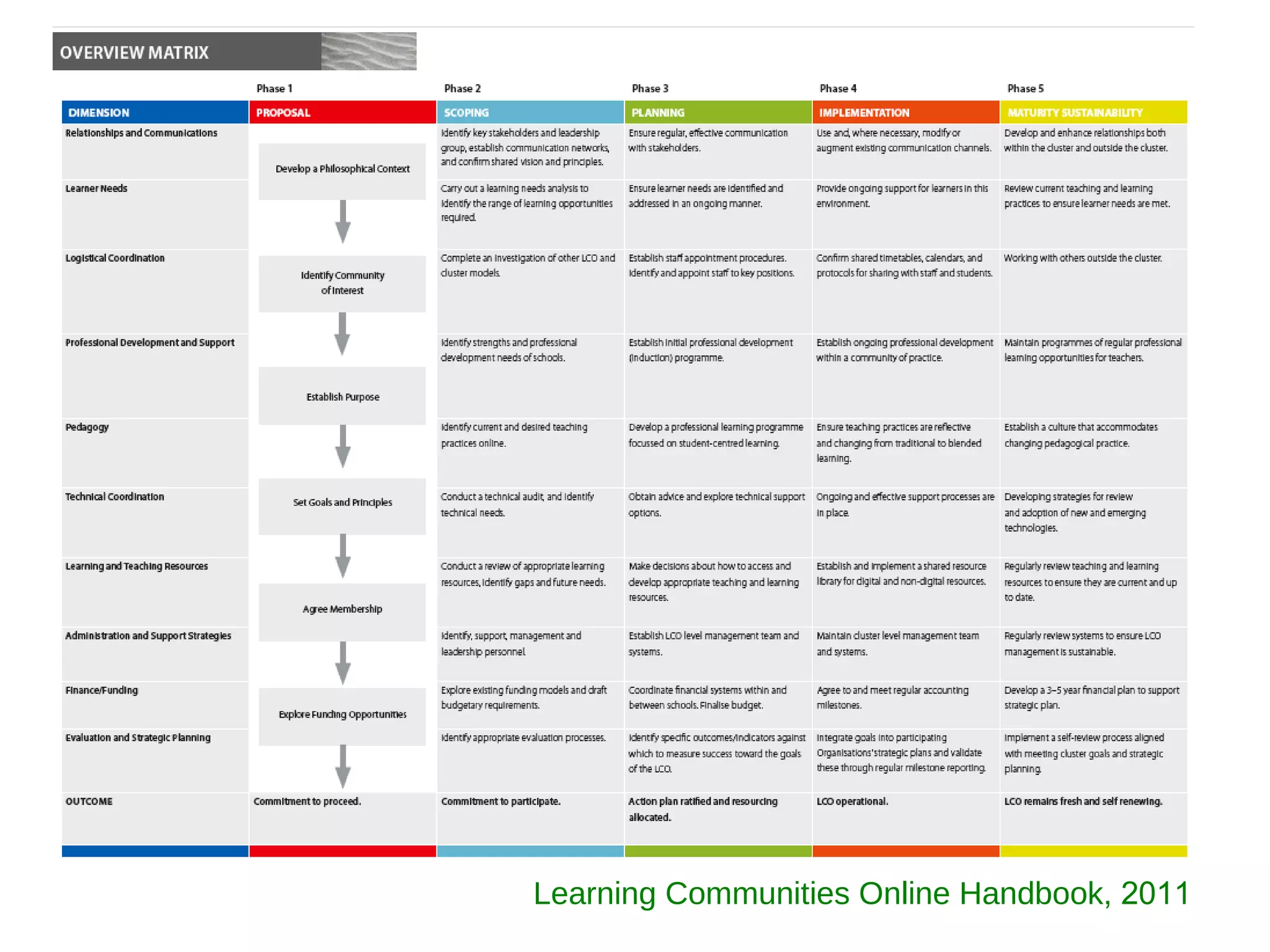
Learning Communities Online Handbook, 2011
Common Obstacles
• Lack of vision

• Funding, resources
  and the role of the
  ePrincipal

• Lack of inter-cluster
  and intra-cluster co-
  operation
Lack of Vision
• process of creating a vision
  for an e-learning initiative is
  critical and was clearly
  evident in this data
• clusters with greatest
  support were those able to
  articulate a vision that went
  beyond the provision of
  distance education courses
  & opportunities that the
  tools could provide
• sustainable vs. mature
Funding, Resources & Role of the ePrincipal
 • Resources
 • leadership
 • teachers (both to teach
   the courses and to support
   students at the local level)
 • professional development
 • asynchronous (e.g., LMS) &
   synchronous (e.g.,
   videoconferencing, bridge
   & etc.) tools
Funding, Resources & Role of the ePrincipal
 • Funding
 • participating schools
    – put in a teacher, get access to
      enrolments
    – contribute money or % of a
      teacher for cluster leadership


 • no formal mechanism for
   heavy users
 • challenges with funding
   when original national
   programme ends
Funding, Resources & Role of the ePrincipal
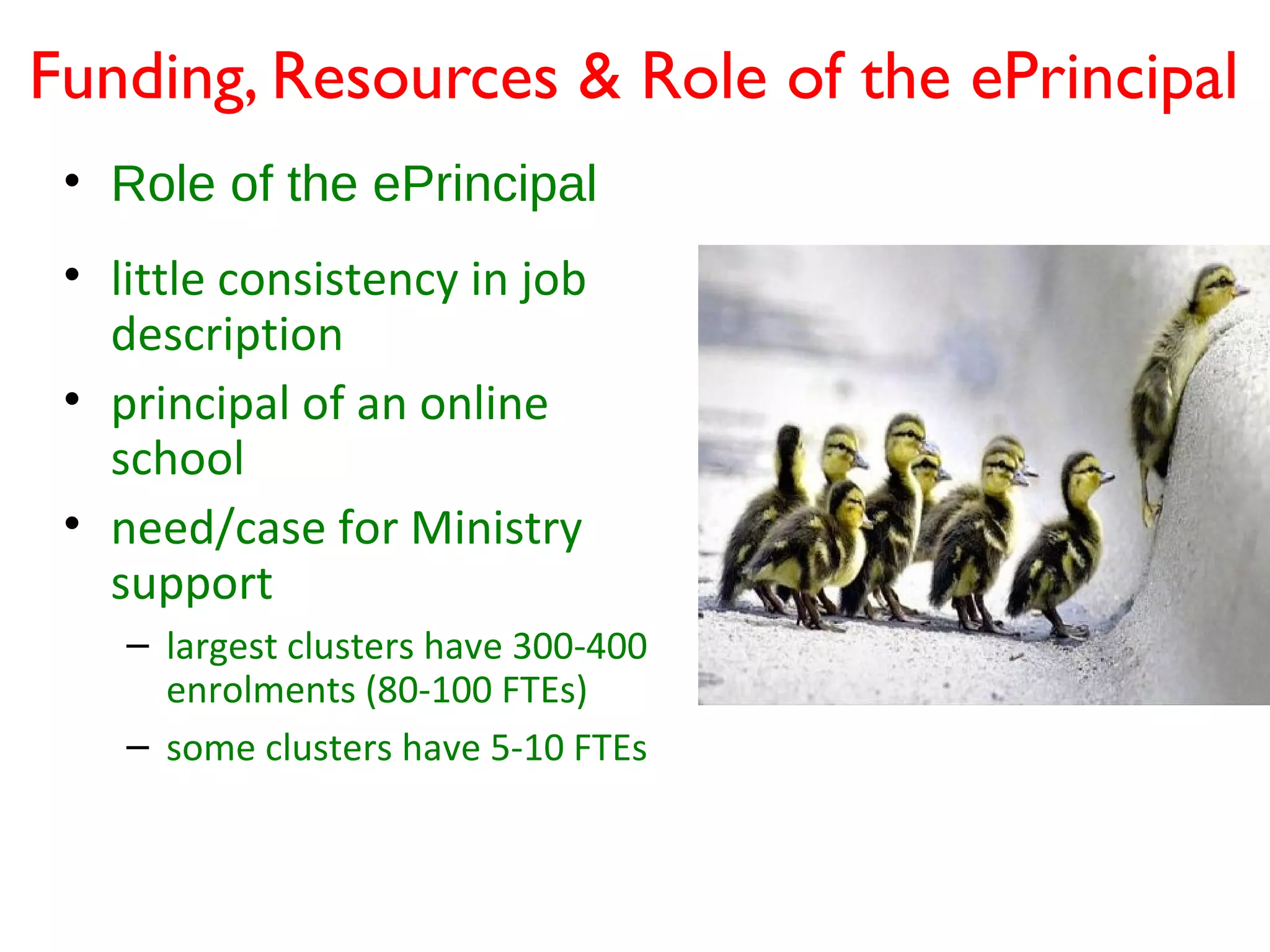
 • Role of the ePrincipal
 • little consistency in job
   description
 • principal of an online
   school
 • need/case for Ministry
   support
    – largest clusters have 300-400
      enrolments (80-100 FTEs)
    – some clusters have 5-10 FTEs
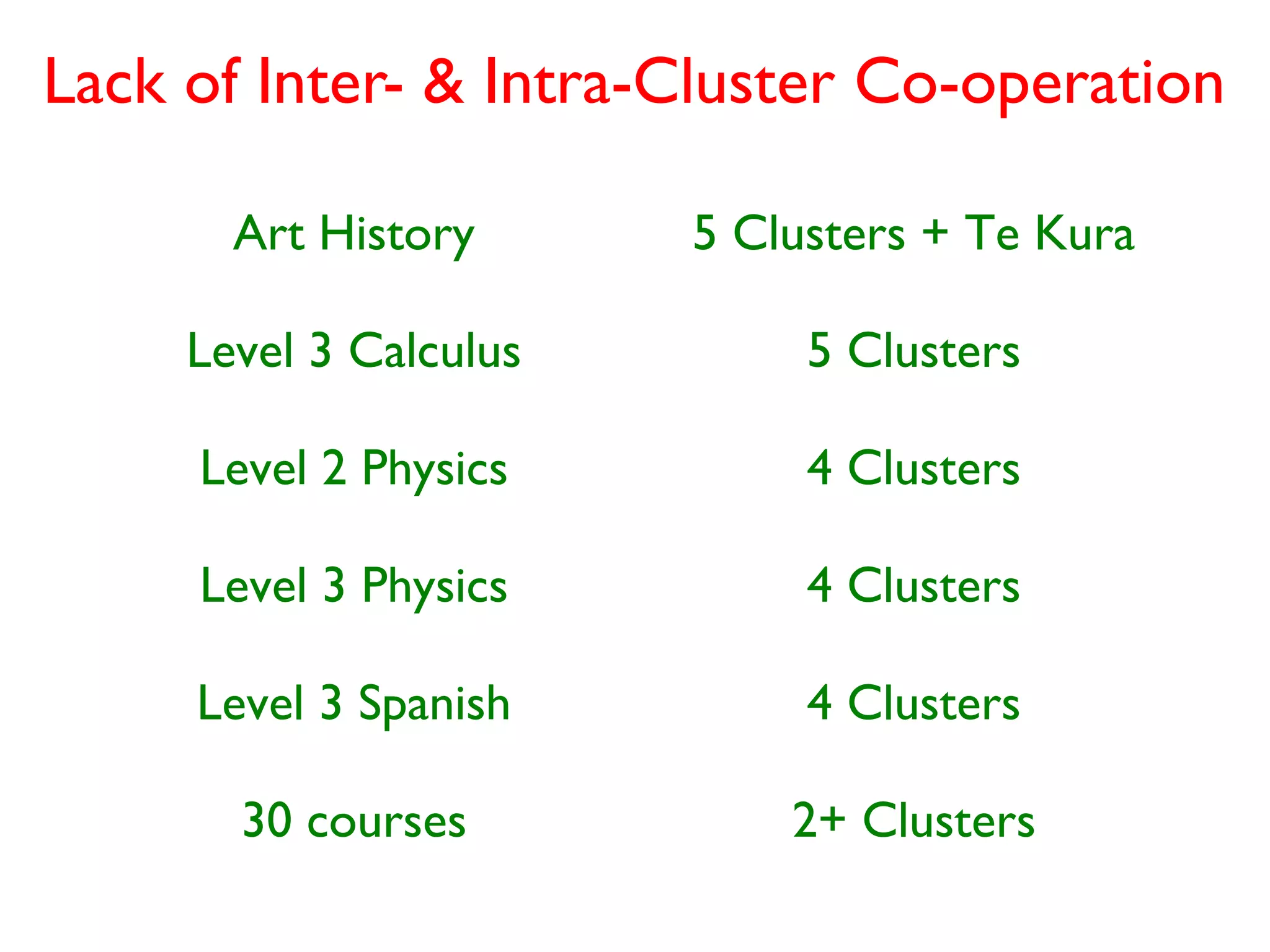
Lack of Inter- & Intra-Cluster Co-operation

       Art History      5 Clusters + Te Kura

     Level 3 Calculus        5 Clusters

     Level 2 Physics         4 Clusters

     Level 3 Physics         4 Clusters

     Level 3 Spanish         4 Clusters

       30 courses           2+ Clusters
Lack of Inter- & Intra-Cluster Co-operation
• Do the eTeachers of these
  same courses communicate
  with each other?
• Have each of the eTeachers
  designed their own
  asynchronous course
  content that is housed in
  the learning management
  system?
• Do each of the eTeachers of
  common courses have
  access to each other’s
  course materials?
Lack of Inter- & Intra-Cluster Co-operation
• Do the five level three calculus          •   Is it possible for a student to register
  eTeachers interact with the level three       for level one mathematics with SILC
  mathematics eTeacher or the four              this year and become comfortable with
  level three statistics and modeling           the way in which their teacher uses
  eTeachers?                                    their video conferencing classes and
                                                with the resources and material
• Do these ten level three maths                provided in their LMS only to have to
  eTeachers interact with the two               become familiar with a completely
  eTeachers responsible for level two           different method of synchronous
  mathematics and/or the one eTeacher           instruction and asynchronous material
  responsible for level one mathematics?        and resources that appear completely
                                                foreign to them next year when that
                                                student enrolls in level two
• Outside of the senior secondary level,        mathematics offered by OtagoNet?
  have the two Year 7-8 Te Reo Maori
  eTeachers ever interacted with the
  two level one Te Reo Maori eTeachers
  or the single level three Te Reo
  eTeacher?
Moving Forward
• E-Learning Clusters
  – coordinate activities between
    clusters
  – examine the role of VLN
    leadership & whether there is
    geographic or like-minded
    rationalisation that can occur


• Ministry of Education
  • continue services
  • create content repository
  • fund regional leadership
Future Research
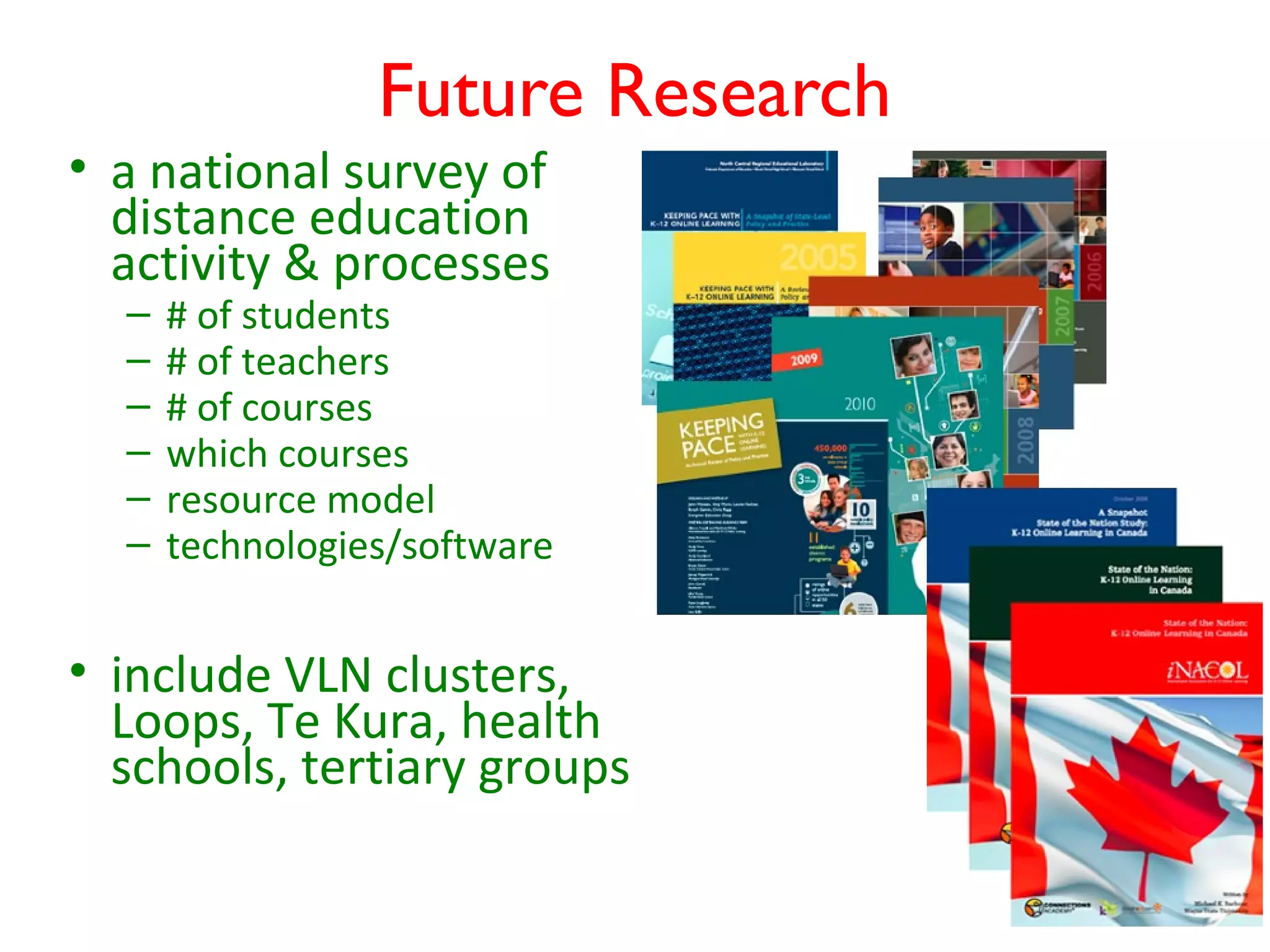
• a national survey of
  distance education
  activity & processes
  –   # of students
  –   # of teachers
  –   # of courses
  –   which courses
  –   resource model
  –   technologies/software


• include VLN clusters,
  Loops, Te Kura, health
  schools, tertiary groups
Your
Questions
  And
Comments
VLN-C AGM 2012 - Primary and Secondary E-Learning: Examining the Process of Achieving Maturity

VLN-C AGM 2012 - Primary and Secondary E-Learning: Examining the Process of Achieving Maturity

  • 1.
    Primary and Secondary e-Learning: Examining the Process of Achieving Maturity Michael Barbour, Wayne State University
  • 3.
    Research Purpose To capture,in a range of ways, information that will contribute to the knowledge base about the development of virtual schooling in New Zealand, in particular, how the Learning Communities Online Handbook is being used to assist and inform this development.
  • 4.
    Research Questions 1.(a) Whatcommon barriers do e-learning clusters face in their development towards maturity and sustainability? 2.(b) How have mature and sustainable clusters overcome those barriers? 2.What are some examples of how networked schools are emerging in the New Zealand context?
  • 5.
    Research Questions 1.(a) Whatcommon barriers do e-learning clusters face in their development towards maturity and sustainability? 2.(b) How have mature and sustainable clusters overcome those barriers? 2.What are some examples of how networked schools are emerging in the New Zealand context?
  • 6.
    Research Visits • 9current or emerging clusters • 3 VLN-related projects • 13 schools • 1 health school • Te Kura • 9 tertiary institutions
  • 7.
  • 8.
    Data Collected • Interviews – 10 current & former ePrincipals – 8 Principals & Deputy Principals – 12 eTeachers, eDeans & Facilitators – 18 Students • Observations – 12 video conferencing session – 10 asynchronous work locations • Document Analysis – reports, courses, data, school newsletter, cluster info, etc.
  • 9.
  • 10.
    Common Obstacles • Lackof vision • Funding, resources and the role of the ePrincipal • Lack of inter-cluster and intra-cluster co- operation
  • 11.
    Lack of Vision •process of creating a vision for an e-learning initiative is critical and was clearly evident in this data • clusters with greatest support were those able to articulate a vision that went beyond the provision of distance education courses & opportunities that the tools could provide • sustainable vs. mature
  • 12.
    Funding, Resources &Role of the ePrincipal • Resources • leadership • teachers (both to teach the courses and to support students at the local level) • professional development • asynchronous (e.g., LMS) & synchronous (e.g., videoconferencing, bridge & etc.) tools
  • 13.
    Funding, Resources &Role of the ePrincipal • Funding • participating schools – put in a teacher, get access to enrolments – contribute money or % of a teacher for cluster leadership • no formal mechanism for heavy users • challenges with funding when original national programme ends
  • 14.
    Funding, Resources &Role of the ePrincipal • Role of the ePrincipal • little consistency in job description • principal of an online school • need/case for Ministry support – largest clusters have 300-400 enrolments (80-100 FTEs) – some clusters have 5-10 FTEs
  • 15.
    Lack of Inter-& Intra-Cluster Co-operation Art History 5 Clusters + Te Kura Level 3 Calculus 5 Clusters Level 2 Physics 4 Clusters Level 3 Physics 4 Clusters Level 3 Spanish 4 Clusters 30 courses 2+ Clusters
  • 16.
    Lack of Inter-& Intra-Cluster Co-operation • Do the eTeachers of these same courses communicate with each other? • Have each of the eTeachers designed their own asynchronous course content that is housed in the learning management system? • Do each of the eTeachers of common courses have access to each other’s course materials?
  • 17.
    Lack of Inter-& Intra-Cluster Co-operation • Do the five level three calculus • Is it possible for a student to register eTeachers interact with the level three for level one mathematics with SILC mathematics eTeacher or the four this year and become comfortable with level three statistics and modeling the way in which their teacher uses eTeachers? their video conferencing classes and with the resources and material • Do these ten level three maths provided in their LMS only to have to eTeachers interact with the two become familiar with a completely eTeachers responsible for level two different method of synchronous mathematics and/or the one eTeacher instruction and asynchronous material responsible for level one mathematics? and resources that appear completely foreign to them next year when that student enrolls in level two • Outside of the senior secondary level, mathematics offered by OtagoNet? have the two Year 7-8 Te Reo Maori eTeachers ever interacted with the two level one Te Reo Maori eTeachers or the single level three Te Reo eTeacher?
  • 18.
    Moving Forward • E-LearningClusters – coordinate activities between clusters – examine the role of VLN leadership & whether there is geographic or like-minded rationalisation that can occur • Ministry of Education • continue services • create content repository • fund regional leadership
  • 19.
    Future Research • anational survey of distance education activity & processes – # of students – # of teachers – # of courses – which courses – resource model – technologies/software • include VLN clusters, Loops, Te Kura, health schools, tertiary groups
  • 20.