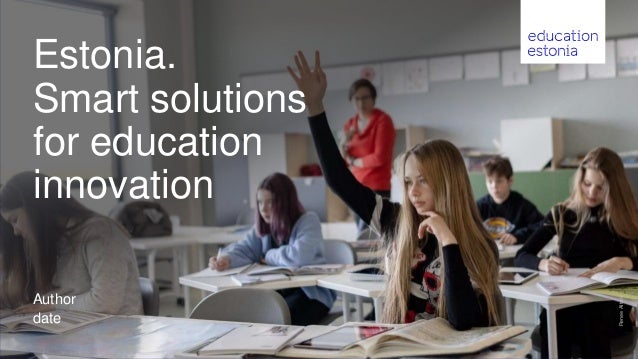
Estonia.
Smart solutions
for education
innovation
Author
date
Renee
Altrov
Tõnu
Runnel
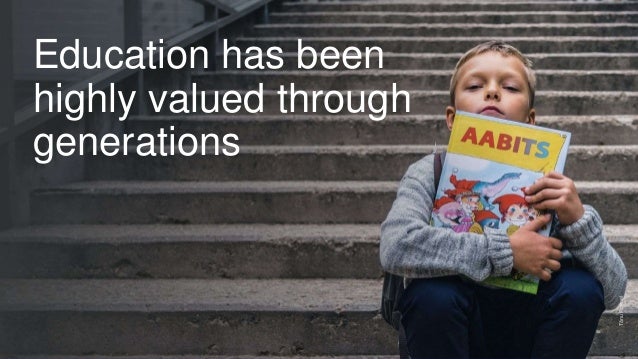
Education has been
highly valued through
generations
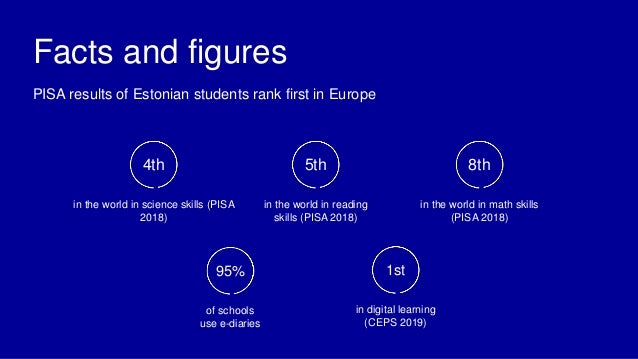
8th
in the world in math skills
(PISA 2018)
4th
in the world in science skills (PISA
2018)
95%
of schools
use e-diaries
5th
in the world in reading
skills (PISA 2018)
1st
in digital learning
(CEPS 2019)
Facts and figures
PISA results of Estonian students rank first in Europe
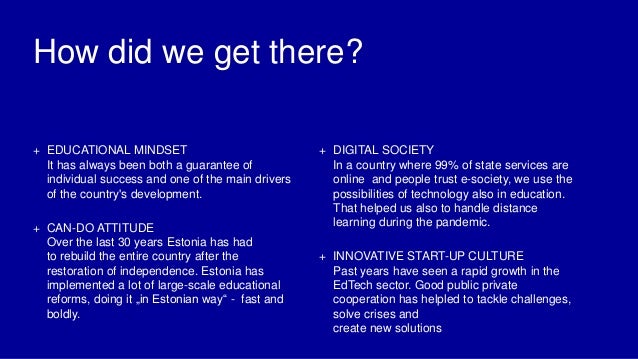
How did we get there?
+ EDUCATIONAL MINDSET
It has always been both a guarantee of
individual success and one of the main drivers
of the country's development.
+ CAN-DO ATTITUDE
Over the last 30 years Estonia has had
to rebuild the entire country after the
restoration of independence. Estonia has
implemented a lot of large-scale educational
reforms, doing it „in Estonian way“ - fast and
boldly.
+ DIGITAL SOCIETY
In a country where 99% of state services are
online and people trust e-society, we use the
possibilities of technology also in education.
That helped us also to handle distance
learning during the pandemic.
+ INNOVATIVE START-UP CULTURE
Past years have seen a rapid growth in the
EdTech sector. Good public private
cooperation has helpled to tackle challenges,
solve crises and
create new solutions
Characteristics of Estonian
education
+ Estonia has sucessfully implemented
INCLUSIVE EDUCATION SYSTEM. All
students learn side by side in the same
classroom and are entitled for free special
support if needed.
+ Schools, school leaders, and teachers have A
LOT OF AUTONOMY in Estonia. All teachers
are required a Master’s degree.
+ As a digital nation, technology has a big role
in education. ALL SCHOOLS USE
E-SOLUTIONS such as digital learning
materials or e-school for communication
between home and school.
+ Children start school at the age of seven.
STUDY AND HOLIDAYS ARE IN BALANCE:
Thanks to efficient use of time, our school day
and school year are shorter than in many
other countries.
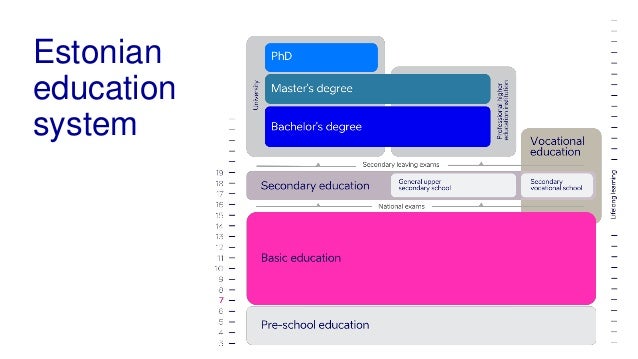
Estonian
education
system
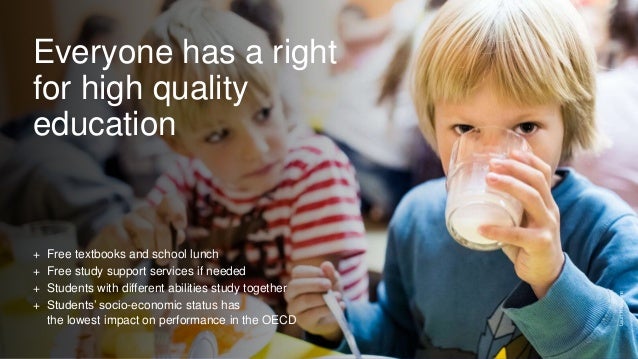
Everyone has a right
for high quality
education
+ Free textbooks and school lunch
+ Free study support services if needed
+ Students with different abilities study together
+ Students’ socio-economic status has
the lowest impact on performance in the OECD
Lauri
Kadajane
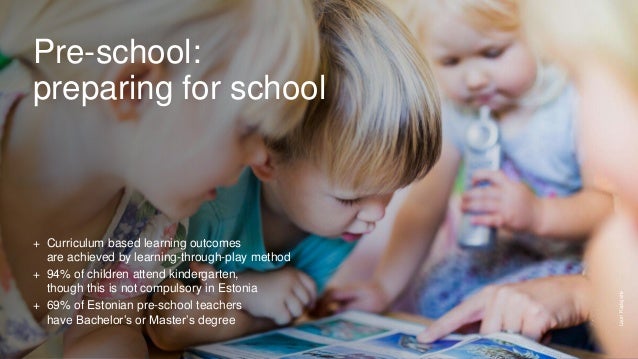
Pre-school:
preparing for school
+ Curriculum based learning outcomes
are achieved by learning-through-play method
+ 94% of children attend kindergarten,
though this is not compulsory in Estonia
+ 69% of Estonian pre-school teachers
have Bachelor’s or Master’s degree
Lauri
Kadajane
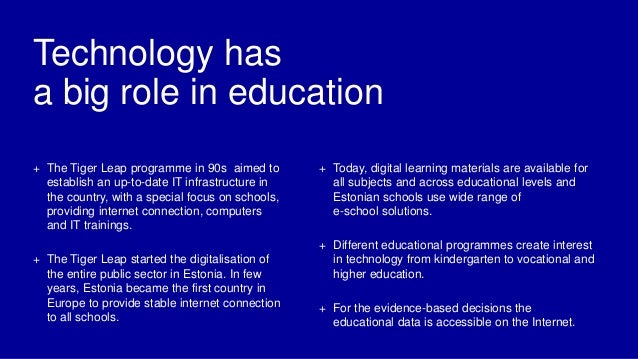
Technology has
a big role in education
+ The Tiger Leap programme in 90s aimed to
establish an up-to-date IT infrastructure in
the country, with a special focus on schools,
providing internet connection, computers
and IT trainings.
+ The Tiger Leap started the digitalisation of
the entire public sector in Estonia. In few
years, Estonia became the first country in
Europe to provide stable internet connection
to all schools.
+ Today, digital learning materials are available for
all subjects and across educational levels and
Estonian schools use wide range of
e-school solutions.
+ Different educational programmes create interest
in technology from kindergarten to vocational and
higher education.
+ For the evidence-based decisions the
educational data is accessible on the Internet.
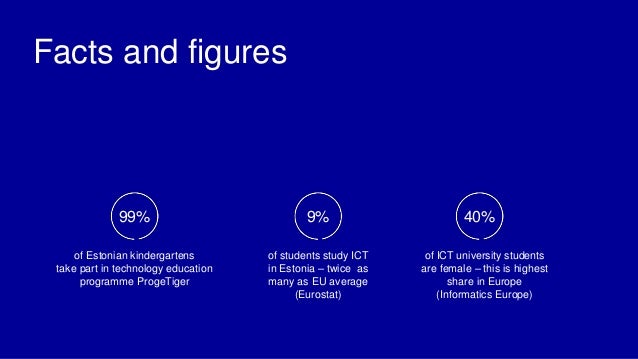
40%
of ICT university students
are female – this is highest
share in Europe
(Informatics Europe)
99%
of Estonian kindergartens
take part in technology education
programme ProgeTiger
9%
of students study ICT
in Estonia – twice as
many as EU average
(Eurostat)
Facts and figures
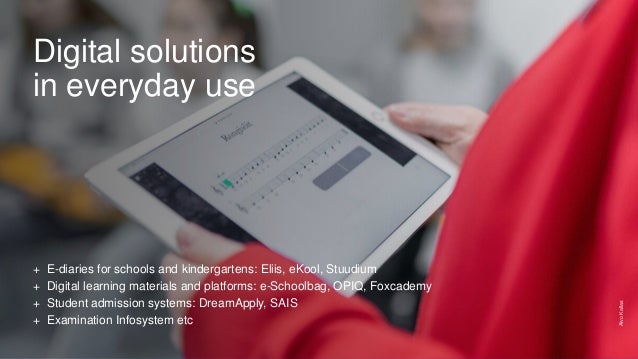
Digital solutions
in everyday use
+ E-diaries for schools and kindergartens: Eliis, eKool, Stuudium
+ Digital learning materials and platforms: e-Schoolbag, OPIQ, Foxcademy
+ Student admission systems: DreamApply, SAIS
+ Examination Infosystem etc
Aivo
Kallas
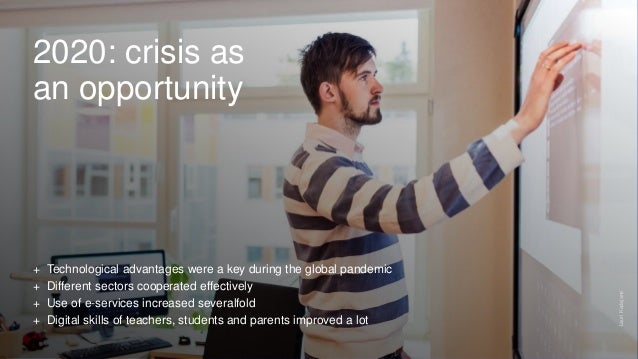
2020: crisis as
an opportunity
+ Technological advantages were a key during the global pandemic
+ Different sectors cooperated effectively
+ Use of e-services increased severalfold
+ Digital skills of teachers, students and parents improved a lot
Lauri
Kadajane
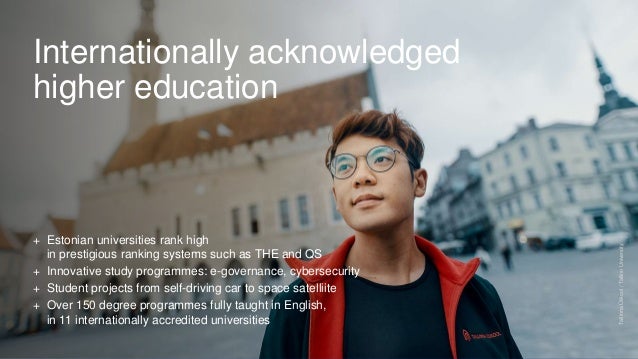
Internationally acknowledged
higher education
+ Estonian universities rank high
in prestigious ranking systems such as THE and QS
+ Innovative study programmes: e-governance, cybersecurity
+ Student projects from self-driving car to space satelliite
+ Over 150 degree programmes fully taught in English,
in 11 internationally accredited universities
Tallinna
Ülikool
/
Tallinn
University
Ensuring essential skills
+ VOCATIONAL EDUCATION is free-of-
charge for everybody and has flexible forms
of studies. Close cooperation with the private
sector provides students real workplace
experience during studies. Moving from
vocational education to higher education and
vice versa is becoming increasingly popular.
+ The state has special project (OSKA) to
ANALYSE THE LABOUR MARKET to find
out what skills are needed in the future.
+ YOUTH WORK AND INFORMAL
EDUCATION provide additional opportunities
to develop skills needed. Estonian youth work
is among the best according to OECD.
+ LIFELONG LEARNING. Acquiring new skills,
retraining, and completing unfinished
schooling are popular in Estonia: every fifth of
all 25-64-year-olds attended at least one
training last year.
Ken
Oja
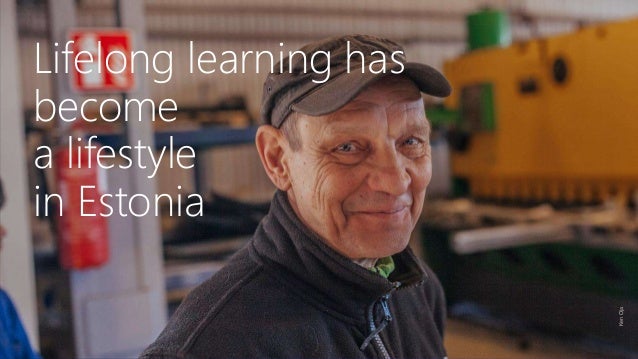
Lifelong learning has
become
a lifestyle
in Estonia
Your guide to smart solutions
Are you interested in particular
digital solution, study visit, etc.?
educationestonia.org
Would you like to know more
about study opportunities?
studyinestonia.ee
Interested in research
opportunities in Estonia?
researchinestonia.eu
Aitäh!
Author
Aron
Urb

Education-Estonia.-Smart-Solutions.-Apr-22.pptx

  • 1.
  • 2.
    Tõnu Runnel Education has been highlyvalued through generations
  • 3.
    8th in the worldin math skills (PISA 2018) 4th in the world in science skills (PISA 2018) 95% of schools use e-diaries 5th in the world in reading skills (PISA 2018) 1st in digital learning (CEPS 2019) Facts and figures PISA results of Estonian students rank first in Europe
  • 4.
    How did weget there? + EDUCATIONAL MINDSET It has always been both a guarantee of individual success and one of the main drivers of the country's development. + CAN-DO ATTITUDE Over the last 30 years Estonia has had to rebuild the entire country after the restoration of independence. Estonia has implemented a lot of large-scale educational reforms, doing it „in Estonian way“ - fast and boldly. + DIGITAL SOCIETY In a country where 99% of state services are online and people trust e-society, we use the possibilities of technology also in education. That helped us also to handle distance learning during the pandemic. + INNOVATIVE START-UP CULTURE Past years have seen a rapid growth in the EdTech sector. Good public private cooperation has helpled to tackle challenges, solve crises and create new solutions
  • 5.
    Characteristics of Estonian education +Estonia has sucessfully implemented INCLUSIVE EDUCATION SYSTEM. All students learn side by side in the same classroom and are entitled for free special support if needed. + Schools, school leaders, and teachers have A LOT OF AUTONOMY in Estonia. All teachers are required a Master’s degree. + As a digital nation, technology has a big role in education. ALL SCHOOLS USE E-SOLUTIONS such as digital learning materials or e-school for communication between home and school. + Children start school at the age of seven. STUDY AND HOLIDAYS ARE IN BALANCE: Thanks to efficient use of time, our school day and school year are shorter than in many other countries.
  • 6.
  • 7.
    Everyone has aright for high quality education + Free textbooks and school lunch + Free study support services if needed + Students with different abilities study together + Students’ socio-economic status has the lowest impact on performance in the OECD Lauri Kadajane
  • 8.
    Pre-school: preparing for school +Curriculum based learning outcomes are achieved by learning-through-play method + 94% of children attend kindergarten, though this is not compulsory in Estonia + 69% of Estonian pre-school teachers have Bachelor’s or Master’s degree Lauri Kadajane
  • 9.
    Technology has a bigrole in education + The Tiger Leap programme in 90s aimed to establish an up-to-date IT infrastructure in the country, with a special focus on schools, providing internet connection, computers and IT trainings. + The Tiger Leap started the digitalisation of the entire public sector in Estonia. In few years, Estonia became the first country in Europe to provide stable internet connection to all schools. + Today, digital learning materials are available for all subjects and across educational levels and Estonian schools use wide range of e-school solutions. + Different educational programmes create interest in technology from kindergarten to vocational and higher education. + For the evidence-based decisions the educational data is accessible on the Internet.
  • 10.
    40% of ICT universitystudents are female – this is highest share in Europe (Informatics Europe) 99% of Estonian kindergartens take part in technology education programme ProgeTiger 9% of students study ICT in Estonia – twice as many as EU average (Eurostat) Facts and figures
  • 11.
    Digital solutions in everydayuse + E-diaries for schools and kindergartens: Eliis, eKool, Stuudium + Digital learning materials and platforms: e-Schoolbag, OPIQ, Foxcademy + Student admission systems: DreamApply, SAIS + Examination Infosystem etc Aivo Kallas
  • 12.
    2020: crisis as anopportunity + Technological advantages were a key during the global pandemic + Different sectors cooperated effectively + Use of e-services increased severalfold + Digital skills of teachers, students and parents improved a lot Lauri Kadajane
  • 13.
    Internationally acknowledged higher education +Estonian universities rank high in prestigious ranking systems such as THE and QS + Innovative study programmes: e-governance, cybersecurity + Student projects from self-driving car to space satelliite + Over 150 degree programmes fully taught in English, in 11 internationally accredited universities Tallinna Ülikool / Tallinn University
  • 14.
    Ensuring essential skills +VOCATIONAL EDUCATION is free-of- charge for everybody and has flexible forms of studies. Close cooperation with the private sector provides students real workplace experience during studies. Moving from vocational education to higher education and vice versa is becoming increasingly popular. + The state has special project (OSKA) to ANALYSE THE LABOUR MARKET to find out what skills are needed in the future. + YOUTH WORK AND INFORMAL EDUCATION provide additional opportunities to develop skills needed. Estonian youth work is among the best according to OECD. + LIFELONG LEARNING. Acquiring new skills, retraining, and completing unfinished schooling are popular in Estonia: every fifth of all 25-64-year-olds attended at least one training last year.
  • 15.
  • 16.
    Your guide tosmart solutions Are you interested in particular digital solution, study visit, etc.? educationestonia.org Would you like to know more about study opportunities? studyinestonia.ee Interested in research opportunities in Estonia? researchinestonia.eu
  • 17.

Editor's Notes