Education in Estonia:
PISA & digital turn
Mart Laanpere, PhD
Senior researcher
Centre for Educational Technology
Tallinn University
Call me Mart
O I am third-generation mathematics
teacher
O Principal of a rural K-12 school 1992 –
1996
O Researcher in the Centre for Educational
Technology, Tallinn University since 2003
O Research interests: digital competences,
pedagogy-driven design of online learning
environments, digital textbooks, online
assessment, smart schoolhouse, learning
analytics, didactics of informatics
mart.laanpere.eu
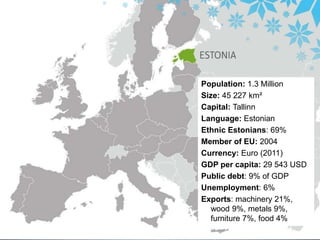
Population: 1.3 Million
Size: 45 227 km²
Capital: Tallinn
Language: Estonian
Ethnic Estonians: 69%
Member of EU: 2004
Currency: Euro (2011)
GDP per capita: 29 543 USD
Public debt: 9% of GDP
Unemployment: 6%
Exports: machinery 21%,
wood 9%, metals 9%,
furniture 7%, food 4%
INFORMATION SOCIETY INDICATORS
O Over 80% of families have at home computer
and broadband connection, independent to their
SES
O 95% of income tax declarations submitted
online, 99% bank transfers made online
O Online elections since 2005, over 30% e-voted
in 2015 parliamentary elections
O iBanking, eHealth, ePolice, ePrescription,
eSchool
O eResidency: https://e-estonia.com/e-residents
O Internet as a human right, free public wifi (500+
access points provided by municipalities) e-estonia.com
30%70%
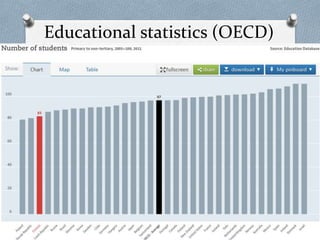
Educational statistics (OECD)
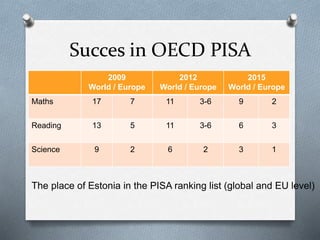
Succes in OECD PISA
2009
World / Europe
2012
World / Europe
2015
World / Europe
Maths 17 7 11 3-6 9 2
Reading 13 5 11 3-6 6 3
Science 9 2 6 2 3 1
The place of Estonia in the PISA ranking list (global and EU level)
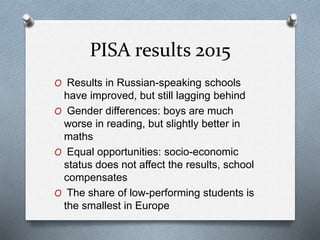
PISA results 2015
O Results in Russian-speaking schools
have improved, but still lagging behind
O Gender differences: boys are much
worse in reading, but slightly better in
maths
O Equal opportunities: socio-economic
status does not affect the results, school
compensates
O The share of low-performing students is
the smallest in Europe
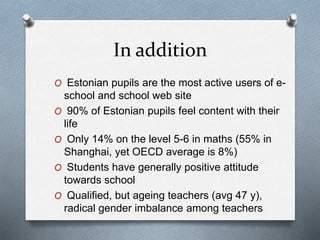
In addition
O Estonian pupils are the most active users of e-
school and school web site
O 90% of Estonian pupils feel content with their
life
O Only 14% on the level 5-6 in maths (55% in
Shanghai, yet OECD average is 8%)
O Students have generally positive attitude
towards school
O Qualified, but ageing teachers (avg 47 y),
radical gender imbalance among teachers
Explaining our success in PISA
O High autonomy of schools
O Highly qualified teachers
O Schools provide equal opportunities, no
difference between urban and rural
schools
O More books at home
O Metacognitive learning strategies applied
O Increase in educational expenditures
O Very few new immigrants
Your impressions?
O Based on your impressions today and
yesterday, how would you explain the success
of Estonian schools in PISA?
www.hm.ee/en/activities/statistics-and-analysis/pisa
O In case you are interested in comparing your
national curriculum with the Estonian one:
www.hm.ee/en/national-curricula
Digital turn in
Estonian schools
Towards 1:1 computing and new
learning paradigm
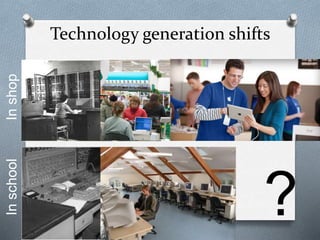
Technology generation shifts
InshopInschool
?
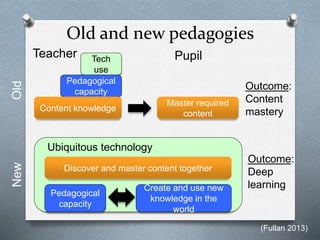
Old and new pedagogies
Tech
use
Pedagogical
capacity
Content knowledge
Master required
content
Outcome:
Content
mastery
OldNew
Outcome:
Deep
learning
Teacher Pupil
Discover and master content together
Pedagogical
capacity
Create and use new
knowledge in the
world
Ubiquitous technology
(Fullan 2013)
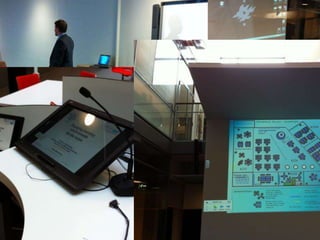
Helsinki University: future
classroom
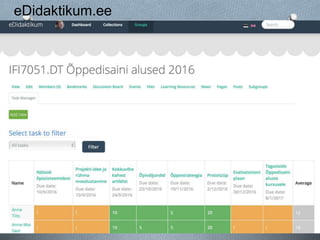
eDidaktikum.ee
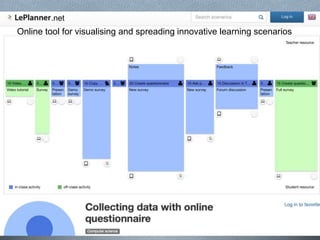
.net
Online tool for visualising and spreading innovative learning scenarios
Digital
Mirror
Self-assessment:
• By the principal
• By digi-team
• By peer team
Data-driven
decision-making:
• Benchmarking
• Strategic goals
• Action plan
• School-owners’
digital strategy
Digital Mirror: Self-assessment of
school’s digital maturity,
Creating digital strategy
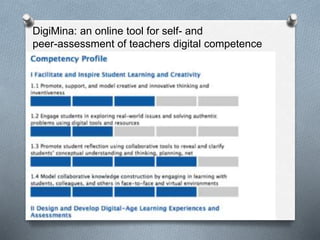
DigiMina: an online tool for self- and
peer-assessment of teachers digital competence
Thank you!
O Questions?
O Evaluation form:
www.surveymonkey.com/r/Benchmarking17-18
Shortlink: bit.ly/2wIJImF
https://www.slideshare.net/martlaa/education-system-in-estonia-pisa-and-digital-turn
Tomorrow:
guided tour with James
Gather by 10:00
in front of the Old Town Hall
Group disuccsion
O Reflect upon your experience regarding the
training and school visits during this week
(both in Finland and Estonia), draw in
conclusion:
O 3 innovative things you learned and would like
to implement in your school
O 3 things that would be impossible to copy in
your school
O 3 things that were strikingly in similar in
Estonian, Finnish and your own school

Eudcation in Estonia: PISA and beyond

  • 1.
    Education in Estonia: PISA& digital turn Mart Laanpere, PhD Senior researcher Centre for Educational Technology Tallinn University
  • 2.
    Call me Mart OI am third-generation mathematics teacher O Principal of a rural K-12 school 1992 – 1996 O Researcher in the Centre for Educational Technology, Tallinn University since 2003 O Research interests: digital competences, pedagogy-driven design of online learning environments, digital textbooks, online assessment, smart schoolhouse, learning analytics, didactics of informatics mart.laanpere.eu
  • 3.
    Population: 1.3 Million Size:45 227 km² Capital: Tallinn Language: Estonian Ethnic Estonians: 69% Member of EU: 2004 Currency: Euro (2011) GDP per capita: 29 543 USD Public debt: 9% of GDP Unemployment: 6% Exports: machinery 21%, wood 9%, metals 9%, furniture 7%, food 4%
  • 4.
    INFORMATION SOCIETY INDICATORS OOver 80% of families have at home computer and broadband connection, independent to their SES O 95% of income tax declarations submitted online, 99% bank transfers made online O Online elections since 2005, over 30% e-voted in 2015 parliamentary elections O iBanking, eHealth, ePolice, ePrescription, eSchool O eResidency: https://e-estonia.com/e-residents O Internet as a human right, free public wifi (500+ access points provided by municipalities) e-estonia.com
  • 5.
  • 6.
  • 7.
    Succes in OECDPISA 2009 World / Europe 2012 World / Europe 2015 World / Europe Maths 17 7 11 3-6 9 2 Reading 13 5 11 3-6 6 3 Science 9 2 6 2 3 1 The place of Estonia in the PISA ranking list (global and EU level)
  • 8.
    PISA results 2015 OResults in Russian-speaking schools have improved, but still lagging behind O Gender differences: boys are much worse in reading, but slightly better in maths O Equal opportunities: socio-economic status does not affect the results, school compensates O The share of low-performing students is the smallest in Europe
  • 9.
    In addition O Estonianpupils are the most active users of e- school and school web site O 90% of Estonian pupils feel content with their life O Only 14% on the level 5-6 in maths (55% in Shanghai, yet OECD average is 8%) O Students have generally positive attitude towards school O Qualified, but ageing teachers (avg 47 y), radical gender imbalance among teachers
  • 10.
    Explaining our successin PISA O High autonomy of schools O Highly qualified teachers O Schools provide equal opportunities, no difference between urban and rural schools O More books at home O Metacognitive learning strategies applied O Increase in educational expenditures O Very few new immigrants
  • 11.
    Your impressions? O Basedon your impressions today and yesterday, how would you explain the success of Estonian schools in PISA? www.hm.ee/en/activities/statistics-and-analysis/pisa O In case you are interested in comparing your national curriculum with the Estonian one: www.hm.ee/en/national-curricula
  • 12.
    Digital turn in Estonianschools Towards 1:1 computing and new learning paradigm
  • 13.
  • 14.
    Old and newpedagogies Tech use Pedagogical capacity Content knowledge Master required content Outcome: Content mastery OldNew Outcome: Deep learning Teacher Pupil Discover and master content together Pedagogical capacity Create and use new knowledge in the world Ubiquitous technology (Fullan 2013)
  • 15.
  • 17.
  • 18.
    .net Online tool forvisualising and spreading innovative learning scenarios
  • 19.
    Digital Mirror Self-assessment: • By theprincipal • By digi-team • By peer team Data-driven decision-making: • Benchmarking • Strategic goals • Action plan • School-owners’ digital strategy Digital Mirror: Self-assessment of school’s digital maturity, Creating digital strategy
  • 20.
    DigiMina: an onlinetool for self- and peer-assessment of teachers digital competence
  • 21.
    Thank you! O Questions? OEvaluation form: www.surveymonkey.com/r/Benchmarking17-18 Shortlink: bit.ly/2wIJImF https://www.slideshare.net/martlaa/education-system-in-estonia-pisa-and-digital-turn Tomorrow: guided tour with James Gather by 10:00 in front of the Old Town Hall
  • 22.
    Group disuccsion O Reflectupon your experience regarding the training and school visits during this week (both in Finland and Estonia), draw in conclusion: O 3 innovative things you learned and would like to implement in your school O 3 things that would be impossible to copy in your school O 3 things that were strikingly in similar in Estonian, Finnish and your own school