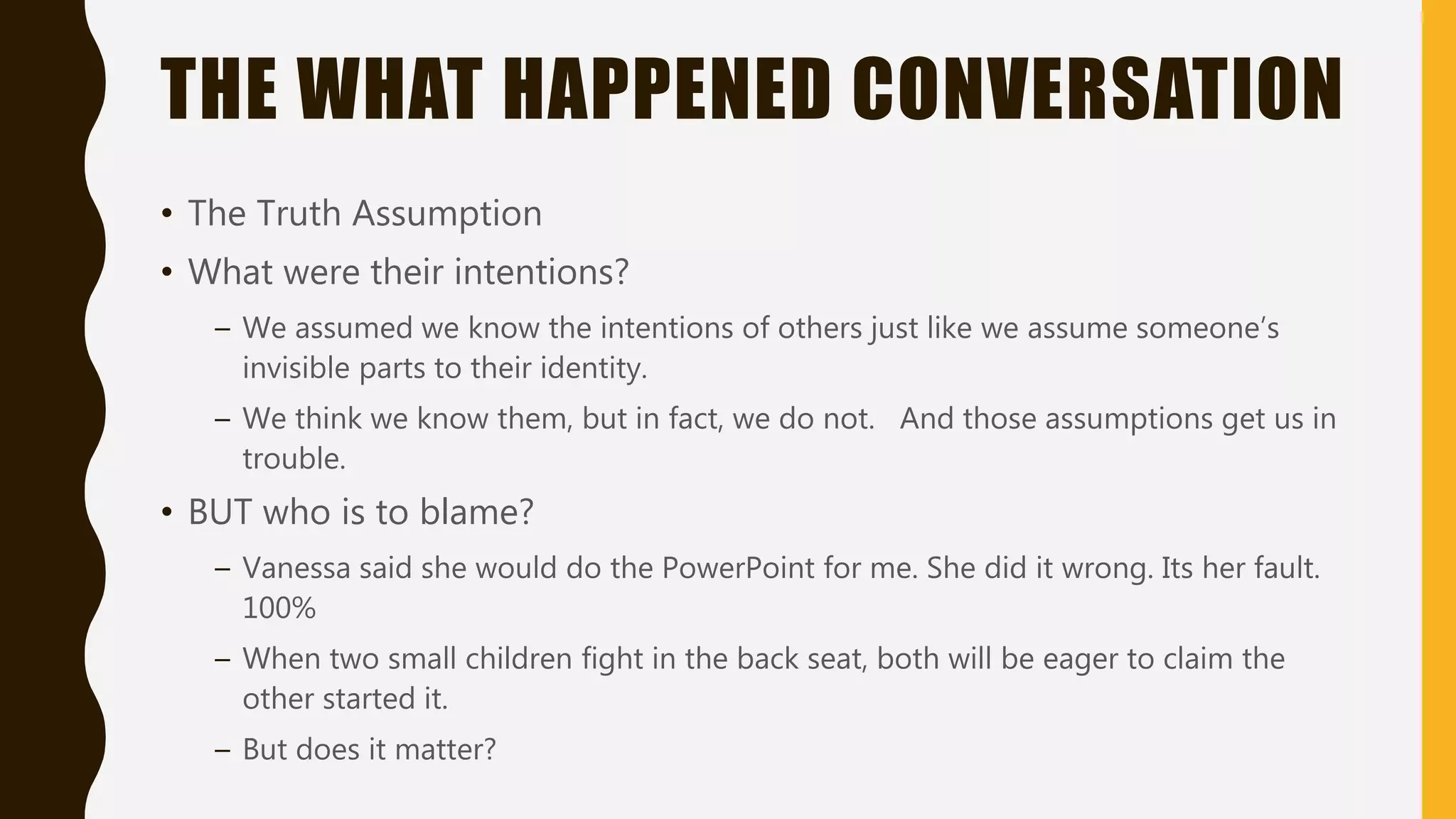
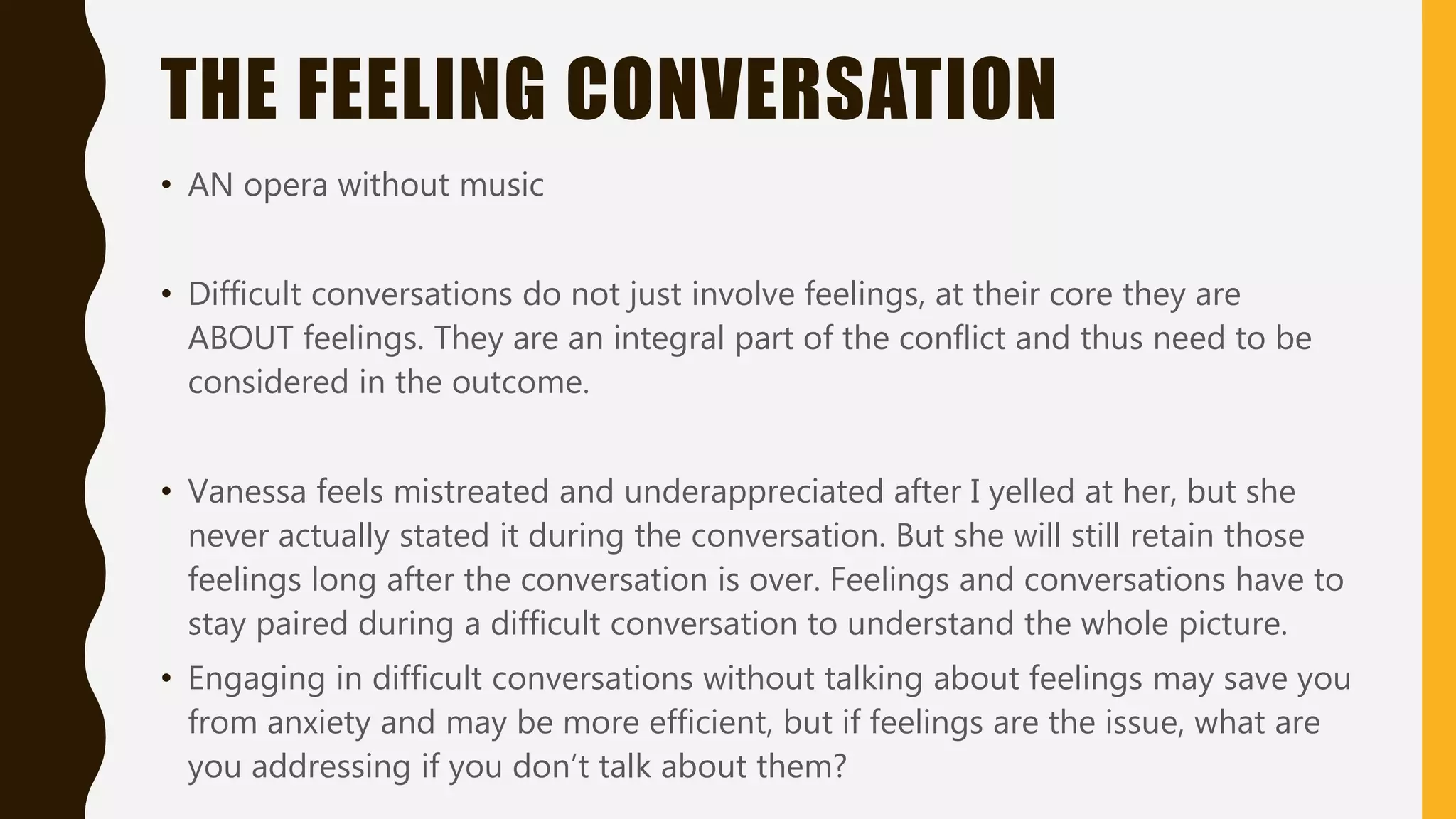
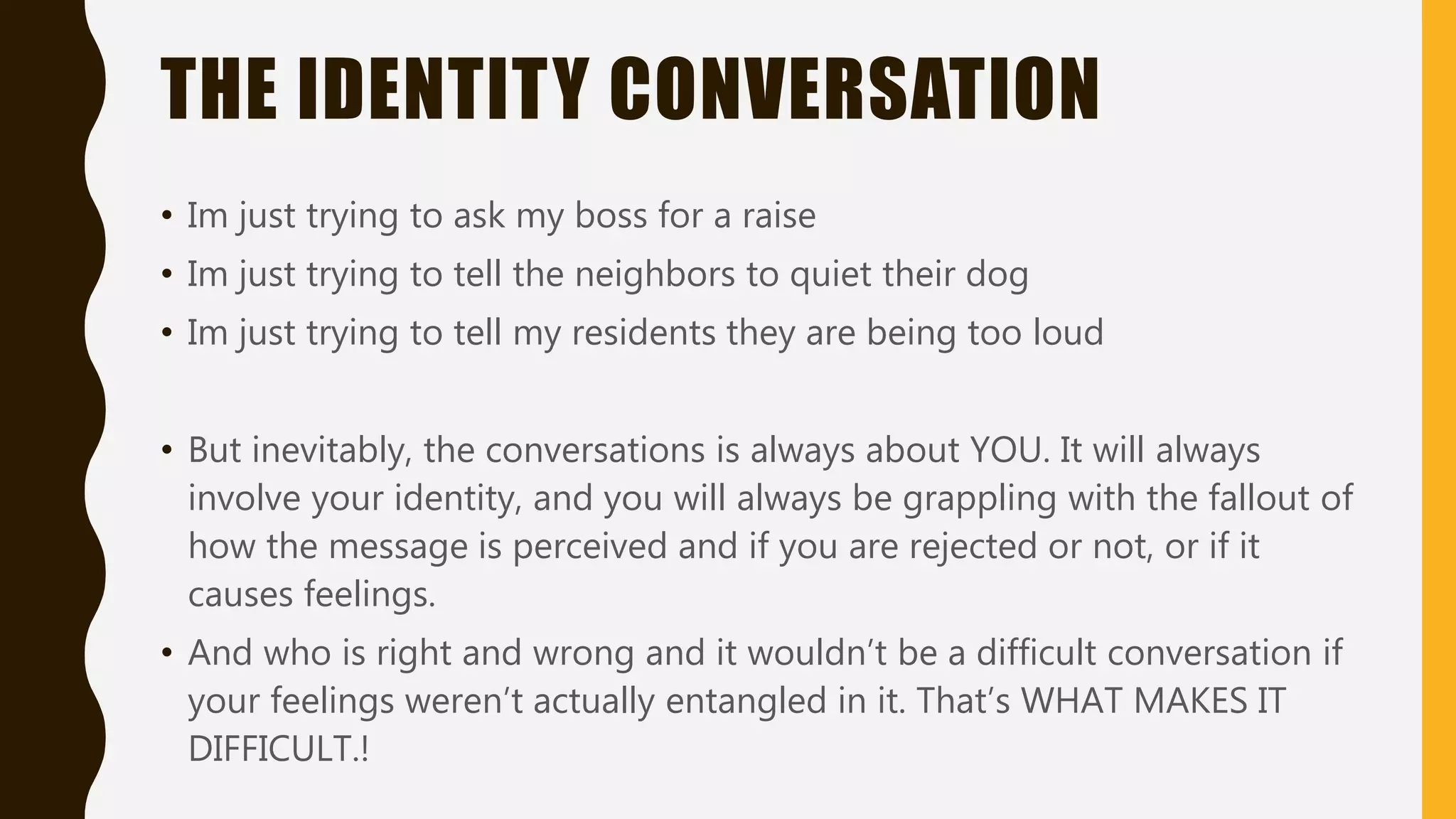
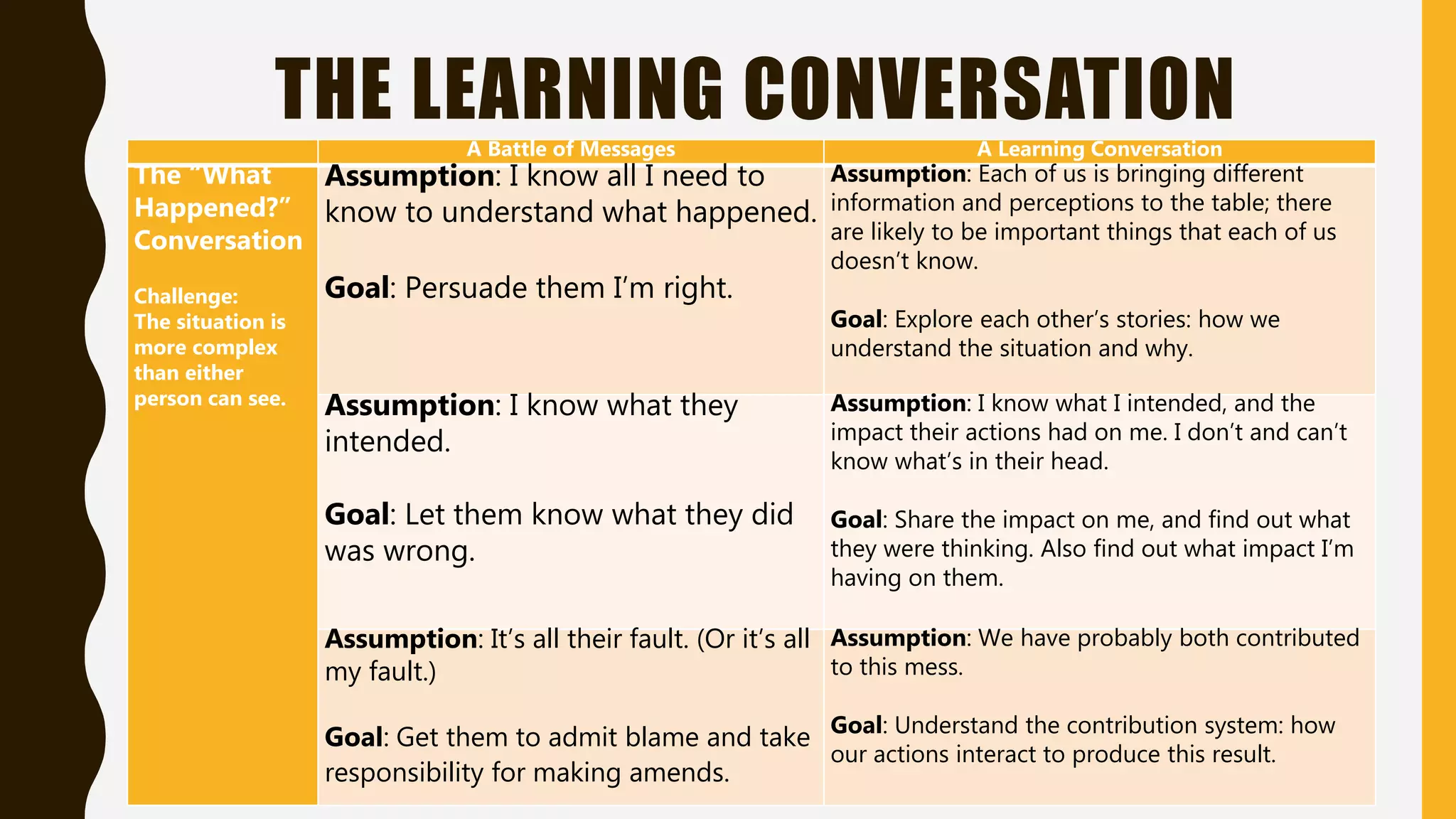
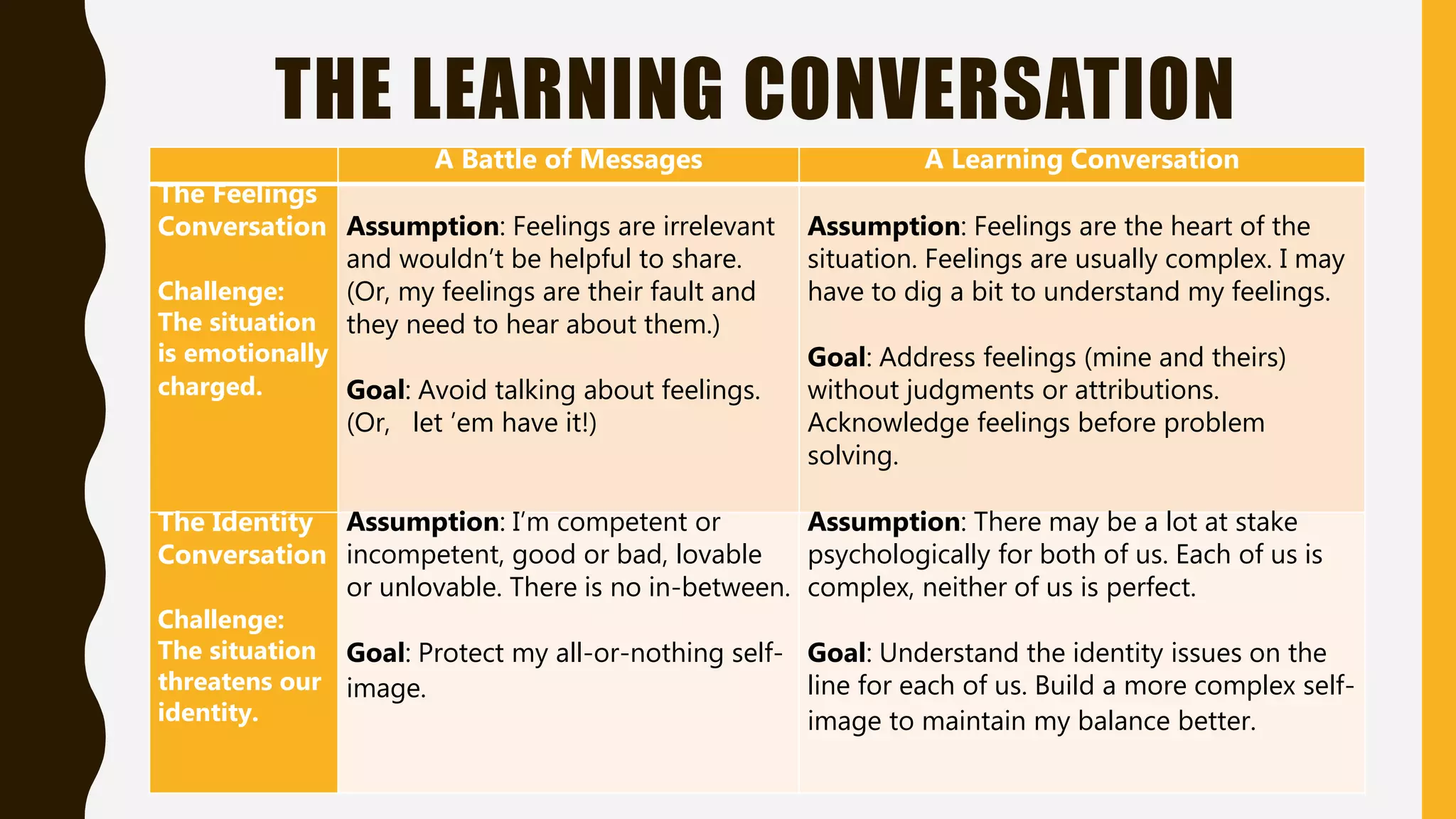
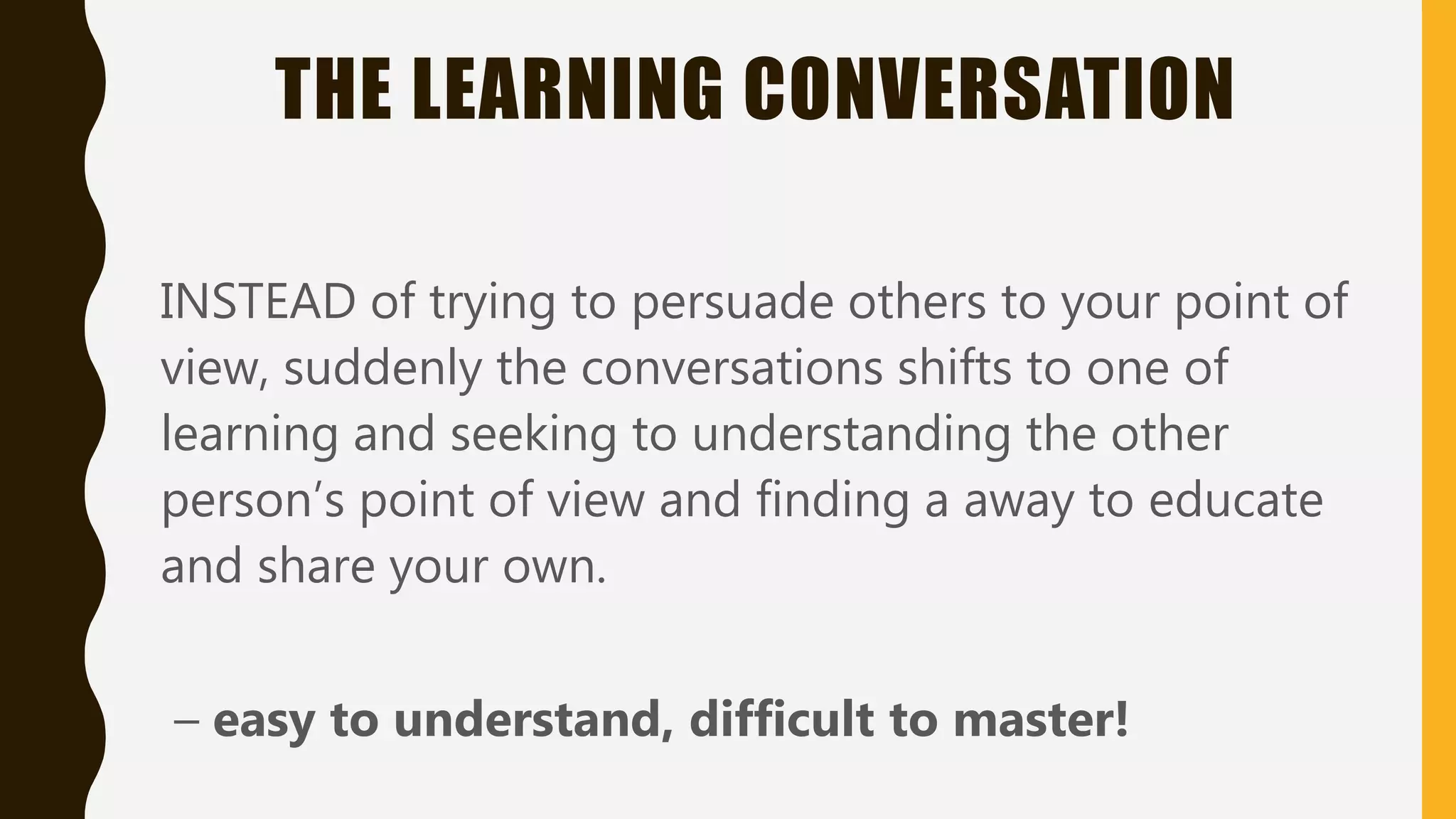
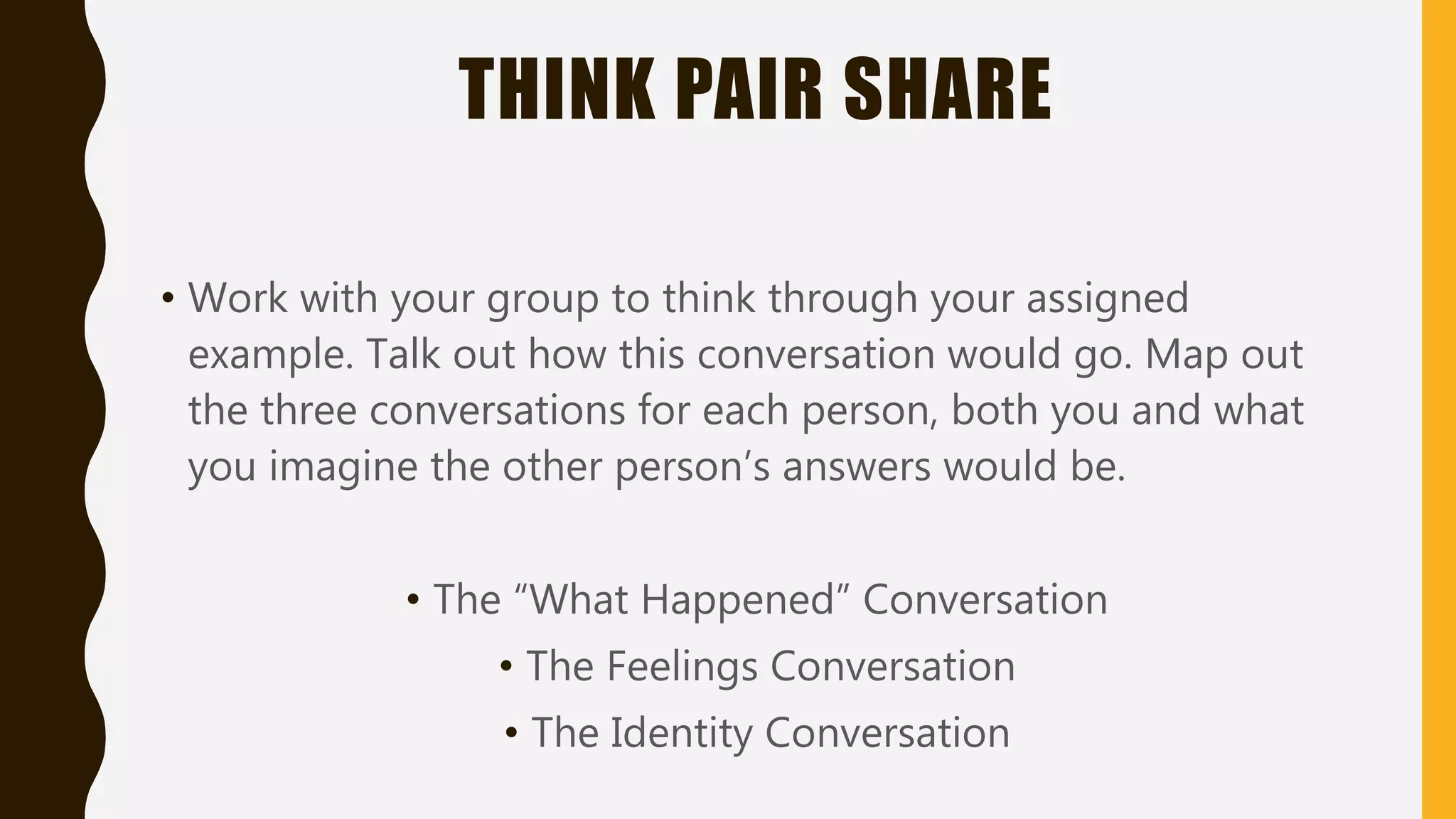
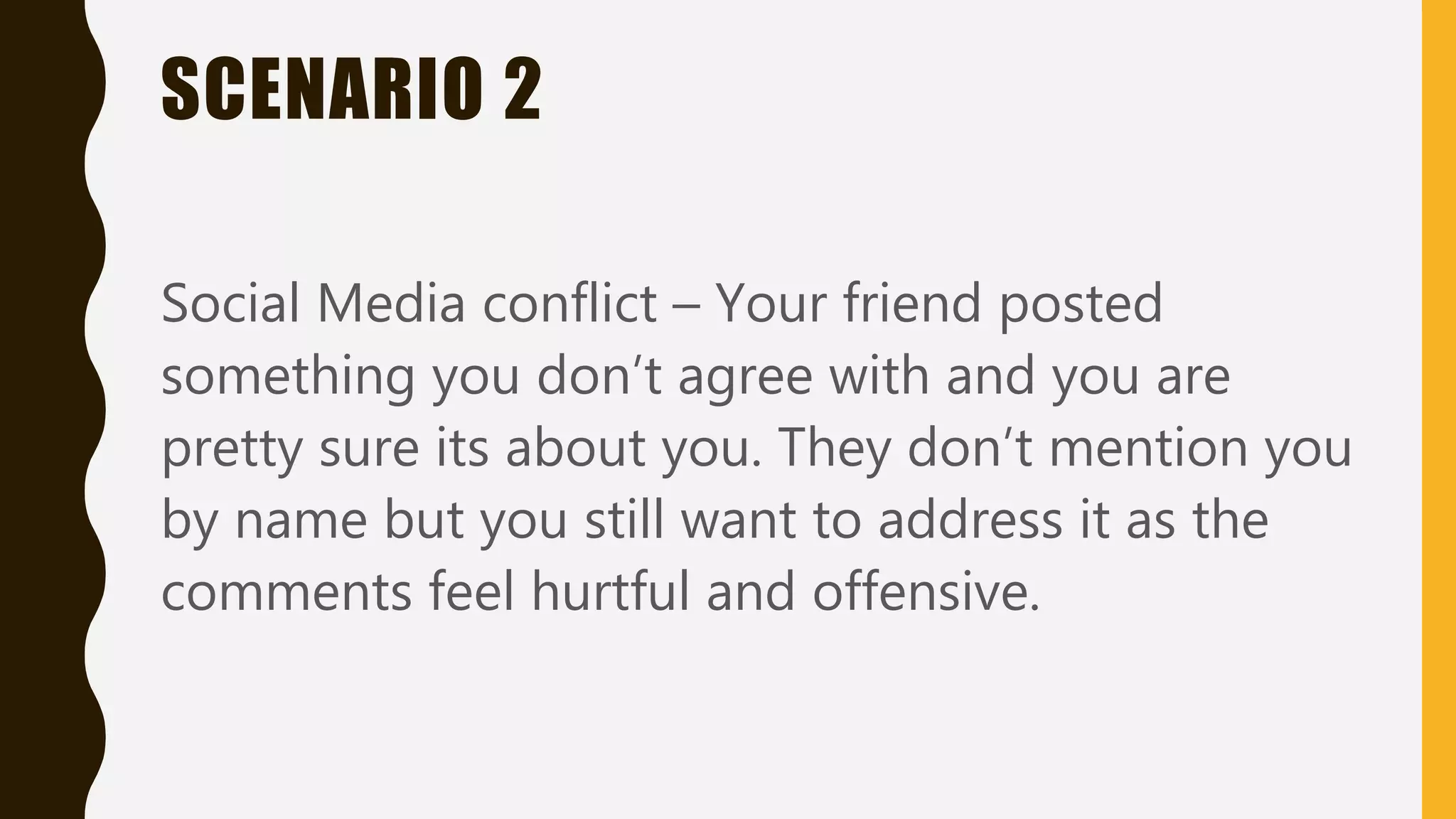
This document provides an overview of strategies for having difficult conversations. It discusses examples of difficult conversations, such as addressing a neighbor's barking dog. It emphasizes that sugarcoating a message does not help and that feelings must be addressed for the conversation to be meaningful. The document presents frameworks for having learning conversations rather than argumentative ones. It focuses on understanding different perspectives rather than proving who is right. Examples are given of thinking through difficult scenarios from multiple viewpoints. Overall, the document teaches tools for navigating difficult interpersonal interactions by understanding feelings, intentions, and identities on all sides of an issue.