Hepatic encephalopathy is a type of brain
disorder that occurs as a result of liver
dysfunction.
 Type A: Associated with acute liver failure.
 Type B: Occurs when there is no primary liver damage
and encephalopathy occurs due to portosystemic shunting
of blood.
 Type C: Associated with chronic liver disease such as
cirrhosis and portal hypertension. The encephalopathy can
either be episodic (acute) or persistent (chronic).
 Chronic hepatitis
 Cirrhosis
 Acute viral hepatitis
Grade Level of consciousness Intellectual function Neurologic function
0 Insomnia, sleep disturbance Change in computation skills Impaired handwriting
1 Lack of awareness, personality
change
Short attention span, mild
confusion, depression
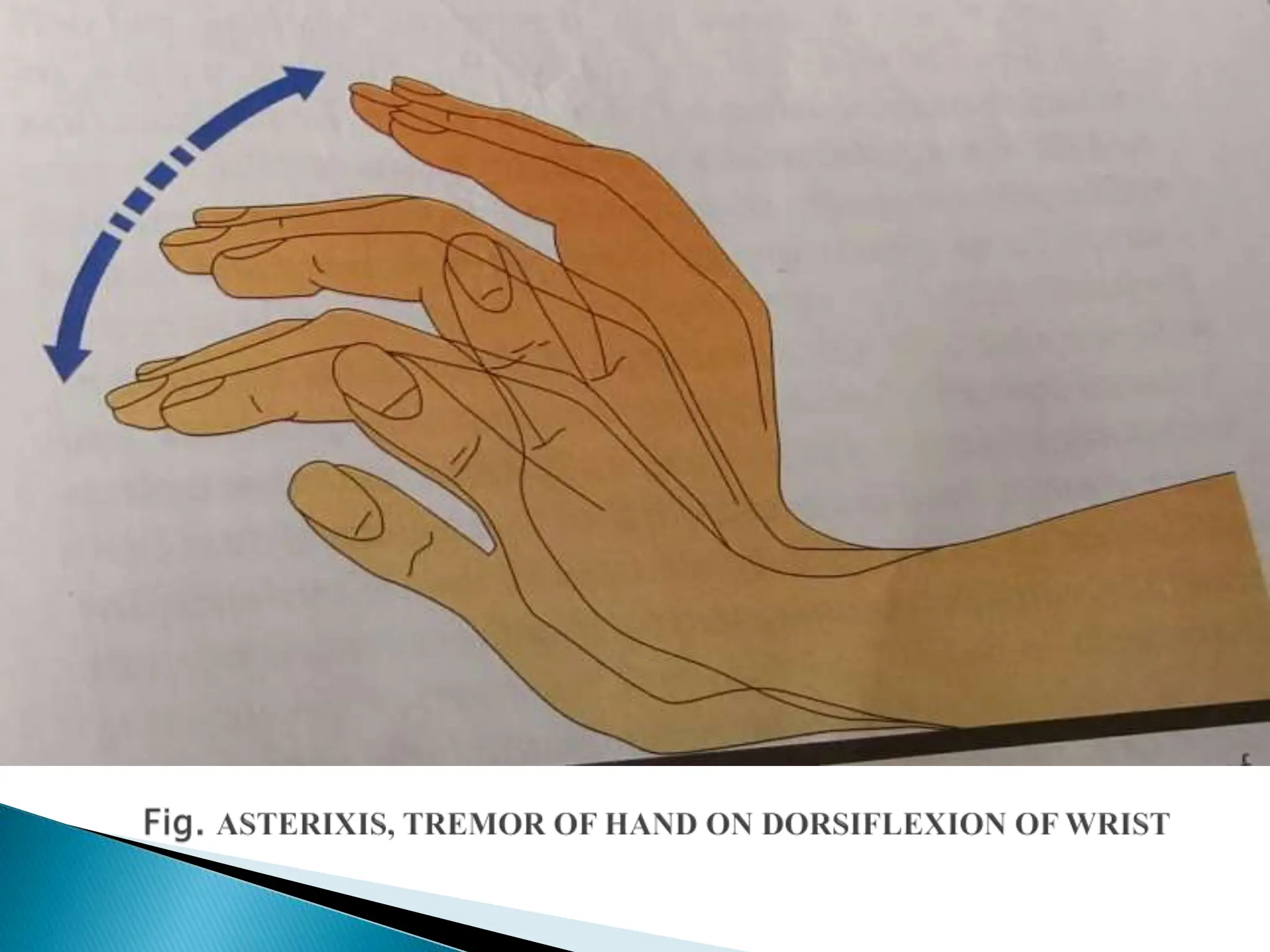
Incoordination , asterixis
2 Lathergy, drowsiness,
inappropriate behaviour
Disoriented Astrexis, abnormal reflexes
3 Asleep, rousable Loss of meaningful
conversation, marked confusion,
incomprehensible speech
Asterixis, abnormal reflexes
4 Not rousable Absent Decerebrate
 Health history
 Physical examination
 Blood test
 CSF analysis
 CT/MRI of brain
 Electroencephalogram
 Hepatic function
 Lactulose -Patients should take sufficient lactulose as to have
2-4 loose stool per day.
 Oral magnesium sulphate or enemas are given after
haemorrhage to clean out the intestine.
 Antibiotic:
- Neomycin; Initial dose is 250 mg orally 2-4 times a
day. Neomycin is usually reserved as a second line
treatment after initiation of treatment with lactulose.
- Rifaximin; dose of 400 mg taken orally 3 times a day
was effective as lactulose.
 Hydroxyzine 25mg at bed time to improve quality of sleep.
Additional management:
 Regular assessment of neurological function
 Record fluid input and output
 Vital monitoring daily 4hourly
 Serum ammonia level monitored daily.
 GI suction to reduce absorption of ammonia.
 Liver transplantation surgery is indicated for chronic
or refractory hepatic encephalopathy.
1.Ineffective breathing pattern related to hypoxia as
evidenced by lower respiratory rate.
2.Deficient fluid volume related to bleeding, decreased
intake as evidenced by physical examination.
4.Imbalanced nutrition: less than body requirement
related to diet restriction as evidenced by fatigue.
5.Deficient knowledge related to disease process, it
control as evidenced by frequent questioning by the
patient and family members.
6.Ineffective individual coping related to stress imposed
by chronic illness
3.Risk for infection related to immune compromise
secondary to chronic illness.
HEPATIC ENCEPHALOPATHY HEPATIC ENCE.pptx

HEPATIC ENCEPHALOPATHY HEPATIC ENCE.pptx

  • 3.
    Hepatic encephalopathy isa type of brain disorder that occurs as a result of liver dysfunction.
  • 4.
     Type A:Associated with acute liver failure.  Type B: Occurs when there is no primary liver damage and encephalopathy occurs due to portosystemic shunting of blood.  Type C: Associated with chronic liver disease such as cirrhosis and portal hypertension. The encephalopathy can either be episodic (acute) or persistent (chronic).
  • 5.
     Chronic hepatitis Cirrhosis  Acute viral hepatitis
  • 6.
    Grade Level ofconsciousness Intellectual function Neurologic function 0 Insomnia, sleep disturbance Change in computation skills Impaired handwriting 1 Lack of awareness, personality change Short attention span, mild confusion, depression Incoordination , asterixis 2 Lathergy, drowsiness, inappropriate behaviour Disoriented Astrexis, abnormal reflexes 3 Asleep, rousable Loss of meaningful conversation, marked confusion, incomprehensible speech Asterixis, abnormal reflexes 4 Not rousable Absent Decerebrate
  • 8.
     Health history Physical examination  Blood test  CSF analysis  CT/MRI of brain  Electroencephalogram  Hepatic function
  • 9.
     Lactulose -Patientsshould take sufficient lactulose as to have 2-4 loose stool per day.  Oral magnesium sulphate or enemas are given after haemorrhage to clean out the intestine.  Antibiotic: - Neomycin; Initial dose is 250 mg orally 2-4 times a day. Neomycin is usually reserved as a second line treatment after initiation of treatment with lactulose. - Rifaximin; dose of 400 mg taken orally 3 times a day was effective as lactulose.  Hydroxyzine 25mg at bed time to improve quality of sleep.
  • 10.
    Additional management:  Regularassessment of neurological function  Record fluid input and output  Vital monitoring daily 4hourly  Serum ammonia level monitored daily.  GI suction to reduce absorption of ammonia.
  • 11.
     Liver transplantationsurgery is indicated for chronic or refractory hepatic encephalopathy.
  • 12.
    1.Ineffective breathing patternrelated to hypoxia as evidenced by lower respiratory rate. 2.Deficient fluid volume related to bleeding, decreased intake as evidenced by physical examination. 4.Imbalanced nutrition: less than body requirement related to diet restriction as evidenced by fatigue.
  • 13.
    5.Deficient knowledge relatedto disease process, it control as evidenced by frequent questioning by the patient and family members. 6.Ineffective individual coping related to stress imposed by chronic illness 3.Risk for infection related to immune compromise secondary to chronic illness.