
Role of Aldose Reductase
in Diabetic Retinopathy
Presented to :
Dr. Shagufta Naz
Roll no:
Class: MS-I
Department of Zoology
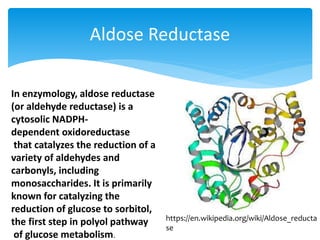
Aldose Reductase
In enzymology, aldose reductase
(or aldehyde reductase) is a
cytosolic NADPH-
dependent oxidoreductase
that catalyzes the reduction of a
variety of aldehydes and
carbonyls, including
monosaccharides. It is primarily
known for catalyzing the
reduction of glucose to sorbitol,
the first step in polyol pathway
of glucose metabolism.
https://en.wikipedia.org/wiki/Aldose_reducta
se
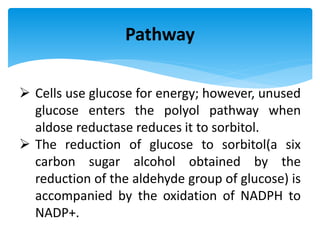
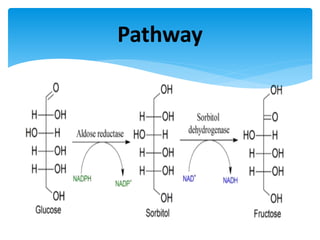
Pathway
 Cells use glucose for energy; however, unused
glucose enters the polyol pathway when
aldose reductase reduces it to sorbitol.
 The reduction of glucose to sorbitol(a six
carbon sugar alcohol obtained by the
reduction of the aldehyde group of glucose) is
accompanied by the oxidation of NADPH to
NADP+.
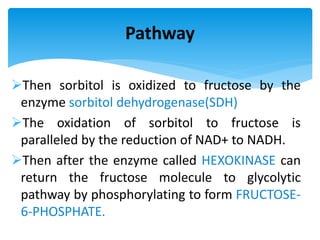
Pathway
Then sorbitol is oxidized to fructose by the
enzyme sorbitol dehydrogenase(SDH)
The oxidation of sorbitol to fructose is
paralleled by the reduction of NAD+ to NADH.
Then after the enzyme called HEXOKINASE can
return the fructose molecule to glycolytic
pathway by phosphorylating to form FRUCTOSE-
6-PHOSPHATE.
Pathway
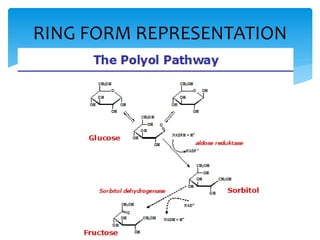
RING FORM REPRESENTATION
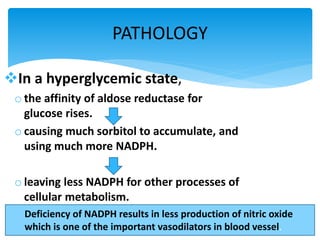
PATHOLOGY
In a hyperglycemic state,
o the affinity of aldose reductase for
glucose rises.
o causing much sorbitol to accumulate, and
using much more NADPH.
o leaving less NADPH for other processes of
cellular metabolism.
Deficiency of NADPH results in less production of nitric oxide
which is one of the important vasodilators in blood vessel.
Hyperglycemia-induced polyol pathway
hyperactivity has an important role in the
etiology of late-onset diabetic
complications.
Once sorbitol has been produced, it does
not easily diffuse across cell membranes;
this intracellular accumulation of sorbitol
may be a factor in the etiology of diabetic
complications.
Polyol pathway and Diabetes mellitus
 Some of the complications include
neuropathy, retinopathy, nephropathy,
keratopathy, cataract-formation, possibly
infection and atherosclerosis.
 The inhibition of aldose reductase (AR), a
rate-limiting enzyme of the pathway, could
become a key element in the prevention and
reversal of diabetic complications.
COMPLICATIONS
Diabetic Retinopathy
Diabetes is the major cause of
blindness in adults ages 20-74.
Diabetic Retinopathy is the largest
example of diabetic eye disease.
Up to 24,000 Americans lose their
sight yearly due to diabetic
retinopathy.
Facts About Diabetic Retinopathy
Four Stages of Diabetic Retinopathy
 Mild Nonproliferative Retinopathy
 Moderate Nonproliferative Retinopathy
 Severe Nonproliferative Retinopathy
 Proliferative Retinopathy
(National Eye Institute, 2006)
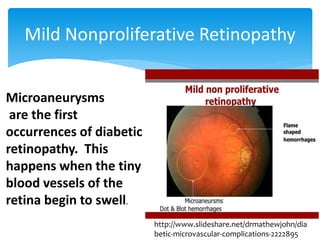
Mild Nonproliferative Retinopathy
Microaneurysms
are the first
occurrences of diabetic
retinopathy. This
happens when the tiny
blood vessels of the
retina begin to swell.
http://www.slideshare.net/drmathewjohn/dia
betic-microvascular-complications-2222895
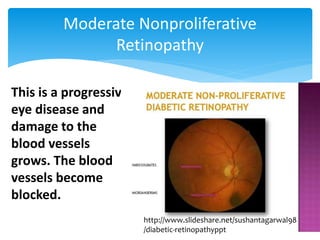
Moderate Nonproliferative
Retinopathy
This is a progressive
eye disease and
damage to the
blood vessels
grows. The blood
vessels become
blocked.
http://www.slideshare.net/sushantagarwal98
/diabetic-retinopathyppt
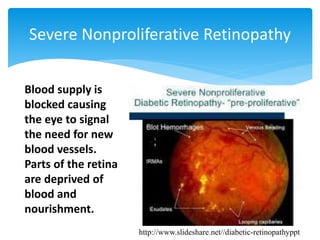
Severe Nonproliferative Retinopathy
Blood supply is
blocked causing
the eye to signal
the need for new
blood vessels.
Parts of the retina
are deprived of
blood and
nourishment.
http://www.slideshare.net//diabetic-retinopathyppt
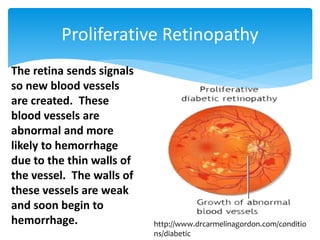
Proliferative Retinopathy
The retina sends signals
so new blood vessels
are created. These
blood vessels are
abnormal and more
likely to hemorrhage
due to the thin walls of
the vessel. The walls of
these vessels are weak
and soon begin to
hemorrhage. http://www.drcarmelinagordon.com/conditio
ns/diabetic
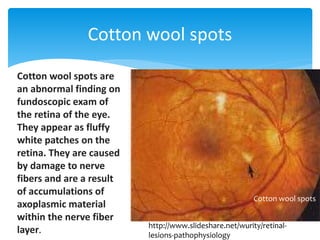
Cotton wool spots
Cotton wool spots are
an abnormal finding on
fundoscopic exam of
the retina of the eye.
They appear as fluffy
white patches on the
retina. They are caused
by damage to nerve
fibers and are a result
of accumulations of
axoplasmic material
within the nerve fiber
layer.
Cotton wool spots
http://www.slideshare.net/wurity/retinal-
lesions-pathophysiology
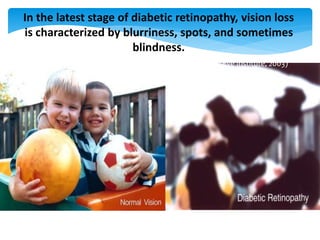
In the latest stage of diabetic retinopathy, vision loss
is characterized by blurriness, spots, and sometimes
blindness.
(National Eye Institute, 2003)
Functional Implications
 Difficulty with fine details
 Visual fluctuations
 Seeing rippled images
 Blurred, hazy or double vision
 Some loss of field vision
 Difficulty seeing at night or in
low light
 Sensitivity to light or glare
 Trouble focusing images
Treatment
 Patient Education
It is NOT inevitable. Diabetic Retinopathy has few
symptoms but can be treated if diagnosed early.
 Controlling blood sugar
 Laser photocoagulation---laser beams seal vessels and
stop new blood vessel growth
 Vitrectomy---removes blood and scar tissue to allow
light refraction
(Juvenile Diabetes Research Foundation International, 2007)
Thank You!

Diabeticretinopathy30 3-2011-121109075116-phpapp01

  • 1.
    Role of AldoseReductase in Diabetic Retinopathy Presented to : Dr. Shagufta Naz Roll no: Class: MS-I Department of Zoology
  • 2.
    Aldose Reductase In enzymology,aldose reductase (or aldehyde reductase) is a cytosolic NADPH- dependent oxidoreductase that catalyzes the reduction of a variety of aldehydes and carbonyls, including monosaccharides. It is primarily known for catalyzing the reduction of glucose to sorbitol, the first step in polyol pathway of glucose metabolism. https://en.wikipedia.org/wiki/Aldose_reducta se
  • 3.
    Pathway  Cells useglucose for energy; however, unused glucose enters the polyol pathway when aldose reductase reduces it to sorbitol.  The reduction of glucose to sorbitol(a six carbon sugar alcohol obtained by the reduction of the aldehyde group of glucose) is accompanied by the oxidation of NADPH to NADP+.
  • 4.
    Pathway Then sorbitol isoxidized to fructose by the enzyme sorbitol dehydrogenase(SDH) The oxidation of sorbitol to fructose is paralleled by the reduction of NAD+ to NADH. Then after the enzyme called HEXOKINASE can return the fructose molecule to glycolytic pathway by phosphorylating to form FRUCTOSE- 6-PHOSPHATE.
  • 5.
  • 6.
  • 7.
    PATHOLOGY In a hyperglycemicstate, o the affinity of aldose reductase for glucose rises. o causing much sorbitol to accumulate, and using much more NADPH. o leaving less NADPH for other processes of cellular metabolism. Deficiency of NADPH results in less production of nitric oxide which is one of the important vasodilators in blood vessel.
  • 8.
    Hyperglycemia-induced polyol pathway hyperactivityhas an important role in the etiology of late-onset diabetic complications. Once sorbitol has been produced, it does not easily diffuse across cell membranes; this intracellular accumulation of sorbitol may be a factor in the etiology of diabetic complications. Polyol pathway and Diabetes mellitus
  • 9.
     Some ofthe complications include neuropathy, retinopathy, nephropathy, keratopathy, cataract-formation, possibly infection and atherosclerosis.  The inhibition of aldose reductase (AR), a rate-limiting enzyme of the pathway, could become a key element in the prevention and reversal of diabetic complications. COMPLICATIONS
  • 10.
  • 11.
    Diabetes is themajor cause of blindness in adults ages 20-74. Diabetic Retinopathy is the largest example of diabetic eye disease. Up to 24,000 Americans lose their sight yearly due to diabetic retinopathy. Facts About Diabetic Retinopathy
  • 12.
    Four Stages ofDiabetic Retinopathy  Mild Nonproliferative Retinopathy  Moderate Nonproliferative Retinopathy  Severe Nonproliferative Retinopathy  Proliferative Retinopathy (National Eye Institute, 2006)
  • 13.
    Mild Nonproliferative Retinopathy Microaneurysms arethe first occurrences of diabetic retinopathy. This happens when the tiny blood vessels of the retina begin to swell. http://www.slideshare.net/drmathewjohn/dia betic-microvascular-complications-2222895
  • 14.
    Moderate Nonproliferative Retinopathy This isa progressive eye disease and damage to the blood vessels grows. The blood vessels become blocked. http://www.slideshare.net/sushantagarwal98 /diabetic-retinopathyppt
  • 15.
    Severe Nonproliferative Retinopathy Bloodsupply is blocked causing the eye to signal the need for new blood vessels. Parts of the retina are deprived of blood and nourishment. http://www.slideshare.net//diabetic-retinopathyppt
  • 16.
    Proliferative Retinopathy The retinasends signals so new blood vessels are created. These blood vessels are abnormal and more likely to hemorrhage due to the thin walls of the vessel. The walls of these vessels are weak and soon begin to hemorrhage. http://www.drcarmelinagordon.com/conditio ns/diabetic
  • 17.
    Cotton wool spots Cottonwool spots are an abnormal finding on fundoscopic exam of the retina of the eye. They appear as fluffy white patches on the retina. They are caused by damage to nerve fibers and are a result of accumulations of axoplasmic material within the nerve fiber layer. Cotton wool spots http://www.slideshare.net/wurity/retinal- lesions-pathophysiology
  • 18.
    In the lateststage of diabetic retinopathy, vision loss is characterized by blurriness, spots, and sometimes blindness. (National Eye Institute, 2003)
  • 19.
    Functional Implications  Difficultywith fine details  Visual fluctuations  Seeing rippled images  Blurred, hazy or double vision  Some loss of field vision  Difficulty seeing at night or in low light  Sensitivity to light or glare  Trouble focusing images
  • 20.
    Treatment  Patient Education Itis NOT inevitable. Diabetic Retinopathy has few symptoms but can be treated if diagnosed early.  Controlling blood sugar  Laser photocoagulation---laser beams seal vessels and stop new blood vessel growth  Vitrectomy---removes blood and scar tissue to allow light refraction (Juvenile Diabetes Research Foundation International, 2007)
  • 21.