Incretins in Diabetes Mellitus
Dr. Abhijit Chowdhury
Honorary Medical Officer; Unit: 1
Department of Endocrinology
BIRDEM
Incretins
• These are hormones produced by GIT in
response to incoming nutrients, and have
important actions that contribute to glucose
homeostasis.
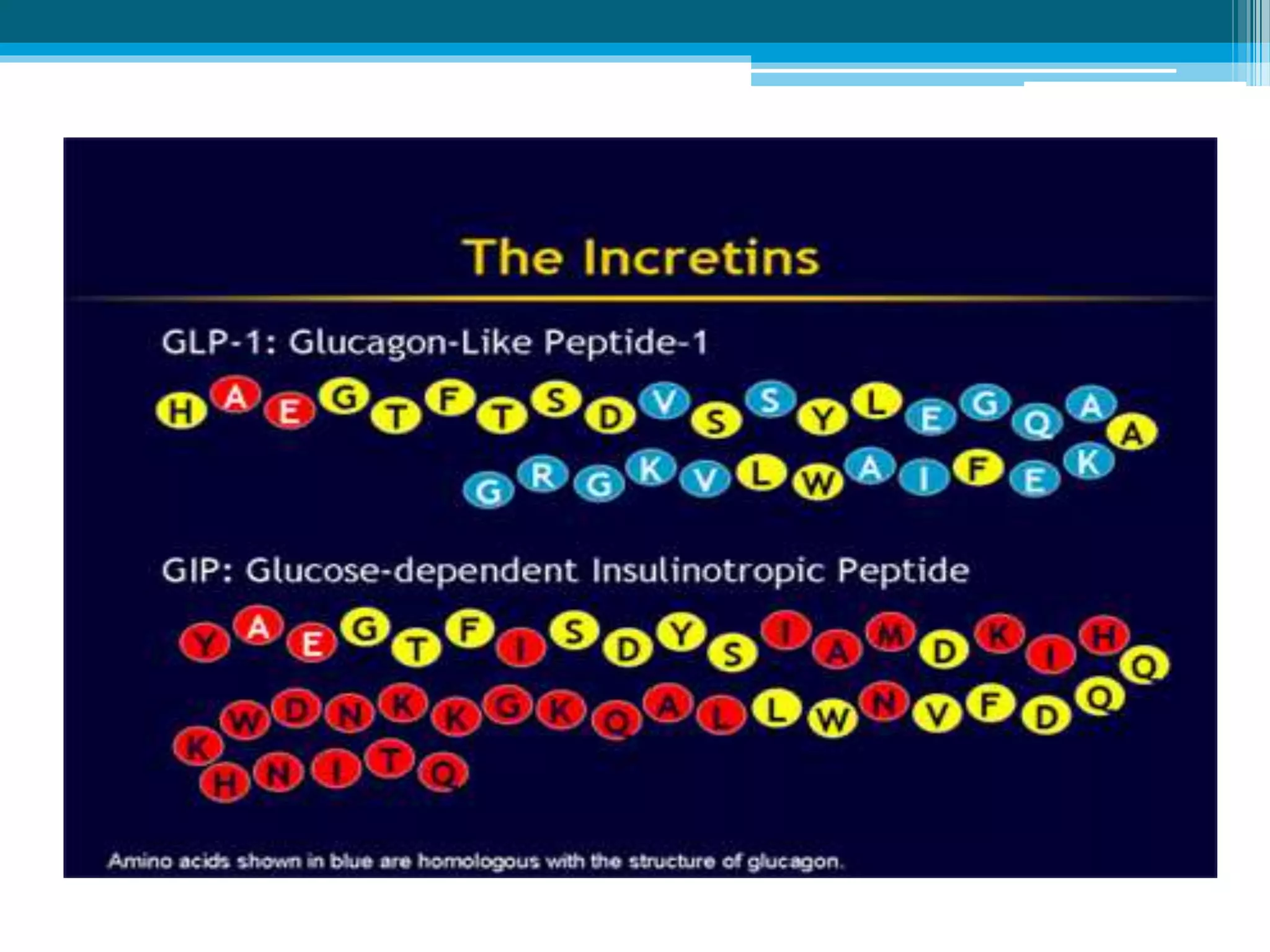
• Two hormones-
▫ Gastric inhibitory polypeptide (GIP)
▫ Glucagon like peptide-1 (GLP-1)
• In 1902, William Bayliss and Starling postulated
that a gut factor(s) might act on the endocrine
pancreas in response to oral nutrients.
• In 1930, La Barre described a greater effect of
oral rather parenteral glucose in increasing
insulin secretion.
• La Barre and Still coined the term Incretin to
describe the hormonal activity released from the
intestine that stimulates insulin secretion.
GIP (Gastric Inhibitory Polypeptide)
• Also known as Glucose-dependent
Insulinotrophic Peptide.
• 42 aa polypeptide; discovered in 1969.
• Secreted from proximal intestinal K cells
(Duodenum and Jejunum).
• Released by ingestion of carbohydrates and fats.
• Stimulates insulin release.
• Inhibits gastric acid secretion.
• Type 2 diabetes patients are resistant to the
action of GIP, hence high blood level of GIP is
found in these patients.
GLP-1 (Glucagon Like Peptide-1)
• 30 aa polypeptide; discovered in 1988.
• t ½: 1 to 2 minutes.
• Secreted from distal intestinal L cells.
• Released by ingestion of carbohydrates and rapid
release occurs from ileal L cells within 15 minutes of
eating.
• Releases insulin if BG is >70- 90 mg/dL.
• In Type 2 diabetes patients there is deficiency of
GLP-1.
Pancreatic Islet Cells are Targets for Incretin Hormones
GLP-1=Glucagon-Like Peptide-1
Adapted from Drucker D. Diabetes Care. 2003;26:2929-2940. Wang Q, et al. Diabetologia. 2004;47:478-487.
Incretin Response
Food
intake
Îą-Cell
β-Cell
Pancreatic Islet
cells
Incretin
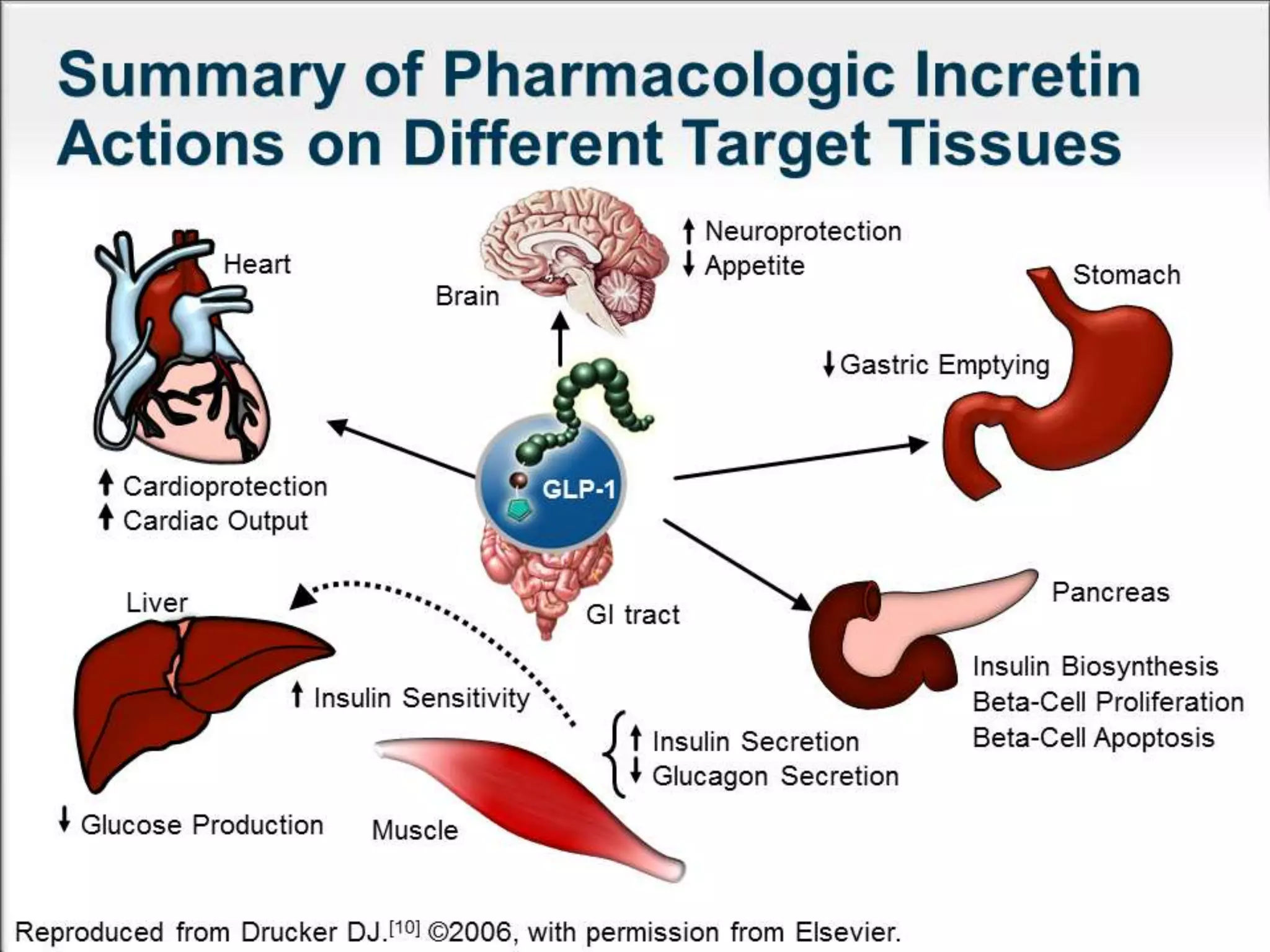
• Incretin hormones increase insulin gene
transcription, leads to β cell proliferation, and 
β cell apoptosis. As a whole there is increased
insulin secretion.
• Incretins slow down gastric emptying and
suppress appettite.
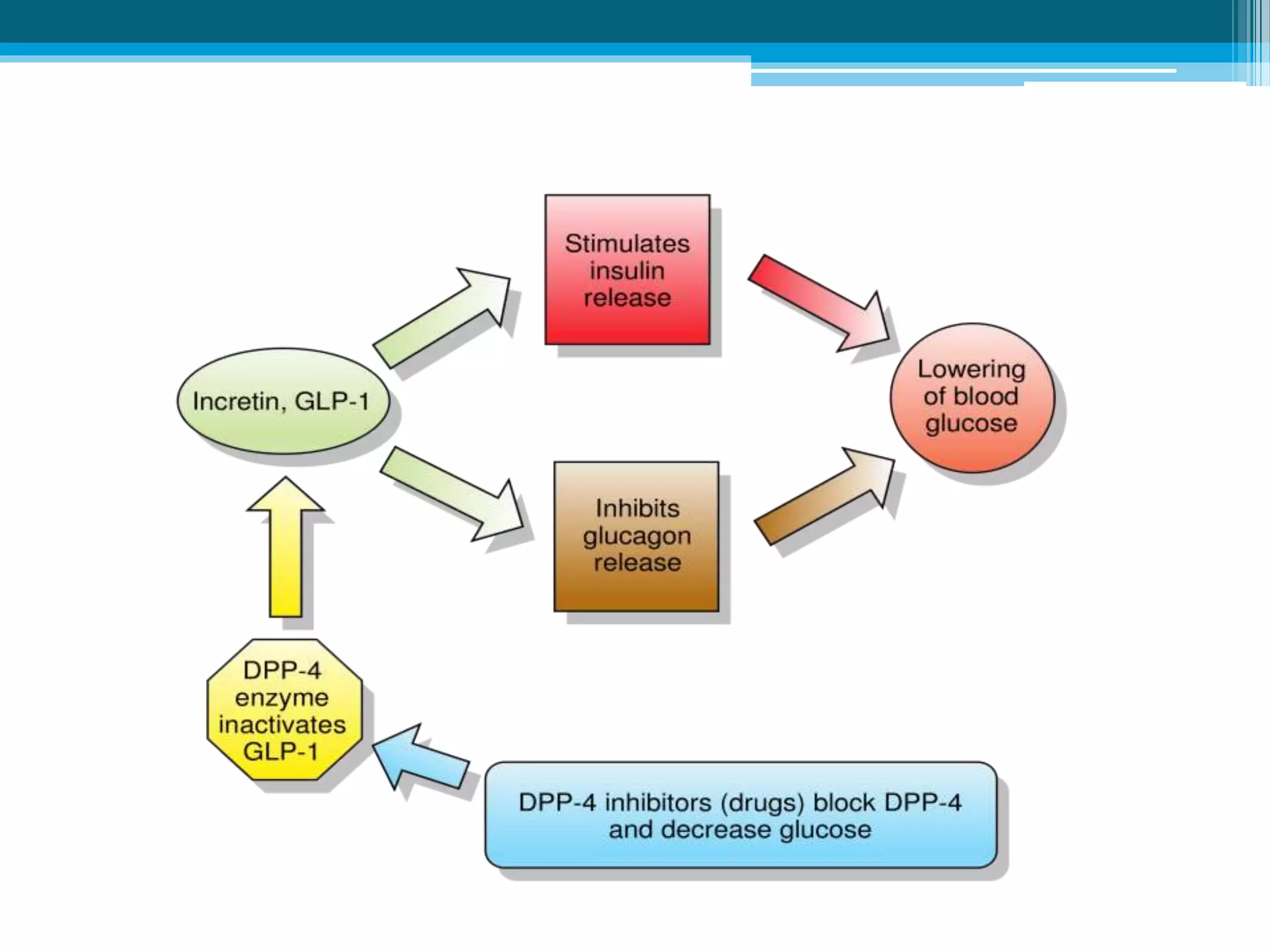
• Incretins are rapidly inactivated by the
Dipeptidyl peptidase-4 (DPP-4) enzyme.
Effects of GLP-1 and GIP on Glucose
Metabolism
GLP-1 GIP
 Insulin secretion  insulin secretion
  cell mass   cell mass
 glucagon secretion and
hepatic gluconeo-genesis
 glucagon secretion but 
gluconeogenic response to glucagon
 gastric emptying  gastric emptying
The Ominous Octet
Islet -cell
Impaired
Insulin Secretion
Neurotransmitter
Dysfunction
Decreased Glucose
Uptake
Islet a-cell
Increased
Glucagon Secretion
Increased
Lipolysis
Increased Glucose
Reabsorption
Increased
HGP
Decreased
Incretin Effect
Decreased
pancreatic insulin
secretion
Peripheral
insulin
resistance in
muscle and fat
tissue
Increased
hepatic
glucose output
Deficient
incretin
hormones
The Incretin Effect Is Diminished in Subjects
With Type 2 Diabetes
Oral glucose load Intravenous (IV) glucose infusion
Adapted with permission from Nauck M et al. Diabetologia 1986;29:46–52. Copyright © 1986 Springer-
Verlag.
Time, min
Control Subjects
(n=8)
IRInsulin,mU/L
80
60
40
20
0
18060 1200
Normal Incretin Effect
80
60
40
20
0
18060 1200
Subjects With Type 2 Diabetes
(n=14)
Diminished Incretin Effect
Time, min
IRInsulin,mU/L
Treatment options
• Incretin mimetics which are Glucagon-like
peptide-1 (GLP-1) agonists.
• Dipeptidyl peptidase-4 (DPP-4) enzyme
inhibitors which inhibit the breakdown of GLP-1.
DPP-4 inhibitors or Incretin
Enhancers
• Sitagliptin (2006)
• Saxagliptin(2009)
• Vildagliptin
• Linagliptin(2011)
• Alogliptin (2013)
Incretin Mimetics/GLP-1 agonists or
analogs
• Exenatide (2005)
• Liraglutide (2010)
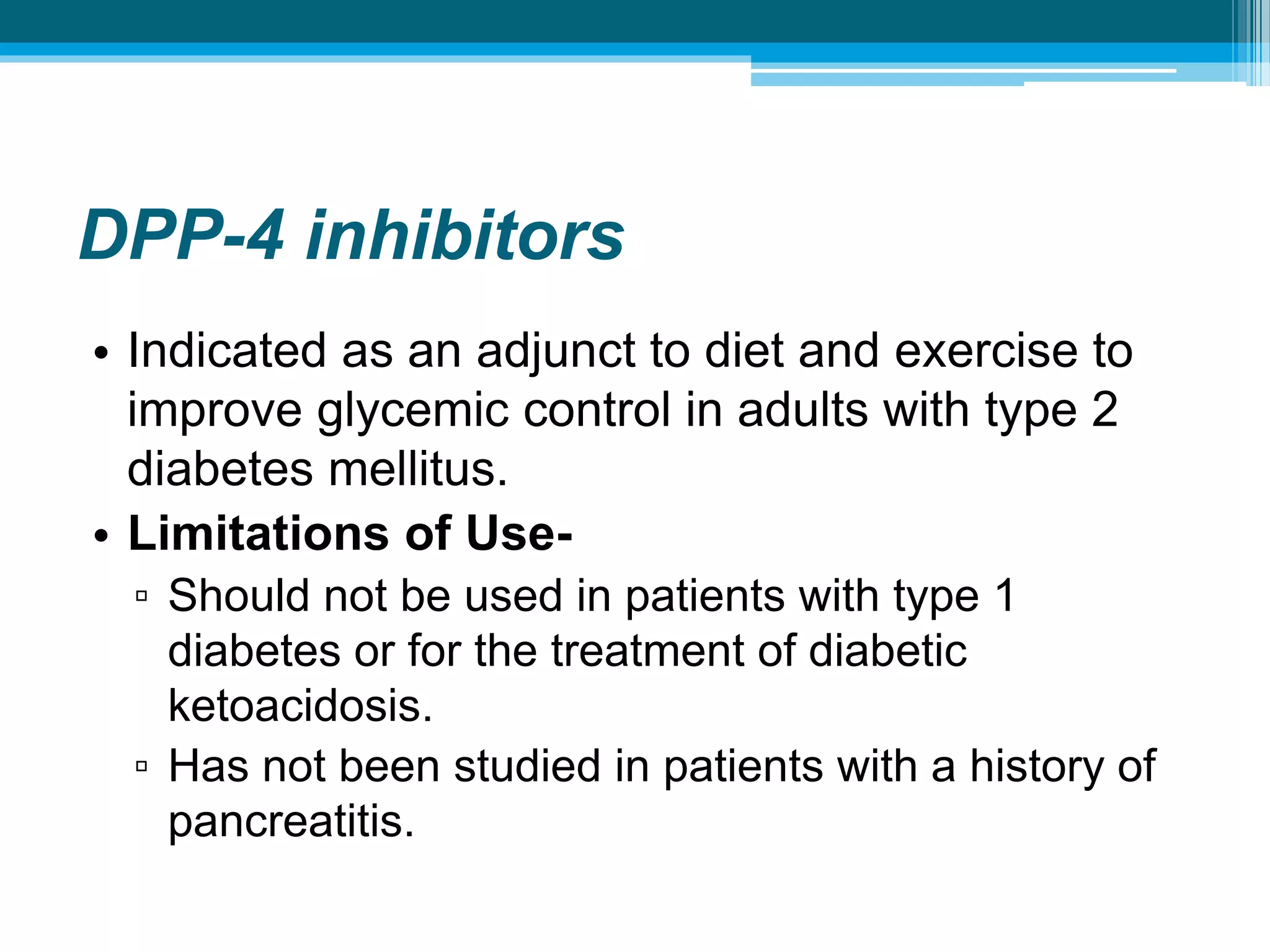
DPP-4 inhibitors
• Indicated as an adjunct to diet and exercise to
improve glycemic control in adults with type 2
diabetes mellitus.
• Limitations of Use-
▫ Should not be used in patients with type 1
diabetes or for the treatment of diabetic
ketoacidosis.
▫ Has not been studied in patients with a history of
pancreatitis.
• Can be taken with or without food.
• Contraindicated if history of serious
hypersensitivity reaction to the drug.
• Safety and effectiveness in children under 18
years have not been established.
• There are no adequate and well-controlled
studies in pregnant women.
Inhibition of DPP-4 increases active GLP-1
GLP-1
inactive
(>80% of pool)
Active
GLP-1
Meal
DPP-4
Intestinal
GLP-1
release
GLP-1 t½=1–2 min
DPP-4=dipeptidyl peptidase-4; GLP-1=glucagon-like peptide-1
Adapted from Rothenberg P, et al. Diabetes 2000; 49 (suppl 1): A39. Abstract 160-OR.
Adapted from Deacon CF, et al. Diabetes 1995; 44: 1126-1131.
Potential cardiovascular benefits of
DPP-4 inhibitors
• Neutral effect on body weight.
• Improved glycemic control, including PPG
reduction.
• Decreased systolic blood pressure.
• Improved lipid profile.
• Reduction in C-reactive protein (CRP).
• Improvement of endothelial dysfunction.
Sitagliptin
• Dosage and administration-
▫ The recommended dose is 100 mg once daily.
▫ Can be taken with or without food
▫ Maximum dose 100 mg daily.
Dosage Adjustment in Patients With Moderate, Severe
and End Stage Renal Disease (ESRD)
Moderate Severe and ESRD
50 mg once daily 25 mg once daily
(CCr >30 to <50 mL/min
~Serum Cr levels [mg/dL]
Men: >1.7– ≤3.0;
Women: >1.5– ≤2.5)
(CCr <30 mL/min
~Serum Cr levels [mg/dL]
Men: >3.0;
Women: >2.5;
or on dialysis)
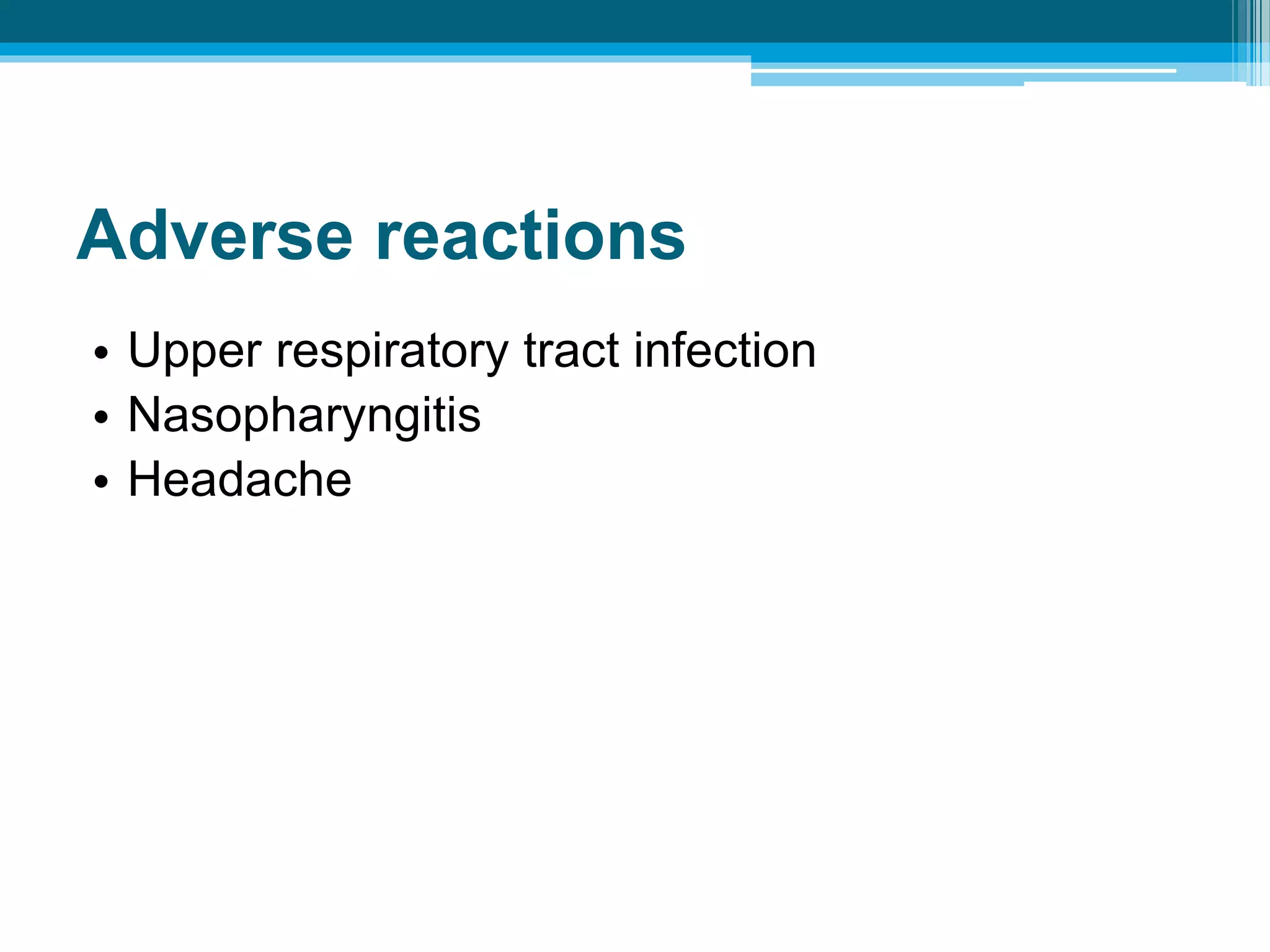
Adverse reactions
• Upper respiratory tract infection
• Nasopharyngitis
• Headache
PRECAUTIONS
• Postmarketing reports of acute pancreatitis,
including fatal and non-fatal hemorrhagic or
necrotizing pancreatitis.
• Postmarketing reports of acute renal failure,
sometimes requiring dialysis.
• Increased risk of hypoglycemia when added to
an insulin secretagogue or insulin therapy.
Vildagliptin
• Indications
▫ In dual combination with metformin or sulfonylurea
or pioglitazone.
▫ In triple combination with a sulfonylurea and
metformin.
▫ In combination with insulin (with or without
metformin).
Dosage and administration
• Dual combination with metformin/
thiazolidinedione- 50 mg or 100 mg daily.
• Dual combination with a sulfonylurea- 50 mg once
daily in the morning.
• Combination with insulin- 50 mg or 100 mg daily.
• Maximum dose- 100 mg (in two doses).
Patients with chronic kidney disease
Mild Moderate Severe ESRD
eGFR 60-89
mL/min/1.73m2
eGFR 30-59
mL/min/1.73m2
eGFR 15-29
mL/min/1.73m2
eGFR <15
mL/min/1.73m2
No dosage
adjustment
required
50 mg once daily
Precautions
• Limited experience in patients with End Stage
Renal Disease (ESRD) on haemodialysis.
• Not recommended in patients with hepatic
impairment, including patients with a pre-
treatment ALT or AST > 2.5 times the upper limit
of normal.
• LFTs should be monitored during Vildagliptin
treatment at three month intervals during the
first year and periodically thereafter.
• If an increase in AST or ALT of 3 times upper
limit of normal or greater persist, withdrawal of
therapy with Vildagliptin is recommended.
• It contains lactose. Patients with rare hereditary
problems of galactose intolerance, lactase
deficiency or glucose-galactose
malabsorption should not take this medicine.
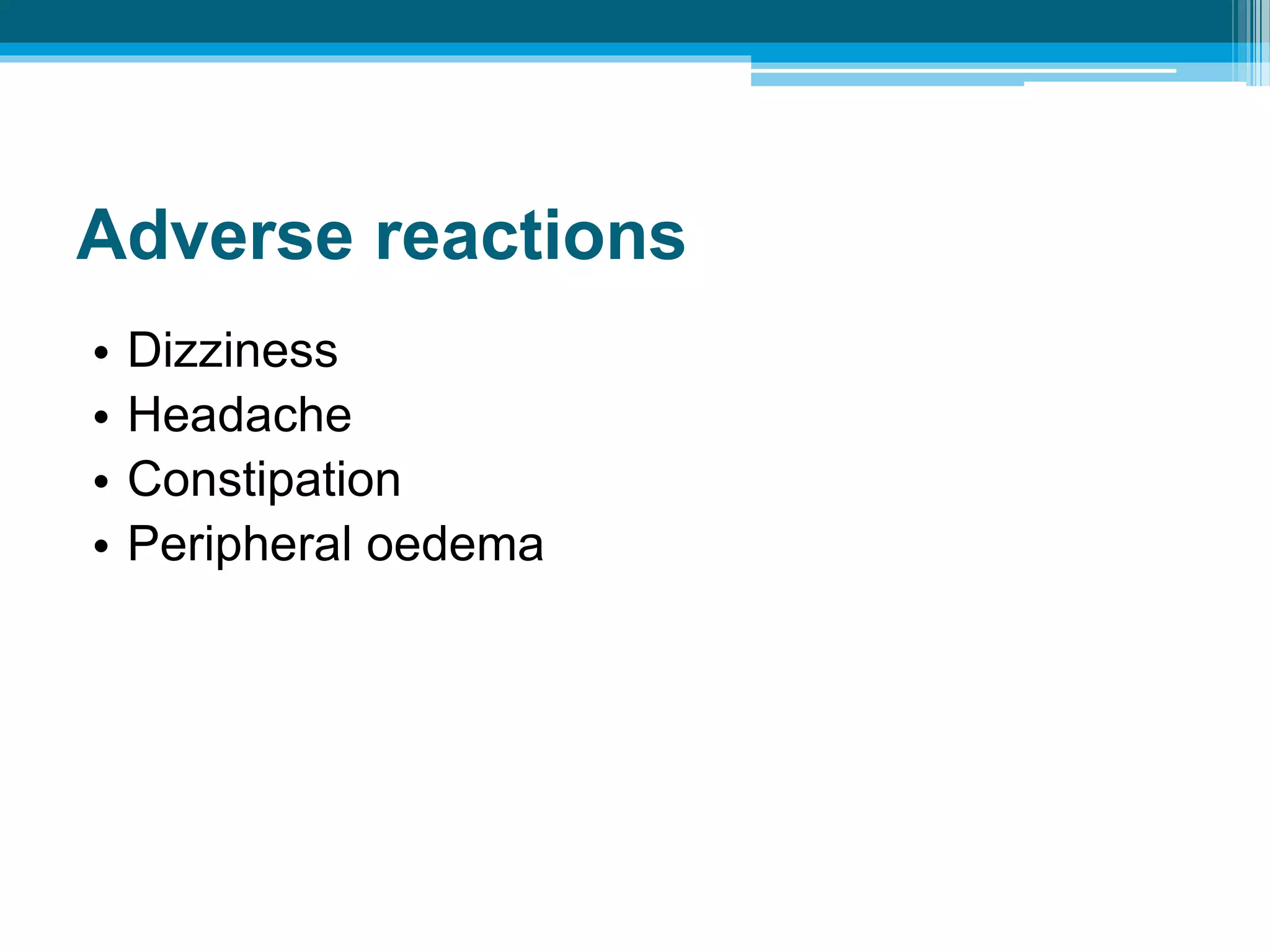
Adverse reactions
• Dizziness
• Headache
• Constipation
• Peripheral oedema
Saxagliptin
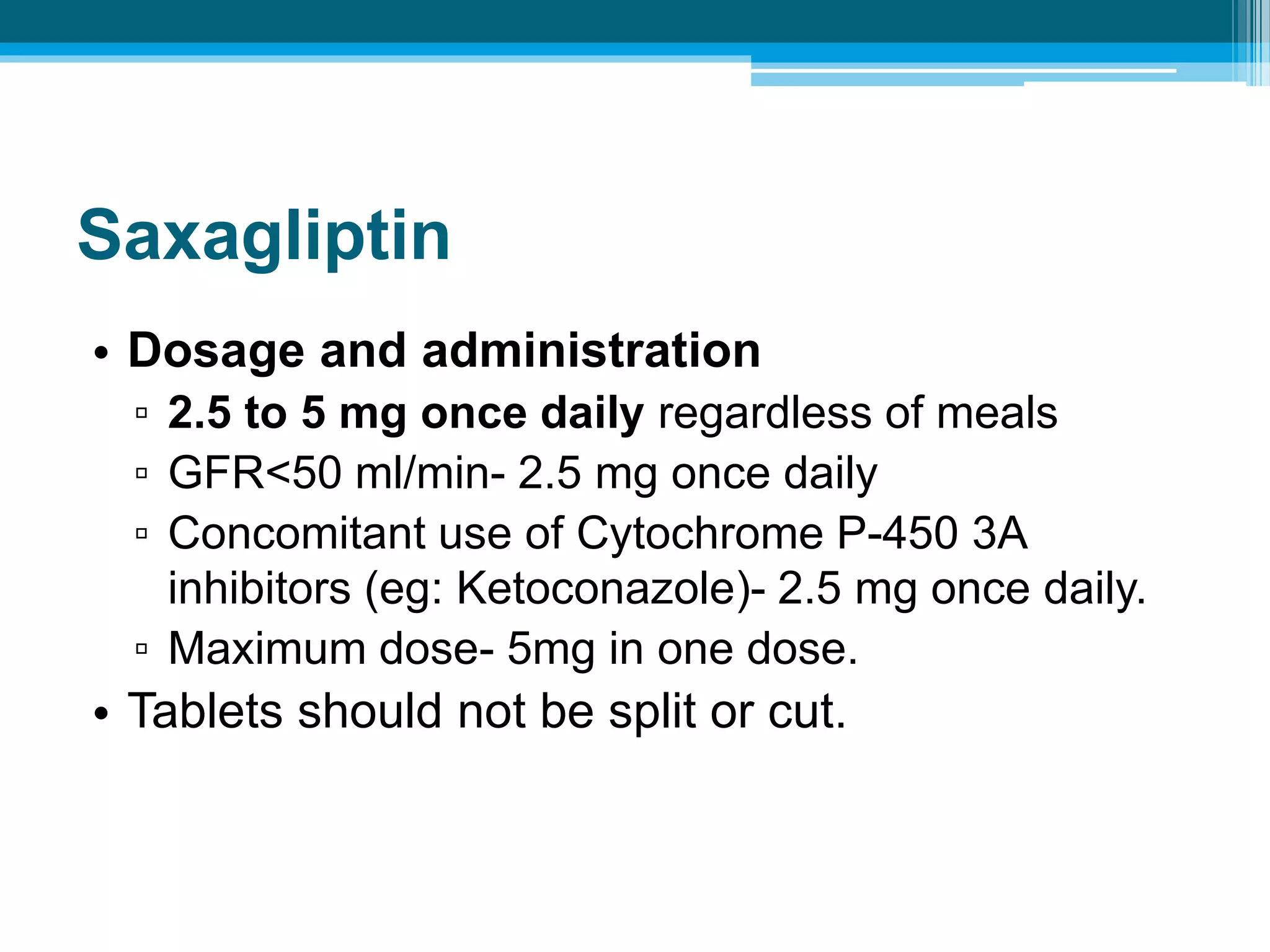
• Dosage and administration
▫ 2.5 to 5 mg once daily regardless of meals
▫ GFR<50 ml/min- 2.5 mg once daily
▫ Concomitant use of Cytochrome P-450 3A
inhibitors (eg: Ketoconazole)- 2.5 mg once daily.
▫ Maximum dose- 5mg in one dose.
• Tablets should not be split or cut.
Precautions
• Acute pancreatitis
• Hypoglycemia
• Hypersensitivity (Urticaria/Facial edema)
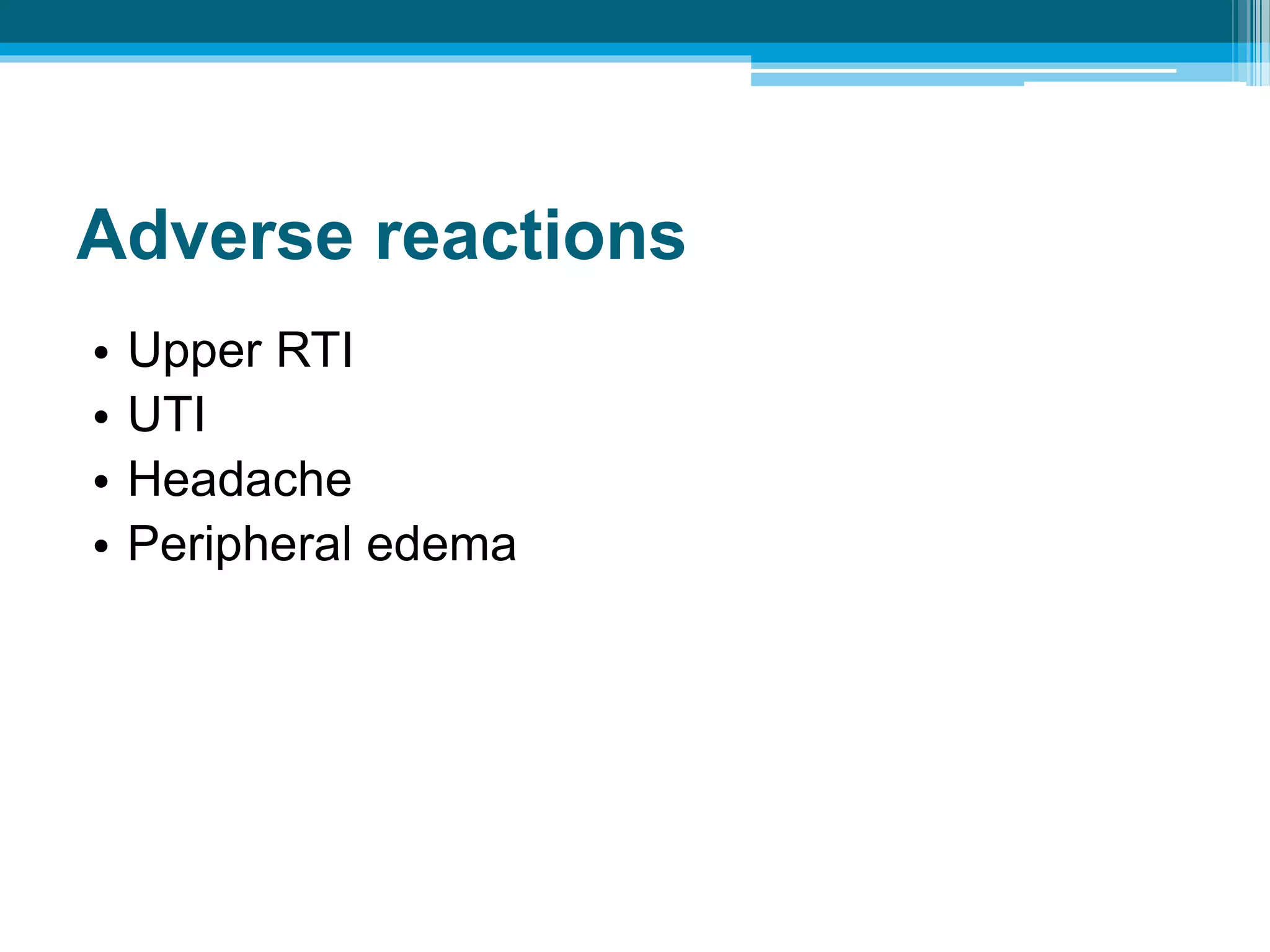
Adverse reactions
• Upper RTI
• UTI
• Headache
• Peripheral edema
Linagliptin
• Dosage and administration-
▫ 5 mg once daily.
• No dosage adjustment needed for renal or
hepatic impairment.
• Strong inducer of Cytochrome P-450 3A (e.g-
Rifampin) decrease exposure to linagliptin. For
patients requiring use of such drugs, an
alternative to linagliptin is strongly
recommended.
Precautions
• Acute pancreatitis.
• Hypoglycemia.
• Serious hypersensitivity reactions including
anaphylaxis, angioedema, and exfoliative skin
conditions.
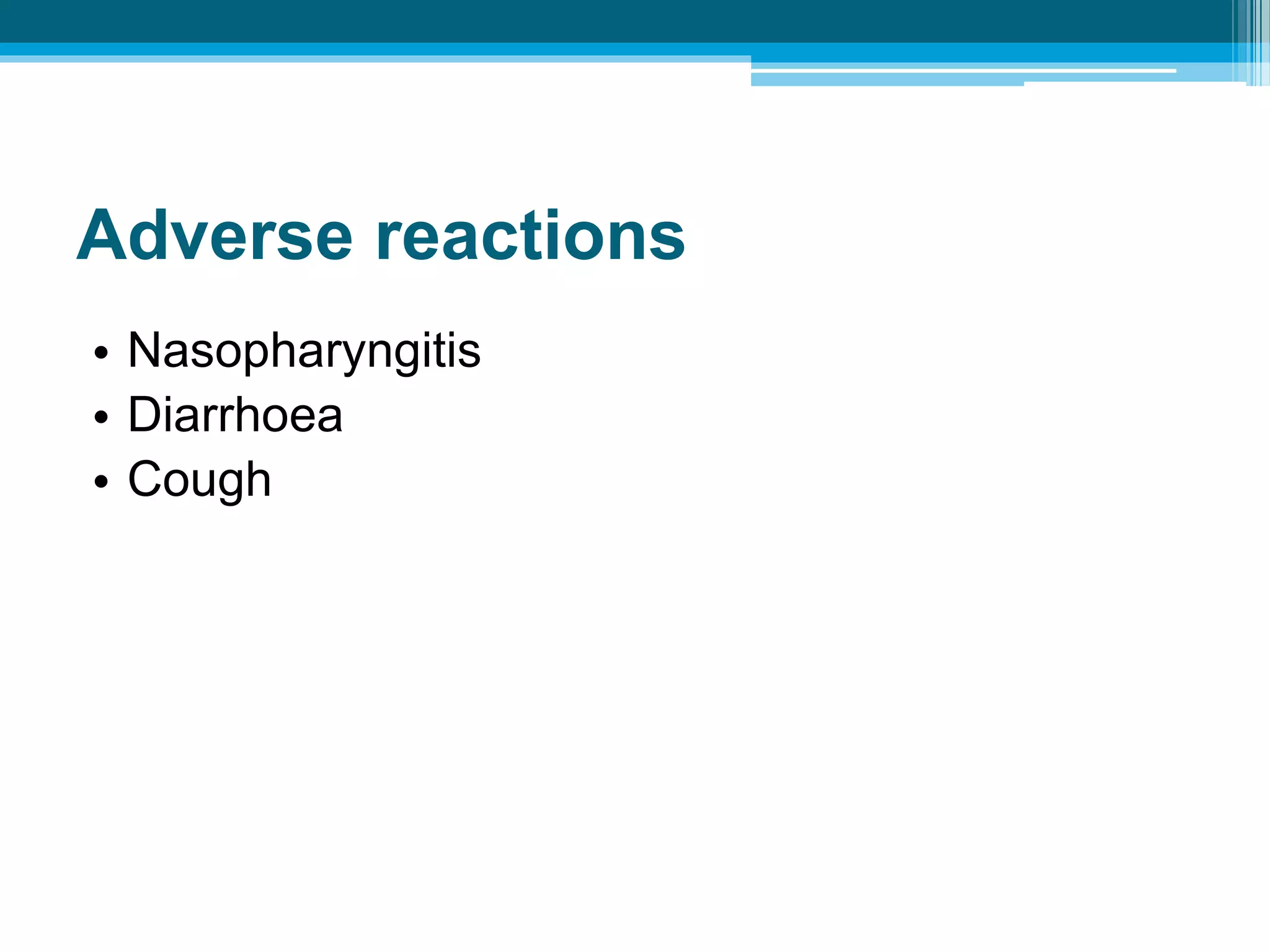
Adverse reactions
• Nasopharyngitis
• Diarrhoea
• Cough
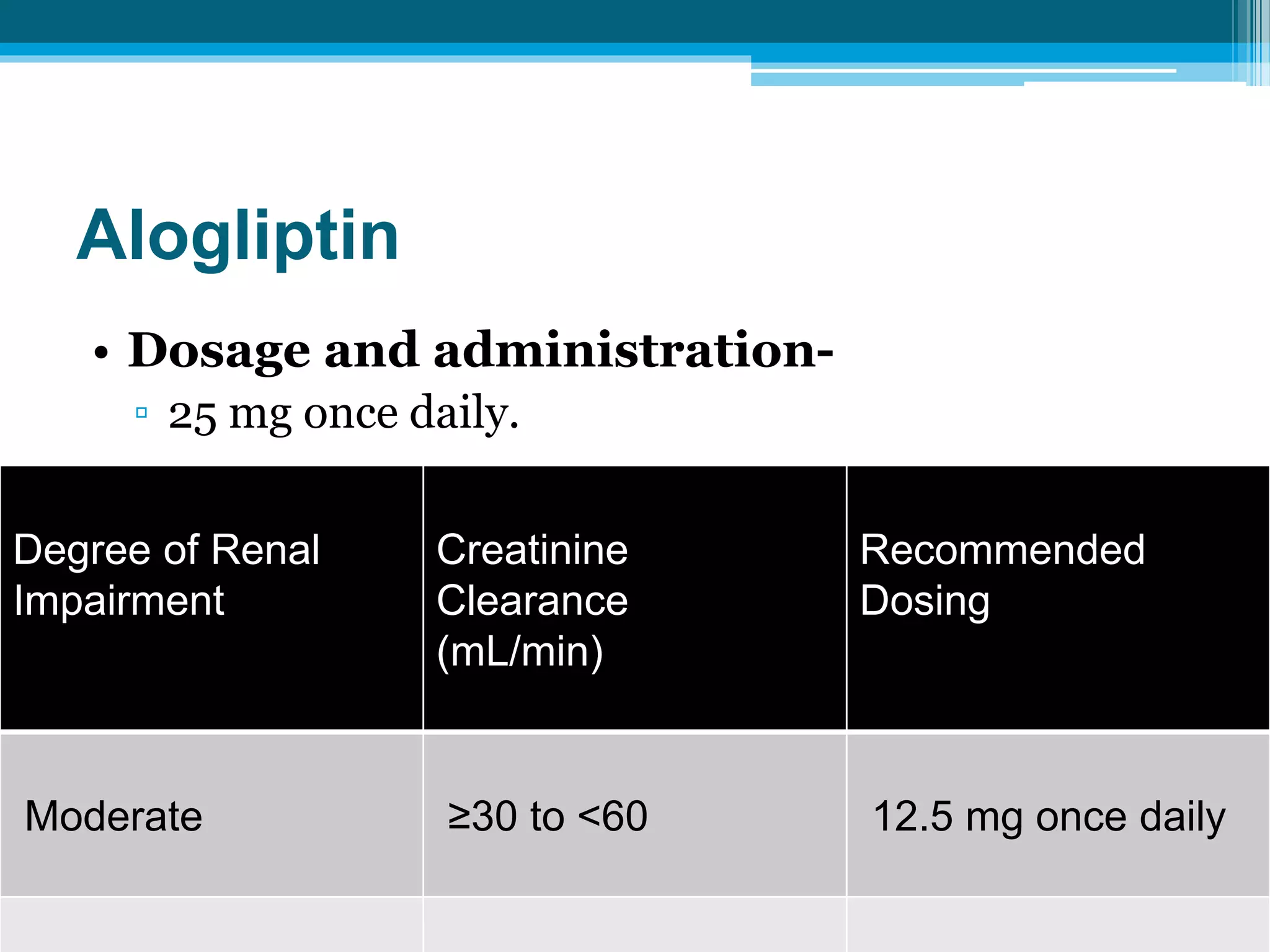
Alogliptin
• Dosage and administration-
▫ 25 mg once daily.
Degree of Renal
Impairment
Creatinine
Clearance
(mL/min)
Recommended
Dosing
Moderate ≥30 to <60 12.5 mg once daily
Precautions
• Acute pancreatitis.
• Hypersensitivity.
• Hepatic failure.
• Hypoglycemia.
Adverse reactions
• Nasopharyngitis
• Headache
• Upper RTI
Drug Duration of
action (Hours)
Preparation Timing with
meal
Maximum
Dose
Sitagliptine 18-24 25, 50, 100 mg ---- 100 mg ( in 1
dose)
Vildagliptine 12-24 50 mg ---- 50 mg (in 2
doses)
Saxagliptine 24 5 mg ---- 5 mg ( in 1
dose)
Linagliptine 24 5 mg ---- 5 mg ( in 1
dose)
GLP-1 agonists
Exenatide
• A chemical in the lizard’s
saliva called exendin-4 was
shown to act in a similar
way to the human hormone
glucagon-like-peptide-1
(GLP-1)
Dosage and administration
• The concurrent use with insulin has not been
studied and cannot be recommended .
• Inject subcutaneously within 60 minutes prior
to morning and evening meals (or before the two
main meals of the day, approximately 6 hours or
more apart).
• Initiate at 5 mcg per dose twice daily; increase
to 10 mcg twice daily after 1 month based on
clinical response
• It should not be used in patients with severe
renal impairment (creatinine clearance < 30
mL/min) or ESRD.
• Should be used with caution in patients with
renal transplantation.
• Not recommended in patients with severe
gastrointestinal disease including gastroparesis.
Precautions
• Pancreatitis.
• Hypoglycemia.
• Renal impairment.
• Severe GI disease.
• Hypersensitivity.
• Co-administration with Warfarin may cause
increased INR and bleeding.
• For oral medications that are dependent on
threshold concentrations for efficacy, such as
contraceptives and antibiotics, patients should be
advised to take those drugs at least 1 hour
before injection.
Adverse reactions
• Nausea, which usually decreases over time.
• Vomiting.
• Hypoglycemia.
• Diarrhoea.
• Dizziness.
• Headache.
• Dyspepsia.
Liraglutide
• Human GLP-1
analogue
• Slow absorption from subcutis
• Resistant to DPP-4
• Long plasma half-life (T½=13 h)
C-16 fatty acid
(palmitoyl)
His Ala Thr Thr SerPheGlu Gly Asp
Val
Ser
SerTyrLeuGluGlyAlaAla GlnLys
Phe
Glu
Ile Ala Trp Leu GlyVal Gly Arg
Glu
Arg
7 9
34
Liraglutide
Dosage and administration
• Administer once daily at any time of day,
independently of meals.
• Initiate at 0.6 mg per day for one week. This
dose is intended to reduce gastrointestinal
symptoms during initial titration, and is not
effective for glycemic control.
• After one week, increase the dose to 1.2 mg. If
the 1.2 mg dose does not result in acceptable
glycemic control, the dose can be increased to
1.8 mg (maximum dose) .
Contraindications
• Do not use in patients with a personal or family
history of medullary thyroid carcinoma or in
patients with Multiple Endocrine Neoplasia
syndrome type 2.
Precautions
• Pancreatitis.
• Serious hypoglycemia.
• Thyroid C-cell tumors in animals.
Adverse reactions
• Headache.
• Nausea.
• Diarrhoea.
• Anti-liraglutide antibody formation.
• Vomiting.
• Upper Respiratory Tract Infection.
• Urinary Tract Infection.
• Dizziness.
• Sinusitis.
• Nasopharyngitis.
Similarities of incretin-based therapies
Differences of incretin-based therapies
Clinical benefits from using incretin-
based glucose lowering medications
• Effective lowering of fasting and postprandial
glucose.
• No stimulation of insulin secretion at low glucose
(avoidance of hypoglycemia).
• No risk of body weight gain.
• Reduction systolic blood pressure.
• Durability better than with sulfonylureas.
• Prevention of microvascular diabetes complications
based on glucose-lowering effects.
• Potential to prevent cardiovascular events and
mortality.
Adverse outcomes from using
incretin- based glucose lowering
medications
• Nausea, vomiting, diarrhea, and other
“gastrointestinal” adverse events.
• Pancreatitis associated with the use of GLP-1
receptor agonists and DPP-4 inhibitors.
• Pancreatic cancer hypothesized to be a long-
term consequence of using incretin-based
glucose-lowering drugs
• C-cell proliferation (hyperplasia, adenomas,
medullary thyroid cancer) induced by GLP-1
receptor agonists in rodents
Incretins In Diabetes Mellitus

Incretins In Diabetes Mellitus

  • 2.
    Incretins in DiabetesMellitus Dr. Abhijit Chowdhury Honorary Medical Officer; Unit: 1 Department of Endocrinology BIRDEM
  • 3.
    Incretins • These arehormones produced by GIT in response to incoming nutrients, and have important actions that contribute to glucose homeostasis. • Two hormones- ▫ Gastric inhibitory polypeptide (GIP) ▫ Glucagon like peptide-1 (GLP-1)
  • 4.
    • In 1902,William Bayliss and Starling postulated that a gut factor(s) might act on the endocrine pancreas in response to oral nutrients. • In 1930, La Barre described a greater effect of oral rather parenteral glucose in increasing insulin secretion. • La Barre and Still coined the term Incretin to describe the hormonal activity released from the intestine that stimulates insulin secretion.
  • 5.
    GIP (Gastric InhibitoryPolypeptide) • Also known as Glucose-dependent Insulinotrophic Peptide. • 42 aa polypeptide; discovered in 1969. • Secreted from proximal intestinal K cells (Duodenum and Jejunum). • Released by ingestion of carbohydrates and fats. • Stimulates insulin release. • Inhibits gastric acid secretion. • Type 2 diabetes patients are resistant to the action of GIP, hence high blood level of GIP is found in these patients.
  • 6.
    GLP-1 (Glucagon LikePeptide-1) • 30 aa polypeptide; discovered in 1988. • t ½: 1 to 2 minutes. • Secreted from distal intestinal L cells. • Released by ingestion of carbohydrates and rapid release occurs from ileal L cells within 15 minutes of eating. • Releases insulin if BG is >70- 90 mg/dL. • In Type 2 diabetes patients there is deficiency of GLP-1.
  • 7.
    Pancreatic Islet Cellsare Targets for Incretin Hormones GLP-1=Glucagon-Like Peptide-1 Adapted from Drucker D. Diabetes Care. 2003;26:2929-2940. Wang Q, et al. Diabetologia. 2004;47:478-487. Incretin Response Food intake ι-Cell β-Cell Pancreatic Islet cells Incretin
  • 8.
    • Incretin hormonesincrease insulin gene transcription, leads to β cell proliferation, and  β cell apoptosis. As a whole there is increased insulin secretion. • Incretins slow down gastric emptying and suppress appettite. • Incretins are rapidly inactivated by the Dipeptidyl peptidase-4 (DPP-4) enzyme.
  • 10.
    Effects of GLP-1and GIP on Glucose Metabolism GLP-1 GIP  Insulin secretion  insulin secretion   cell mass   cell mass  glucagon secretion and hepatic gluconeo-genesis  glucagon secretion but  gluconeogenic response to glucagon  gastric emptying  gastric emptying
  • 14.
    The Ominous Octet Islet-cell Impaired Insulin Secretion Neurotransmitter Dysfunction Decreased Glucose Uptake Islet a-cell Increased Glucagon Secretion Increased Lipolysis Increased Glucose Reabsorption Increased HGP Decreased Incretin Effect
  • 15.
    Decreased pancreatic insulin secretion Peripheral insulin resistance in muscleand fat tissue Increased hepatic glucose output Deficient incretin hormones
  • 16.
    The Incretin EffectIs Diminished in Subjects With Type 2 Diabetes Oral glucose load Intravenous (IV) glucose infusion Adapted with permission from Nauck M et al. Diabetologia 1986;29:46–52. Copyright © 1986 Springer- Verlag. Time, min Control Subjects (n=8) IRInsulin,mU/L 80 60 40 20 0 18060 1200 Normal Incretin Effect 80 60 40 20 0 18060 1200 Subjects With Type 2 Diabetes (n=14) Diminished Incretin Effect Time, min IRInsulin,mU/L
  • 17.
    Treatment options • Incretinmimetics which are Glucagon-like peptide-1 (GLP-1) agonists. • Dipeptidyl peptidase-4 (DPP-4) enzyme inhibitors which inhibit the breakdown of GLP-1.
  • 18.
    DPP-4 inhibitors orIncretin Enhancers • Sitagliptin (2006) • Saxagliptin(2009) • Vildagliptin • Linagliptin(2011) • Alogliptin (2013)
  • 19.
    Incretin Mimetics/GLP-1 agonistsor analogs • Exenatide (2005) • Liraglutide (2010)
  • 20.
    DPP-4 inhibitors • Indicatedas an adjunct to diet and exercise to improve glycemic control in adults with type 2 diabetes mellitus. • Limitations of Use- ▫ Should not be used in patients with type 1 diabetes or for the treatment of diabetic ketoacidosis. ▫ Has not been studied in patients with a history of pancreatitis.
  • 21.
    • Can betaken with or without food. • Contraindicated if history of serious hypersensitivity reaction to the drug. • Safety and effectiveness in children under 18 years have not been established. • There are no adequate and well-controlled studies in pregnant women.
  • 22.
    Inhibition of DPP-4increases active GLP-1 GLP-1 inactive (>80% of pool) Active GLP-1 Meal DPP-4 Intestinal GLP-1 release GLP-1 t½=1–2 min DPP-4=dipeptidyl peptidase-4; GLP-1=glucagon-like peptide-1 Adapted from Rothenberg P, et al. Diabetes 2000; 49 (suppl 1): A39. Abstract 160-OR. Adapted from Deacon CF, et al. Diabetes 1995; 44: 1126-1131.
  • 23.
    Potential cardiovascular benefitsof DPP-4 inhibitors • Neutral effect on body weight. • Improved glycemic control, including PPG reduction. • Decreased systolic blood pressure. • Improved lipid profile. • Reduction in C-reactive protein (CRP). • Improvement of endothelial dysfunction.
  • 24.
    Sitagliptin • Dosage andadministration- ▫ The recommended dose is 100 mg once daily. ▫ Can be taken with or without food ▫ Maximum dose 100 mg daily.
  • 25.
    Dosage Adjustment inPatients With Moderate, Severe and End Stage Renal Disease (ESRD) Moderate Severe and ESRD 50 mg once daily 25 mg once daily (CCr >30 to <50 mL/min ~Serum Cr levels [mg/dL] Men: >1.7– ≤3.0; Women: >1.5– ≤2.5) (CCr <30 mL/min ~Serum Cr levels [mg/dL] Men: >3.0; Women: >2.5; or on dialysis)
  • 26.
    Adverse reactions • Upperrespiratory tract infection • Nasopharyngitis • Headache
  • 27.
    PRECAUTIONS • Postmarketing reportsof acute pancreatitis, including fatal and non-fatal hemorrhagic or necrotizing pancreatitis. • Postmarketing reports of acute renal failure, sometimes requiring dialysis. • Increased risk of hypoglycemia when added to an insulin secretagogue or insulin therapy.
  • 28.
    Vildagliptin • Indications ▫ Indual combination with metformin or sulfonylurea or pioglitazone. ▫ In triple combination with a sulfonylurea and metformin. ▫ In combination with insulin (with or without metformin).
  • 29.
    Dosage and administration •Dual combination with metformin/ thiazolidinedione- 50 mg or 100 mg daily. • Dual combination with a sulfonylurea- 50 mg once daily in the morning. • Combination with insulin- 50 mg or 100 mg daily. • Maximum dose- 100 mg (in two doses).
  • 30.
    Patients with chronickidney disease Mild Moderate Severe ESRD eGFR 60-89 mL/min/1.73m2 eGFR 30-59 mL/min/1.73m2 eGFR 15-29 mL/min/1.73m2 eGFR <15 mL/min/1.73m2 No dosage adjustment required 50 mg once daily
  • 31.
    Precautions • Limited experiencein patients with End Stage Renal Disease (ESRD) on haemodialysis. • Not recommended in patients with hepatic impairment, including patients with a pre- treatment ALT or AST > 2.5 times the upper limit of normal. • LFTs should be monitored during Vildagliptin treatment at three month intervals during the first year and periodically thereafter.
  • 32.
    • If anincrease in AST or ALT of 3 times upper limit of normal or greater persist, withdrawal of therapy with Vildagliptin is recommended. • It contains lactose. Patients with rare hereditary problems of galactose intolerance, lactase deficiency or glucose-galactose malabsorption should not take this medicine.
  • 33.
    Adverse reactions • Dizziness •Headache • Constipation • Peripheral oedema
  • 34.
    Saxagliptin • Dosage andadministration ▫ 2.5 to 5 mg once daily regardless of meals ▫ GFR<50 ml/min- 2.5 mg once daily ▫ Concomitant use of Cytochrome P-450 3A inhibitors (eg: Ketoconazole)- 2.5 mg once daily. ▫ Maximum dose- 5mg in one dose. • Tablets should not be split or cut.
  • 35.
    Precautions • Acute pancreatitis •Hypoglycemia • Hypersensitivity (Urticaria/Facial edema)
  • 36.
    Adverse reactions • UpperRTI • UTI • Headache • Peripheral edema
  • 37.
    Linagliptin • Dosage andadministration- ▫ 5 mg once daily. • No dosage adjustment needed for renal or hepatic impairment. • Strong inducer of Cytochrome P-450 3A (e.g- Rifampin) decrease exposure to linagliptin. For patients requiring use of such drugs, an alternative to linagliptin is strongly recommended.
  • 38.
    Precautions • Acute pancreatitis. •Hypoglycemia. • Serious hypersensitivity reactions including anaphylaxis, angioedema, and exfoliative skin conditions.
  • 39.
  • 40.
    Alogliptin • Dosage andadministration- ▫ 25 mg once daily. Degree of Renal Impairment Creatinine Clearance (mL/min) Recommended Dosing Moderate ≥30 to <60 12.5 mg once daily
  • 41.
    Precautions • Acute pancreatitis. •Hypersensitivity. • Hepatic failure. • Hypoglycemia.
  • 42.
  • 43.
    Drug Duration of action(Hours) Preparation Timing with meal Maximum Dose Sitagliptine 18-24 25, 50, 100 mg ---- 100 mg ( in 1 dose) Vildagliptine 12-24 50 mg ---- 50 mg (in 2 doses) Saxagliptine 24 5 mg ---- 5 mg ( in 1 dose) Linagliptine 24 5 mg ---- 5 mg ( in 1 dose)
  • 44.
    GLP-1 agonists Exenatide • Achemical in the lizard’s saliva called exendin-4 was shown to act in a similar way to the human hormone glucagon-like-peptide-1 (GLP-1)
  • 45.
    Dosage and administration •The concurrent use with insulin has not been studied and cannot be recommended . • Inject subcutaneously within 60 minutes prior to morning and evening meals (or before the two main meals of the day, approximately 6 hours or more apart). • Initiate at 5 mcg per dose twice daily; increase to 10 mcg twice daily after 1 month based on clinical response
  • 46.
    • It shouldnot be used in patients with severe renal impairment (creatinine clearance < 30 mL/min) or ESRD. • Should be used with caution in patients with renal transplantation. • Not recommended in patients with severe gastrointestinal disease including gastroparesis.
  • 47.
    Precautions • Pancreatitis. • Hypoglycemia. •Renal impairment. • Severe GI disease. • Hypersensitivity. • Co-administration with Warfarin may cause increased INR and bleeding. • For oral medications that are dependent on threshold concentrations for efficacy, such as contraceptives and antibiotics, patients should be advised to take those drugs at least 1 hour before injection.
  • 48.
    Adverse reactions • Nausea,which usually decreases over time. • Vomiting. • Hypoglycemia. • Diarrhoea. • Dizziness. • Headache. • Dyspepsia.
  • 49.
    Liraglutide • Human GLP-1 analogue •Slow absorption from subcutis • Resistant to DPP-4 • Long plasma half-life (T½=13 h) C-16 fatty acid (palmitoyl) His Ala Thr Thr SerPheGlu Gly Asp Val Ser SerTyrLeuGluGlyAlaAla GlnLys Phe Glu Ile Ala Trp Leu GlyVal Gly Arg Glu Arg 7 9 34 Liraglutide
  • 50.
    Dosage and administration •Administer once daily at any time of day, independently of meals. • Initiate at 0.6 mg per day for one week. This dose is intended to reduce gastrointestinal symptoms during initial titration, and is not effective for glycemic control. • After one week, increase the dose to 1.2 mg. If the 1.2 mg dose does not result in acceptable glycemic control, the dose can be increased to 1.8 mg (maximum dose) .
  • 51.
    Contraindications • Do notuse in patients with a personal or family history of medullary thyroid carcinoma or in patients with Multiple Endocrine Neoplasia syndrome type 2.
  • 52.
    Precautions • Pancreatitis. • Serioushypoglycemia. • Thyroid C-cell tumors in animals.
  • 53.
    Adverse reactions • Headache. •Nausea. • Diarrhoea. • Anti-liraglutide antibody formation. • Vomiting. • Upper Respiratory Tract Infection. • Urinary Tract Infection. • Dizziness. • Sinusitis. • Nasopharyngitis.
  • 55.
  • 56.
  • 57.
    Clinical benefits fromusing incretin- based glucose lowering medications • Effective lowering of fasting and postprandial glucose. • No stimulation of insulin secretion at low glucose (avoidance of hypoglycemia). • No risk of body weight gain. • Reduction systolic blood pressure. • Durability better than with sulfonylureas. • Prevention of microvascular diabetes complications based on glucose-lowering effects. • Potential to prevent cardiovascular events and mortality.
  • 58.
    Adverse outcomes fromusing incretin- based glucose lowering medications • Nausea, vomiting, diarrhea, and other “gastrointestinal” adverse events. • Pancreatitis associated with the use of GLP-1 receptor agonists and DPP-4 inhibitors. • Pancreatic cancer hypothesized to be a long- term consequence of using incretin-based glucose-lowering drugs • C-cell proliferation (hyperplasia, adenomas, medullary thyroid cancer) induced by GLP-1 receptor agonists in rodents

Editor's Notes