Microbiota & Diabetes
Abdulmoein Eid Al-Agha, FRCPCH
Professor of Pediatric Endocrinology, Head,
Pediatric Endocrinology & Diabetes section,
King Abdulaziz University Hospital, Saudi Arabia
www.aagha.kau.edu.sa
Objectives
• Introduction into human microbiota (what are they?)
• What do we know on Gut microbiota?
• Environmental factors affecting Gut microbiota (from antenatal life till adulthood)
• Dysbiosis of the microbiota (change beneficial bacteria to abnormal dysregulated
ones)
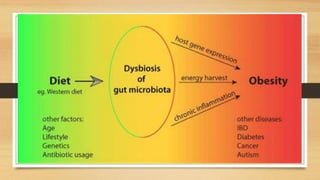
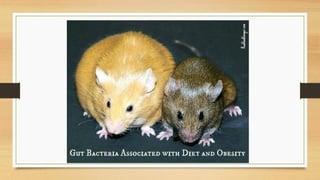
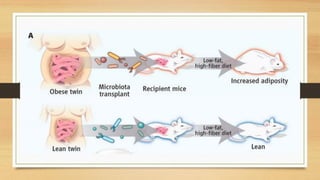
• High fat diet associated & obesity leads to microbiota dysbiosis which leads to type 2
DM & Metabolic syndrome
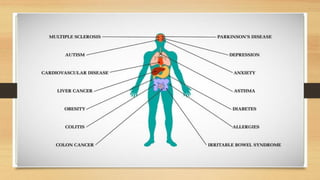
• Dysbiotic microbiota associations with various diseases including:
• Obesity, insulin resistance, type 2 DM & type 1 DM
What is the “Microbiota”?
“the ecological community of commensal,
symbiotic, & pathogenic microorganisms that share
our body space”
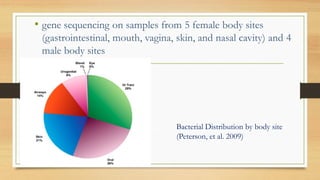
• gene sequencing on samples from 5 female body sites
(gastrointestinal, mouth, vagina, skin, and nasal cavity) and 4
male body sites
Bacterial Distribution by body site
(Peterson, et al. 2009)
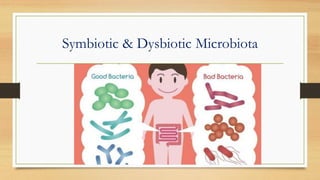
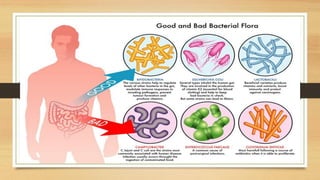
Symbiotic & Dysbiotic Microbiota
•What do we know about the gut
Microbiota in health/ Disease states?
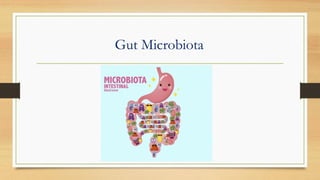
Gut Microbiota
Gut Microbiota
• Trillions of micro-organisms inhabit the distal gut, where they
together weigh about 1.5 kg
• Regarded as a microbial organ that carries out key functions
that the human host is incapable to perform by itself
• More than 90% of the prevalent bacterial species can be
grouped into the two bacterial Phyla Firmicutes (Gram-
positive) & Bacteroidetes (Gram-negative)
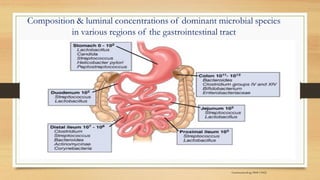
Composition & luminal concentrations of dominant microbial species
in various regions of the gastrointestinal tract
Gastroenterology 2008 134(2)
Beneficial Effects of Gut Microbiota
• Protects against pathogens
• Helps maturate and constantly educate the immune system
• Plays a role for regulation of intestinal hormone secretions & for
gastrointestinal nerve activity
• Members of gut microbiota synthesize vitamin K , folate & vitamin
B12
• Produce short-chain fatty acids (SCFAs) by fermentation of
otherwise non-digestible carbohydrates
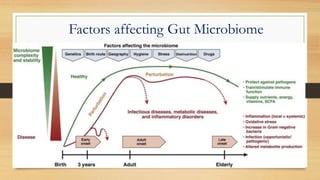
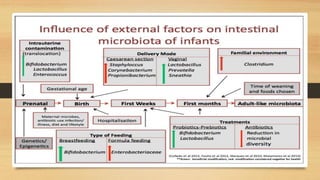
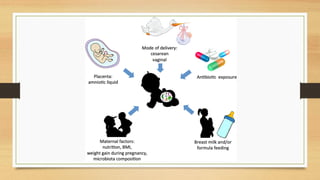
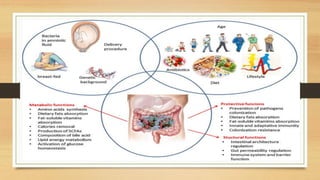
Factors affecting Gut Microbiome
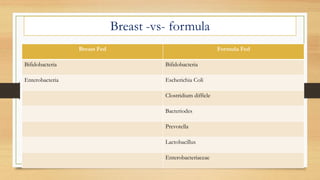
Breast -vs- formula
Breast Fed Formula Fed
Bifidobacteria Bifidobacteria
Enterobacteria Escherichia Coli
Clostridium difficle
Bacteriodes
Prevotella
Lactobacillus
Enterobacteriaceae
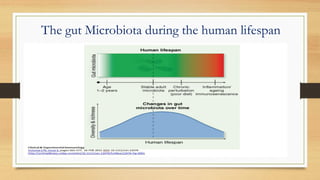
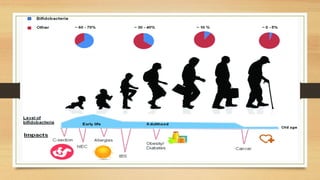
The gut Microbiota during the human lifespan
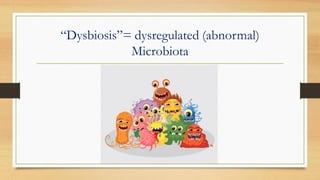
“Dysbiosis”= dysregulated (abnormal)
Microbiota
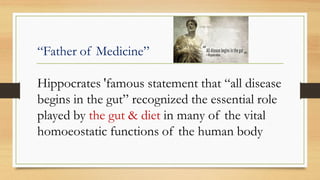
“Father of Medicine”
Hippocrates 'famous statement that “all disease
begins in the gut” recognized the essential role
played by the gut & diet in many of the vital
homoeostatic functions of the human body
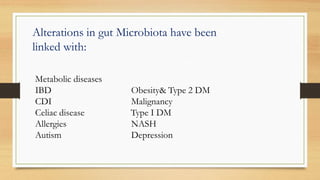
Metabolic diseases
IBD Obesity& Type 2 DM
CDI Malignancy
Celiac disease Type I DM
Allergies NASH
Autism Depression
Alterations in gut Microbiota have been
linked with:
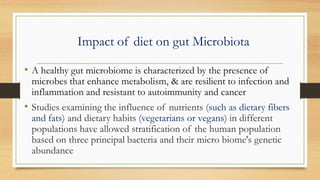
Impact of diet on gut Microbiota
• A healthy gut microbiome is characterized by the presence of
microbes that enhance metabolism, & are resilient to infection and
inflammation and resistant to autoimmunity and cancer
• Studies examining the influence of nutrients (such as dietary fibers
and fats) and dietary habits (vegetarians or vegans) in different
populations have allowed stratification of the human population
based on three principal bacteria and their micro biome's genetic
abundance
Gut Microbiota dysbiosis & Type 2 DM
Risk factors for type 2 diabetes, including:
• Genetic predisposition
• Poor physical activity
• Fetal programming
• Obesity
• Altered configuration of the Microbiota has emerged as a new candidate that
may be linked to obesity & type 2 diabetes
Microbiota Dysbiosis associated with Type 2
Diabetes
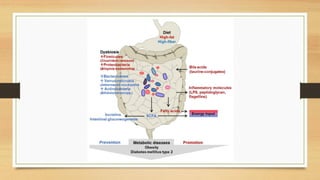
• Alterations in the gut microbiota have been linked to the increasing
prevalence of metabolic disorders including obesity, insulin resistance &
type 2 diabetes
• Accumulating evidence over the past decade has linked the development of
metabolic syndrome related to diabetes to variations in gut microbiota
• Remarkably, decreased synthesis of short-chain fatty acids, have been
significantly associated with the predisposition to diabetes and related
disorders
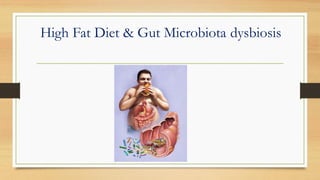
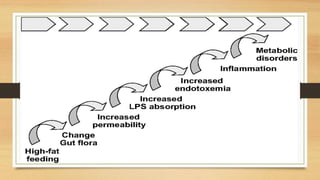
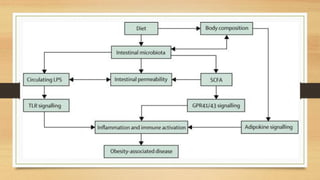
High Fat Diet & Gut Microbiota dysbiosis
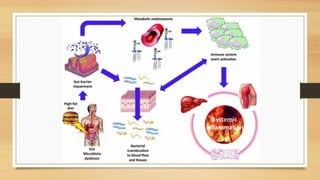
Metabolic Endotoxemia Phenomenon
• High-fat diet (HFD) is known to translocate
microbiota into a lipopolysaccharide (LPS)-enriched
intestinal microbiota with a consequently elevated
plasma concentration of LPS, which characterizes a
state of metabolic Endotoxemia
• Cani P, Bibiloni R, Knauf C, Waget A, Neyrinck A, Delzenne N, et al. Changes in gut
microbiota control metabolic endotoxemia-induced inflammation in high-fat diet-induced
obesity and diabetes in mice. Diabetes (2008) 57:1470–81.10.2337/db07-1403
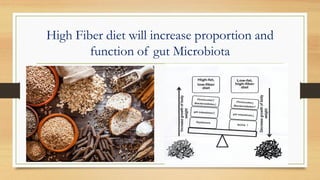
High Fiber diet will increase proportion and
function of gut Microbiota
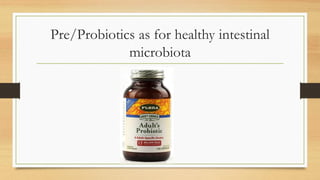
Pre/Probiotics as for healthy intestinal
microbiota
High Fat Diet & Type 2 Diabetes
• HFD has also been shown to cause a loss of intestinal T helper (Th) 17 cells putatively
through an altered gut microbiota that interfere with the induction of Th17 cells by the
antigen-presenting cells, resulting in diminished intestinal defense and integrity
• Moreover, it has been demonstrated that immunization with the HFD-associated ileum
microbial extracts reversed partially gut microbiota Dysbiosis and prevented
hyperglycemia and insulin resistance in response to HFD likely by enhancing the
proliferation of intestinal CD4 T cells
• This underlines the potential of vaccination for preventing and managing T2DM
Conclusion “Dysbiosis of gut Microbiota &
obesity with type 2 DM”
• As the dysbiosis of gut microbiota is increasingly
appreciated as a mechanism accounting for metabolic
diseases, the growing understanding of microbiota-
driven immune and metabolic responses has begun to
reveal potential interventional targets, sustaining the
development of new therapeutic strategies by dietary
and/or pharmacological means
Conclusion “Dysbiosis of gut Microbiota &
obesity with type 2 DM”
• Dietary intervention (e.g., prebiotics, probiotics, and postbiotics)
and fecal microbiota transplantation that tackle microbiota
Dysbiosis
• Manipulation of the key players in the intestinal integrity and
function, bacterial recognition and translocation, tissue
inflammation, and host nutrient-sensing mechanisms by using :
• recent reports about vaccination and genetic modulation of the gut
microbial metabolites further add to our knowledge of the therapeutics of
metabolic diseases
The “Perfect Storm” for Type 1 Diabetes
The Complex Interplay Between Intestinal
Microbiota, Gut Permeability, and Mucosal
Immunity
Dysbiosis of gut Microbiota & type 1 diabetes
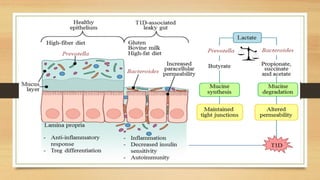
• Recent data showed the critical role of the gastrointestinal microbiota in the
protection or the triggering of type 1 diabetes
• In both models, the target pancreatic insulin producing beta cells are attacked
and destroyed by activated immune cells, leading to type-1 diabetes.
• In human, the incidence of type 1 diabetes has increased during the
past several decades in developed countries where environmental
conditions have dramatically changed
Dysbiosis of gut Microbiota & type 1 diabetes
• Increased intestinal permeability has been observed in
animal models of type 1 diabetes as well as in humans with
or at increased-risk for the disease
• An altered mucosal immune system has been associated with
the disease and is likely a major contributor resulting in the
autoimmunity that underlies type 1 diabetes
Dysbiosis of gut Microbiota & type 1
diabetes
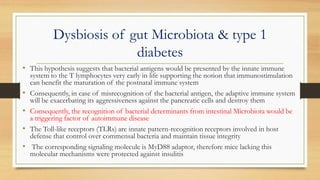
• This hypothesis suggests that bacterial antigens would be presented by the innate immune
system to the T lymphocytes very early in life supporting the notion that immunostimulation
can benefit the maturation of the postnatal immune system
• Consequently, in case of misrecognition of the bacterial antigen, the adaptive immune system
will be exacerbating its aggressiveness against the pancreatic cells and destroy them
• Consequently, the recognition of bacterial determinants from intestinal Microbiota would be
a triggering factor of autoimmune disease
• The Toll-like receptors (TLRs) are innate pattern-recognition receptors involved in host
defense that control over commensal bacteria and maintain tissue integrity
• The corresponding signaling molecule is MyD88 adaptor, therefore mice lacking this
molecular mechanisms were protected against insulitis
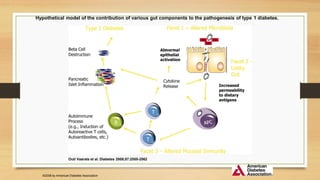
Hypothetical model of the contribution of various gut components to the pathogenesis of type 1 diabetes.
Outi Vaarala et al. Diabetes 2008;57:2555-2562
©2008 by American Diabetes Association
Conclusion
• Clearly, much work remains in terms of understanding the role of the gut
in type 1 & type 2 diabetes development.
• Despite numerous studies showing health benefits of probiotics, the
enthusiasm for their application as well as other means to alter the
intestinal microbial ecosystem in the prevention of diabetes needs to be
tempered due to the current lack of knowledge of the normal developing
intestinal microbiota, in addition to questions as to how it affects the
developing immune system
Conclusion /Future understanding
• Future studies using newly developed techniques to evaluate
intestinal Microbiota, coupled with the rapidly emerging fields
of proteomics and metabolomics, are certainly needed
• Finally, the role of gut as modulator of –cell autoimmunity,
and/or as the place for initiation of –cell autoimmunity, should
provide new understanding of the changing incidence of type 1
diabetes at different times and in different populations
Thank You

Diabetes & microbiota

  • 1.
    Microbiota & Diabetes AbdulmoeinEid Al-Agha, FRCPCH Professor of Pediatric Endocrinology, Head, Pediatric Endocrinology & Diabetes section, King Abdulaziz University Hospital, Saudi Arabia www.aagha.kau.edu.sa
  • 2.
    Objectives • Introduction intohuman microbiota (what are they?) • What do we know on Gut microbiota? • Environmental factors affecting Gut microbiota (from antenatal life till adulthood) • Dysbiosis of the microbiota (change beneficial bacteria to abnormal dysregulated ones) • High fat diet associated & obesity leads to microbiota dysbiosis which leads to type 2 DM & Metabolic syndrome • Dysbiotic microbiota associations with various diseases including: • Obesity, insulin resistance, type 2 DM & type 1 DM
  • 3.
    What is the“Microbiota”? “the ecological community of commensal, symbiotic, & pathogenic microorganisms that share our body space”
  • 4.
    • gene sequencingon samples from 5 female body sites (gastrointestinal, mouth, vagina, skin, and nasal cavity) and 4 male body sites Bacterial Distribution by body site (Peterson, et al. 2009)
  • 5.
  • 7.
    •What do weknow about the gut Microbiota in health/ Disease states?
  • 8.
  • 9.
    Gut Microbiota • Trillionsof micro-organisms inhabit the distal gut, where they together weigh about 1.5 kg • Regarded as a microbial organ that carries out key functions that the human host is incapable to perform by itself • More than 90% of the prevalent bacterial species can be grouped into the two bacterial Phyla Firmicutes (Gram- positive) & Bacteroidetes (Gram-negative)
  • 10.
    Composition & luminalconcentrations of dominant microbial species in various regions of the gastrointestinal tract Gastroenterology 2008 134(2)
  • 11.
    Beneficial Effects ofGut Microbiota • Protects against pathogens • Helps maturate and constantly educate the immune system • Plays a role for regulation of intestinal hormone secretions & for gastrointestinal nerve activity • Members of gut microbiota synthesize vitamin K , folate & vitamin B12 • Produce short-chain fatty acids (SCFAs) by fermentation of otherwise non-digestible carbohydrates
  • 12.
  • 15.
    Breast -vs- formula BreastFed Formula Fed Bifidobacteria Bifidobacteria Enterobacteria Escherichia Coli Clostridium difficle Bacteriodes Prevotella Lactobacillus Enterobacteriaceae
  • 16.
    The gut Microbiotaduring the human lifespan
  • 19.
  • 20.
    “Father of Medicine” Hippocrates'famous statement that “all disease begins in the gut” recognized the essential role played by the gut & diet in many of the vital homoeostatic functions of the human body
  • 22.
    Metabolic diseases IBD Obesity&Type 2 DM CDI Malignancy Celiac disease Type I DM Allergies NASH Autism Depression Alterations in gut Microbiota have been linked with:
  • 24.
    Impact of dieton gut Microbiota • A healthy gut microbiome is characterized by the presence of microbes that enhance metabolism, & are resilient to infection and inflammation and resistant to autoimmunity and cancer • Studies examining the influence of nutrients (such as dietary fibers and fats) and dietary habits (vegetarians or vegans) in different populations have allowed stratification of the human population based on three principal bacteria and their micro biome's genetic abundance
  • 25.
    Gut Microbiota dysbiosis& Type 2 DM Risk factors for type 2 diabetes, including: • Genetic predisposition • Poor physical activity • Fetal programming • Obesity • Altered configuration of the Microbiota has emerged as a new candidate that may be linked to obesity & type 2 diabetes
  • 26.
    Microbiota Dysbiosis associatedwith Type 2 Diabetes • Alterations in the gut microbiota have been linked to the increasing prevalence of metabolic disorders including obesity, insulin resistance & type 2 diabetes • Accumulating evidence over the past decade has linked the development of metabolic syndrome related to diabetes to variations in gut microbiota • Remarkably, decreased synthesis of short-chain fatty acids, have been significantly associated with the predisposition to diabetes and related disorders
  • 27.
    High Fat Diet& Gut Microbiota dysbiosis
  • 29.
    Metabolic Endotoxemia Phenomenon •High-fat diet (HFD) is known to translocate microbiota into a lipopolysaccharide (LPS)-enriched intestinal microbiota with a consequently elevated plasma concentration of LPS, which characterizes a state of metabolic Endotoxemia • Cani P, Bibiloni R, Knauf C, Waget A, Neyrinck A, Delzenne N, et al. Changes in gut microbiota control metabolic endotoxemia-induced inflammation in high-fat diet-induced obesity and diabetes in mice. Diabetes (2008) 57:1470–81.10.2337/db07-1403
  • 30.
    High Fiber dietwill increase proportion and function of gut Microbiota
  • 33.
    Pre/Probiotics as forhealthy intestinal microbiota
  • 36.
    High Fat Diet& Type 2 Diabetes • HFD has also been shown to cause a loss of intestinal T helper (Th) 17 cells putatively through an altered gut microbiota that interfere with the induction of Th17 cells by the antigen-presenting cells, resulting in diminished intestinal defense and integrity • Moreover, it has been demonstrated that immunization with the HFD-associated ileum microbial extracts reversed partially gut microbiota Dysbiosis and prevented hyperglycemia and insulin resistance in response to HFD likely by enhancing the proliferation of intestinal CD4 T cells • This underlines the potential of vaccination for preventing and managing T2DM
  • 40.
    Conclusion “Dysbiosis ofgut Microbiota & obesity with type 2 DM” • As the dysbiosis of gut microbiota is increasingly appreciated as a mechanism accounting for metabolic diseases, the growing understanding of microbiota- driven immune and metabolic responses has begun to reveal potential interventional targets, sustaining the development of new therapeutic strategies by dietary and/or pharmacological means
  • 41.
    Conclusion “Dysbiosis ofgut Microbiota & obesity with type 2 DM” • Dietary intervention (e.g., prebiotics, probiotics, and postbiotics) and fecal microbiota transplantation that tackle microbiota Dysbiosis • Manipulation of the key players in the intestinal integrity and function, bacterial recognition and translocation, tissue inflammation, and host nutrient-sensing mechanisms by using : • recent reports about vaccination and genetic modulation of the gut microbial metabolites further add to our knowledge of the therapeutics of metabolic diseases
  • 42.
    The “Perfect Storm”for Type 1 Diabetes The Complex Interplay Between Intestinal Microbiota, Gut Permeability, and Mucosal Immunity
  • 43.
    Dysbiosis of gutMicrobiota & type 1 diabetes • Recent data showed the critical role of the gastrointestinal microbiota in the protection or the triggering of type 1 diabetes • In both models, the target pancreatic insulin producing beta cells are attacked and destroyed by activated immune cells, leading to type-1 diabetes. • In human, the incidence of type 1 diabetes has increased during the past several decades in developed countries where environmental conditions have dramatically changed
  • 44.
    Dysbiosis of gutMicrobiota & type 1 diabetes • Increased intestinal permeability has been observed in animal models of type 1 diabetes as well as in humans with or at increased-risk for the disease • An altered mucosal immune system has been associated with the disease and is likely a major contributor resulting in the autoimmunity that underlies type 1 diabetes
  • 45.
    Dysbiosis of gutMicrobiota & type 1 diabetes • This hypothesis suggests that bacterial antigens would be presented by the innate immune system to the T lymphocytes very early in life supporting the notion that immunostimulation can benefit the maturation of the postnatal immune system • Consequently, in case of misrecognition of the bacterial antigen, the adaptive immune system will be exacerbating its aggressiveness against the pancreatic cells and destroy them • Consequently, the recognition of bacterial determinants from intestinal Microbiota would be a triggering factor of autoimmune disease • The Toll-like receptors (TLRs) are innate pattern-recognition receptors involved in host defense that control over commensal bacteria and maintain tissue integrity • The corresponding signaling molecule is MyD88 adaptor, therefore mice lacking this molecular mechanisms were protected against insulitis
  • 47.
    Hypothetical model ofthe contribution of various gut components to the pathogenesis of type 1 diabetes. Outi Vaarala et al. Diabetes 2008;57:2555-2562 ©2008 by American Diabetes Association
  • 48.
    Conclusion • Clearly, muchwork remains in terms of understanding the role of the gut in type 1 & type 2 diabetes development. • Despite numerous studies showing health benefits of probiotics, the enthusiasm for their application as well as other means to alter the intestinal microbial ecosystem in the prevention of diabetes needs to be tempered due to the current lack of knowledge of the normal developing intestinal microbiota, in addition to questions as to how it affects the developing immune system
  • 49.
    Conclusion /Future understanding •Future studies using newly developed techniques to evaluate intestinal Microbiota, coupled with the rapidly emerging fields of proteomics and metabolomics, are certainly needed • Finally, the role of gut as modulator of –cell autoimmunity, and/or as the place for initiation of –cell autoimmunity, should provide new understanding of the changing incidence of type 1 diabetes at different times and in different populations
  • 50.