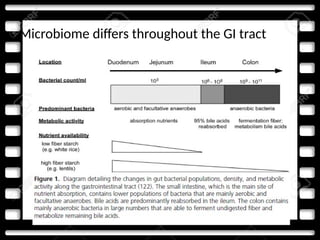
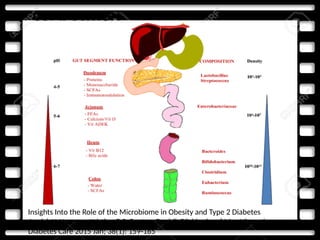
COMPOSITION
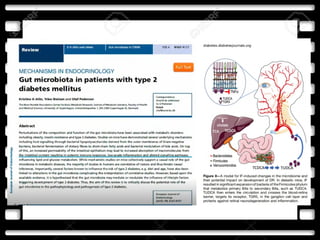
Insights Into theRole of the Microbiome in Obesity and Type 2 Diabetes
Annick V. Hartstra, Kristien E.C. Bouter, Fredrik Bäckhed and Max Nieuwdorp
Diabetes Care 2015 Jan; 38(1): 159-165
9.
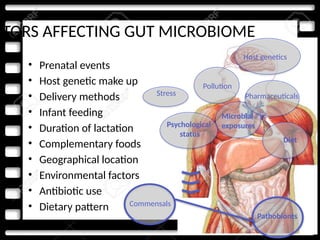
CTORS AFFECTING GUTMICROBIOME
• Prenatal events
• Host genetic make up
• Delivery methods
• Infant feeding
• Duration of lactation
• Complementary foods
• Geographical location
• Environmental factors
• Antibiotic use
• Dietary pattern
Pollution
Pharmaceuticals
Microbial
exposures
Psychological
status
Diet
Stress
Commensals
Pathobionts
Host genetics
10.
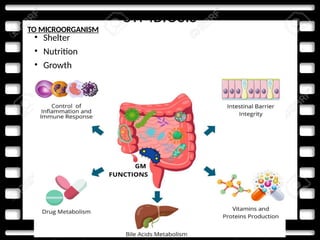
SYMBIOSIS
• Shelter
• Nutrition
•Growth
TO MICROORGANISM
TO THE HOST
• Stimulates immune function
• Produces antimicrobial substances
11.
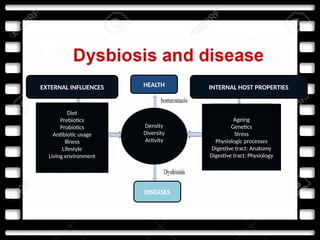
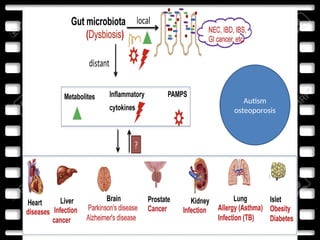
Dysbiosis
“Abnormal microbial colonizationof the intestine where changes in
quantity and quality of flora become pathological and harmful”
Change in bacterial composition
Decreased abundance and diversity
13.
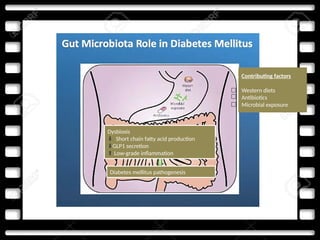
Dysbiosis
⬇ Short chainfatty acid production
⬇GLP1 secretion
⬆ Low-grade inflammation
Diabetes mellitus pathogenesis
Contributing factors
Western diets
Antibiotics
Microbial exposure
📩
📩
📩
• the elucidationof the molecular mechanistic pathway
• on the role of gut microbiota in the gut-brain axis is not
• moving forward as expected.
• This is because the elucidation of the molecular mechanistic pathway of gut
microbiota in the gutbrain axis depends on precise high throughput identifi
cation of the microbial organisms constituting gut microbiota. Although there
were some techniques utilized to identify microbial organisms constituting gut
microbiota, current technological
• advances make the high-throughput identifi cation of individual
• microbial components of gut microbiota possible.
• Especially, the advent of next-generation sequencing (NGS) has enabled
• the metagenomic and meta-transcriptomic analysis for high
• throughput identification of microbial organisms constituting
• gut microbiota
20.
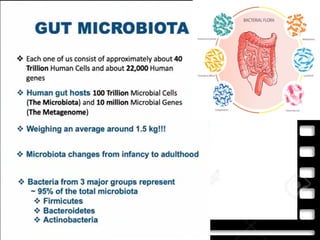
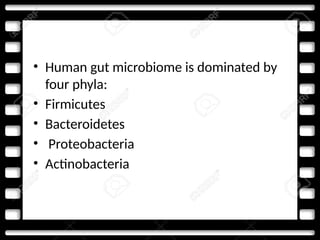
• Human gutmicrobiome is dominated by
four phyla:
• Firmicutes
• Bacteroidetes
• Proteobacteria
• Actinobacteria
21.
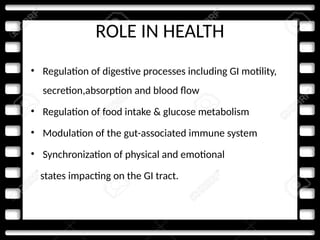
ROLE IN HEALTH
•Regulation of digestive processes including GI motility,
secretion,absorption and blood flow
• Regulation of food intake & glucose metabolism
• Modulation of the gut-associated immune system
• Synchronization of physical and emotional
states impacting on the GI tract.
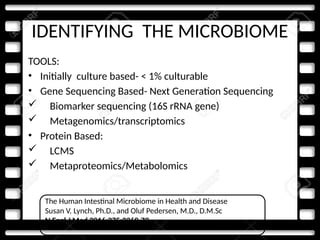
IDENTIFYING THE MICROBIOME
TOOLS:
•Initially culture based- < 1% culturable
• Gene Sequencing Based- Next Generation Sequencing
Biomarker sequencing (16S rRNA gene)
Metagenomics/transcriptomics
• Protein Based:
LCMS
Metaproteomics/Metabolomics
The Human Intestinal Microbiome in Health and Disease
Susan V. Lynch, Ph.D., and Oluf Pedersen, M.D., D.M.Sc
N Engl J Med 2016;375:2369-79
24.
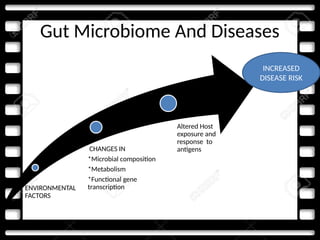
Gut Microbiome AndDiseases
ENVIRONMENTAL
FACTORS
CHANGES IN
*Microbial composition
*Metabolism
*Functional gene
transcription
Altered Host
exposure and
response to
antigens
INCREASED
DISEASE RISK
25.
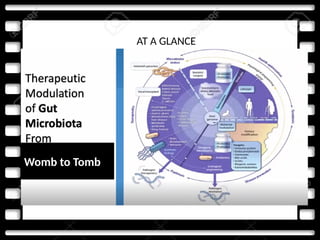
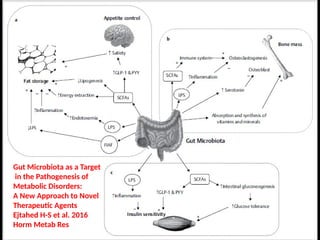
Gut Microbiota asa Target
in the Pathogenesis of
Metabolic Disorders:
A New Approach to Novel
Therapeutic Agents
Ejtahed H-S et al. 2016
Horm Metab Res
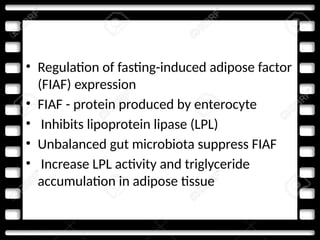
• Regulation offasting-induced adipose factor
(FIAF) expression
• FIAF - protein produced by enterocyte
• Inhibits lipoprotein lipase (LPL)
• Unbalanced gut microbiota suppress FIAF
• Increase LPL activity and triglyceride
accumulation in adipose tissue
28.
MECHANISM
• Increased systemiclipopolysaccharide
• Changes in bile acid metabolism
• Alterations in short chain fatty acid (SCFA) production
• Alterations in gut hormone secretion
• Changes in circulating branched chain amino acids
29.
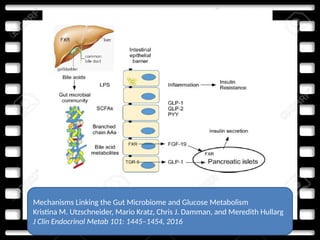
Mechanisms Linking theGut Microbiome and Glucose Metabolism
Kristina M. Utzschneider, Mario Kratz, Chris J. Damman, and Meredith Hullarg
J Clin Endocrinol Metab 101: 1445–1454, 2016
30.
The “Leaky Gut”Hypothesis and
Endotoxemia
• LPS- endotoxin- gram negative bacteria
• Stimulate inflammation via TLR-4 and TGF beta
activation ------ sepsis
• Higher systemic LPS / LPS binding protein
• Low-grade, chronic inflammation
• Obesity, Metabolic syndrome and T2DM.
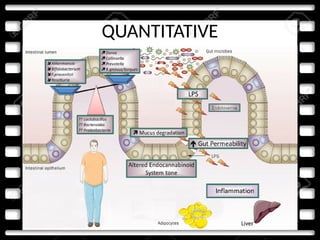
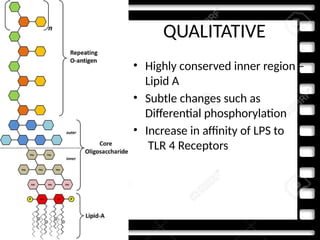
QUALITATIVE
• Highly conservedinner region –
Lipid A
• Subtle changes such as
Differential phosphorylation
• Increase in affinity of LPS to
TLR 4 Receptors
33.
• LPS canbe taken up by gut epithelial cells
• Incorporated into chylomicrons in the small intestine after
a high-fat meal.
• Lps contains a lipid moiety
Taken up by enterocytes and transported to the golgi
apparatus , where chylomicrons are also formed
34.
GUT MICROBIOME &PERMEABILITY
• Probiotics (Streptococcus thermophilus/
Lactobacillus acidophilus)
• Prevented increases in permeability induced by
TNF or gamma IFN
• In mouse models, high-fat feeding leads to
dramatic changes in the gut microbiota, glucose
intolerance, insulin resistance, increased plasma
LPS, intestinal permeability, inflammation, and
oxidative stress.
36.
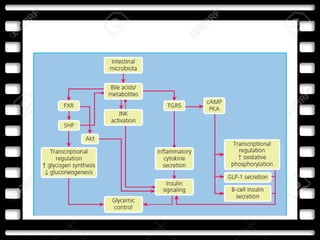
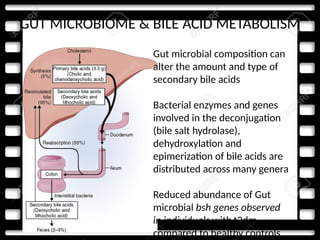
GUT MICROBIOME &BILE ACID METABOLISM
Gut microbial composition can
alter the amount and type of
secondary bile acids
Bacterial enzymes and genes
involved in the deconjugation
(bile salt hydrolase),
dehydroxylation and
epimerization of bile acids are
distributed across many genera
Reduced abundance of Gut
microbial bsh genes observed
in individuals with t2dm
compared to healthy controls
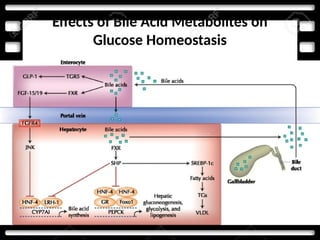
• Farnesoid Xreceptor is expressed in the ileum, liver, and
pancreas
• ILEUM:
• FGF-19-affects glucose tolerance through mechanisms that
are largely independent of insulin .
• Activation of TGR5 leads to production of GLP-1
39.
Pancreas:
• Insulin transportand secretion
• Protect islets against lipotoxicity
• LIVER:
• Improves insulin sensitivity via shp-and sterol regulatory
element binding protein-1c (srebp-1c)-dependent
mechanisms
40.
Role of ShortChain Fatty Acids (SCFAs)
• Bacteria in the colon ferment nondigestible carbohydrates
into SCFAs, with acetate, butyrate, and propionate
• Interplay between dietary fiber content, microbiota and SCFAs
• SCFAs are also produced during amino acid catabolism by gut
bacteria
• 17–38% of the SCFA produced in the cecum and
sigmoid/rectum from proteins
41.
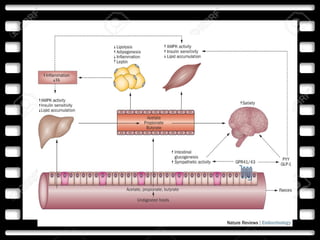
SCFA - Functions
Butyrate: energy source for colonocytes
Propionate: substrates for lipogenesis and
gluconeogenesis
Acetate: substrate for peripheral cholesterol synthesis
Stimulate fatty acid oxidation
Inhibit de novo lipogenesis
Signalling molecules by activating AMP kinase and free
fatty acid receptors 2 and 3
Regulate secretion of gut hormones-GLP-1& anorectic
hormone peptide YY (PYY)
42.
• Butyrate hasreceived increased focus as a
potential beneficial intermediary.
• Butyrate producing bacteria are less abundant
in subjects with T2DM
• Butyrate supplementation improves insulin
sensitivity
44.
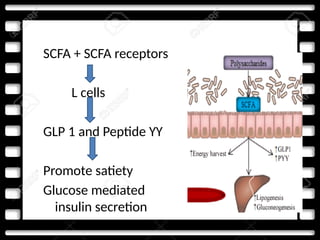
SCFA + SCFAreceptors
L cells
GLP 1 and Peptide YY
Promote satiety
Glucose mediated
insulin secretion
45.
Microbial Synthesis ofAmino Acids
• Branched chain amino acids contribute to
Obesity and Insulin resistance.
• Certain species of gut bacteria can synthesize
Branched chain aminoacid s.
ISOLEUCINE, LEUCINE, VALINE,
TYROSINE & PHENYLALANINE
46.
Flora in Diabetes
•Decrease in:
• Bifidobacterium
• Faecalibacterium prausnitzii
• Firmicutes-related bacteria
• (Eubacterium rectale and Blautia coccoides)
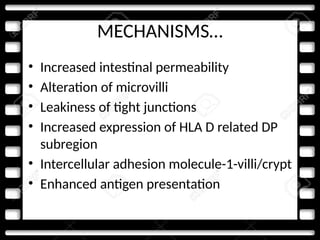
MECHANISMS…
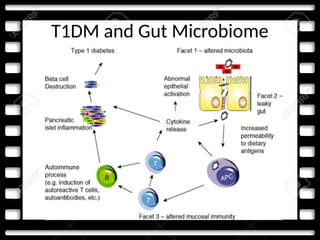
• Increased intestinalpermeability
• Alteration of microvilli
• Leakiness of tight junctions
• Increased expression of HLA D related DP
subregion
• Intercellular adhesion molecule-1-villi/crypt
• Enhanced antigen presentation
49.
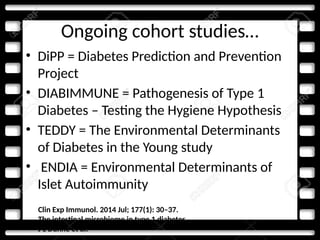
Ongoing cohort studies…
•DiPP = Diabetes Prediction and Prevention
Project
• DIABIMMUNE = Pathogenesis of Type 1
Diabetes – Testing the Hygiene Hypothesis
• TEDDY = The Environmental Determinants
of Diabetes in the Young study
• ENDIA = Environmental Determinants of
Islet Autoimmunity
Clin Exp Immunol. 2014 Jul; 177(1): 30–37.
The intestinal microbiome in type 1 diabetes
J L Dunne et al.
50.
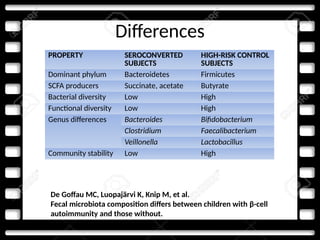
Differences
PROPERTY SEROCONVERTED
SUBJECTS
HIGH-RISK CONTROL
SUBJECTS
Dominantphylum Bacteroidetes Firmicutes
SCFA producers Succinate, acetate Butyrate
Bacterial diversity Low High
Functional diversity Low High
Genus differences Bacteroides Bifidobacterium
Clostridium Faecalibacterium
Veillonella Lactobacillus
Community stability Low High
De Goffau MC, Luopajärvi K, Knip M, et al.
Fecal microbiota composition differs between children with β-cell
autoimmunity and those without.
Diabetes. 2013;62:1238–1244.
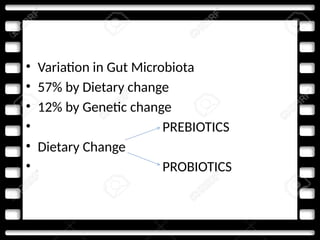
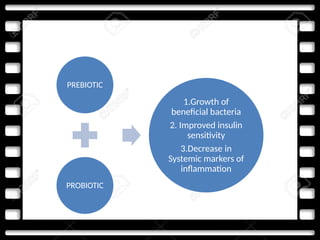
PREBIOTICS
• A prebioticis an ingredient that its fermentation
leads to beneficial changes in the gut microbiota
• Short chain inulin-type fructans, oligofructose or
wheat-derived arabinoxylan oligosaccharides,
lactulose, lactitol, galacto-oligosaccharides, fructo-
oligosaccharides, inulin, isomalto-oligosaccharides,
polydextrose, resistant starch and gums
• Rise in Bifidobacterium spp.
53.
PREBIOTICS
• Trophic effecton the intestine & redistribution of occludin
and zonula occludens
• Prebiotic treatment changes 102 gut bacterial taxa, &
abundance of 25 taxa
• Increase in proglucagon-GLP2 Expression
• Increase in L-cells in the intestine
• Akkermansia muciniphila was increased by approximately
100-fold (inversely correlates with body weight)
• Increase in SCFA levels
54.
PROBIOTICS
• Live microorganismsthat their administration
In adequate amounts causes health benefits on the host
• Lactobacillus, bifidobacterium,
saccharomyces,enterococcus, streptococcus, pediococcus,
leuconostoc and bacillus
Fecal microbiota transplantation(FMT)
• Transfers intestinal bacteria from a healthy
donor into a patient
• Important “physiologic” factor in the
prevention & treatment of metabolic
dysregulation
• Improving the obesity, insulin resistance, &
metabolic syndrome
Vrieze A et al. Transfer of intestinal microbiota from lean donors
increases insulin sensitivity in individuals with metabolic syndrome.
Gastroenterology
2012; 143: 913.e7–916.e7
57.
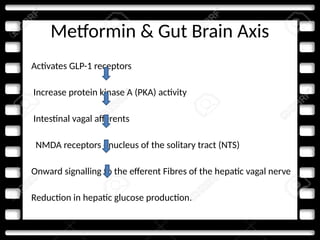
Metformin & GutBrain Axis
• Activates GLP-1 receptors
• Increase protein kinase A (PKA) activity
• Intestinal vagal afferents
• NMDA receptors - nucleus of the solitary tract (NTS)
• Onward signalling to the efferent Fibres of the hepatic vagal nerve
• Reduction in hepatic glucose production.
58.
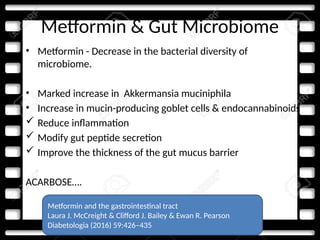
Metformin & GutMicrobiome
• Metformin - Decrease in the bacterial diversity of
microbiome.
• Marked increase in Akkermansia muciniphila
• Increase in mucin-producing goblet cells & endocannabinoids
Reduce inflammation
Modify gut peptide secretion
Improve the thickness of the gut mucus barrier
ACARBOSE….
Metformin and the gastrointestinal tract
Laura J. McCreight & Clifford J. Bailey & Ewan R. Pearson
Diabetologia (2016) 59:426–435
59.
CHALLENGES…
• Majority ofmicrobiome not cultivable
• Long term prospective cohort studies to
define causative process
• Use of intestinal biopsy and genomic
sequencing rather than fecal samples
60.
• Gut microbiotais an “invisible organ” of the human body
• Vital for normal metabolism and immuno-modulation
• The number and diversity of microbes differ across the gastrointestinal tract from
the mouth to the anus, and is most abundant in the intestine.
61.
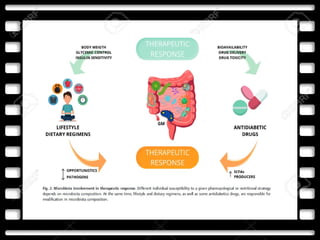
Anti diabetic drugs
•1. Therapeutic efficacy and potential side
effects--influenced by resident microbiota
• 2. Antidiabetic drugs alter GM composition
62.
microbial shift increasingSCFAs
concentration
enhanced the presence of
Bifidobacterium Mlongum and reduced
LPS levels.
63.
• 1. VOGLIBOSE=decreased Firmicutes to
Bacteroidetes ratio
• Lactobacillus, Faecalibacterium,
• and Dialister up-regulation Butyricicoccus,
Phascolarctobacterium, and Ruminococcus
Reduction
• 2. Increase in SCFA
• 3.Decrease in LPS
64.
• sitagliptin andvildagliptin, modulate GM.
• they restore the GM composition increasing
the abundance of Bacteroidetes
• liraglutide administration promoted the
• expression of SCFA producing bacteria.
• SGLT2 inhibitors-no change in GM
65.
METFORMIN
• therapeutic effectsare mediated by the GM
• strengthening of tight junction
• there are indeed specific microbiotic clusters able to
• predict the efficacy of metformin therapy in diabetic
• Patients
• an increased presence of Prevotella copri appears
• to limit the ability of reducing glycated hemoglobin
• (HbA1c)
• Similarly, an increased presence of Streptococcus parasanguinis before
starting antidiabetic
• treatment is predictive of metformin-associated side-effects
• associated with a higher production of SCFAs
66.
• the differentefficacy achieved by a given
nutritional intervention in different
enterotypes confirms the hypothesis that
• everyone should be offered a personalized
strategy,‘tailor-made’ according to the
composition of her/his
• microbiota.
67.
Effects of exercise
HIGHINTENSITY
• dysbiosis
• “exerciseinduced gastrointestinal syndrome”
impacts on its composition,
MODERATE INTENSITY
• Increasing Akkermansia muciniphila
• and Oscillospira
• Increase in SCFAs and lactic acid-production
68.
PRE VS PROBIOTICS
DOTHEY IMPROVE GLYCEMIC CONTROL?
• Lactobacillus and Bifidobacterium strains, can
also improve lipid profile and reduce fasting
glycaemia
• Akkermansia muciniphila CAN regenerate
• the intestinal barrier, reduce inflammation,
and improve metabolic processes.
• this strategy only can be adjuvant and not
curative itself.
69.
PRE BIOTICS
• Complexcarbohydrates, polyphenols, and
polyunsaturated Fas
• increase stool consistency and can be fermented to
SCFAs.
• For example, oligo-fructose has
• shown positive effects on glucose homeostasis,
inflammation,leptin sensitivity, GLP-1 production,
• Berberine, resveratrol,alliin, capsaicin, betacyanin, and
cranberry proanthocyanins have also shown
antidiabetic effects
70.
Diabetes and fecalmicrobiota transplantation
(FMT)
• the transfer of stools from a healthy donor
into another subject’s gastrointestinal
• tract, aiming to change the recipient’s GM
• gaining health benefit
• Currently successful for for recurrent and
• refractory Clostridium Difficile Infection (CDI)
71.
• FMT maynot only improve insulin
• Sensitivity
• alter the natural course of type I
• diabetes by modulating autoimmunity.
72.
• success ofmicrobial modulation
• depends on the tested strains, on its composition
• and diversity, on the patients pre-existing microbial
diversity
• and his genetic fingerprint. However, there are
• some risks related to FMT that should be taken into
• account. Major concerns regard the transfer of infectious
• disease or the promotion of dysbiotic status which
• could promote the development of disorders linked to
• GM
#6 Most DNA in our body is NOT our own; We are only 46% human
#12 Diet-induced obesity dampens cyclical microbiota fluctuations. Time-restricted feeding in mice, in which food is available only during the nocturnal active phase, partially restores these cyclical fluctuations











![PERI-PROSTHETIC FRACTURE NAIL-PLATE CONSTRUCT [NPC].pptx](https://cdn.slidesharecdn.com/ss_thumbnails/drarunkumardrmohamedashrafperiprostheticfrasturenail-plateconstructnpc-260209164459-7e9d15a1-thumbnail.jpg?width=640&height=640&fit=bounds)


