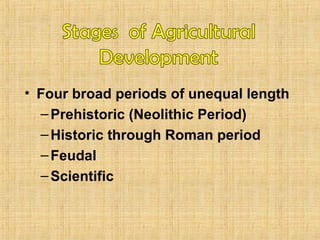

• Four broad periods of unequal length 
– Prehistoric (Neolithic Period) 
– Historic through Roman period 
–Feudal 
–Scientific
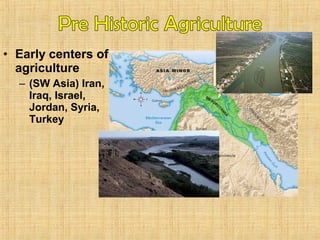
• Early centers of 
agriculture 
– (SW Asia) Iran, 
Iraq, Israel, 
Jordan, Syria, 
Turkey
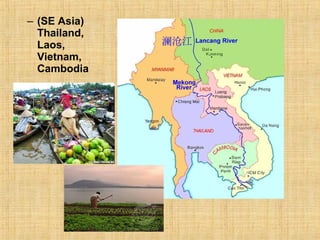
– (SE Asia) 
Thailand, 
Laos, 
Vietnam, 
Cambodia
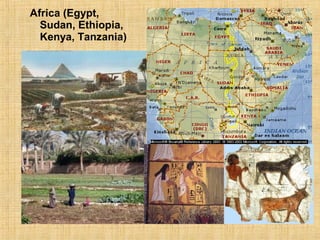
Africa (Egypt, 
Sudan, Ethiopia, 
Kenya, Tanzania)
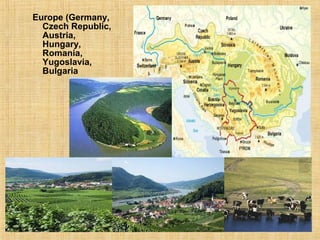
Europe (Germany, 
Czech Republic, 
Austria, 
Hungary, 
Romania, 
Yugoslavia, 
Bulgaria
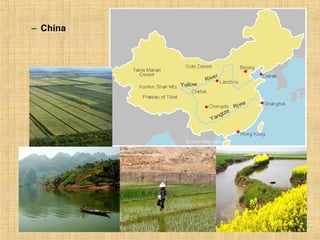
– China
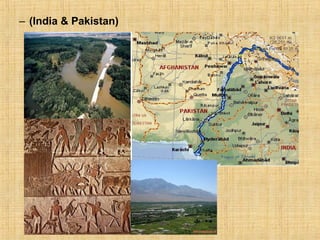
– (India & Pakistan)
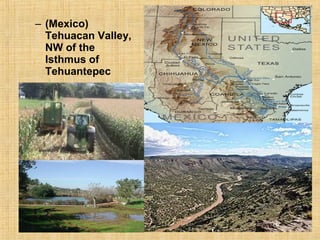
– (Mexico) 
Tehuacan Valley, 
NW of the 
Isthmus of 
Tehuantepec
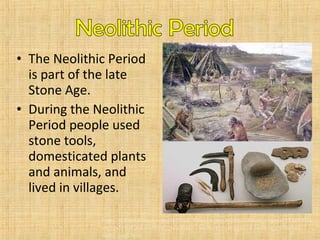
• The Neolithic Period 
is part of the late 
Stone Age. 
• During the Neolithic 
Period people used 
stone tools, 
domesticated plants 
and animals, and 
lived in villages. 
http://icnorthwales.icnetwork.co.uk/news/regionalnews/content_objectid=13499034_ 
method=full_siteid=50142_headline=-Are-we-the-progeny-of-stone-age-Siberians-- 
name_page.html
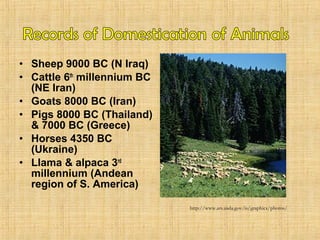
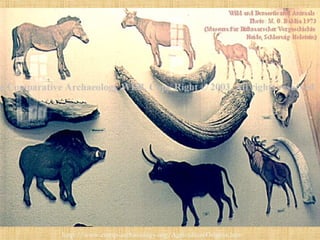
• Sheep 9000 BC (N Iraq) 
• Cattle 6th millennium BC 
(NE Iran) 
• Goats 8000 BC (Iran) 
• Pigs 8000 BC (Thailand) 
& 7000 BC (Greece) 
• Horses 4350 BC 
(Ukraine) 
• Llama & alpaca 3rd 
millennium (Andean 
region of S. America) 
http://www.ars.usda.gov/is/graphics/photos/
http://www.comp-archaeology.org/AgricultureOrigins.htm
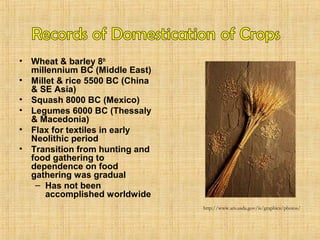
• Wheat & barley 8th 
millennium BC (Middle East) 
• Millet & rice 5500 BC (China 
& SE Asia) 
• Squash 8000 BC (Mexico) 
• Legumes 6000 BC (Thessaly 
& Macedonia) 
• Flax for textiles in early 
Neolithic period 
• Transition from hunting and 
food gathering to 
dependence on food 
gathering was gradual 
– Has not been 
accomplished worldwide 
http://www.ars.usda.gov/is/graphics/photos/
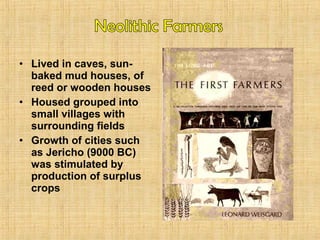
• Lived in caves, sun-baked 
mud houses, of 
reed or wooden houses 
• Housed grouped into 
small villages with 
surrounding fields 
• Growth of cities such 
as Jericho (9000 BC) 
was stimulated by 
production of surplus 
crops
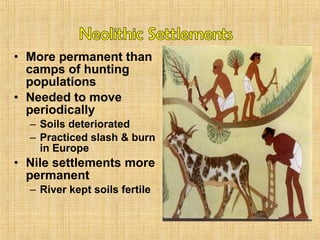
• More permanent than 
camps of hunting 
populations 
• Needed to move 
periodically 
– Soils deteriorated 
– Practiced slash & burn 
in Europe 
• Nile settlements more 
permanent 
– River kept soils fertile
• A later development 
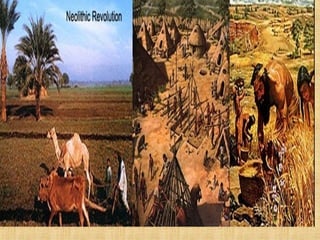
• Mixed farming, combining cultivation of 
crops and stock raising was a common 
Neolithic pattern 
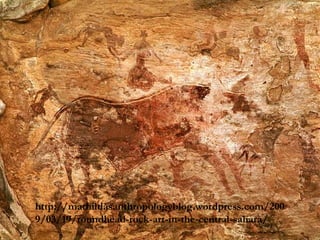
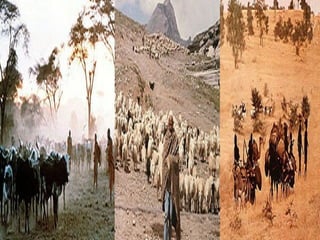
• Nomadic herders roamed the plains of 
Europe and Asia where the horse and 
camel were domesticated
http://mathildasanthropologyblog.wordpress.com/200 
9/03/19/roundhead-rock-art-in-the-central-sahara/
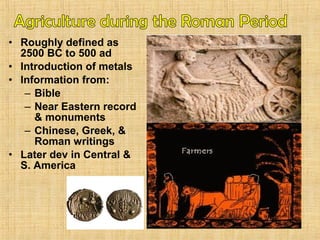
• Roughly defined as 
2500 BC to 500 ad 
• Introduction of metals 
• Information from: 
– Bible 
– Near Eastern record 
& monuments 
– Chinese, Greek, & 
Roman writings 
• Later dev in Central & 
S. America
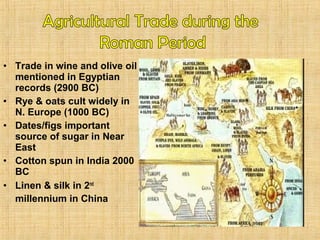
• Trade in wine and olive oil 
mentioned in Egyptian 
records (2900 BC) 
• Rye & oats cult widely in 
N. Europe (1000 BC) 
• Dates/figs important 
source of sugar in Near 
East 
• Cotton spun in India 2000 
BC 
• Linen & silk in 2nd 
millennium in China
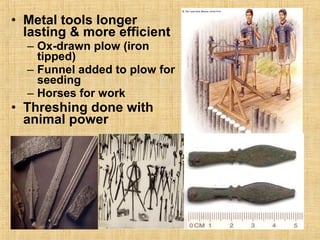
• Metal tools longer 
lasting & more efficient 
– Ox-drawn plow (iron 
tipped) 
– Funnel added to plow for 
seeding 
– Horses for work 
• Threshing done with 
animal power
http://stravaganzastravaganza.blogspot.com/2011/ 
03/islamic-influences-on-western.html 
http://www.go4knowledge.info/agriculture. 
html
Historical Agriculture Through the 
Roman Period 
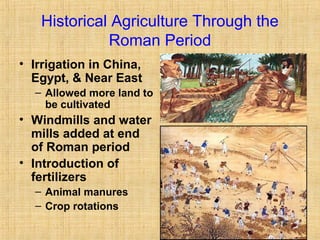
• Irrigation in China, 
Egypt, & Near East 
– Allowed more land to 
be cultivated 
• Windmills and water 
mills added at end 
of Roman period 
• Introduction of 
fertilizers 
– Animal manures 
– Crop rotations
Historical Agriculture Through the 
Roman Period 
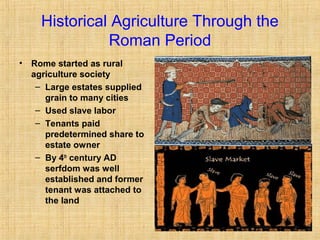
• Rome started as rural 
agriculture society 
– Large estates supplied 
grain to many cities 
– Used slave labor 
– Tenants paid 
predetermined share to 
estate owner 
– By 4th century AD 
serfdom was well 
established and former 
tenant was attached to 
the land
Feudal Agriculture 
• Began soon after the fall of the Roman 
empire 
• Reached its peak in about 1100 ad
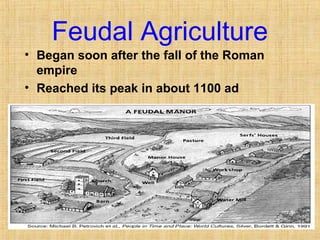
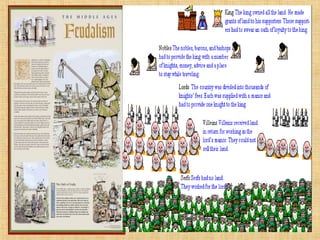
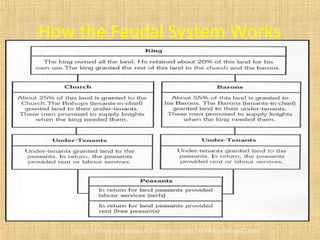
How the Feudal System Works 
http://www.spartacus.schoolnet.co.uk/NORfeudalismC.htm
Feudal Agriculture 
• Irrigation extended in Egypt & Spain 
• Grain production was sufficient in 
Egypt to sell wheat internationally 
• Irrigation from Mountain streams 
increased vineyards in Spain 
• In Spain silkworm was raised and its 
food the mulberry tree was grown
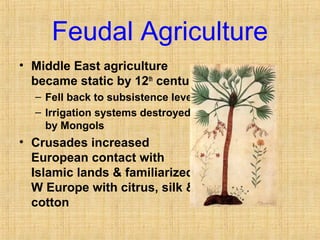
Feudal Agriculture 
• Middle East agriculture 
became static by 12th century 
– Fell back to subsistence levels 
– Irrigation systems destroyed 
by Mongols 
• Crusades increased 
European contact with 
Islamic lands & familiarized 
W Europe with citrus, silk & 
cotton
Feudal Agriculture 
• In Scandinavia and E Germany, small 
farms and villages remained 
• The manorial system could not flourish 
in most of Europe 
–Stock raising and grape culture were 
normally outside the system
Feudal Agriculture 
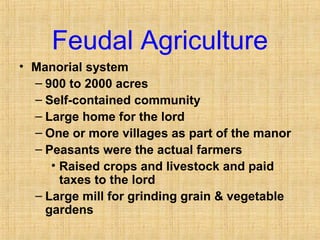
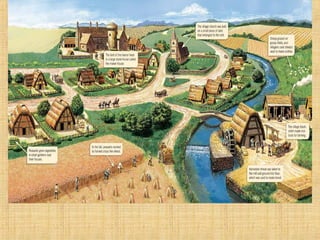
• Manorial system 
– 900 to 2000 acres 
– Self-contained community 
– Large home for the lord 
– One or more villages as part of the manor 
– Peasants were the actual farmers 
• Raised crops and livestock and paid 
taxes to the lord 
– Large mill for grinding grain & vegetable 
gardens
Feudal Agriculture 
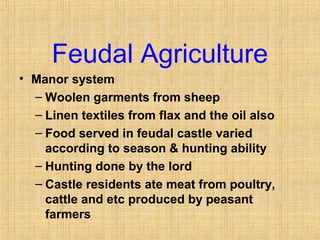
• Manor system 
– Woolen garments from sheep 
– Linen textiles from flax and the oil also 
– Food served in feudal castle varied 
according to season & hunting ability 
– Hunting done by the lord 
– Castle residents ate meat from poultry, 
cattle and etc produced by peasant 
farmers
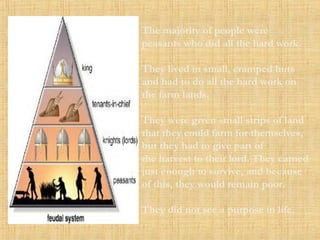
The majority of people were 
peasants who did all the hard work. 
They lived in small, cramped huts 
and had to do all the hard work on 
the farm lands. 
They were given small strips of land 
that they could farm for themselves, 
but they had to give part of 
the harvest to their lord. They earned 
just enough to survive, and because 
of this, they would remain poor. 
They did not see a purpose in life.
Feudal Agriculture 
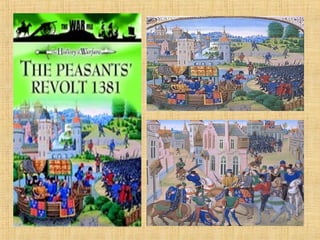
• Independent manorialism affected by 
wars of 14th & 15th centuries & 
widespread plague outbreaks 
• Villages were wiped out and land was 
abandoned 
• Remaining peasants were discontented
Scientific Agriculture 
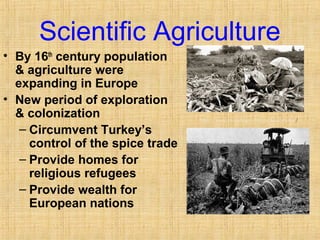
• By 16th century population 
& agriculture were 
expanding in Europe 
• New period of exploration 
& colonization 
– Circumvent Turkey’s 
control of the spice trade 
– Provide homes for 
religious refugees 
– Provide wealth for 
European nations 
http://www.ars.usda.gov/is/graphics/photos/
Scientific Agriculture 
• Colonial agriculture 
– Feed colonies 
– Produce cash crops & feed home country 
– Cultivation of sugar, cotton, tobacco, tea, 
animals for wool and hide etc 
– From 15th to 19th centuries slaves were used 
– Slaves worked in Caribbean on sugar 
plantations & in N America
Scientific Agriculture 
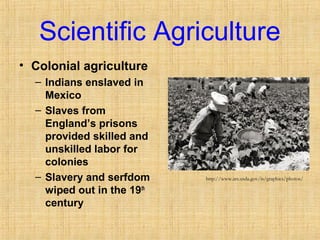
• Colonial agriculture 
– Indians enslaved in 
Mexico 
– Slaves from 
England’s prisons 
provided skilled and 
unskilled labor for 
colonies 
– Slavery and serfdom 
wiped out in the 19th 
century 
http://www.ars.usda.gov/is/graphics/photos/
Scientific Agriculture 
• Scientific revolution occurred from the 
Renaissance and Age of Enlightenment 
in Europe 
– Plant breeding 
– Breeding cattle & sheep 
• Guernsey cow breed 
– Crop rotations 
– Drainage brought more land into 
cultivation
Scientific Agriculture 
• Livestock breeding in 1700s 
• Limestone on soils in late 
1700s 
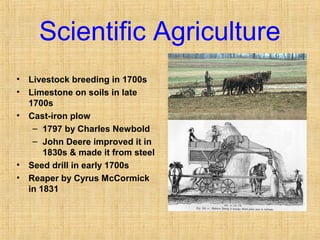
• Cast-iron plow 
– 1797 by Charles Newbold 
– John Deere improved it in 
1830s & made it from steel 
• Seed drill in early 1700s 
• Reaper by Cyrus McCormick 
in 1831
Scientific Agriculture 
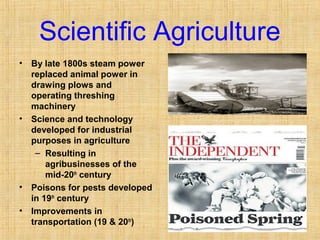
• By late 1800s steam power 
replaced animal power in 
drawing plows and 
operating threshing 
machinery 
• Science and technology 
developed for industrial 
purposes in agriculture 
– Resulting in 
agribusinesses of the 
mid-20th century 
• Poisons for pests developed 
in 19th century 
• Improvements in 
transportation (19 & 20th) 
http://www.ars.usda.gov/is/graphics/photos/
Scientific Agriculture 
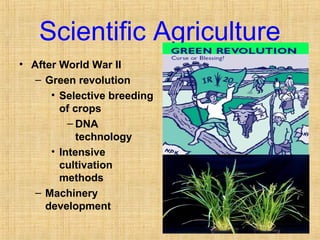
• After World War II 
– Green revolution 
• Selective breeding 
of crops 
– DNA 
technology 
• Intensive 
cultivation 
methods 
– Machinery 
development
Future of Agriculture 
• Genetic engineering will be important 
– Pests to pharmaceuticals to industrial products 
• Identity preserved crops 
– From farm gate to table top to industrial uses 
• Need students well versed in the basic 
sciences 
• Ever growing world population is of great 
concern 
• Space?
References 
• www.adbio.com/science/agri-history 
• www.aces.uiuc.edu/~sare/columbian.html 
• Franklin, R.B. 1948. A history of agriculture. G. 
Bell and Sons Ltd, London. 
• Kerr, N.A. 1987. The legacy, a centennial 
history of the agricultural experiment stations 
1887-1987. Missouri Ag Exp Sta., Univ of 
Missouri-Columbia.

Development Stages in World Agriculture

  • 2.
    • Four broadperiods of unequal length – Prehistoric (Neolithic Period) – Historic through Roman period –Feudal –Scientific
  • 3.
    • Early centersof agriculture – (SW Asia) Iran, Iraq, Israel, Jordan, Syria, Turkey
  • 4.
    – (SE Asia) Thailand, Laos, Vietnam, Cambodia
  • 5.
    Africa (Egypt, Sudan,Ethiopia, Kenya, Tanzania)
  • 6.
    Europe (Germany, CzechRepublic, Austria, Hungary, Romania, Yugoslavia, Bulgaria
  • 7.
  • 8.
    – (India &Pakistan)
  • 9.
    – (Mexico) TehuacanValley, NW of the Isthmus of Tehuantepec
  • 10.
    • The NeolithicPeriod is part of the late Stone Age. • During the Neolithic Period people used stone tools, domesticated plants and animals, and lived in villages. http://icnorthwales.icnetwork.co.uk/news/regionalnews/content_objectid=13499034_ method=full_siteid=50142_headline=-Are-we-the-progeny-of-stone-age-Siberians-- name_page.html
  • 12.
    • Sheep 9000BC (N Iraq) • Cattle 6th millennium BC (NE Iran) • Goats 8000 BC (Iran) • Pigs 8000 BC (Thailand) & 7000 BC (Greece) • Horses 4350 BC (Ukraine) • Llama & alpaca 3rd millennium (Andean region of S. America) http://www.ars.usda.gov/is/graphics/photos/
  • 13.
  • 14.
    • Wheat &barley 8th millennium BC (Middle East) • Millet & rice 5500 BC (China & SE Asia) • Squash 8000 BC (Mexico) • Legumes 6000 BC (Thessaly & Macedonia) • Flax for textiles in early Neolithic period • Transition from hunting and food gathering to dependence on food gathering was gradual – Has not been accomplished worldwide http://www.ars.usda.gov/is/graphics/photos/
  • 15.
    • Lived incaves, sun-baked mud houses, of reed or wooden houses • Housed grouped into small villages with surrounding fields • Growth of cities such as Jericho (9000 BC) was stimulated by production of surplus crops
  • 16.
    • More permanentthan camps of hunting populations • Needed to move periodically – Soils deteriorated – Practiced slash & burn in Europe • Nile settlements more permanent – River kept soils fertile
  • 17.
    • A laterdevelopment • Mixed farming, combining cultivation of crops and stock raising was a common Neolithic pattern • Nomadic herders roamed the plains of Europe and Asia where the horse and camel were domesticated
  • 18.
  • 20.
    • Roughly definedas 2500 BC to 500 ad • Introduction of metals • Information from: – Bible – Near Eastern record & monuments – Chinese, Greek, & Roman writings • Later dev in Central & S. America
  • 21.
    • Trade inwine and olive oil mentioned in Egyptian records (2900 BC) • Rye & oats cult widely in N. Europe (1000 BC) • Dates/figs important source of sugar in Near East • Cotton spun in India 2000 BC • Linen & silk in 2nd millennium in China
  • 22.
    • Metal toolslonger lasting & more efficient – Ox-drawn plow (iron tipped) – Funnel added to plow for seeding – Horses for work • Threshing done with animal power
  • 23.
  • 24.
    Historical Agriculture Throughthe Roman Period • Irrigation in China, Egypt, & Near East – Allowed more land to be cultivated • Windmills and water mills added at end of Roman period • Introduction of fertilizers – Animal manures – Crop rotations
  • 25.
    Historical Agriculture Throughthe Roman Period • Rome started as rural agriculture society – Large estates supplied grain to many cities – Used slave labor – Tenants paid predetermined share to estate owner – By 4th century AD serfdom was well established and former tenant was attached to the land
  • 26.
    Feudal Agriculture •Began soon after the fall of the Roman empire • Reached its peak in about 1100 ad
  • 28.
    How the FeudalSystem Works http://www.spartacus.schoolnet.co.uk/NORfeudalismC.htm
  • 29.
    Feudal Agriculture •Irrigation extended in Egypt & Spain • Grain production was sufficient in Egypt to sell wheat internationally • Irrigation from Mountain streams increased vineyards in Spain • In Spain silkworm was raised and its food the mulberry tree was grown
  • 30.
    Feudal Agriculture •Middle East agriculture became static by 12th century – Fell back to subsistence levels – Irrigation systems destroyed by Mongols • Crusades increased European contact with Islamic lands & familiarized W Europe with citrus, silk & cotton
  • 31.
    Feudal Agriculture •In Scandinavia and E Germany, small farms and villages remained • The manorial system could not flourish in most of Europe –Stock raising and grape culture were normally outside the system
  • 32.
    Feudal Agriculture •Manorial system – 900 to 2000 acres – Self-contained community – Large home for the lord – One or more villages as part of the manor – Peasants were the actual farmers • Raised crops and livestock and paid taxes to the lord – Large mill for grinding grain & vegetable gardens
  • 33.
    Feudal Agriculture •Manor system – Woolen garments from sheep – Linen textiles from flax and the oil also – Food served in feudal castle varied according to season & hunting ability – Hunting done by the lord – Castle residents ate meat from poultry, cattle and etc produced by peasant farmers
  • 35.
    The majority ofpeople were peasants who did all the hard work. They lived in small, cramped huts and had to do all the hard work on the farm lands. They were given small strips of land that they could farm for themselves, but they had to give part of the harvest to their lord. They earned just enough to survive, and because of this, they would remain poor. They did not see a purpose in life.
  • 36.
    Feudal Agriculture •Independent manorialism affected by wars of 14th & 15th centuries & widespread plague outbreaks • Villages were wiped out and land was abandoned • Remaining peasants were discontented
  • 38.
    Scientific Agriculture •By 16th century population & agriculture were expanding in Europe • New period of exploration & colonization – Circumvent Turkey’s control of the spice trade – Provide homes for religious refugees – Provide wealth for European nations http://www.ars.usda.gov/is/graphics/photos/
  • 39.
    Scientific Agriculture •Colonial agriculture – Feed colonies – Produce cash crops & feed home country – Cultivation of sugar, cotton, tobacco, tea, animals for wool and hide etc – From 15th to 19th centuries slaves were used – Slaves worked in Caribbean on sugar plantations & in N America
  • 40.
    Scientific Agriculture •Colonial agriculture – Indians enslaved in Mexico – Slaves from England’s prisons provided skilled and unskilled labor for colonies – Slavery and serfdom wiped out in the 19th century http://www.ars.usda.gov/is/graphics/photos/
  • 41.
    Scientific Agriculture •Scientific revolution occurred from the Renaissance and Age of Enlightenment in Europe – Plant breeding – Breeding cattle & sheep • Guernsey cow breed – Crop rotations – Drainage brought more land into cultivation
  • 42.
    Scientific Agriculture •Livestock breeding in 1700s • Limestone on soils in late 1700s • Cast-iron plow – 1797 by Charles Newbold – John Deere improved it in 1830s & made it from steel • Seed drill in early 1700s • Reaper by Cyrus McCormick in 1831
  • 43.
    Scientific Agriculture •By late 1800s steam power replaced animal power in drawing plows and operating threshing machinery • Science and technology developed for industrial purposes in agriculture – Resulting in agribusinesses of the mid-20th century • Poisons for pests developed in 19th century • Improvements in transportation (19 & 20th) http://www.ars.usda.gov/is/graphics/photos/
  • 46.
    Scientific Agriculture •After World War II – Green revolution • Selective breeding of crops – DNA technology • Intensive cultivation methods – Machinery development
  • 47.
    Future of Agriculture • Genetic engineering will be important – Pests to pharmaceuticals to industrial products • Identity preserved crops – From farm gate to table top to industrial uses • Need students well versed in the basic sciences • Ever growing world population is of great concern • Space?
  • 48.
    References • www.adbio.com/science/agri-history • www.aces.uiuc.edu/~sare/columbian.html • Franklin, R.B. 1948. A history of agriculture. G. Bell and Sons Ltd, London. • Kerr, N.A. 1987. The legacy, a centennial history of the agricultural experiment stations 1887-1987. Missouri Ag Exp Sta., Univ of Missouri-Columbia.